My second travel to Egypt (26/12/2021 - 09/01/2022)
After my first travel exactly two years ago in the northern part of Egypt, I decided to explore the southern Egyptian treasures. Enchanted again.
Itinerary in short (More details below and under the photos ordered by the days):
Day 1 (Dec 26): Aswan West Bank: Tombs Of Nobles – St Simeon Monastery – Botanical Gardens – Felluca sunset ride
Day 2 (Dec 27): Nile cruise with Dahabyia Loulia Day 1 – Kom Ombo temple – sandstone querry of Gebel El Silsila
Day 3 (Dec 28): Nile cruise with Dahabyia Loulia Day 2 – sandstone querry of Gebel El Silsila - Temple of Horus in Edfu
Day 4 (Dec 29): Nile cruise with Dahabyia Loulia Day 3 – El Kab tombs – city of Esna
Day 5 (Dec 30): Temple of Khnum in Esna - Luxor East Bank: Karnak Temple and Mumification museum
Day 6 (Dec 31) Seti I temple in Abydoss and Dendera temple of Hathor
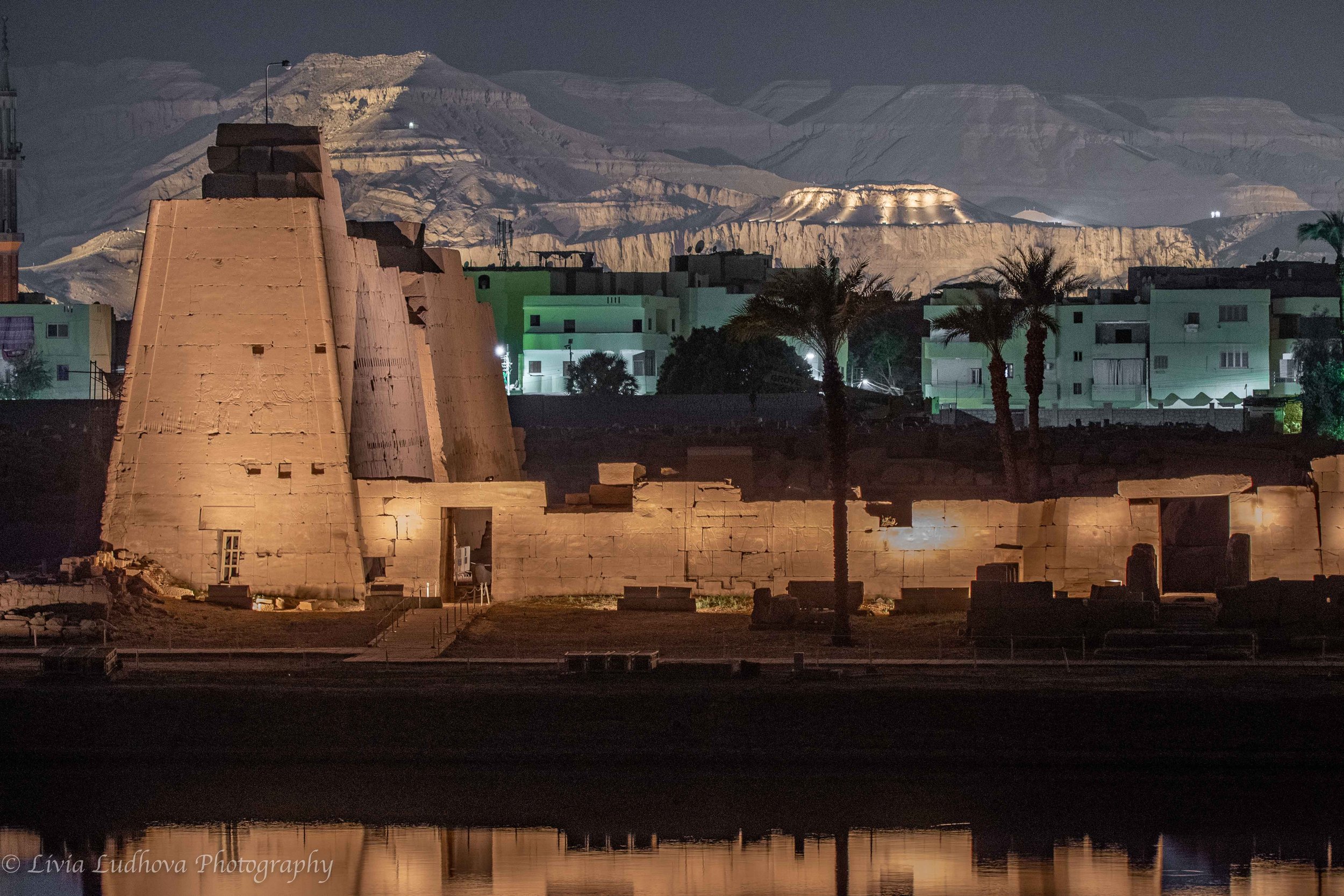
Day 7 (Jan 1) Luxor East Bank: Luxor Temple - Karnak Temple – Luxor Museum – Karnak sound and light show
Day 8 (Jan 2) Luxor West Bank 1: Valley of the Kings (tombs KV1 Ramesses VII, KV 6 Ramesses IX, KV 8 Merenptah , KV 9 RamessesV & VI, KV 11 Ramesses III, KV 14 Tausert - Setnakht, KV 15 Sety II, KV 16 Ramesses the first, KV 17 Seti the first, KV 47 Siptah, KV 63 Tutankhamen) – Carter House - Hatshepsut temple –Habbu Temple - Colossi of Memnon
Day 9 (Jan 3) Luxor West Bank 2: Tombs of the Nobels (Rekhmira No 100, Sennefer No 96, Ramose No 55 10th Dynasty) - Ramsseum - Deir el Medina (Sennutem, Inherkha/Amherkha No 350, Pashedu tombs) - Seti I Funerary Temple – Valley of the Queens (tombs of Nefertari, prince Amonchopeshfu, Titi No 52, prince Kha Em Wast )
Day 10 (Jan 4) : Travel to Aswan - Old Cataract Hotel – Nubian Museum
Day 11 (Jan 5): Aswan: Unfinished Obelisk – Elephantina island – Philae temple
Day 12 (Jan 6): Travel to Abu Simbel
Day 13 (Jan 7): Abu Simbel - Aswan (Hight Dam, Nubian Village, Old Souk)
Day 14 (Jan 8): Cairo: National Museum of Egyptian Civilasion
Day 15 (Jan 9): Faiyum oasis
-
mmmmrenn
-
Description text goes here
-
Description text goes here
Day 1: Aswan I: West Bank
Dec 26: Aswan West Bank: Tombs Of Nobles – St Simeon Monastery – Botanical Gardens – Felluca sunset ride
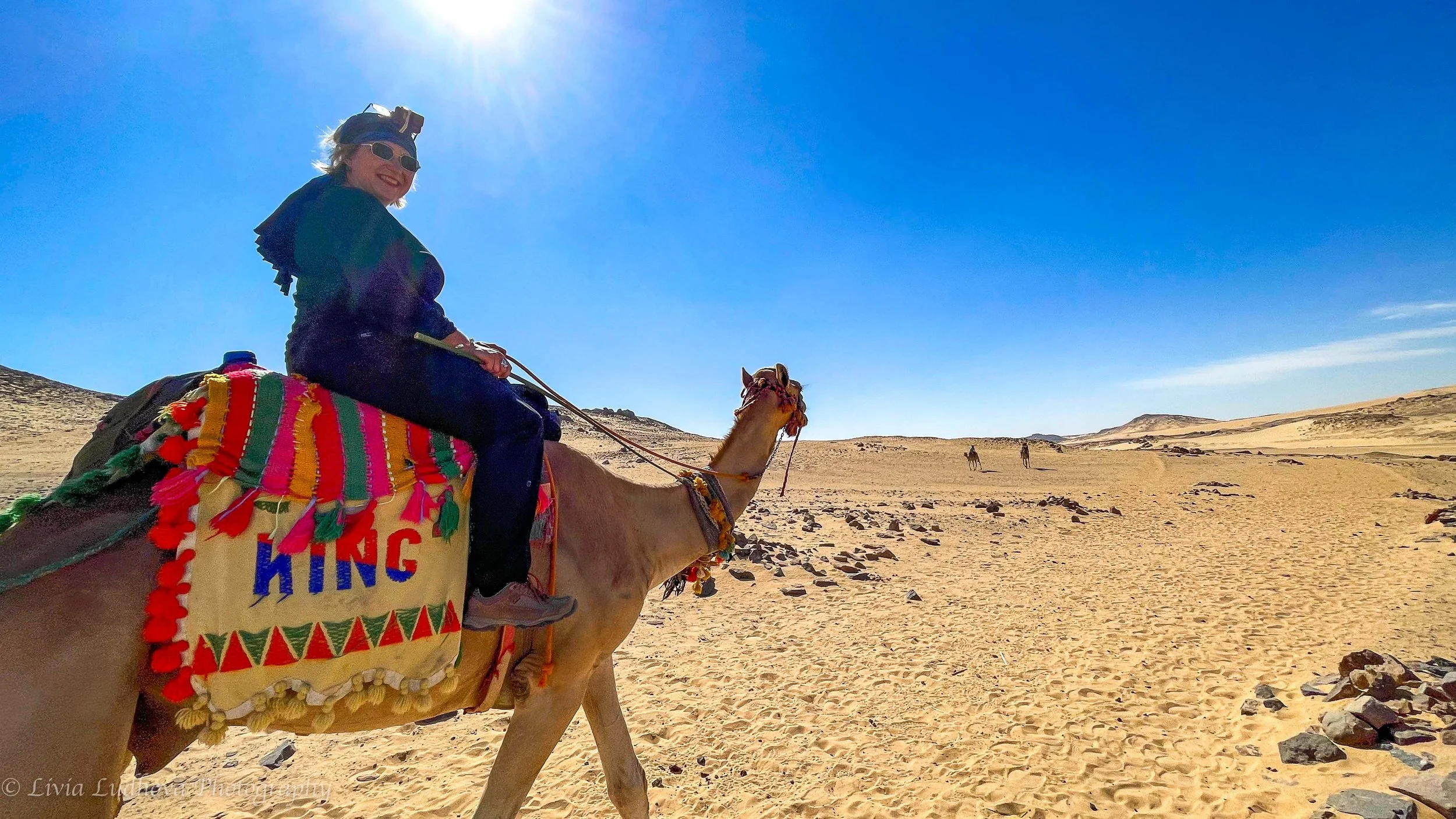
I arrived early in the morning to Aswan and began exploring the West Bank of the Nile. The day started at the Tombs of the Nobles, dating mainly to the Old and New Kingdoms (c. 2600–1070 BCE), where richly decorated rock-cut chambers of high-ranking officials overlook the river and reveal scenes of administration, trade, and daily life. From there, I continued by camel ride across the desert plateau to the remote ruins of St. Simeon Monastery, founded in the 6th century CE and later expanded during the medieval period as one of the largest Christian monastic complexes in southern Egypt. Right after the camel ride, I crossed the Nile by boat to the Botanical Gardens, a tranquil oasis of greenery and shade, before ending the day with a traditional felucca ride and a sunset over the river.
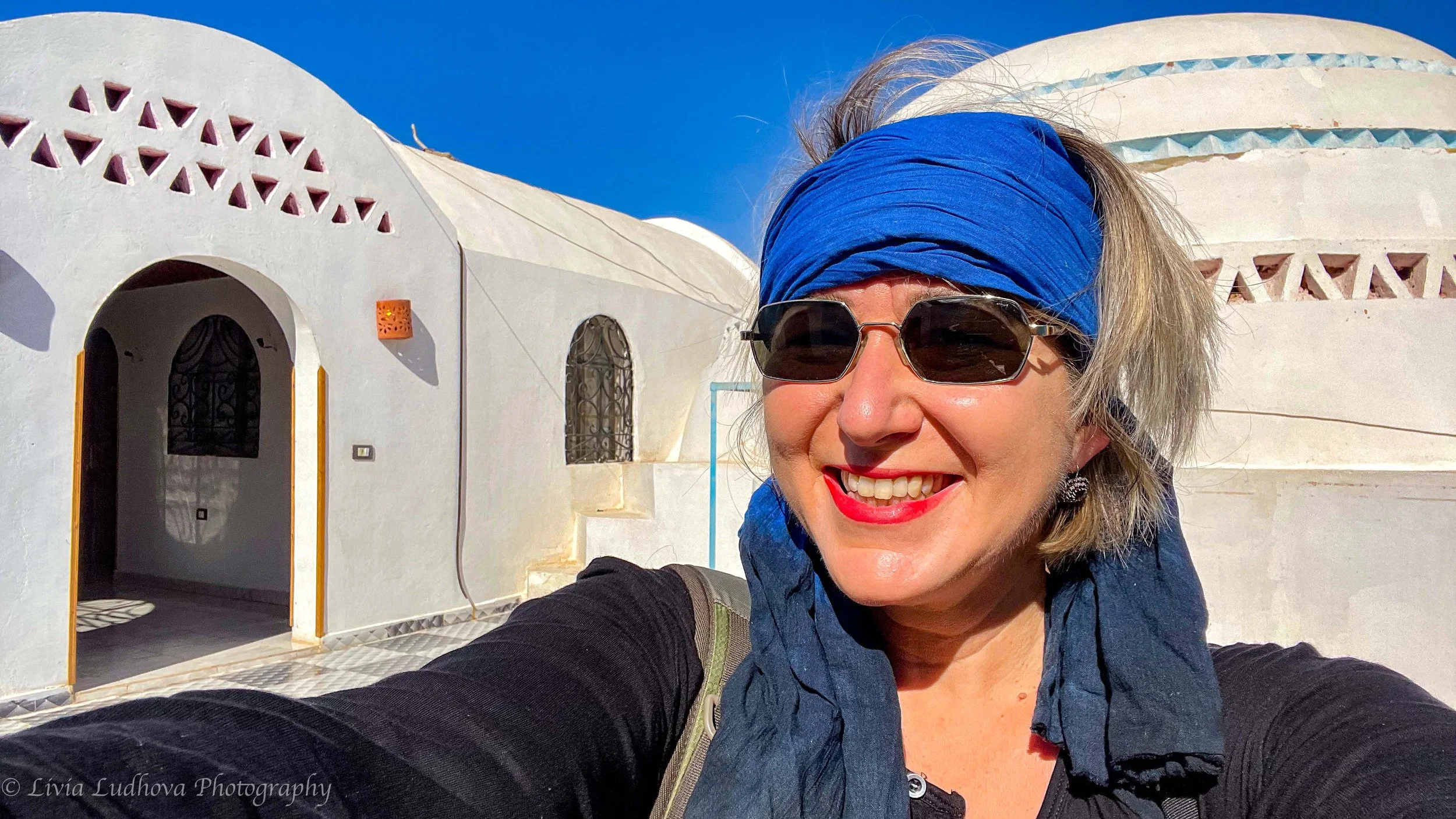
Refreshed at Nubian Holiday Houseat Aswan West Bank after the night travel. Ready to explore!
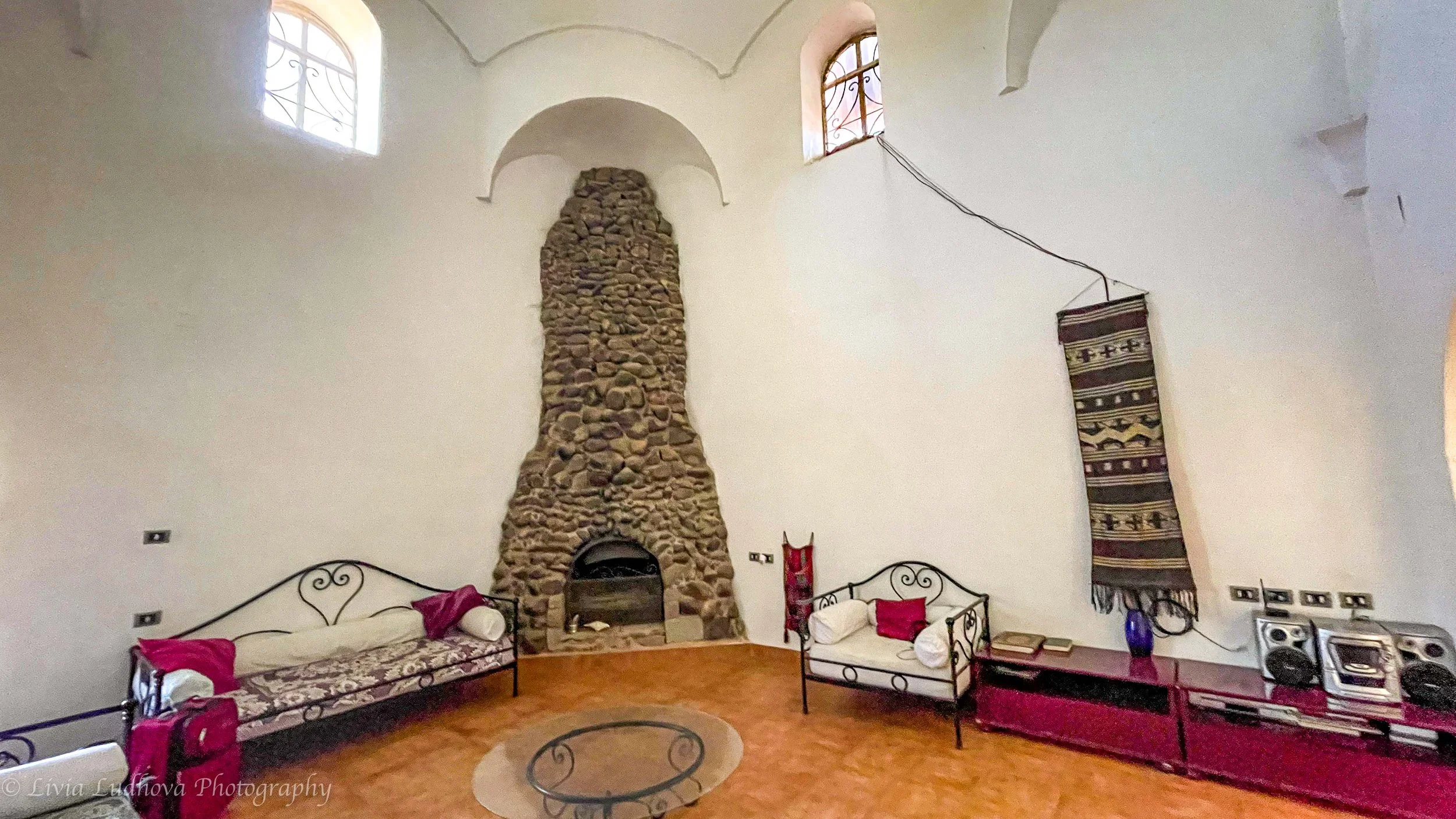
Interior of the hotel.
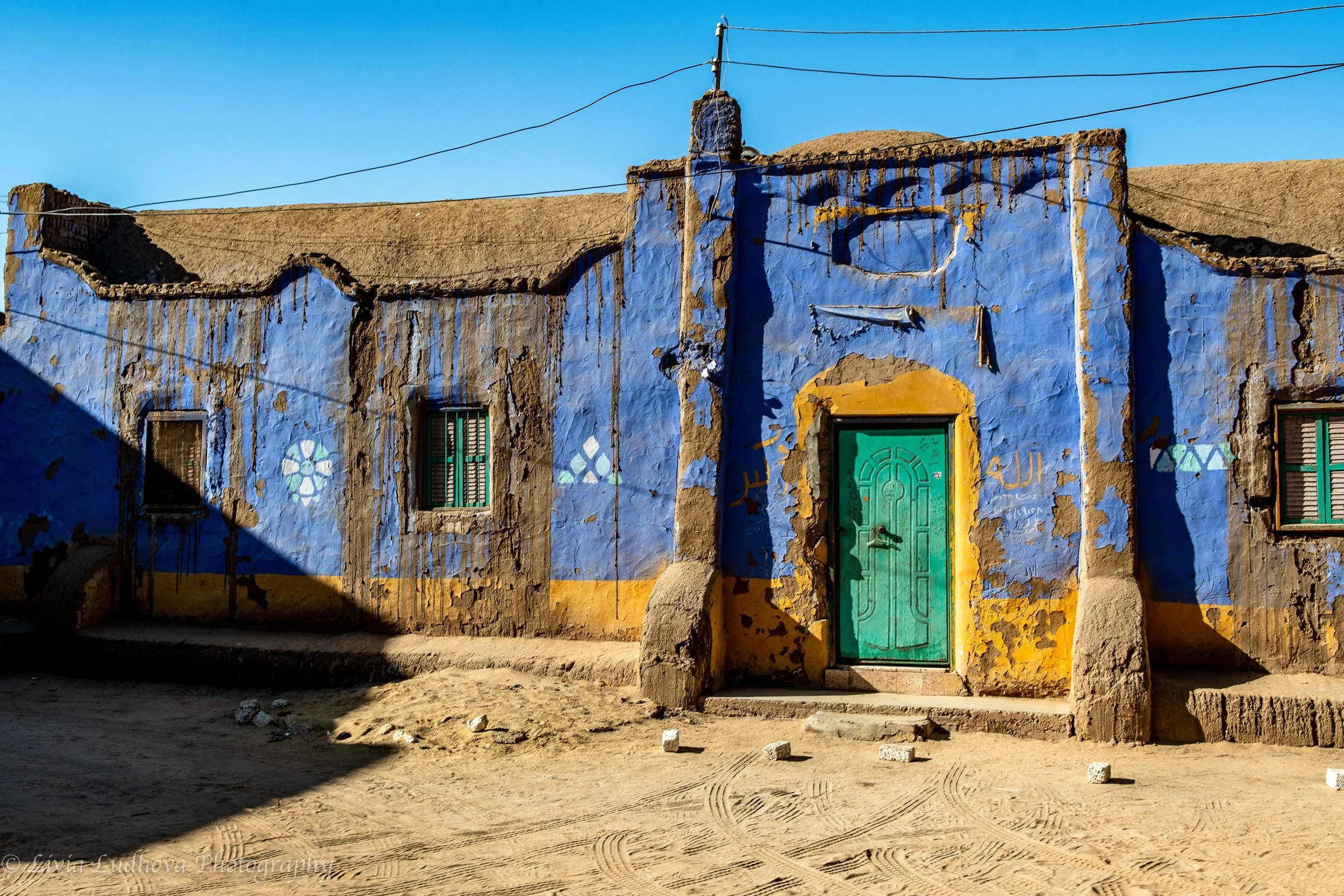
Colourful Nubian house.
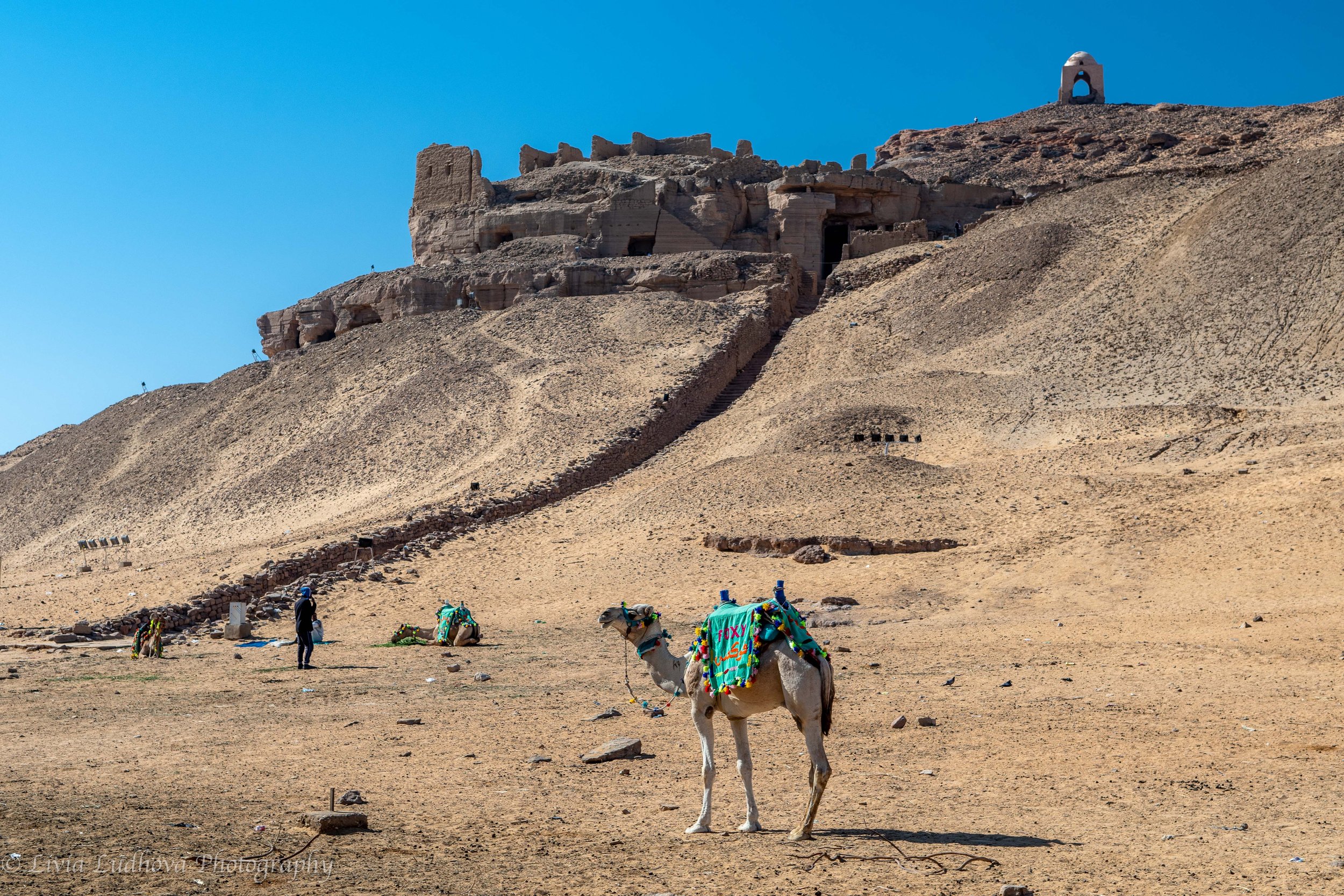
Aswan West Bank — typical scene with camels and the stairway that I used to approach the Tombs of the Nobles, he rock-cut burial chambers overlooking Aswan.
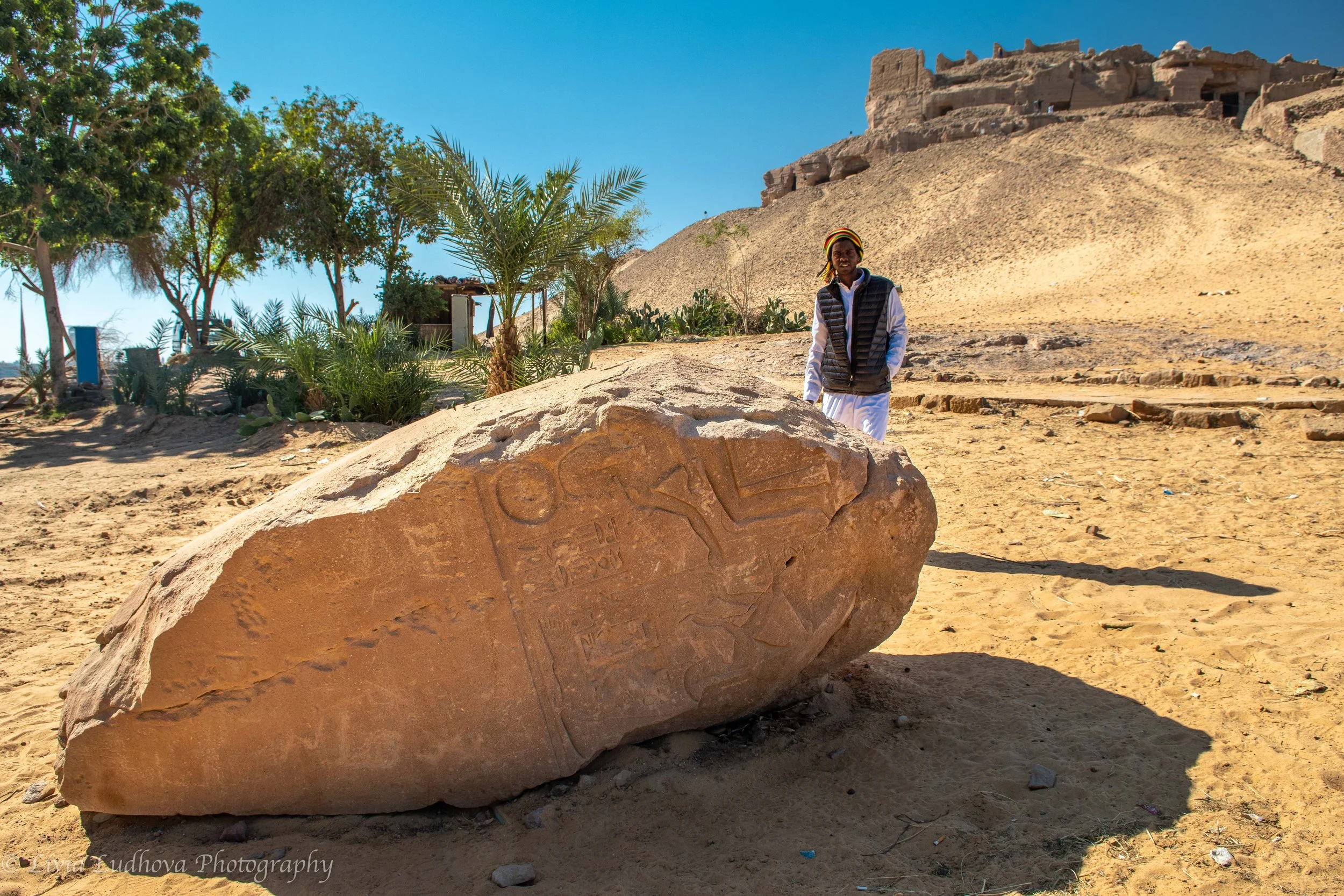
a fallen sandstone block carved with ancient reliefs lies along the approach to the Tombs of the Nobles,
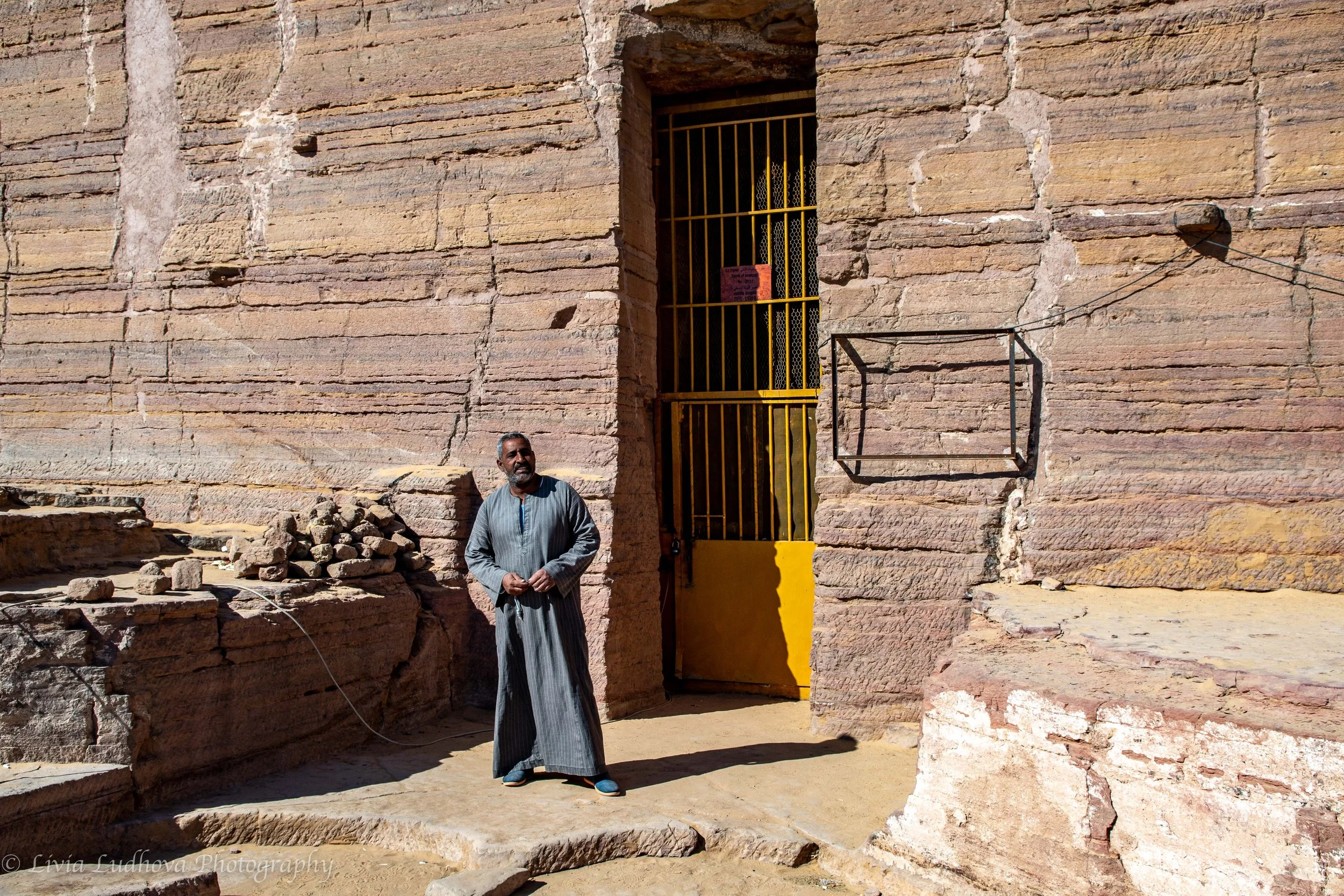
Entrance to the Tomb of Sarenput II, who was an ancient Egyptian monarch during the reign of pharaohs Senusret II and Senusret III of the 12th Dynasty (1971-1928 BC). Mekhu was killed during an expedition in Nubia and the his son, Sabni, made efforts to bring the body of his father back home.
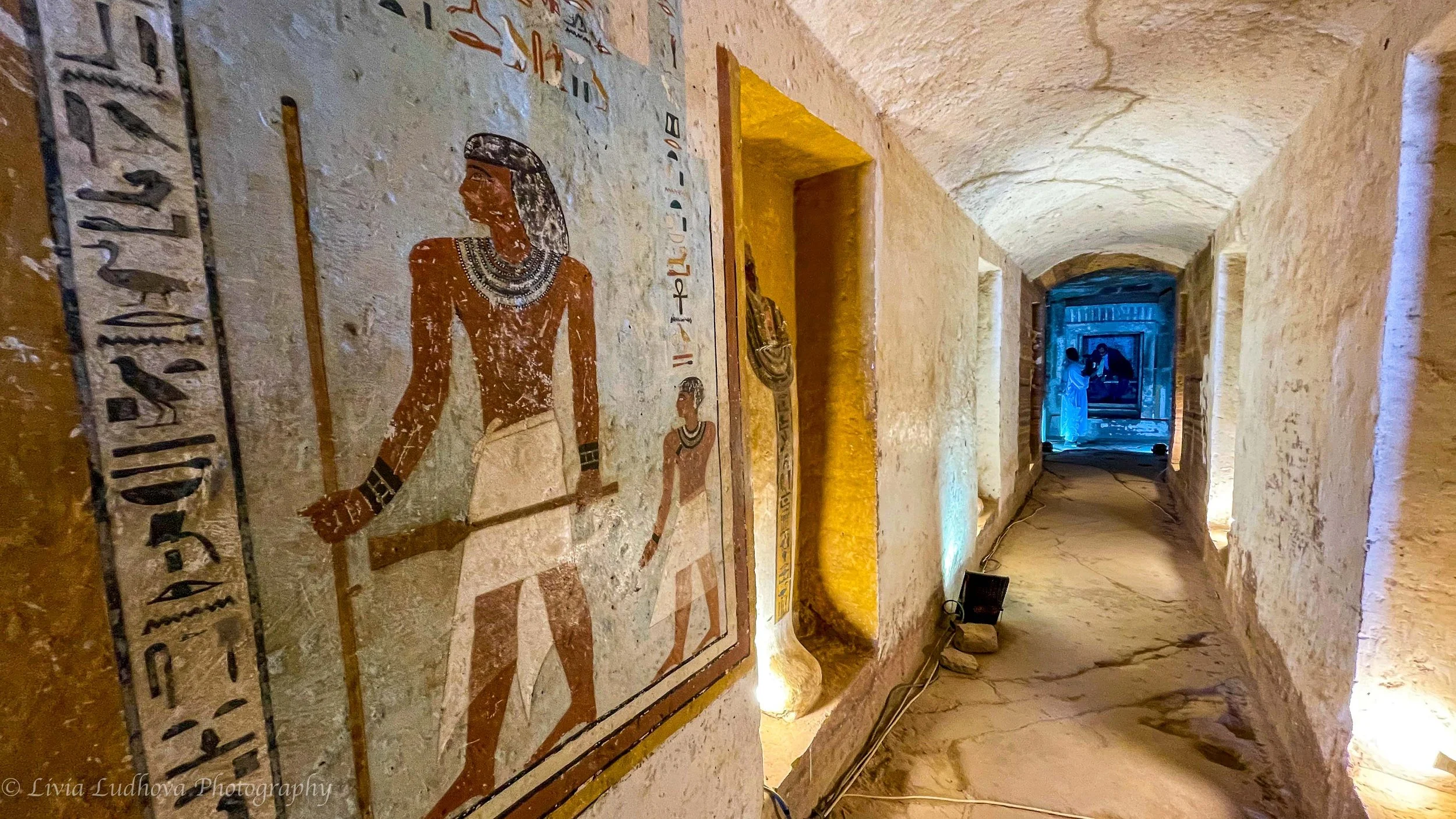
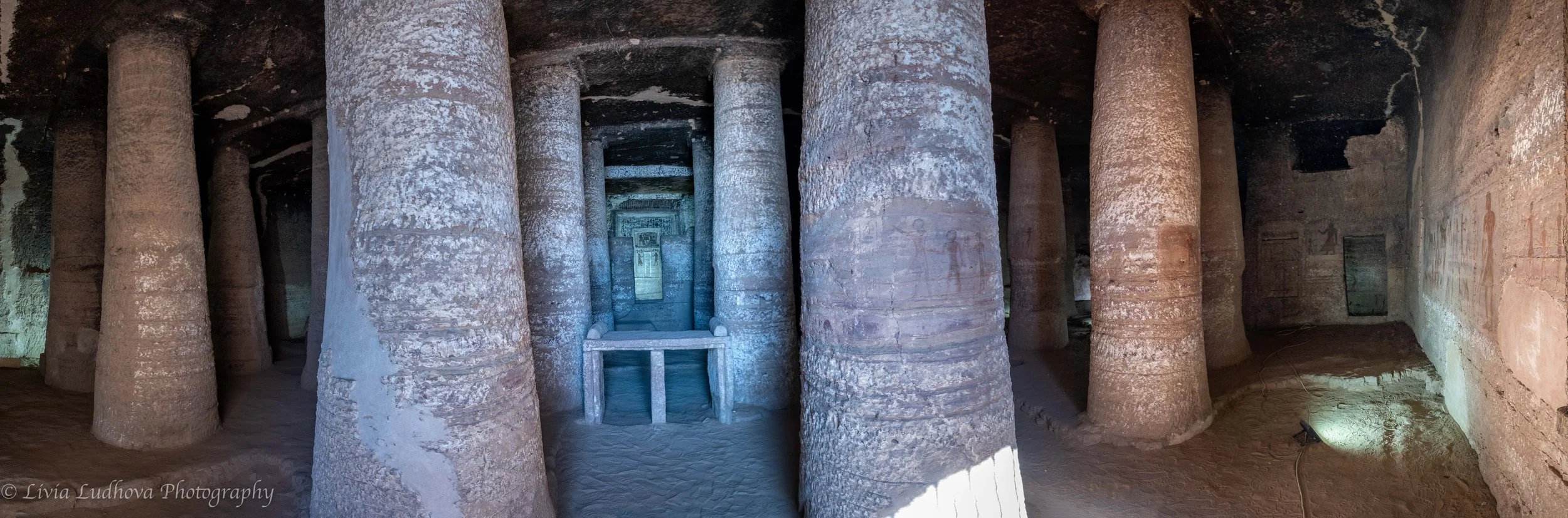
Painted corridor in the tomb of Sarenput II, where vividly preserved Middle Kingdom wall paintings and hieroglyphs accompany the long passage leading toward the burial chambers, guiding the deceased symbolically into the afterlife.
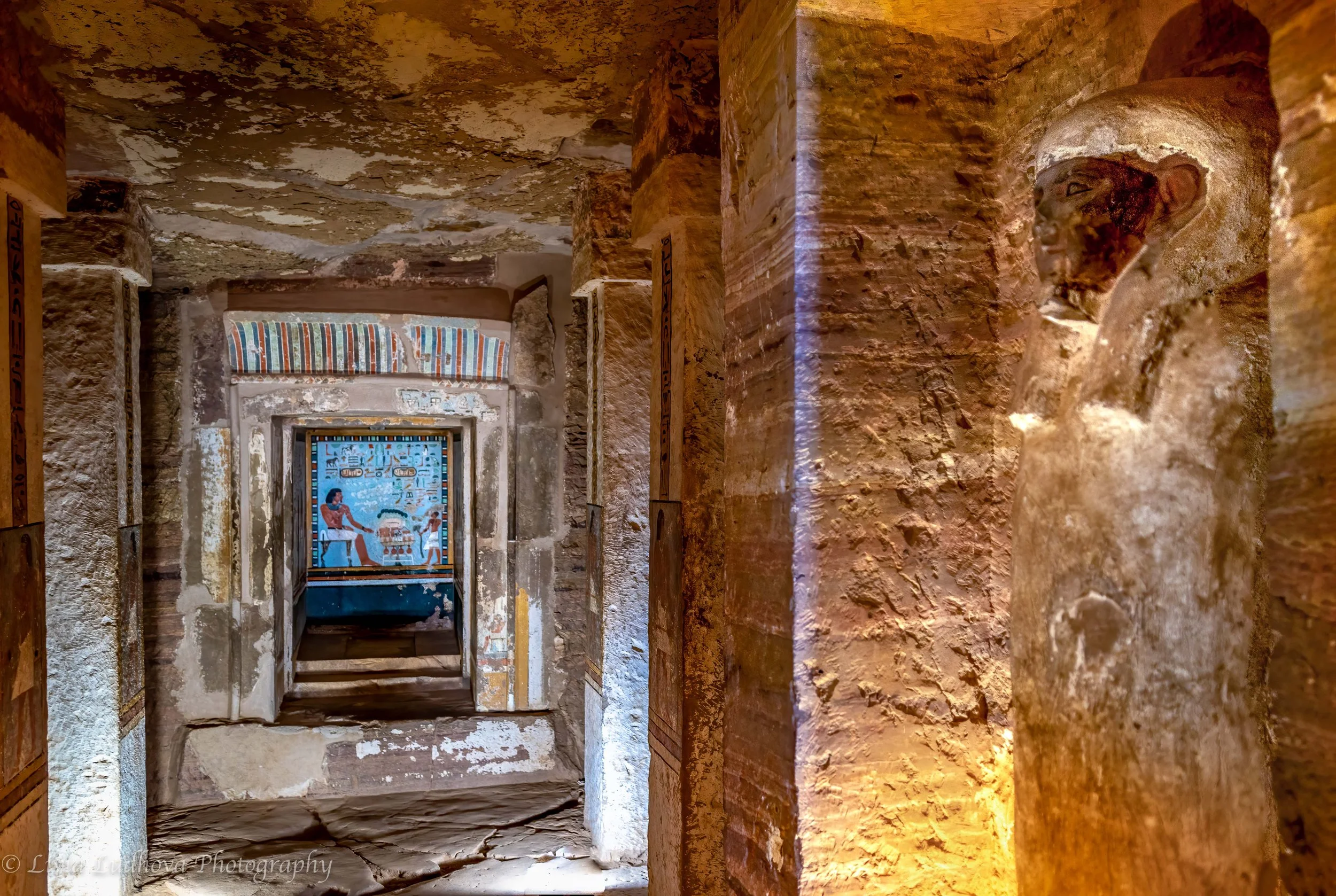
Inner chambers of the tomb of Sarenput II,
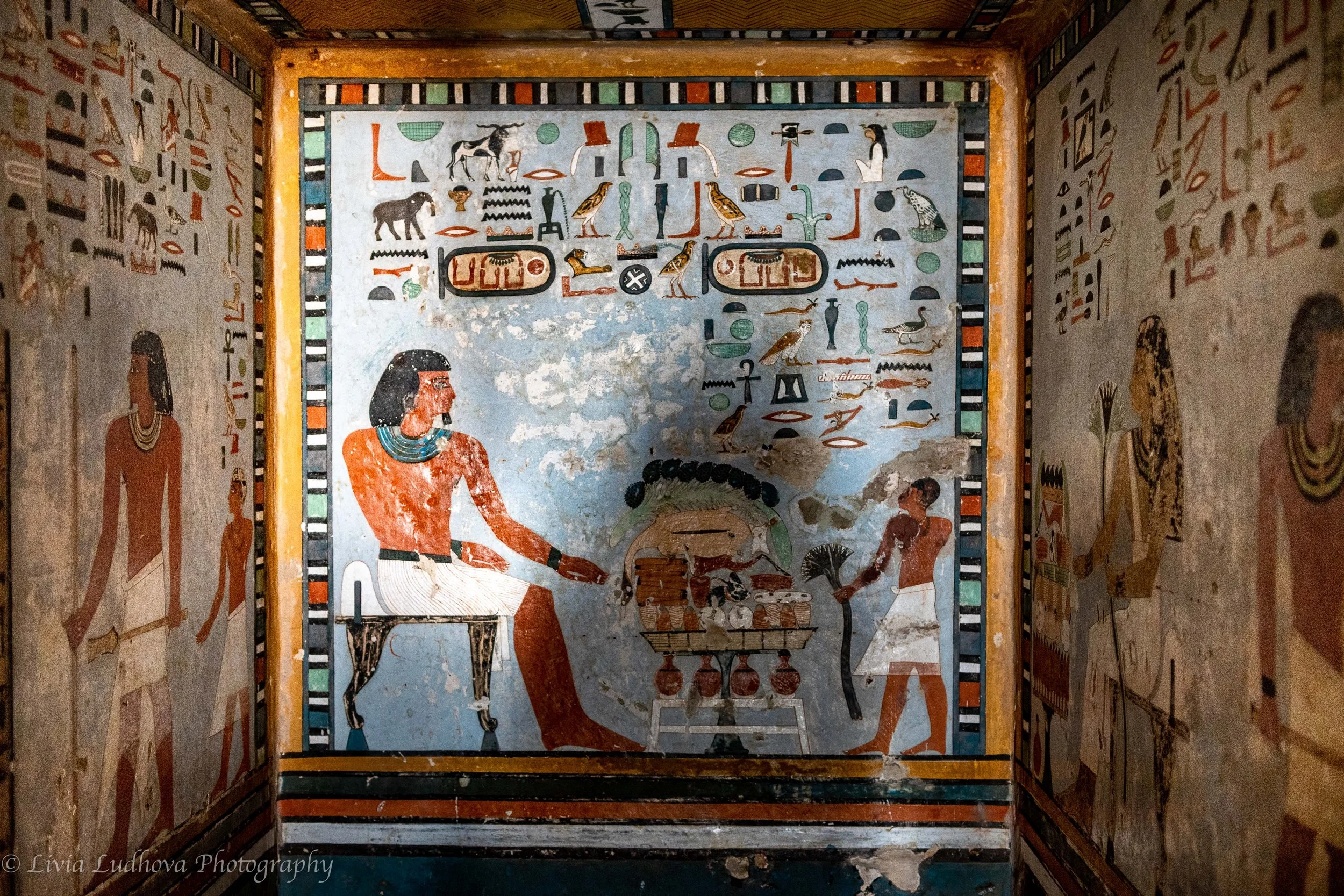
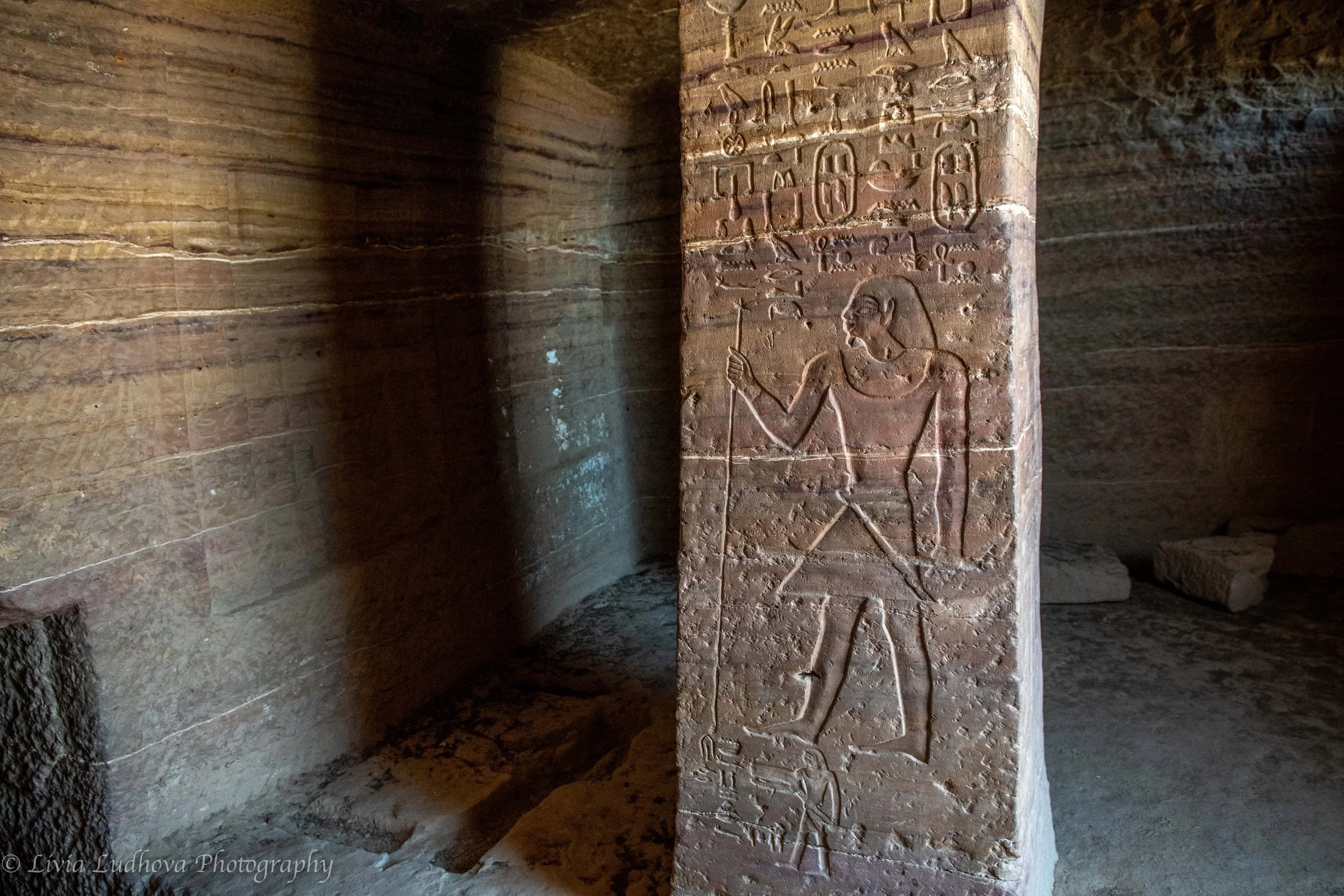
Offering scene in the tomb of Sarenput II, showing the tomb owner seated before an offering table, surrounded by richly colored hieroglyphs that ensured eternal sustenance and remembrance in the afterlife.
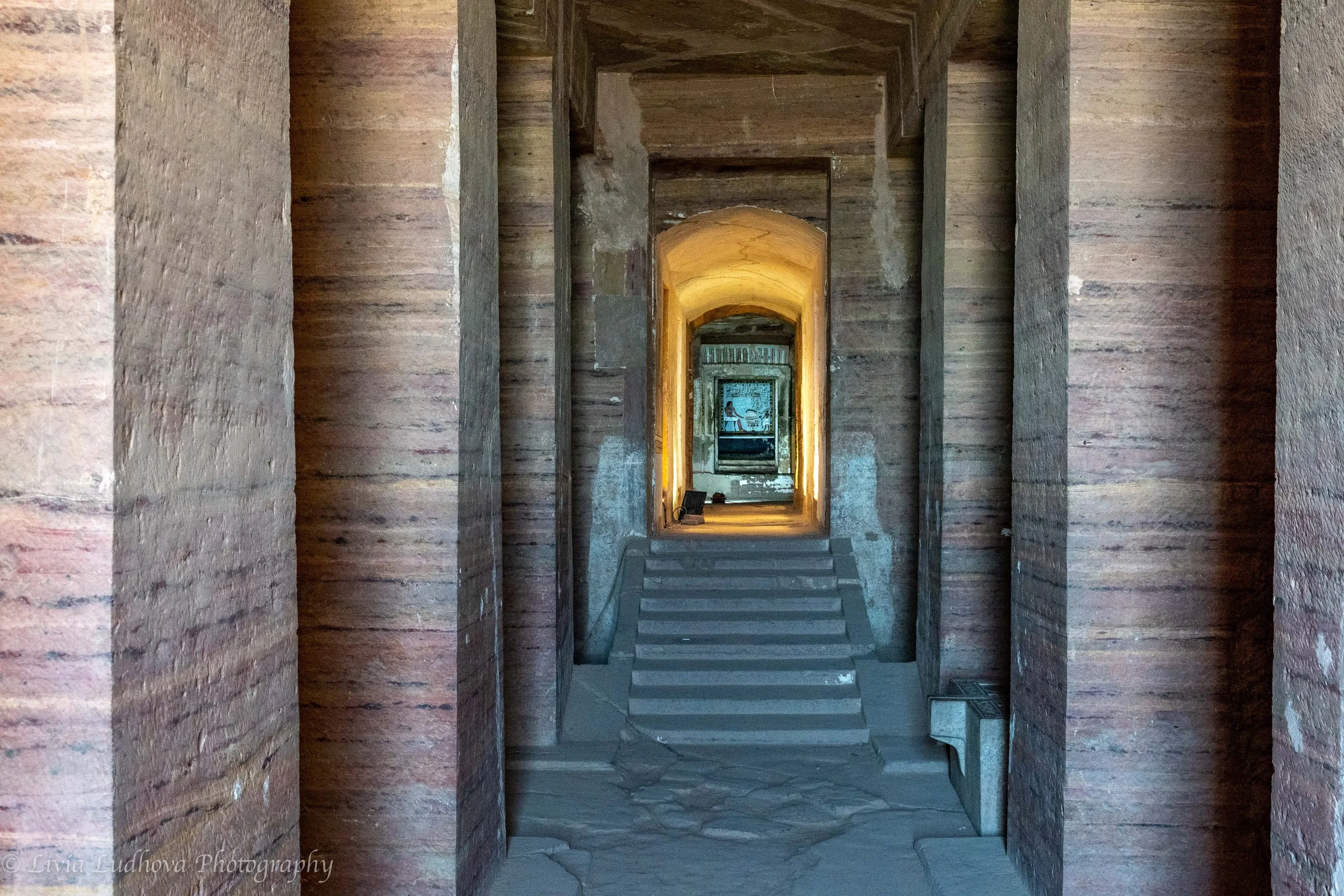
Precisely cut sandstone pillars and sharply defined edges in the tomb of Sarenput II, revealing the exceptional craftsmanship of Middle Kingdom stonework and the careful alignment of the passage leading toward the inner chambers.
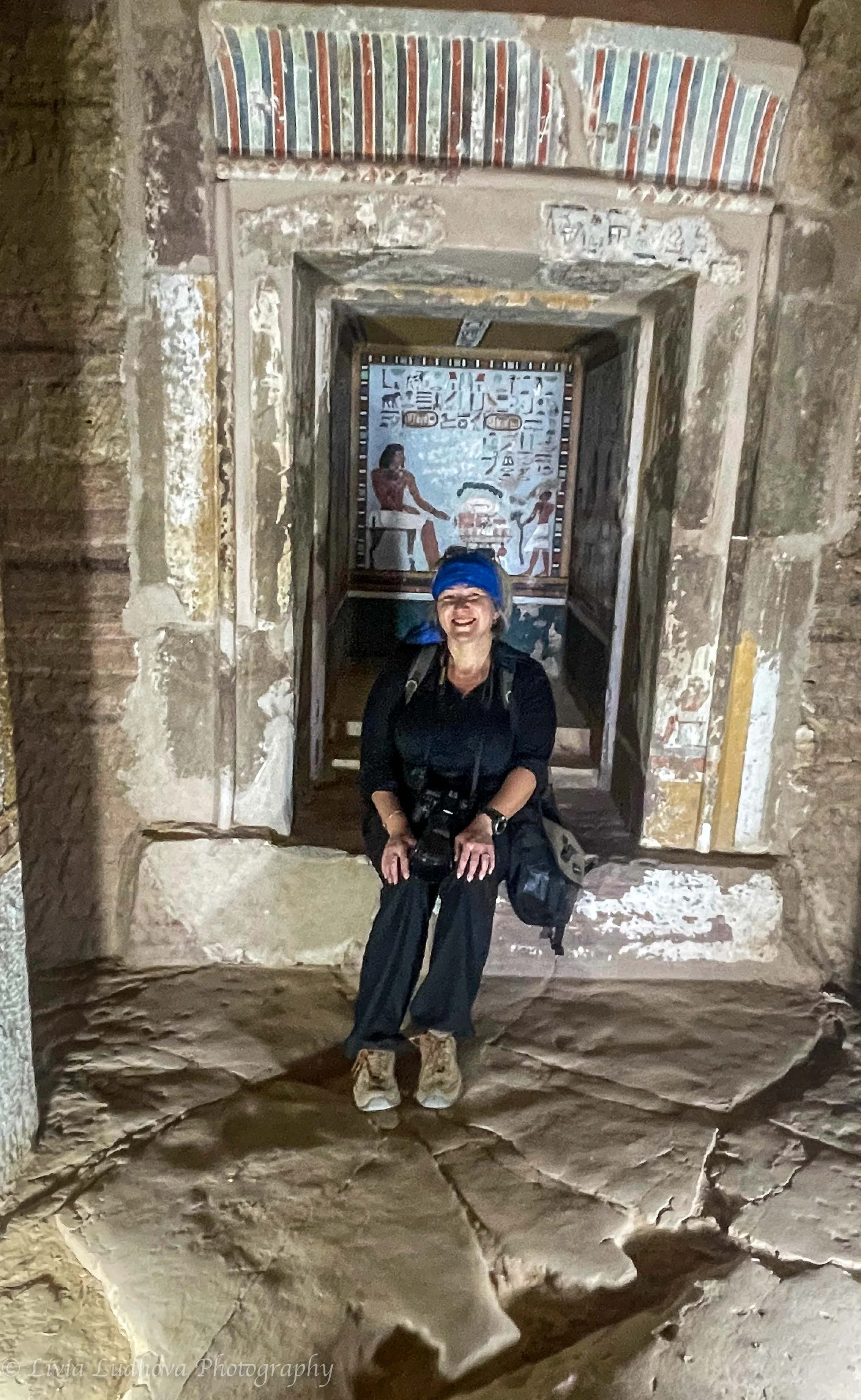
Tomb of Sarenput II
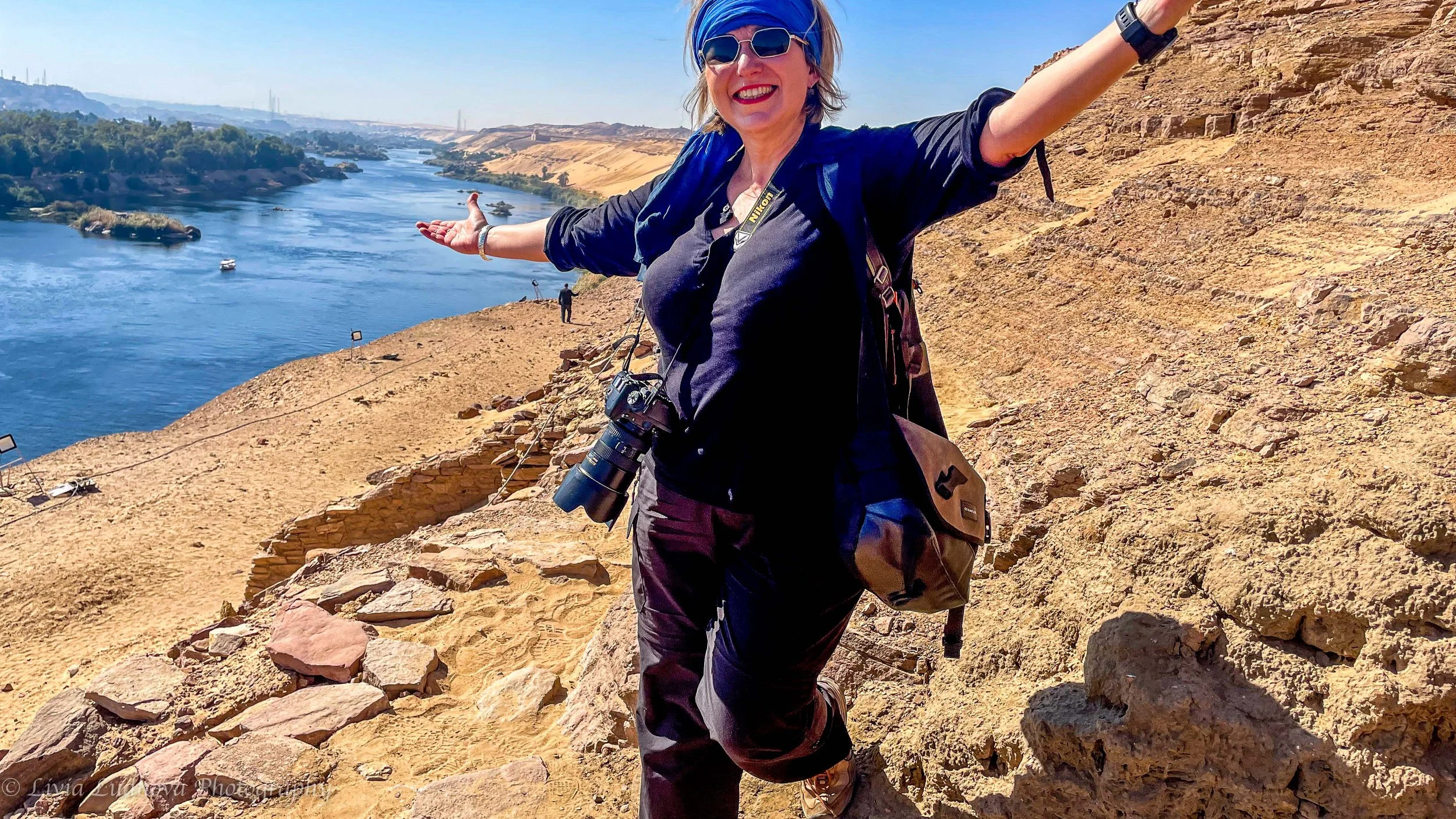
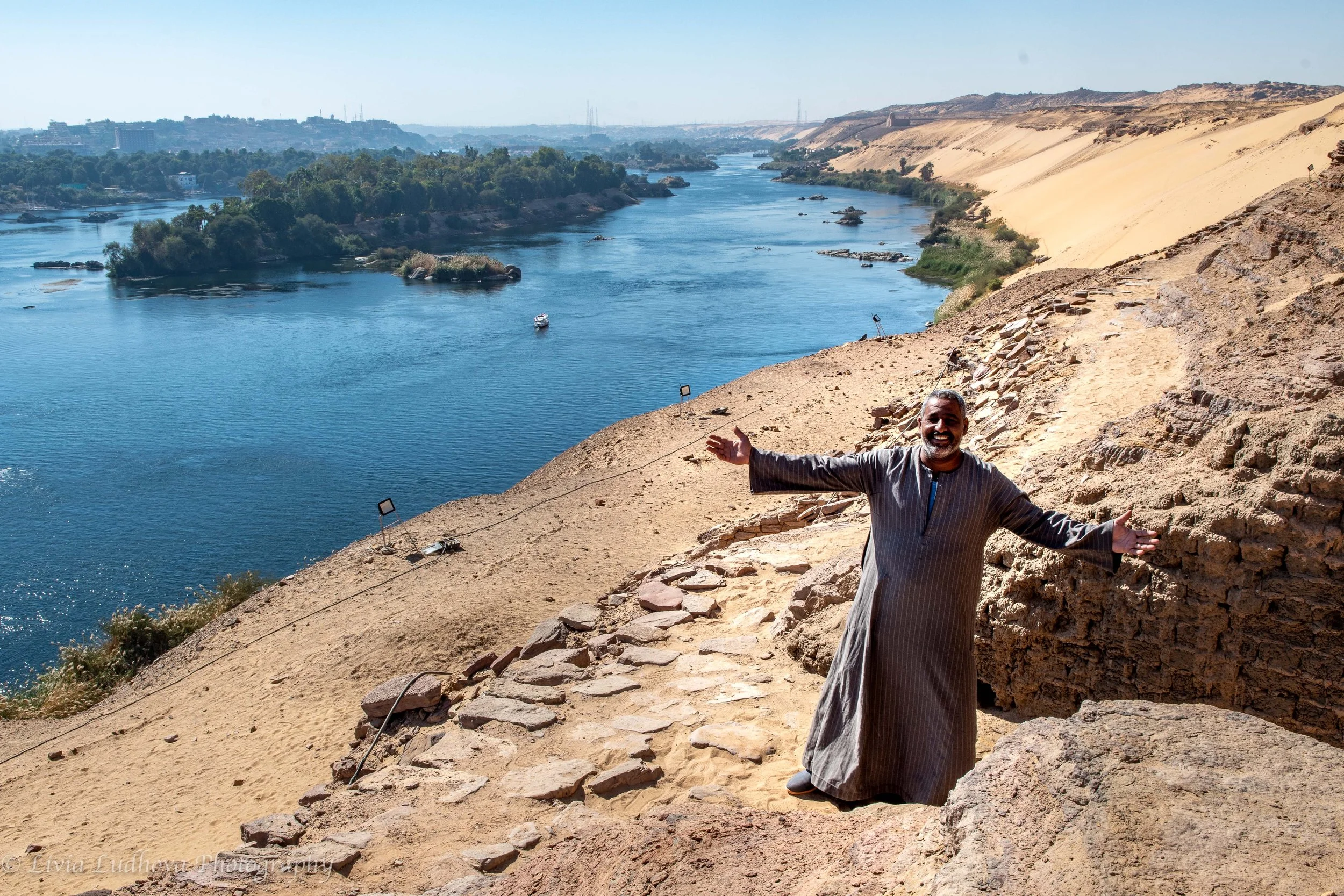
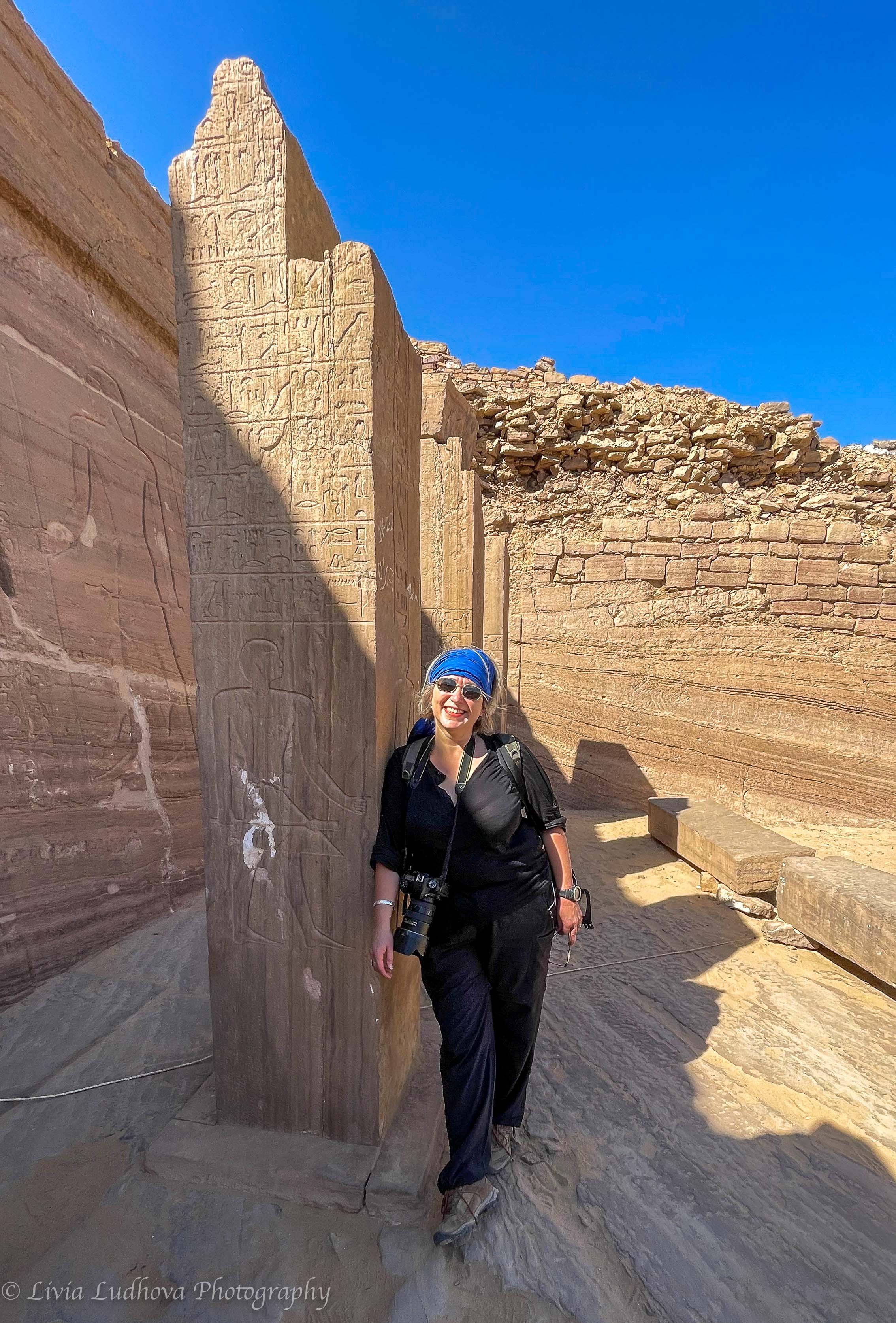
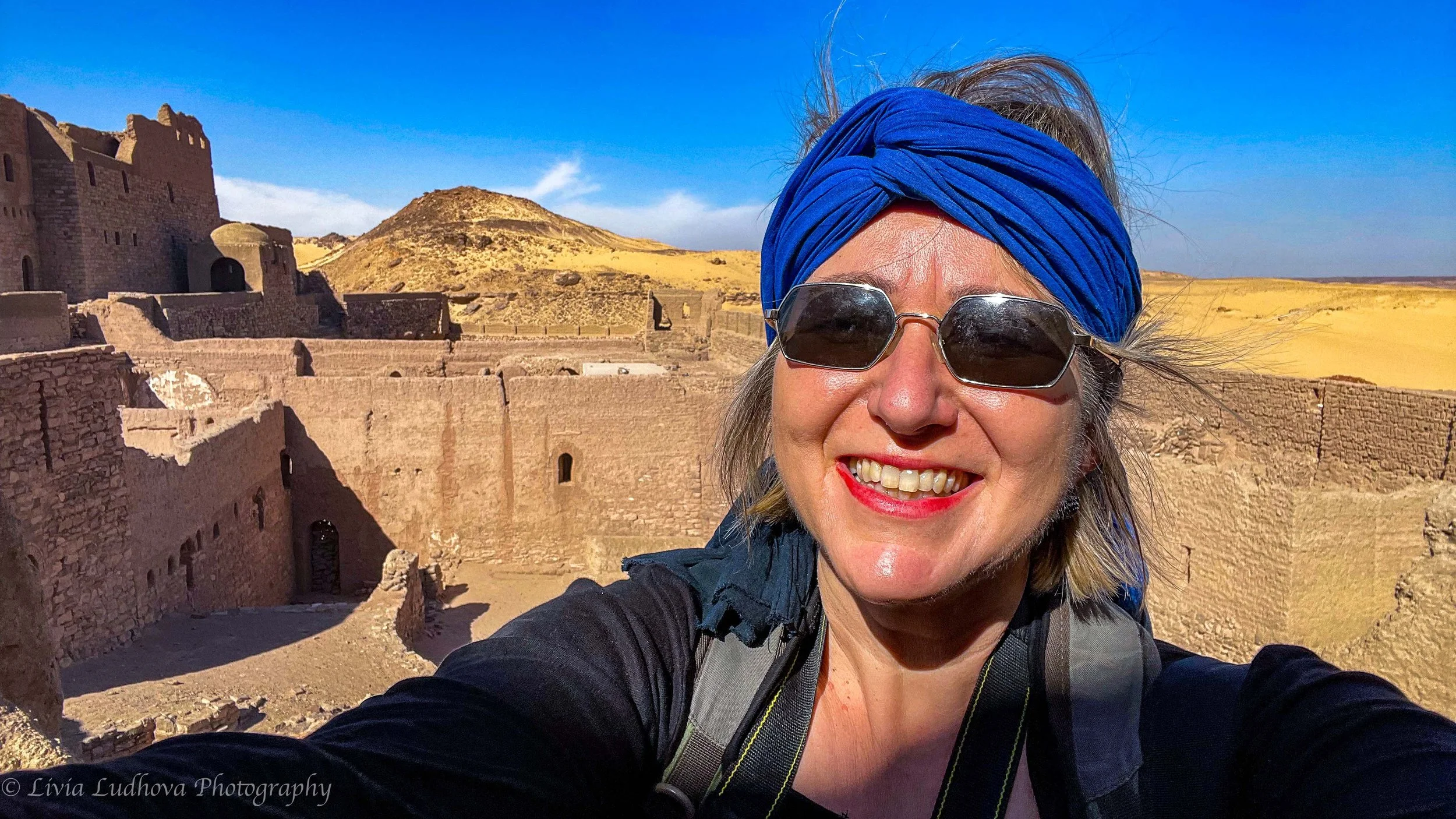
Posing above the Nile :-)
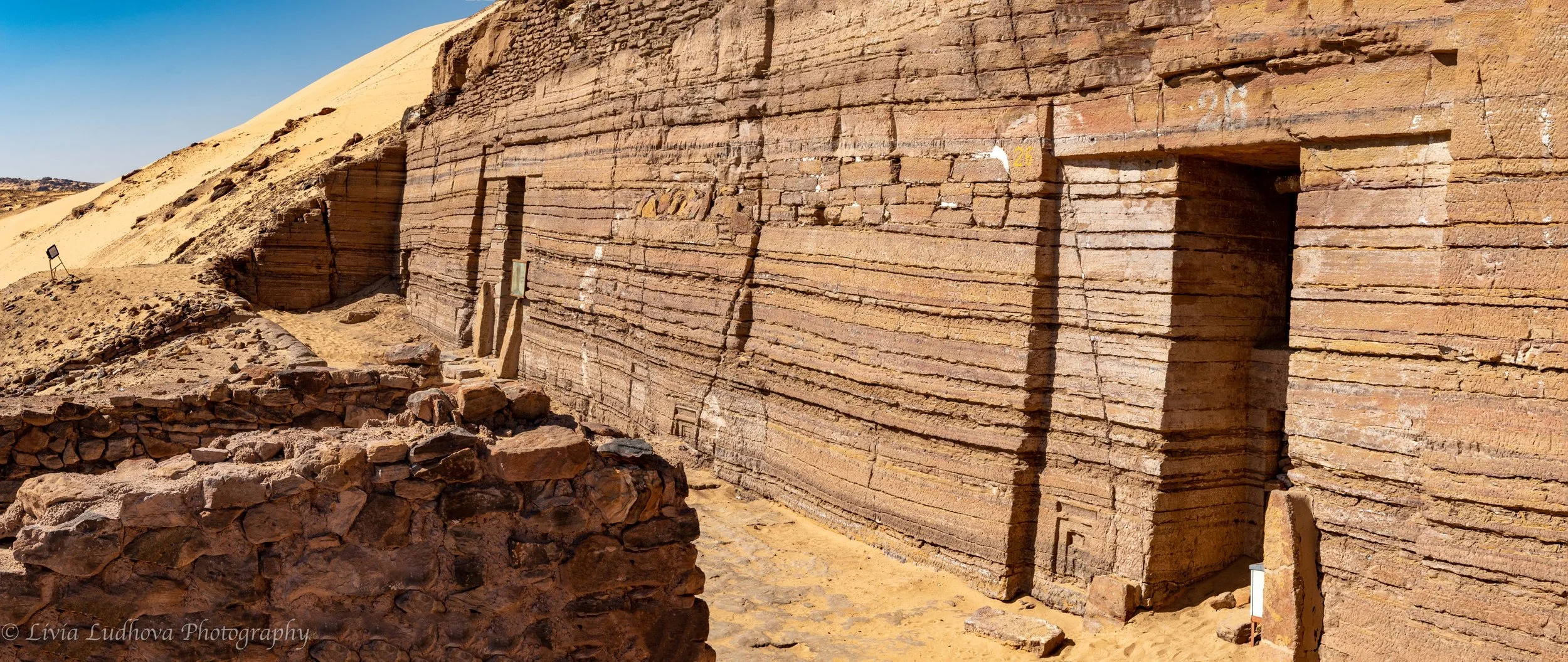
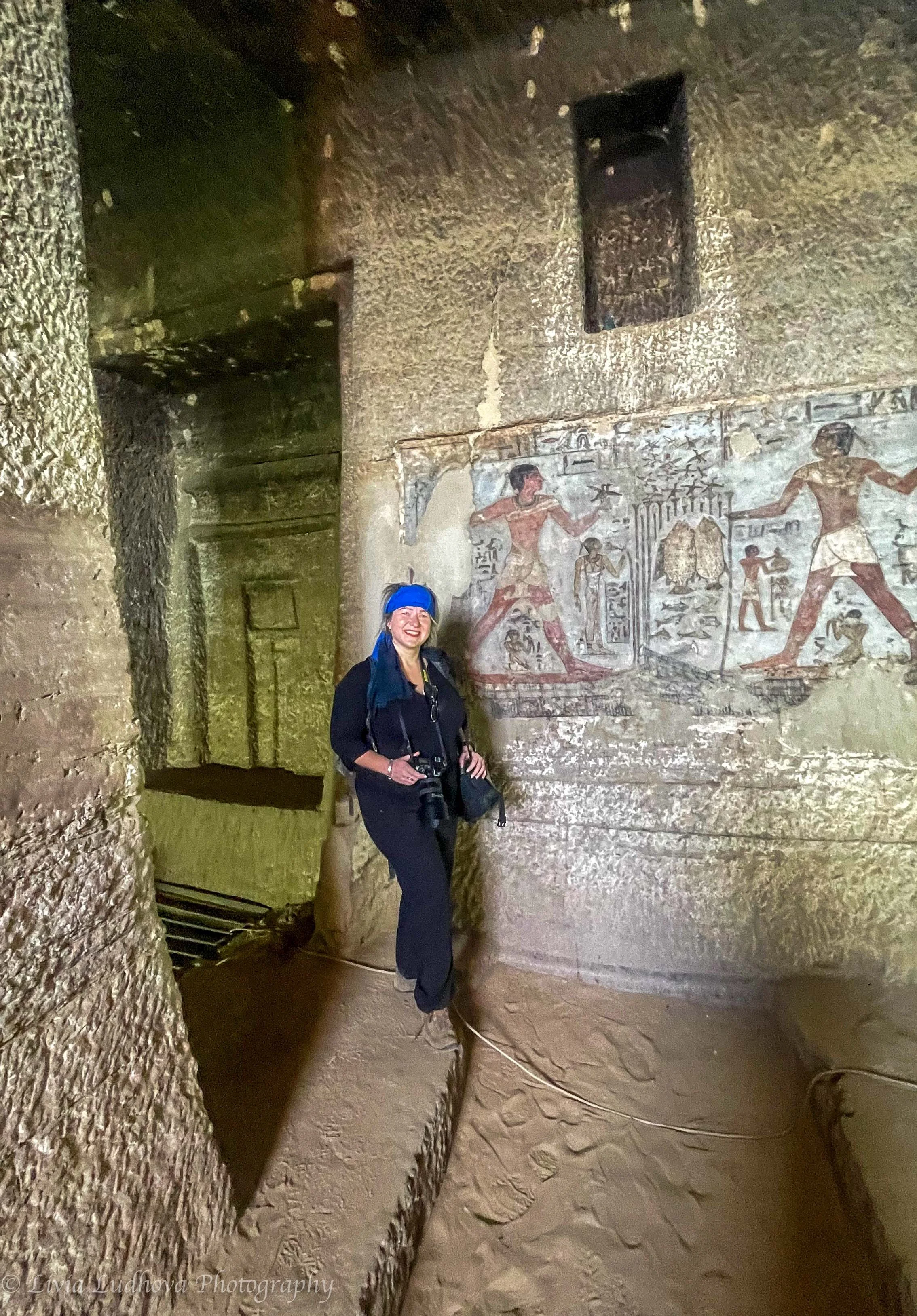
Tomb of Mekhu and Sabni, 2345 BC. Mekhu and Sabni were father and son, both were governors of Upper Egypt during the reign of Pepi II of the 6th Dynasty.
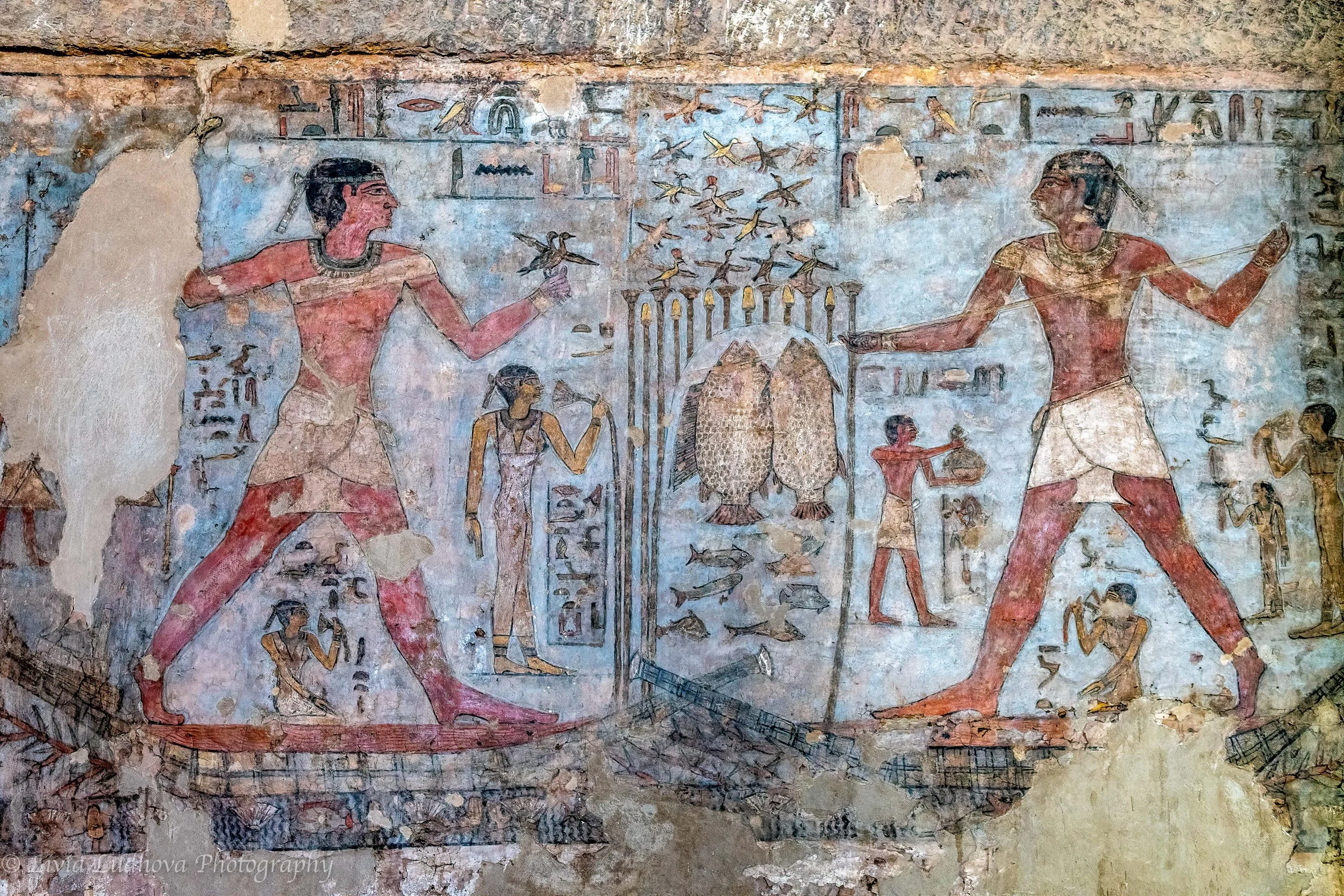
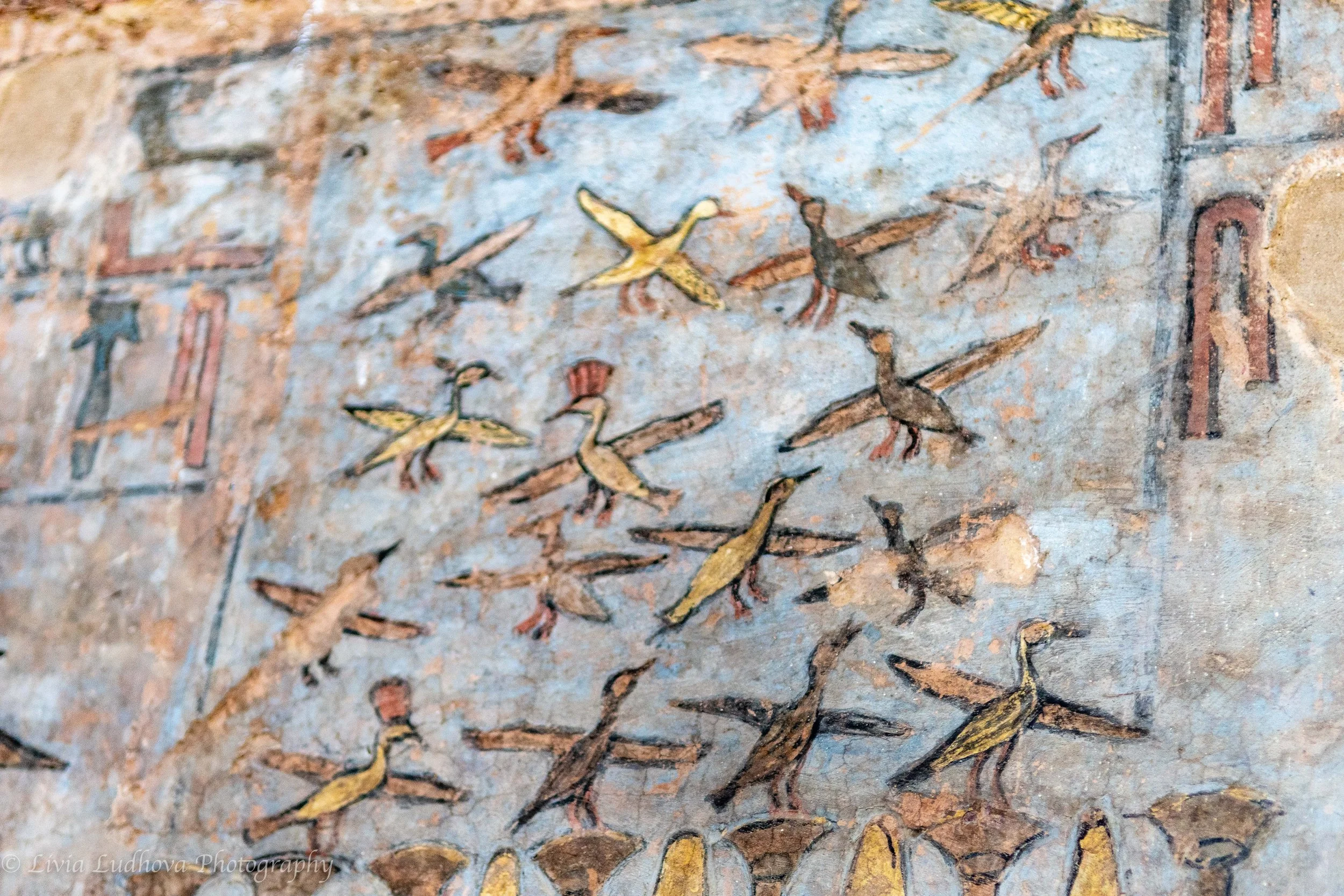
It is a ritualized abundance scene, asserting Mekhu’s and Sabni’s power, legitimacy, and eternal well-being in the afterlife.
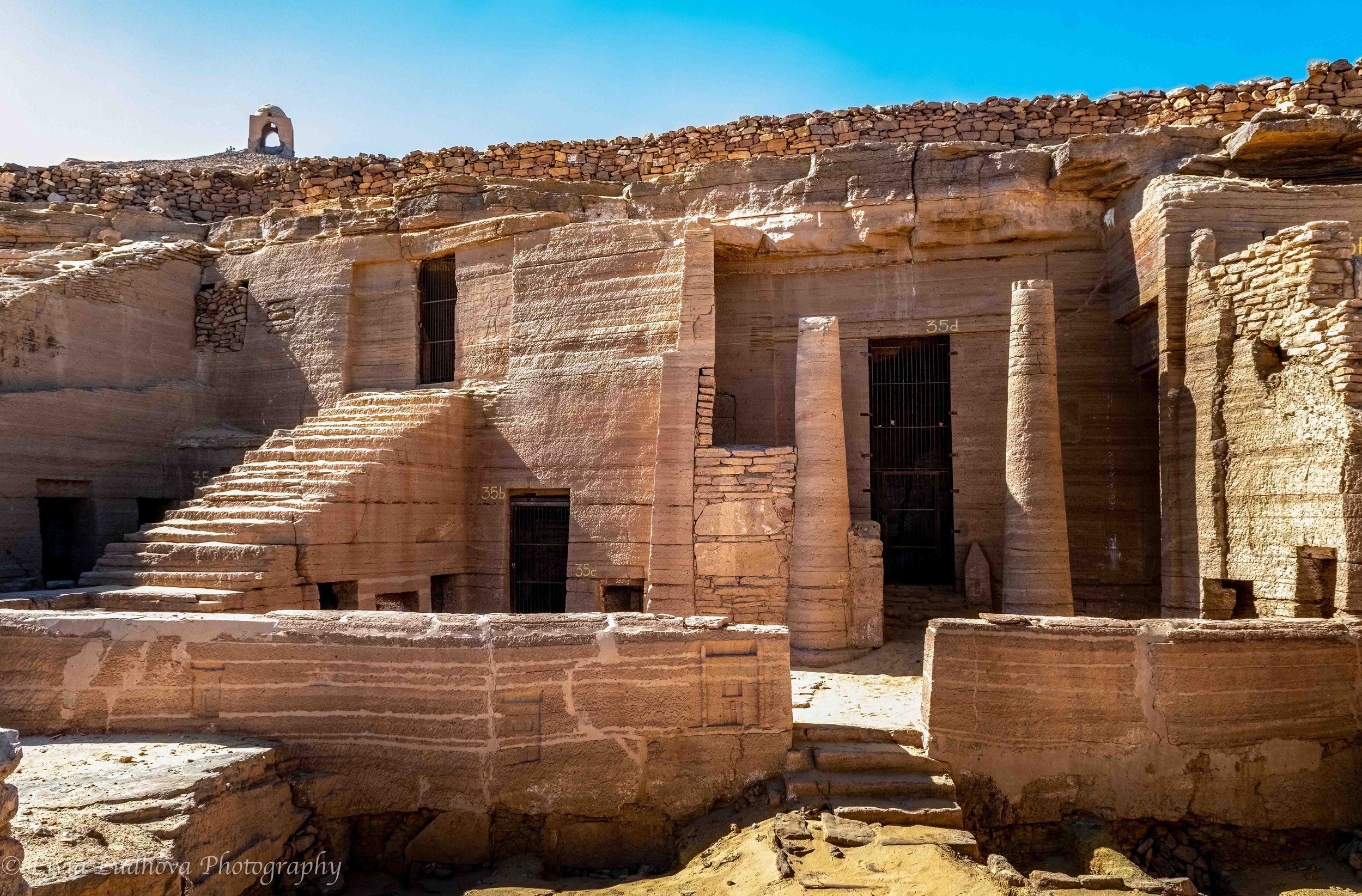
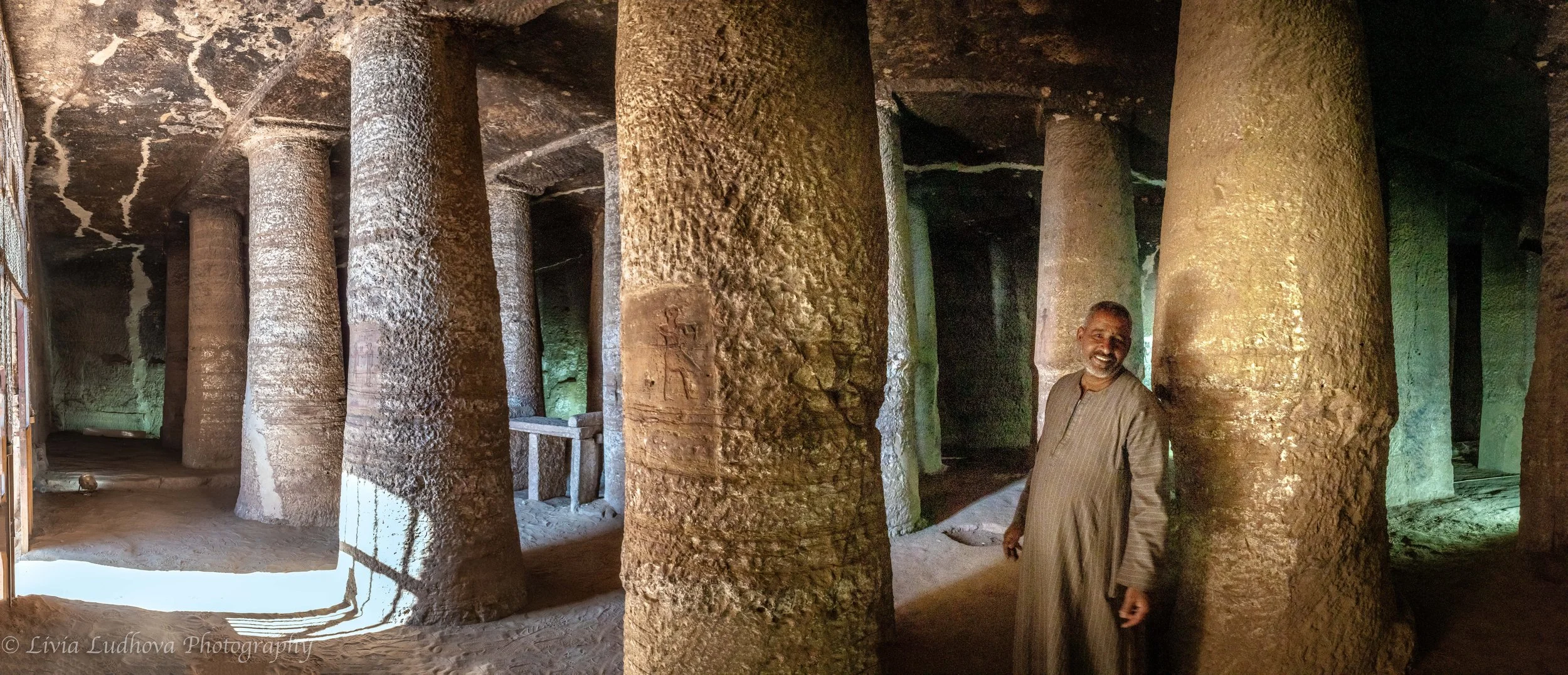
Rock-cut tomb façade carved directly into Nubian sandstone, with columned entrance and stepped approach reflecting elite non-royal burial architecture of the New Kingdom.
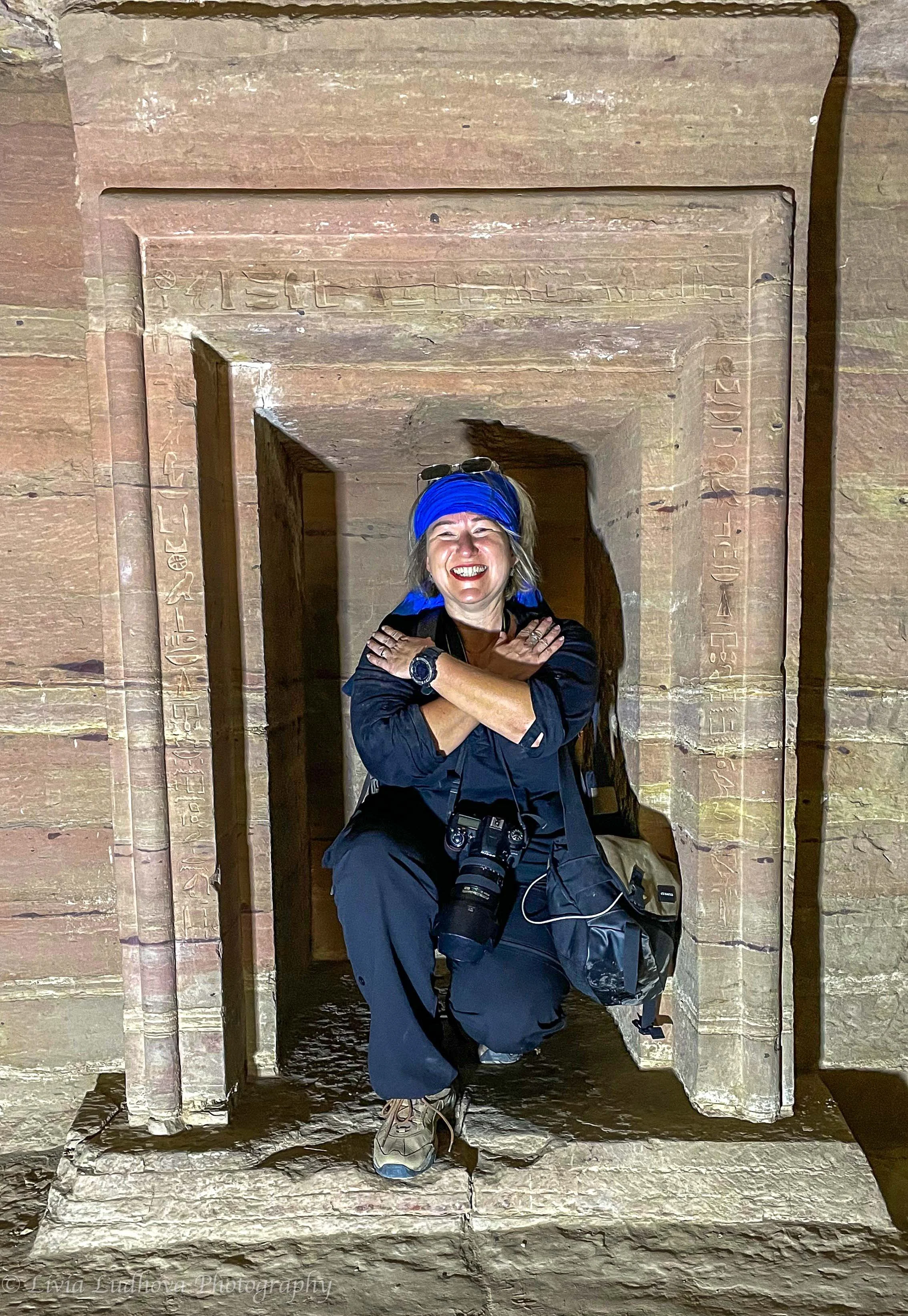
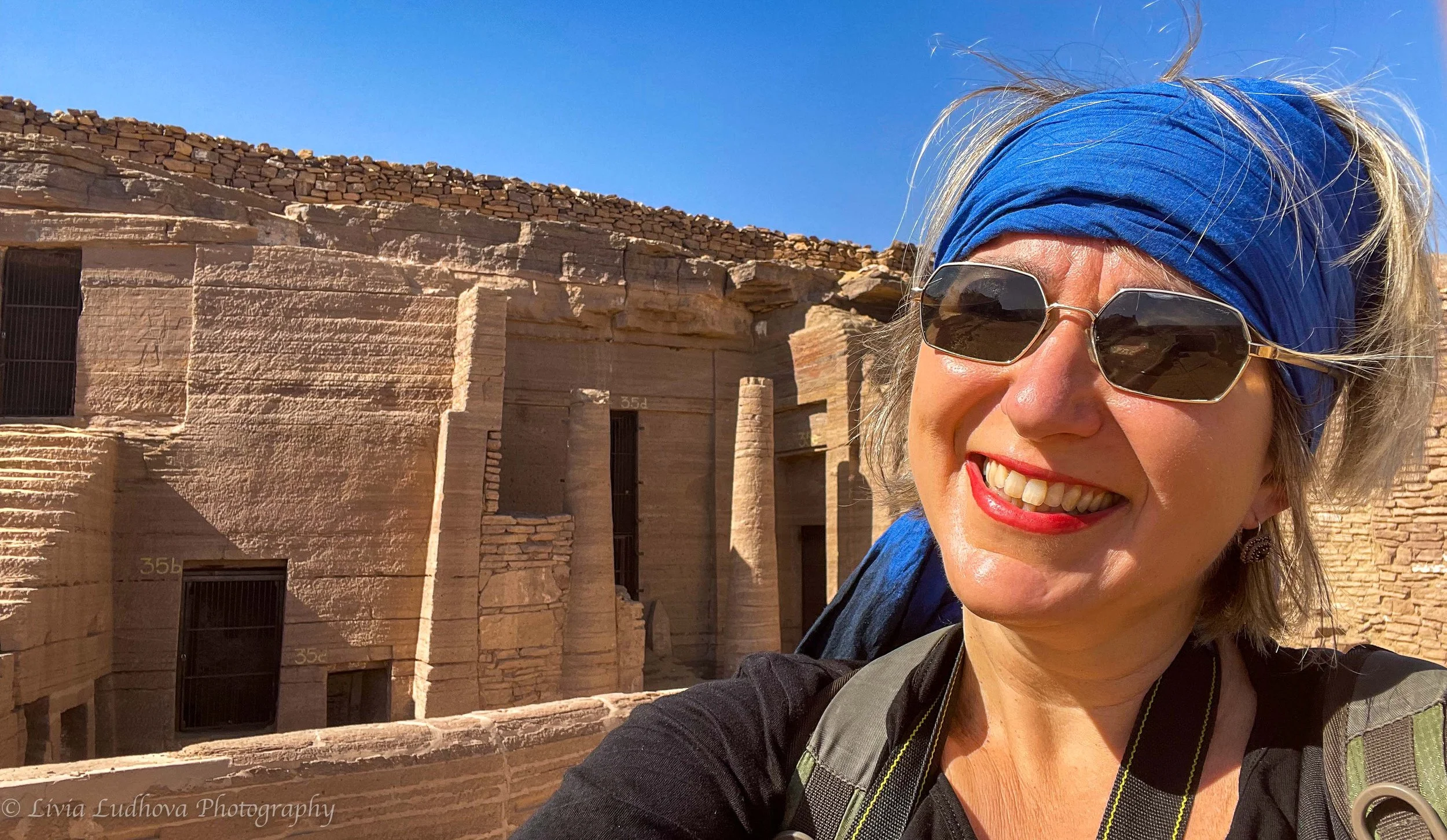
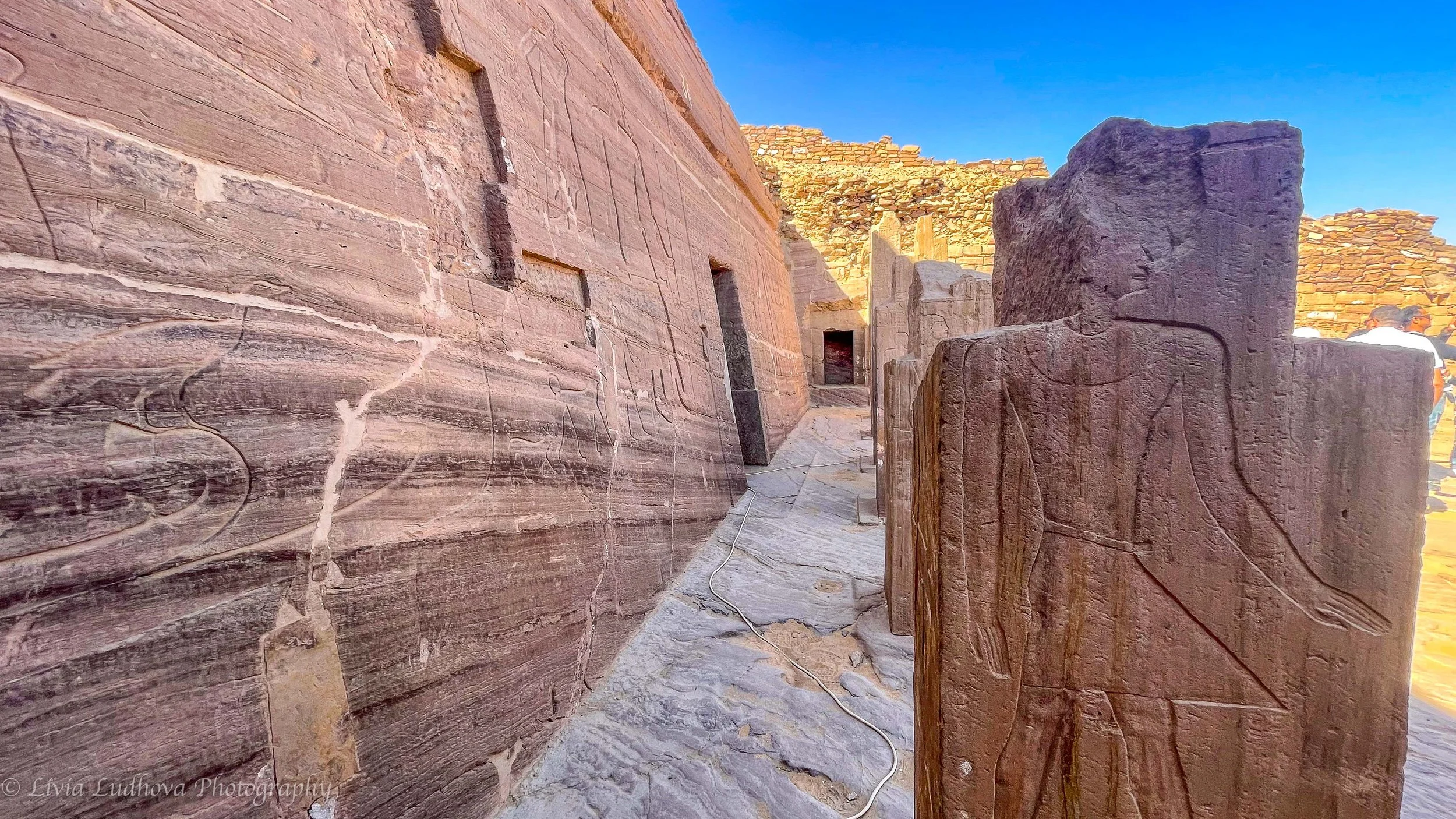
Tomb of Sarenput I
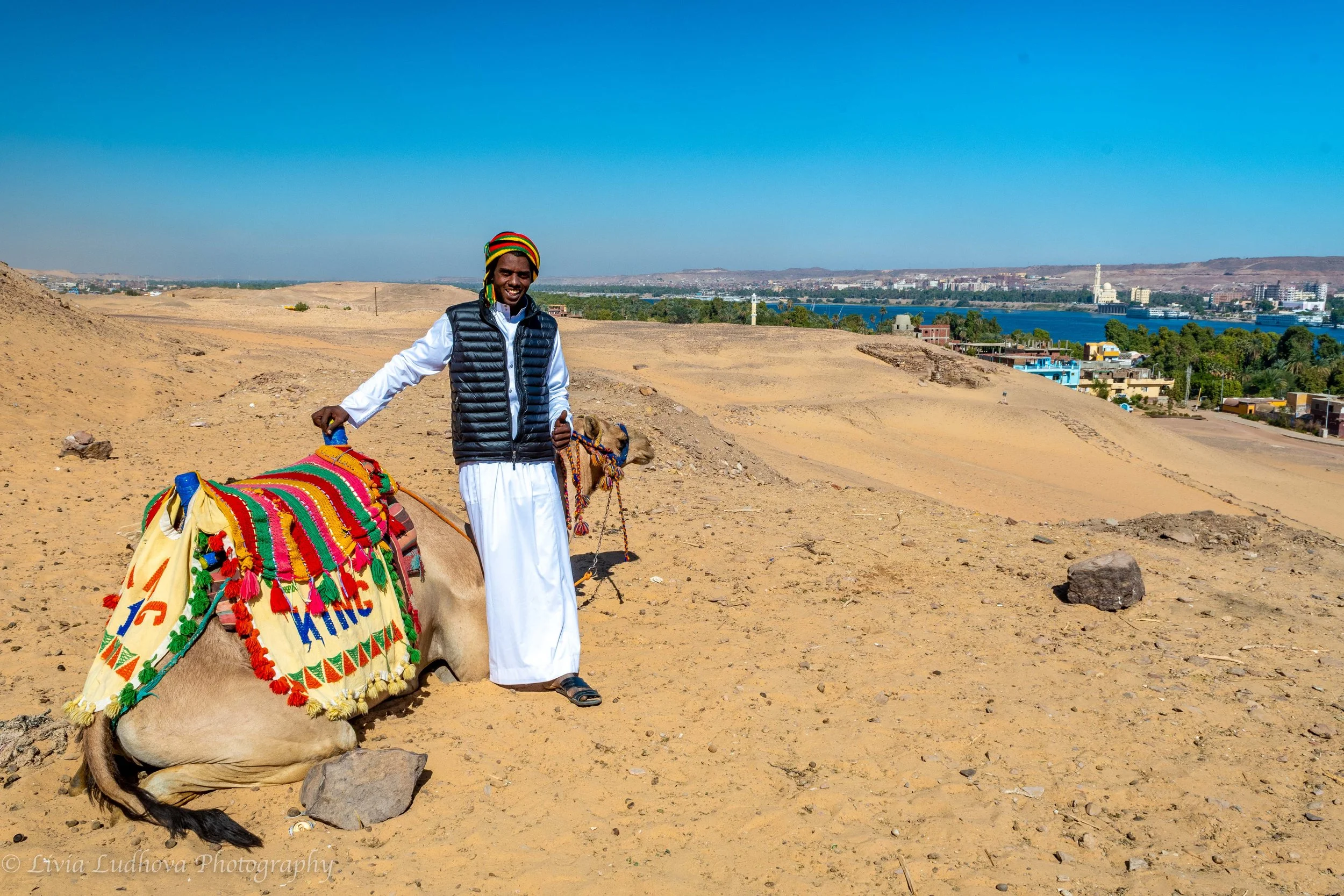
Camel waiting for me to reach St. Simeon Monastery.
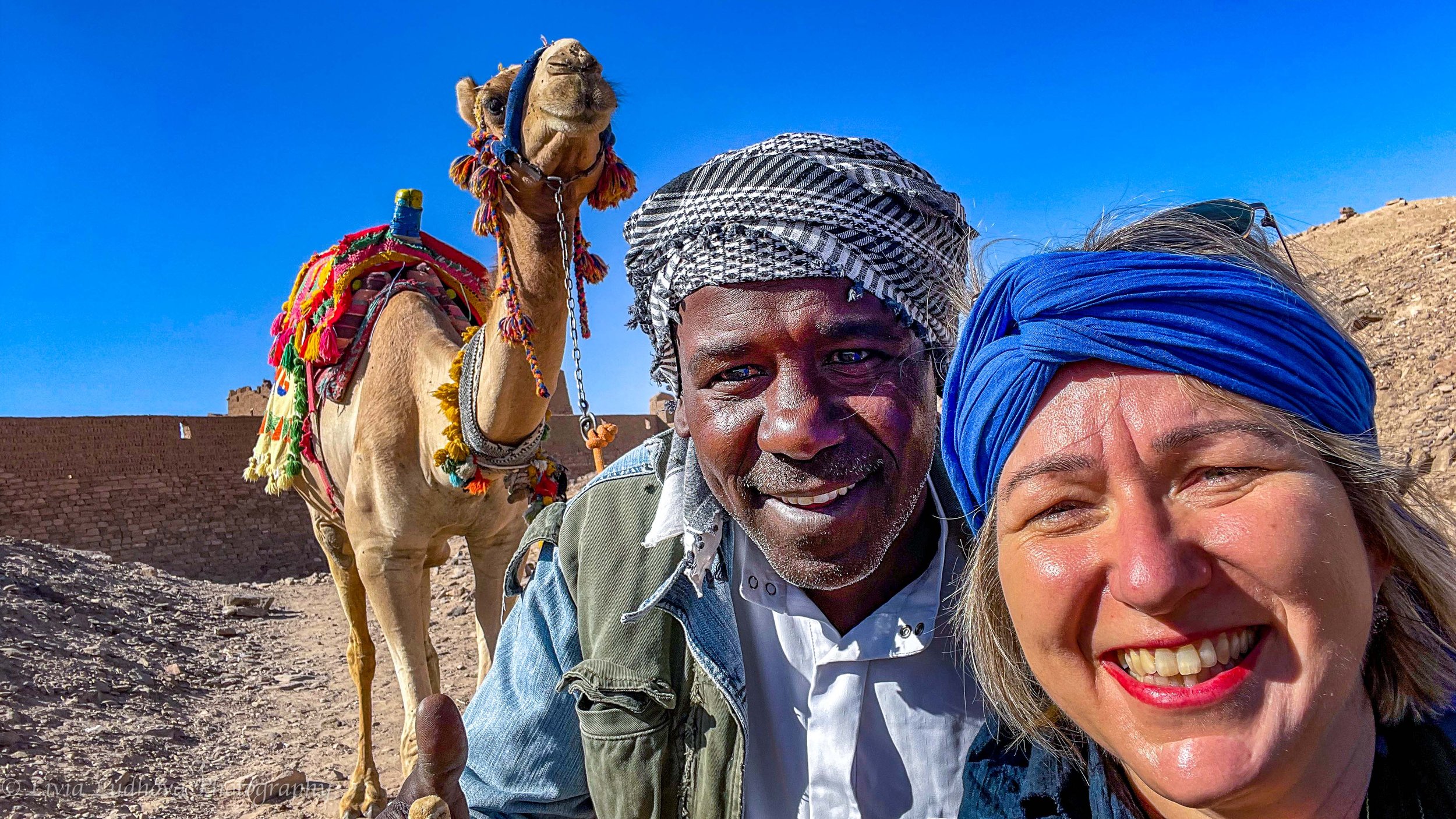
With the camel man and "my" camel.
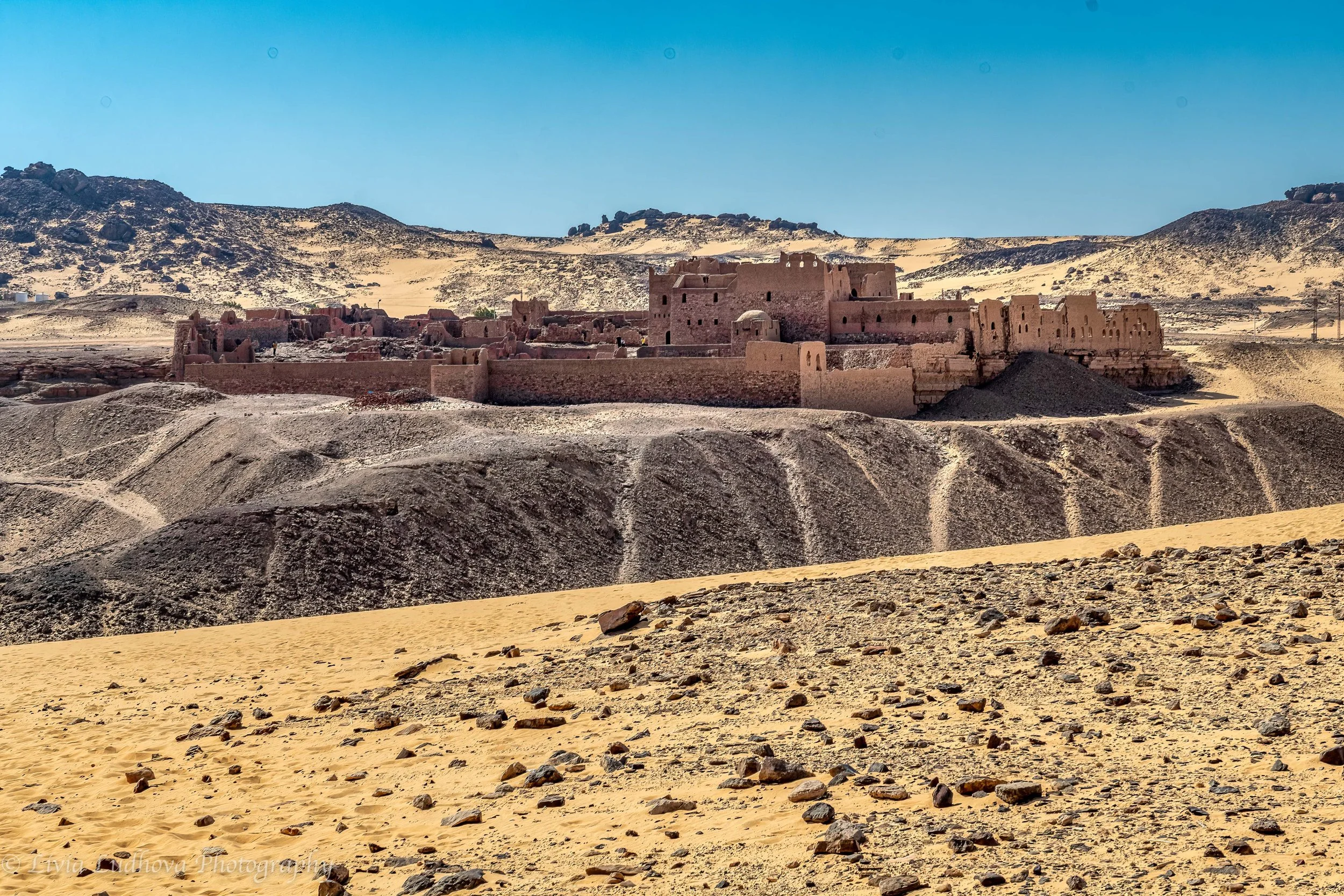
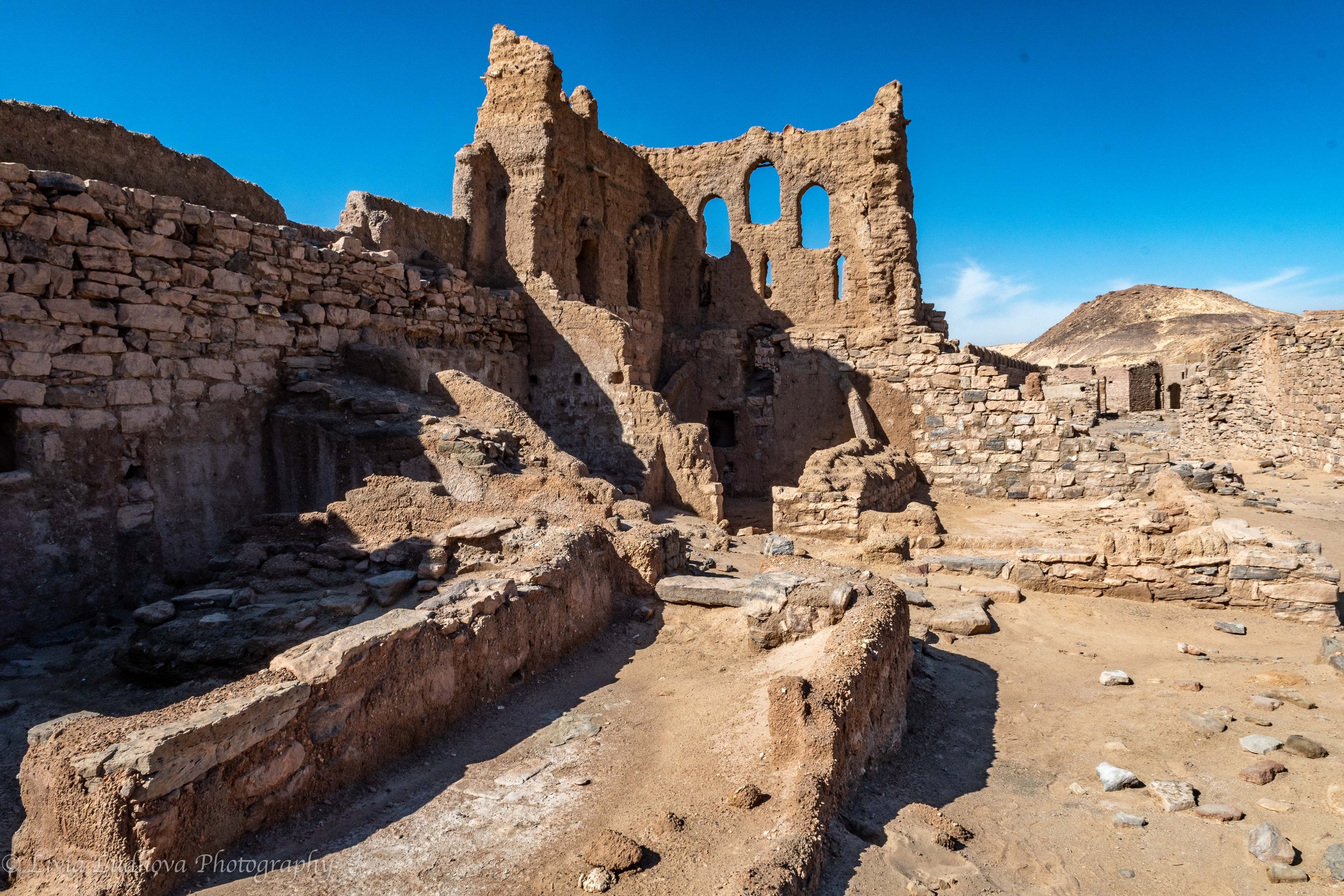
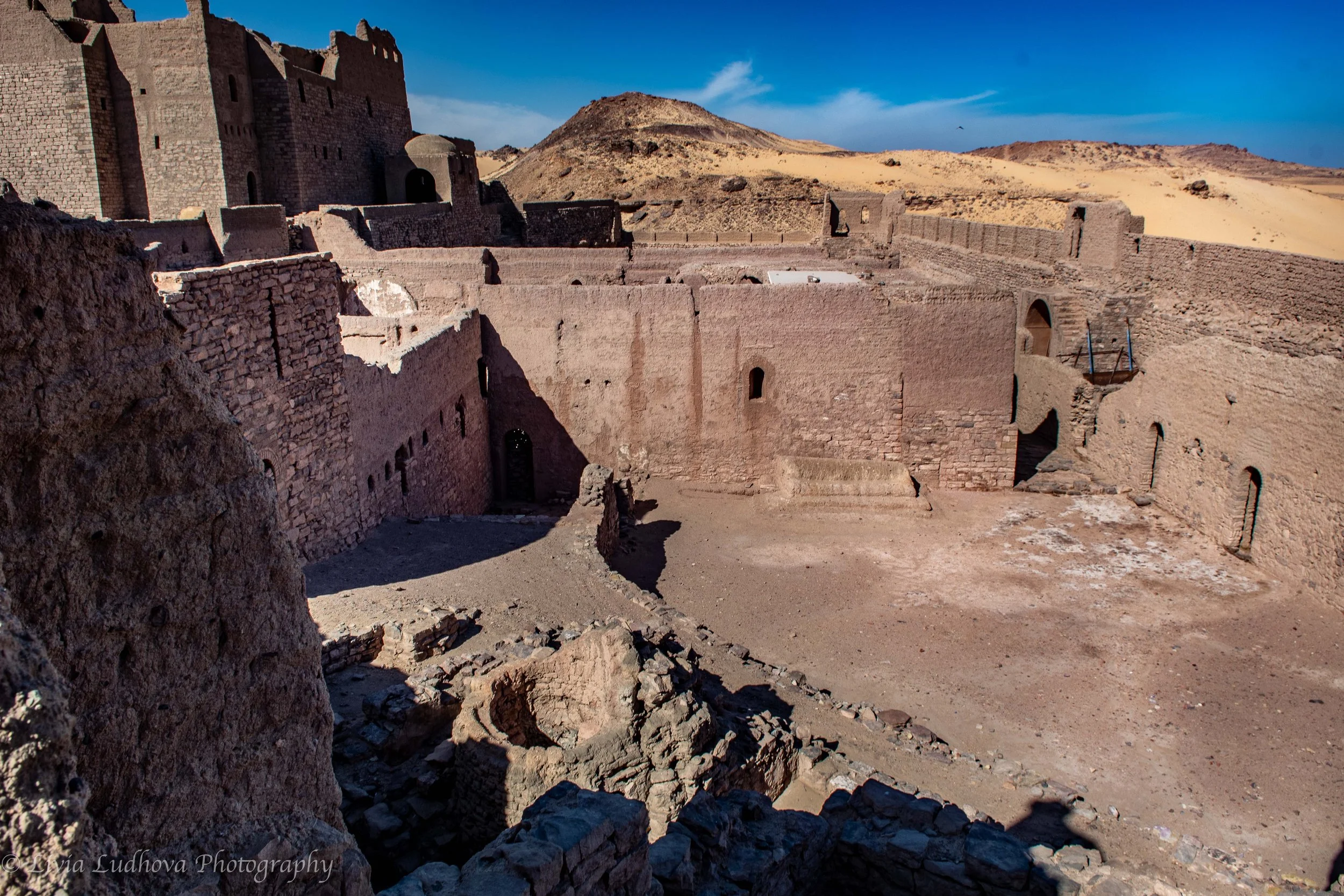
The Monastery of St. Simeon (Anba Hatre), a fortified 6th–7th-century Coptic monastery on the Aswan West Bank, built of mudbrick and stone on a desert ridge overlooking the Nile. Abandoned around the 13th century, it remains one of the best-preserved early Christian monastic complexes in Egypt.
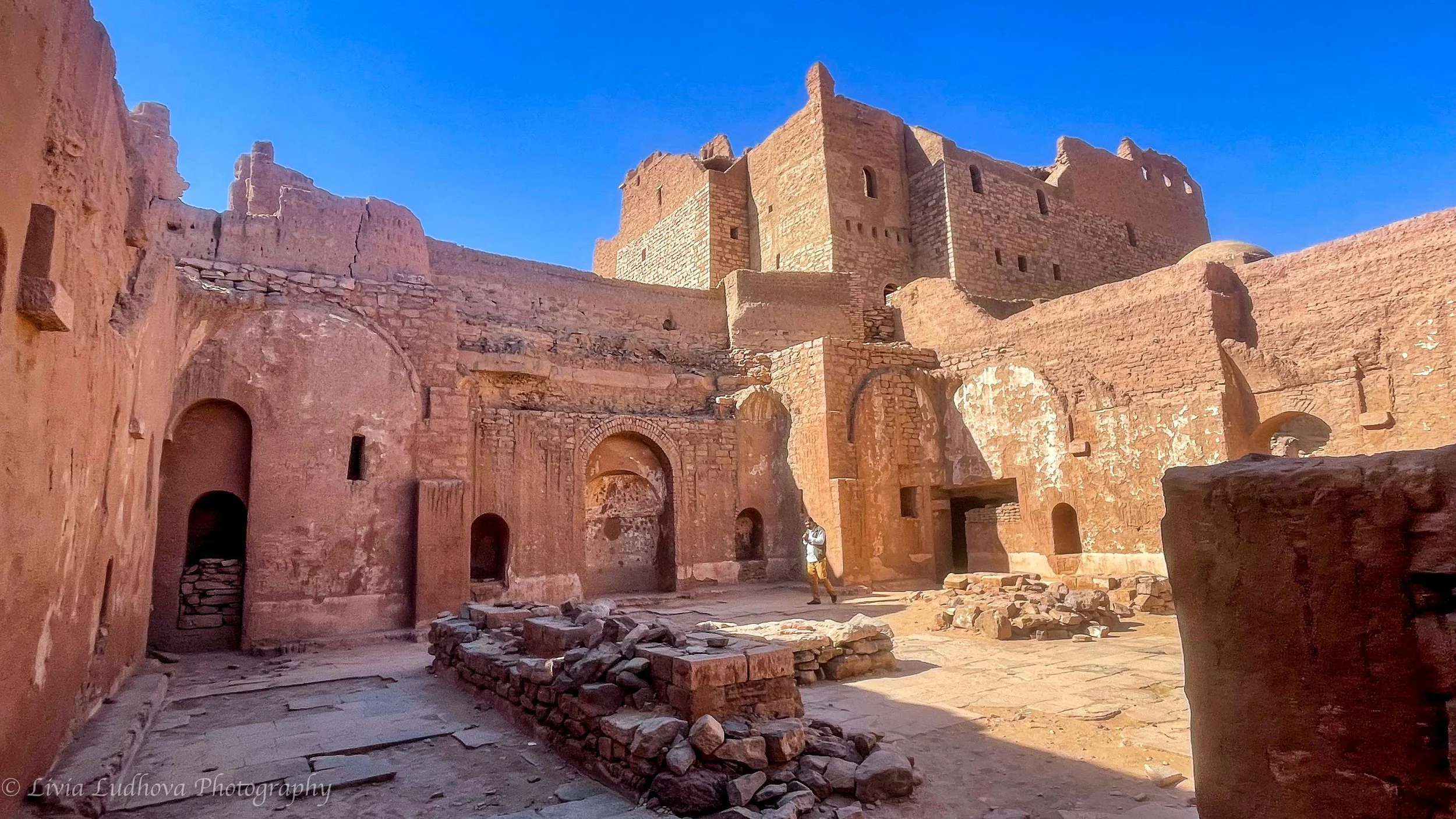
Inside the Monastery of St. Simeon, where arched doorways and thick mudbrick walls once sheltered a remote Coptic community above the Nile.
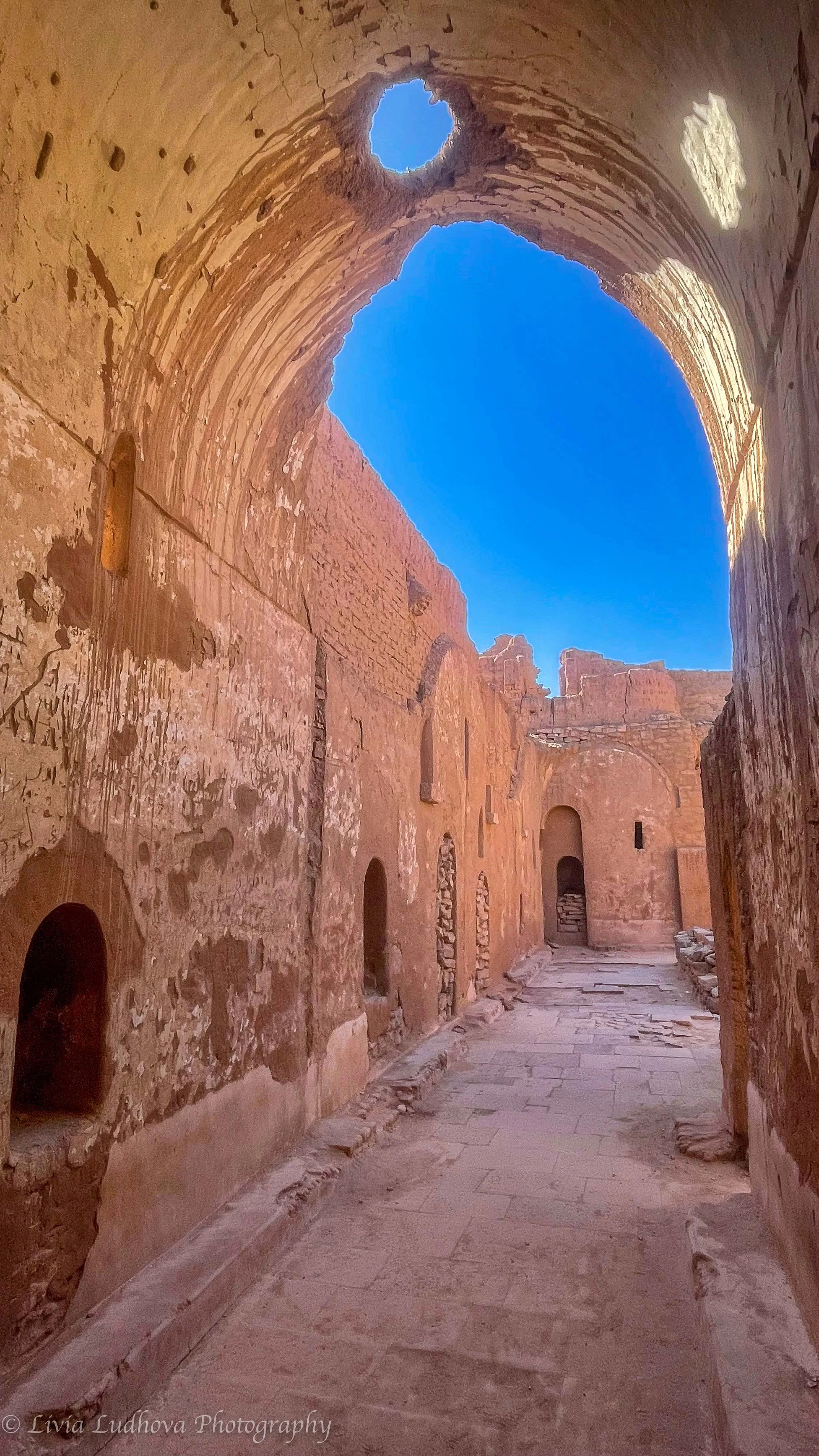
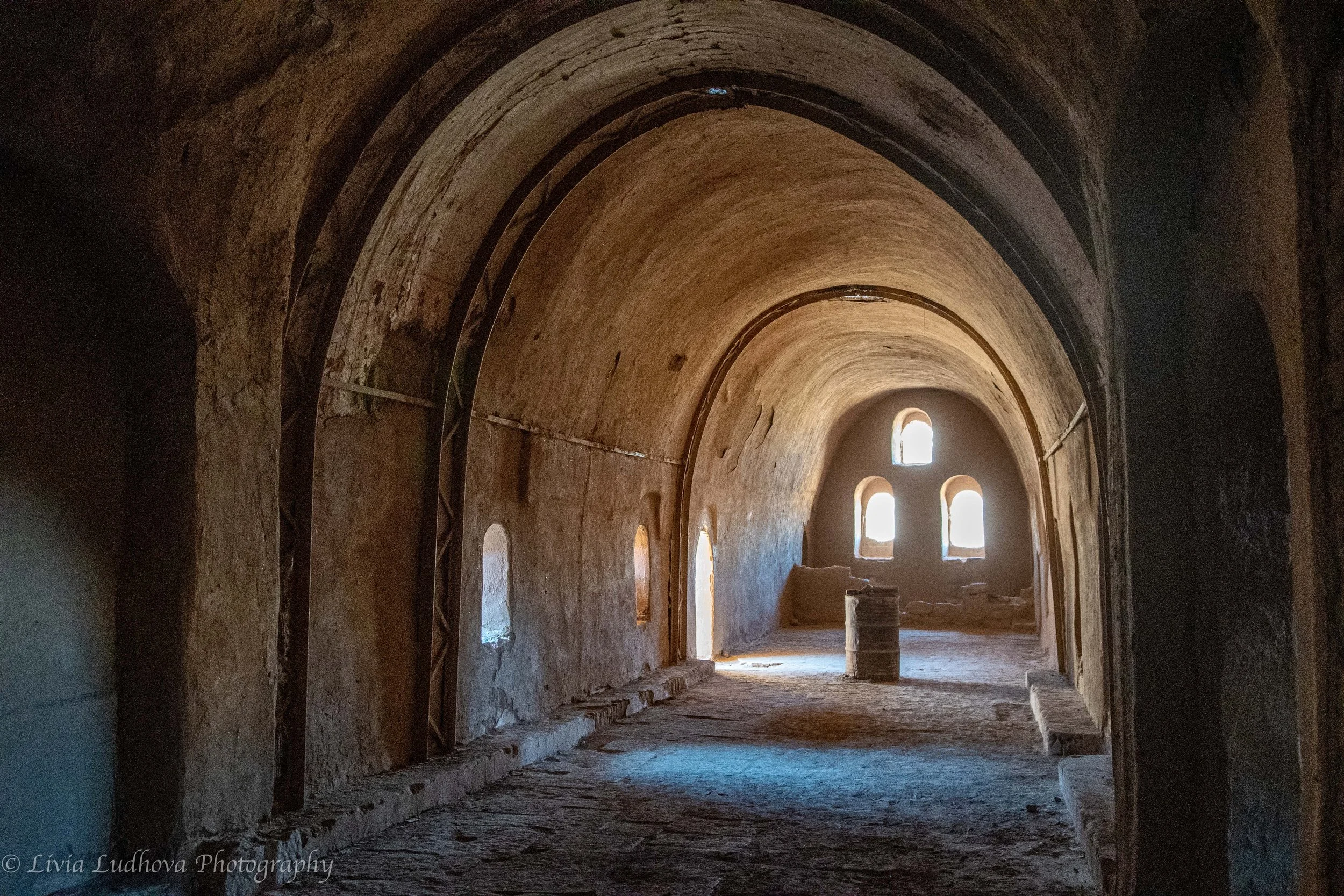
Barrel-vaulted hall inside the Monastery of St. Simeon, once used for communal worship and daily life by a Coptic monastic community.
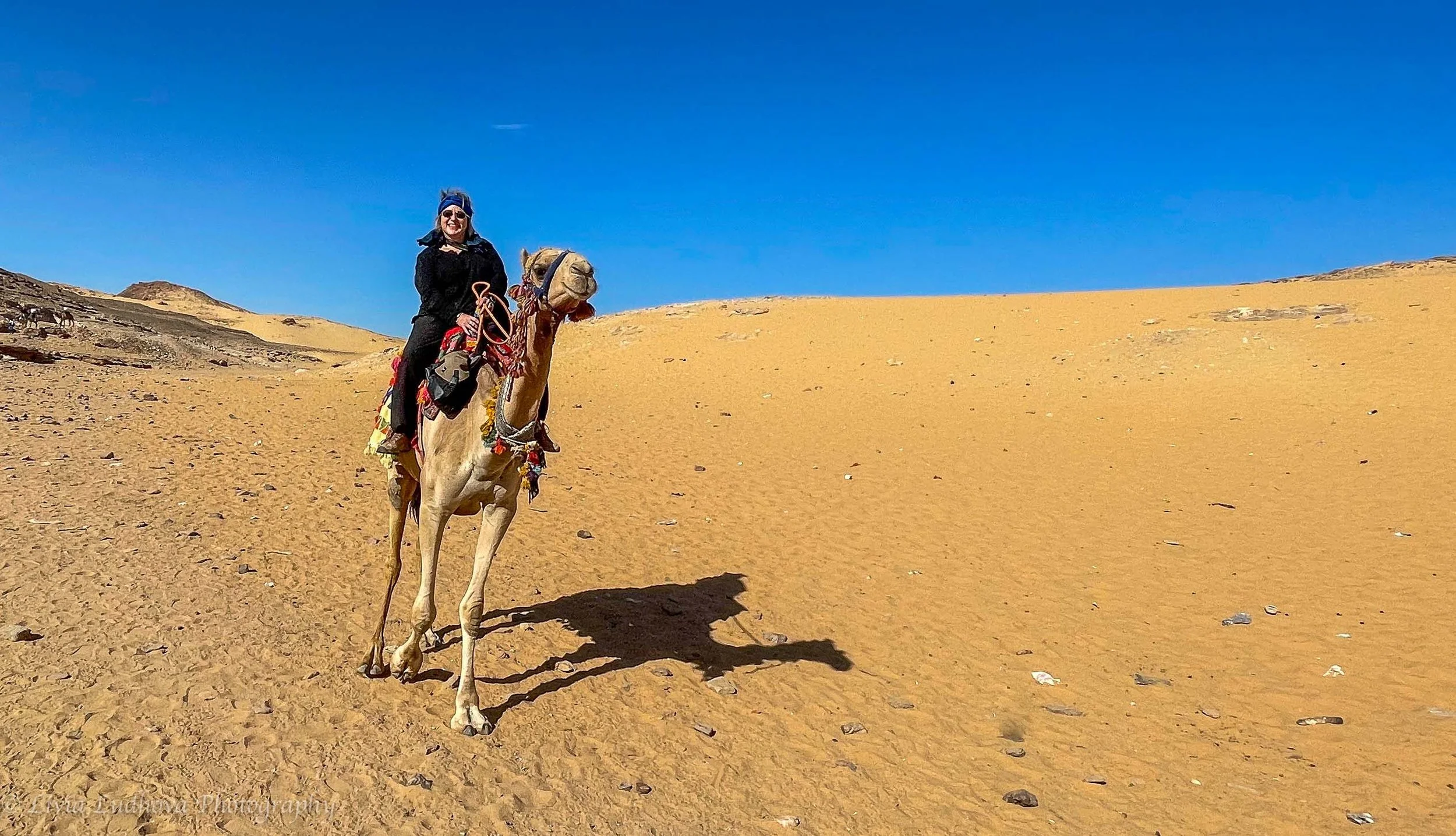
And then I descend towards the Nile on the camel.
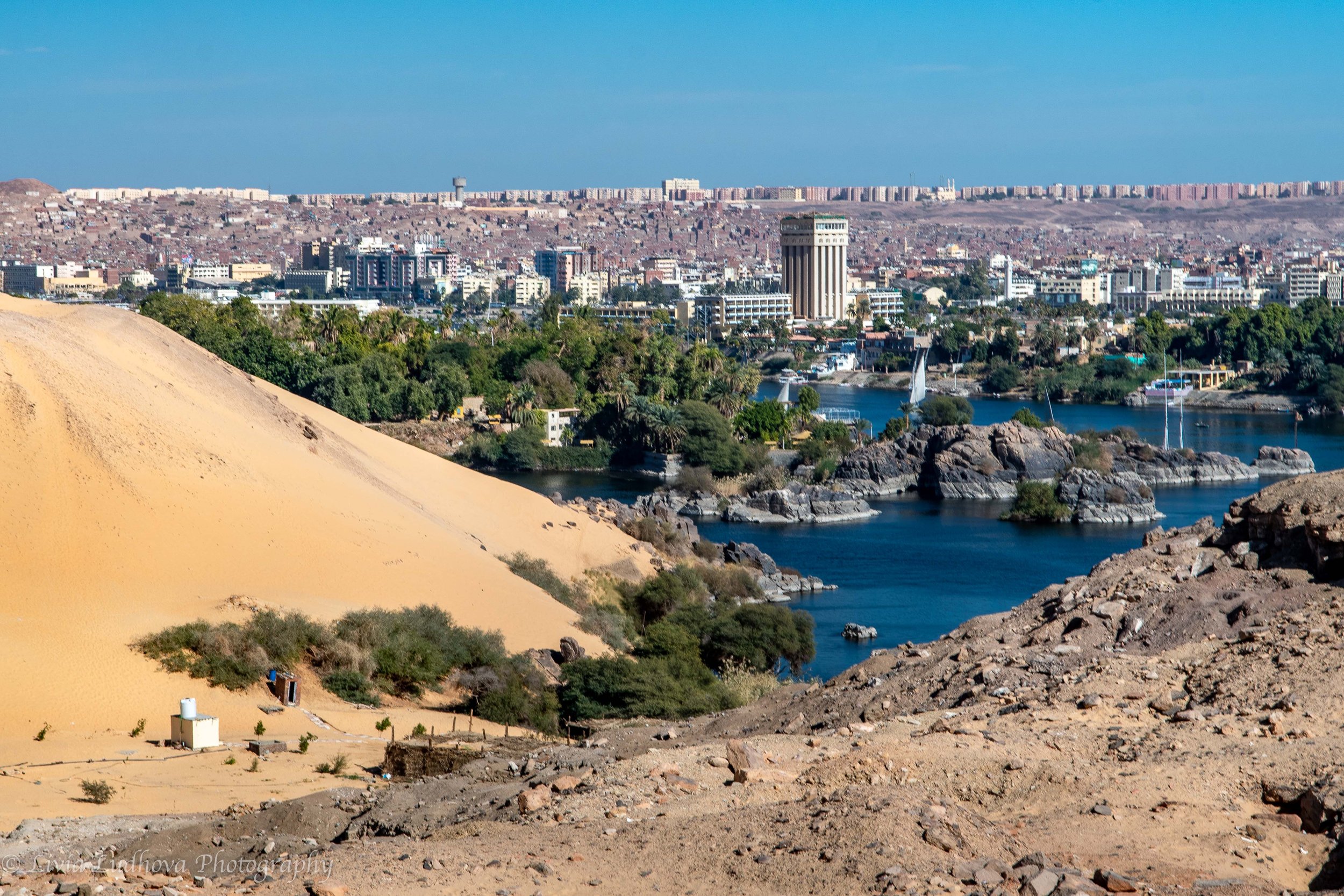
The views are fantastic.
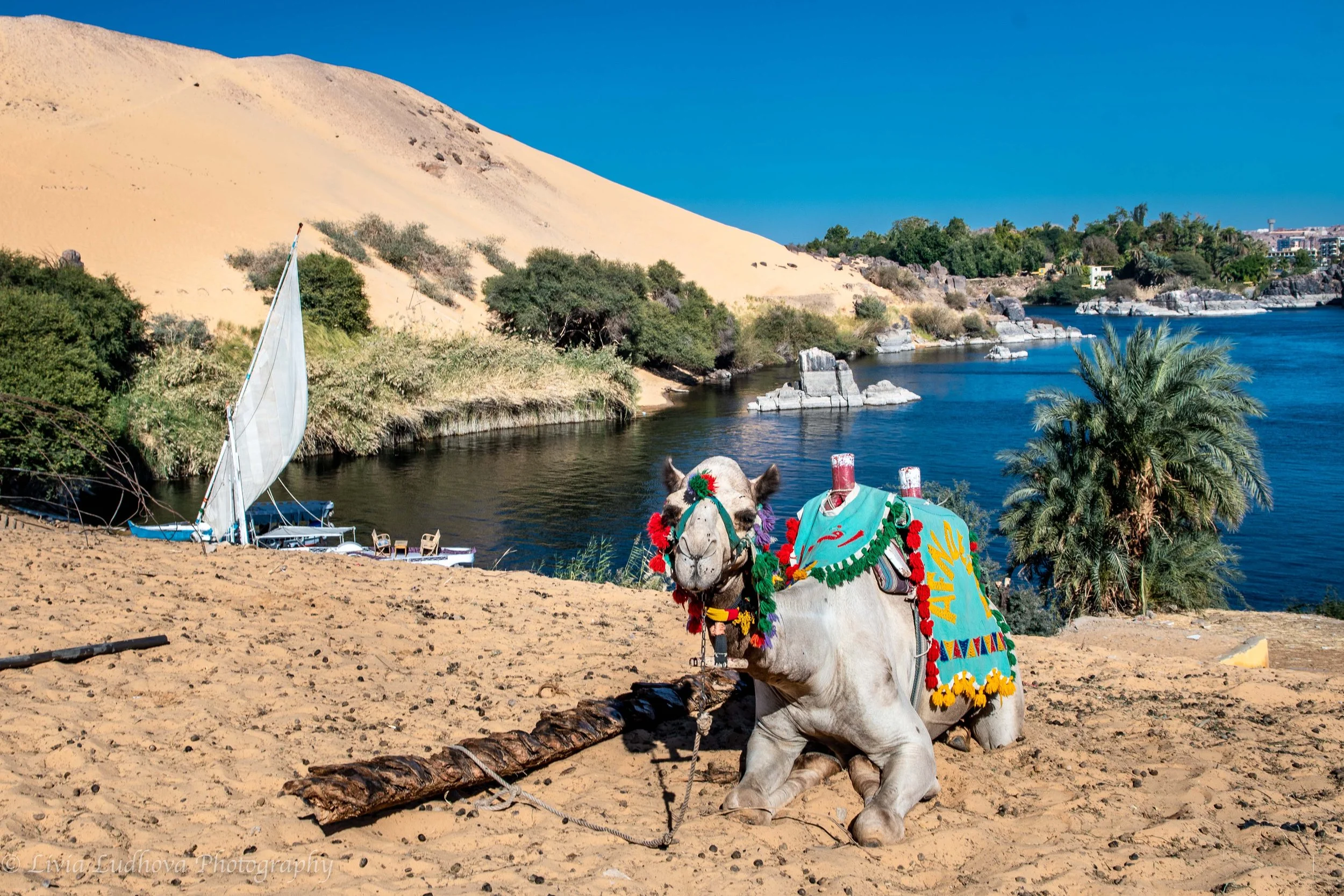
And here at the camel parking lot I exchange came for a small boat that brings me to the amasing Botanical Garden on the island.
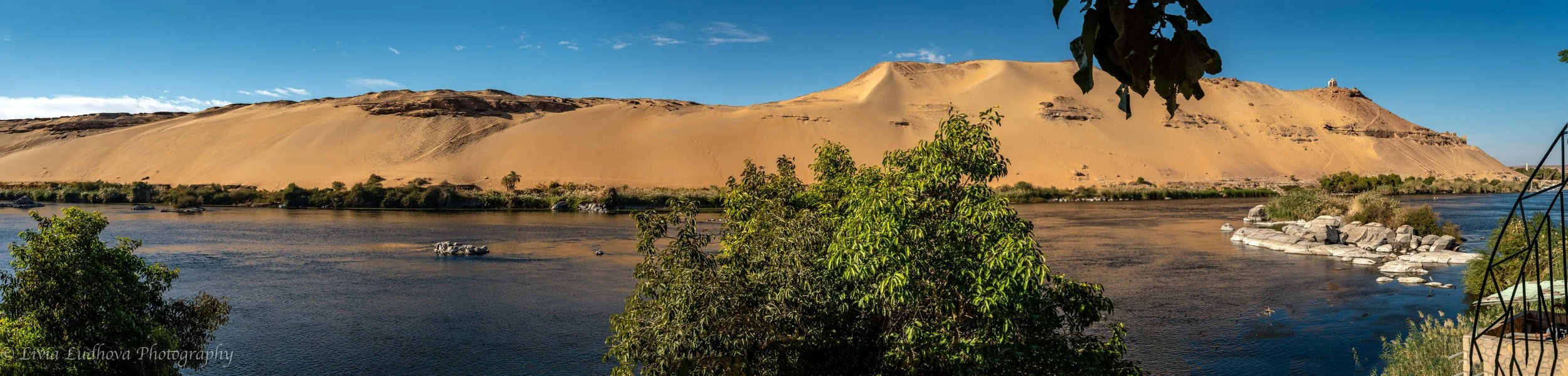
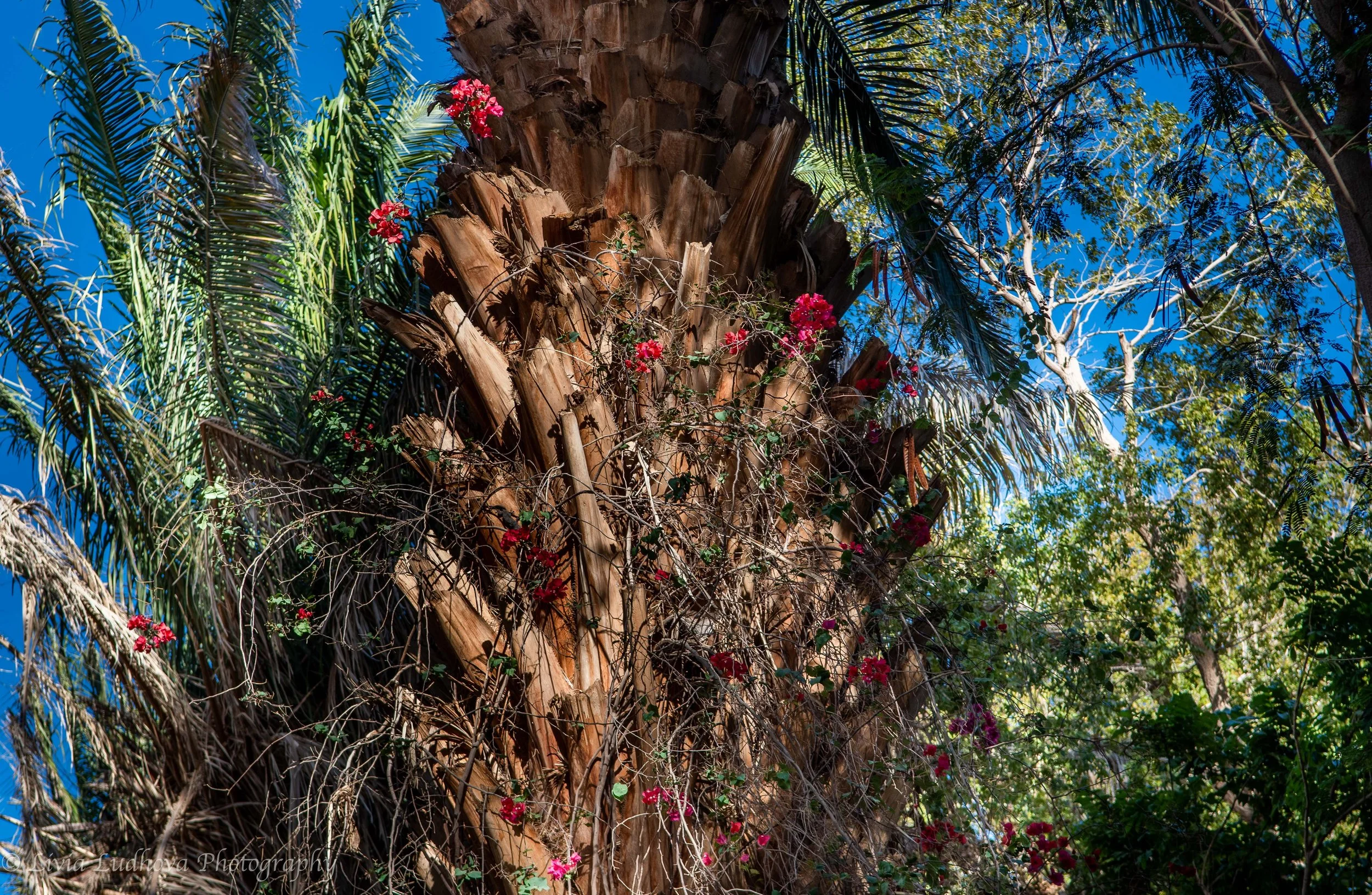
What to add..... view from the botanical garden.
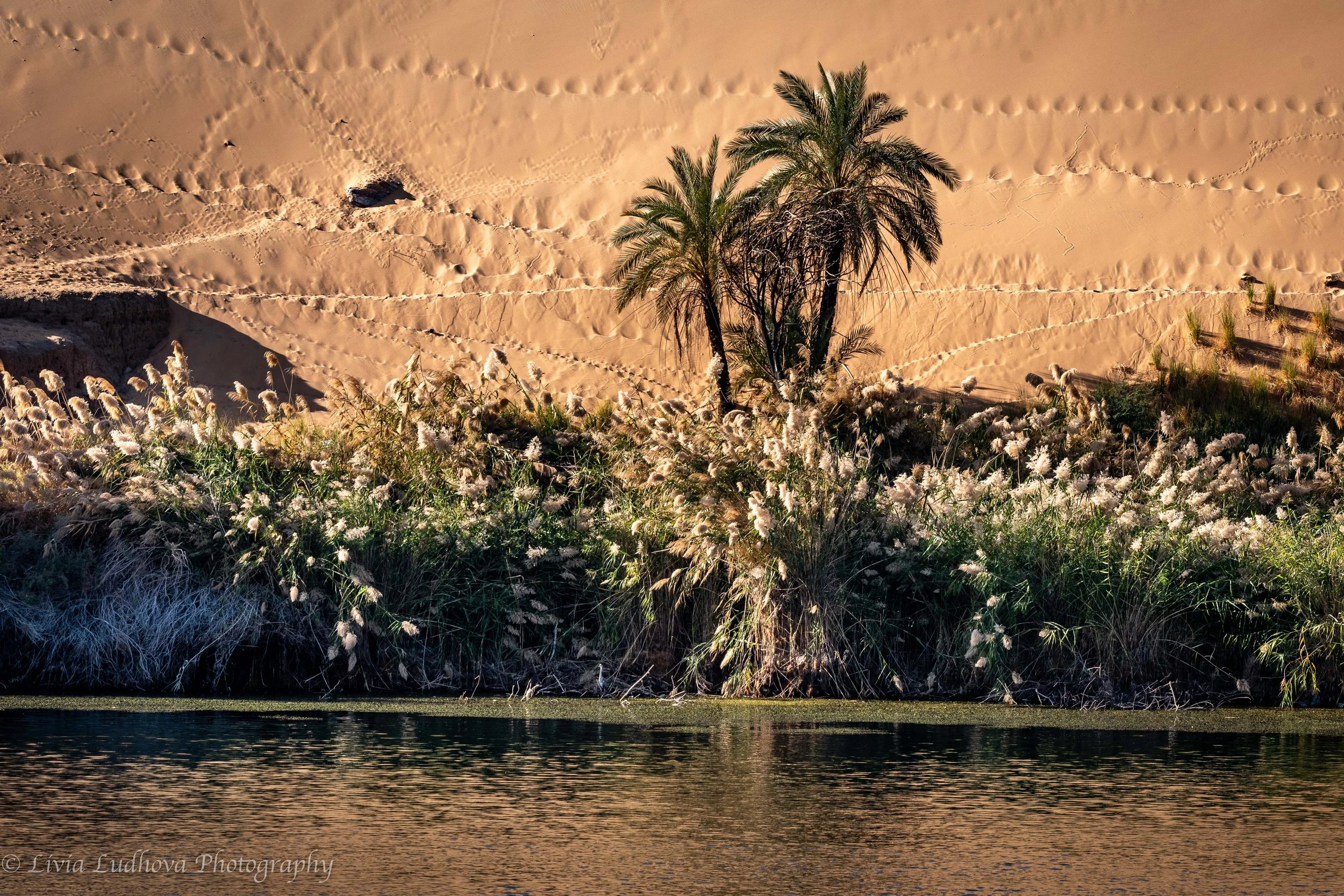
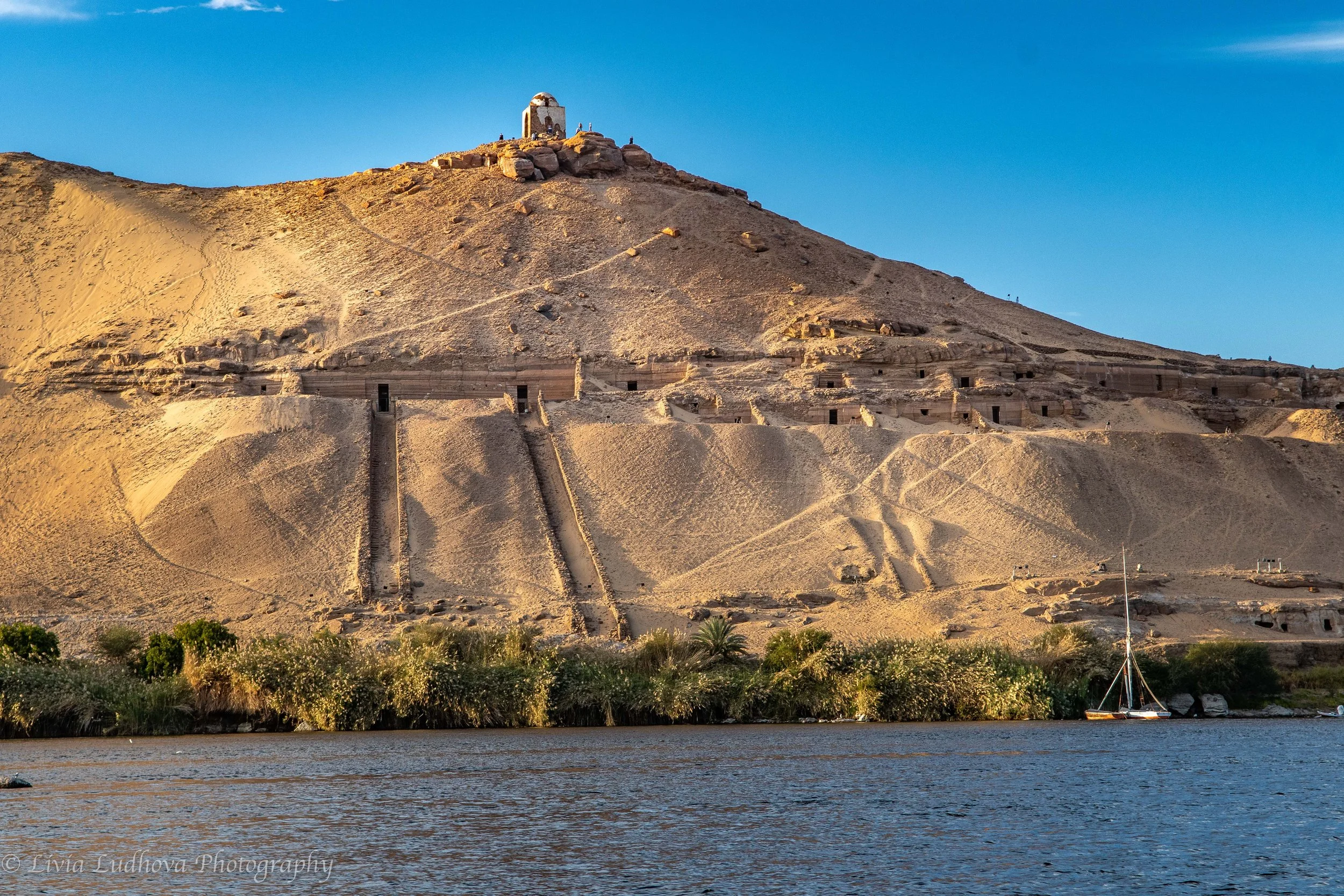
View on the West Bank.
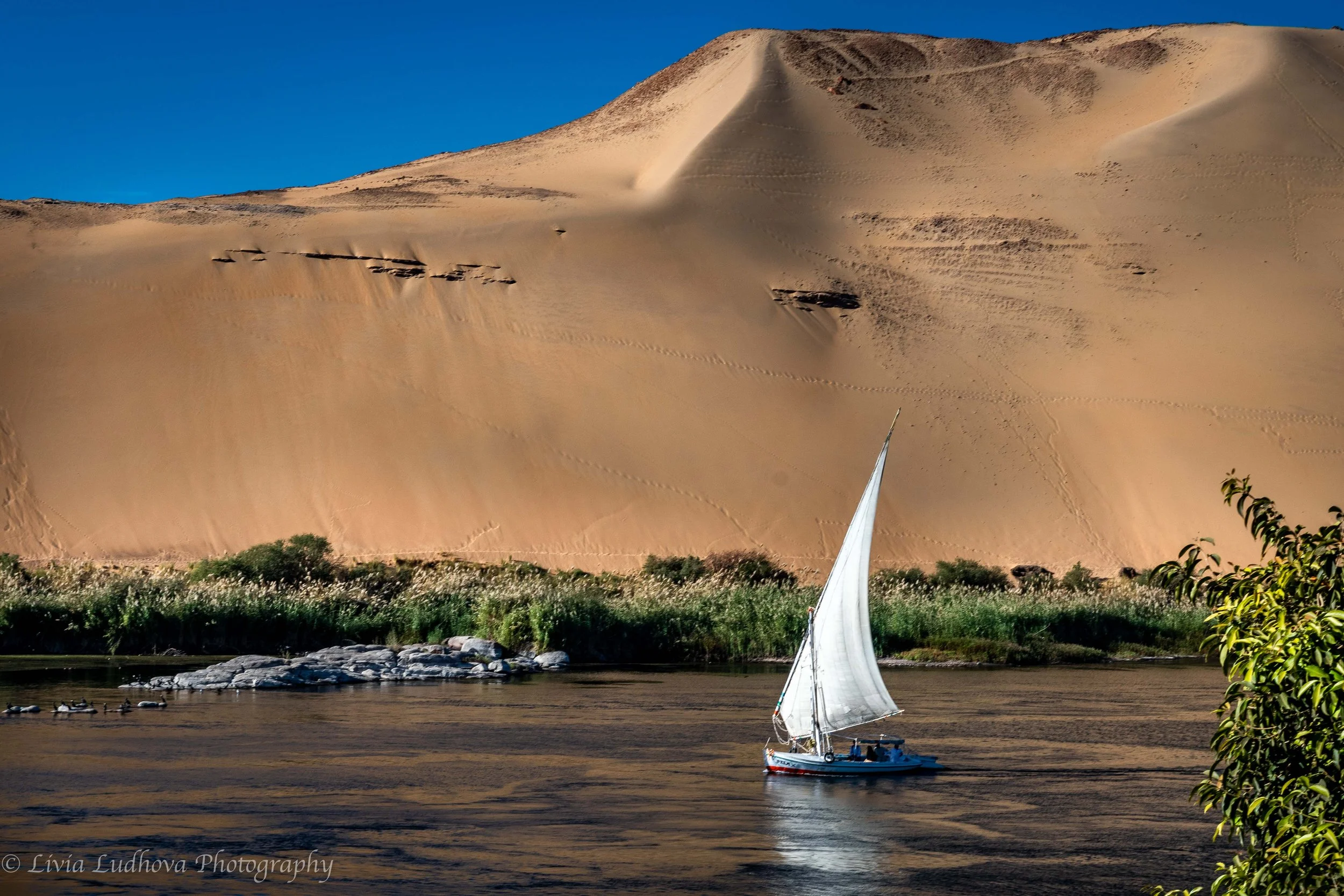
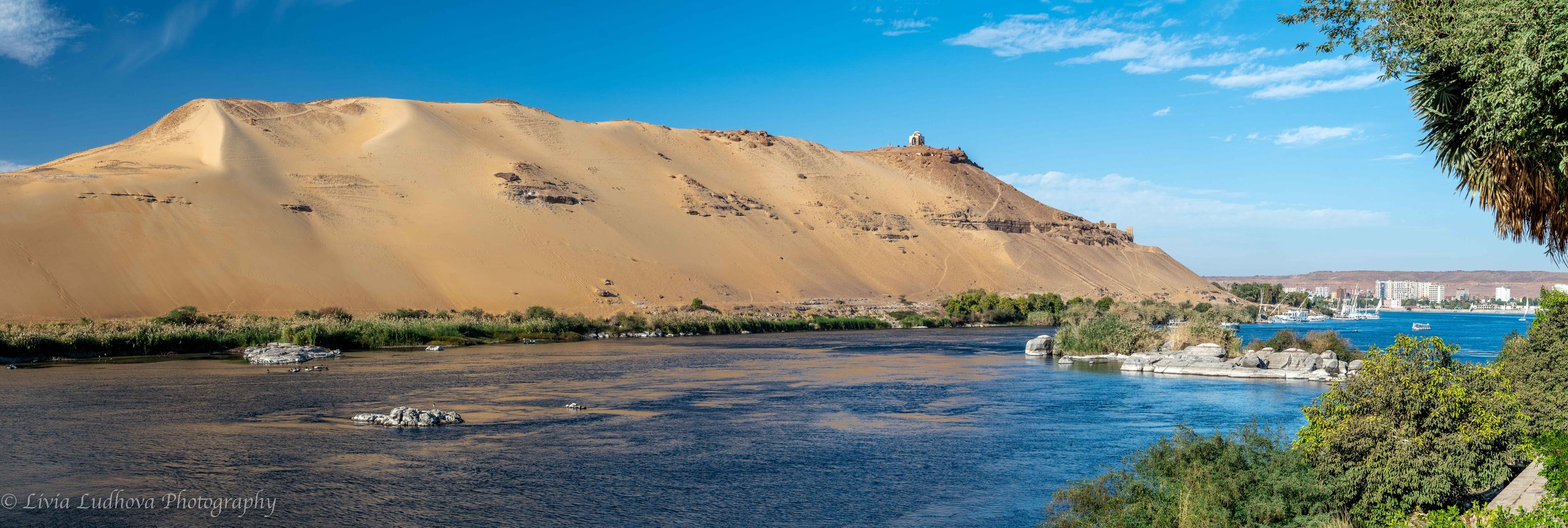
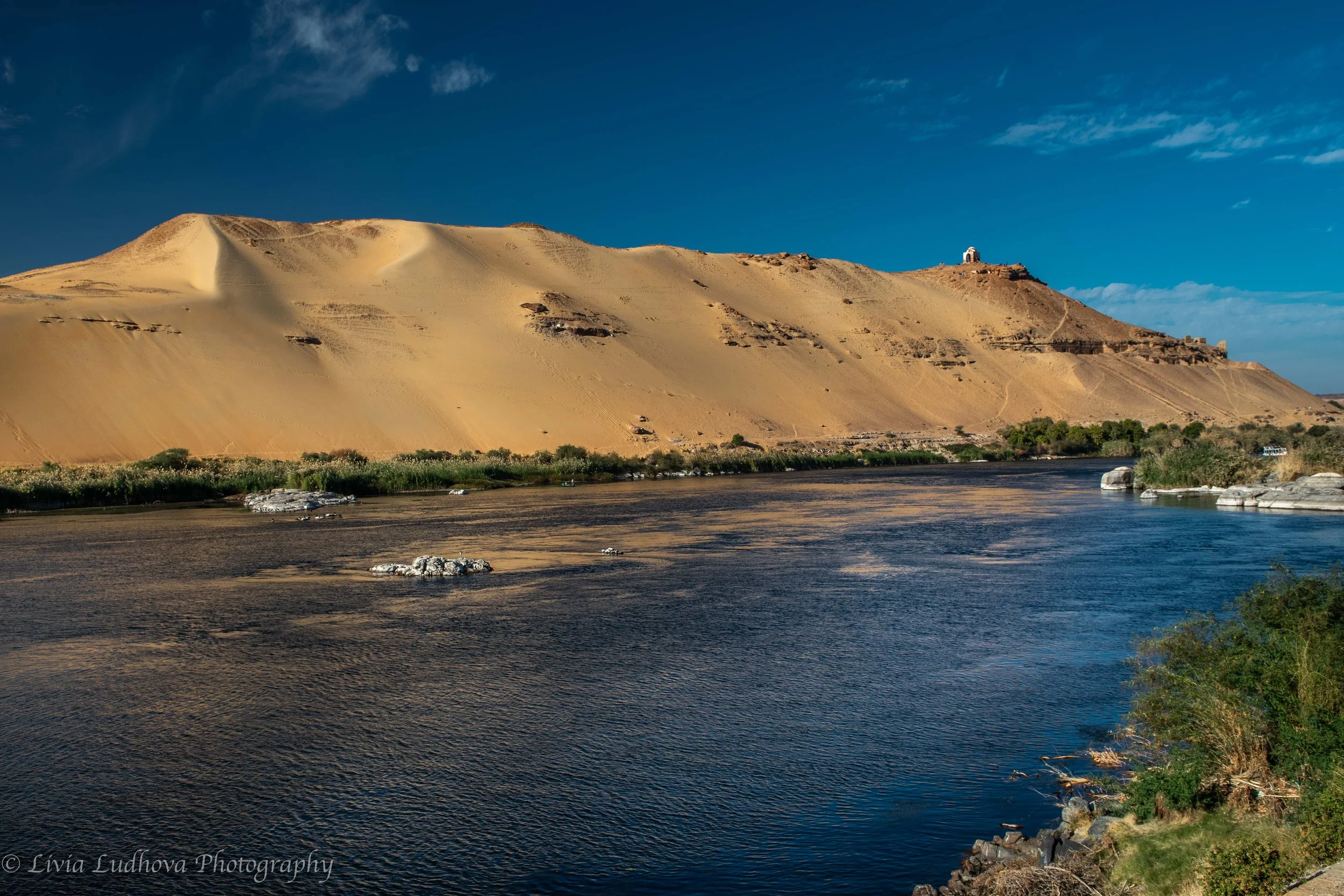
Clean view of the white felluca, golden dune, lush greens and blue Nile.
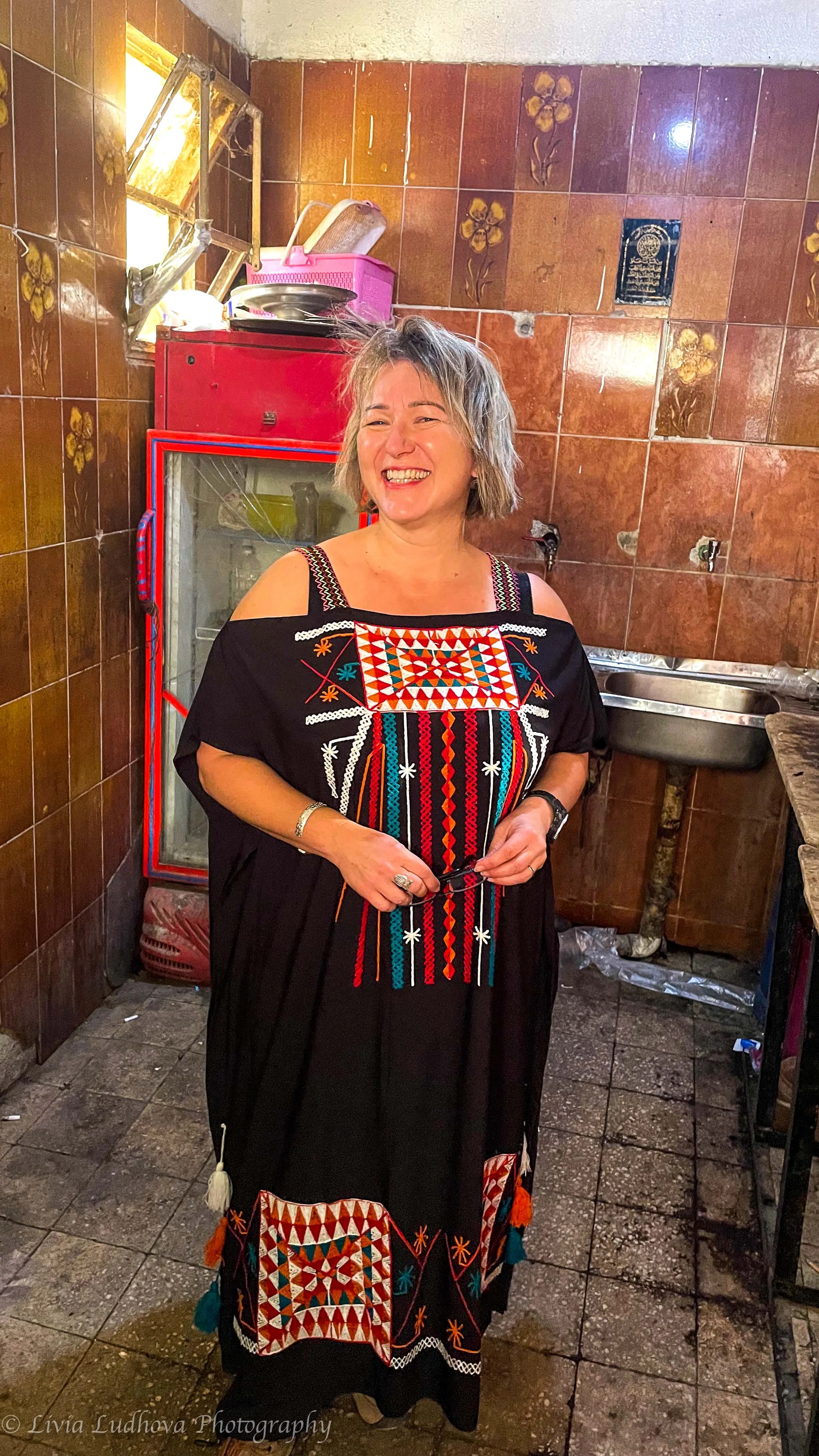
Unfortunately, I did not buy this dress, WHY????
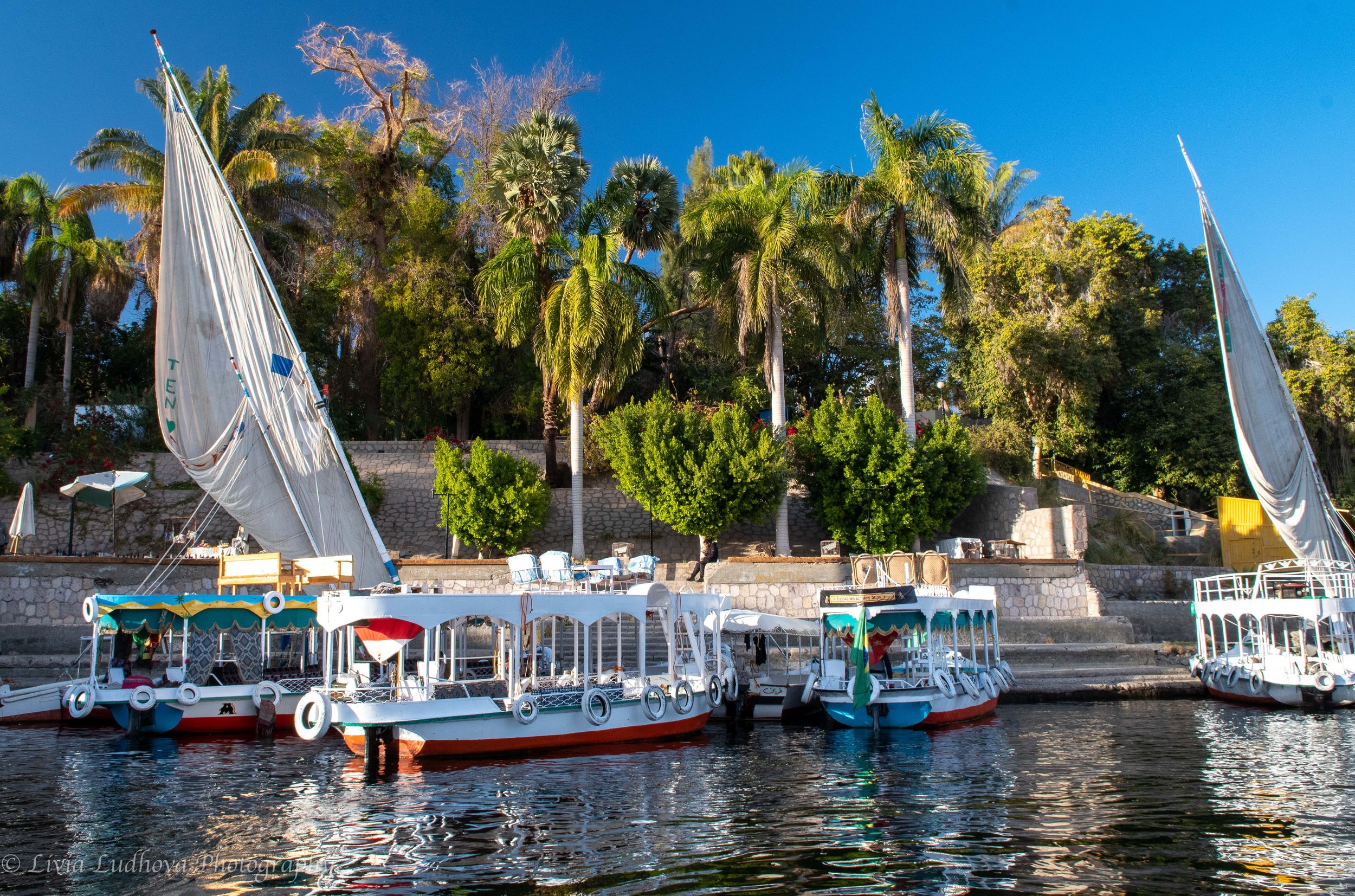
Anchor point
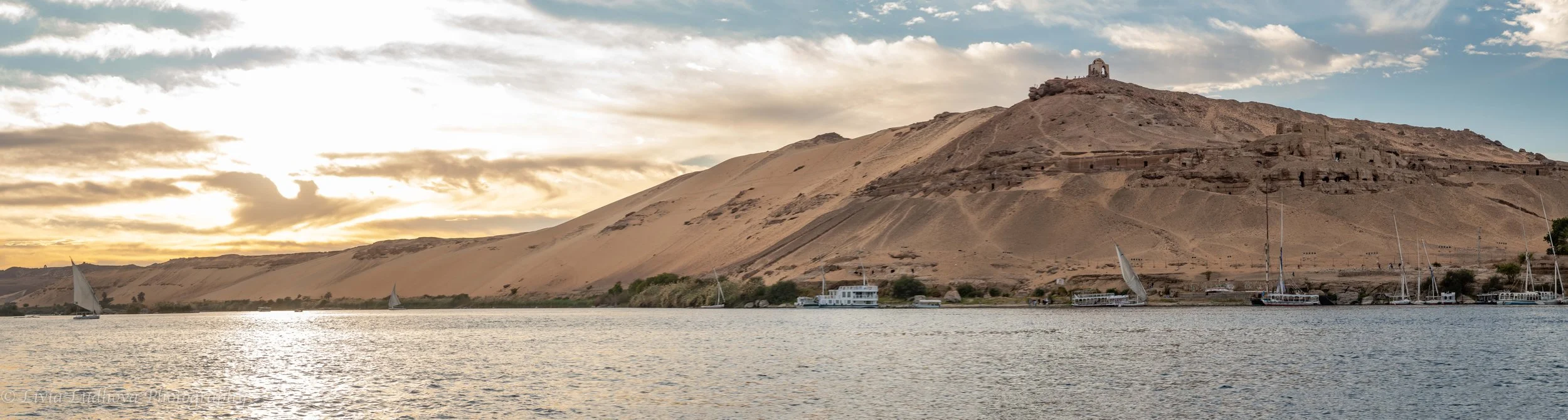
Sunset
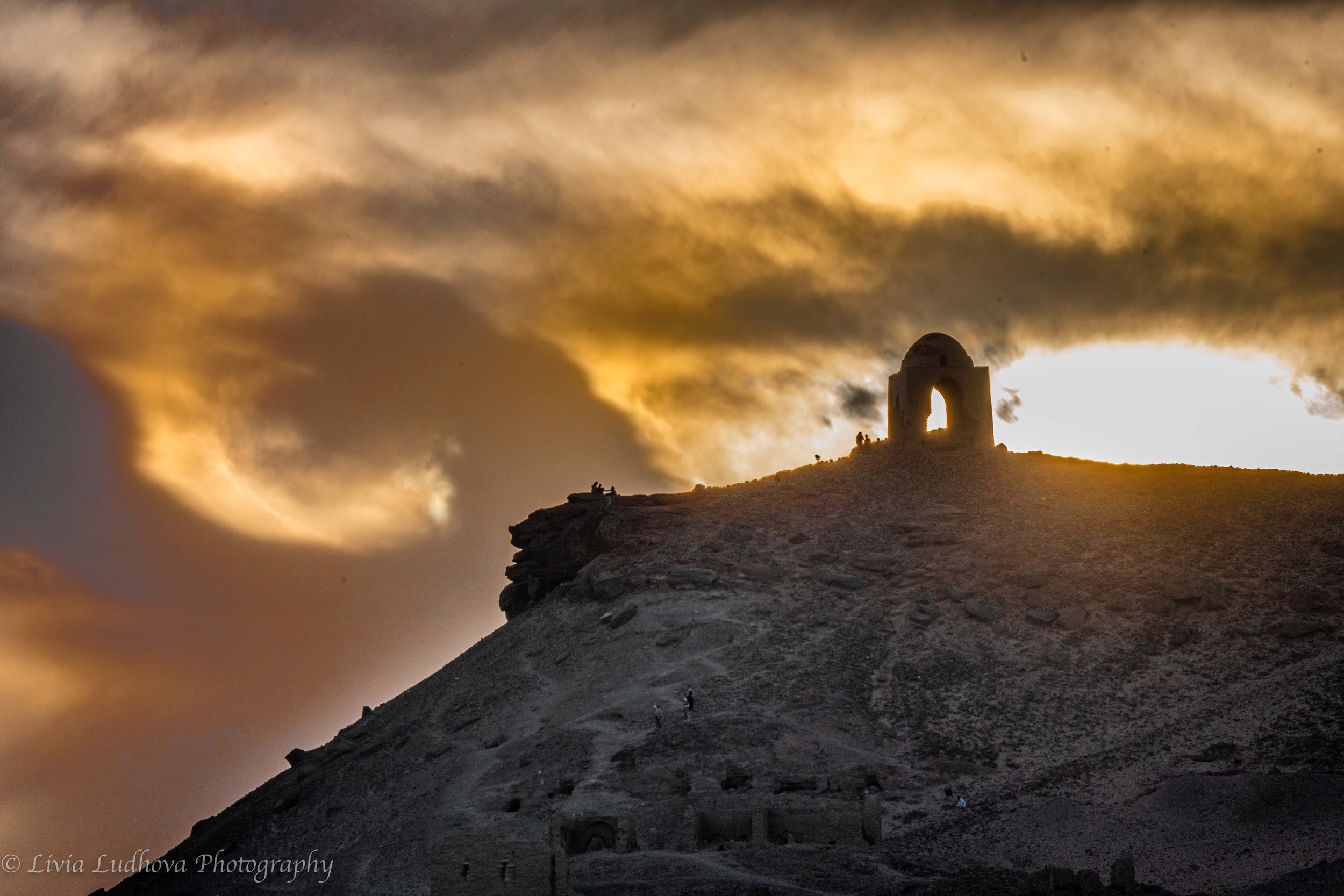
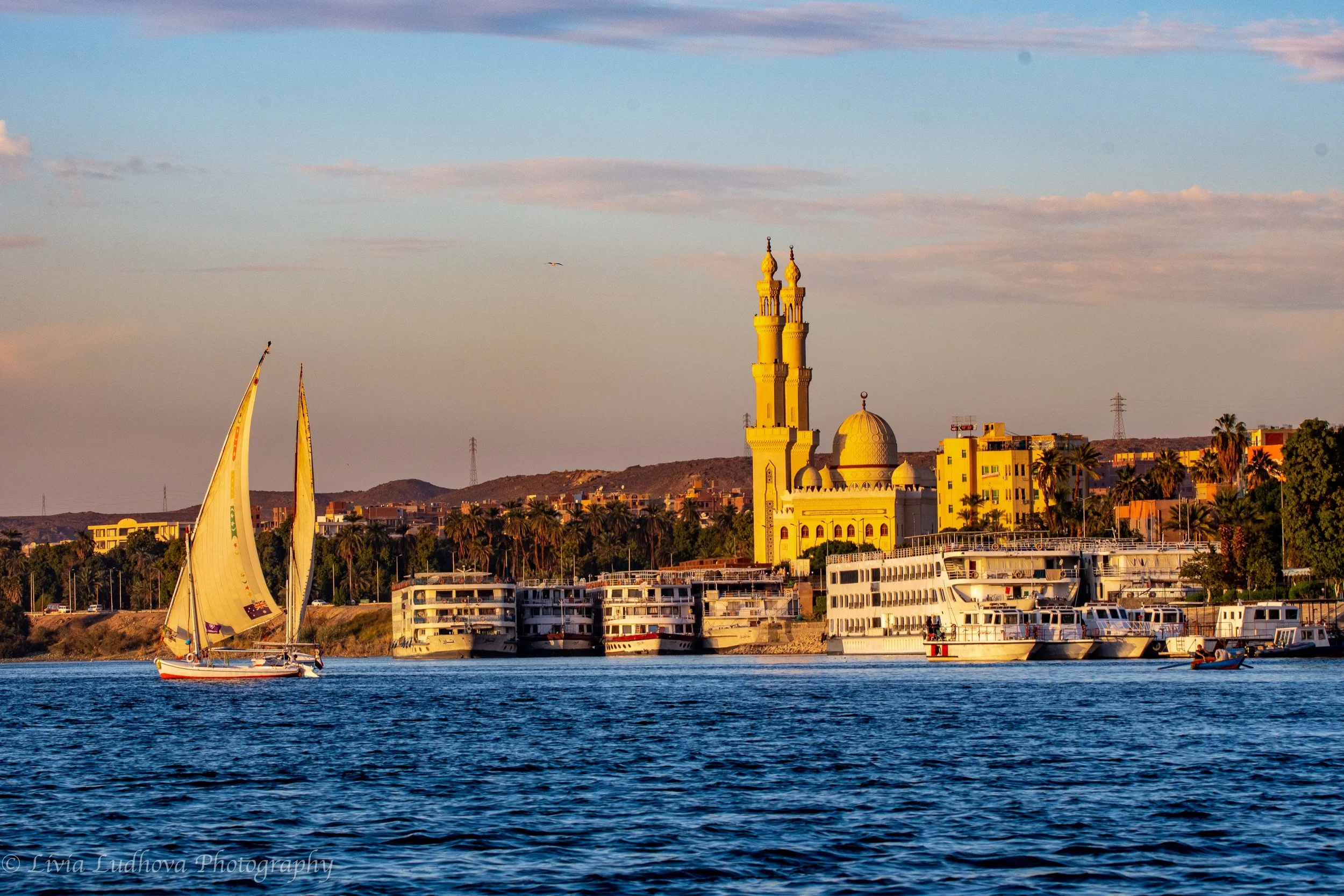
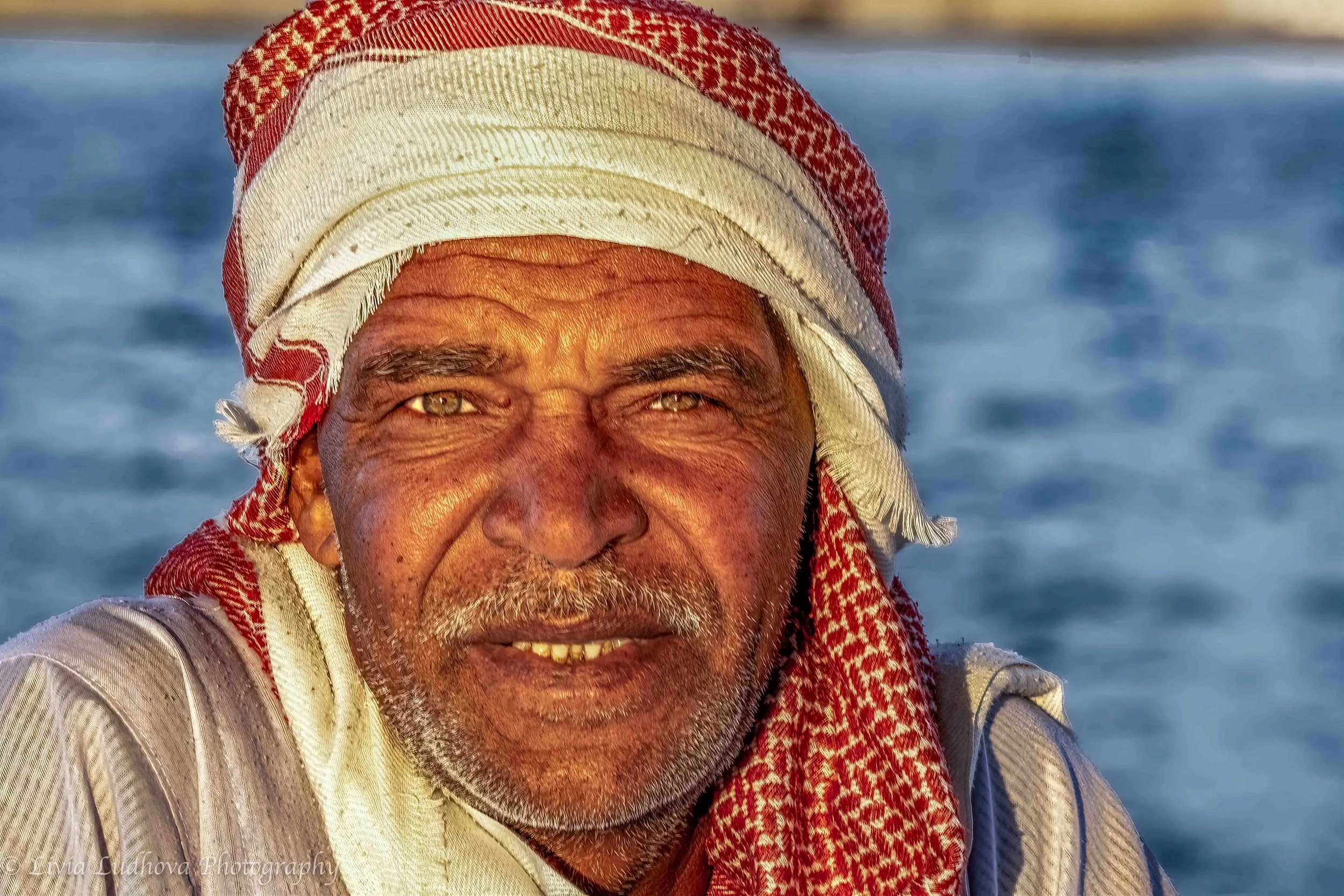
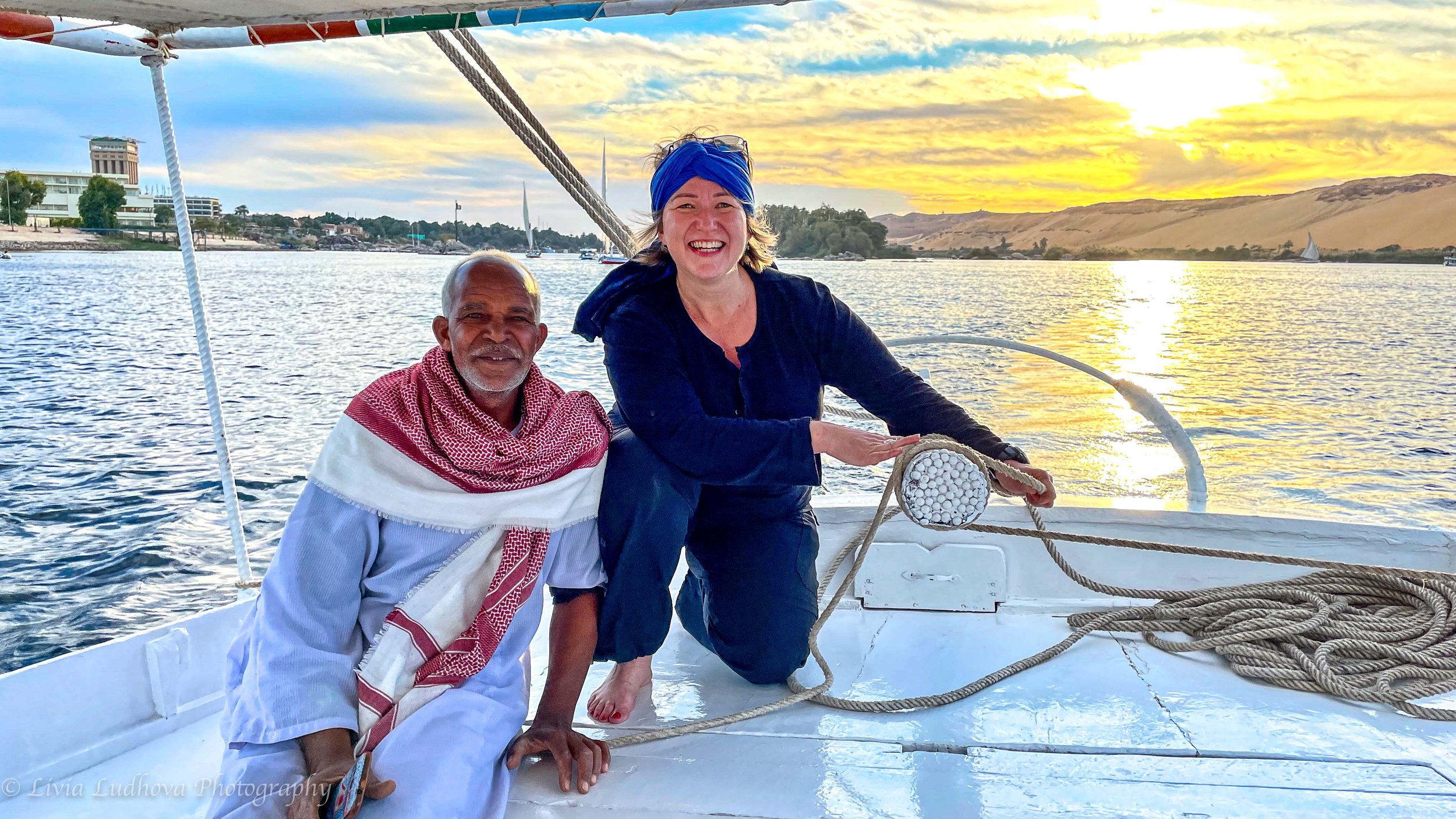
With the felluca captain at the sunset.
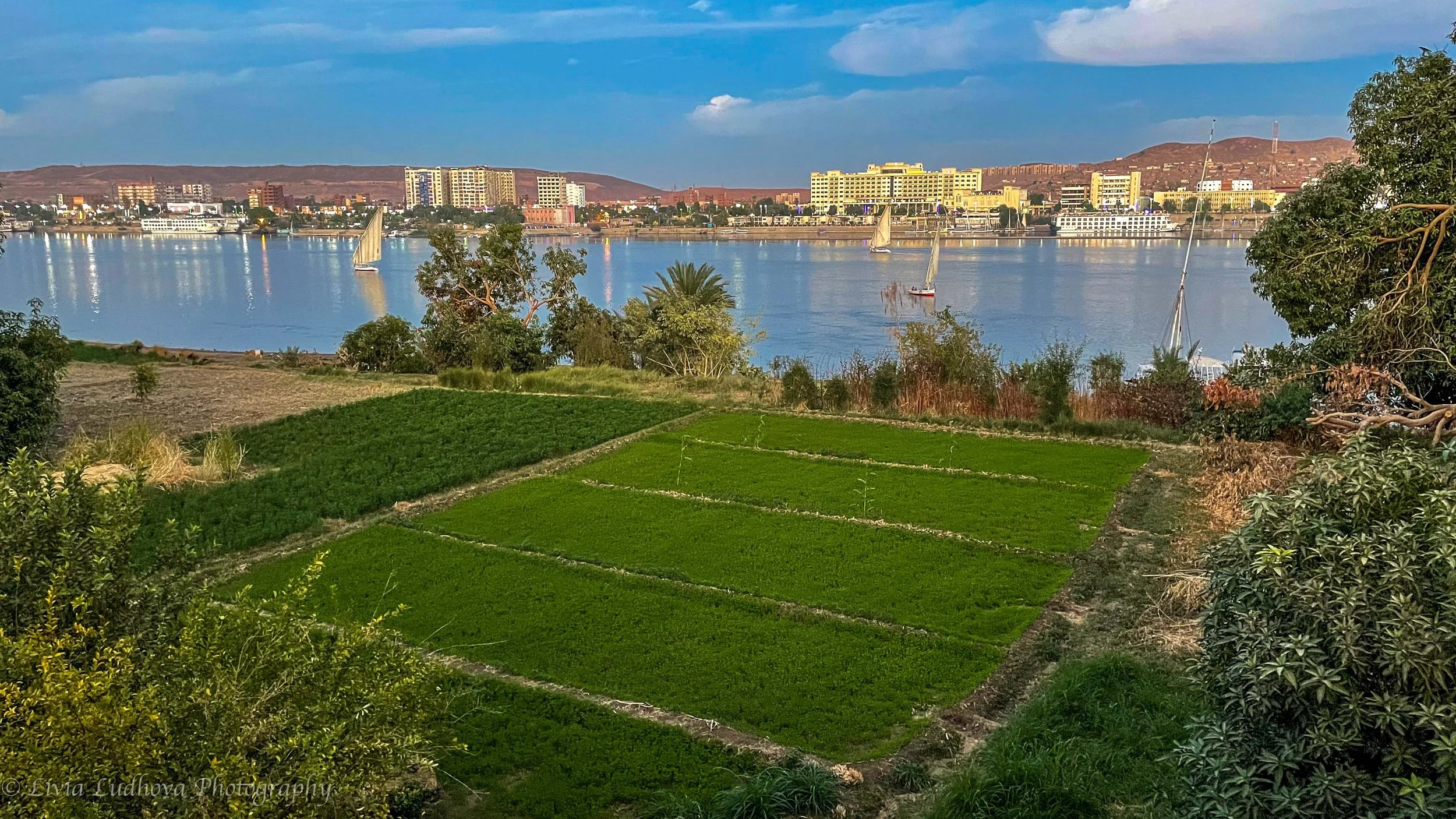
Rich fields seen from the hotel tererace.
Day 2: Nile Cruise: Kom Ombo
Dec 27: Nile cruise with Dahabyia Loulia Day 1 – Kom Ombo temple – sandstone querry of Gebel El Silsila
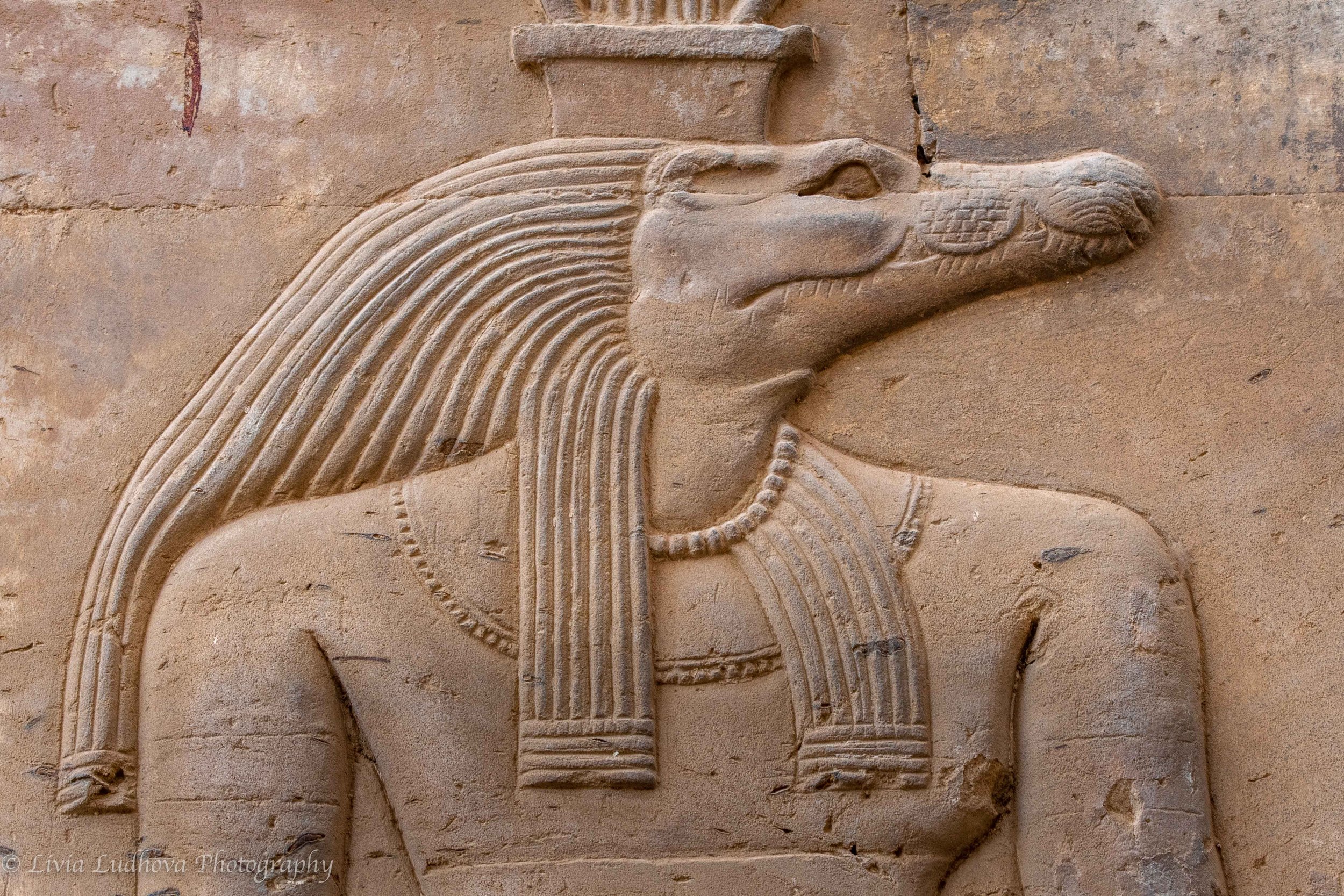
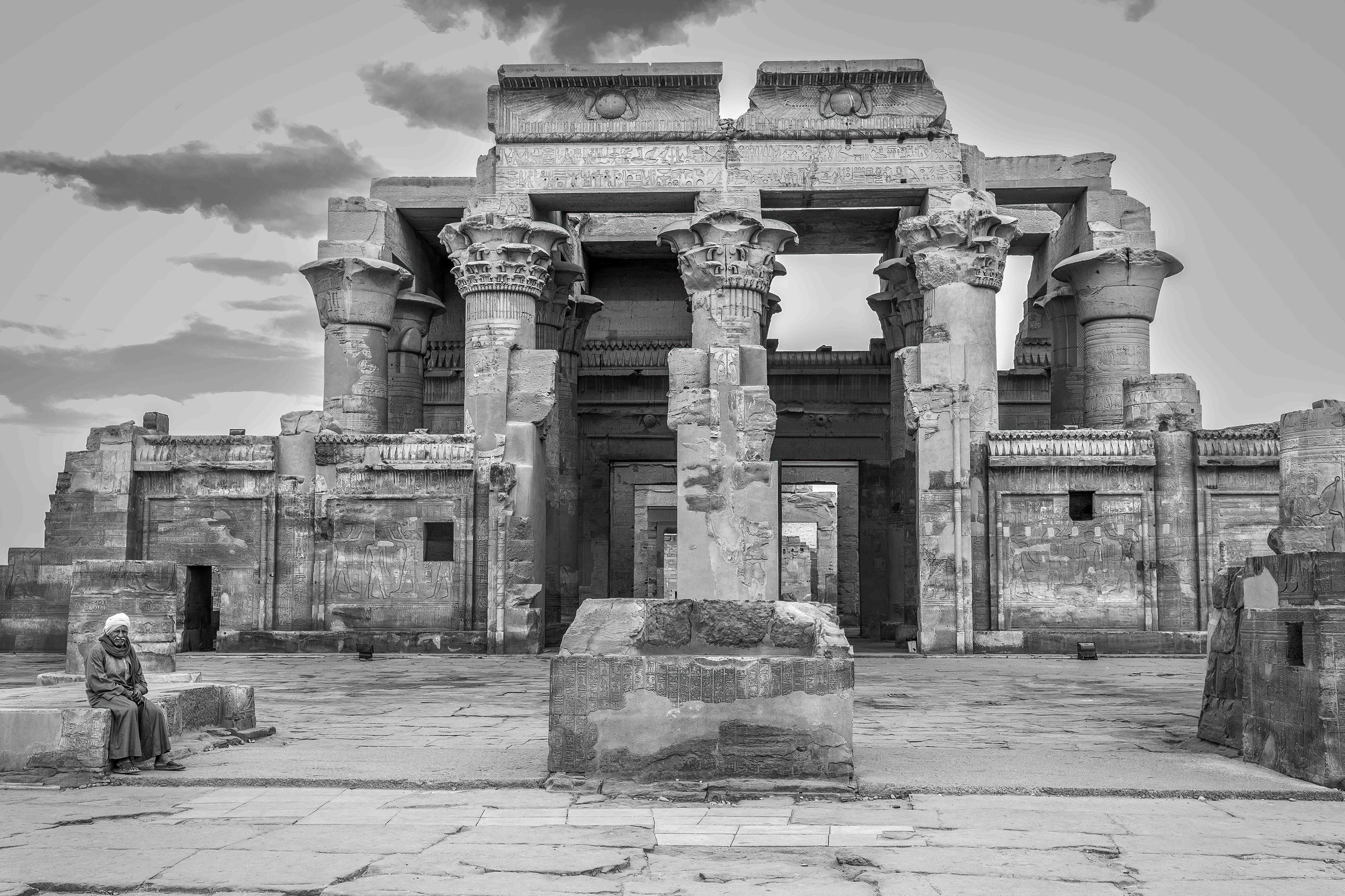
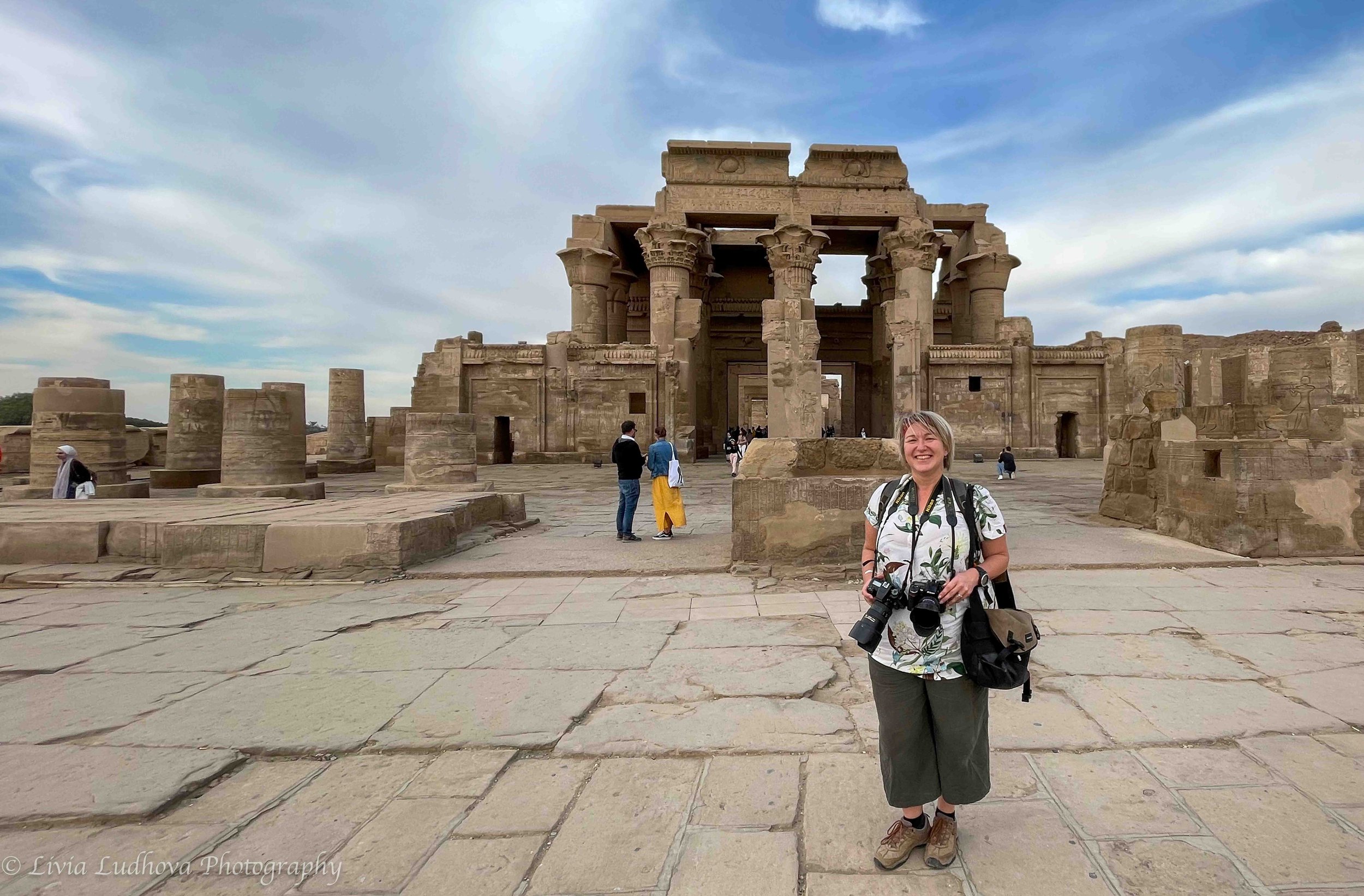
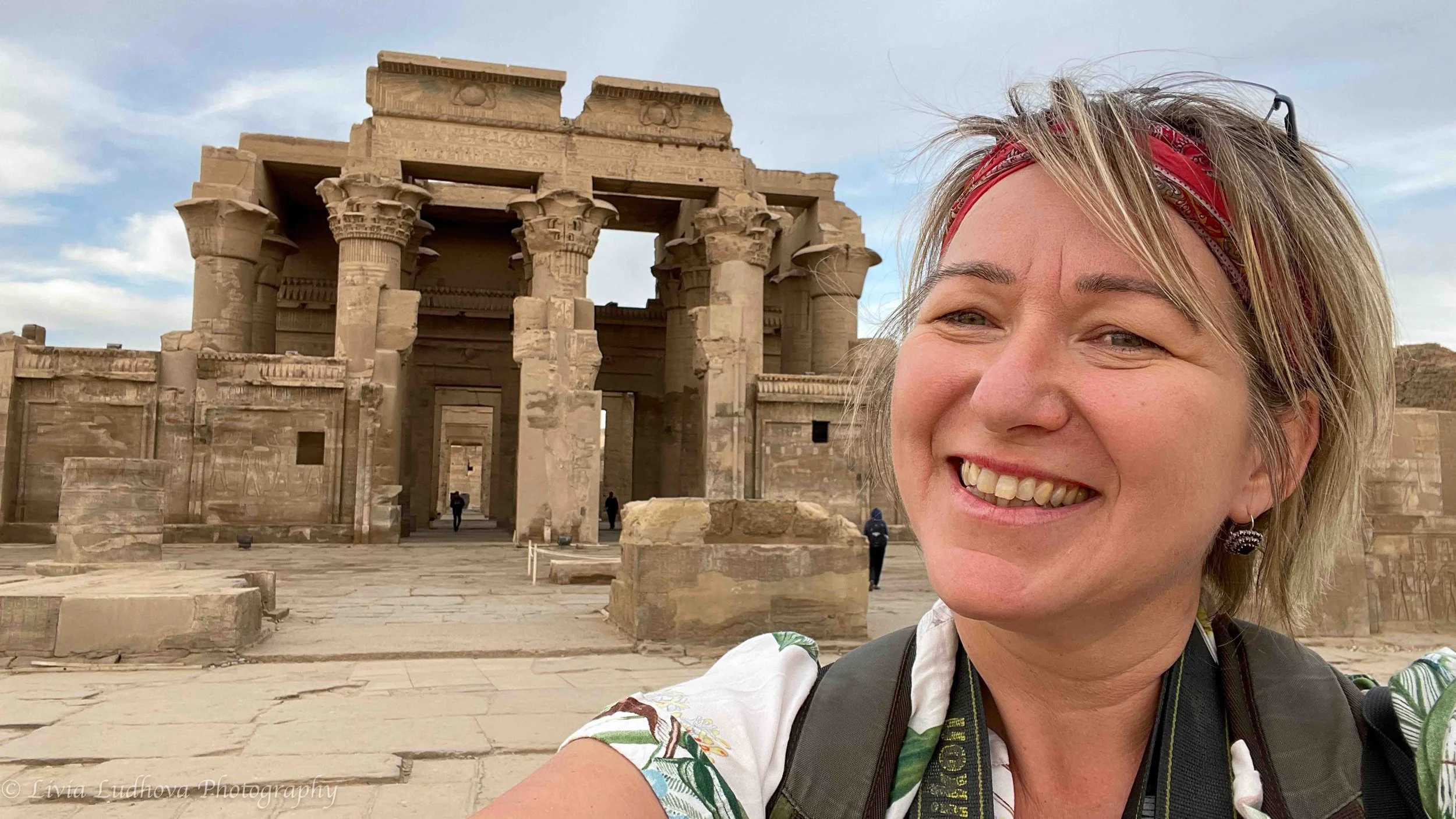
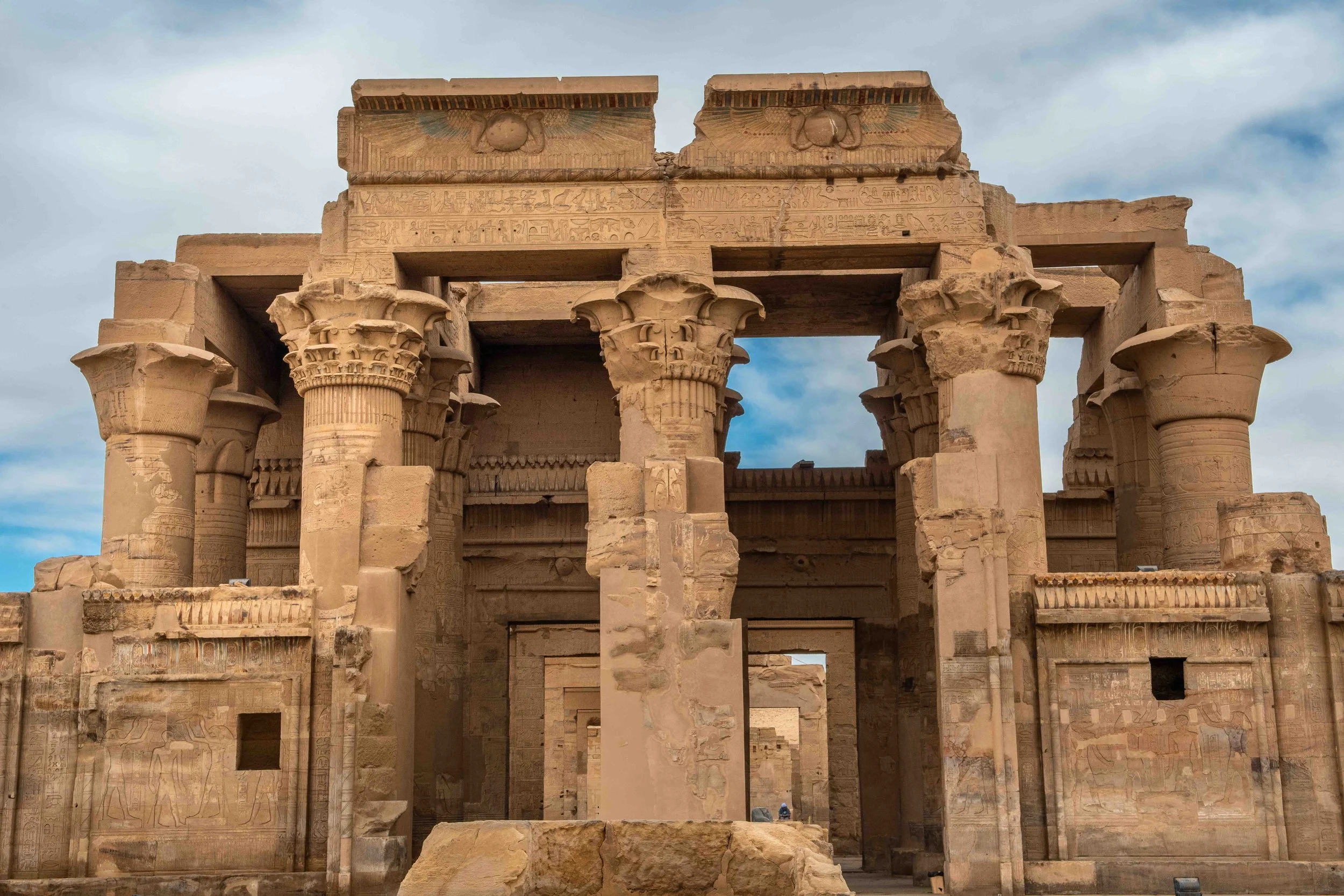
I started in Aswan and was transported to board the dahabiya Loulia. The very first step of the journey was swimming in the Nile, followed by an encounter with the majestic Temple of Kom Ombo. Rising directly from a bend in the river between Aswan and Edfu, Kom Ombo is a unique Ptolemaic temple dedicated simultaneously to Sobek, the crocodile god, and Horus the Elder, its perfectly symmetrical design reflecting this dual devotion. Later, we anchored at the ancient sandstone quarry of Gebel el-Silsila, where the stone for many of Egypt’s greatest temples was cut, deepening the sense of traveling not only through space along the Nile, but through layers of history itself.
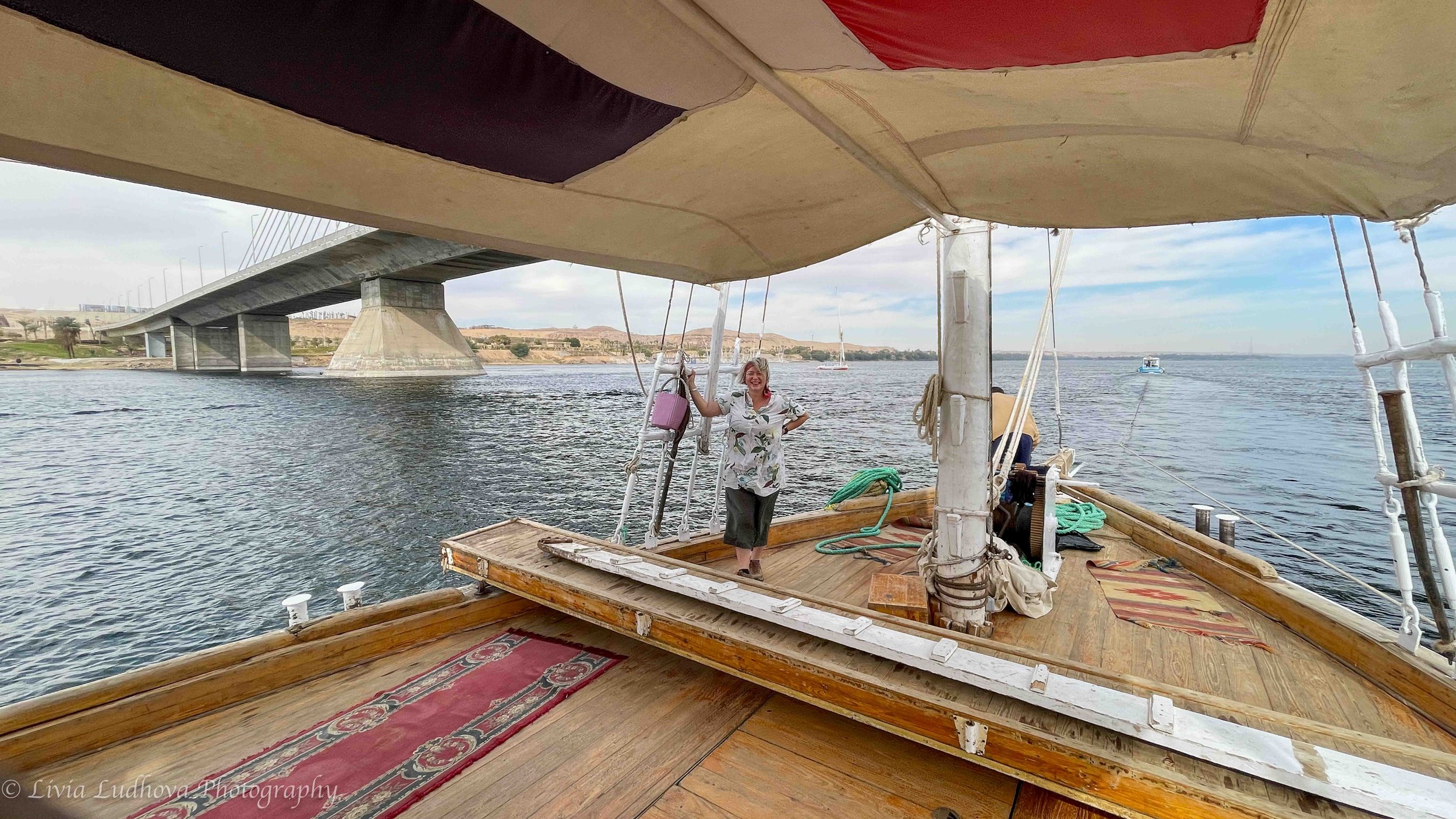
And the journey starts...
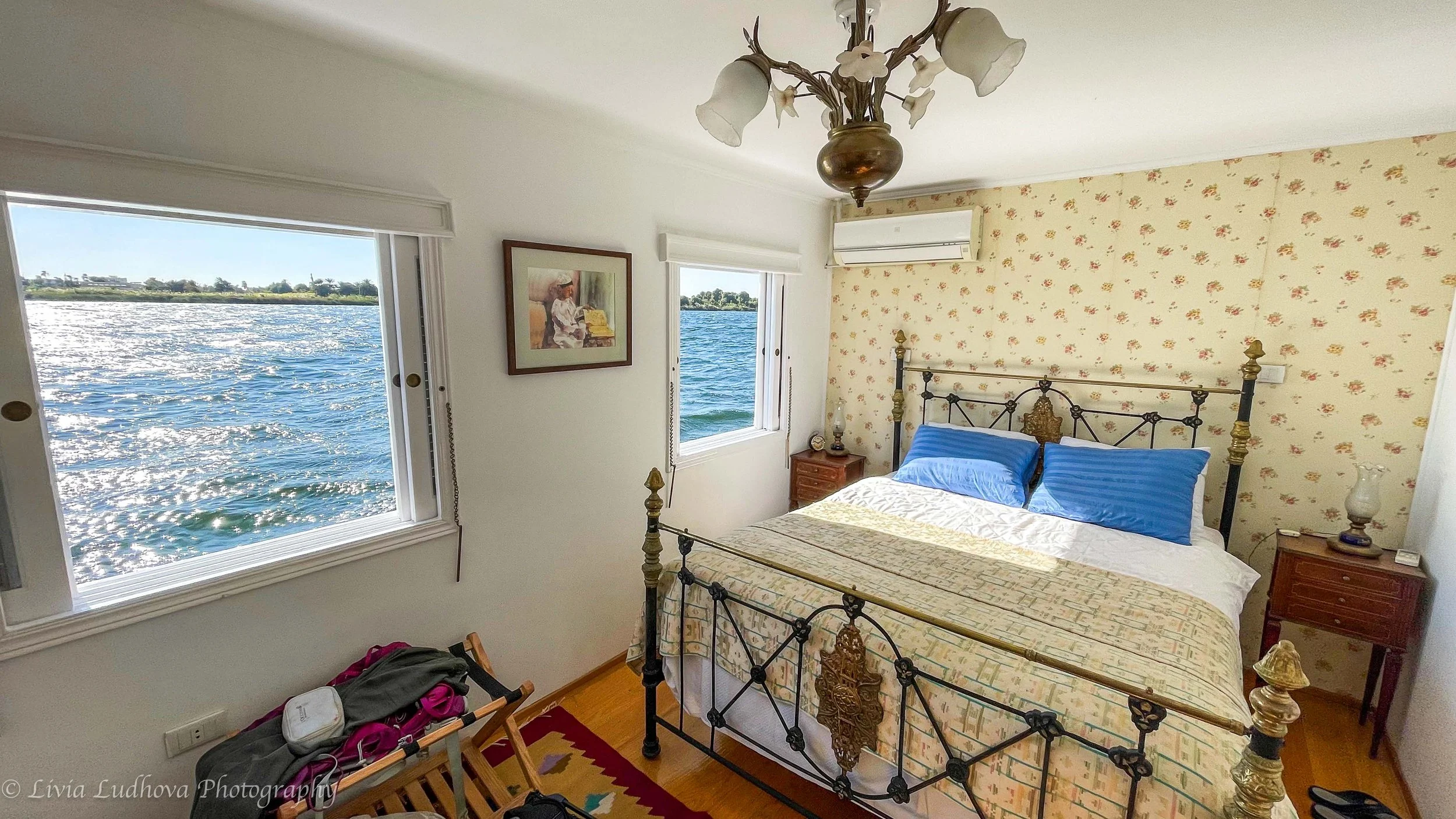
My beautiful cabin with windows facing Nile.
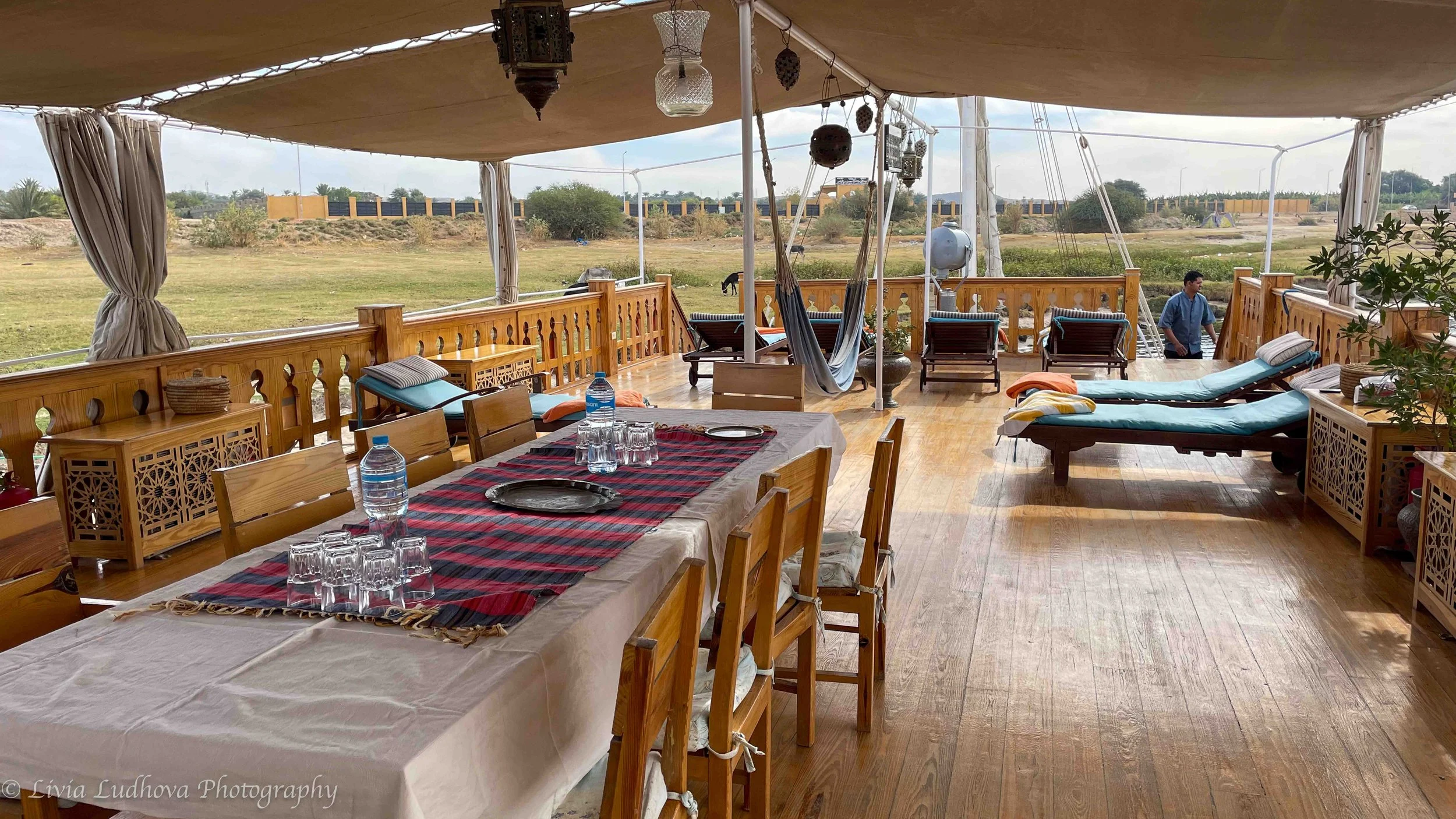
Dining area on the deck.
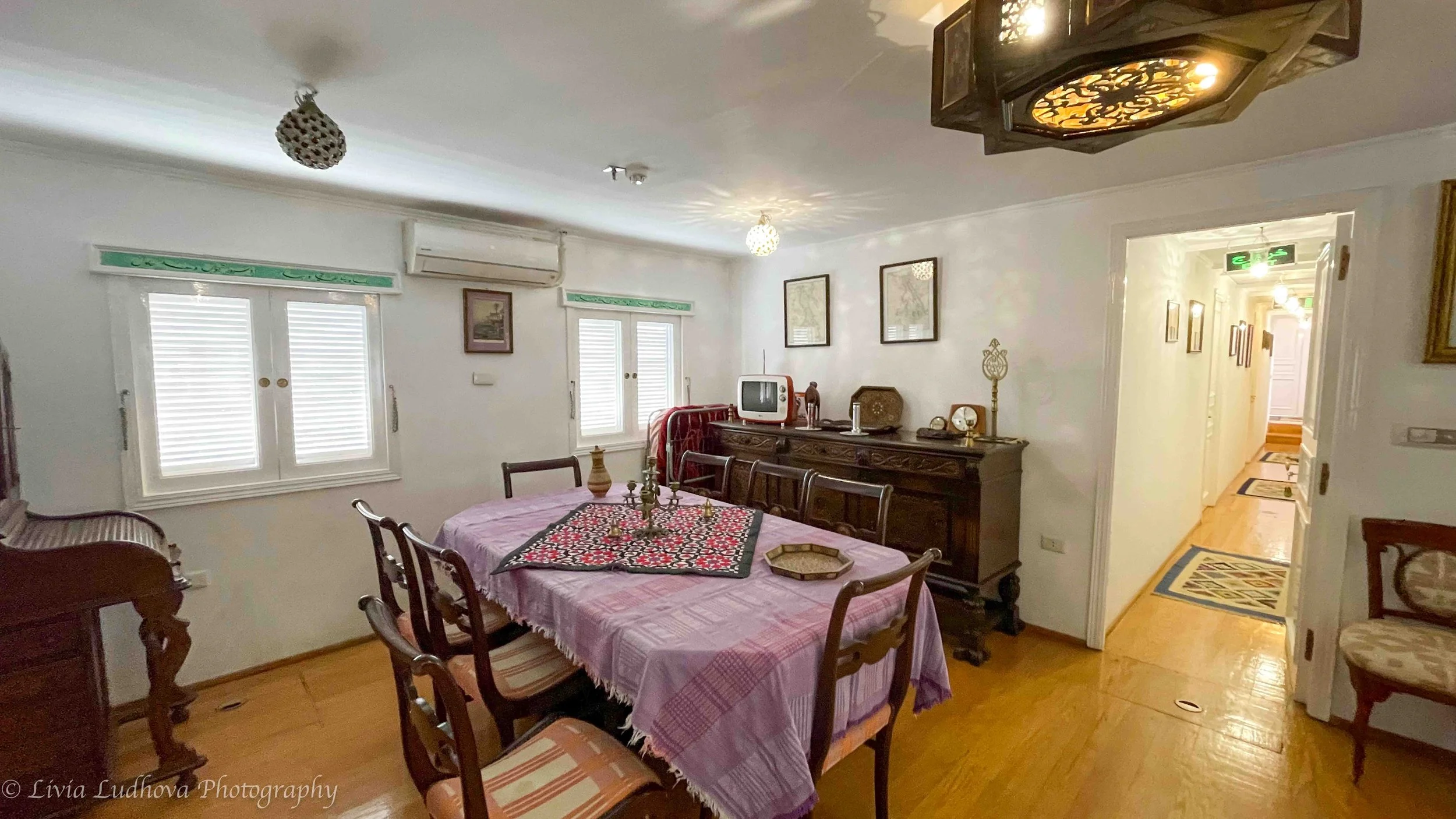
Detail of the hull of the dahabiya,
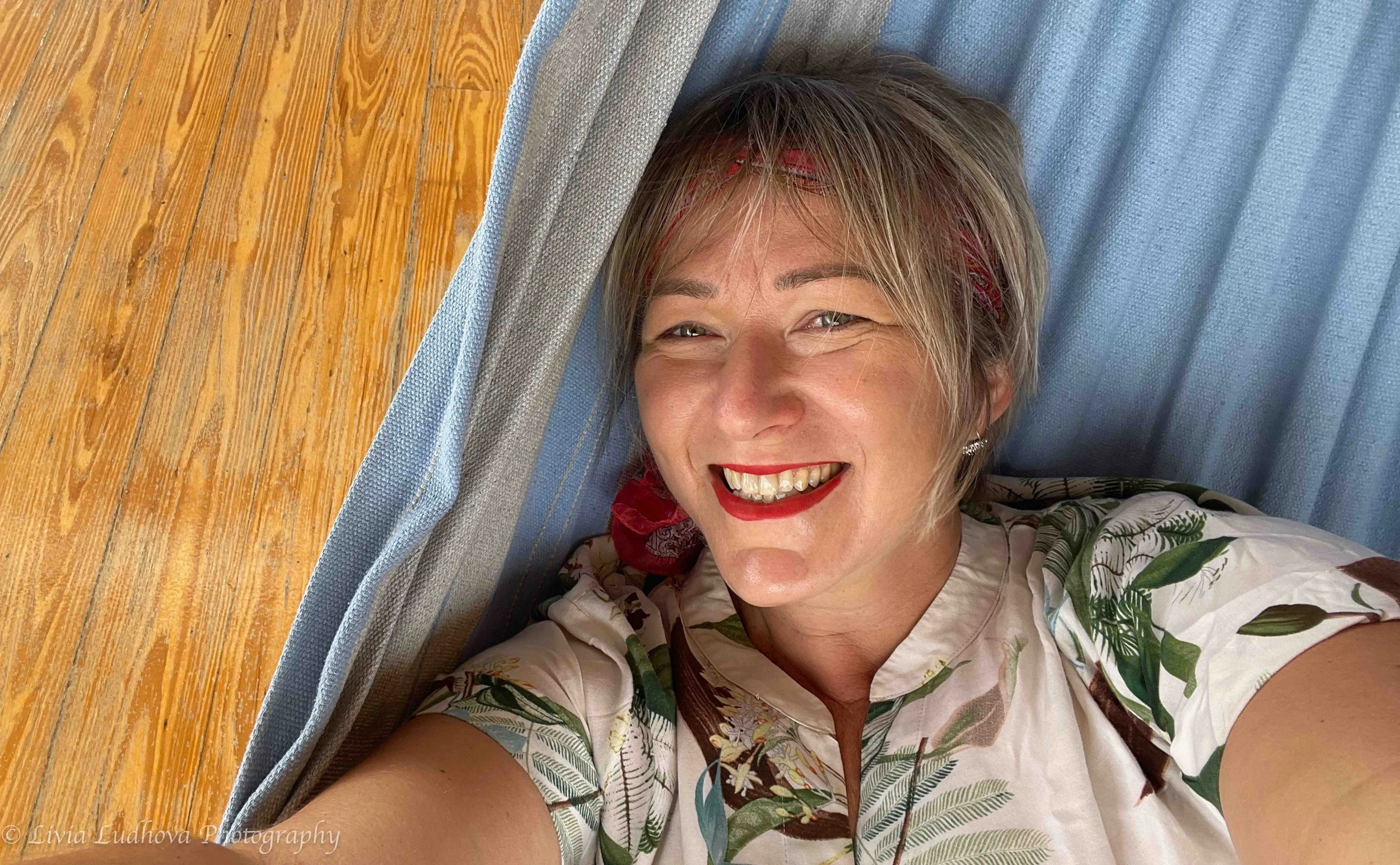
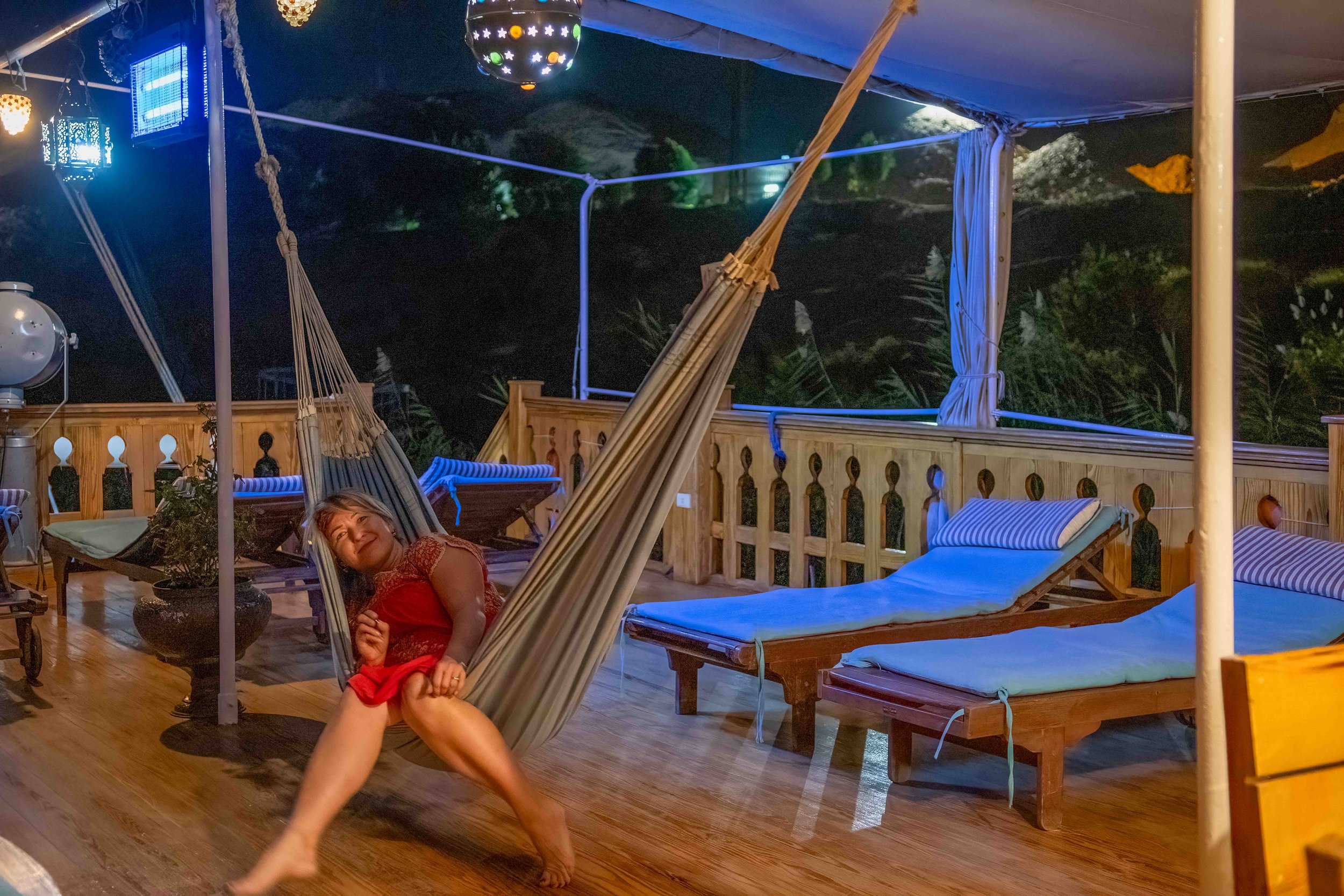
Happy relax in hamaka.
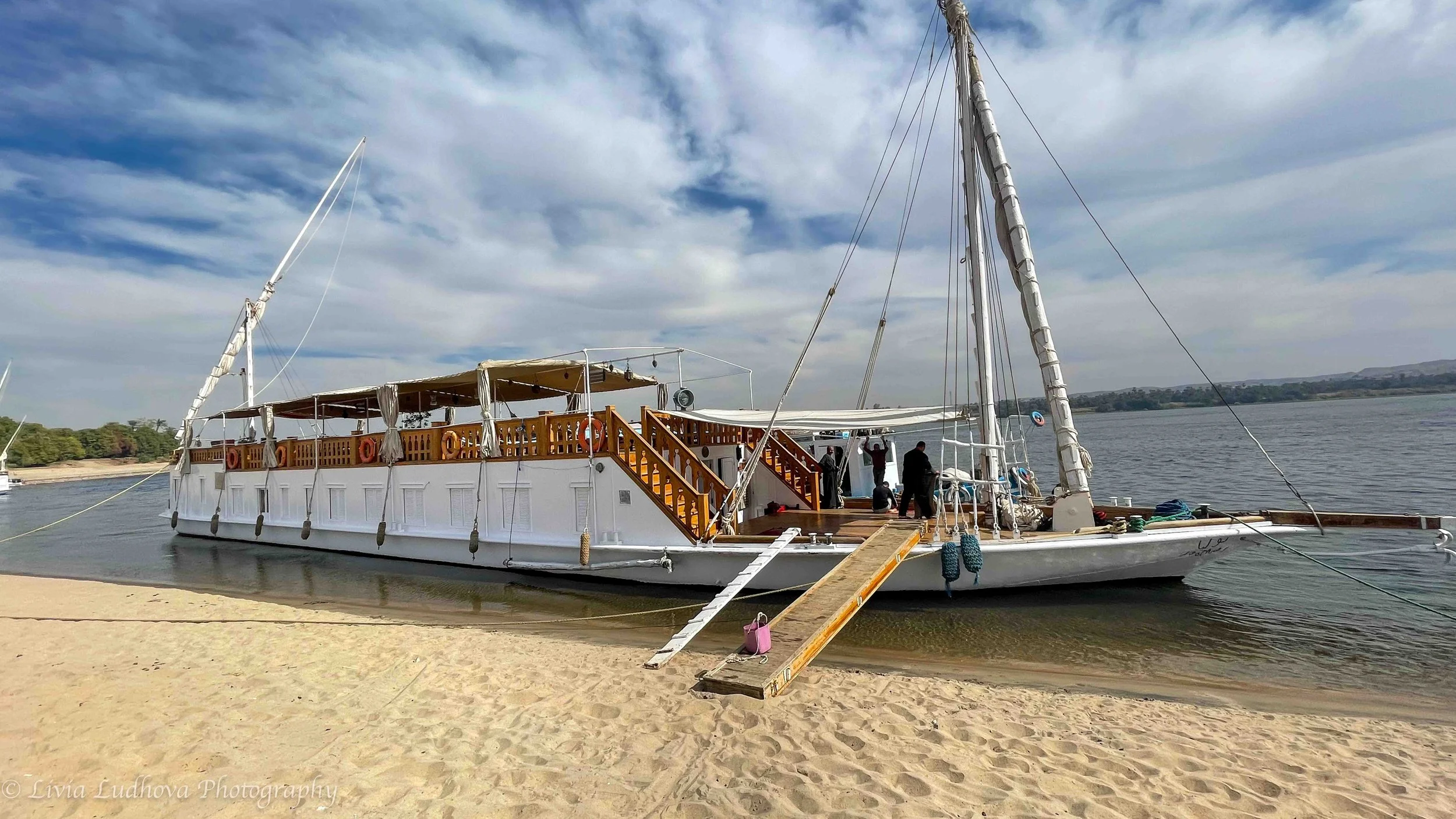
We stop on a batiful beach for a swim.
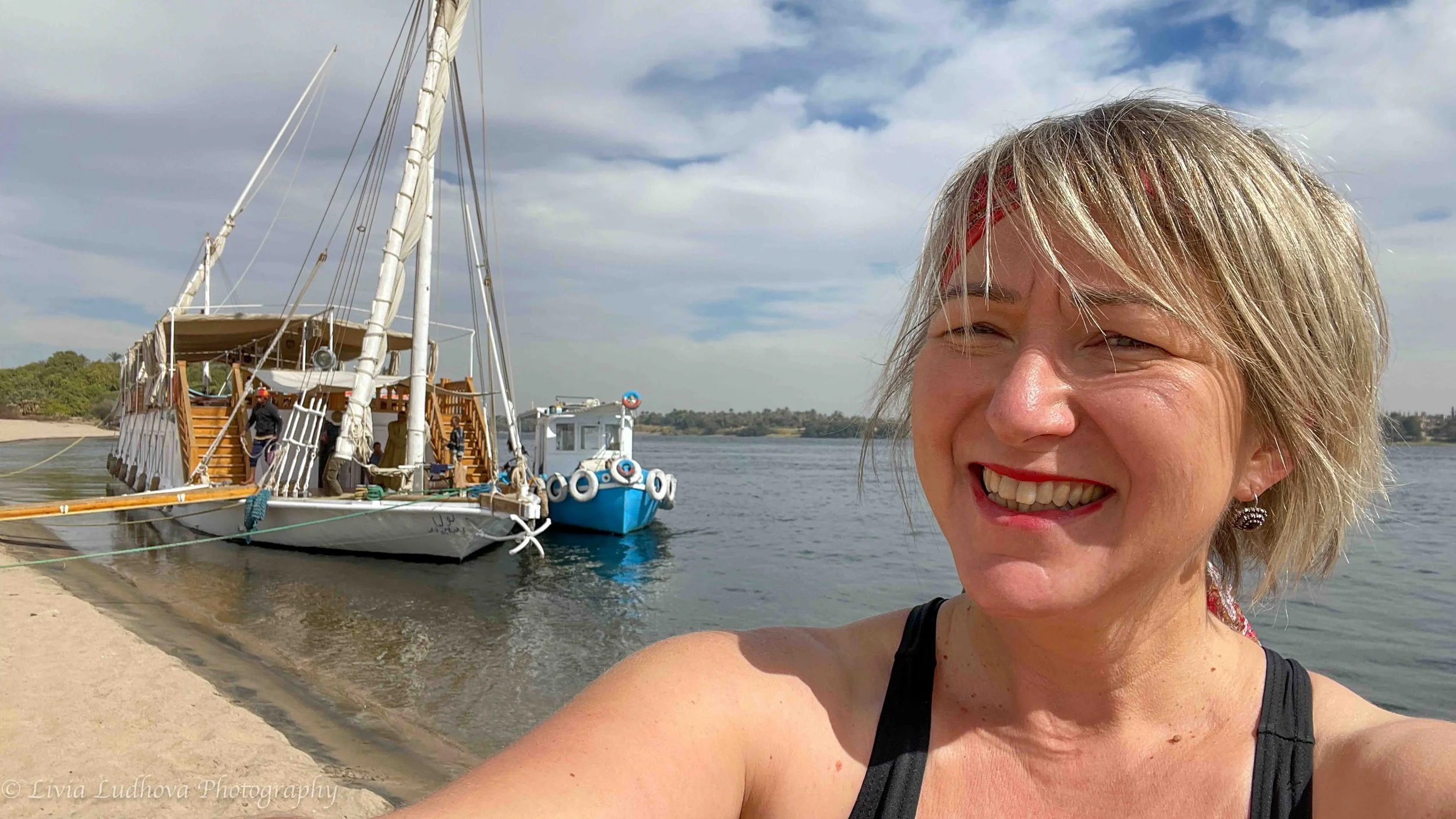
I have to to try it!
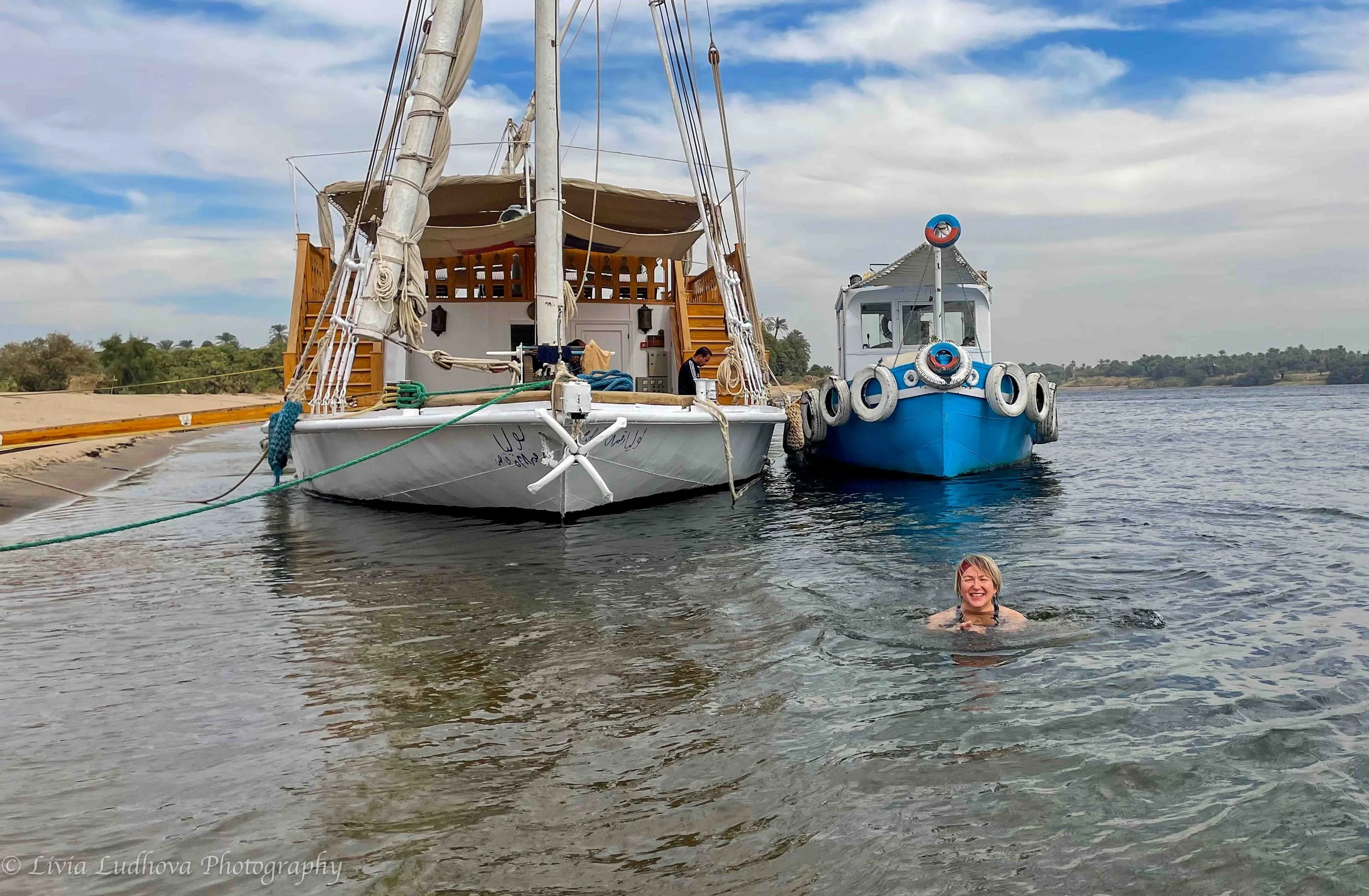
So refreshing.
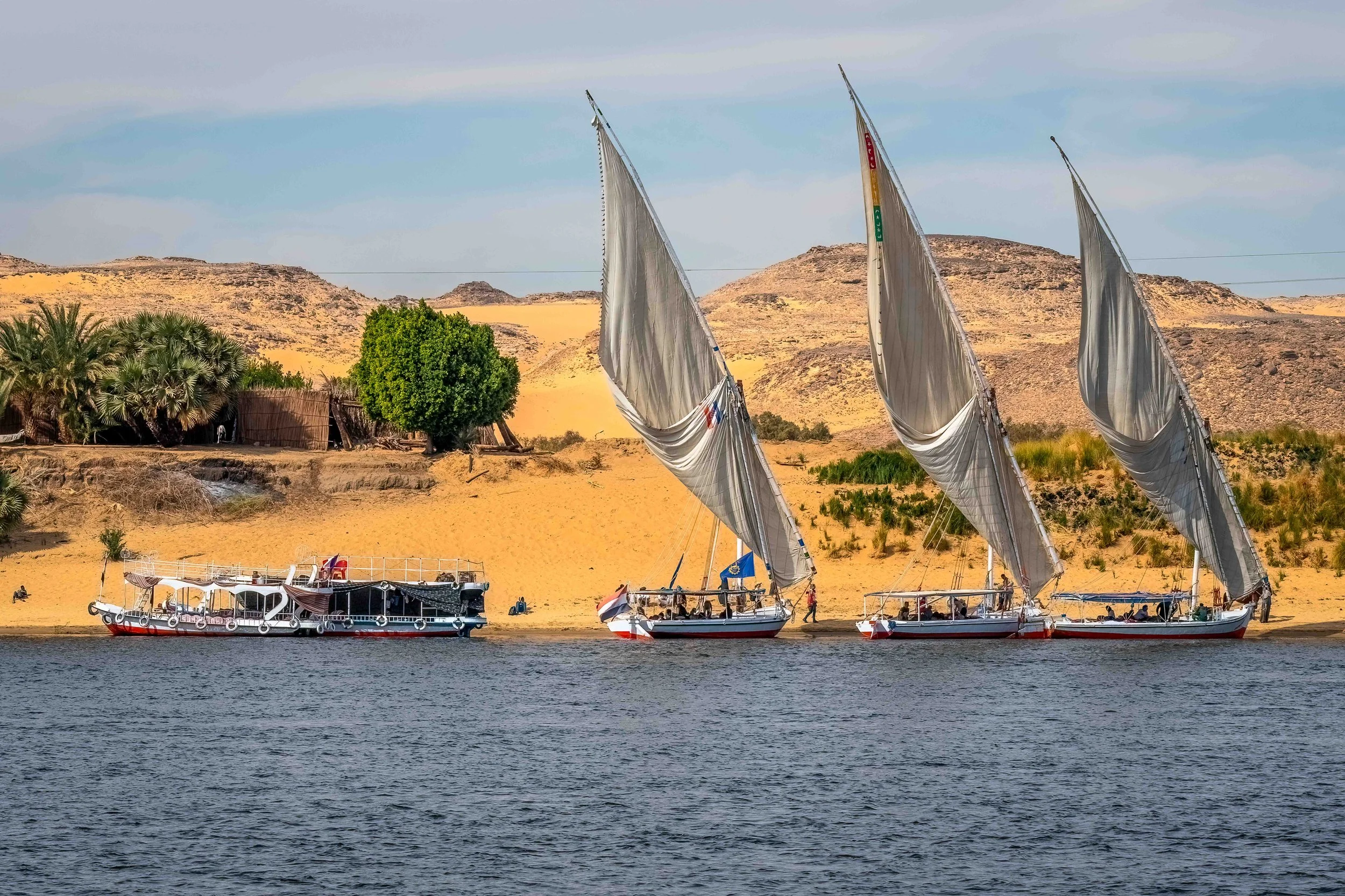
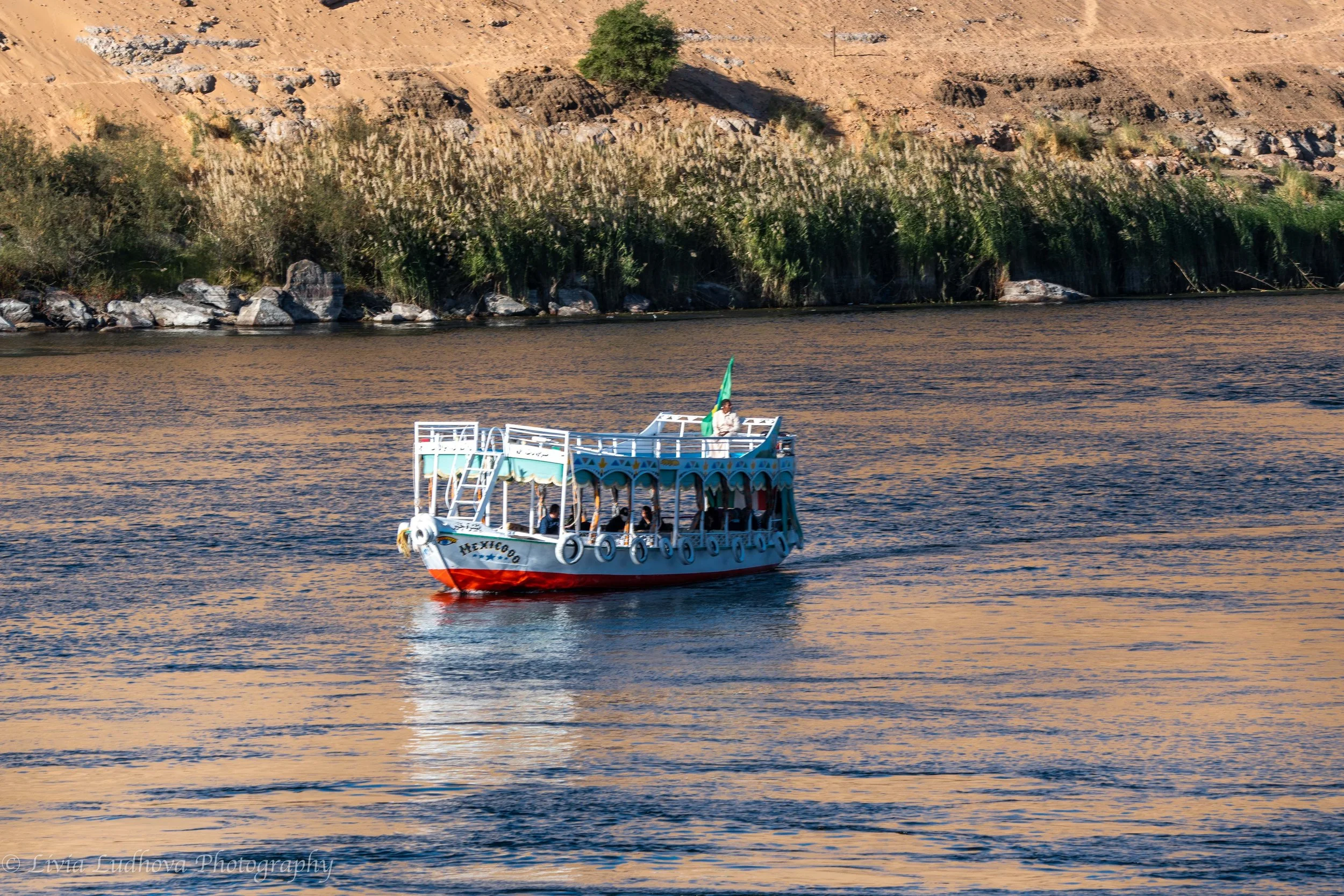
What a fantastic Nile scene with boats, golden sand, and blue water.
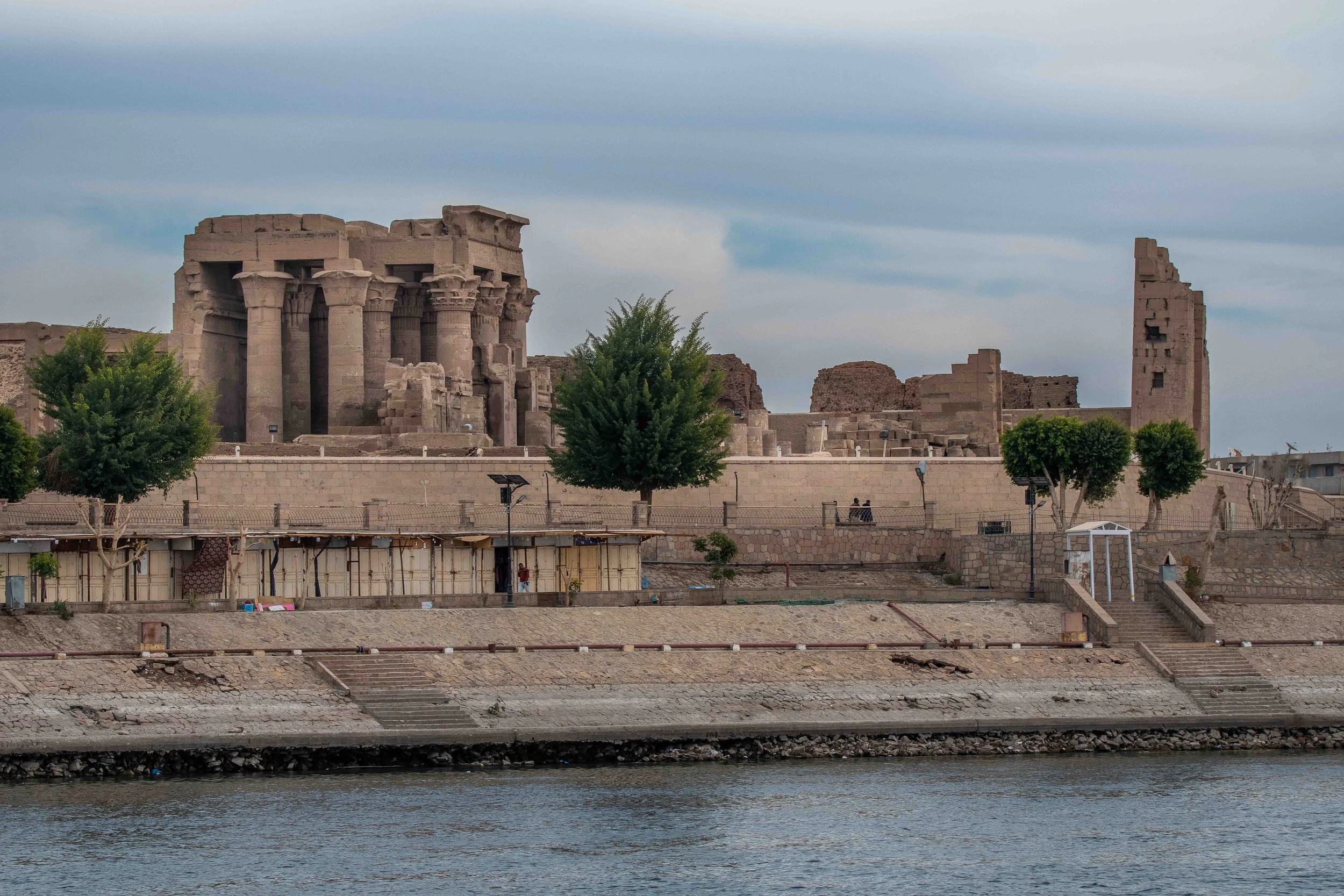
We approach Kom Ombo.
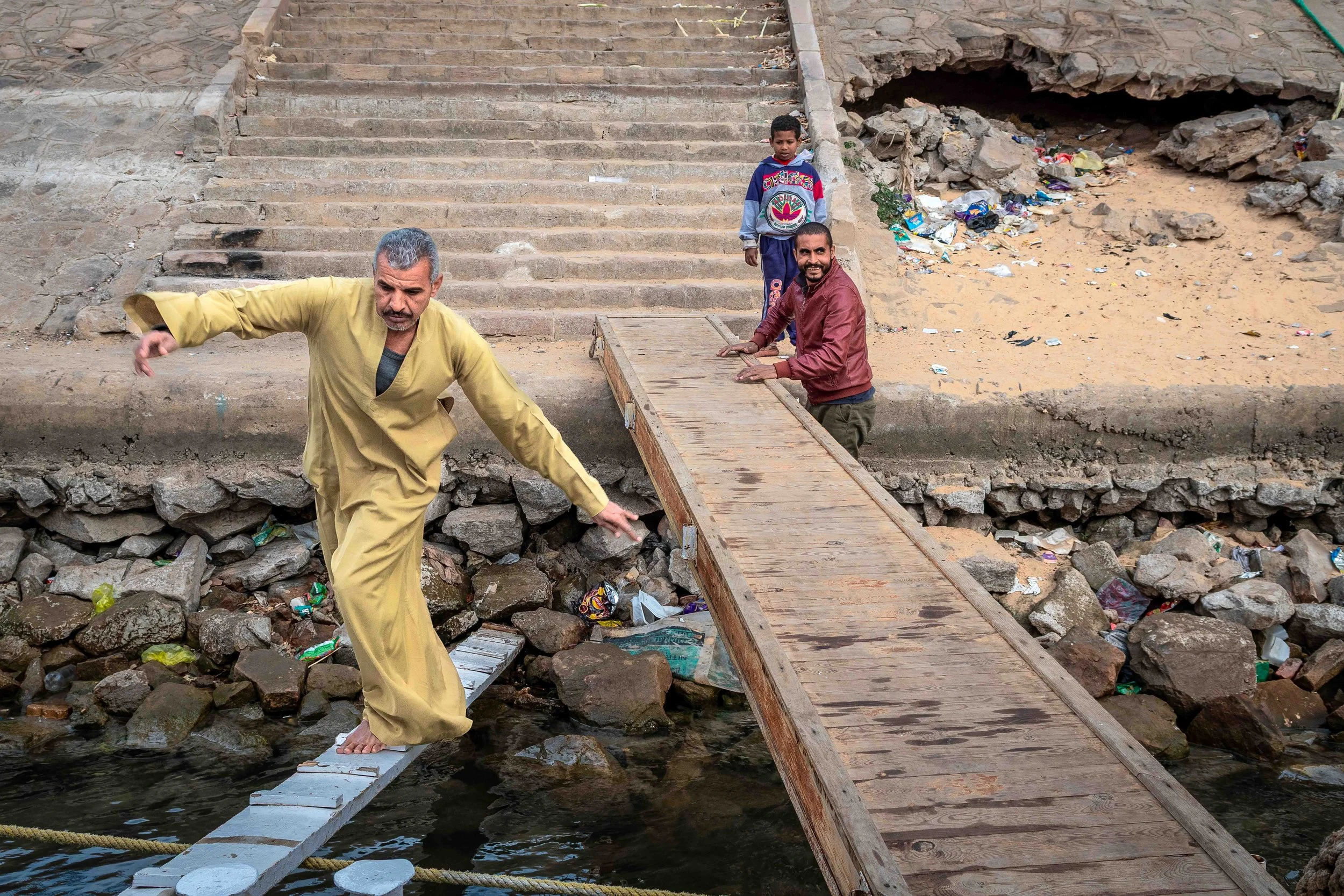
Activity as we moore in Kom Ombo.
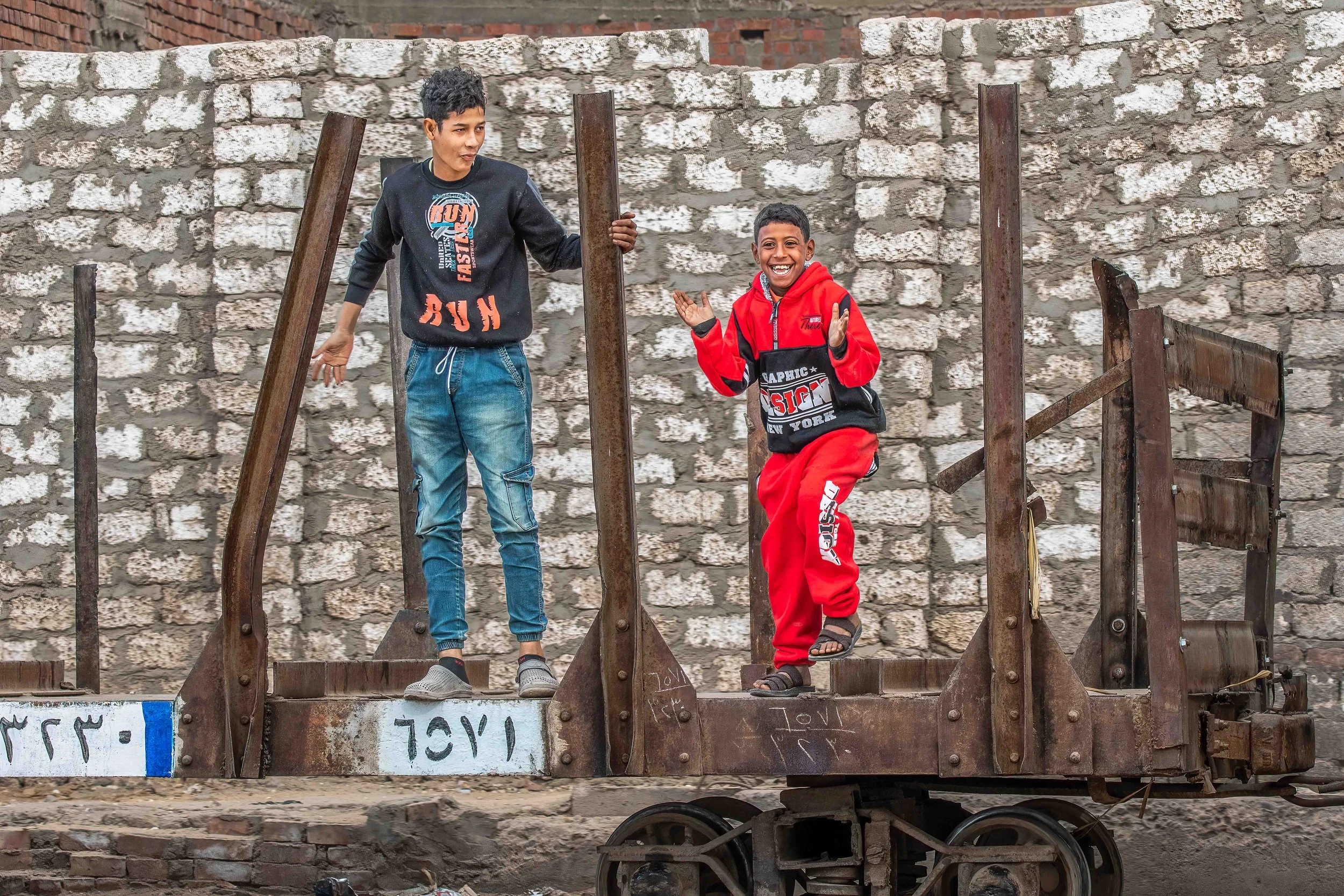
Local kids playing hobos ;-)
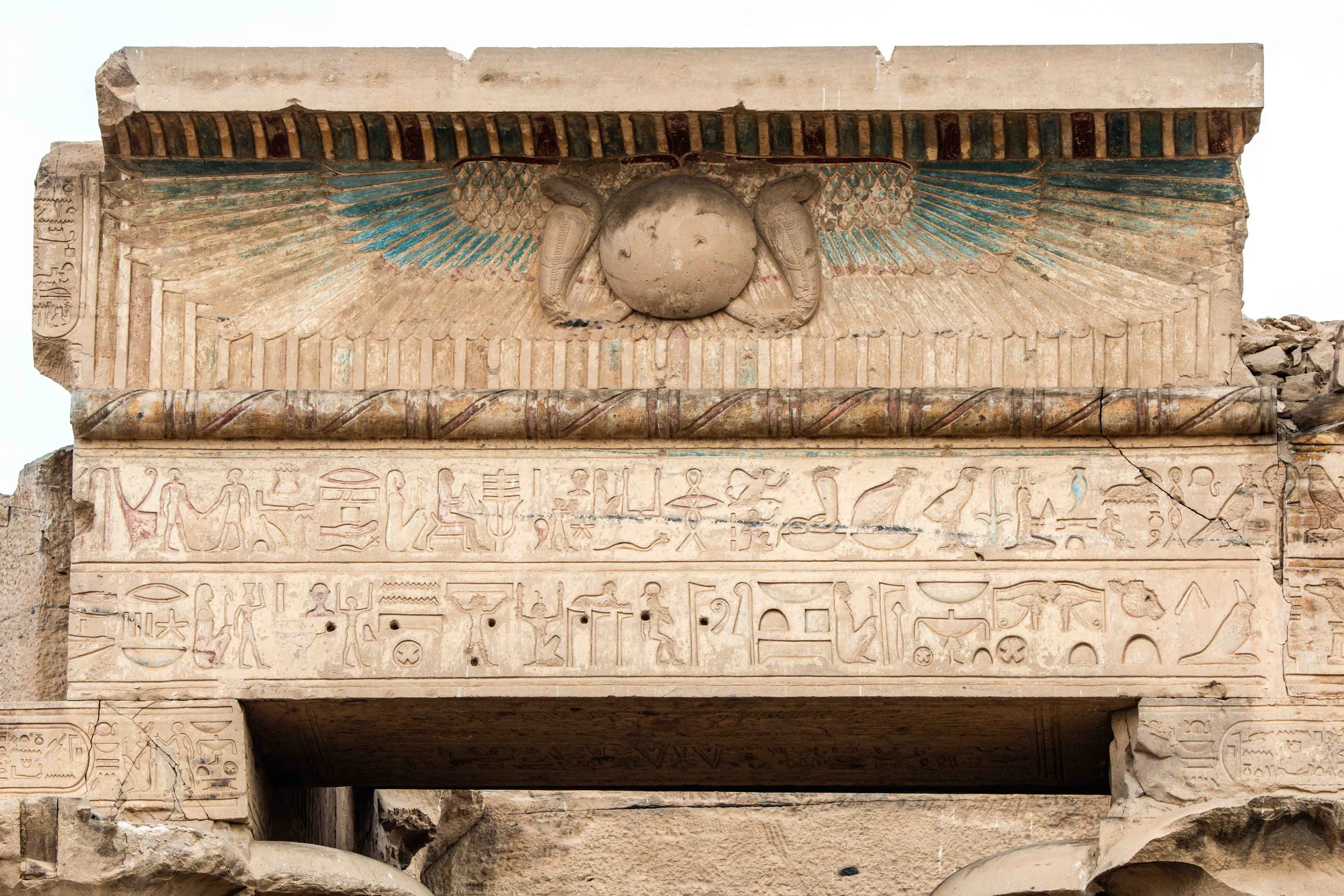
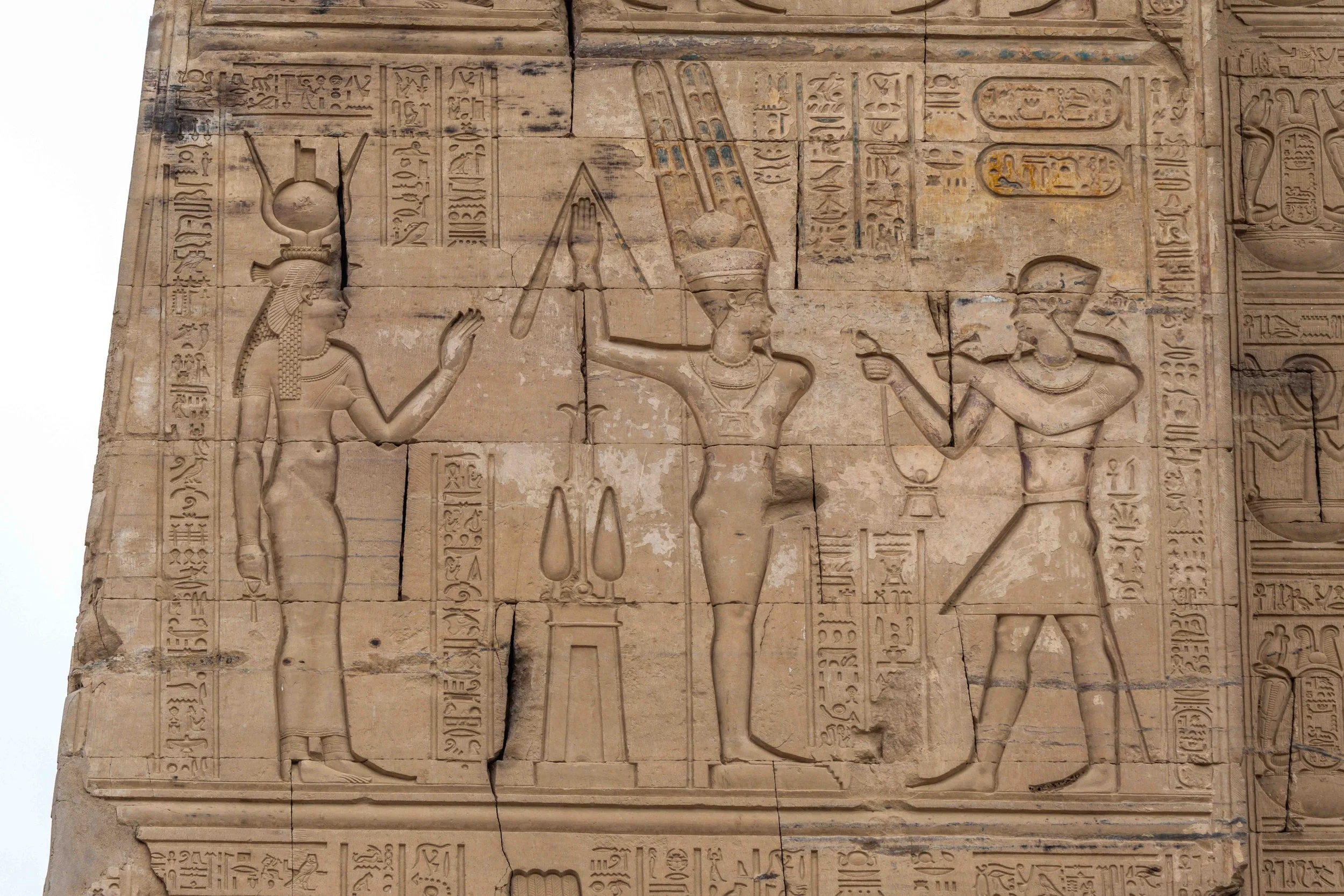
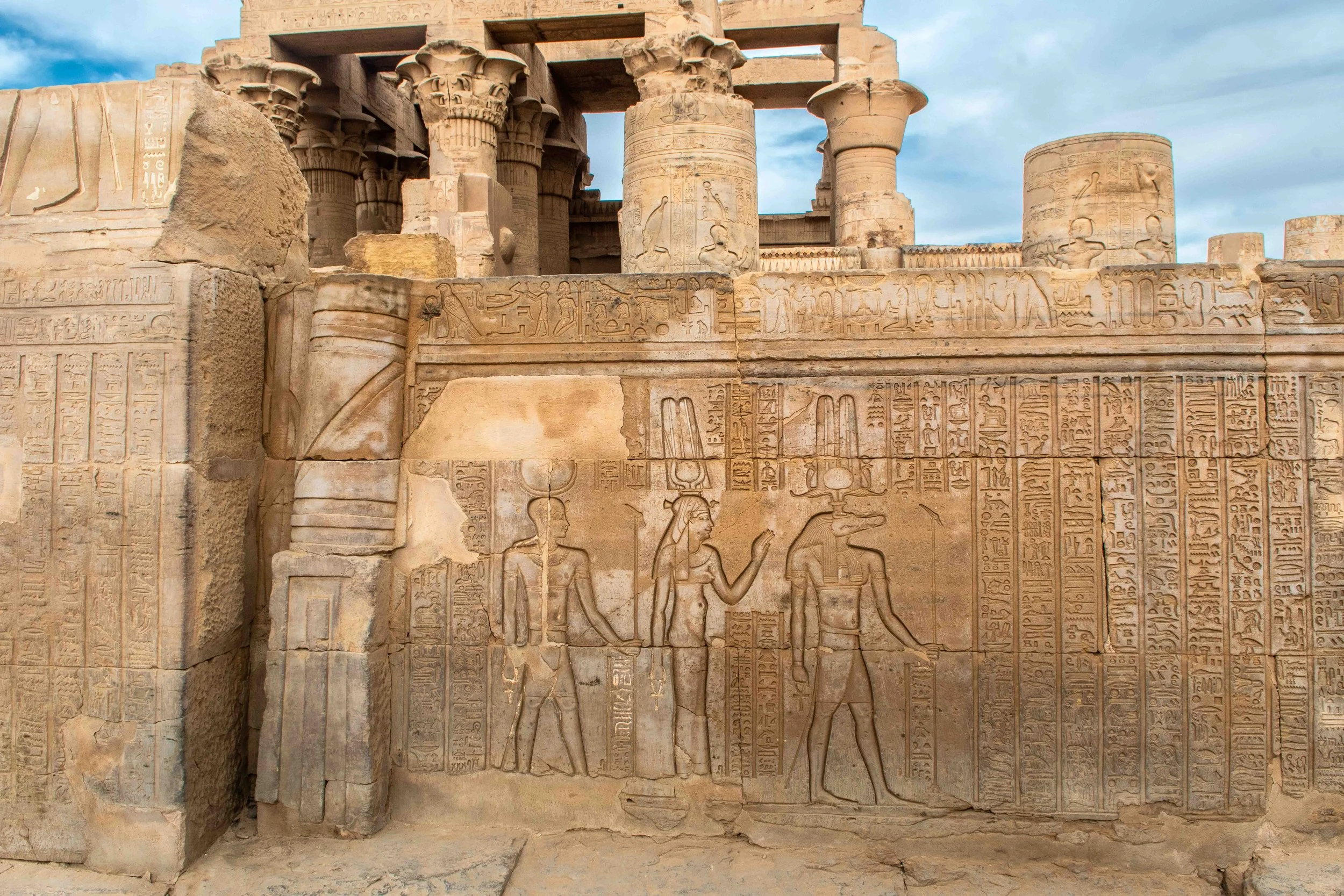
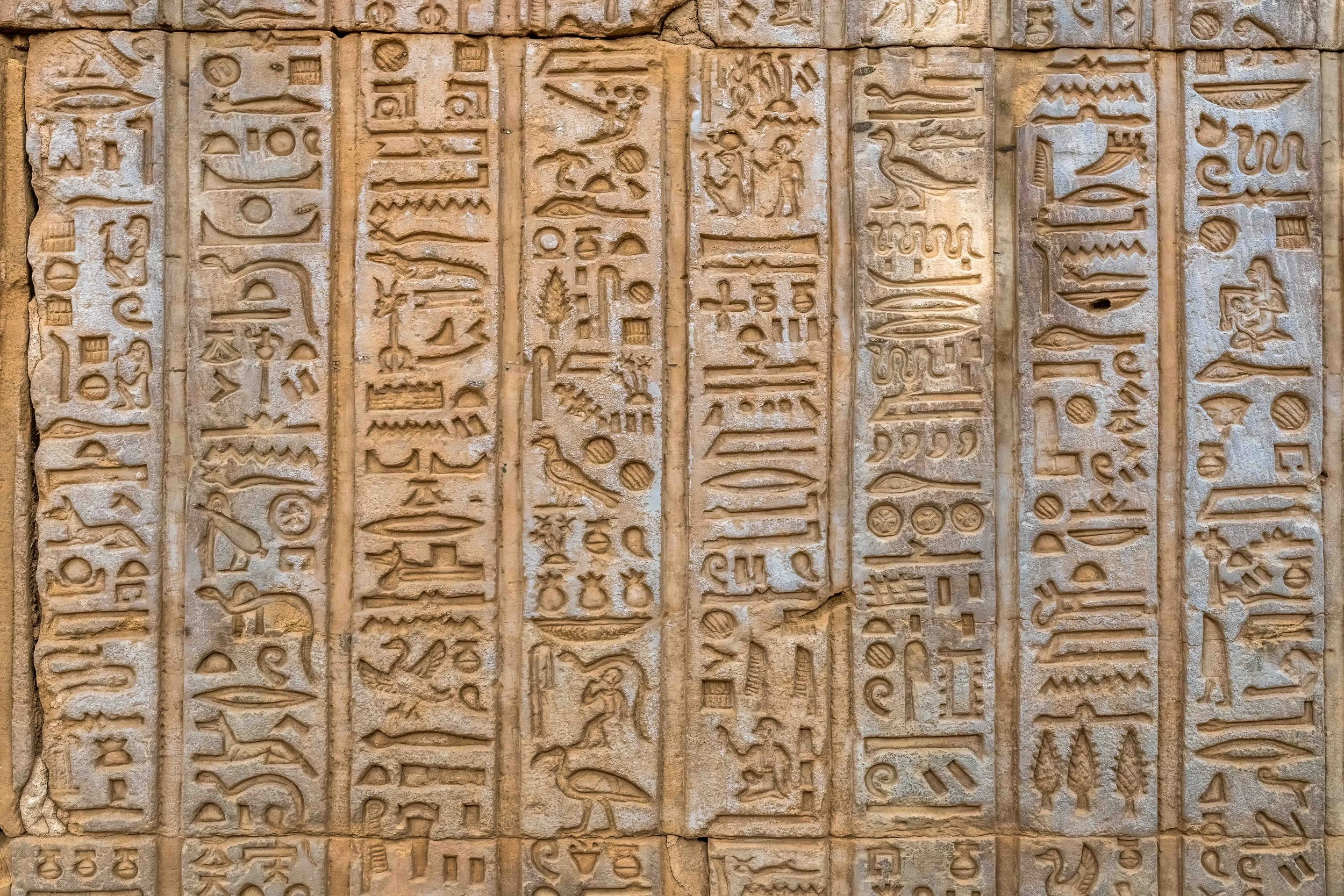
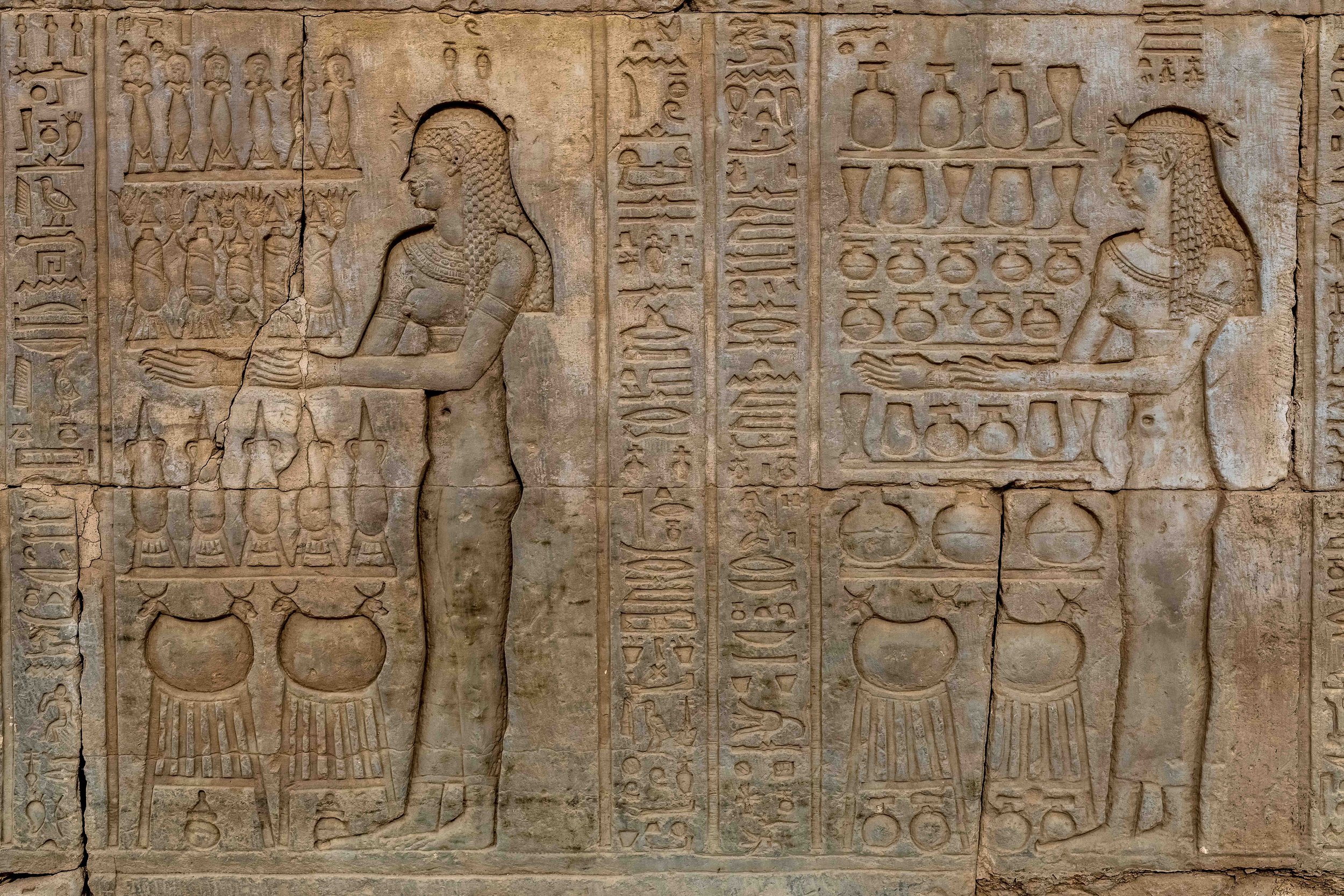
Carved wall with offering texts — ritual inscriptions at Kom Ombo.
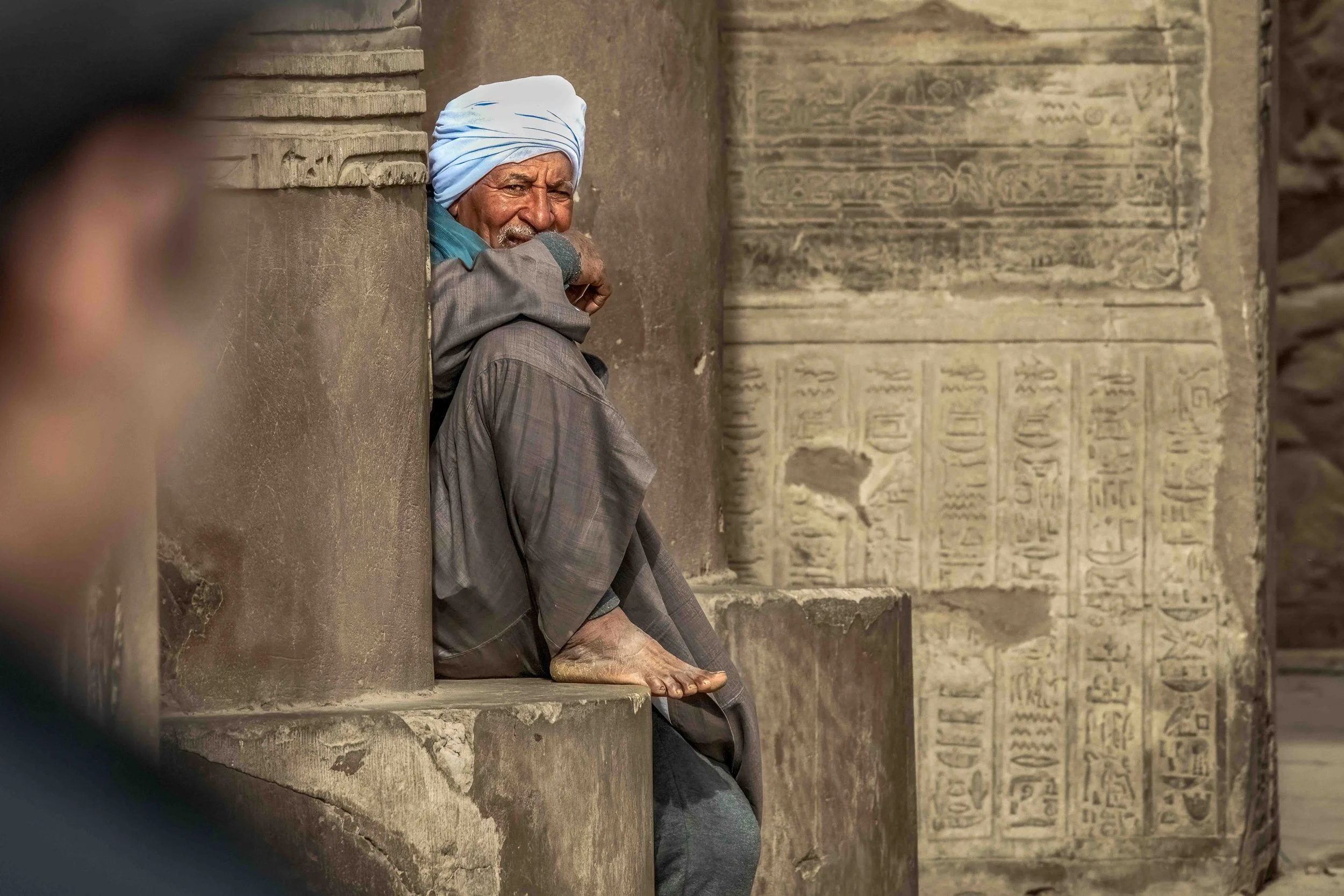
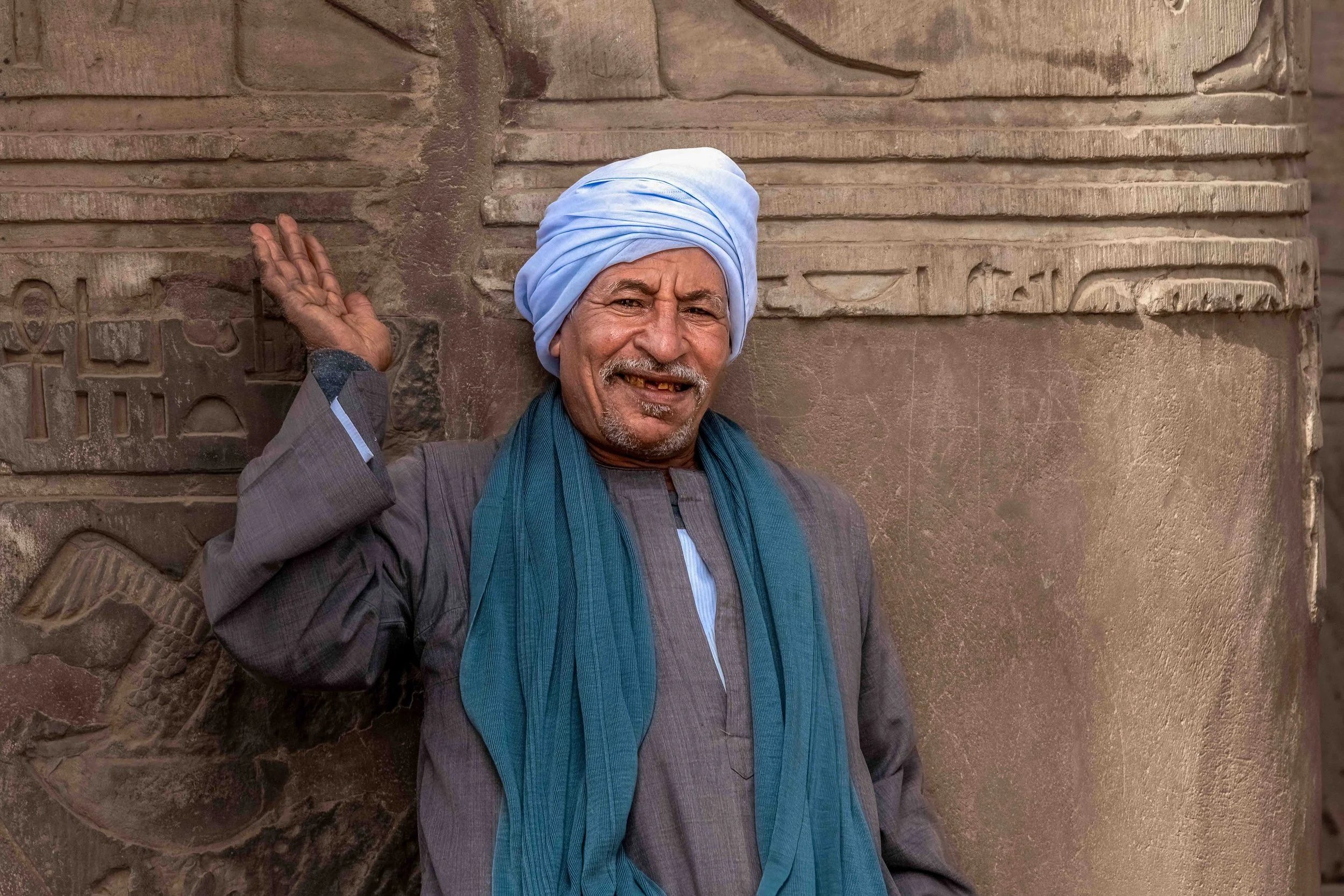
Local man near temple wall — contemporary presence within the ancient setting.
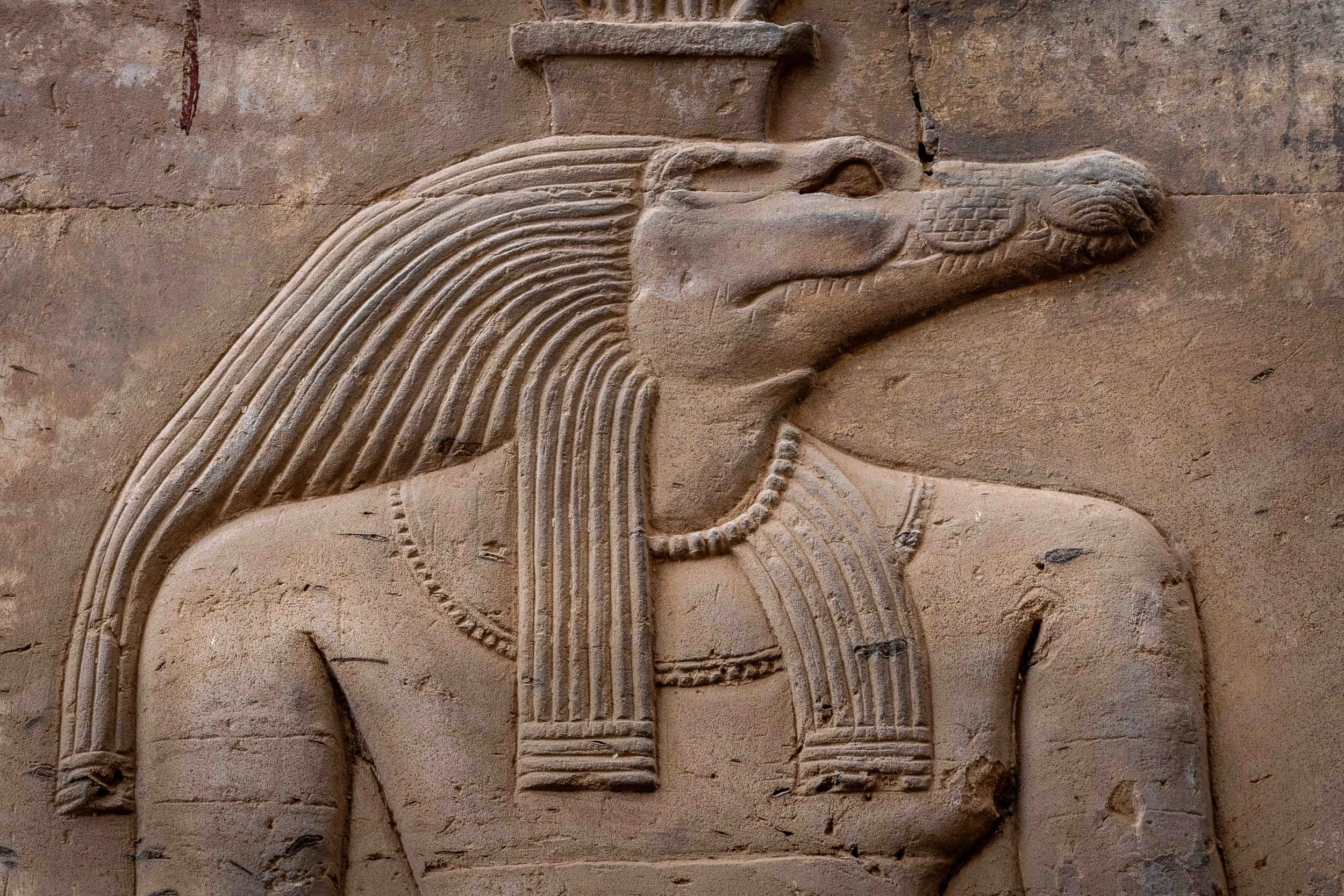
Sobek relief — crocodile god associated with fertility and the Nile.
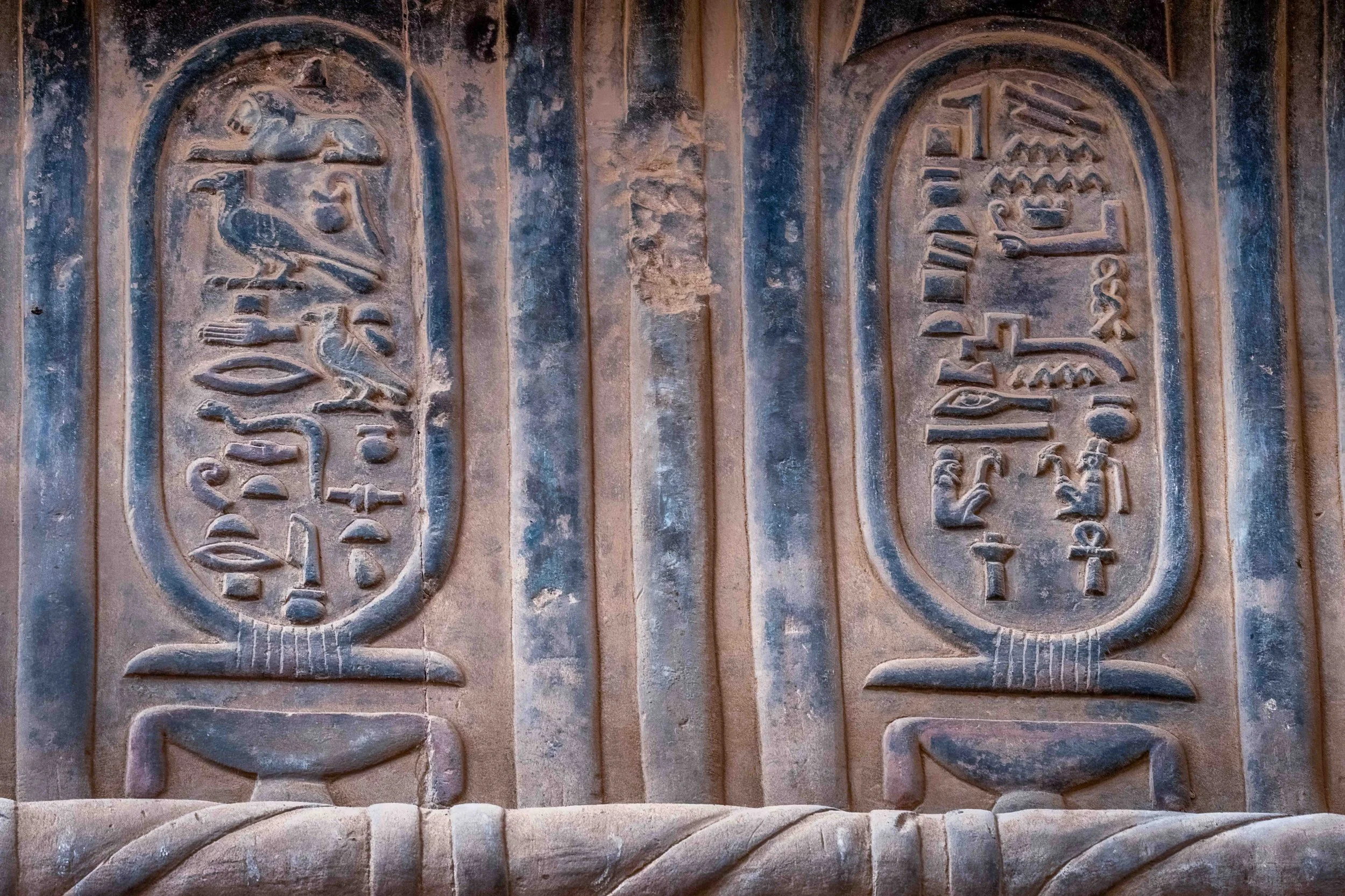
Hieroglyphic cartouches — royal titulary carved in relief.
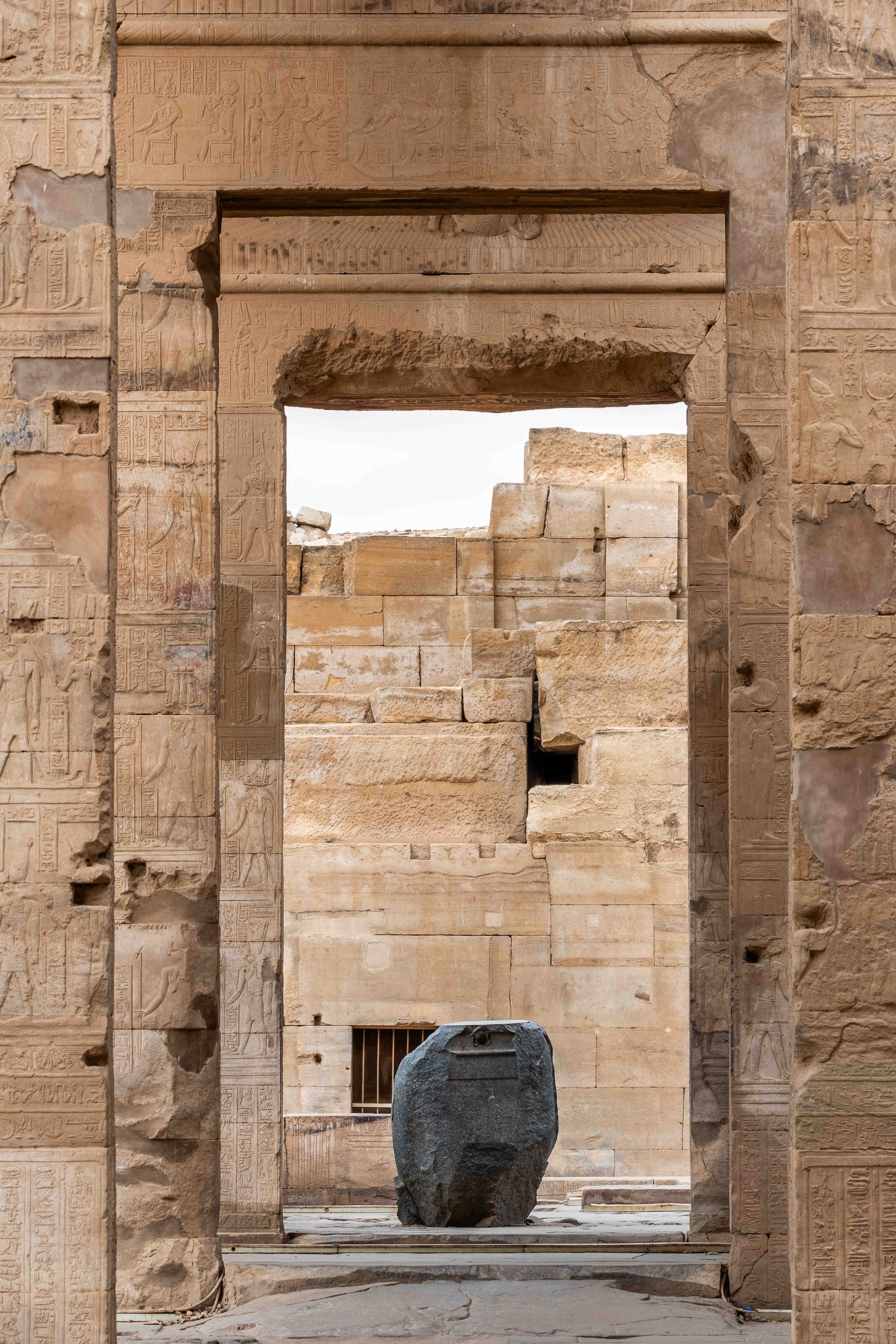
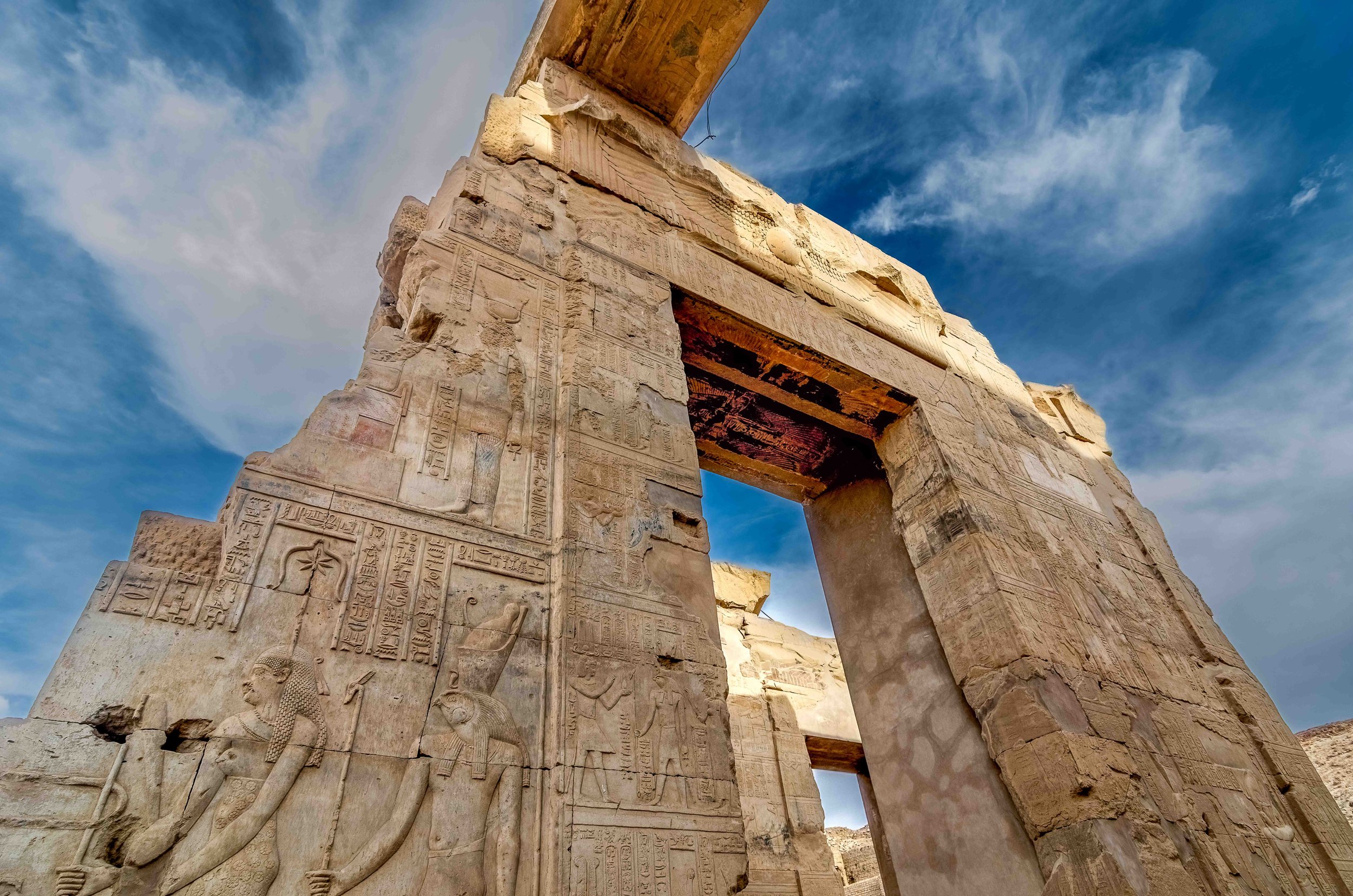
emple doorway — controlled transition between sacred spaces.
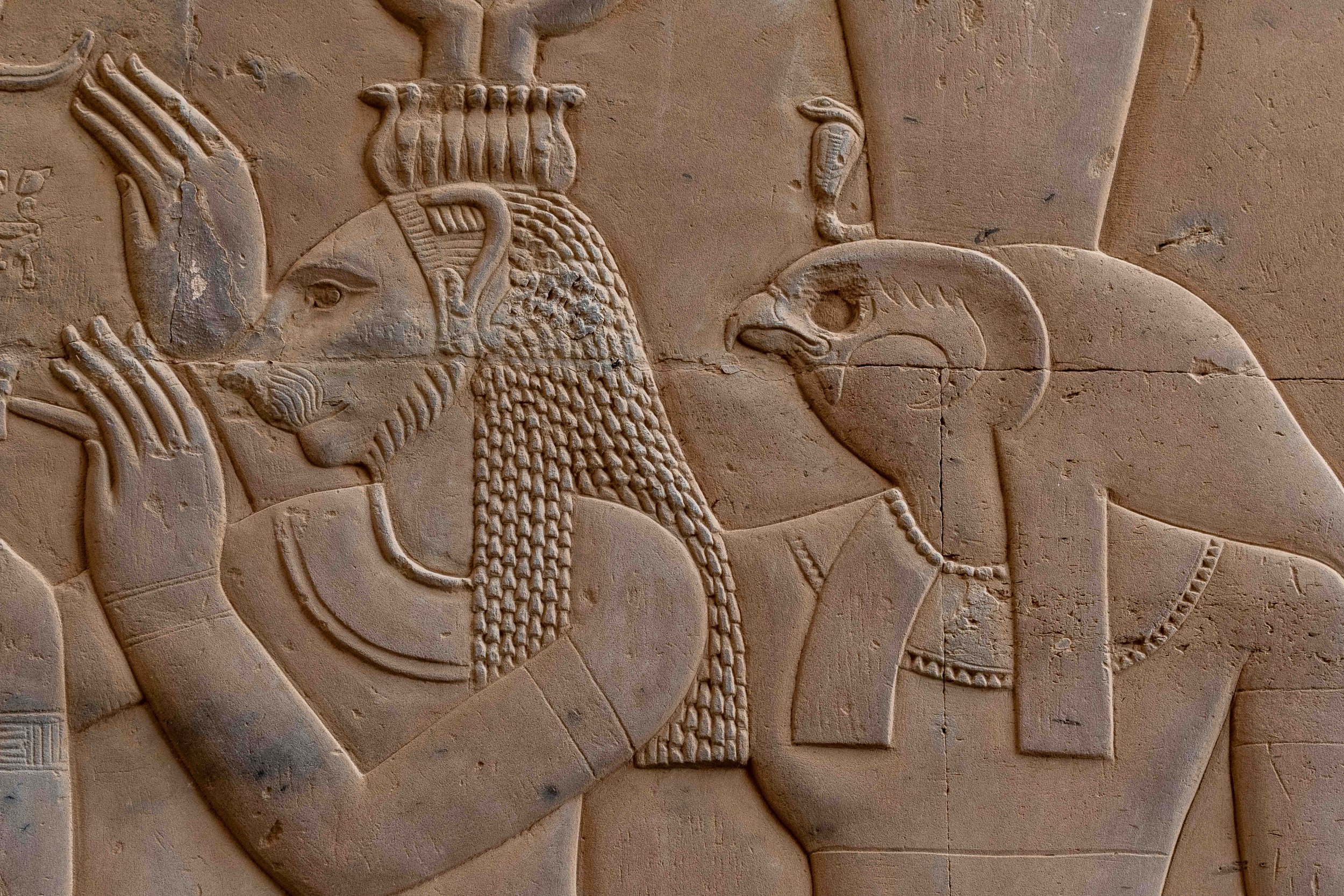
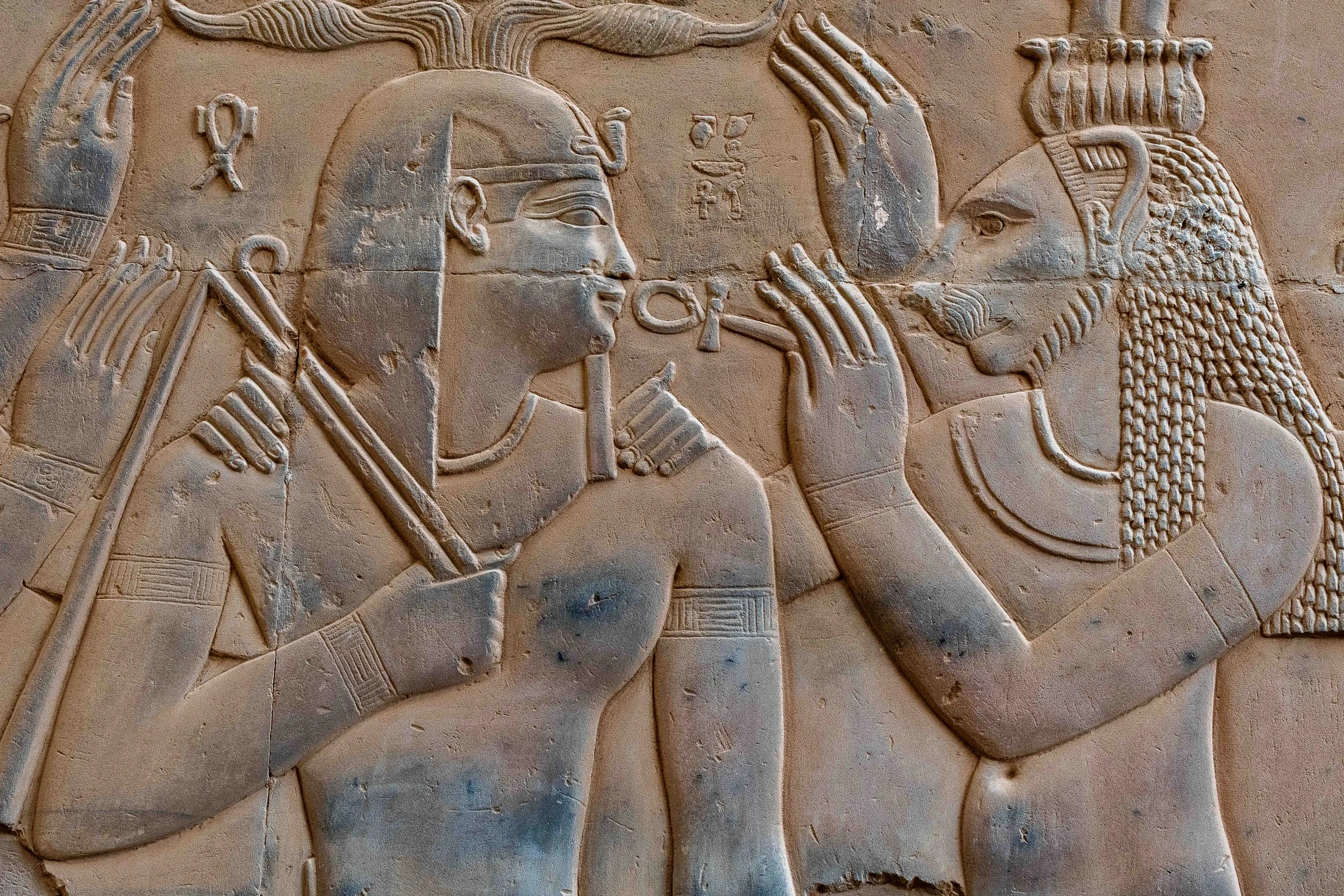
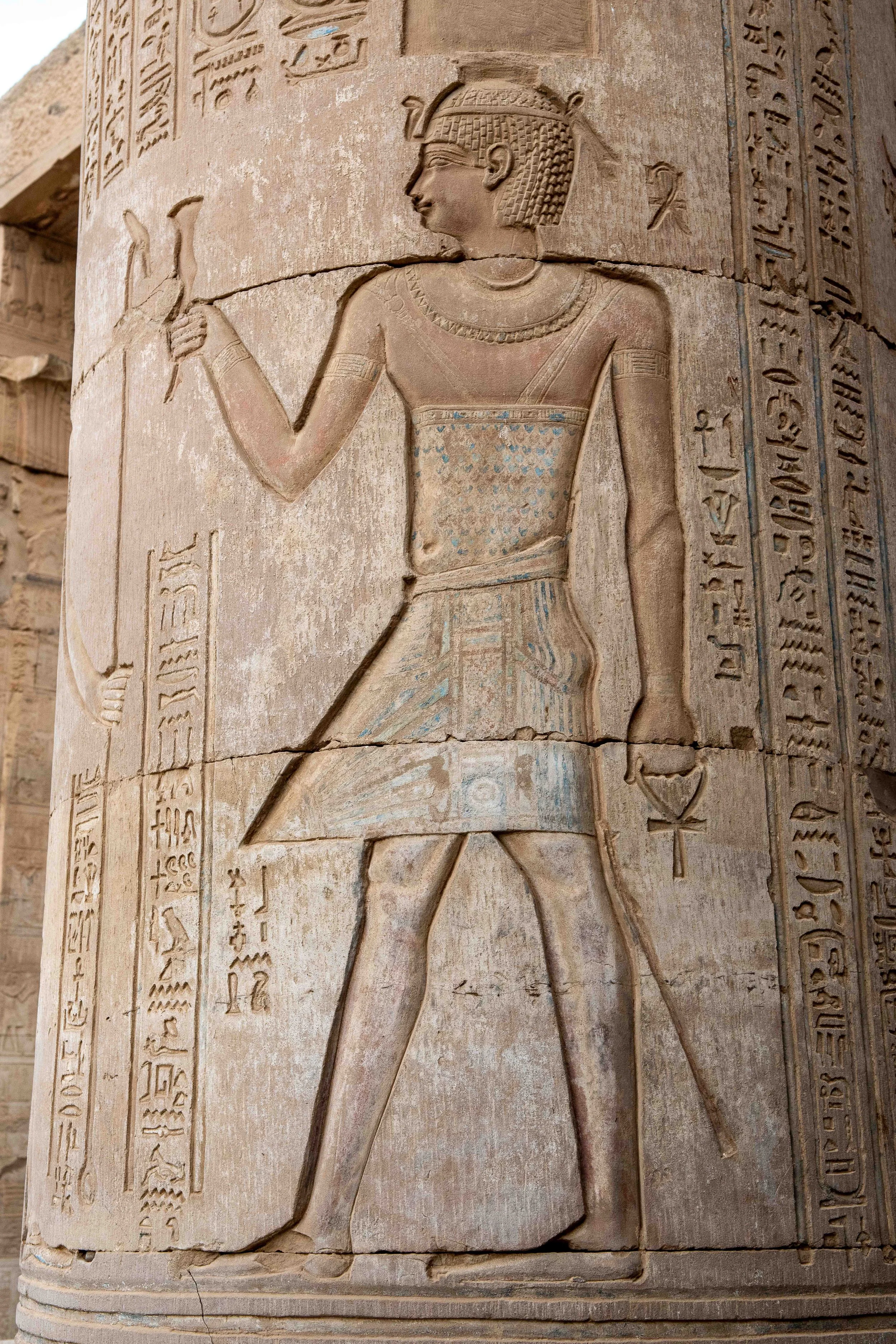
Relief of deities in adoration — Ptolemaic reliefs combining traditional pharaonic iconography with Greek-era workmanship.
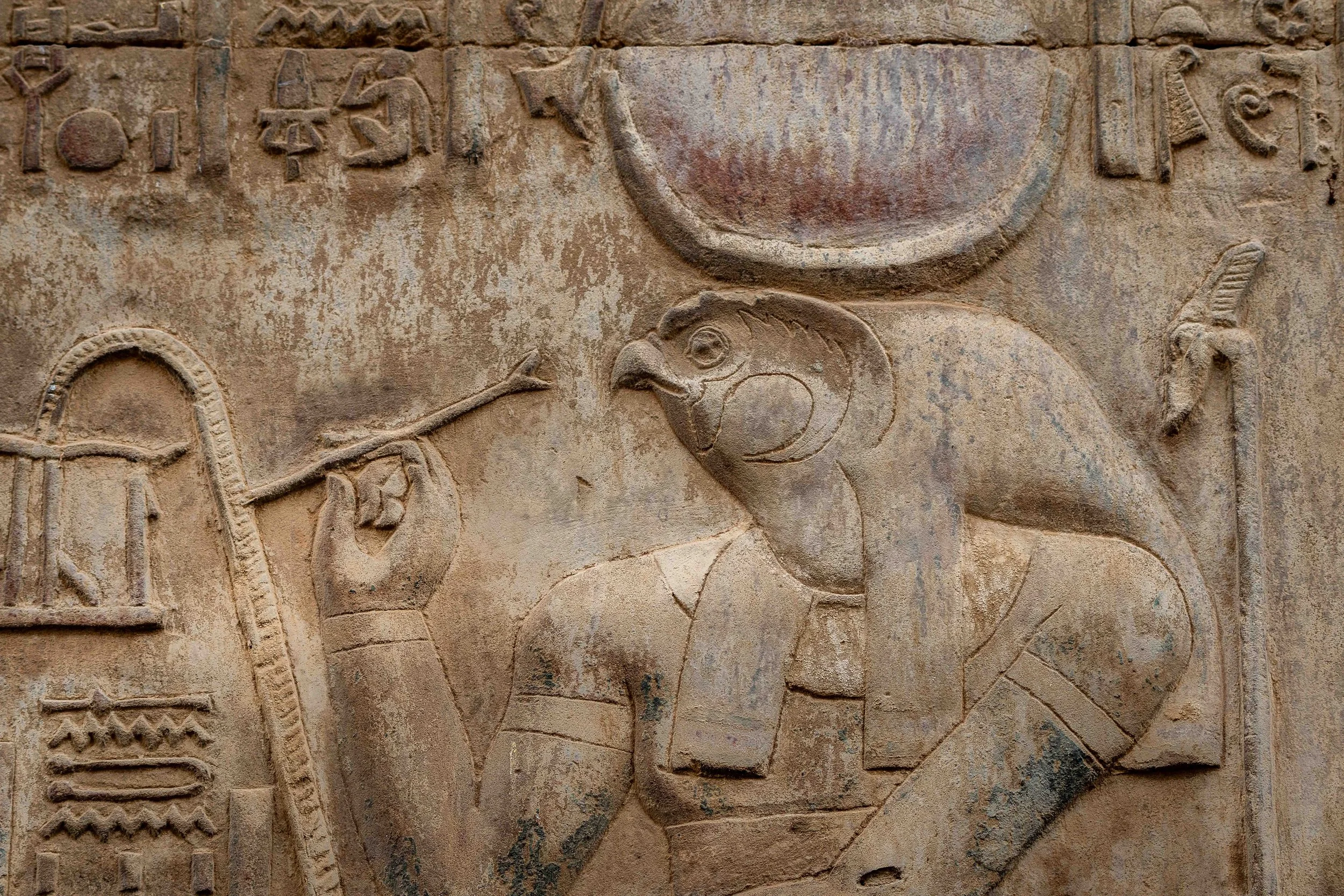
Horus the Elder (Haroeris) — Falcon-headed god associated with kingship, protection, and cosmic order; co-patron of the double temple of Kom Ombo alongside Sobek.
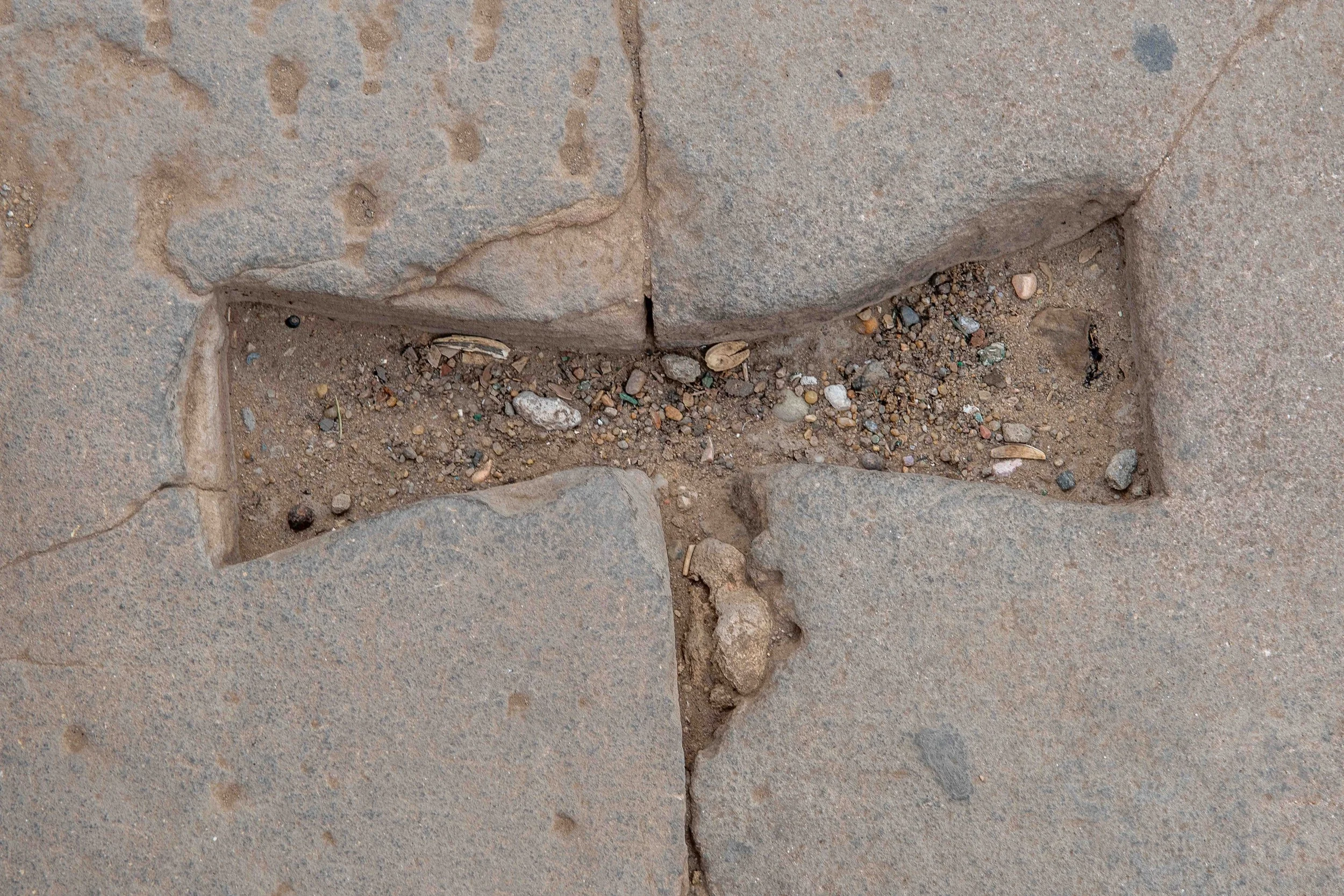
Dovetail clamp cut — Stone-cutting technique used to stabilize temple blocks; evidence of ancient construction methods.
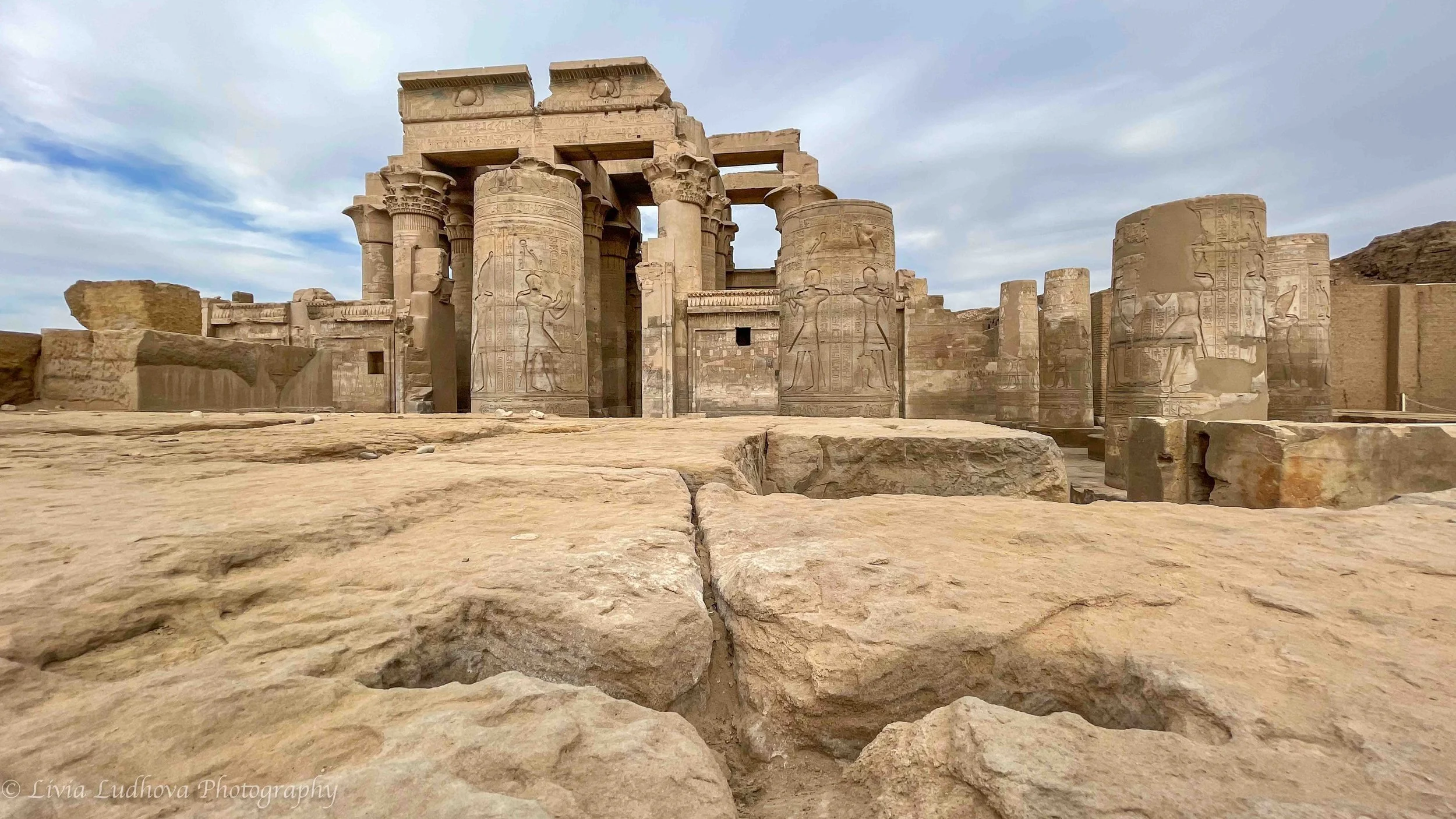
Temple of Kom Ombo - construction detail in contrast with a general view.
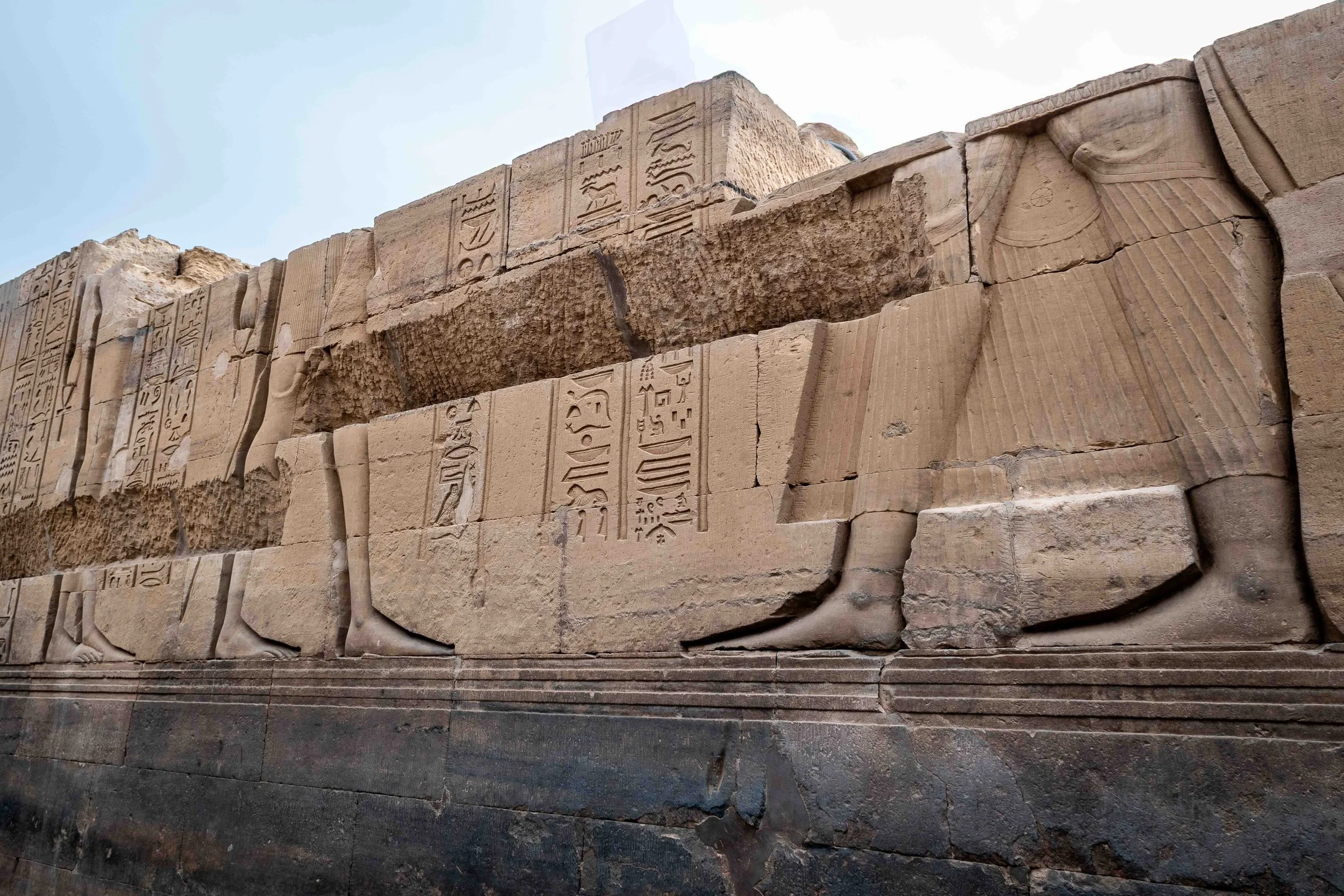
Outer wall reliefs — Ritual scenes and inscriptions carved along the exterior walls during the Ptolemaic dynasty.
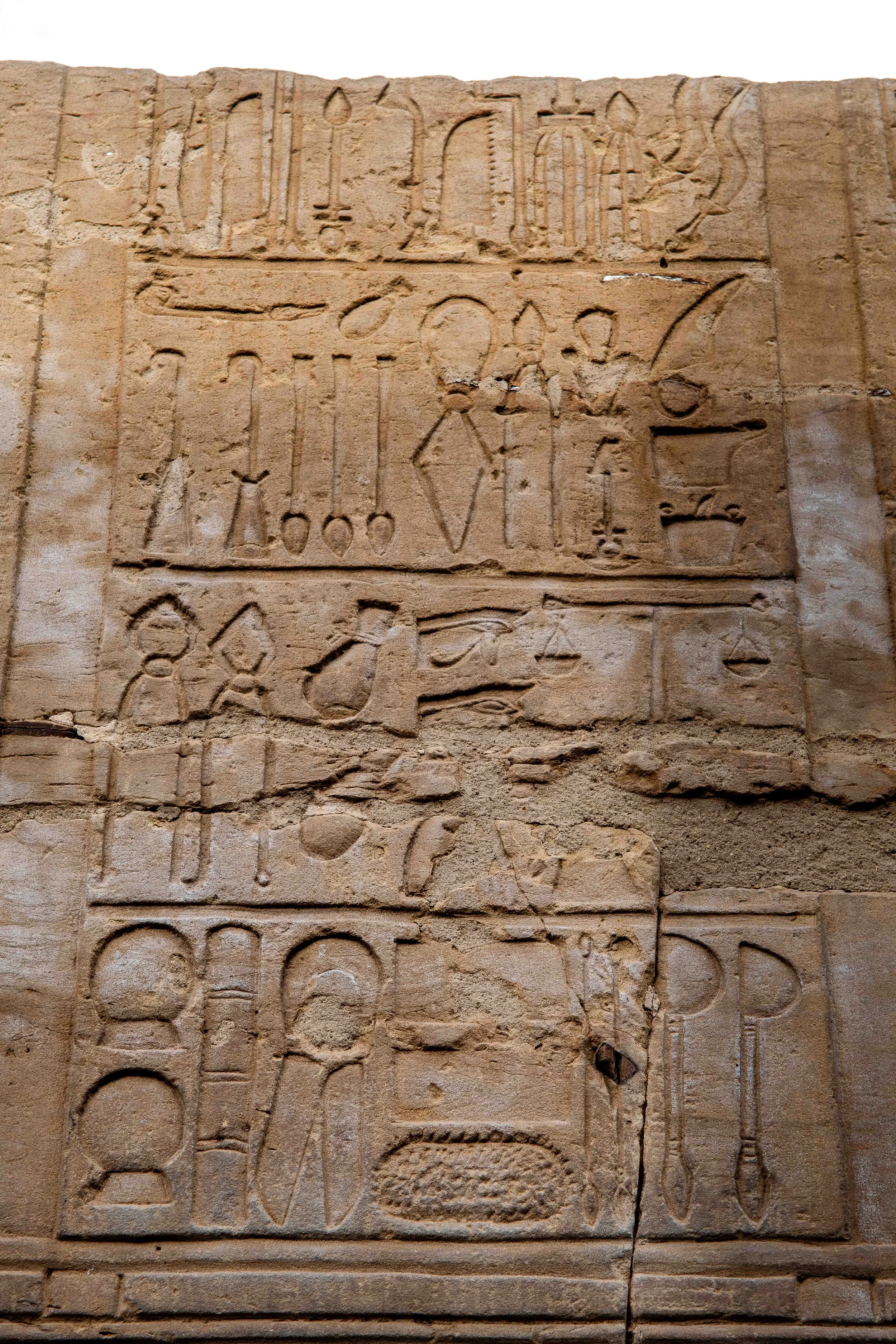
Medical instruments relief — Famous Kom Ombo panel depicting surgical tools, rare in ancient Egyptian art.
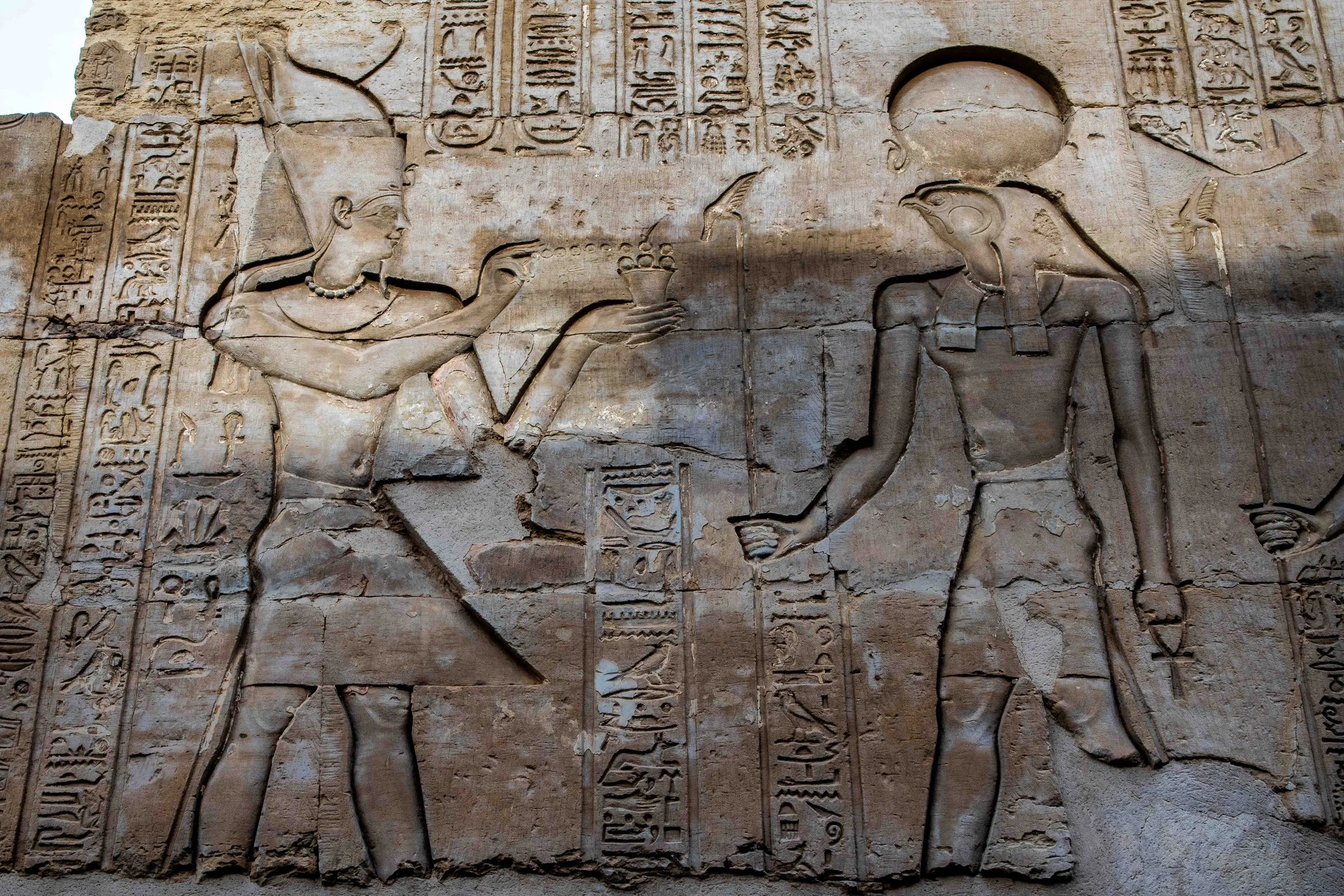
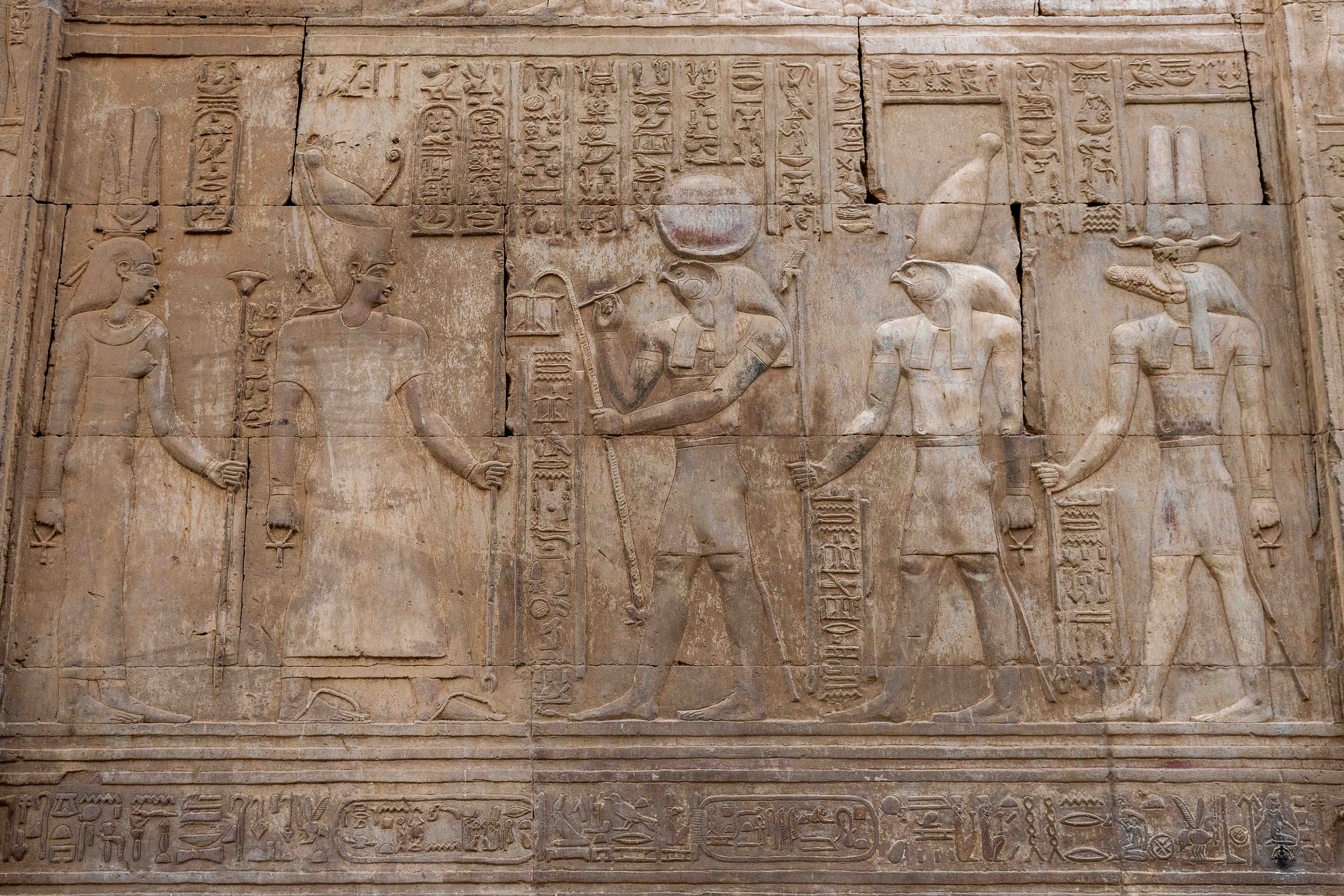
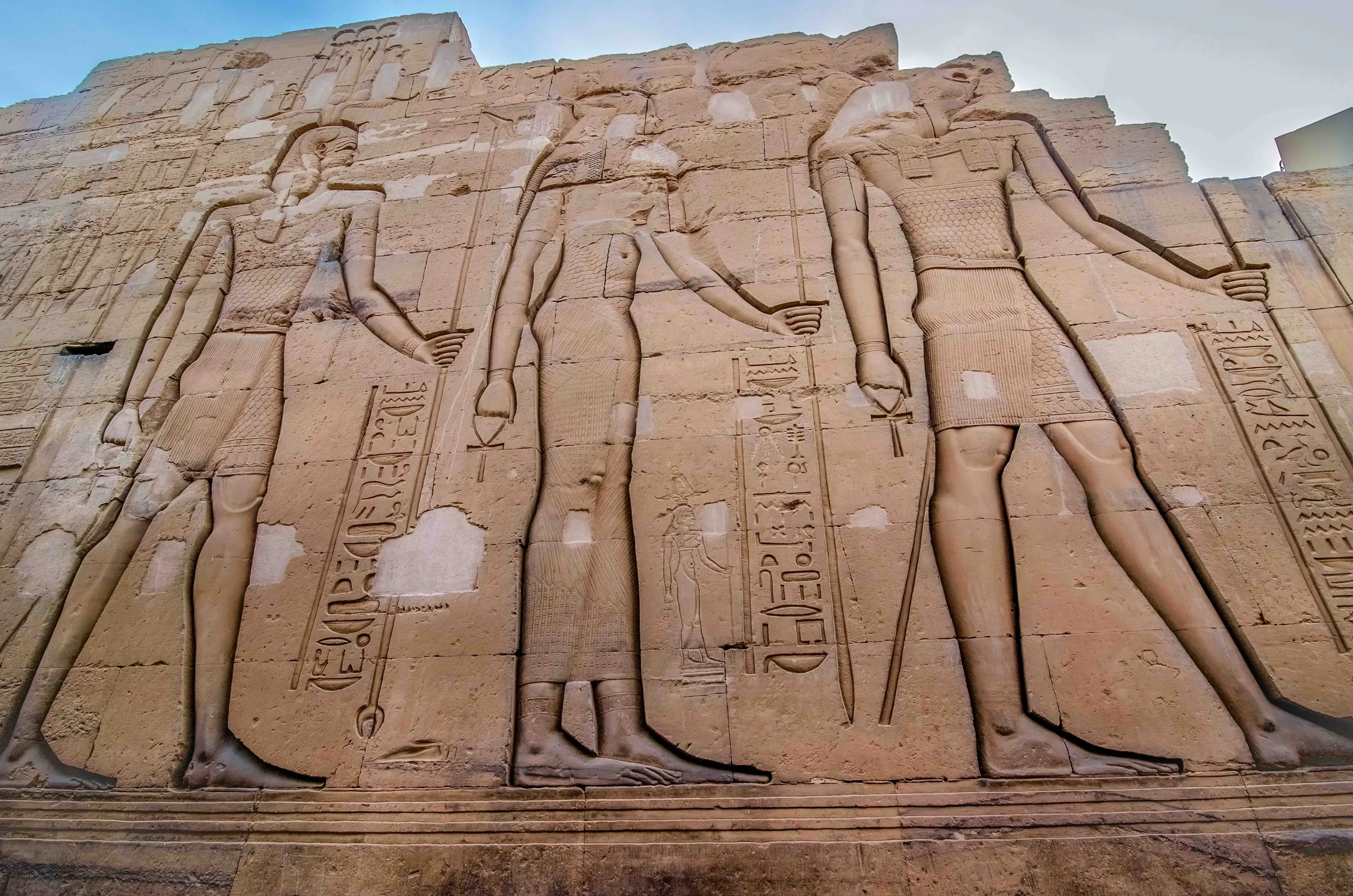
Ritual scene with Horus and king — Pharaoh shown performing offerings, maintaining maat (cosmic order).
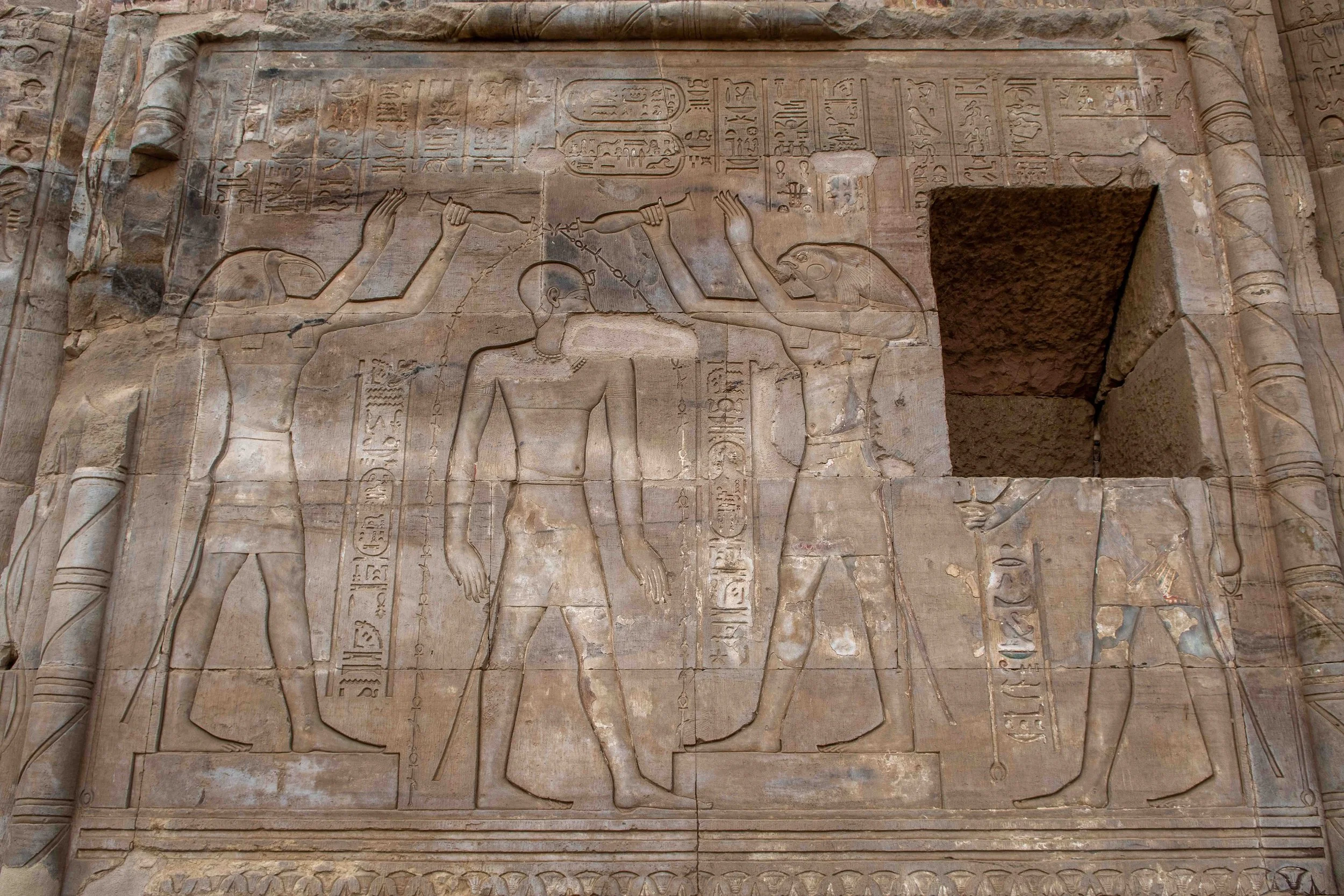
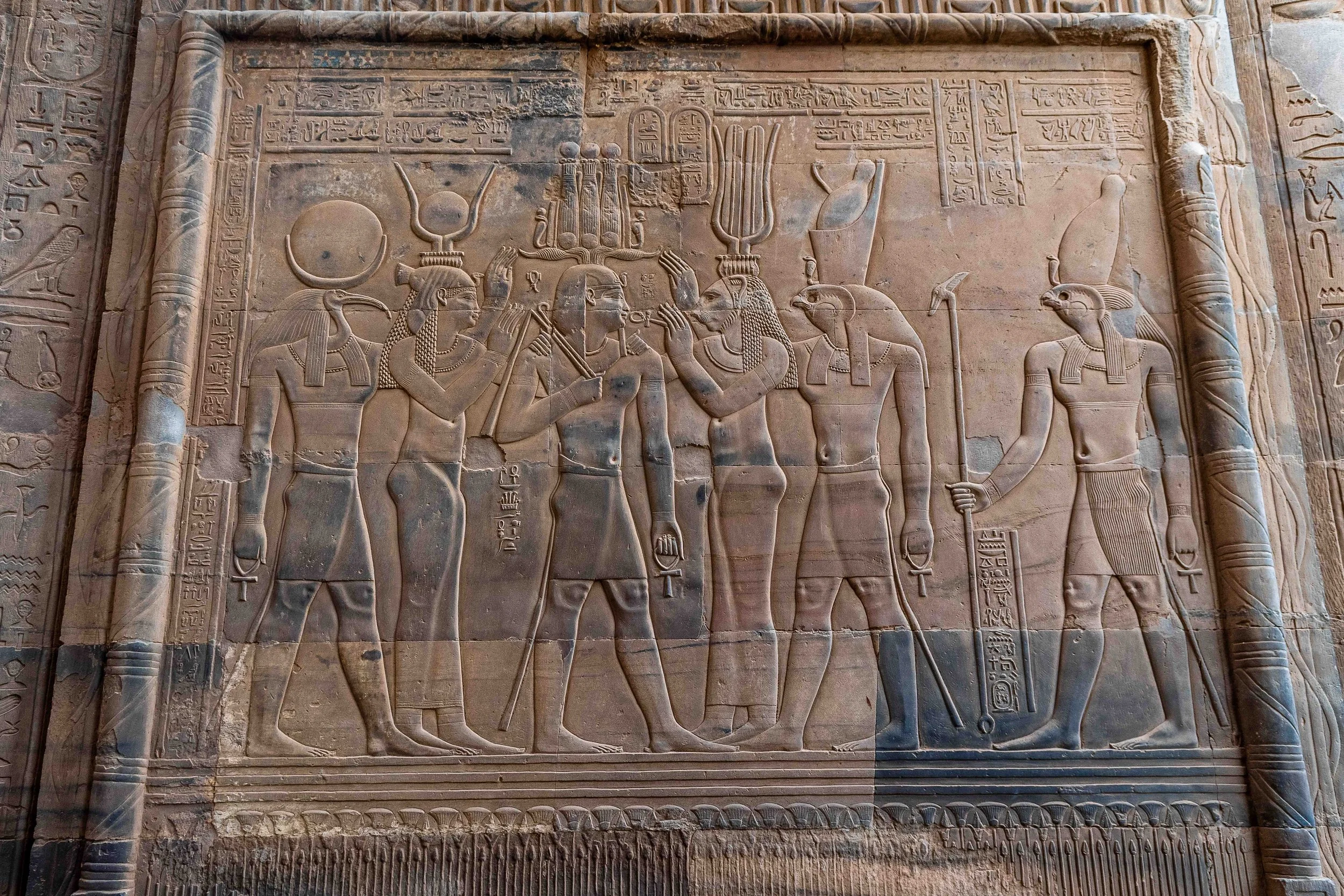
The king presents between two deities - Thoth, the ibis-headed god of wisdom and writing, and Horus, the falcon-headed god of kingship.
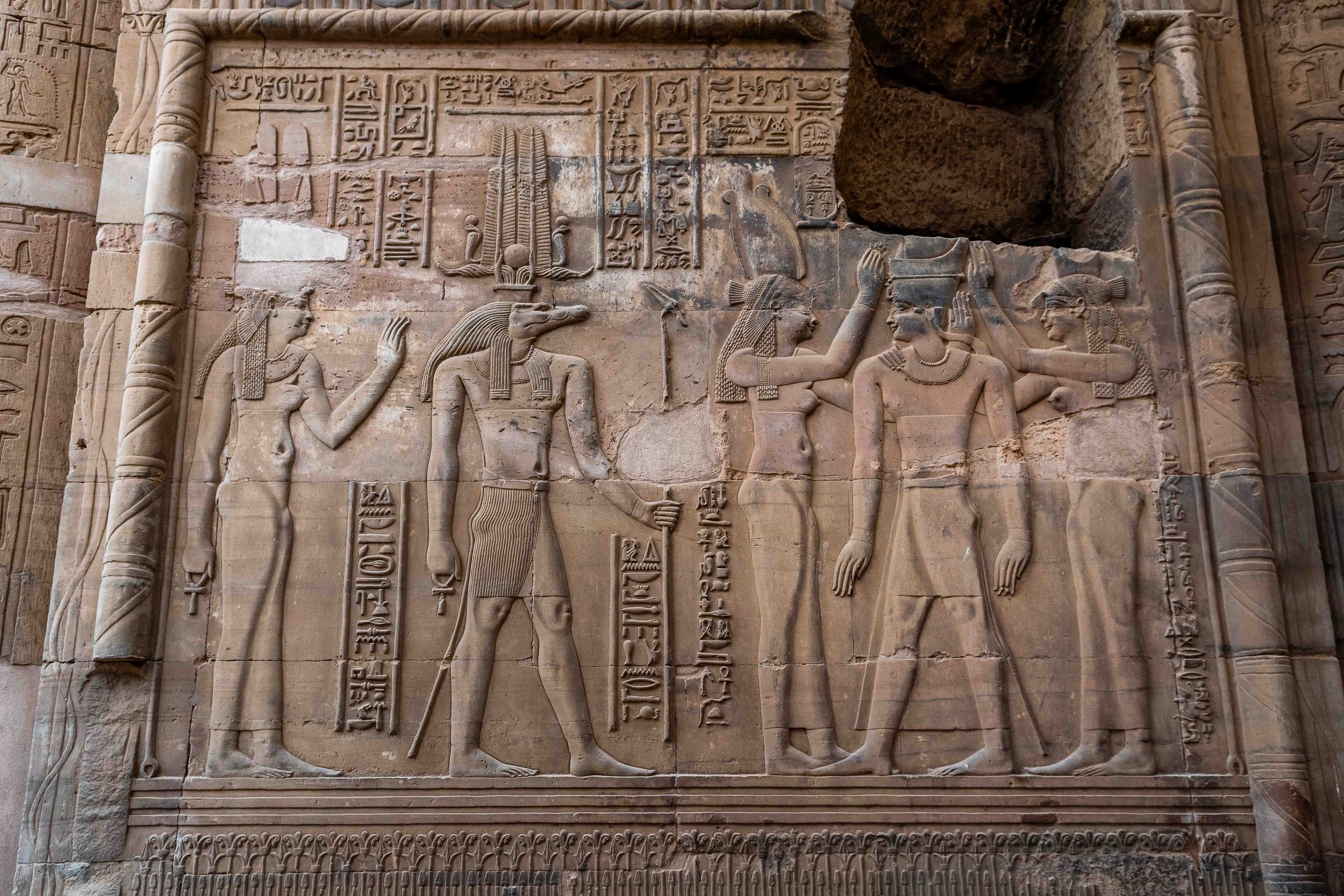
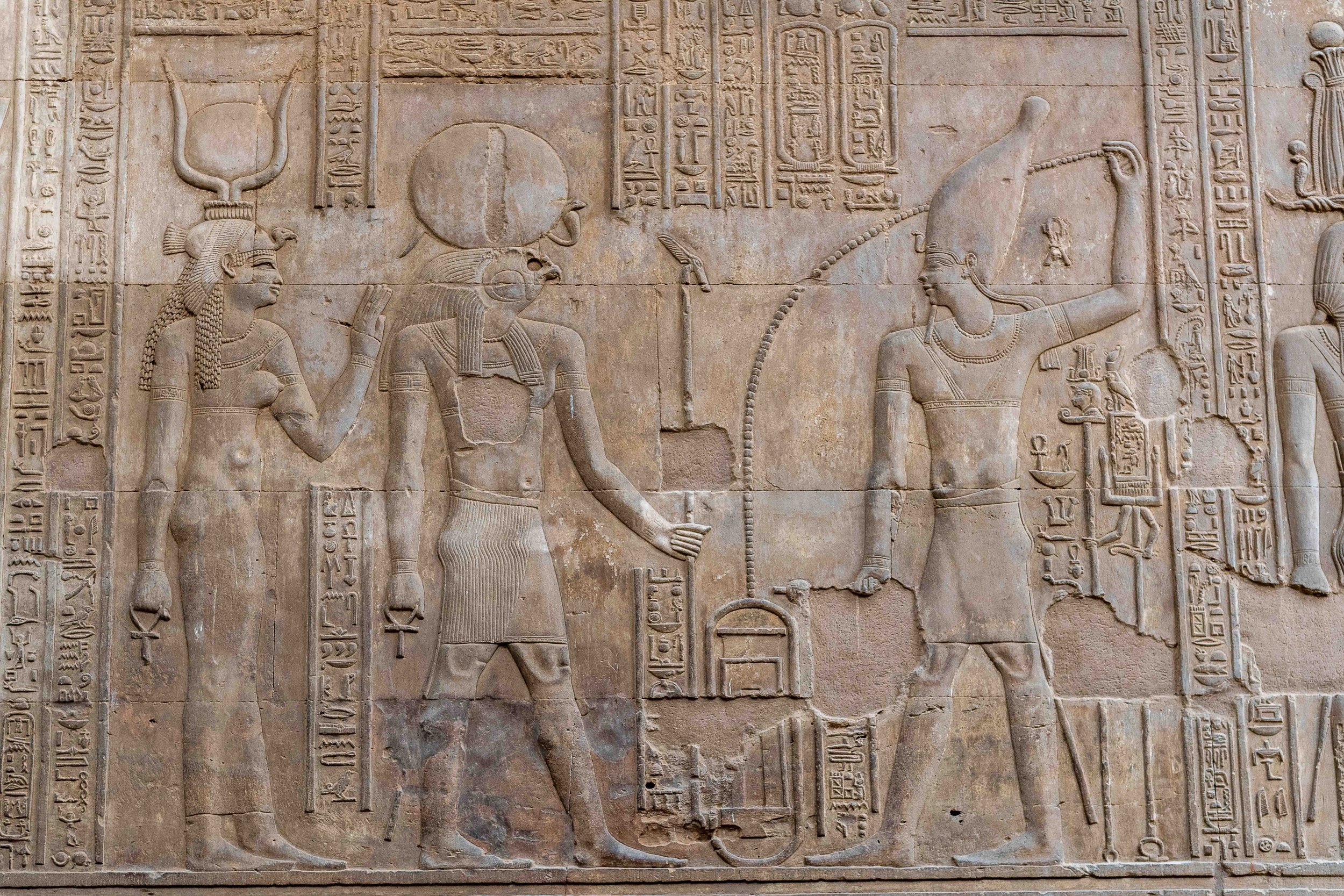
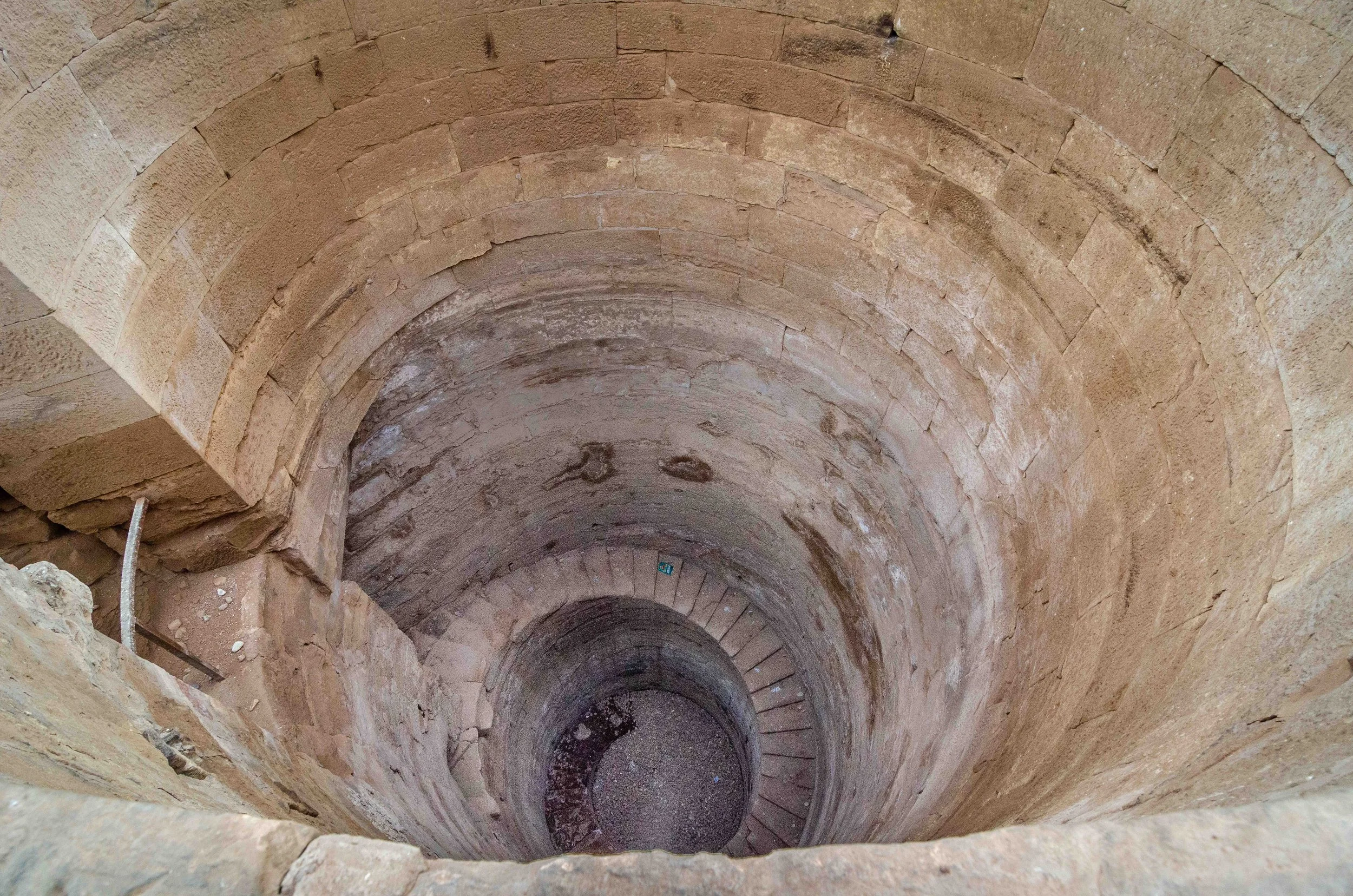
Spiral well shaft — Nilometer-related structure used to monitor Nile flood levels crucial for agriculture.
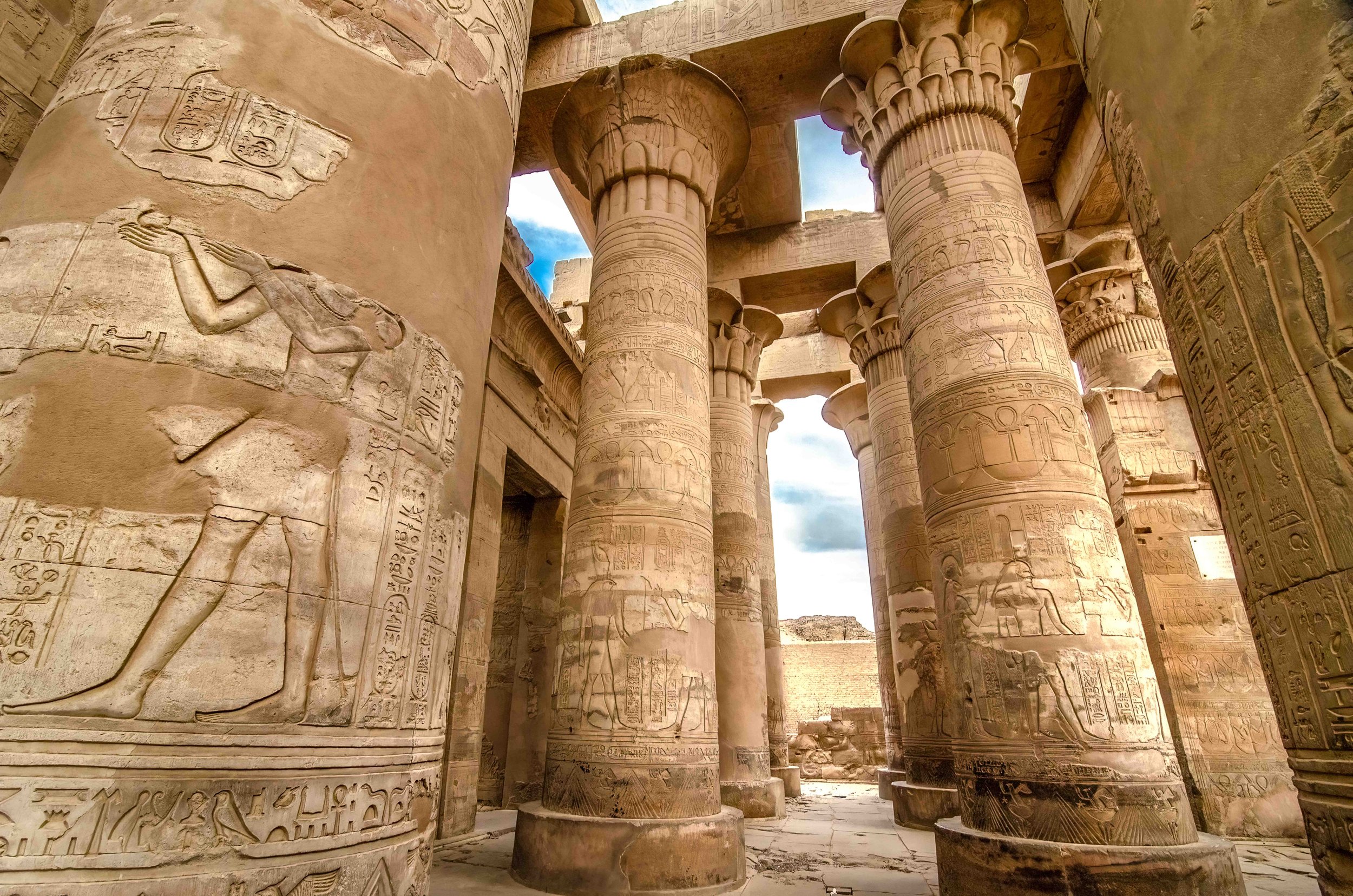
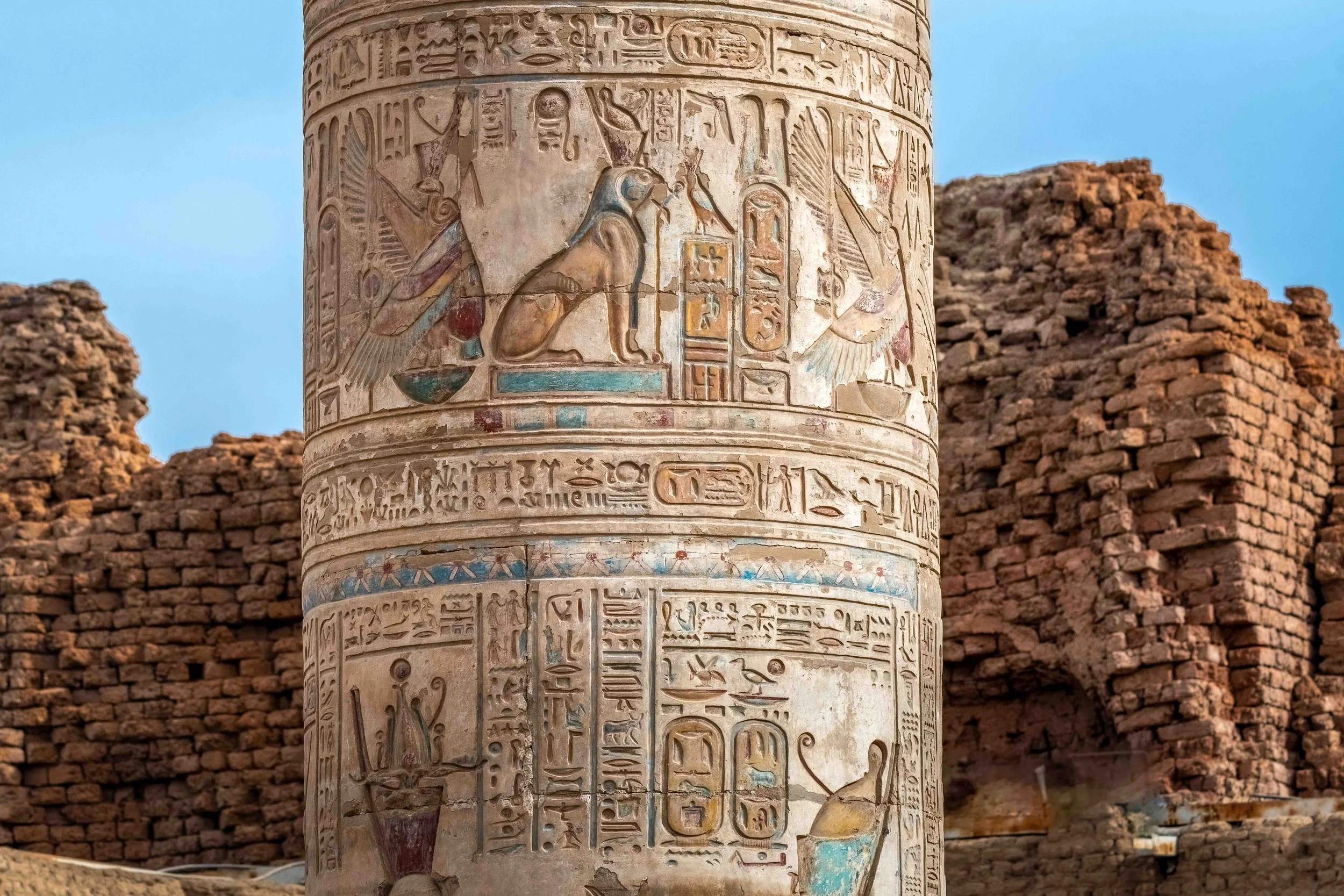
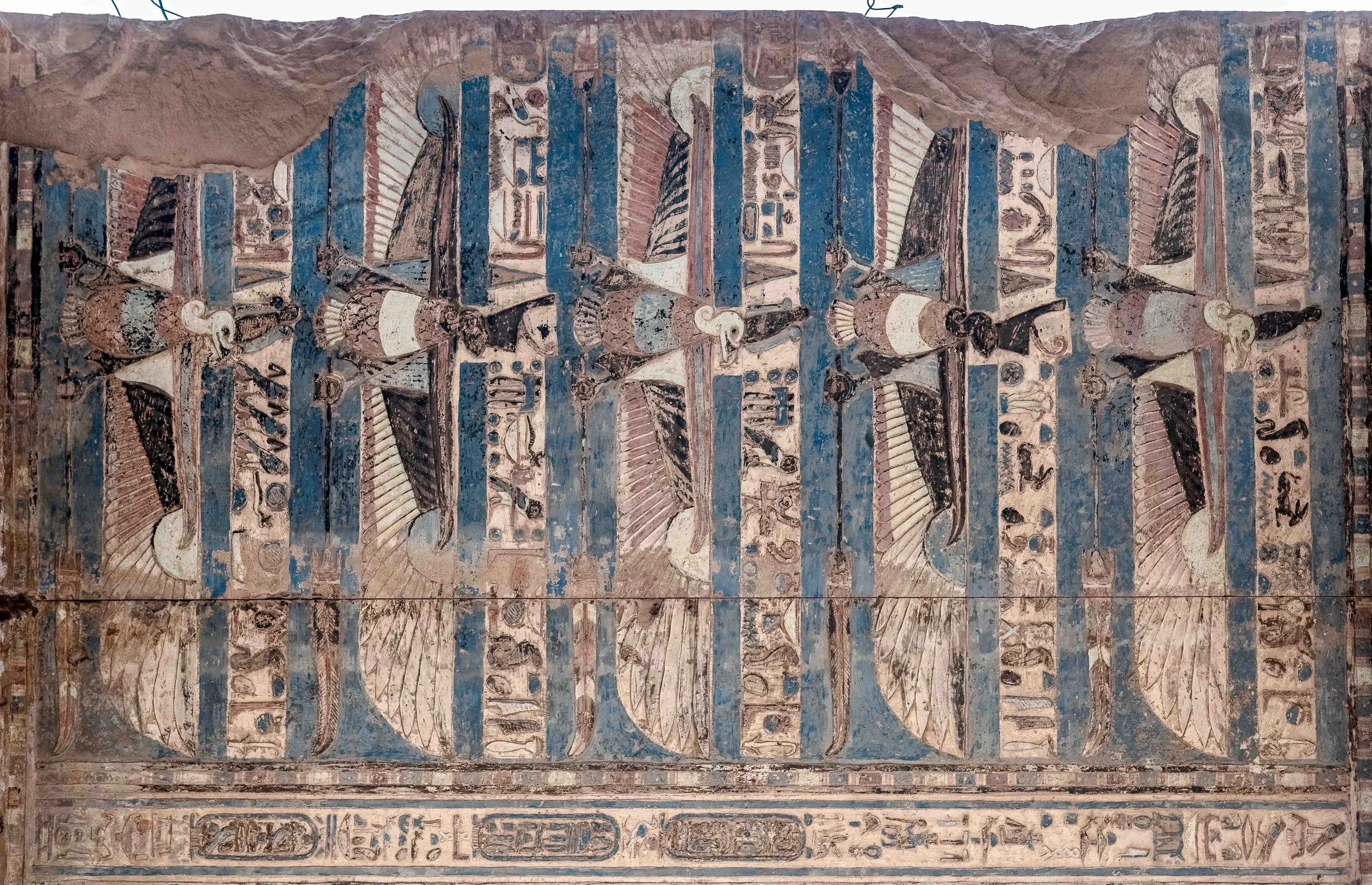
Hypostyle columns — Palm and floral capitals referencing fertility and the Nile environment.
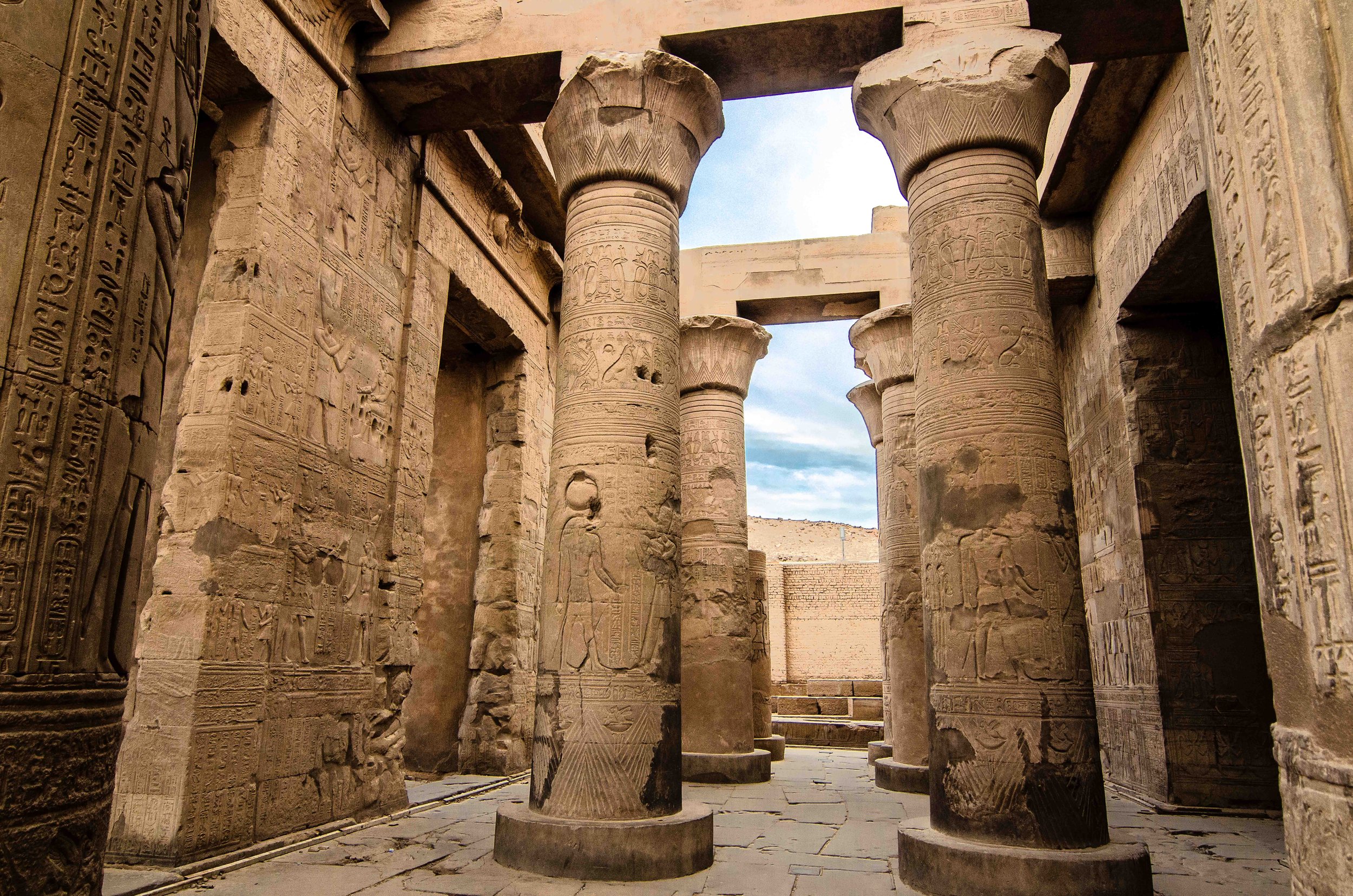
Hypostyle columns — vertical rhythm of the temple interior.
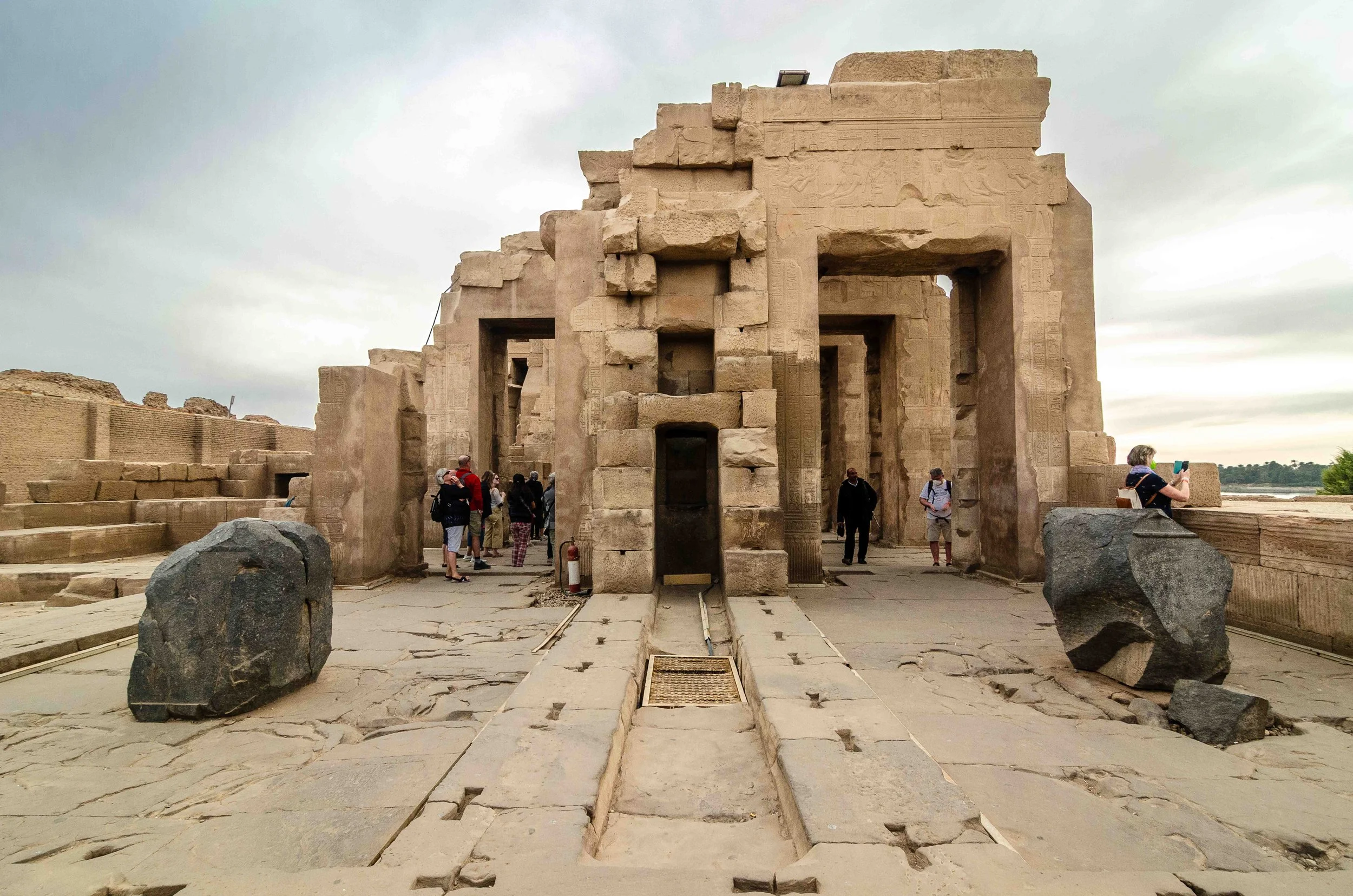
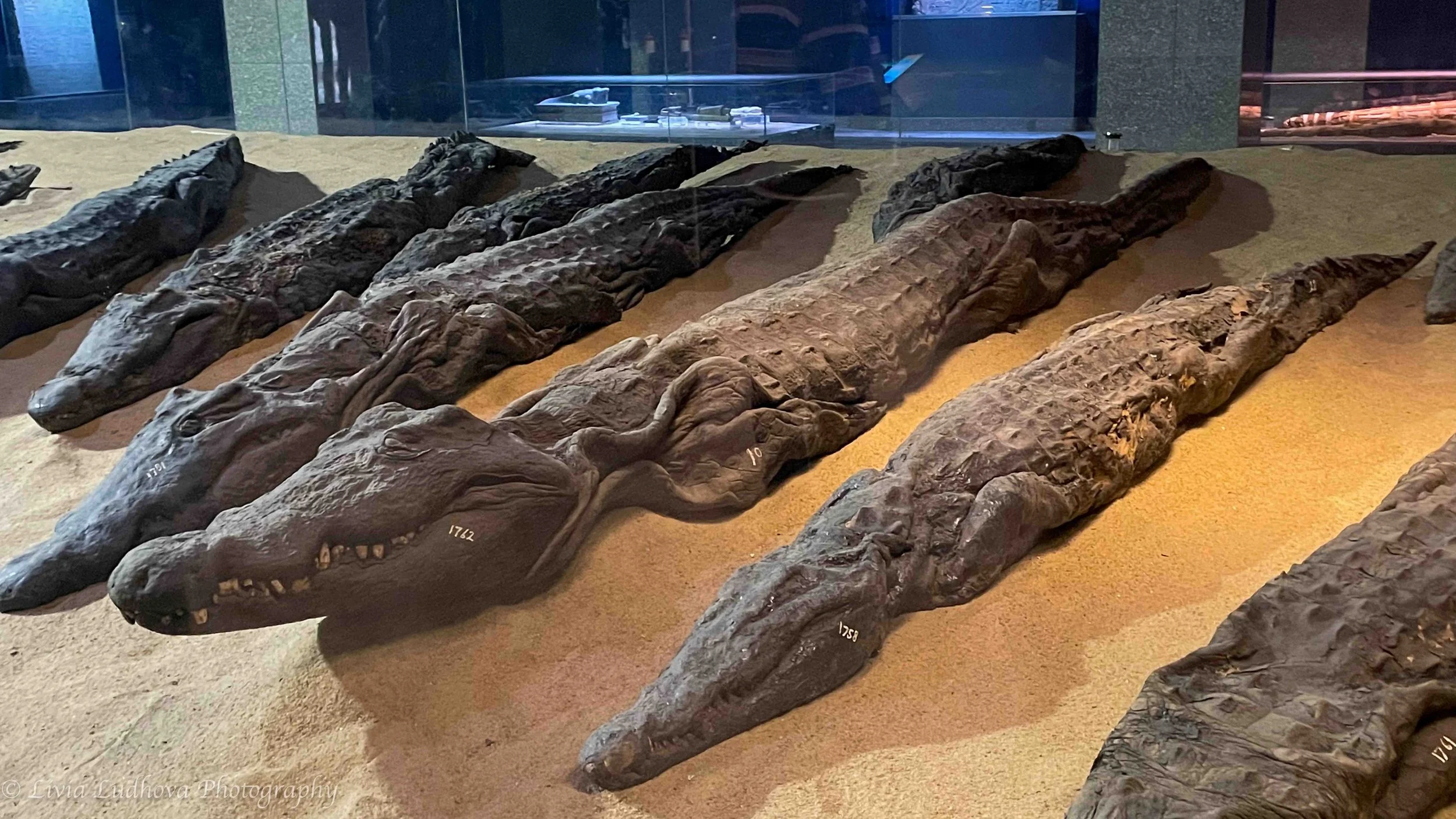
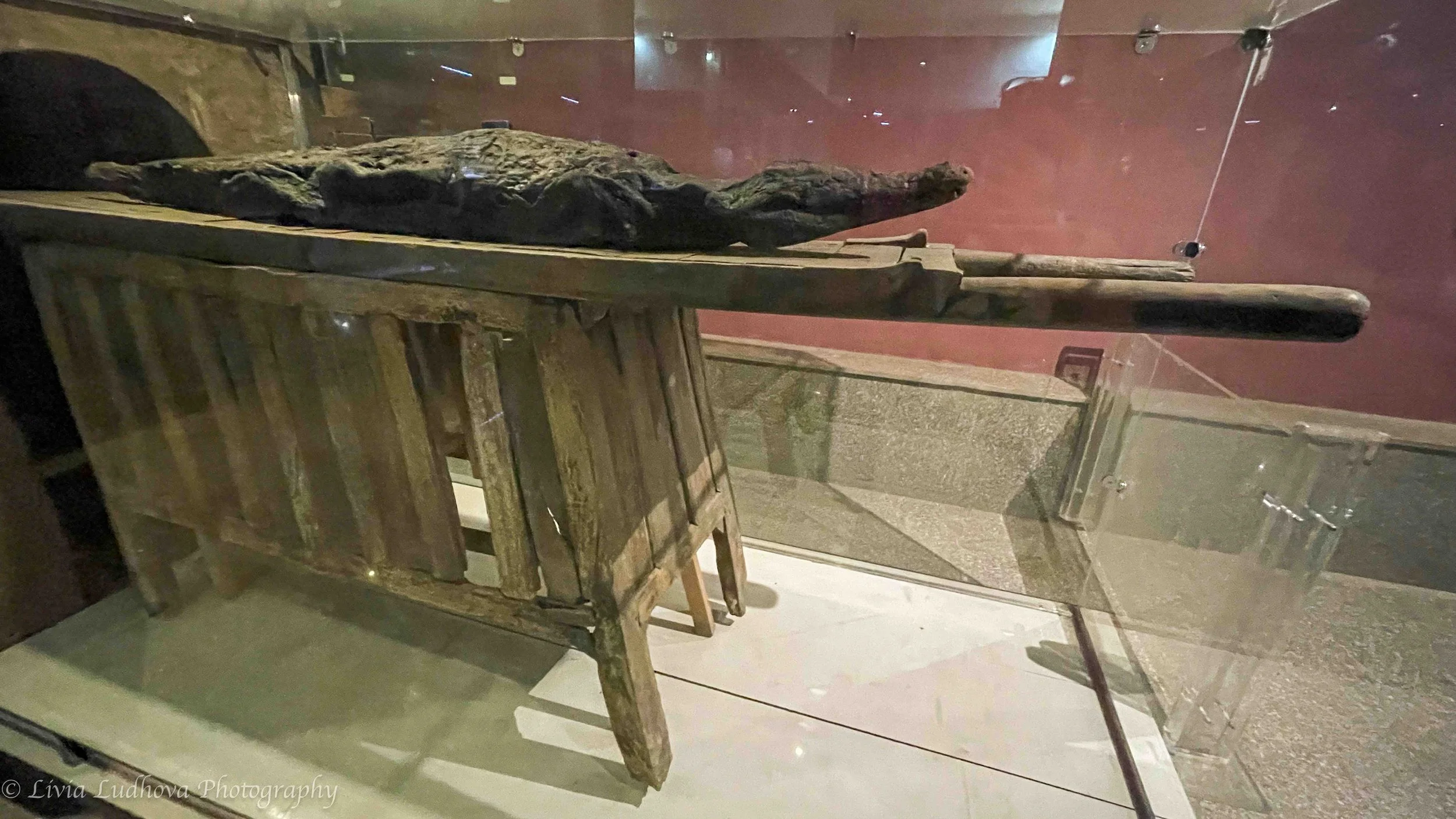
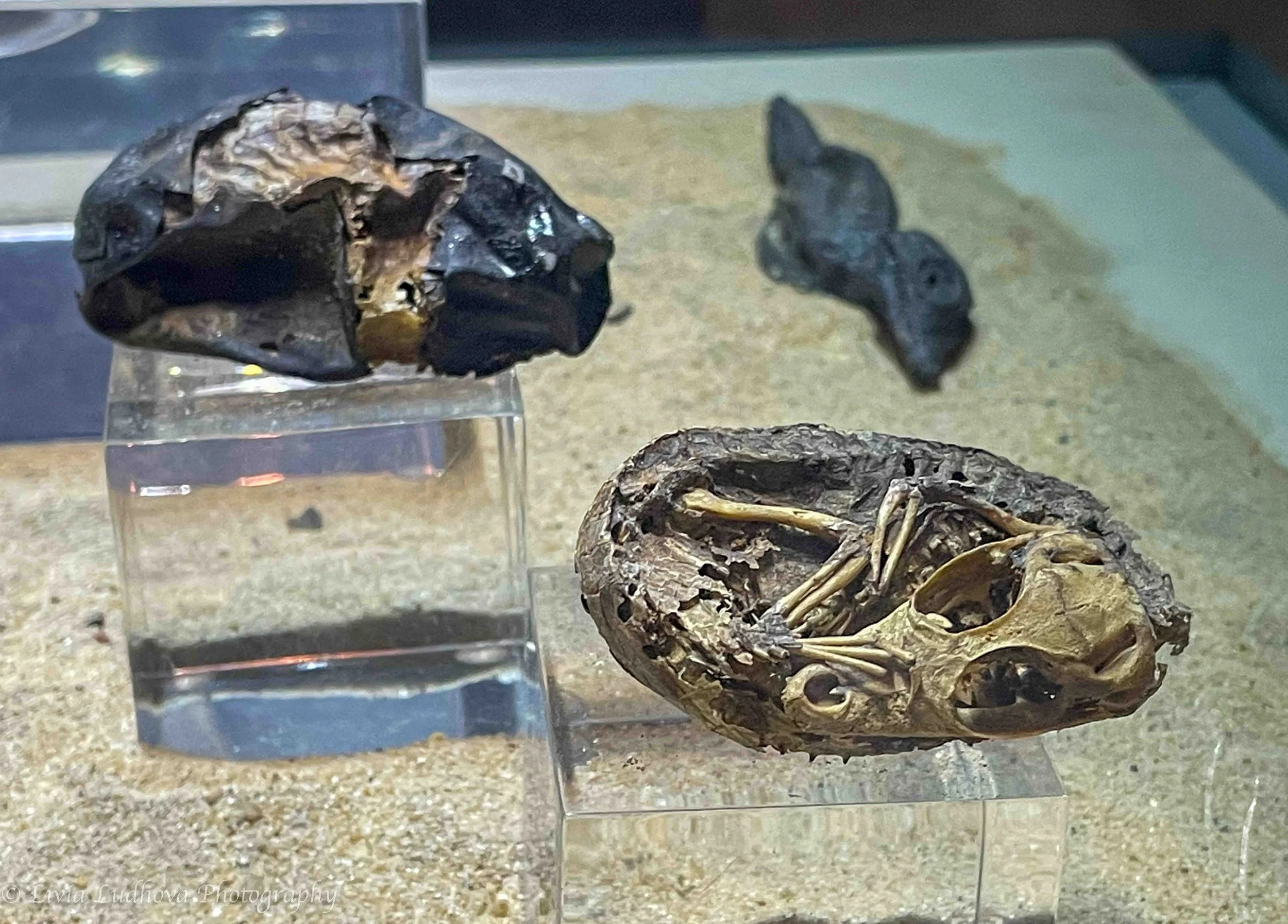
Crocodile mummies (museum display) — cult of Sobek at Kom Ombo..
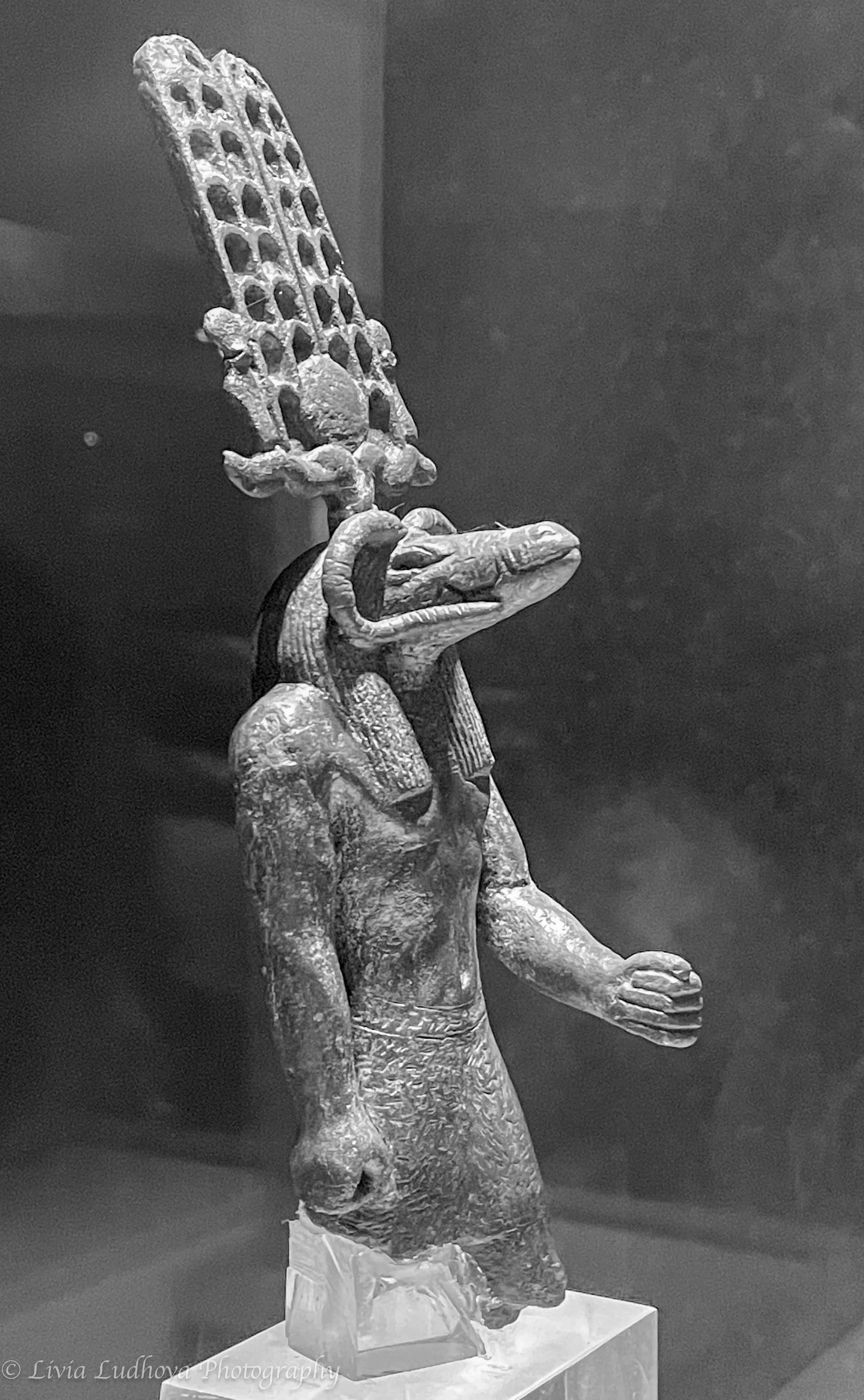
Bronze statue of Sobek (museum) — Votive object reflecting popular devotion to the crocodile god.
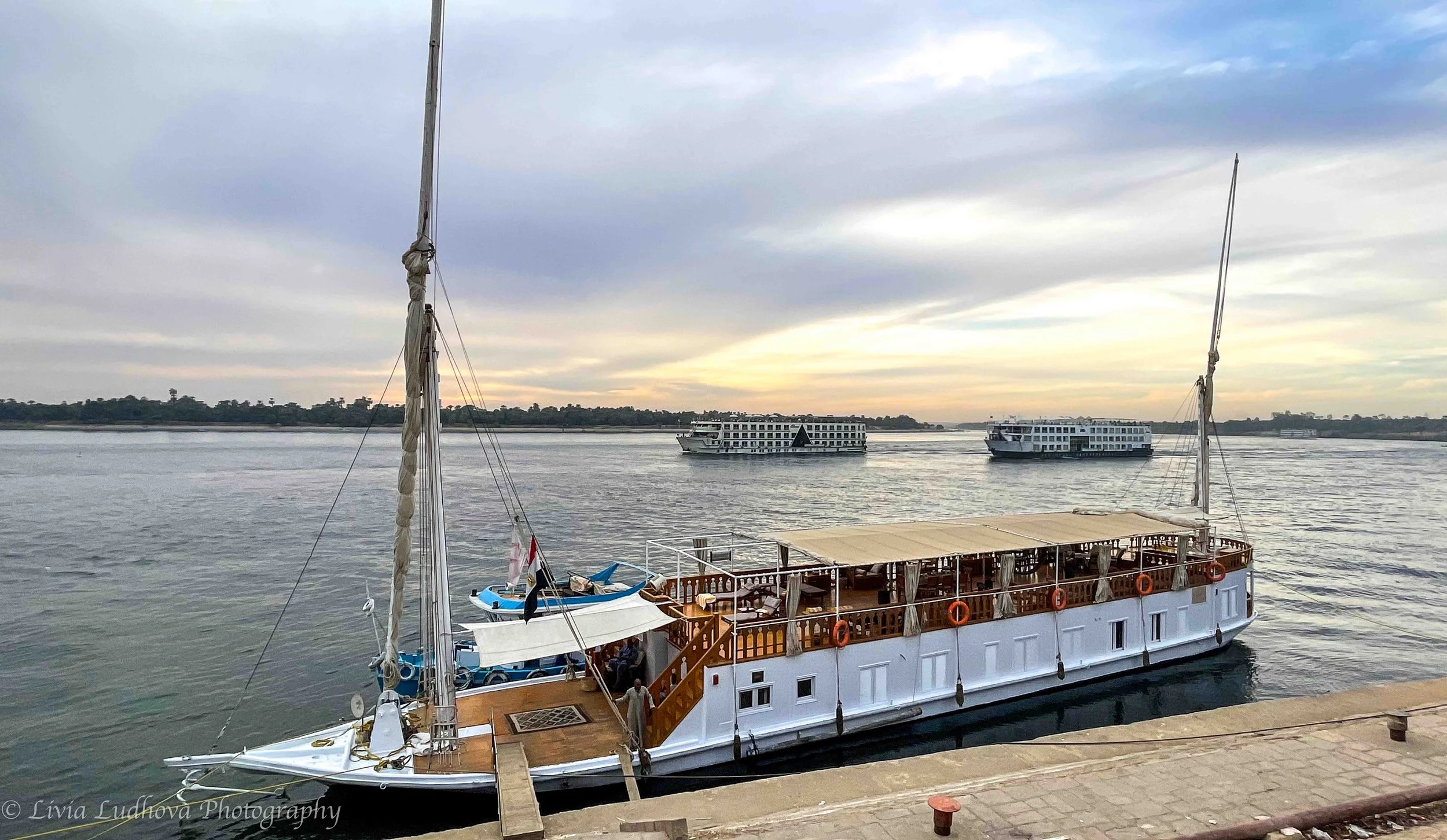
Dahabiya at sunset.
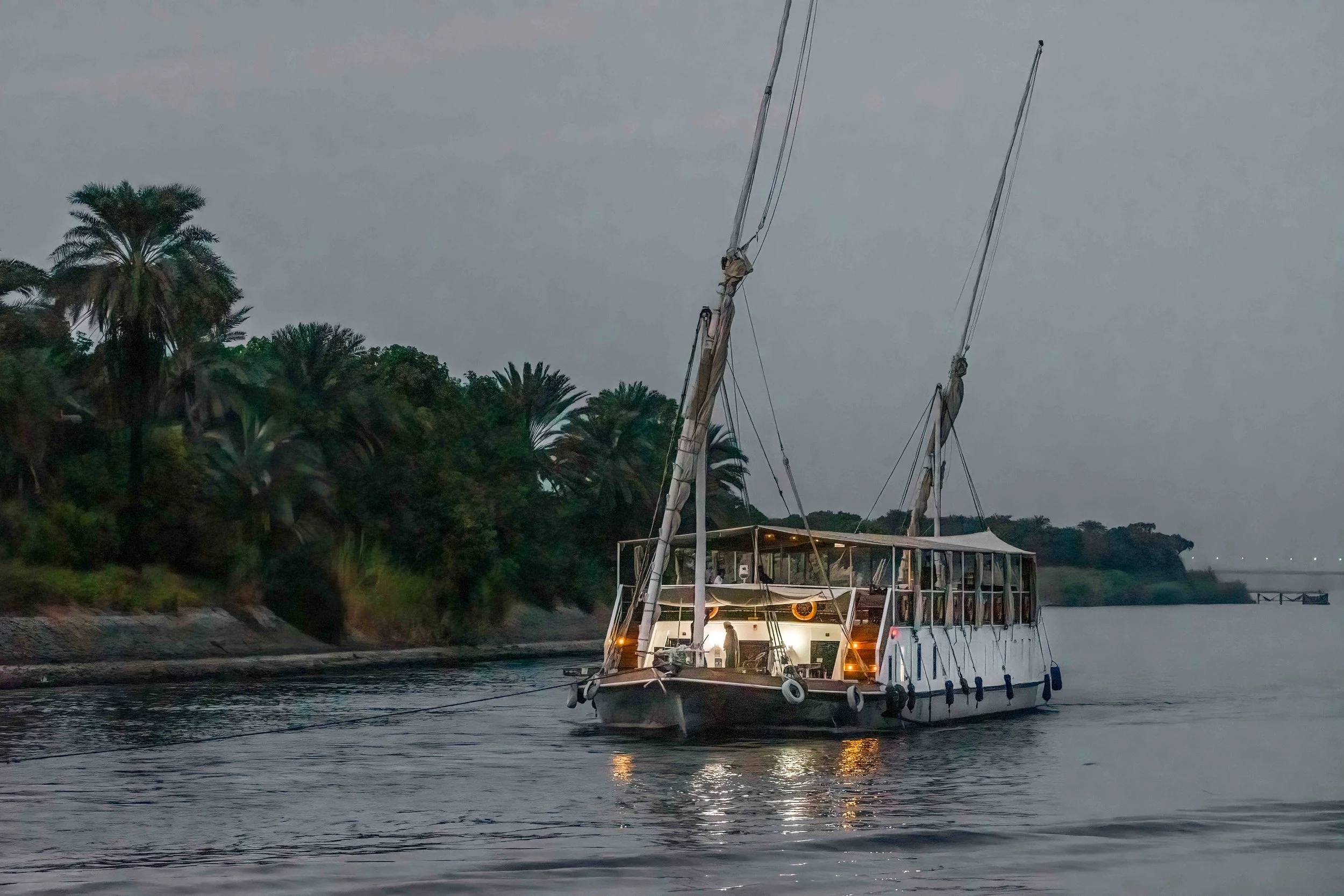
Evening navigation — calm Nile conditions at dusk.
Magic night moment.
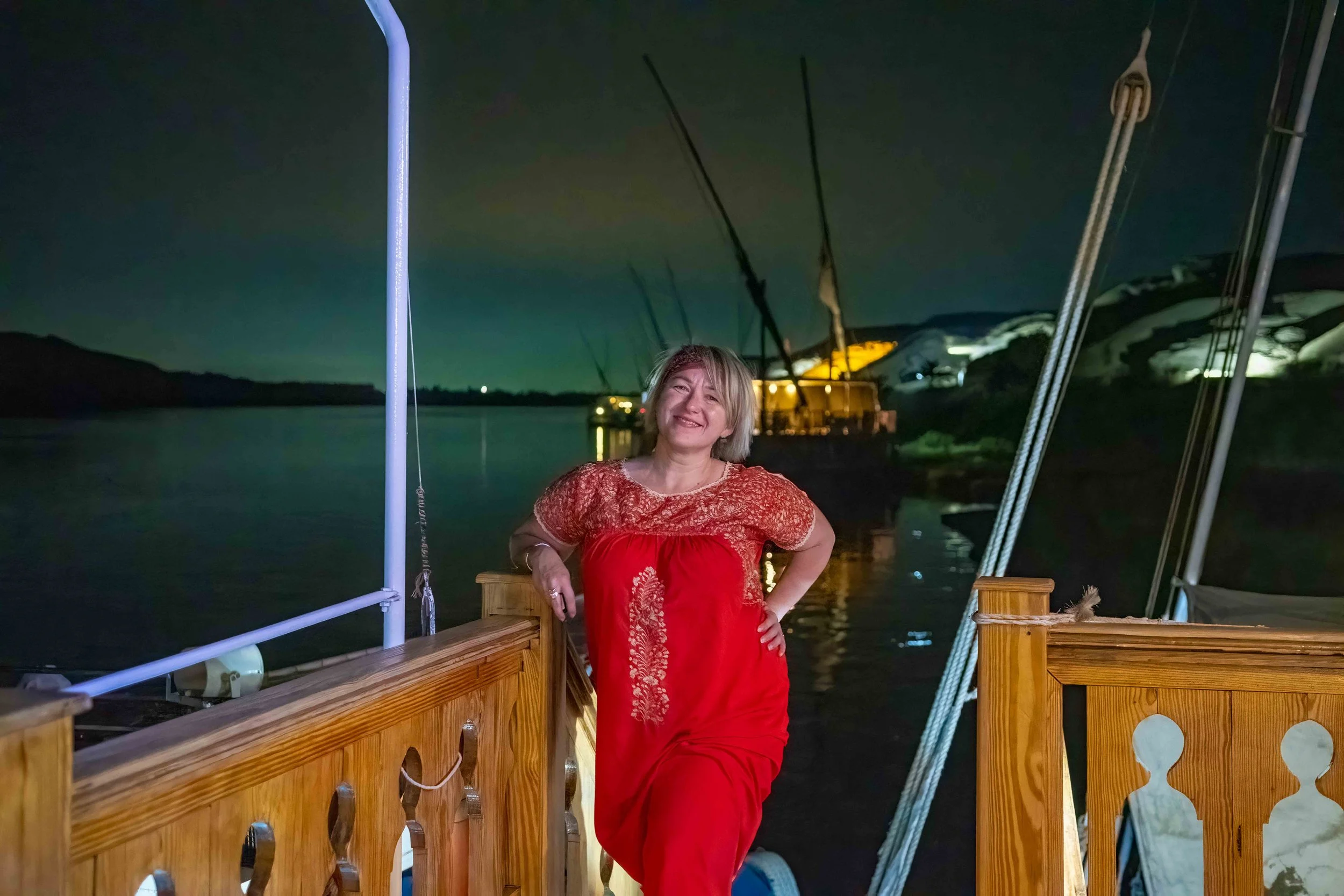
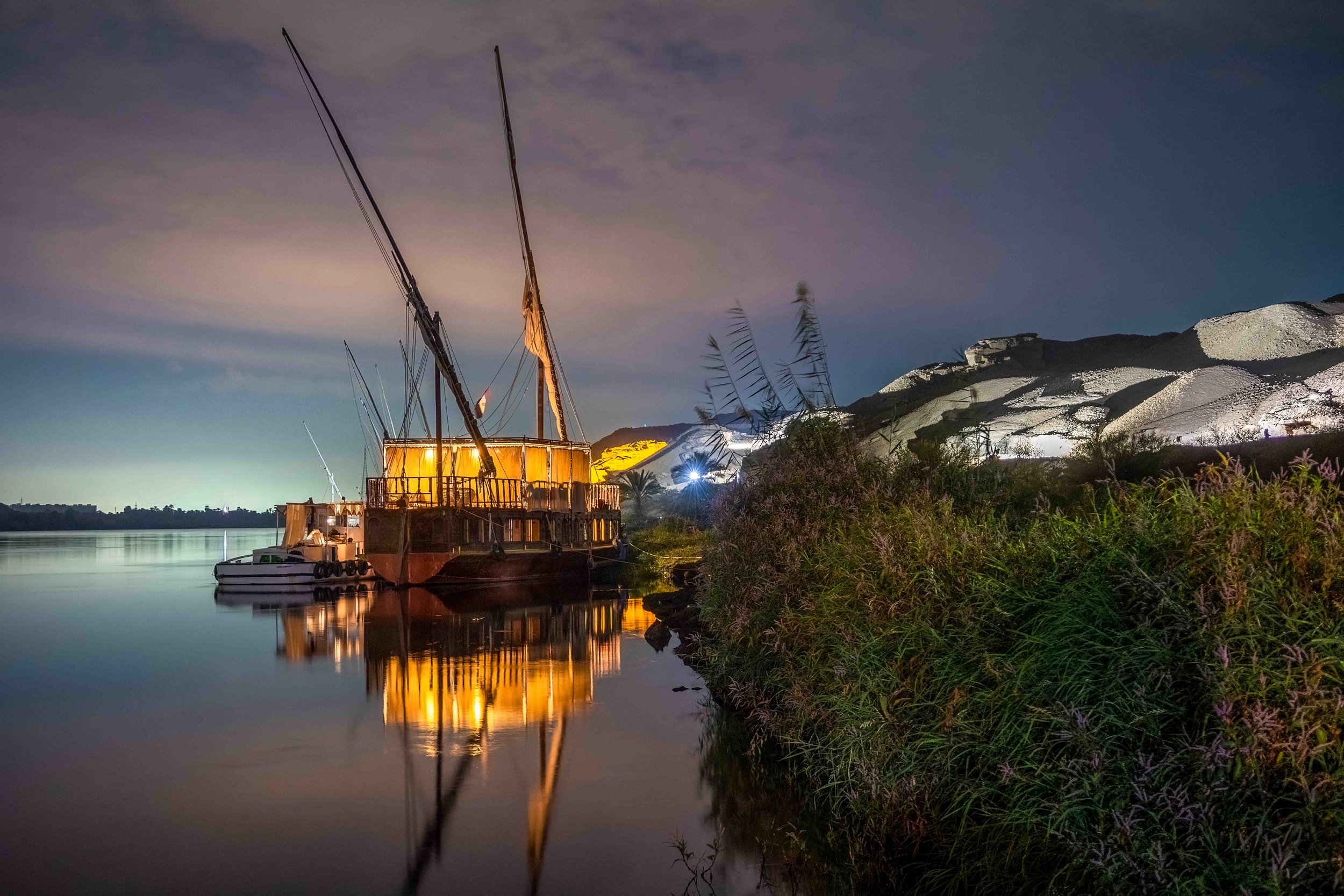
Dahabiya illuminated at night — vessel as temporary home.
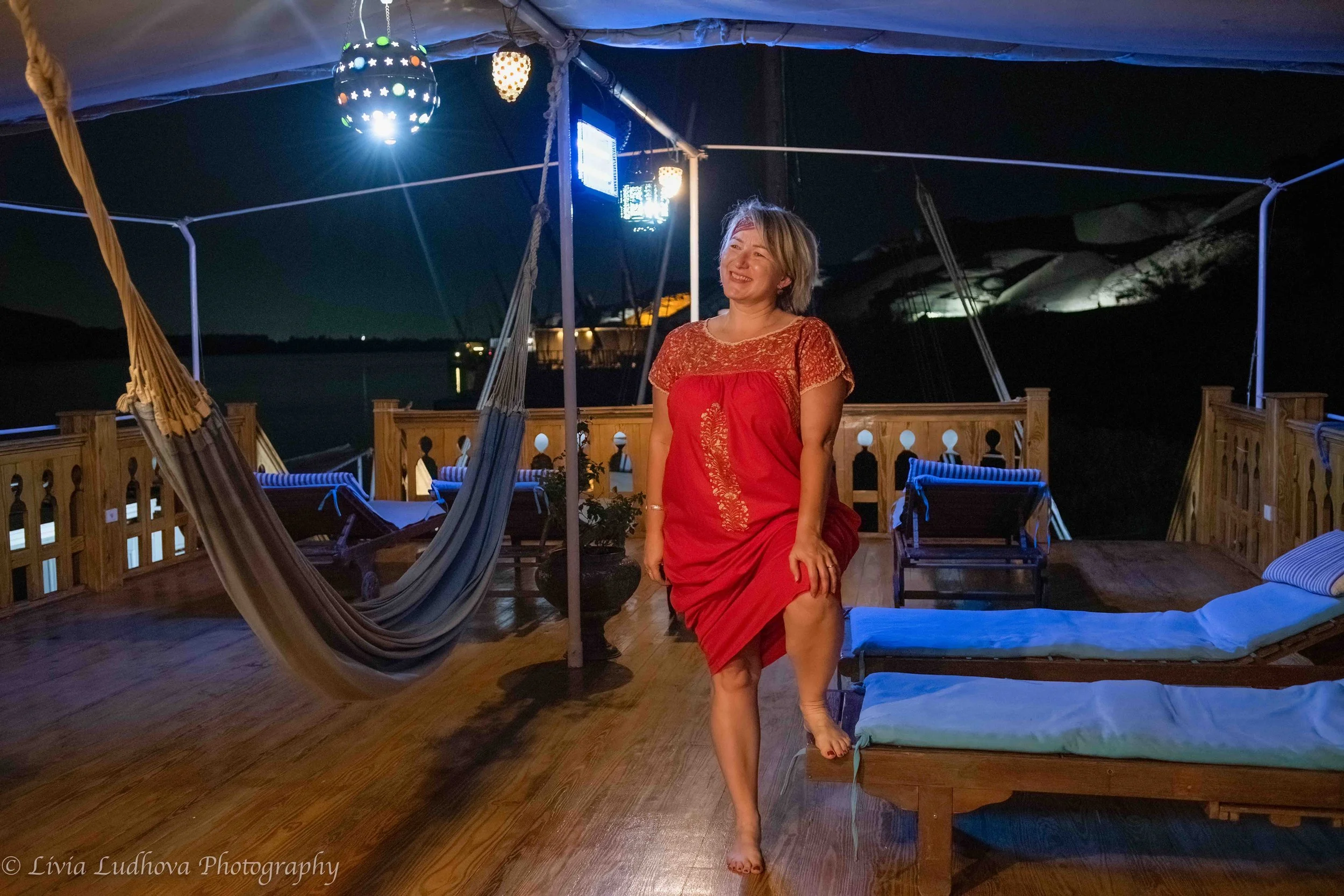
Special night atmosphere.
Day 3: Nile Cruise: Gebel El Silsila and Edfu
Dec 28: Nile cruise with Dahabyia Loulia Day 2 – sandstone querry of Gebel El Silsila - Temple of Horus in Edfu
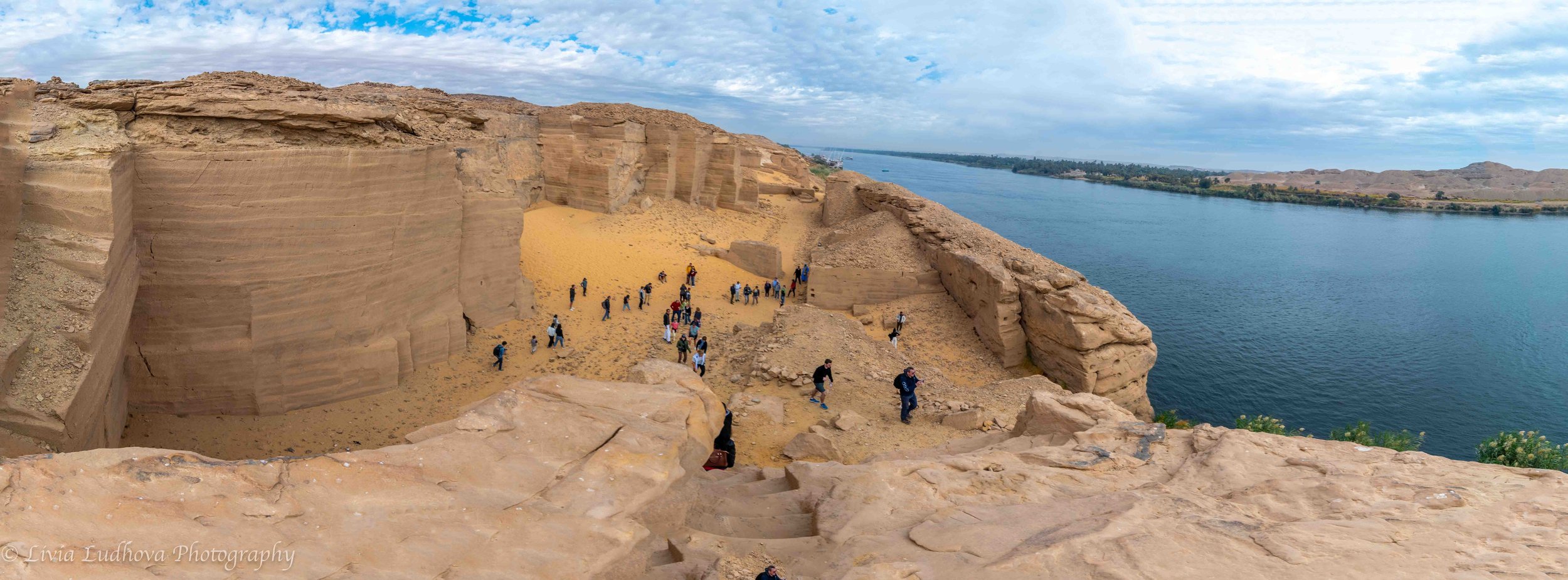
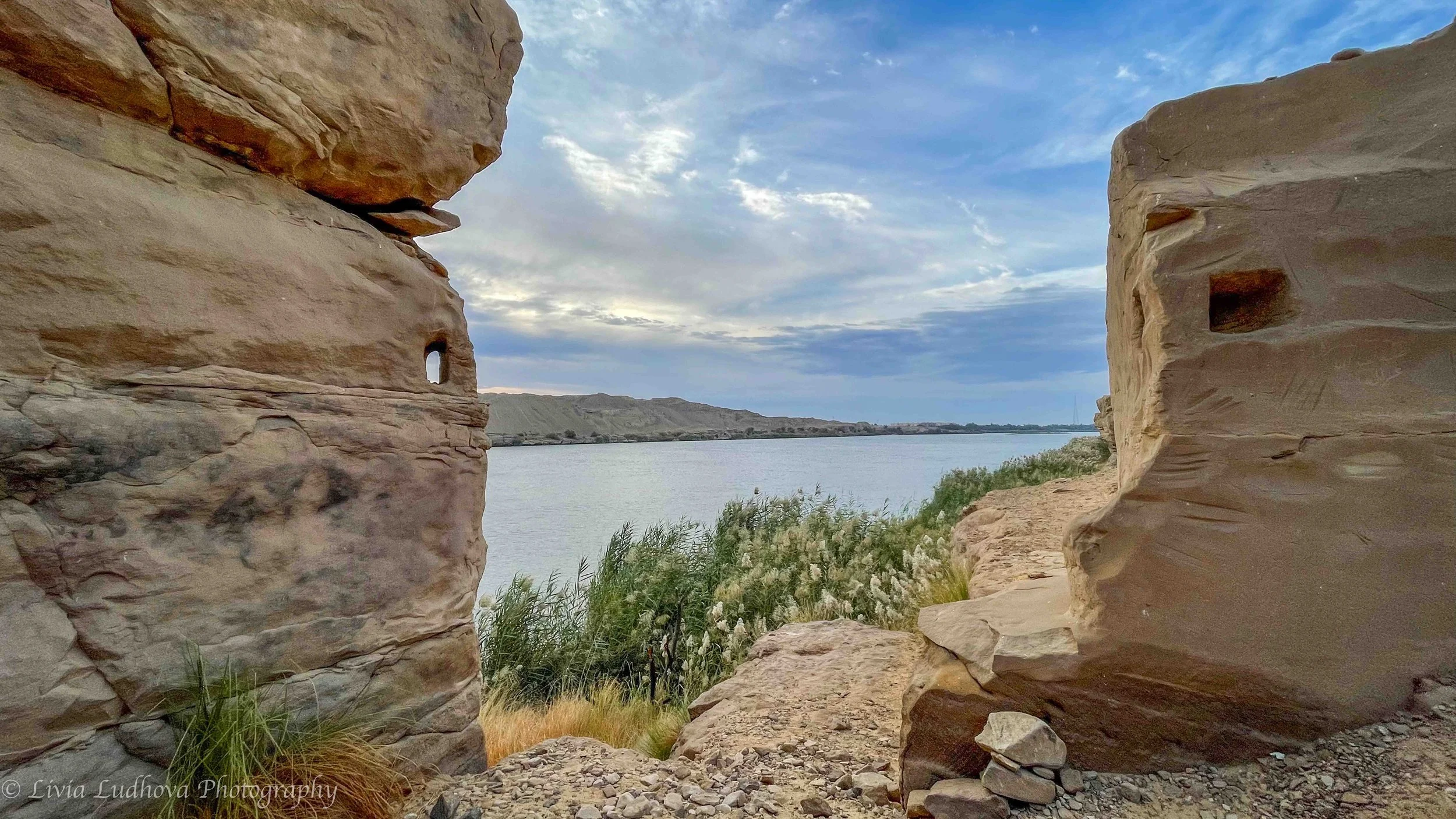
The second day of the Nile cruise began before sunrise at the sandstone quarries of Gebel El Silsila, the principal source of Nubian sandstone used for many temples of the New Kingdom, particularly under the 18th and 19th Dynasties. In the early light, the quarry’s rock-cut chambers, extraction marks, and carved stelae revealed both scale and intimacy, as I wandered alone among the signs of daily work left by people who lived and perished millennia ago. Later, after a guided visit, we continued to Temple of Horus at Edfu, one of the best-preserved temples in Egypt. Edfu temple was built during the Ptolemaic period between 237 and 57 BCE and dedicated to Horus, the falcon-headed god of kingship, protection, and divine order. Constructed on the site of an earlier shrine, the temple follows a strictly traditional pharaonic layout despite its Greek-era date. Its monumental pylons rank among the largest in Egypt, leading into a sequence of courtyards, hypostyle halls, and a granite sanctuary that once housed the sacred cult statue of Horus. The walls are covered with exceptionally detailed reliefs and inscriptions, including the Edfu Texts, which preserve temple rituals, foundation ceremonies, and the mythic conflict between Horus and Seth—one of the most complete surviving narrative cycles from ancient Egypt. Together, these elements make Edfu an unparalleled record of religious architecture, ritual practice, and mythological tradition along the Nile.
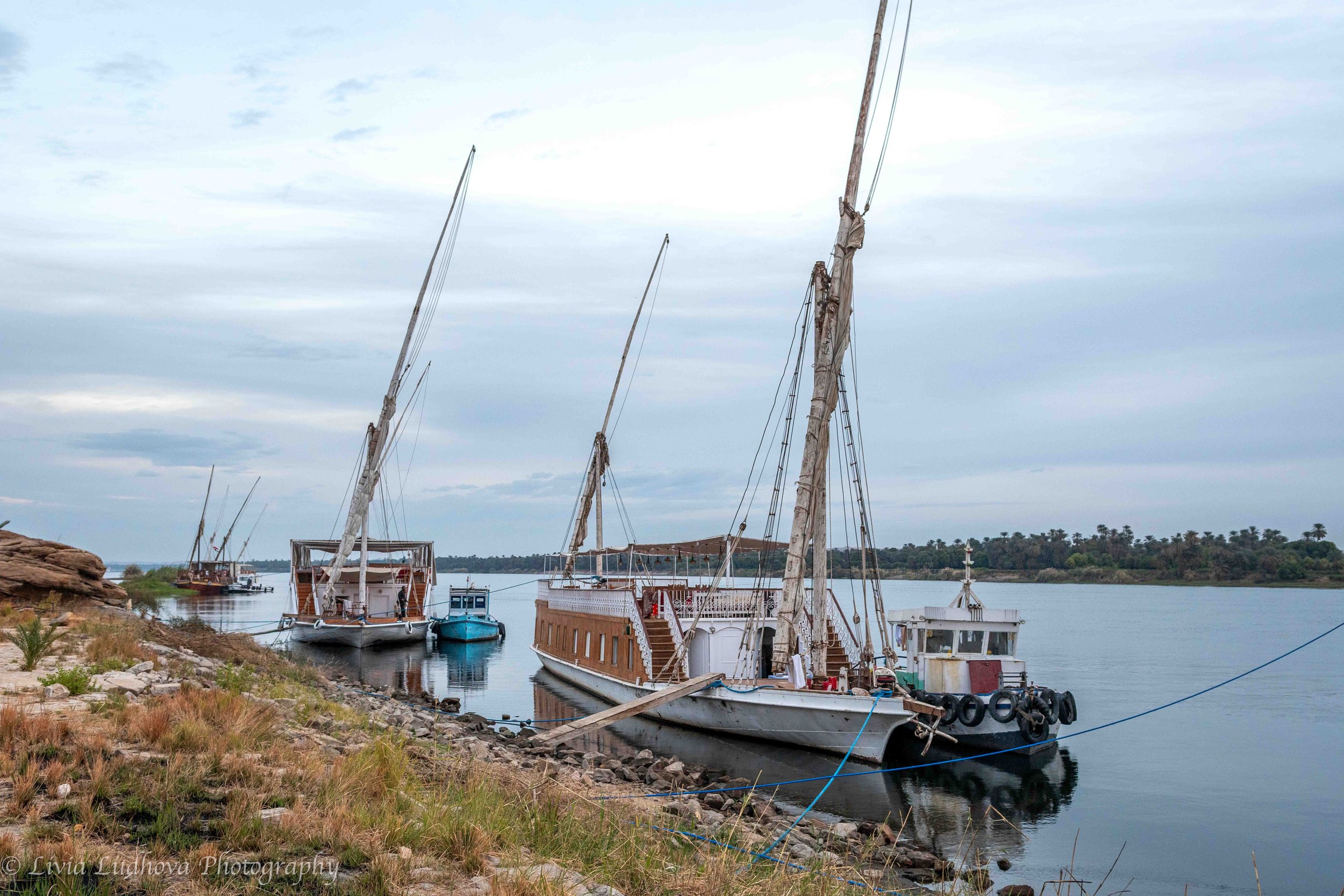
Several dahabiyas spent the night anchored at this location, turning the riverbank into a quiet floating village.
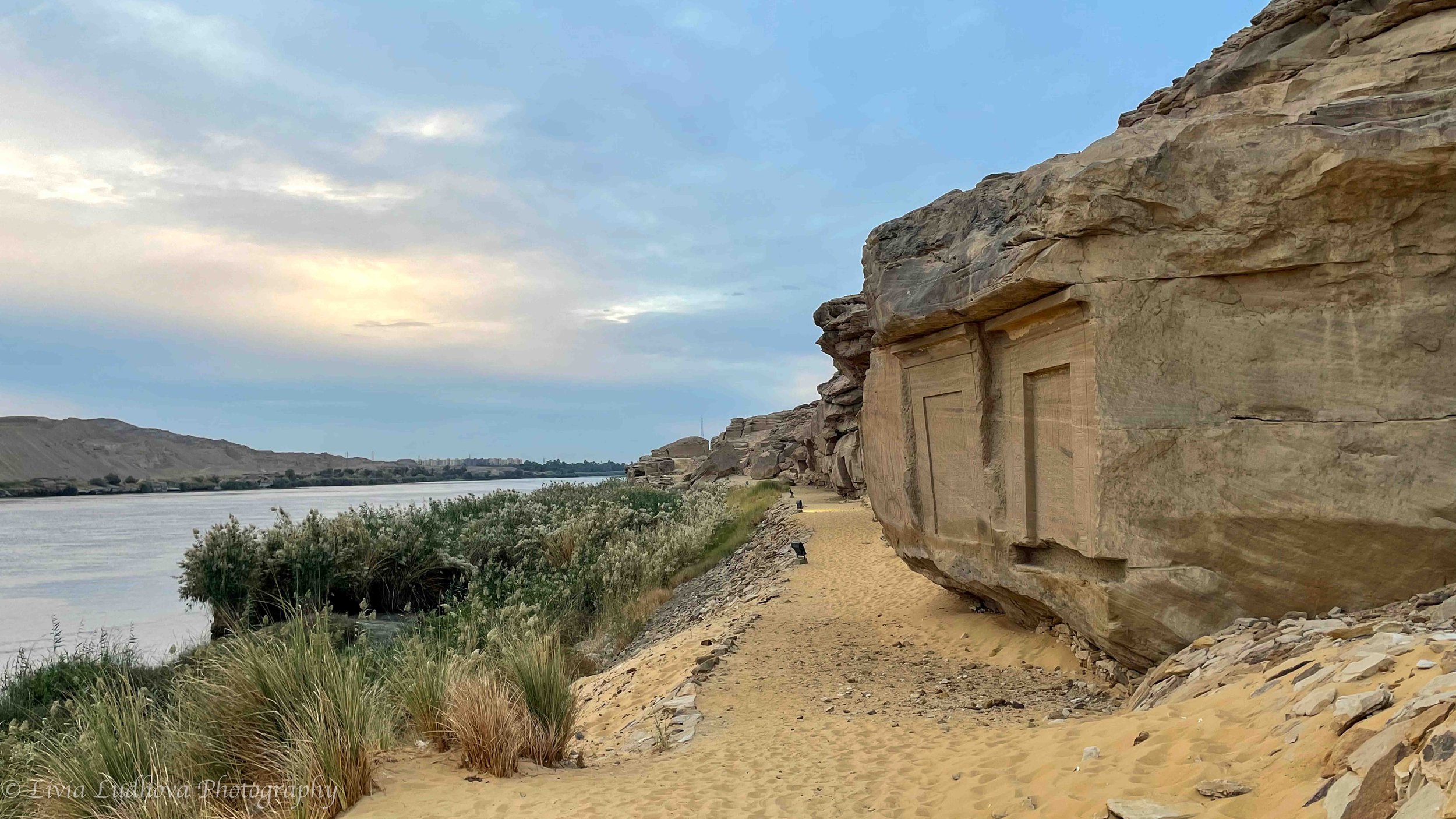
Before sunrise, this path along the Nile brings me to the core of the query.
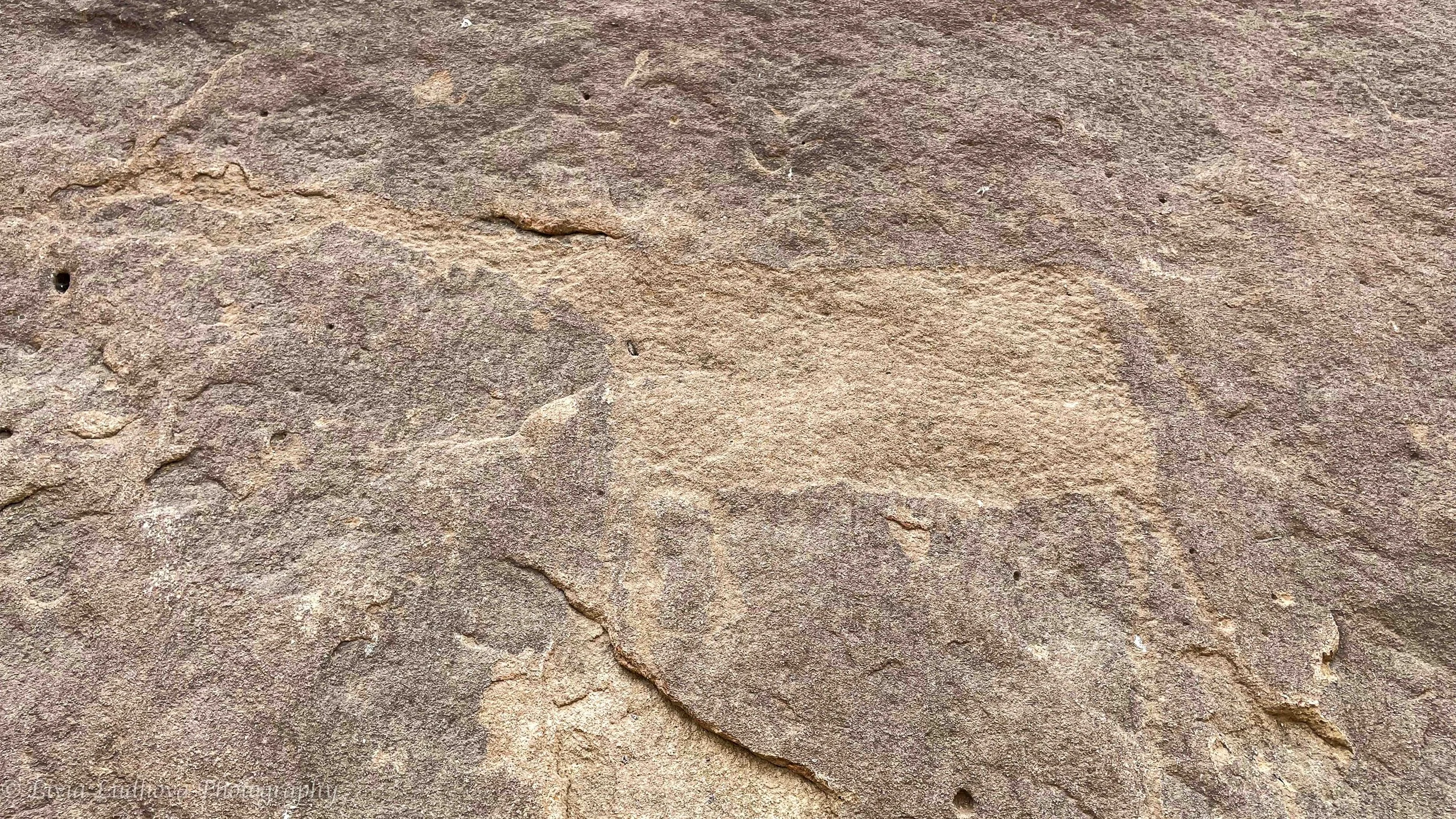
During their free time, quarry workers made their graffiti - as this giraffe.

... and lions!
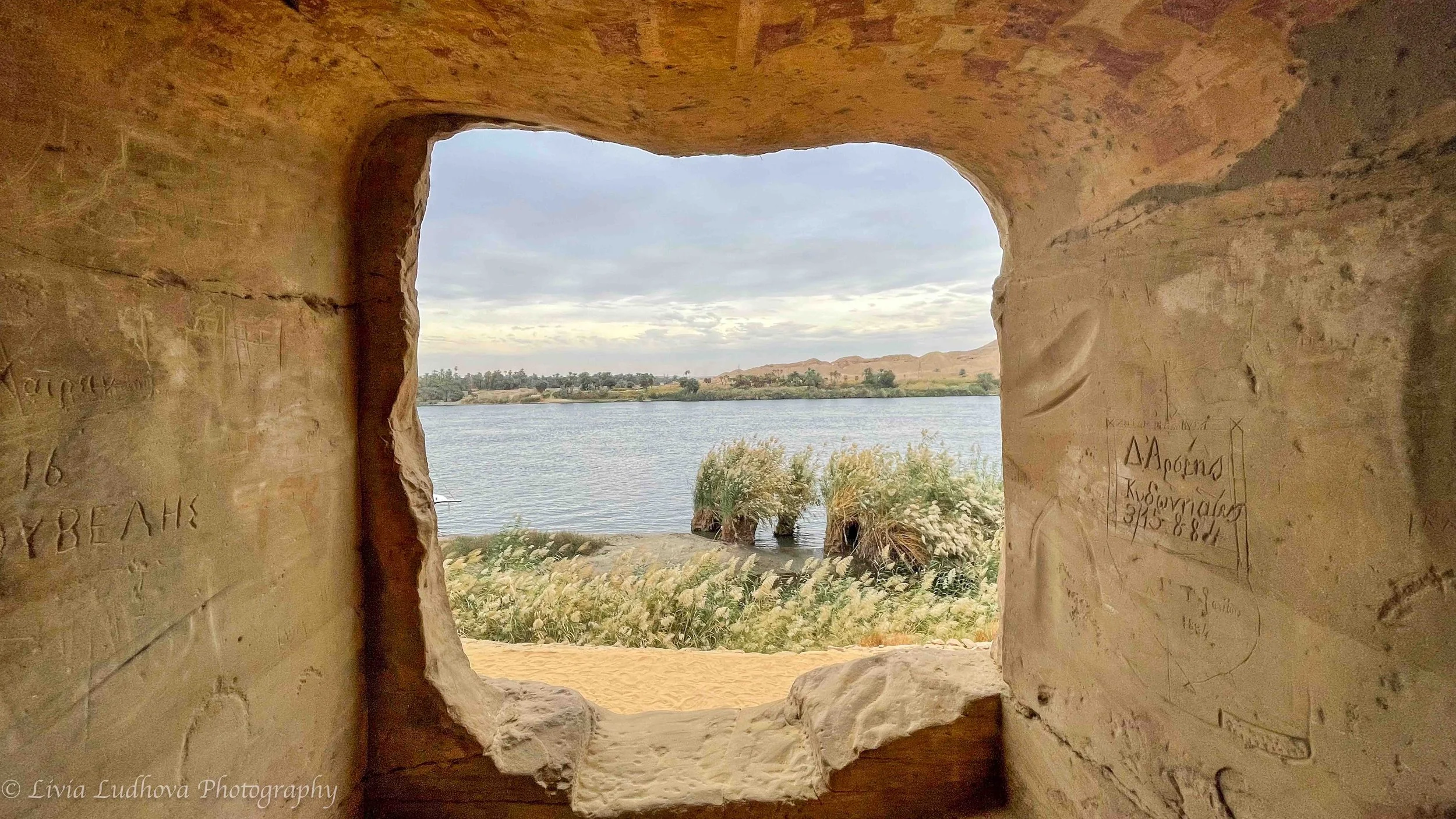
Around the quarry are located also some tombs of persons related to the life in quarry .
Carved deep into the sandstone at Gebel El Silsila, these rope holes once held the lines that guided stone blocks—and the work of countless hands—toward the Nile.
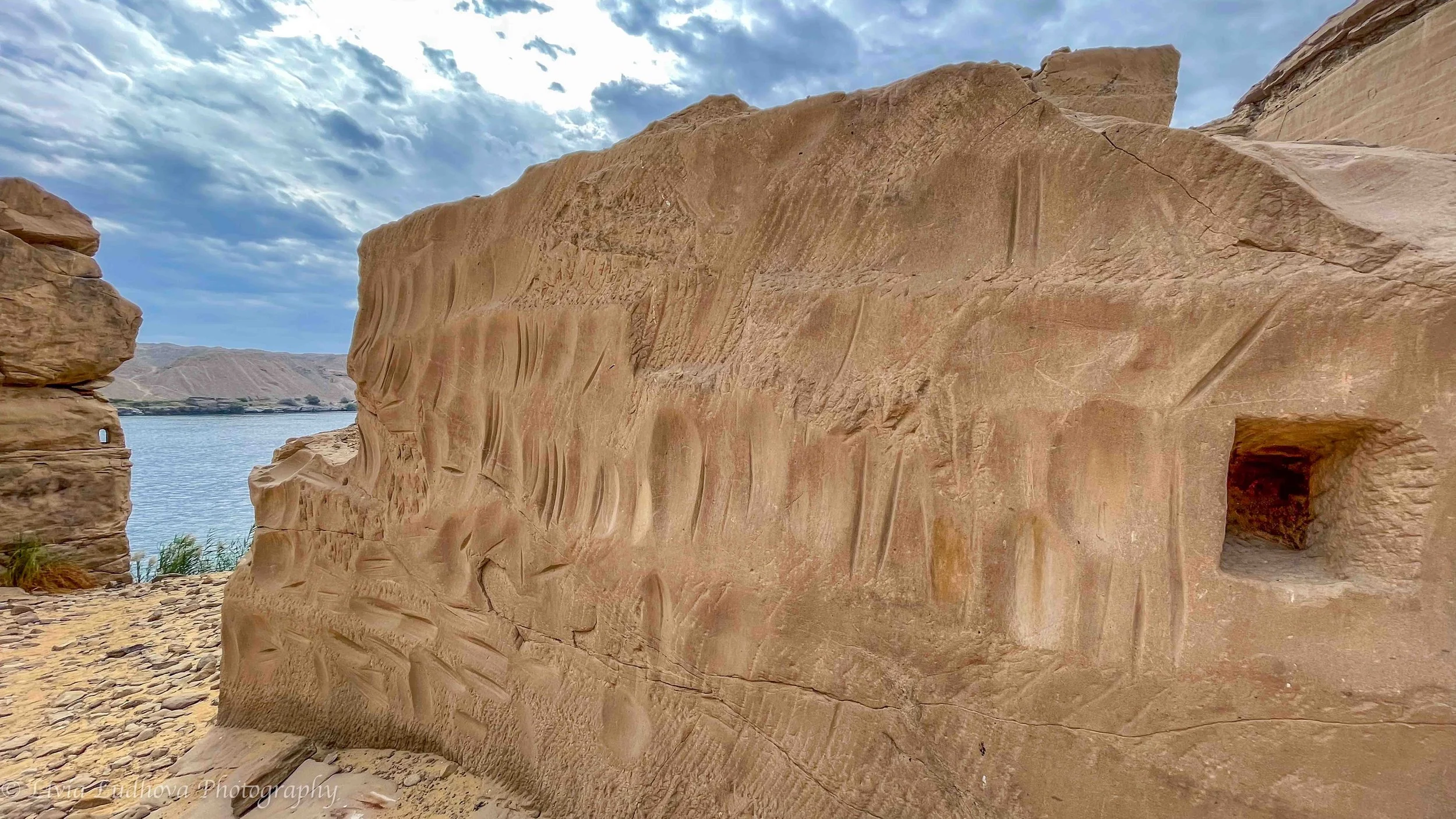
The sandstone remembers: chisel marks at Gebel El Silsila.
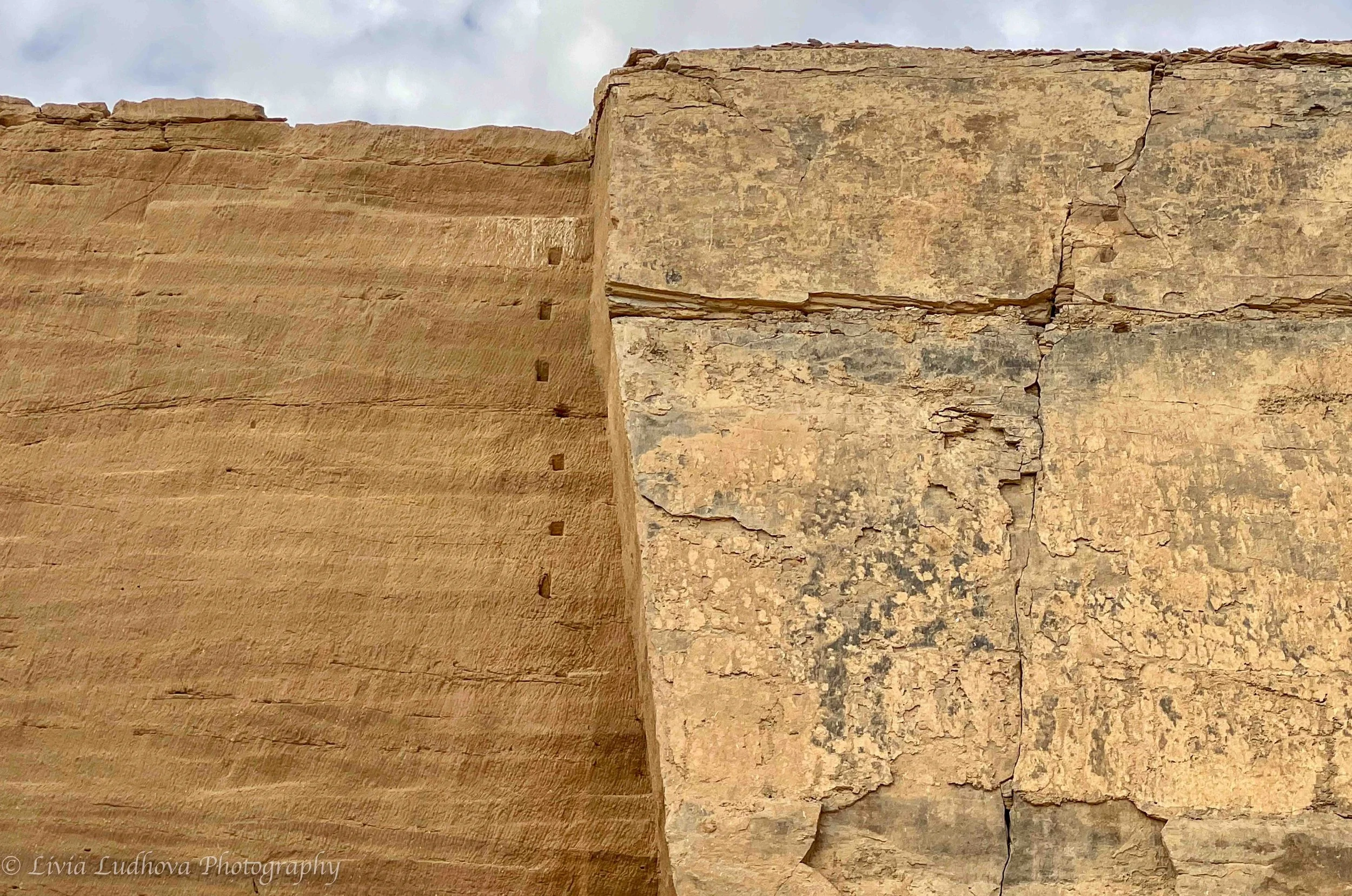
The holes in the rock served as a ladder for the workers to reach upper layers of the quarry .
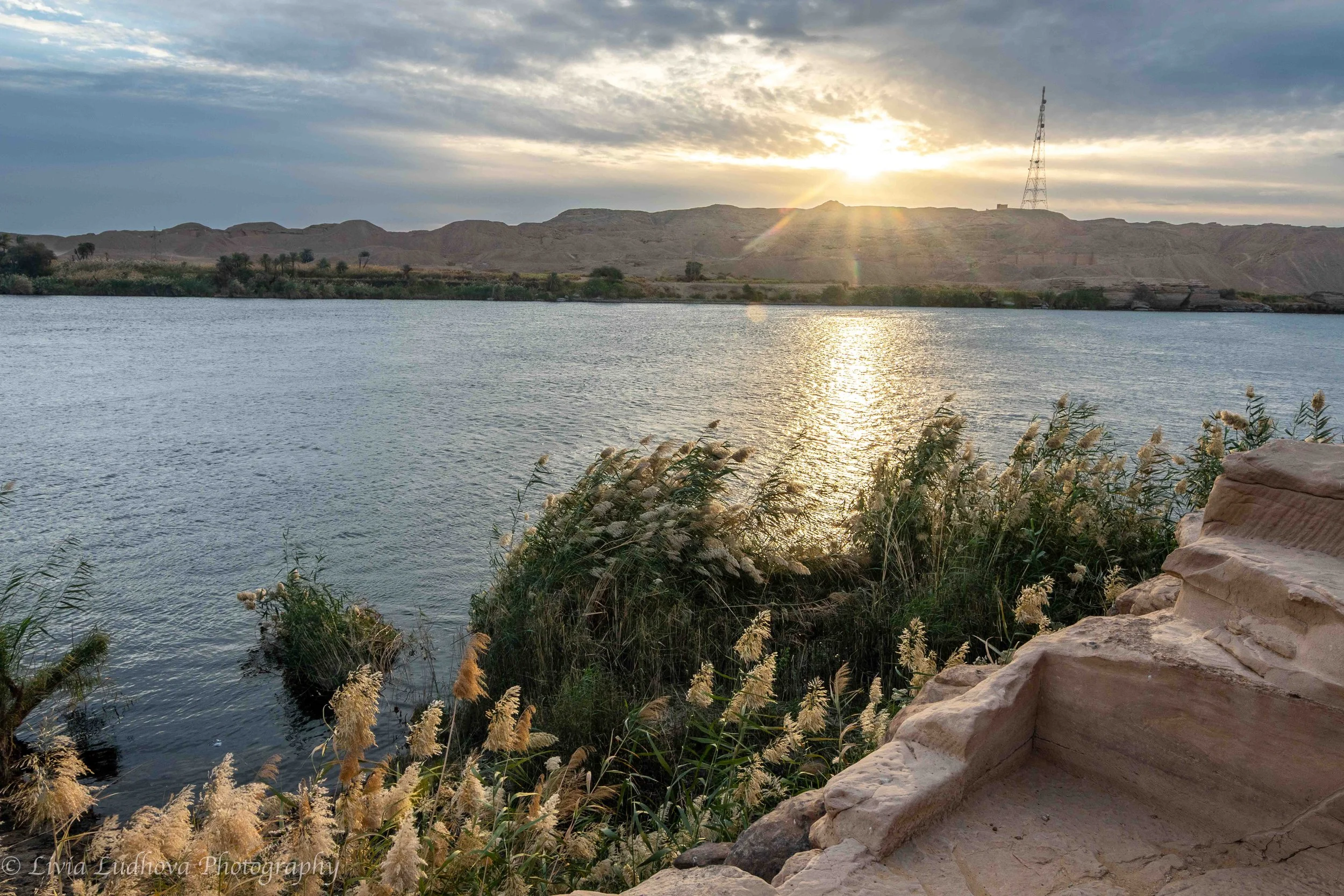
And then sunrise above eternal Nile...
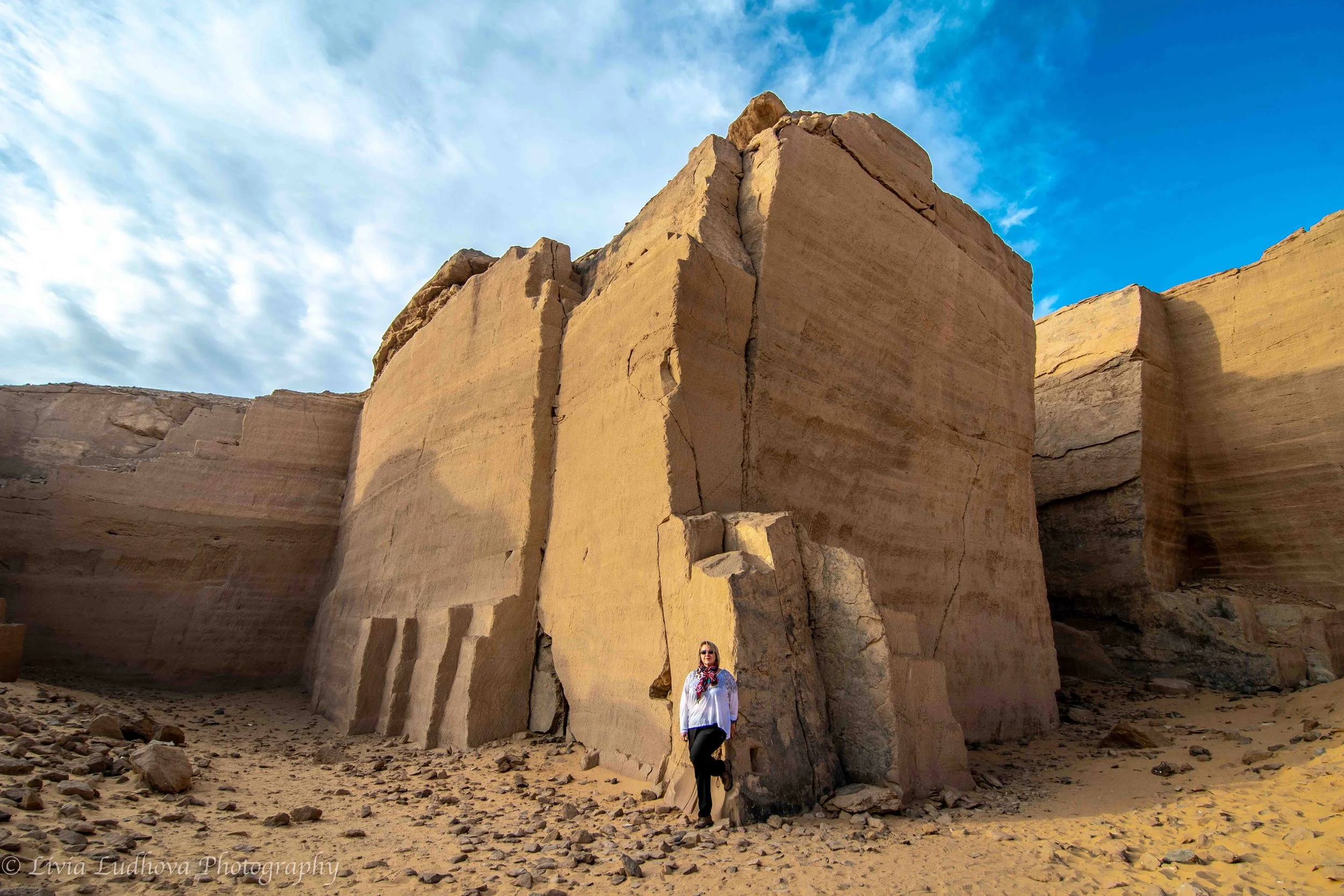
Massive sandstone block glowing in the raising sun.
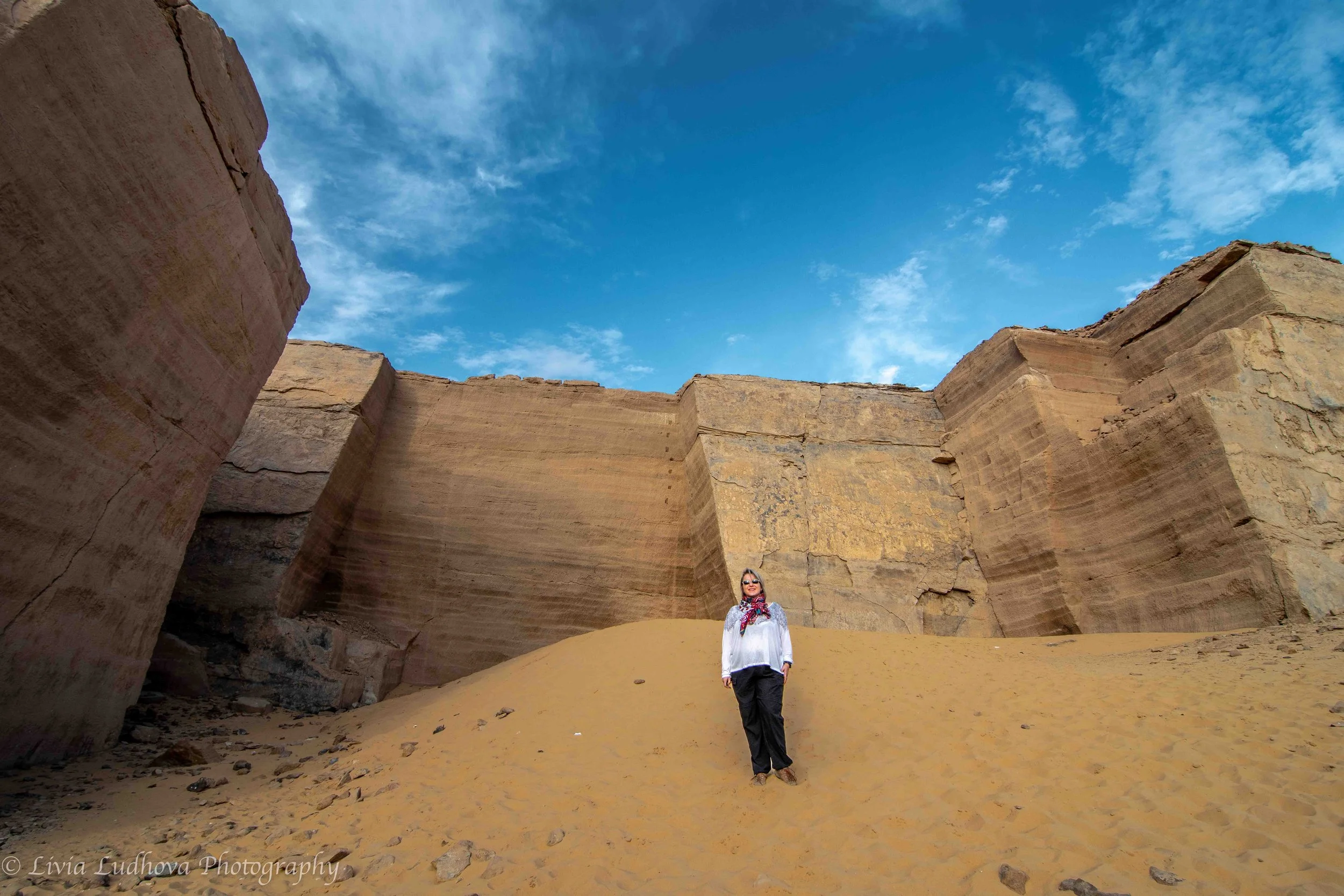
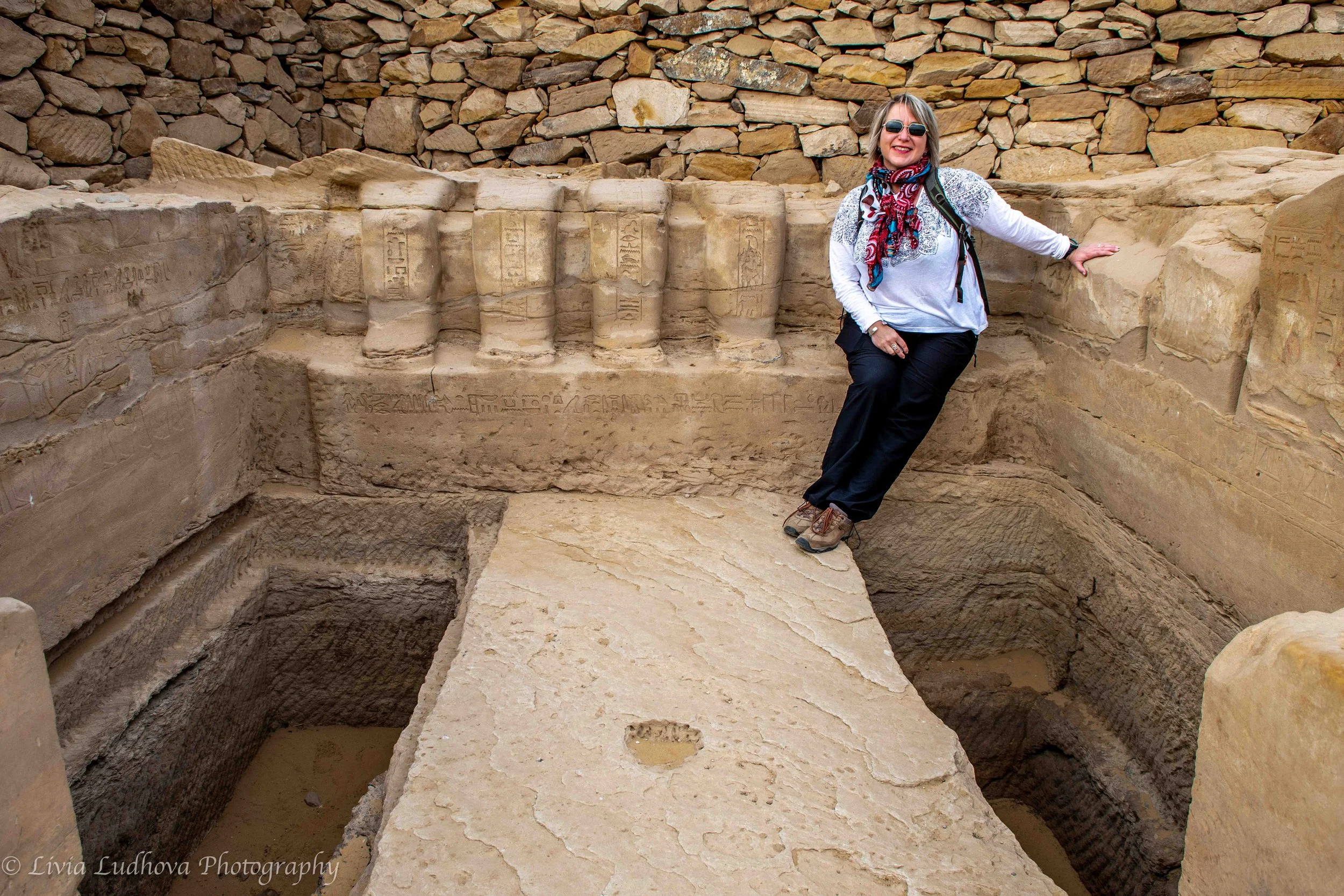
Rock-cut tomb likely belonging to a quarry official or worker.
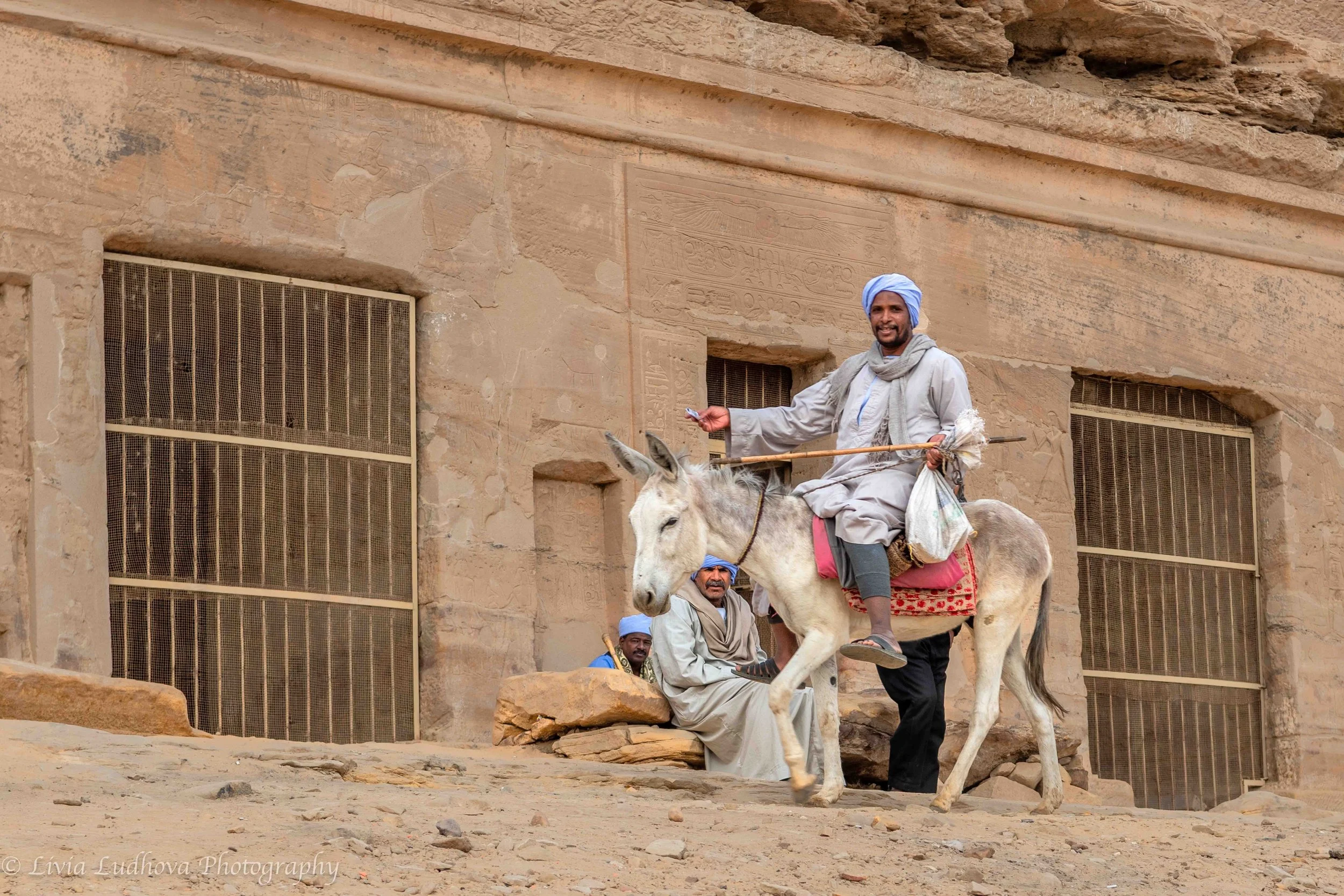
Local worker arriving to work, in front of a small building protecting rock-cut burials close to the mooring point.
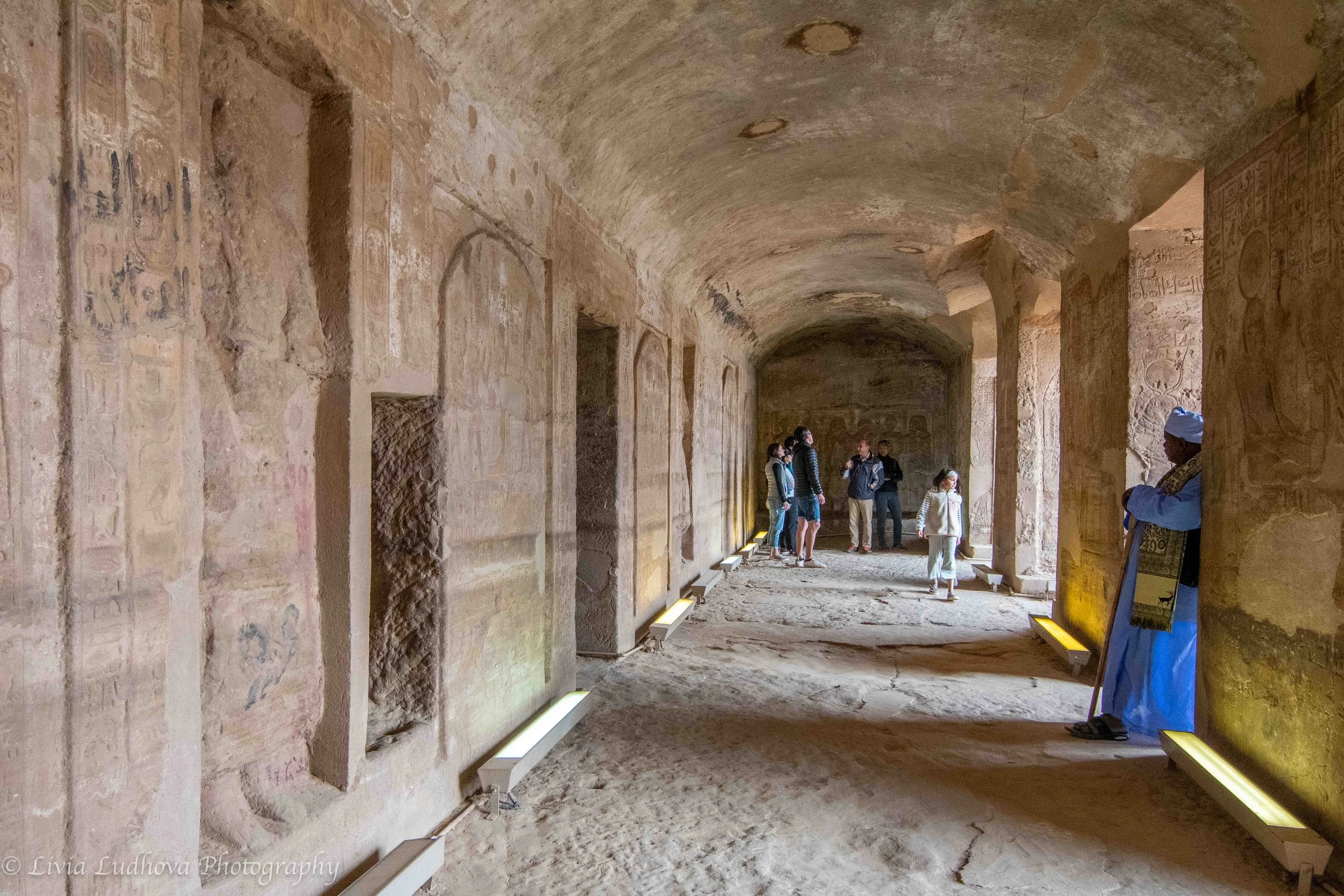
Rock cut tombs
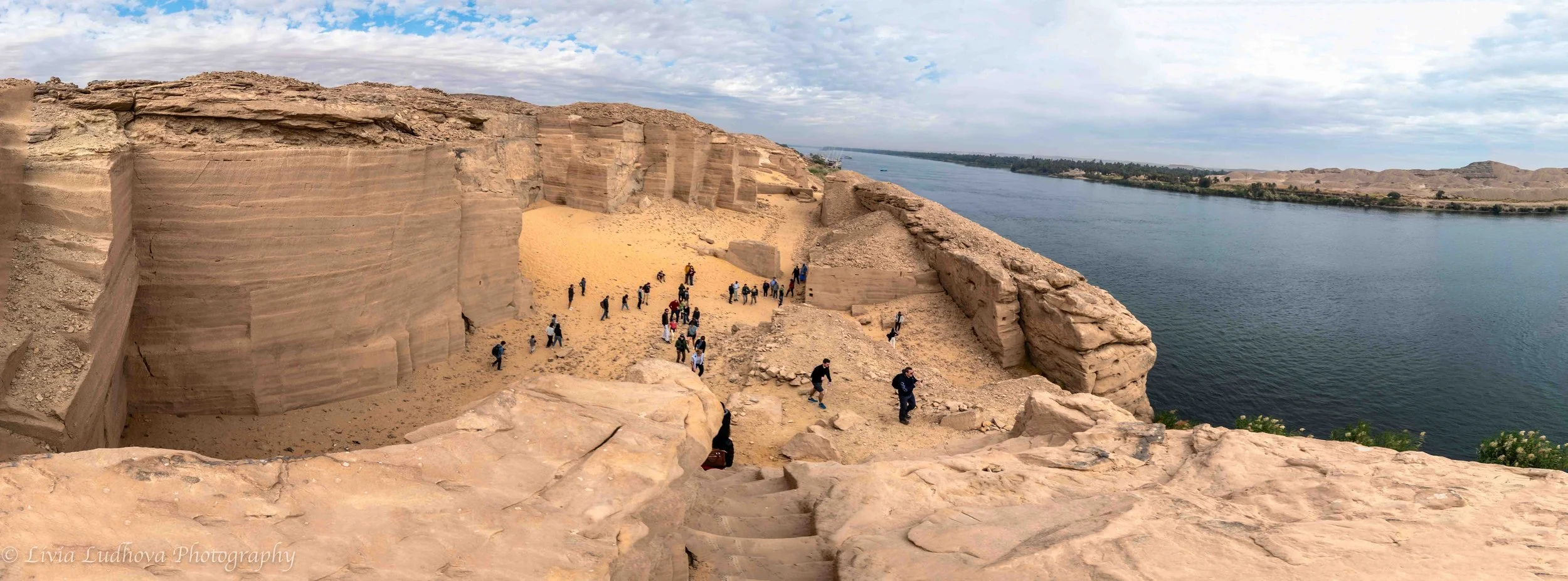
Eagle eye view on the quarry.
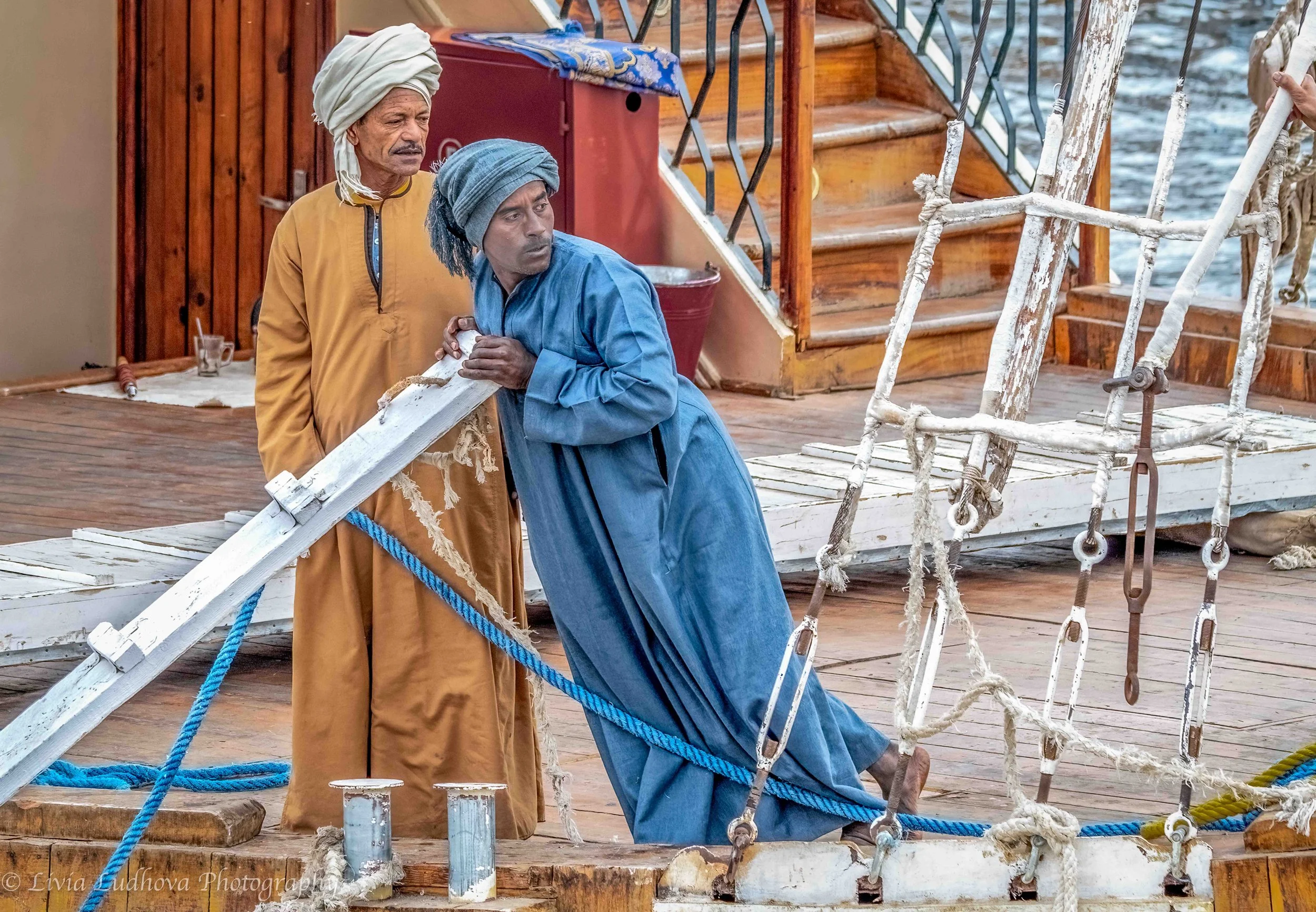
And time to depart....
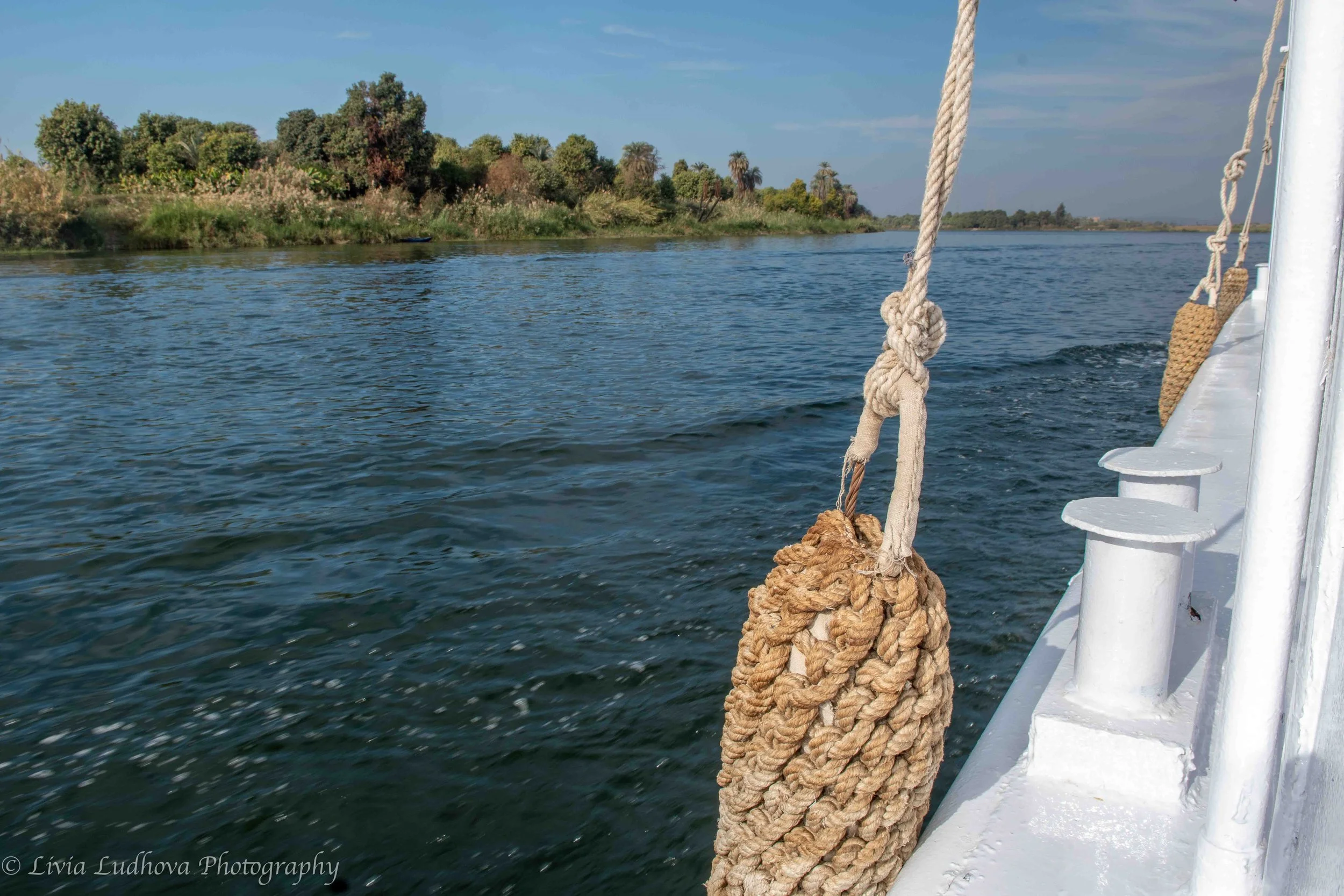
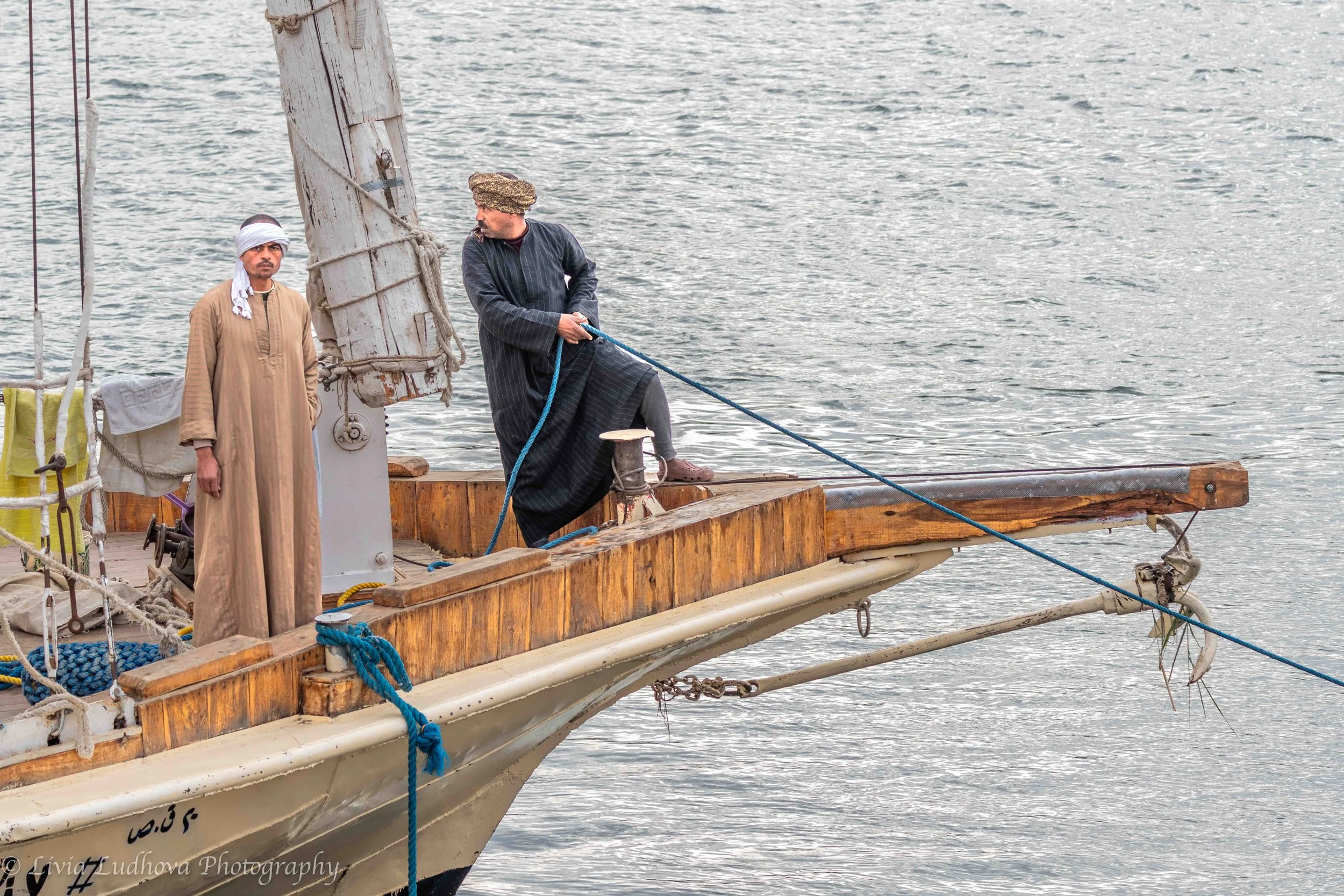
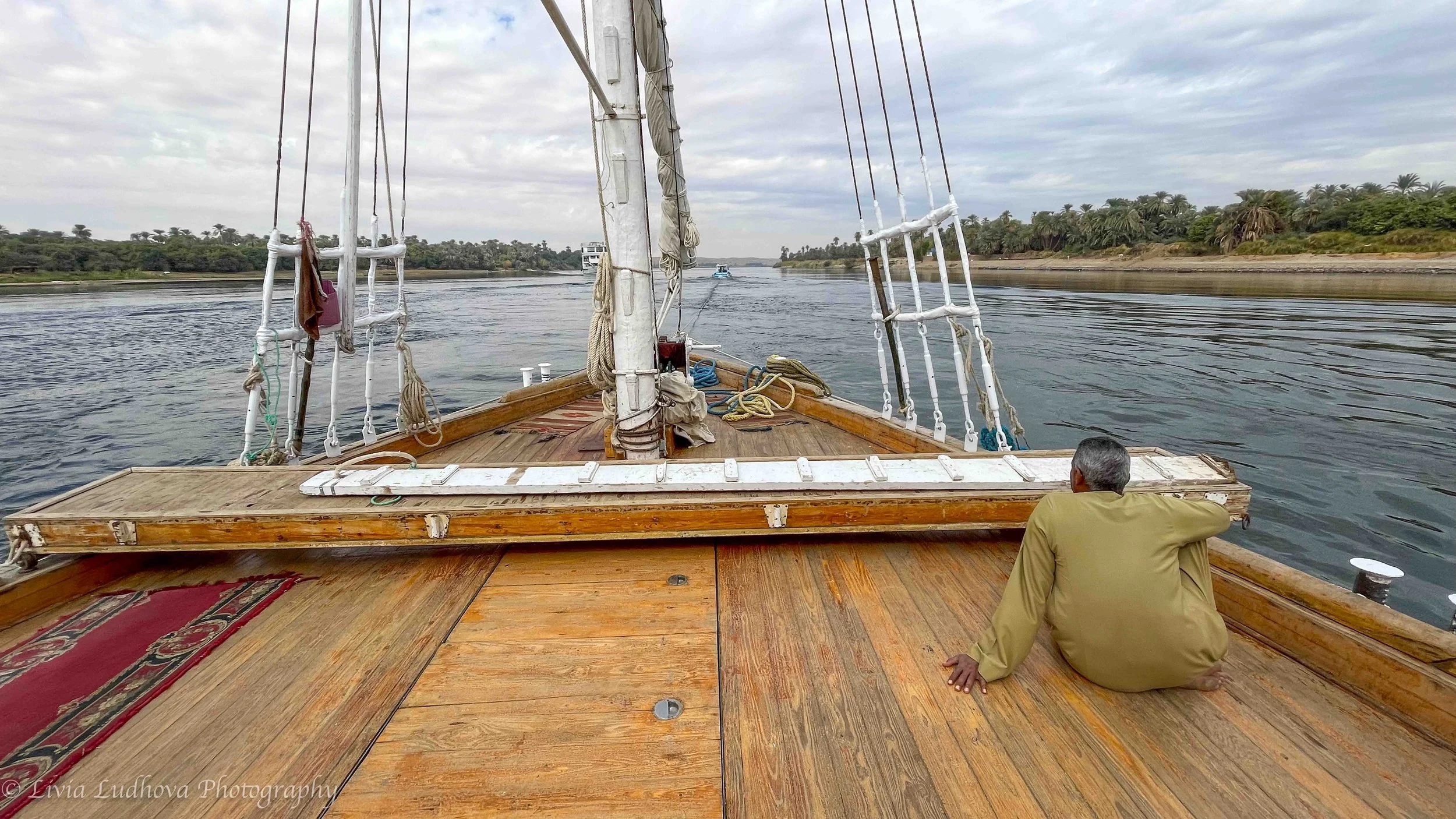
Captain getting ready to set the sails.
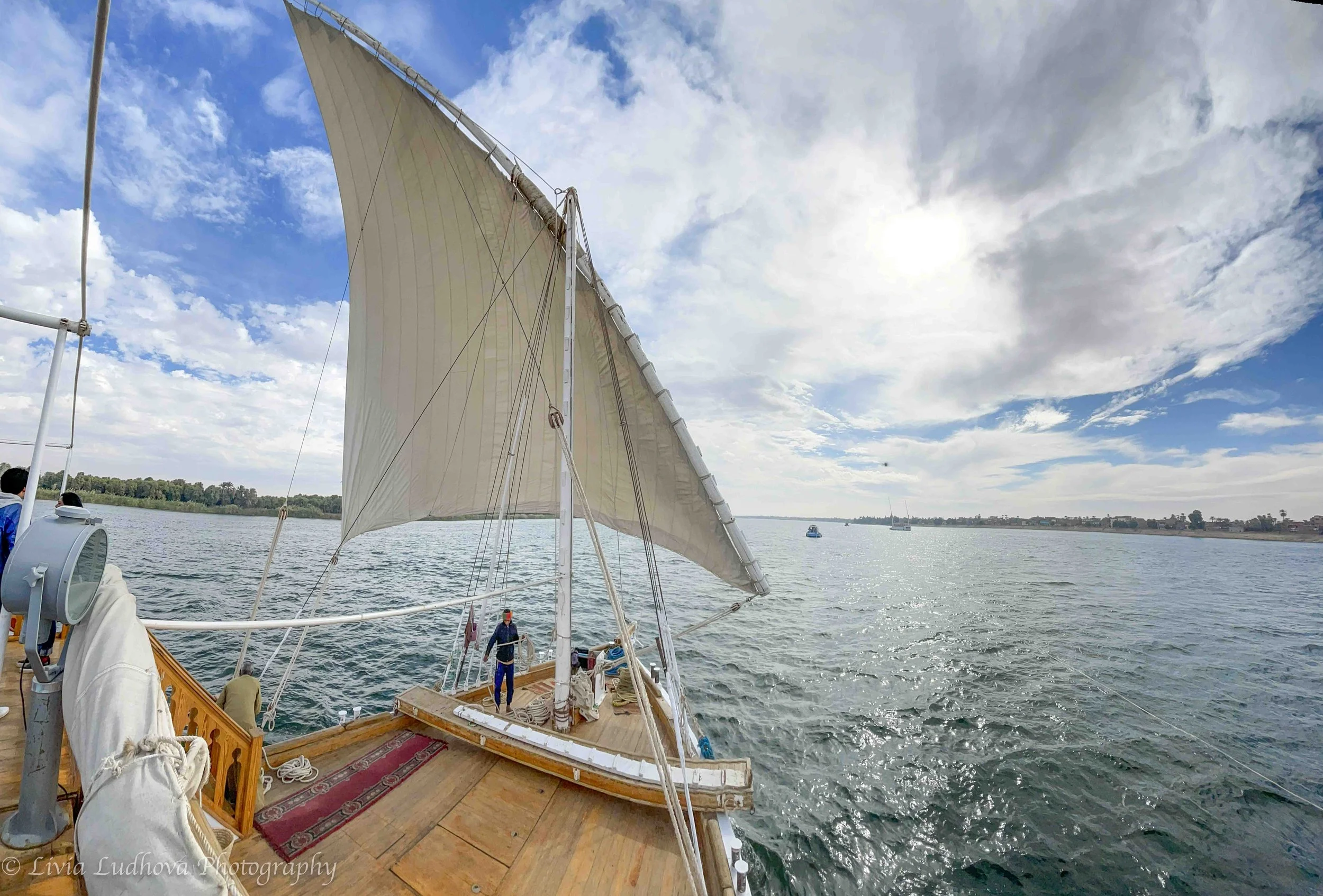
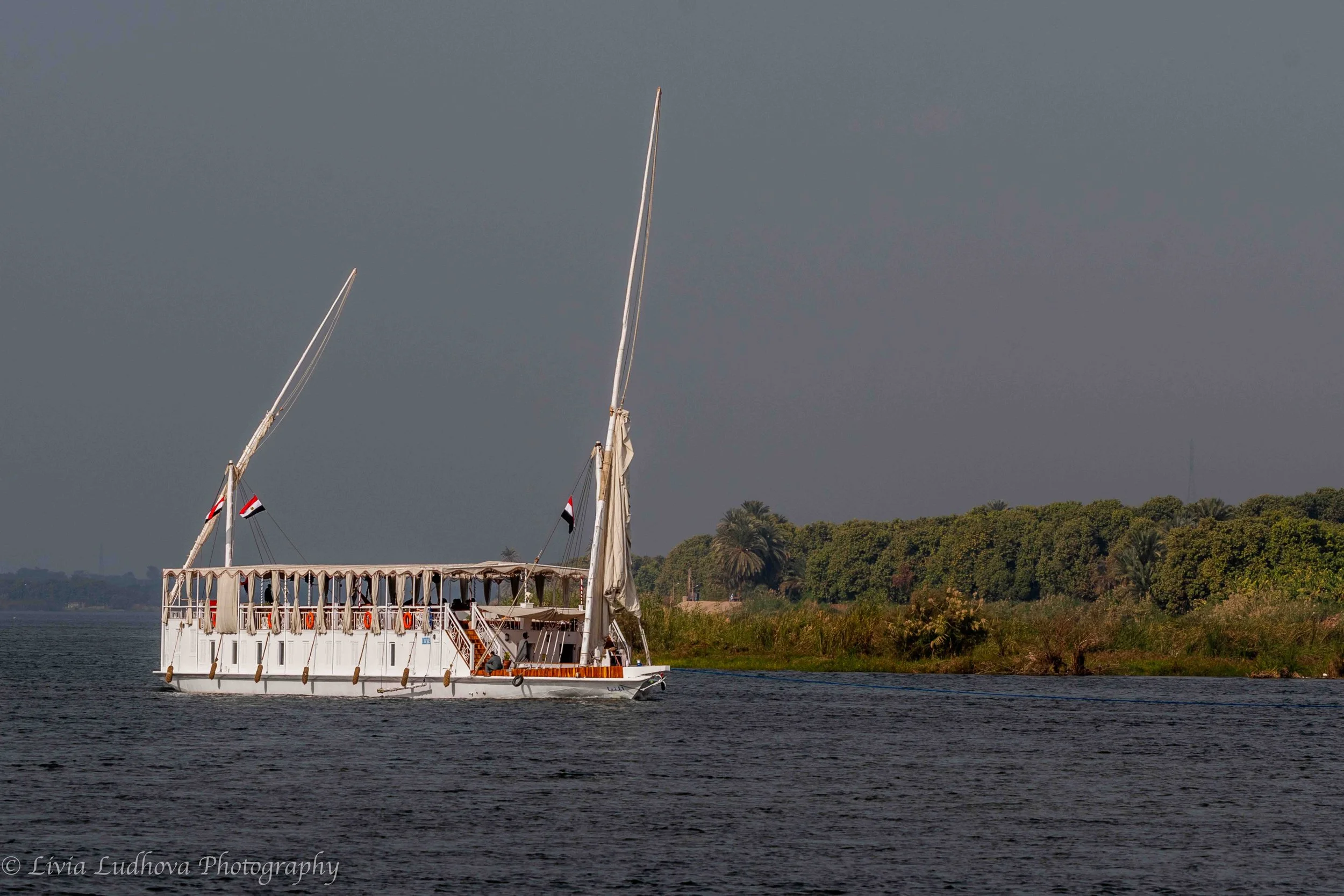
Sailing downstream on the Nile, the dahabiya relied mainly on the current; only during the lunch break did we turn briefly upstream to raise the sail and catch the north wind.
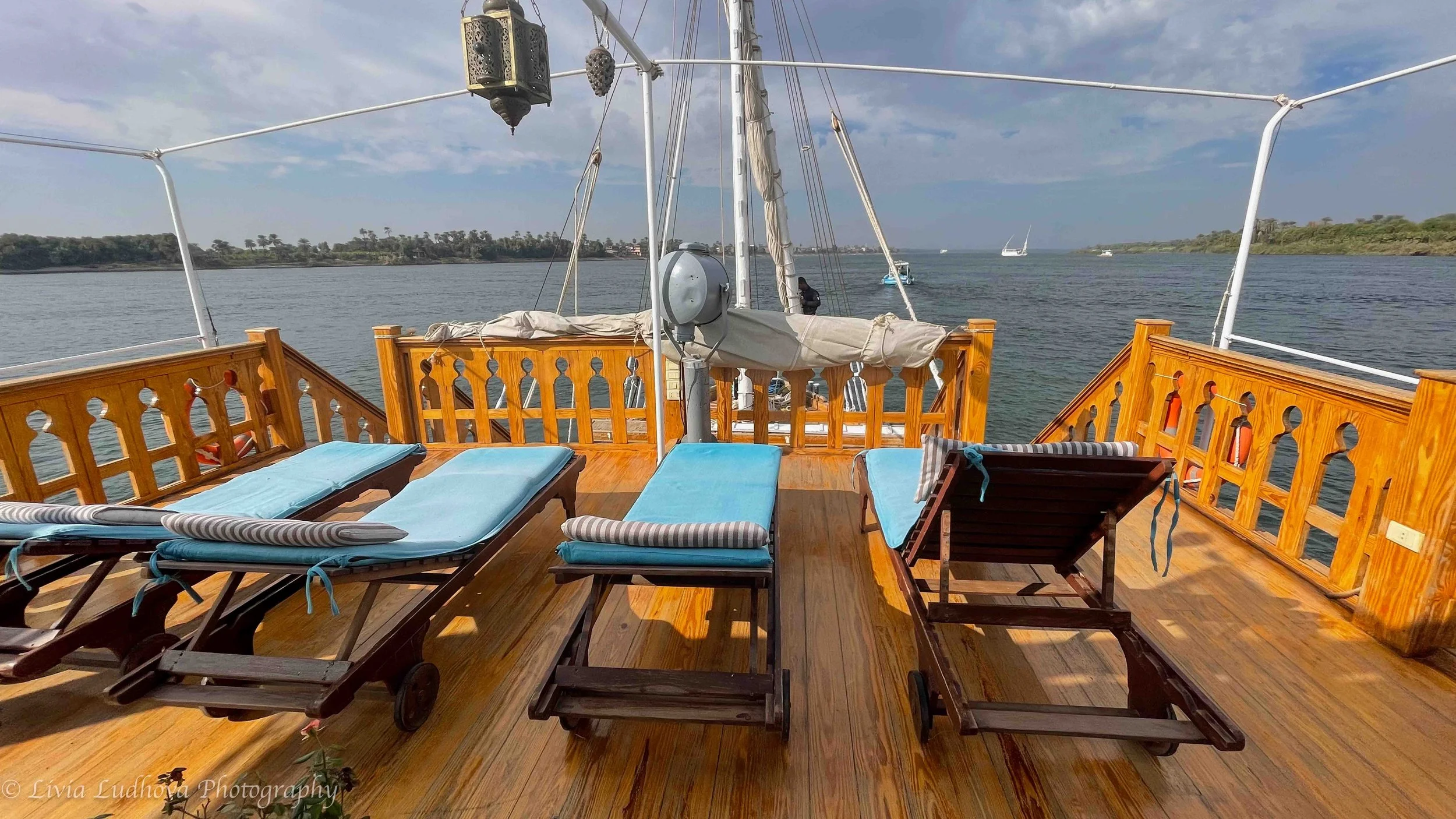
Sundeck....
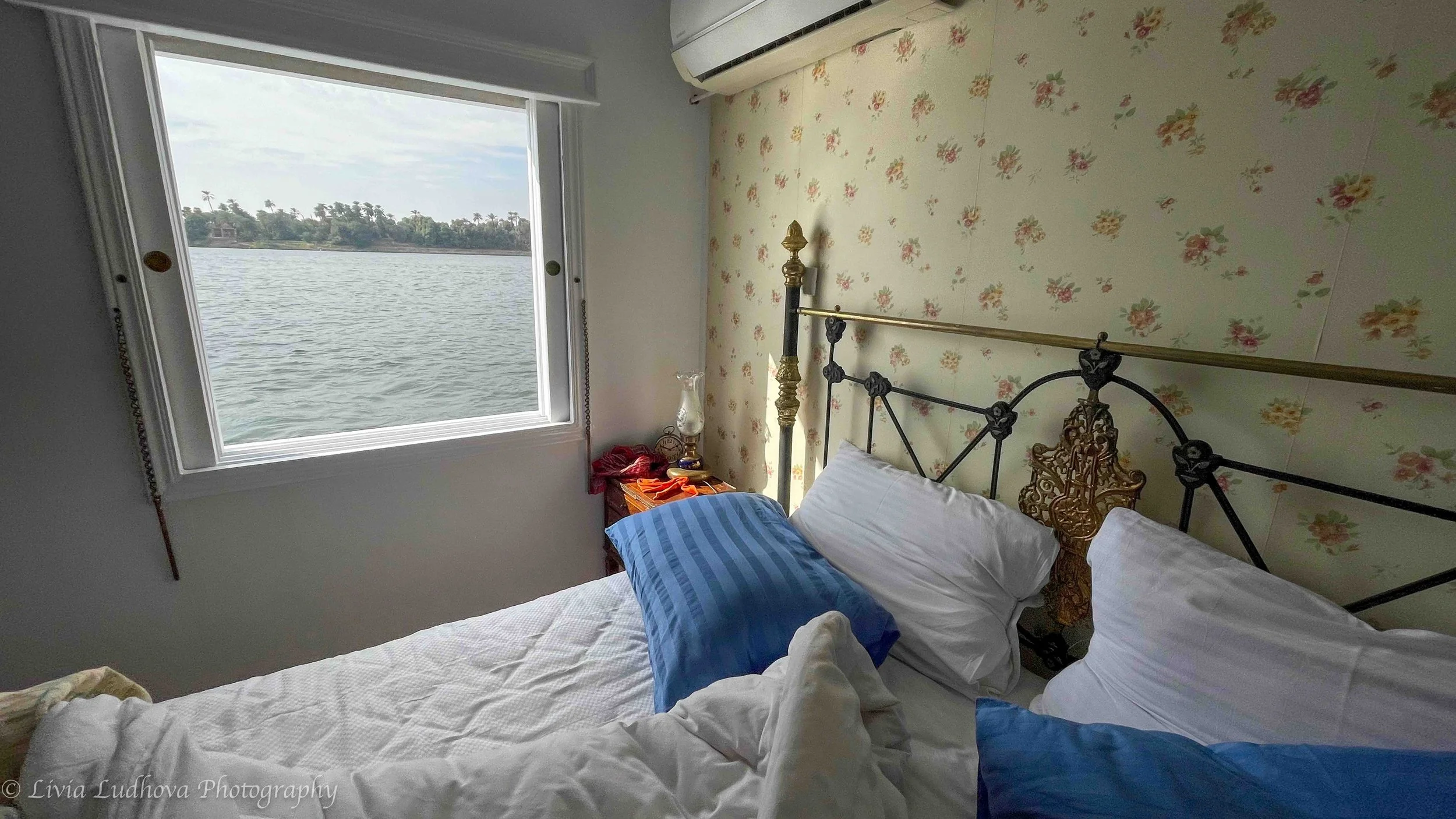
Nile view directly from my bed!
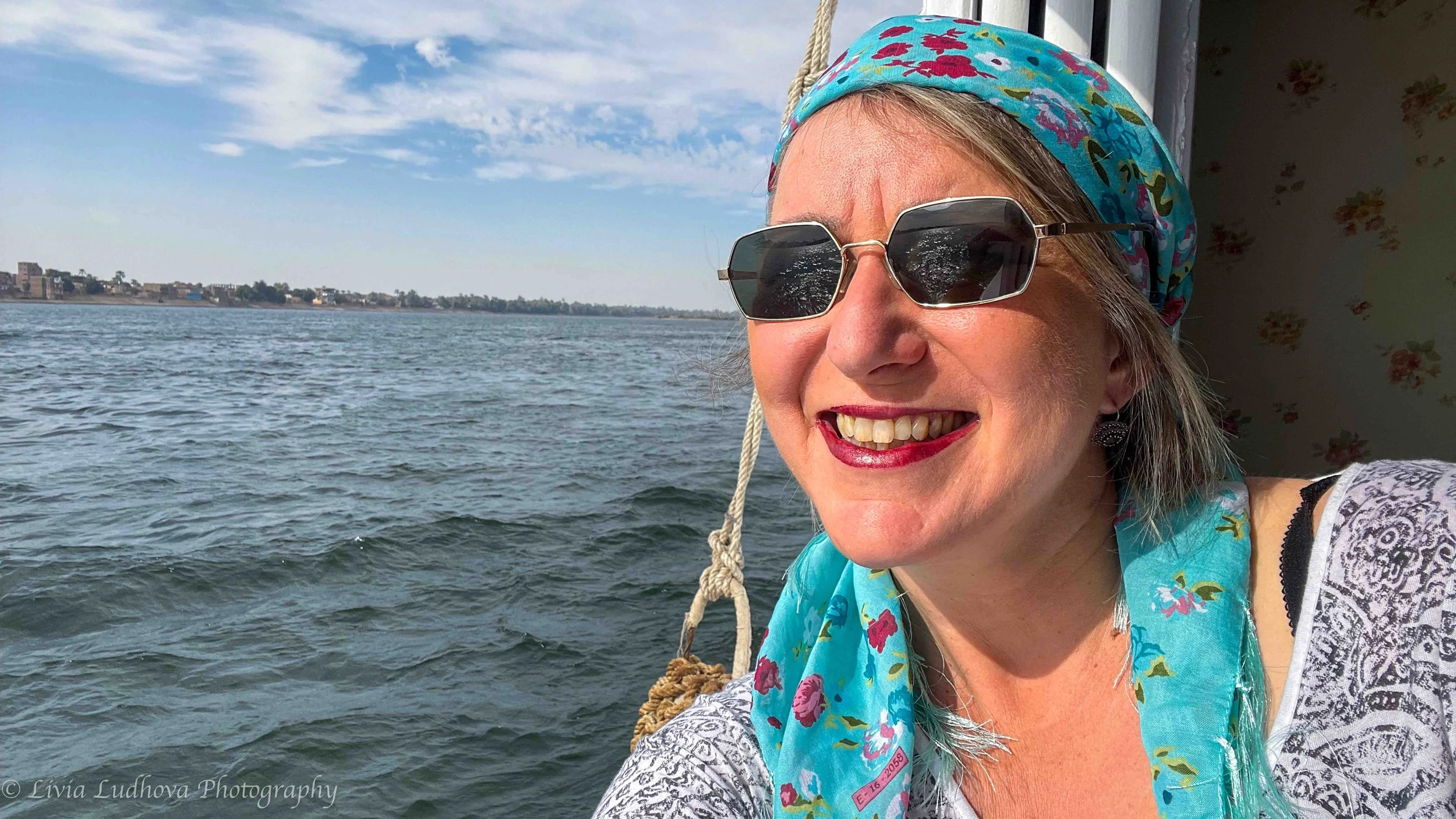

End we arrived to Edfu.
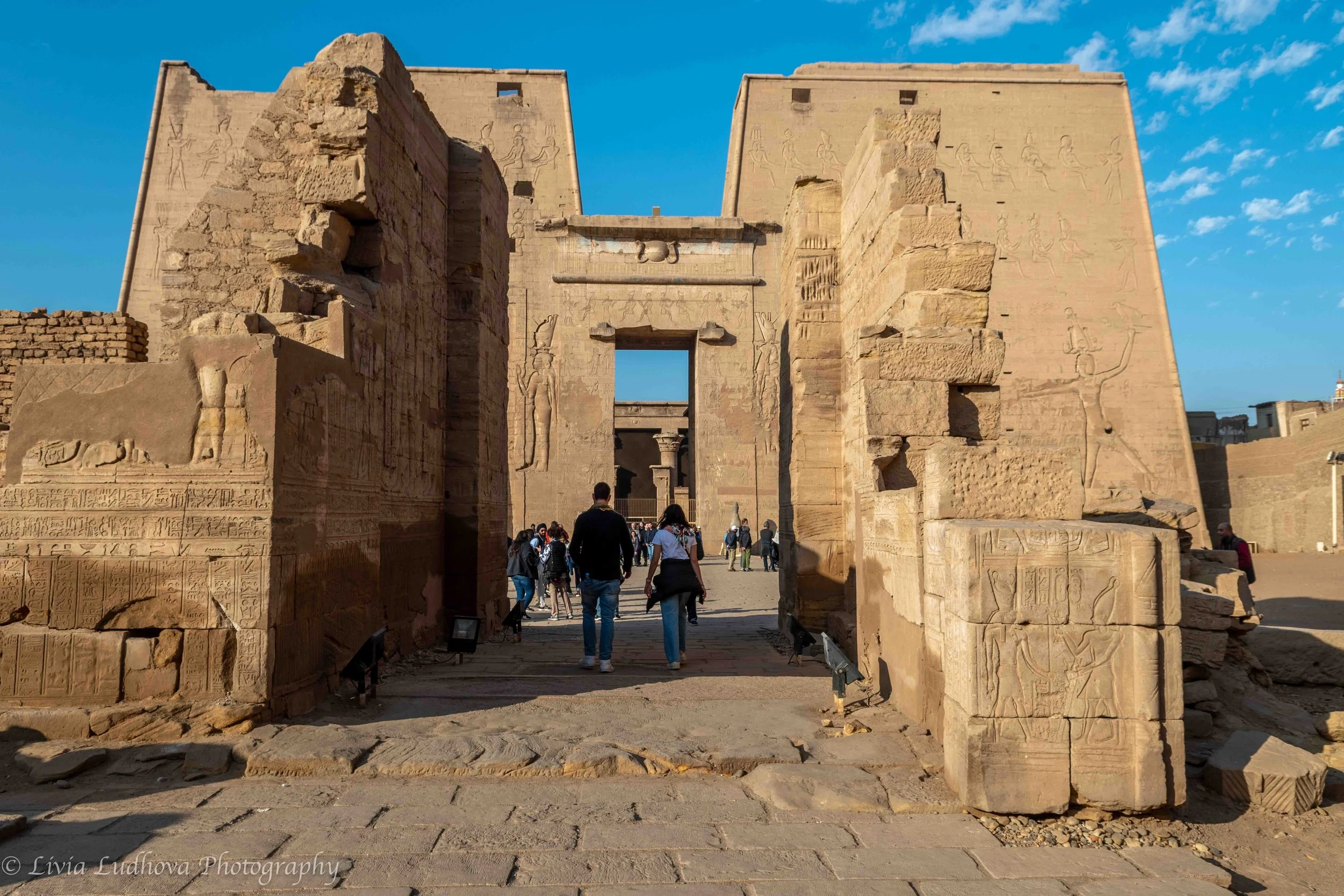
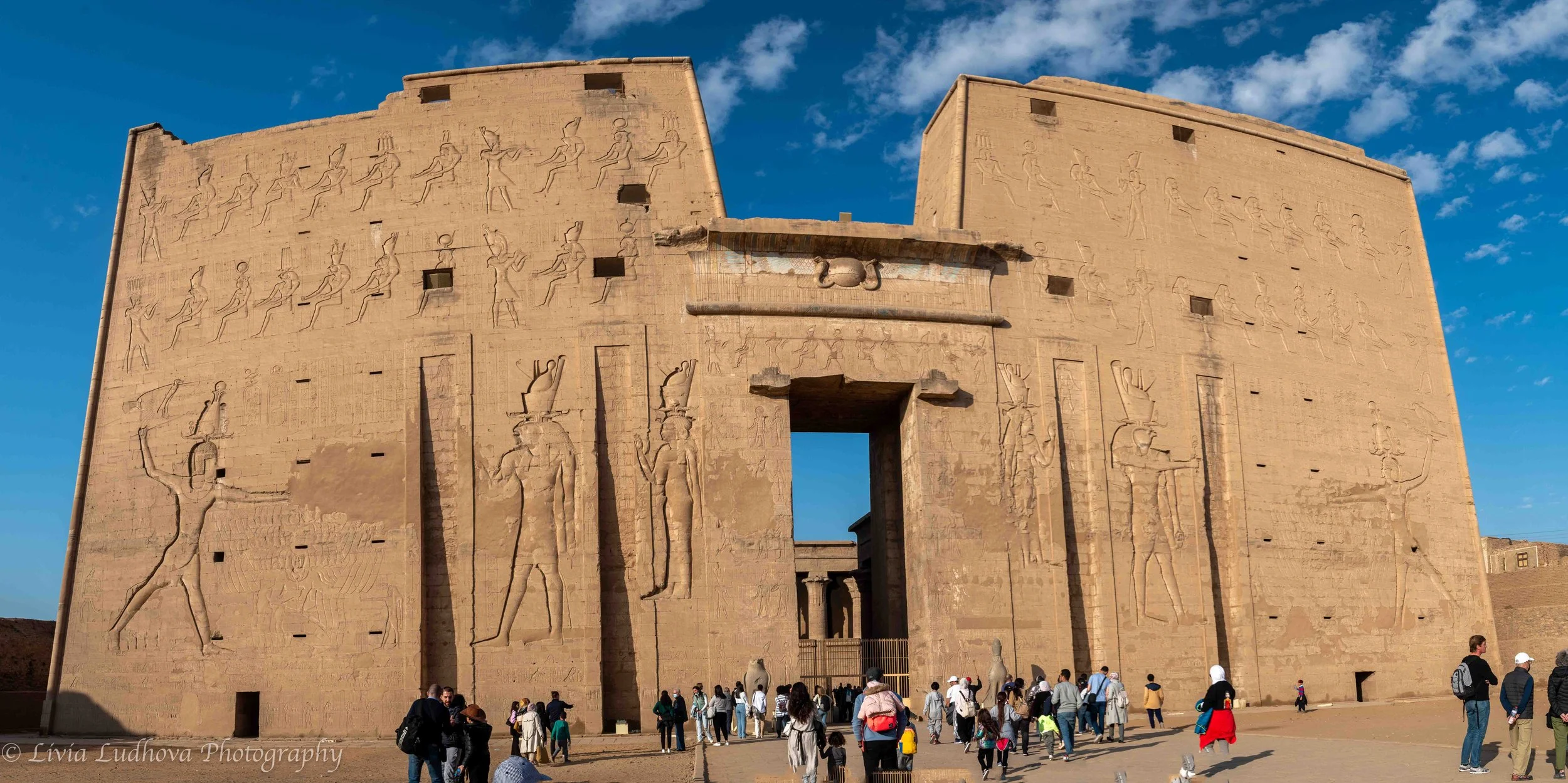
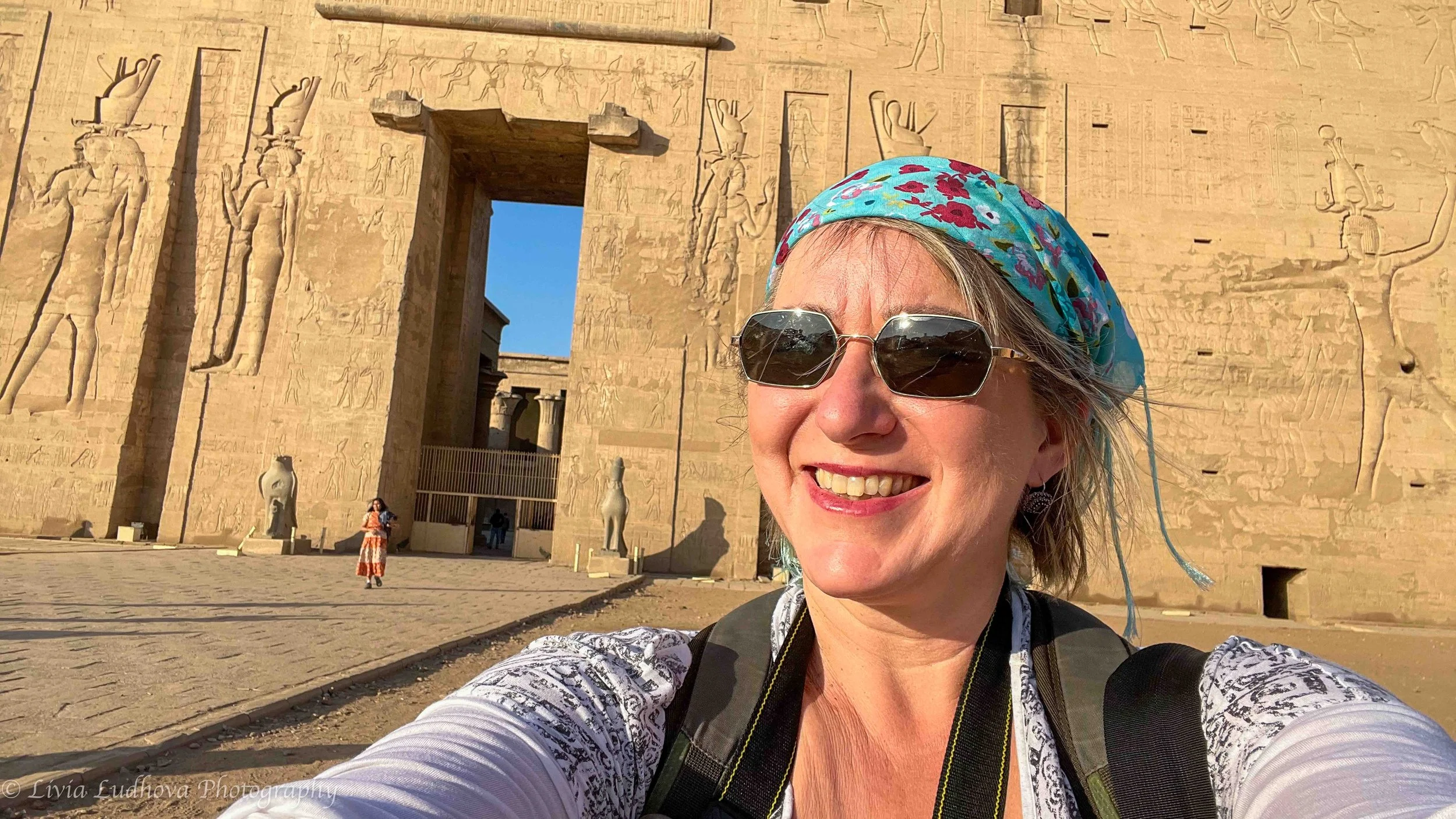
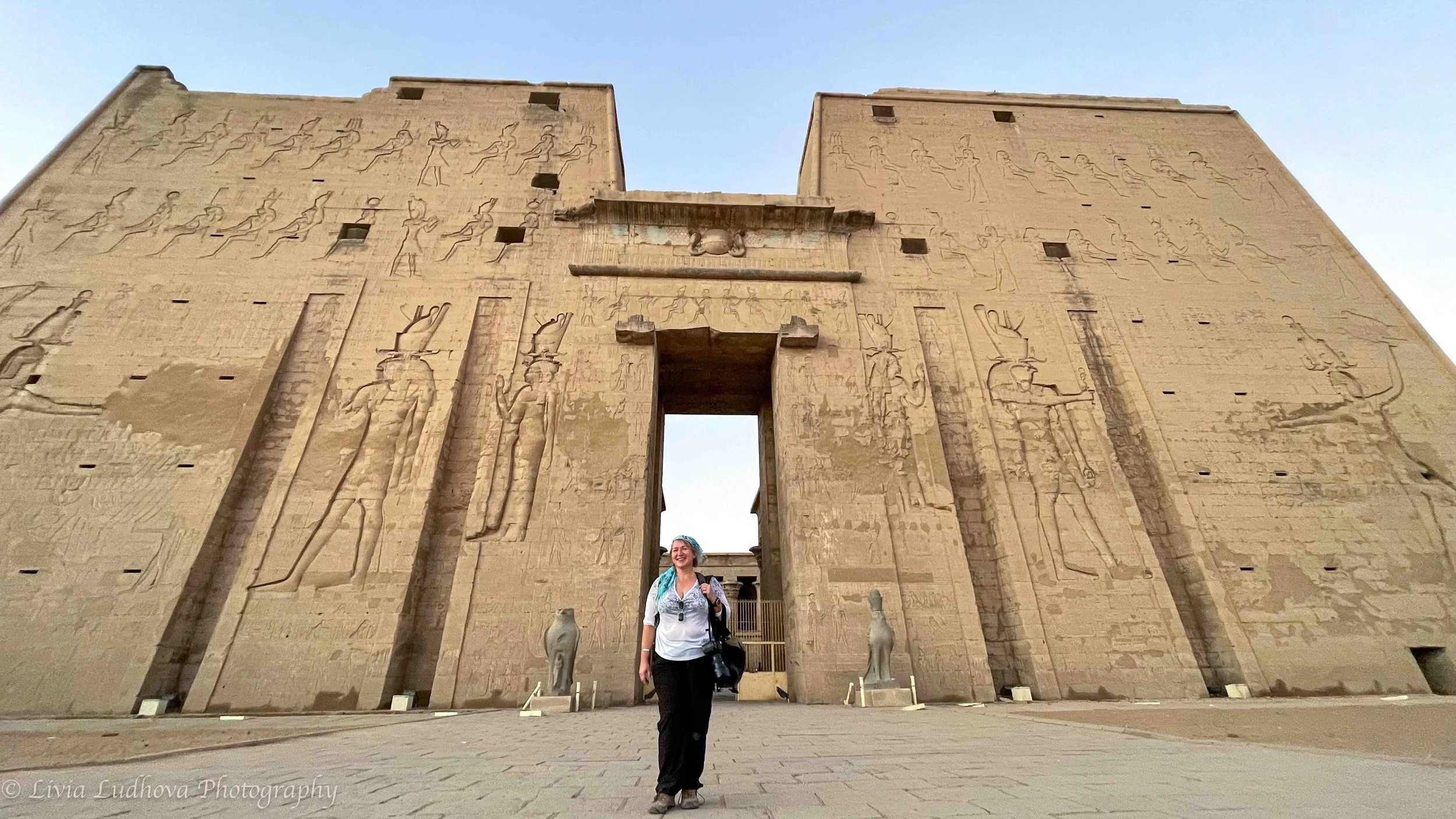
The monumental pylon of the Temple of Horus rises about 36 meters—roughly the height of a 12-storey building—making it one of the tallest and most imposing temple gateways in Egypt.
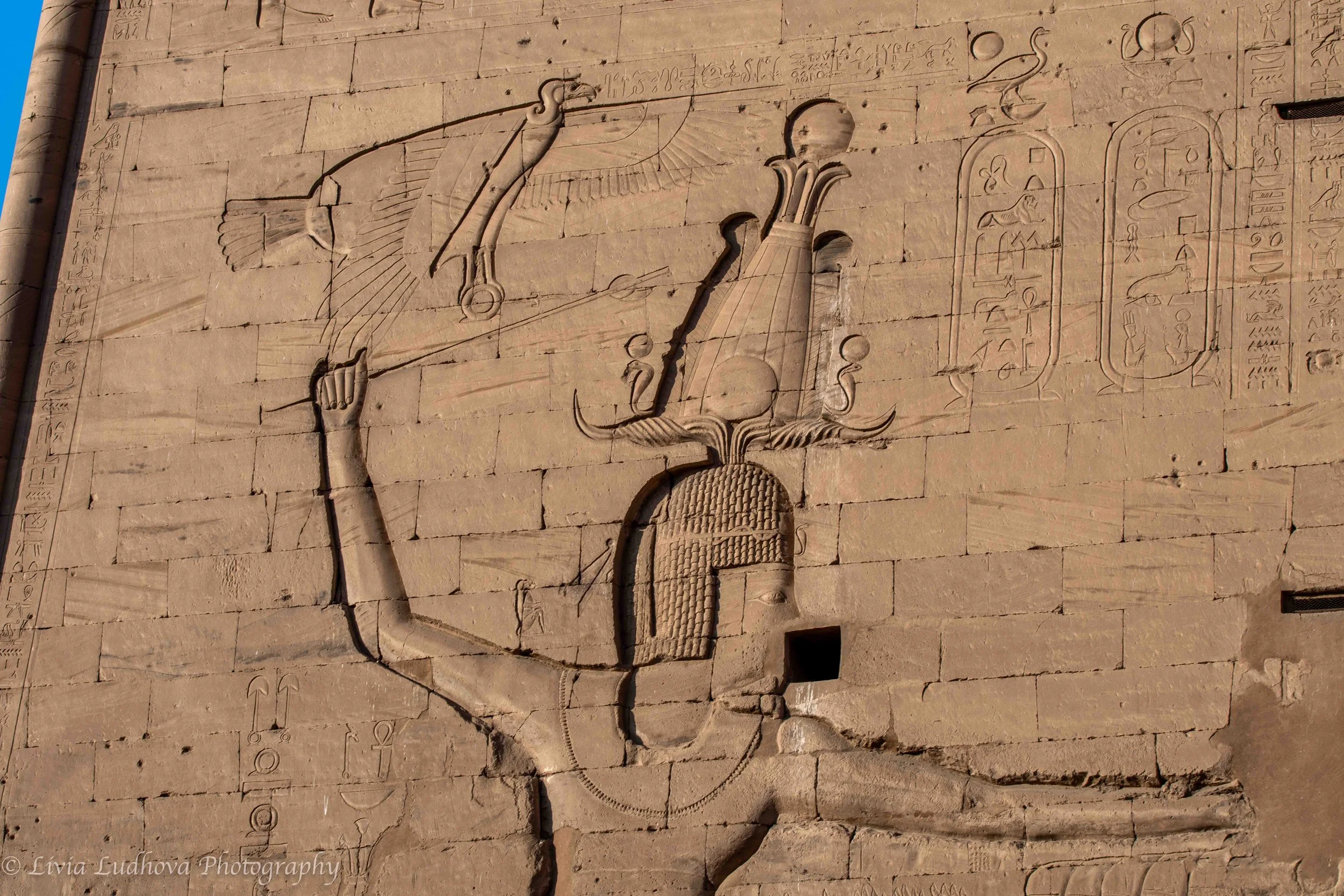
Detail of the figure of the Ptolemaic king, Horus on the Earth.
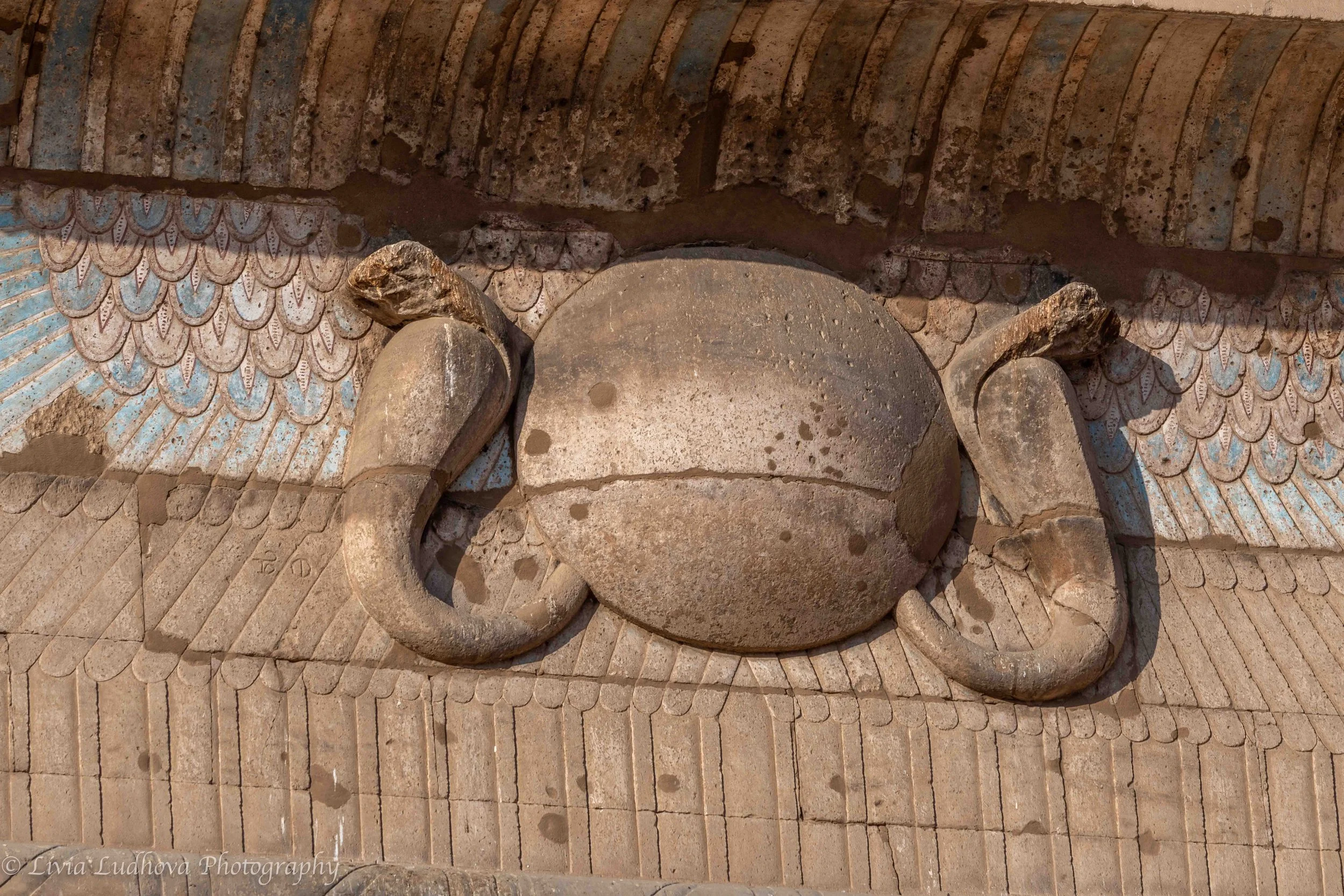
Above the pylon gate of the Temple of Horus, the winged sun disk spreads its protective wings—an emblem of Horus and divine kingship, symbolizing protection, cosmic order, and the triumph of light over chaos as one enters the sacred space.
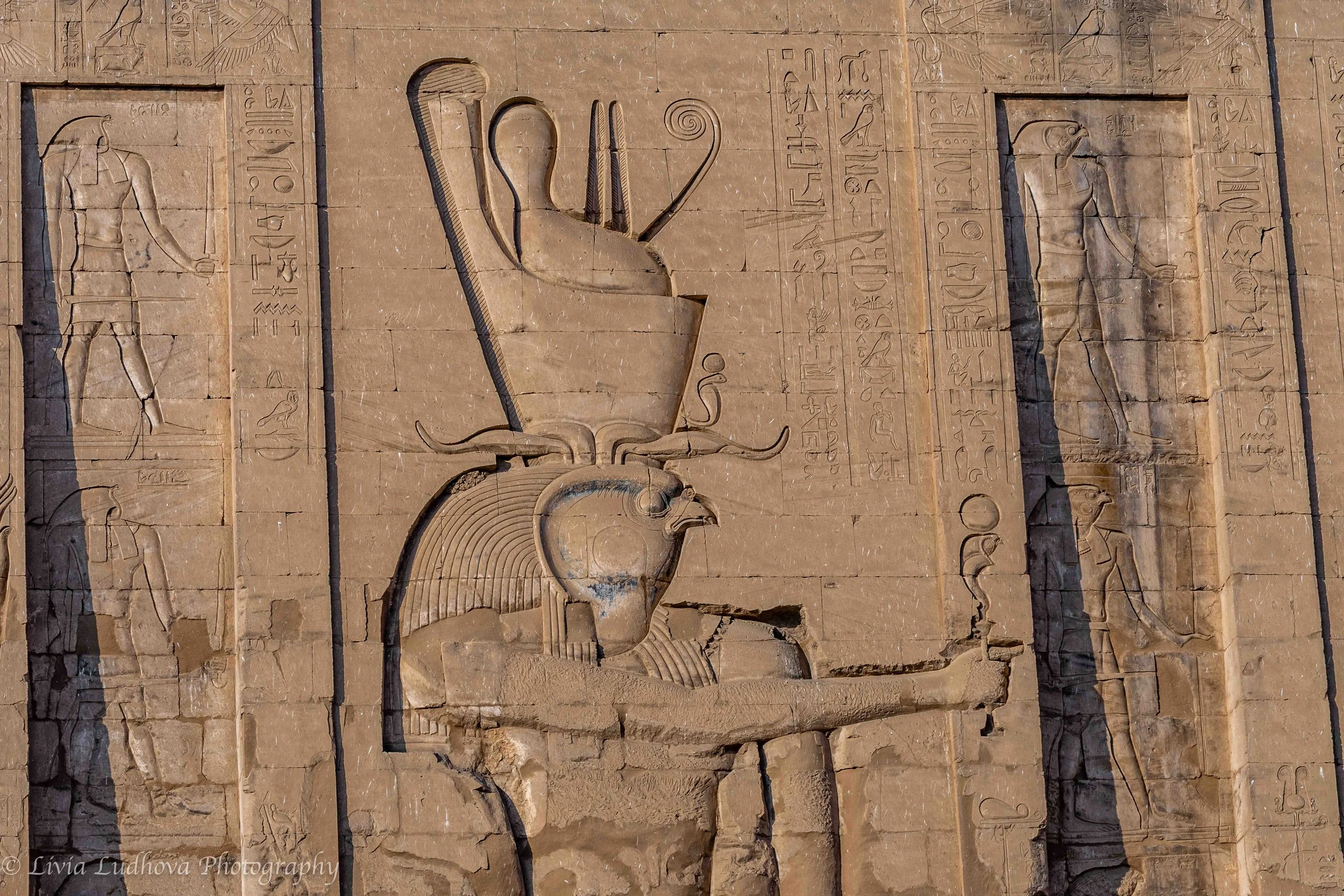
And his majesty Horus....
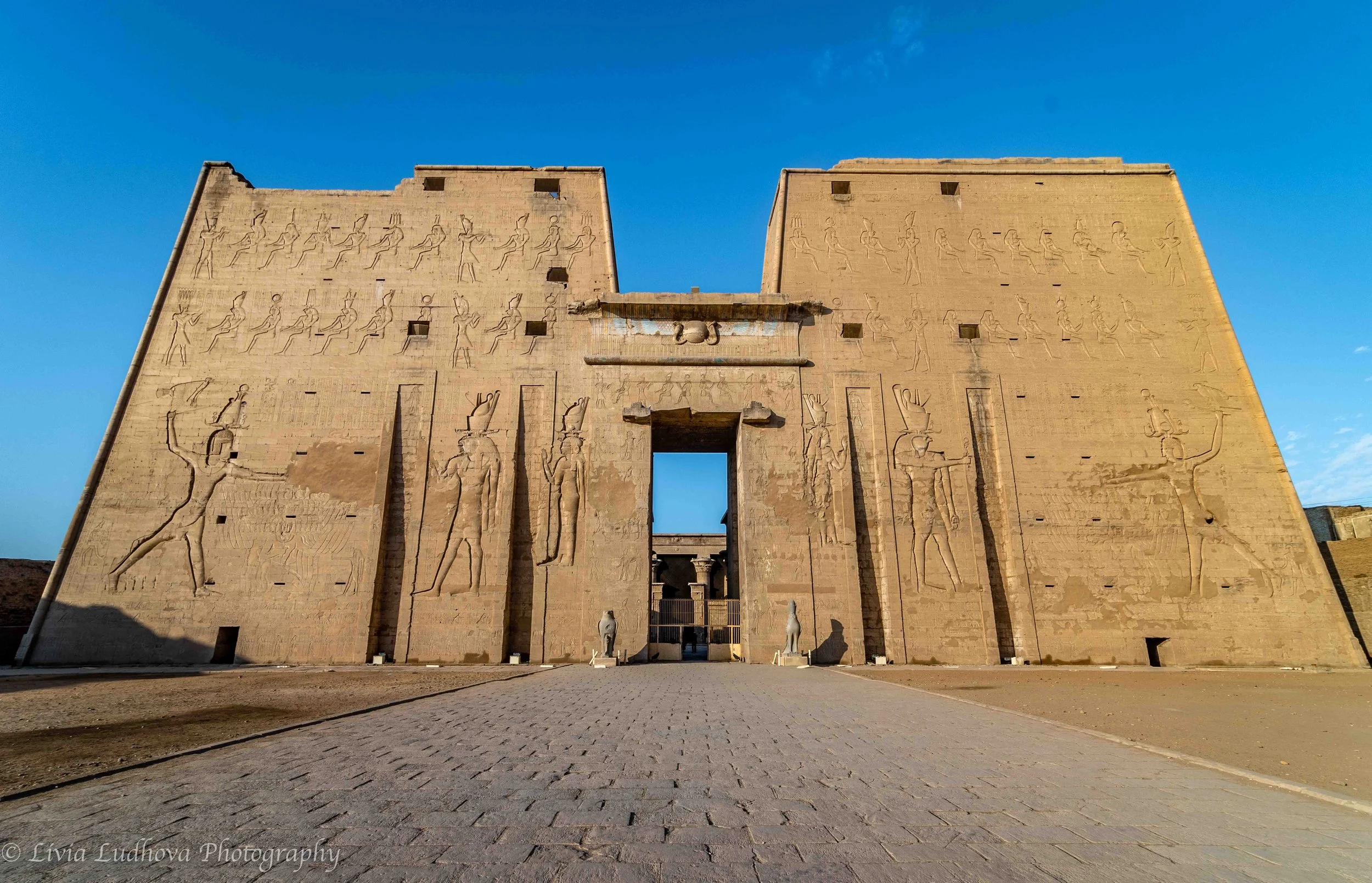
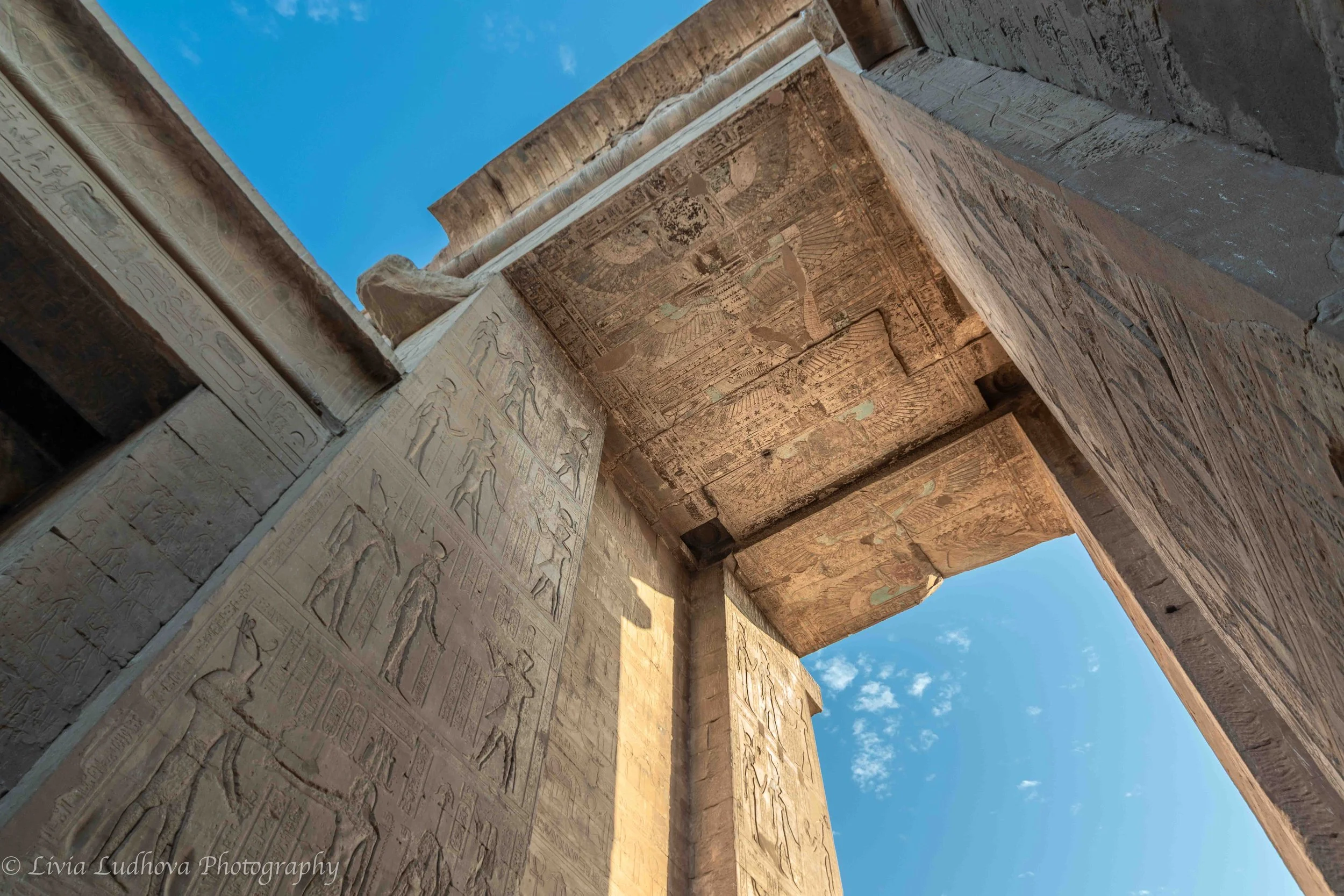
Looking up through the monumental gateway of the Temple of Horus, where carved sandstone walls rise like a stone canyon toward the open sky.
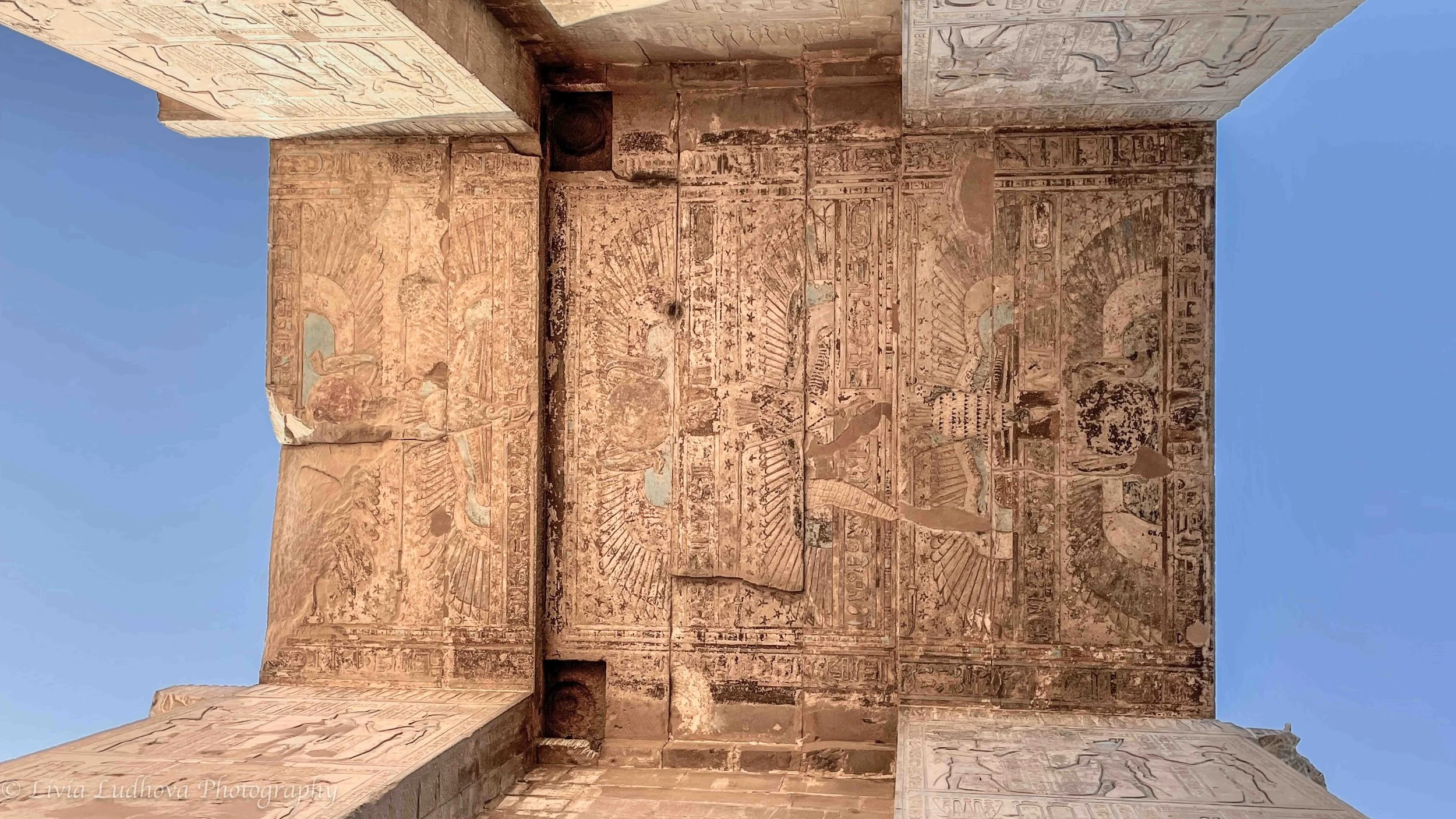
Stone “sky” above the pylon passage at the Temple of Horus, Edfu—carved with ritual texts and cosmic symbols that place everyone passing beneath it under the protection of the gods.
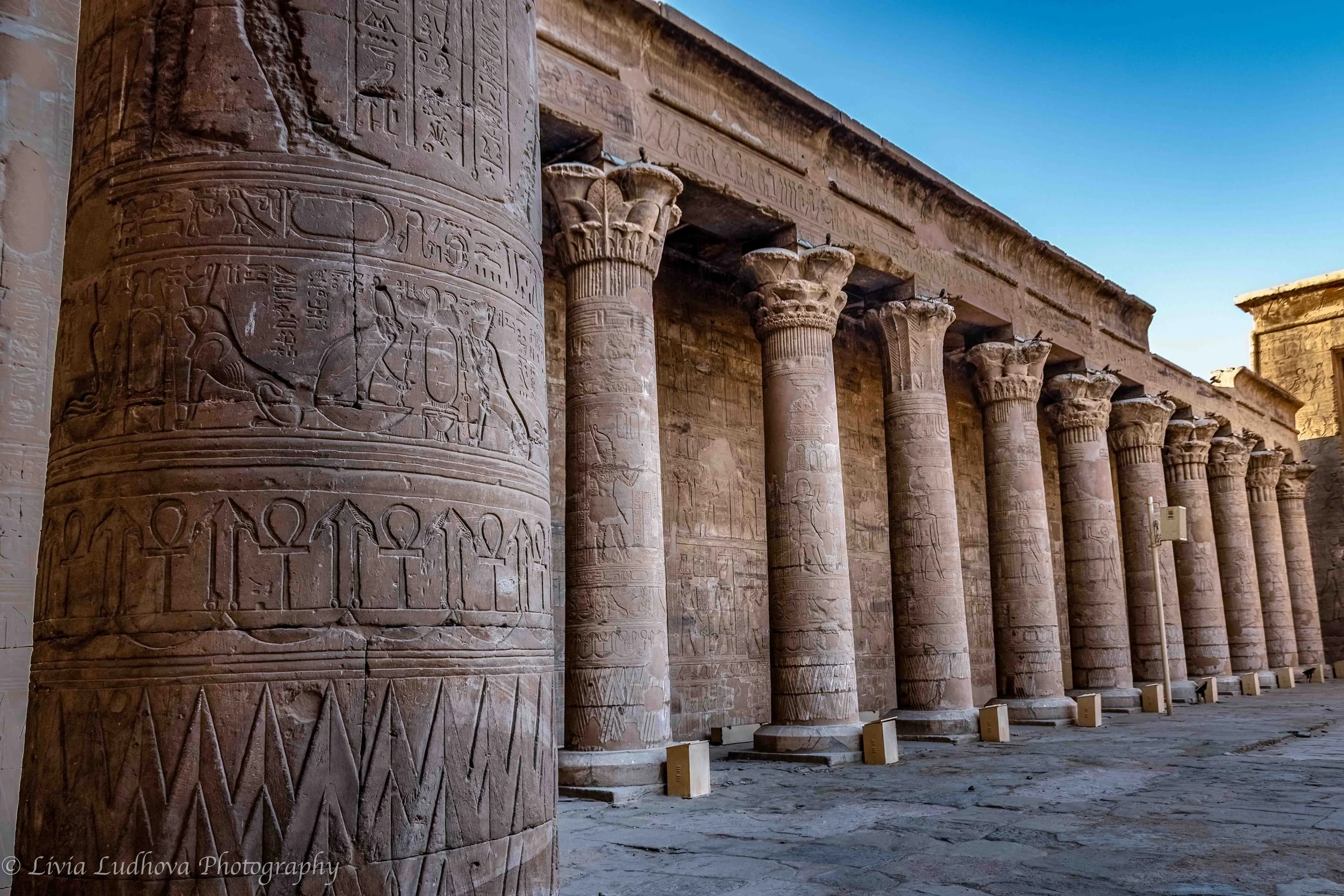
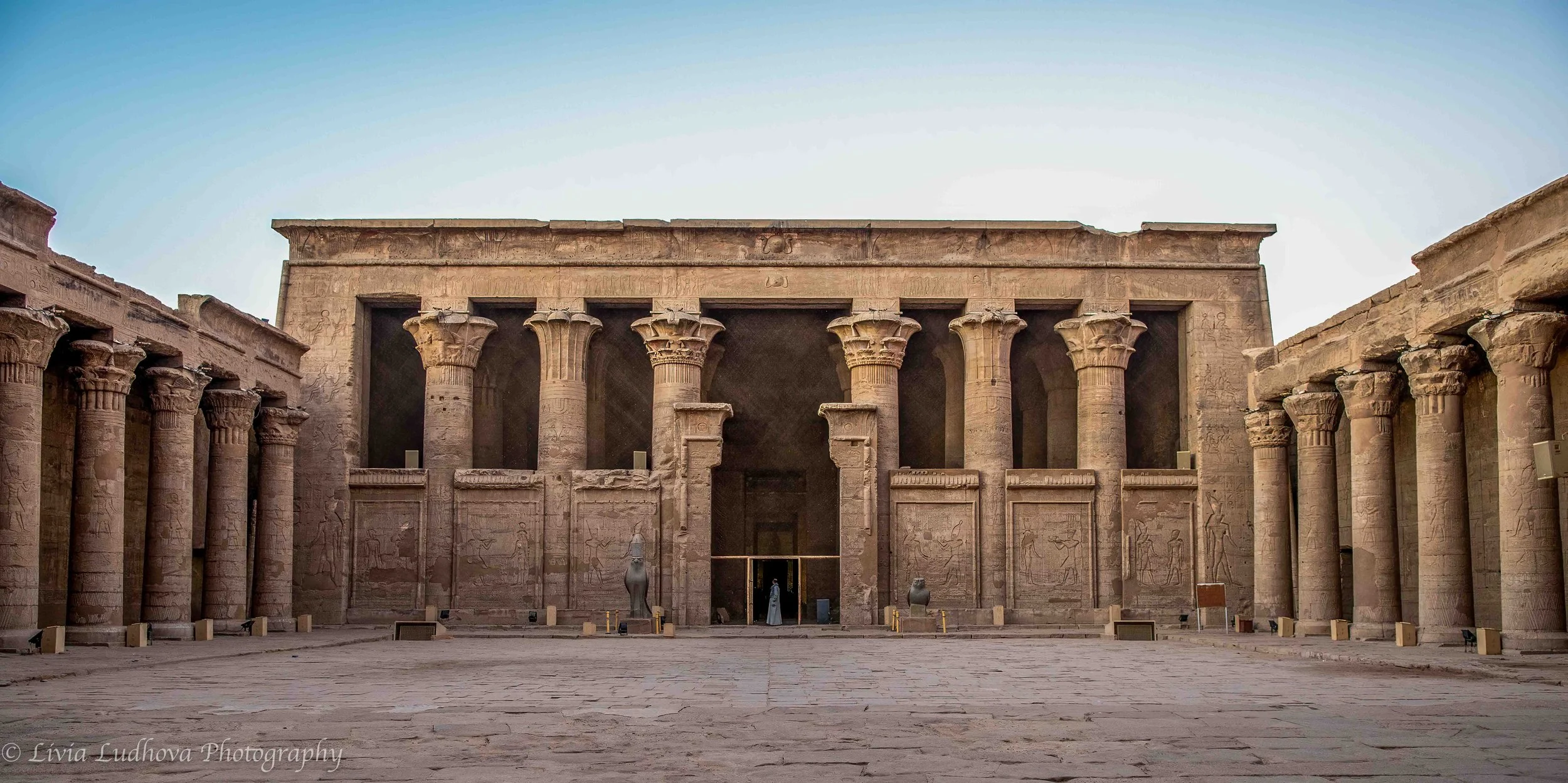
Papyrus-bundle columns lining the hypostyle court of the Temple of Horus, Edfu—each shaft carved with hieroglyphs and ritual scenes, turning architecture into a continuous stone manuscript.
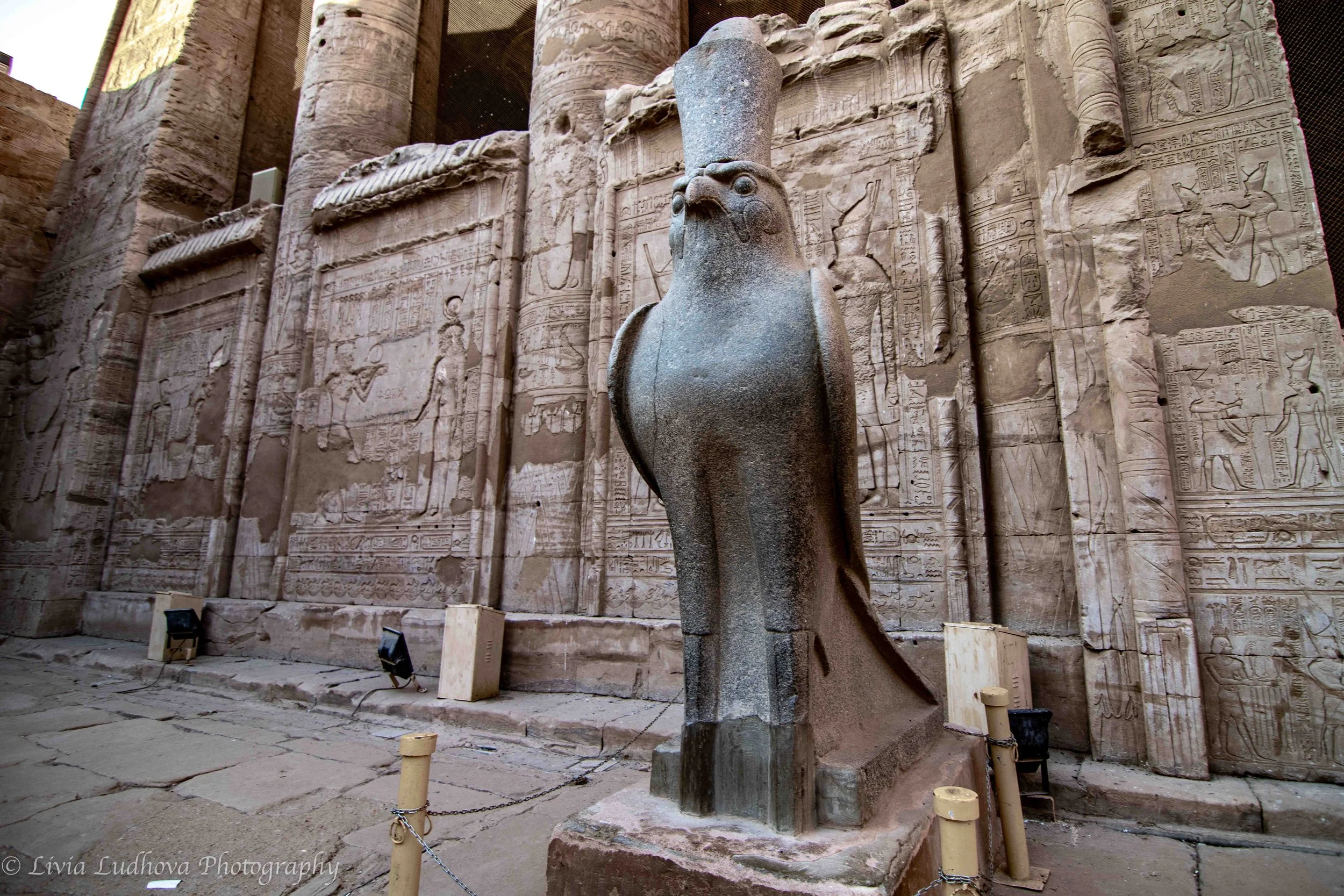
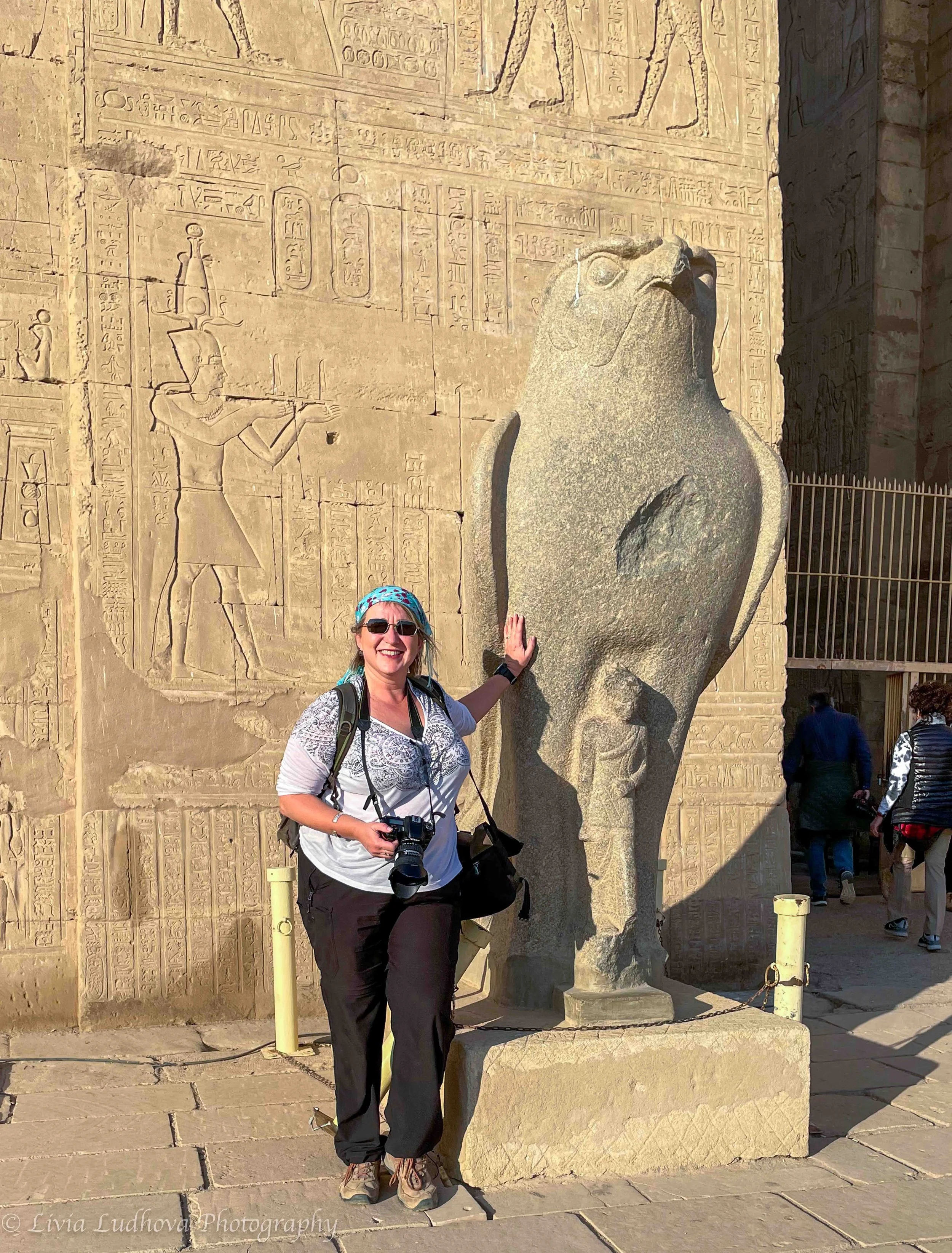
Granite statue of Horus the Falcon at the Temple of Edfu, guardian of the sanctuary and embodiment of divine kingship, standing watch against walls dense with ritual reliefs and hieroglyphs.
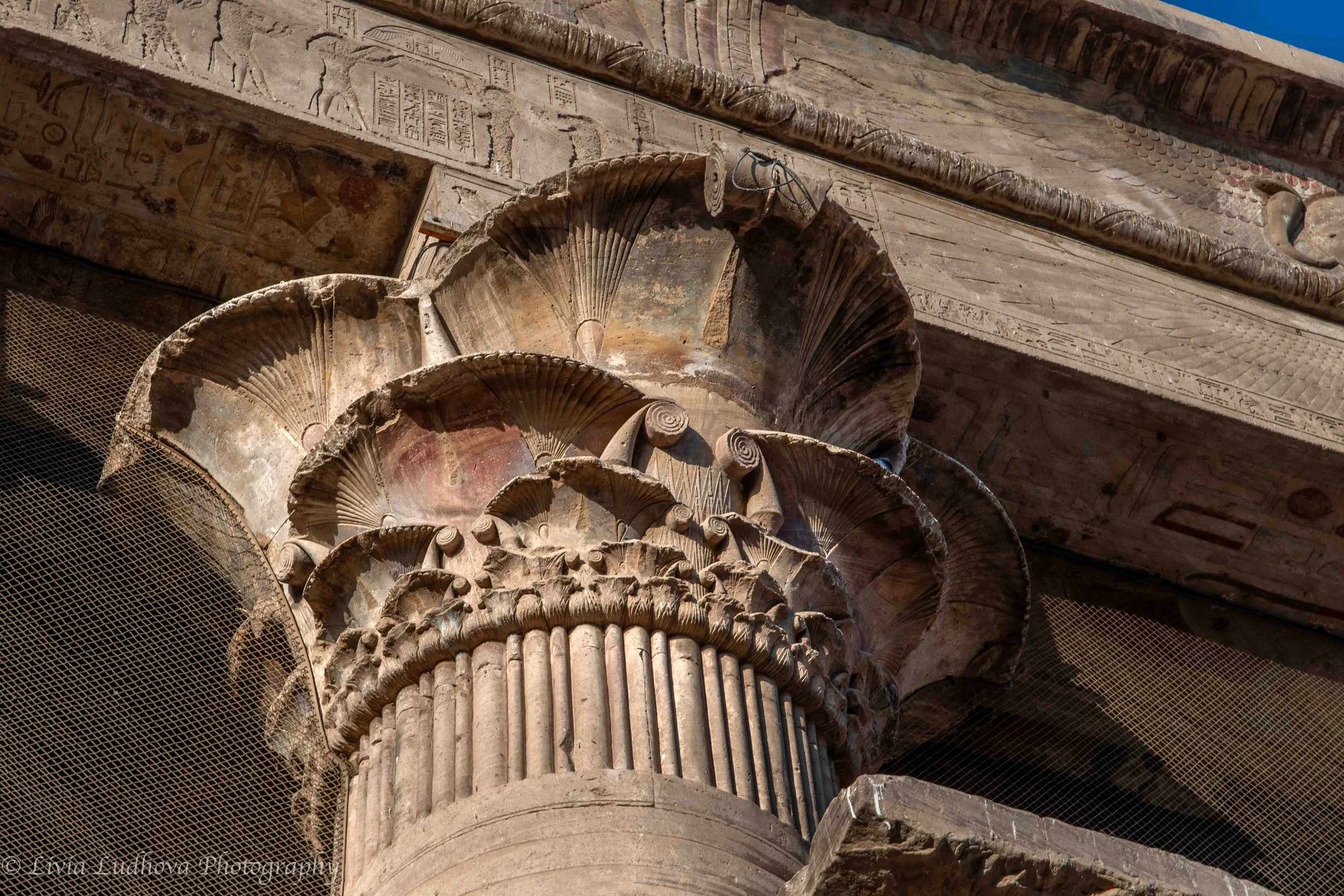
Lotus and papyrus capital crowning a column at the Temple of Edfu, its carved vegetal forms symbolizing regeneration and the unity of Upper and Lower Egypt beneath layers of ritual inscriptions.
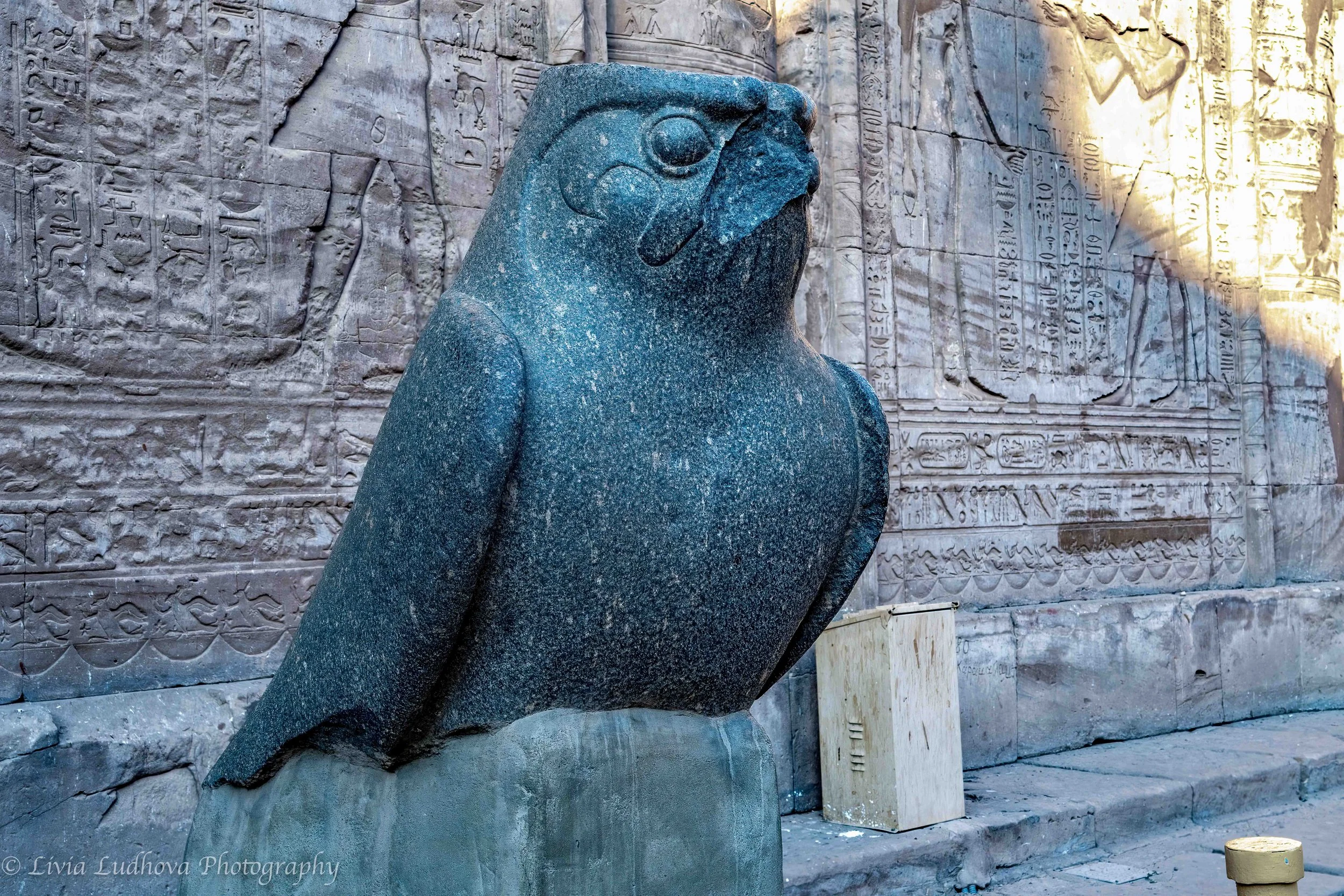
Horus the Falcon, uncrowned — guardian of the Temple of Edfu, shown in his timeless divine form rather than as a ruling king.
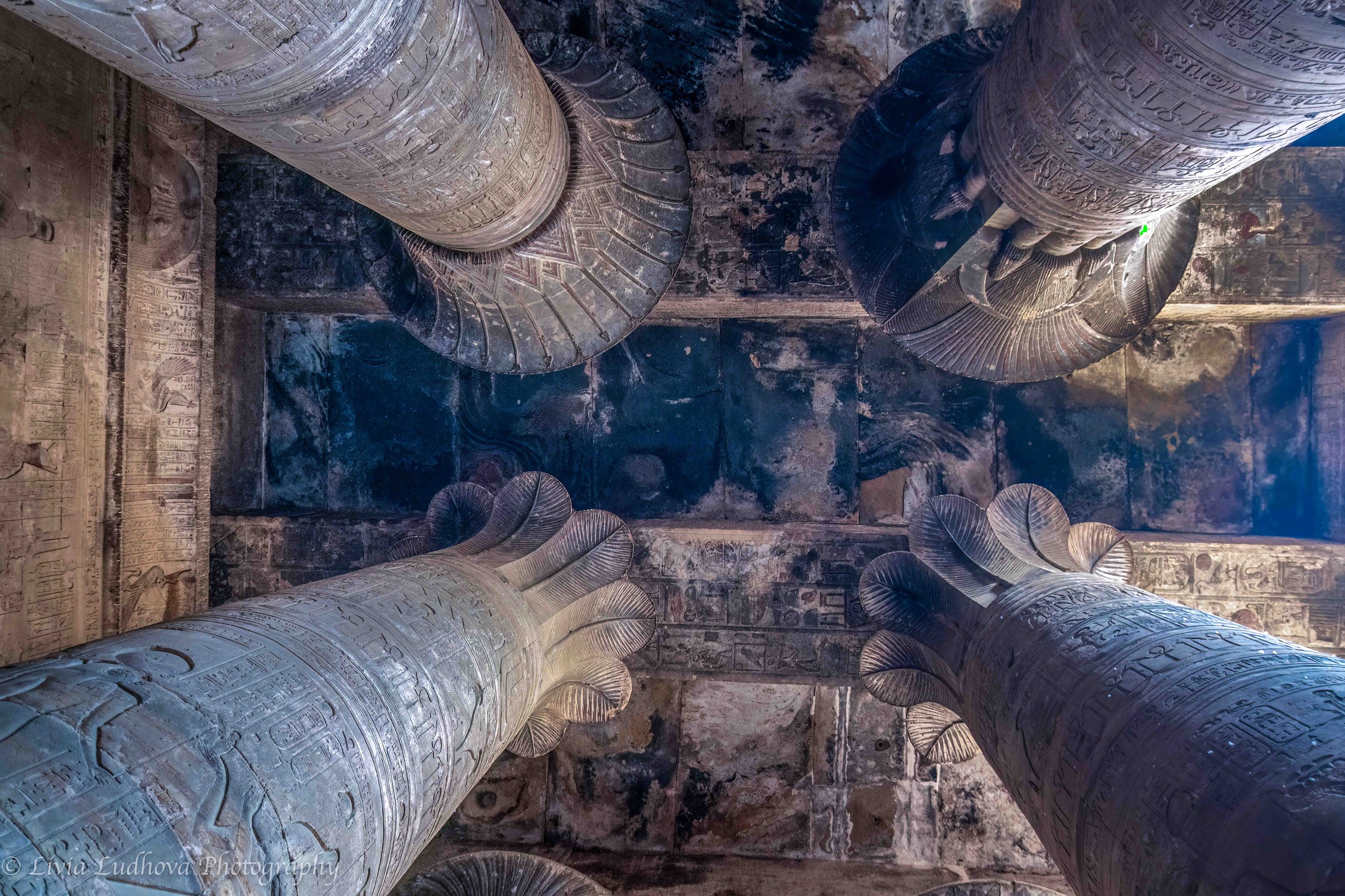
Looking up beneath the hypostyle hall at Edfu, where towering columns crowned with papyrus capitals support a ceiling darkened by centuries of incense, ritual, and time.
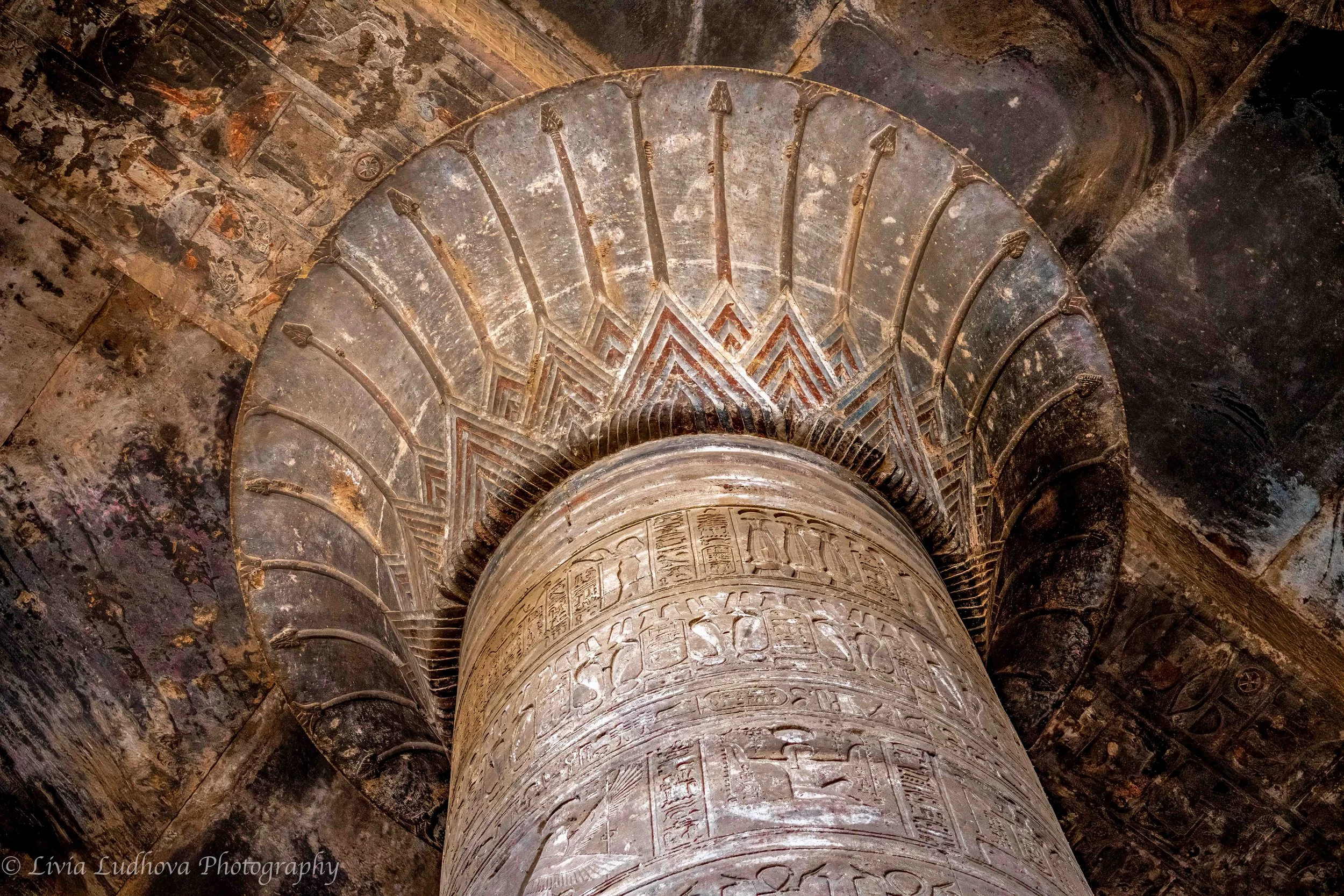
Lotus capital and column at Edfu, preserved beneath centuries of Nile silt and later revealed through careful excavation.
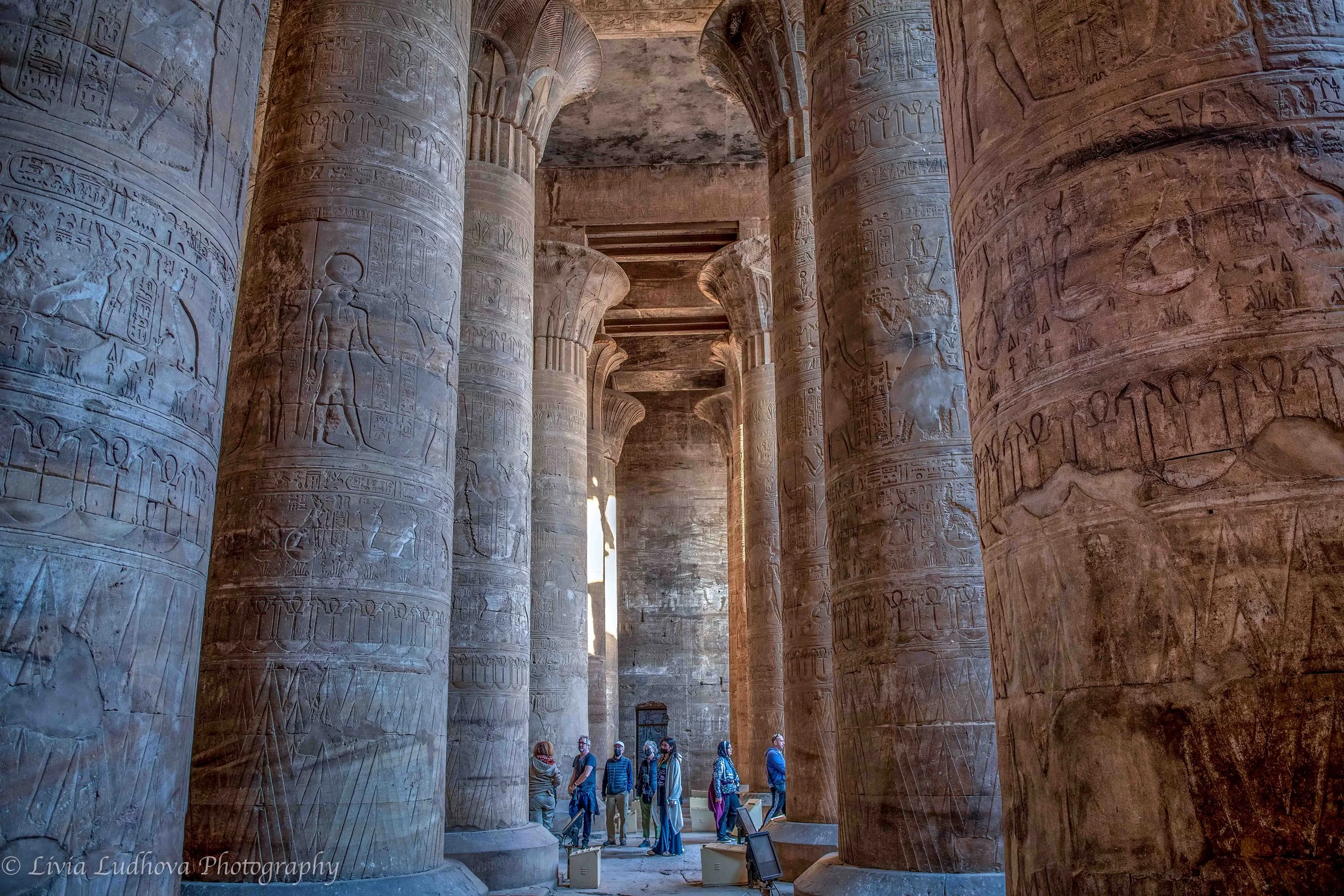
Visitors dwarfed by the massive columns of the hypostyle hall at Edfu, where towering Ptolemaic pillars once framed ritual processions leading toward the sanctuary of Horus.
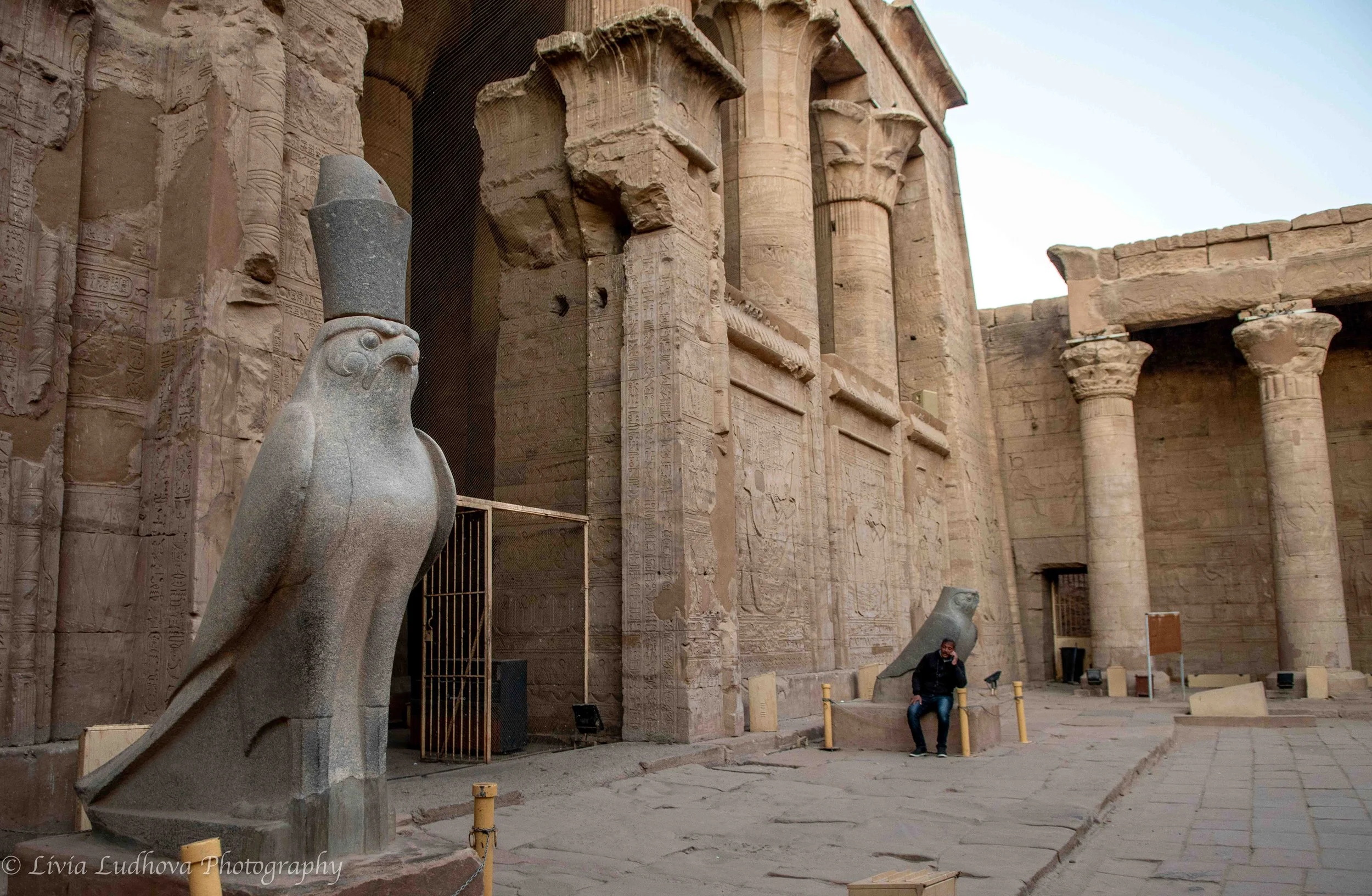
A falcon statue of Horus stands watch at the entrance of Edfu Temple, its scale echoing the monumental architecture of the Ptolemaic sanctuary behind.
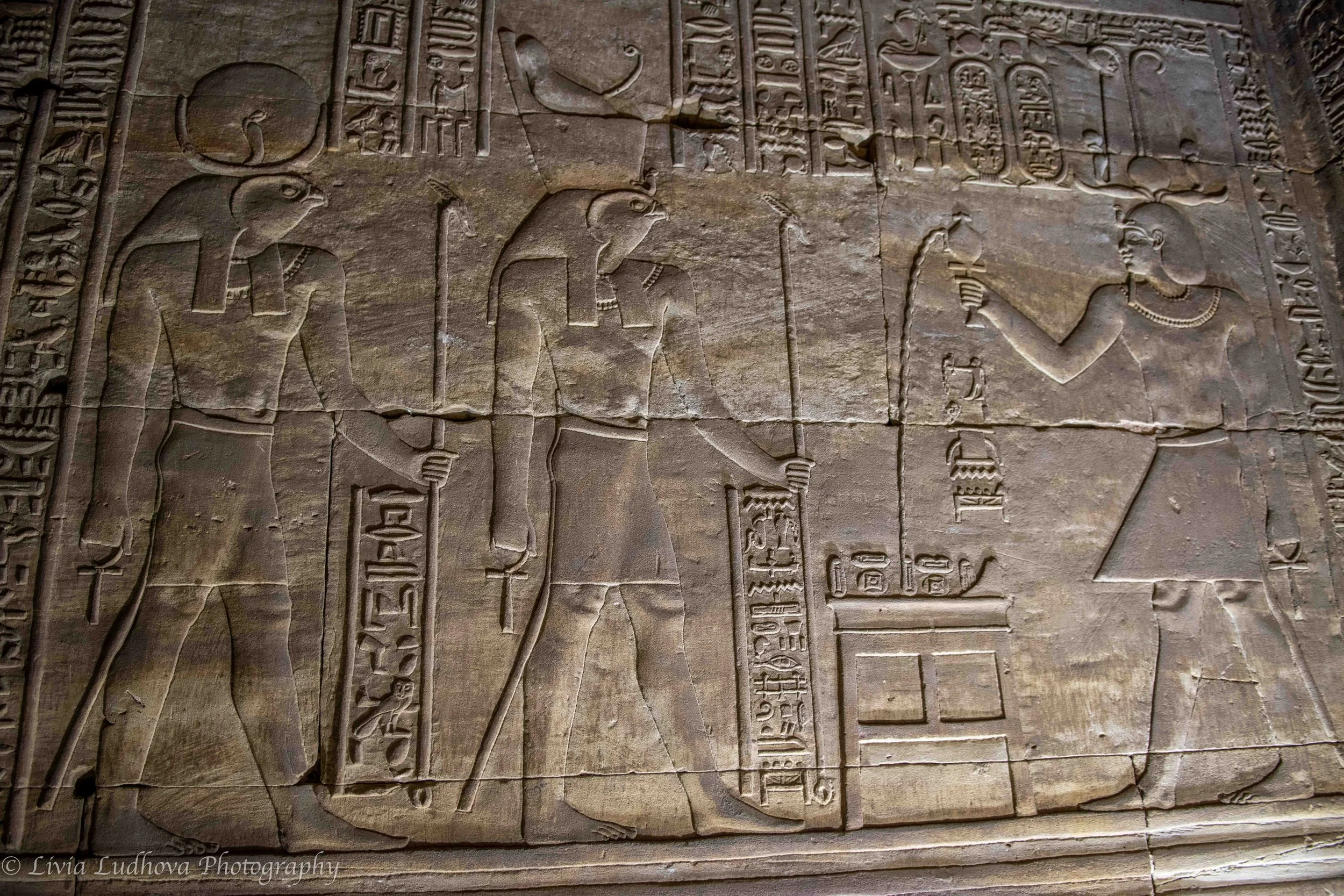
Offering scene with Horus and associated deities receiving gifts from the king, affirming divine order (ma’at) and royal legitimacy.
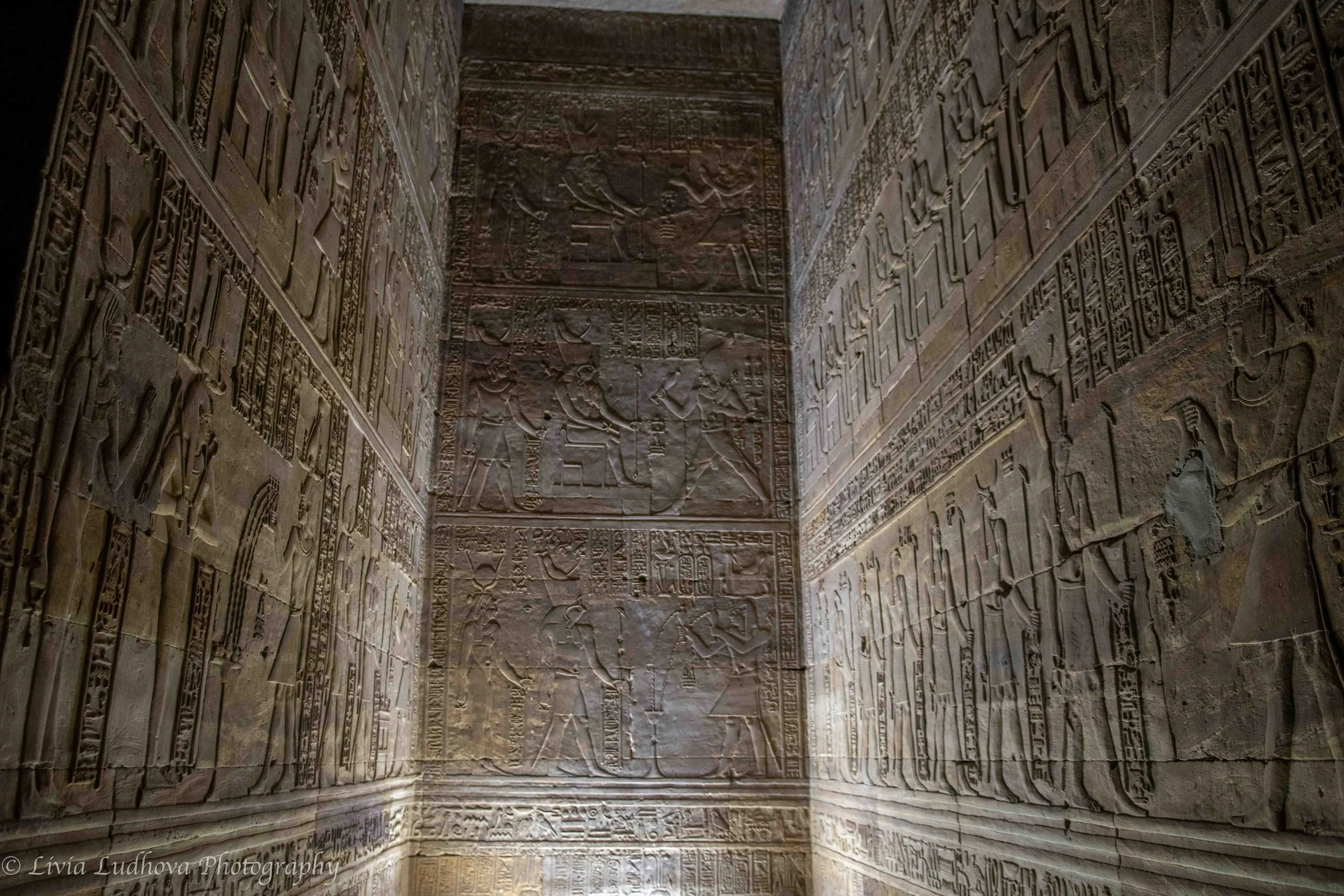
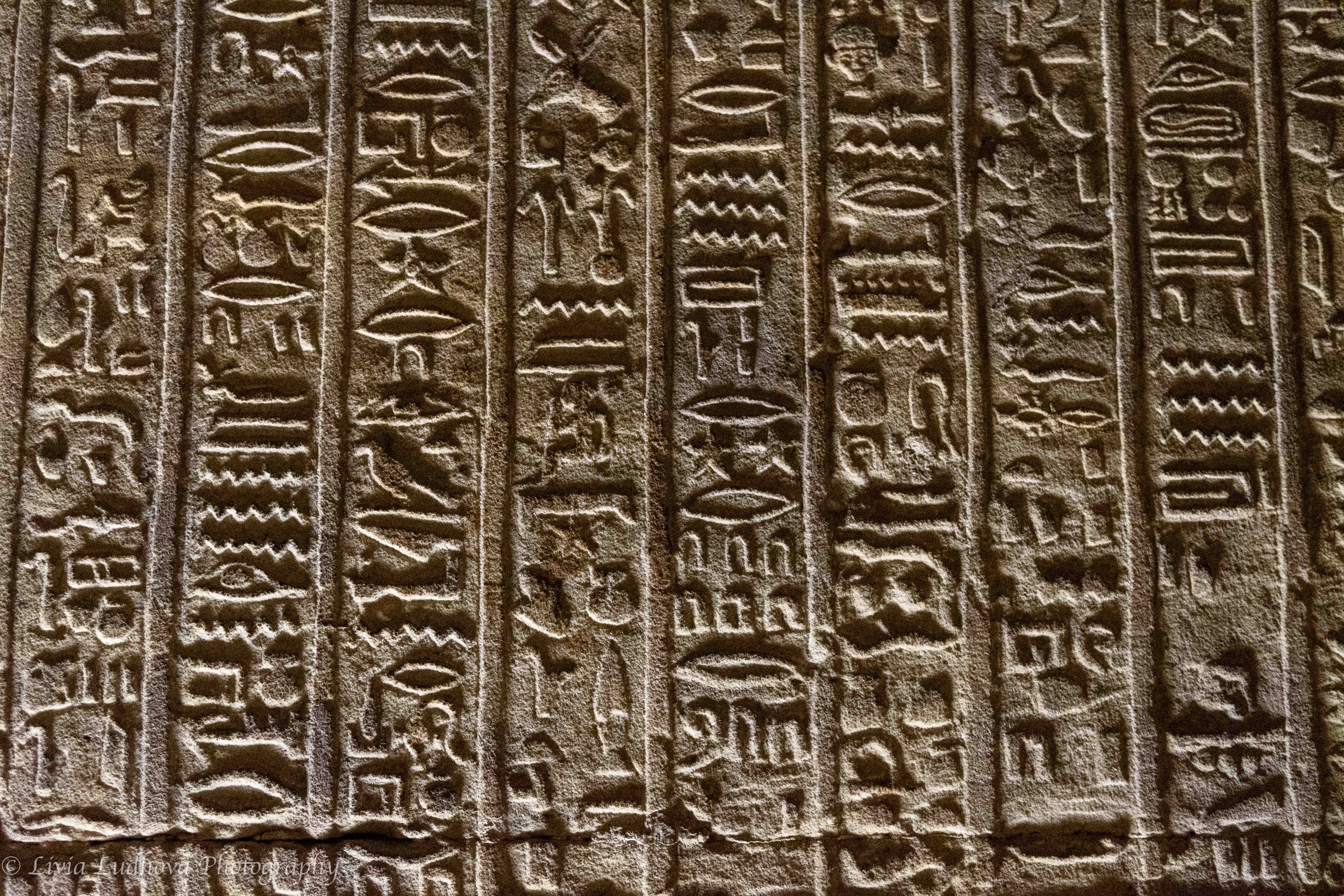
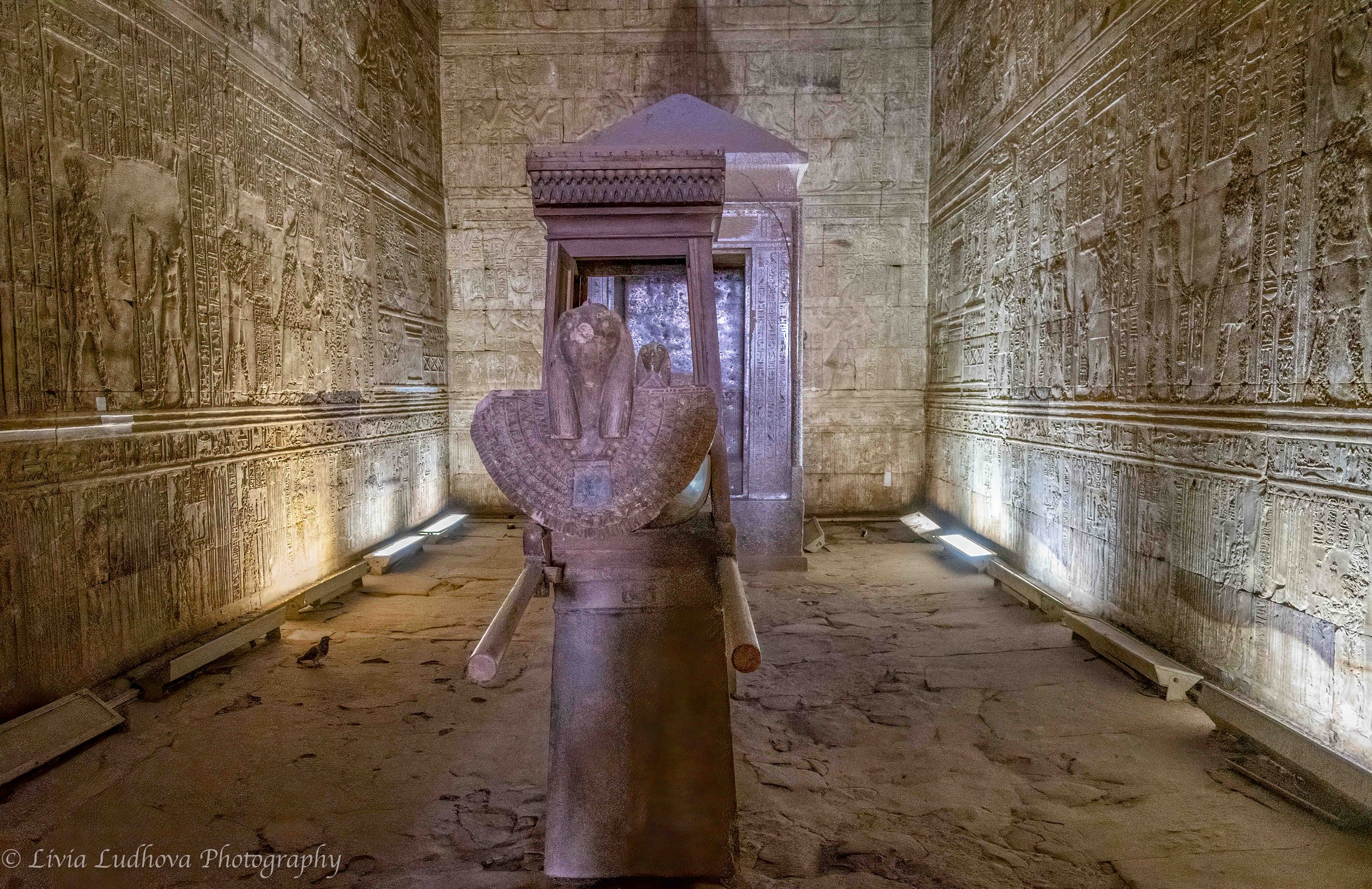
At the core of the sanctuary at Edfu, the granite shrine and falcon statue of Horus stand on the temple’s central axis, symbolizing the innermost sacred space where the god’s presence was believed to dwell.
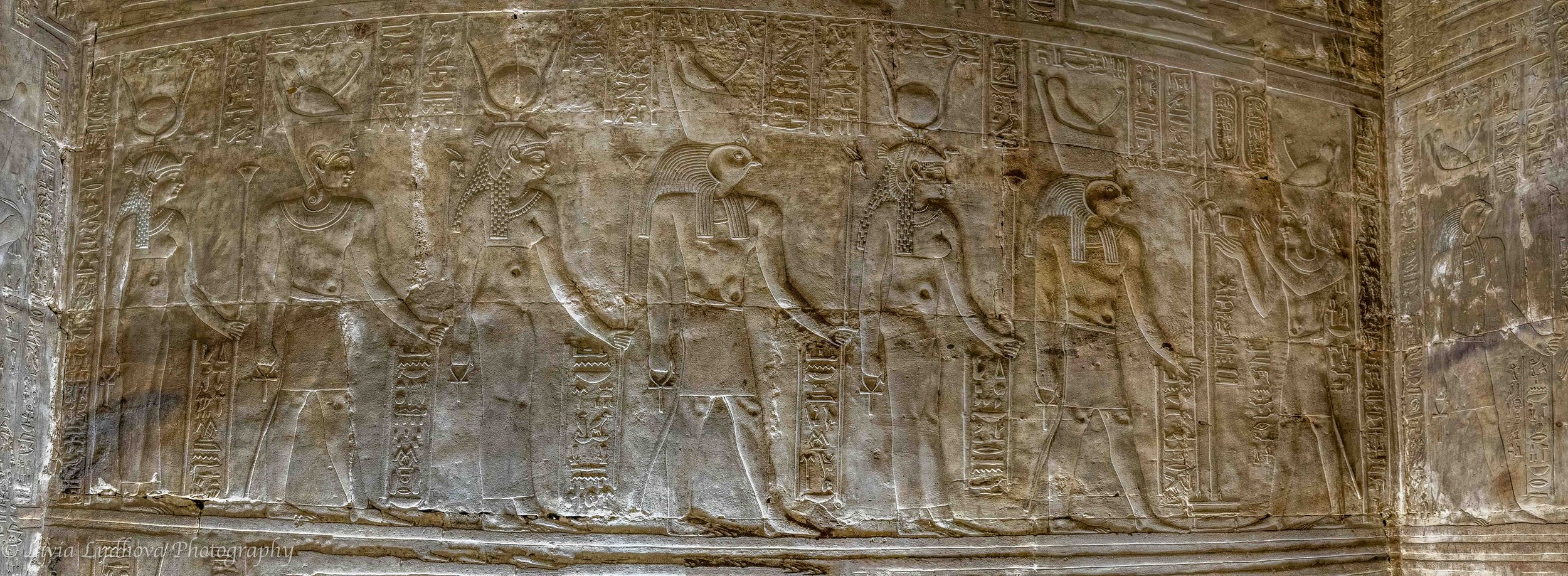
Another offering scene..,...
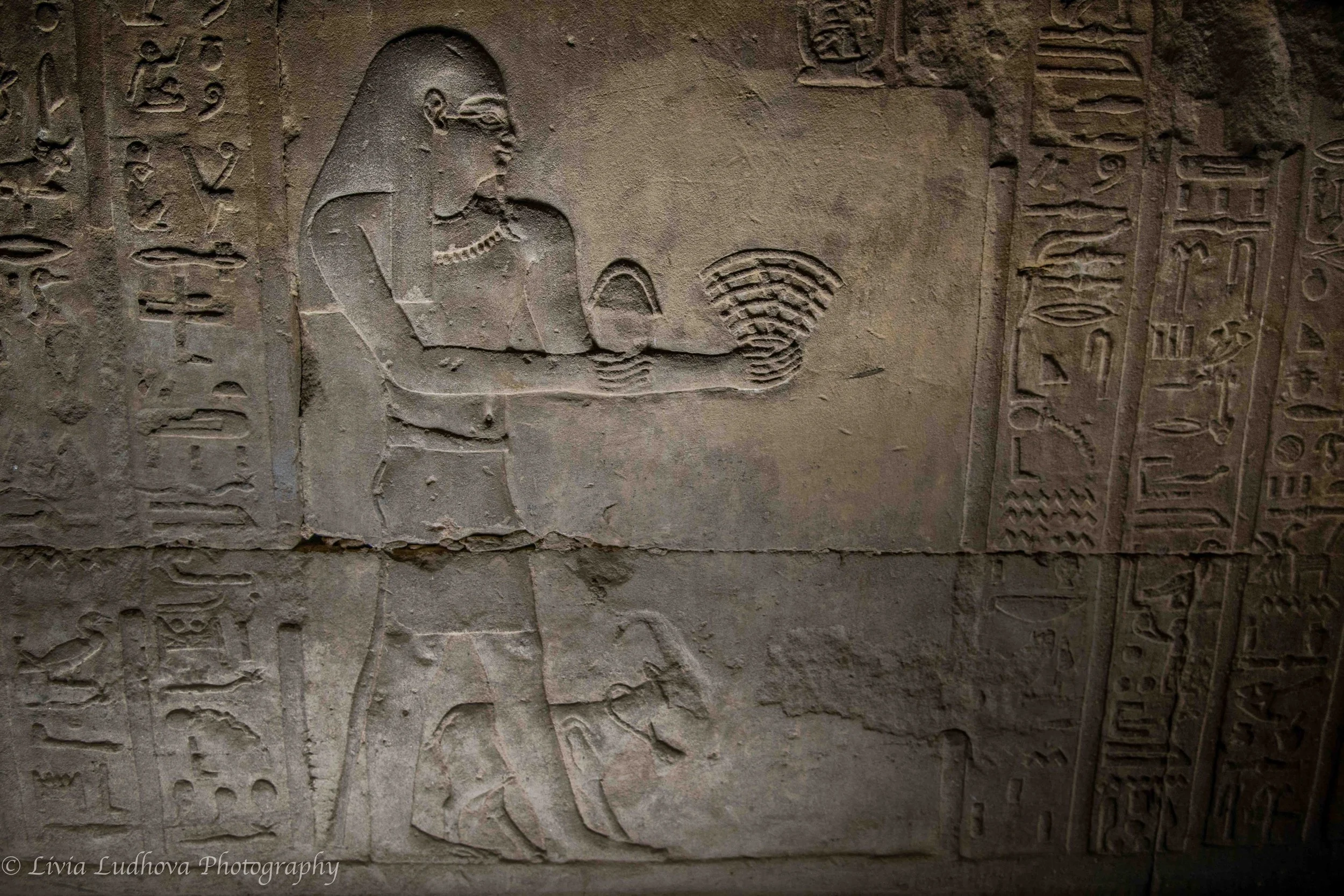
When wifi was introuced :-)
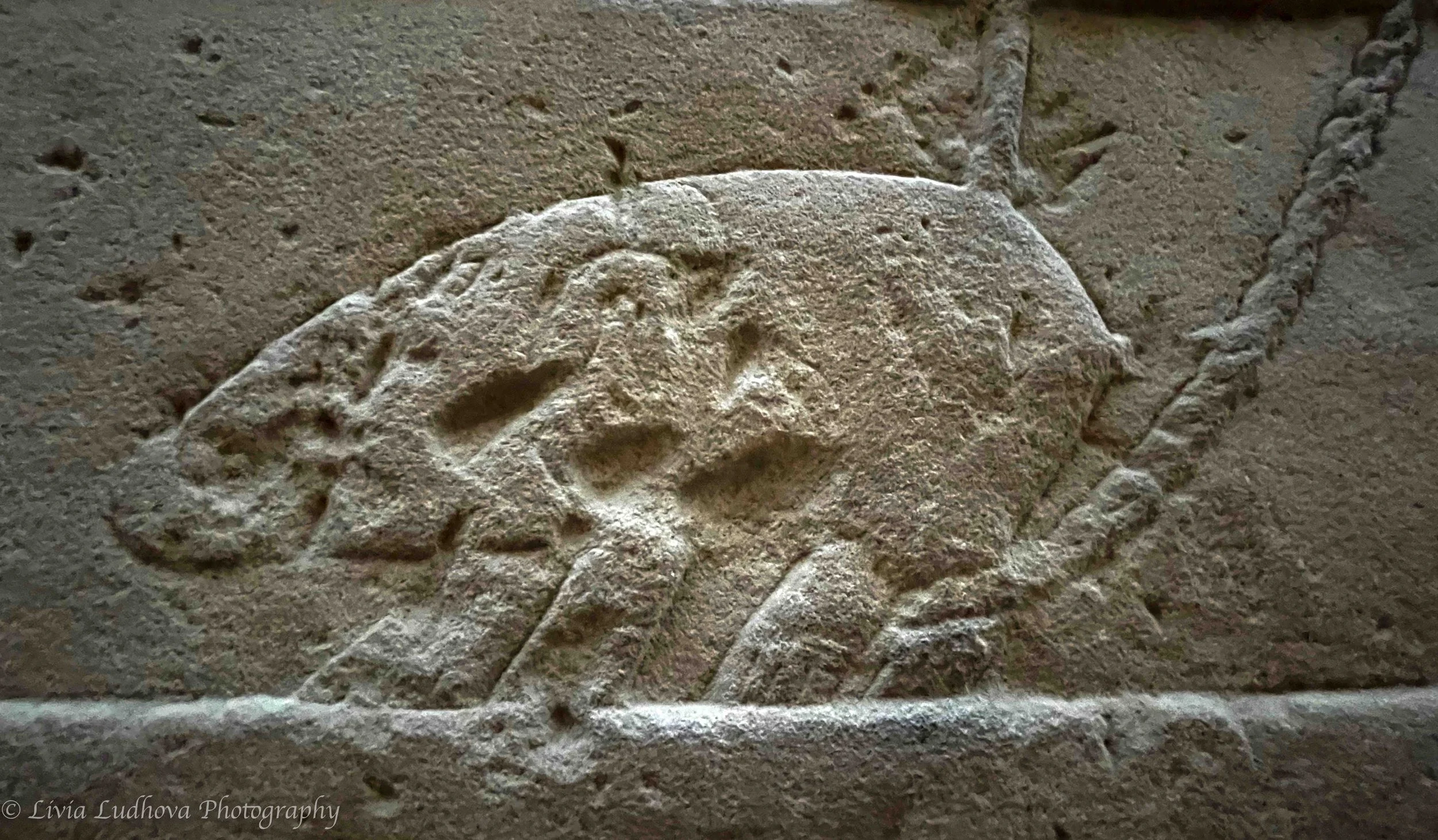
Two faces of chaos and control: paired reliefs at Edfu show the hippopotamus—symbol of Seth and destructive forces—depicted once upright and once overturned beneath the Nile’s surface, visualizing Horus’s triumph over chaos and the restoration of cosmic order.
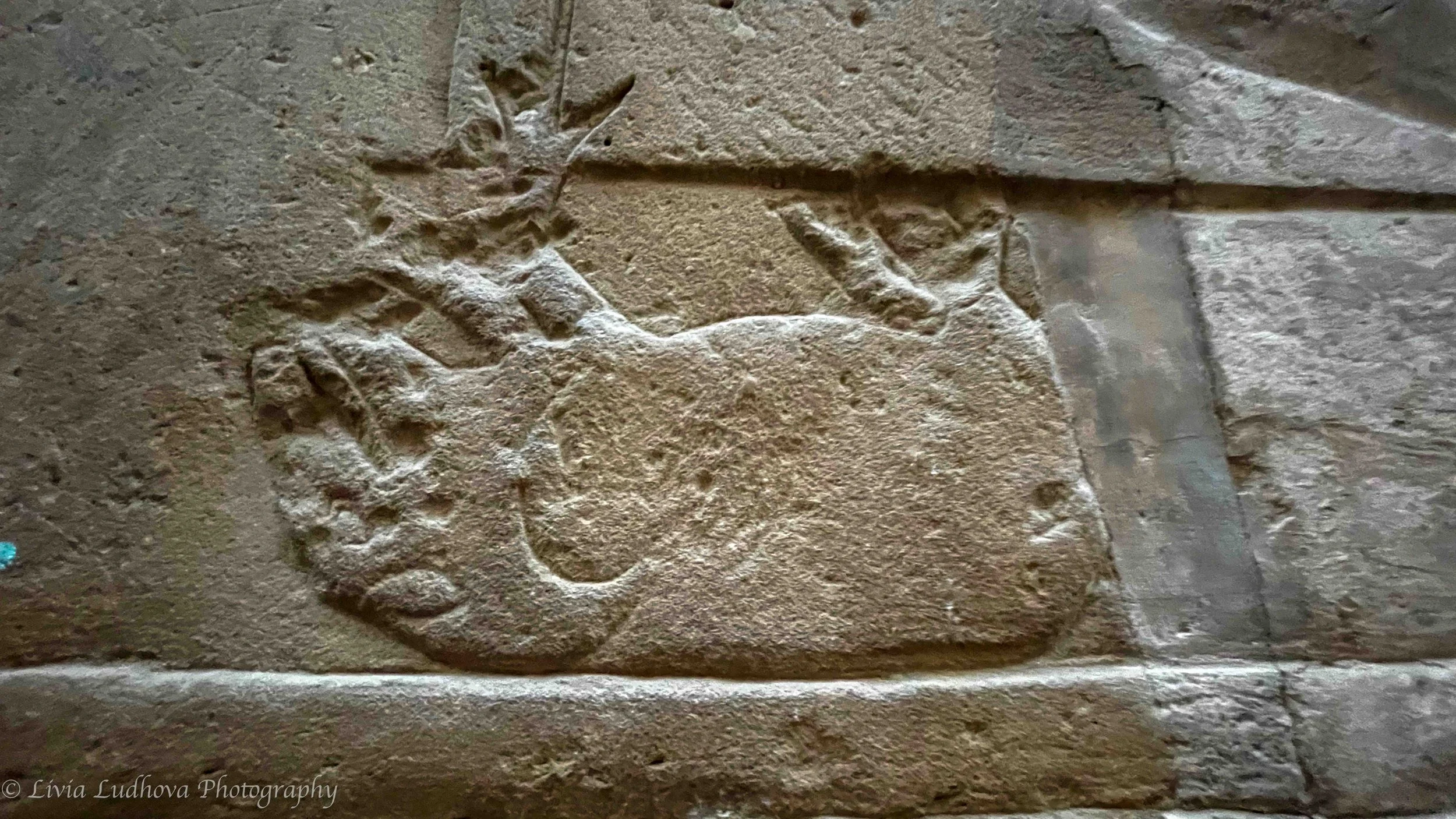
And here chaos is defeated.....
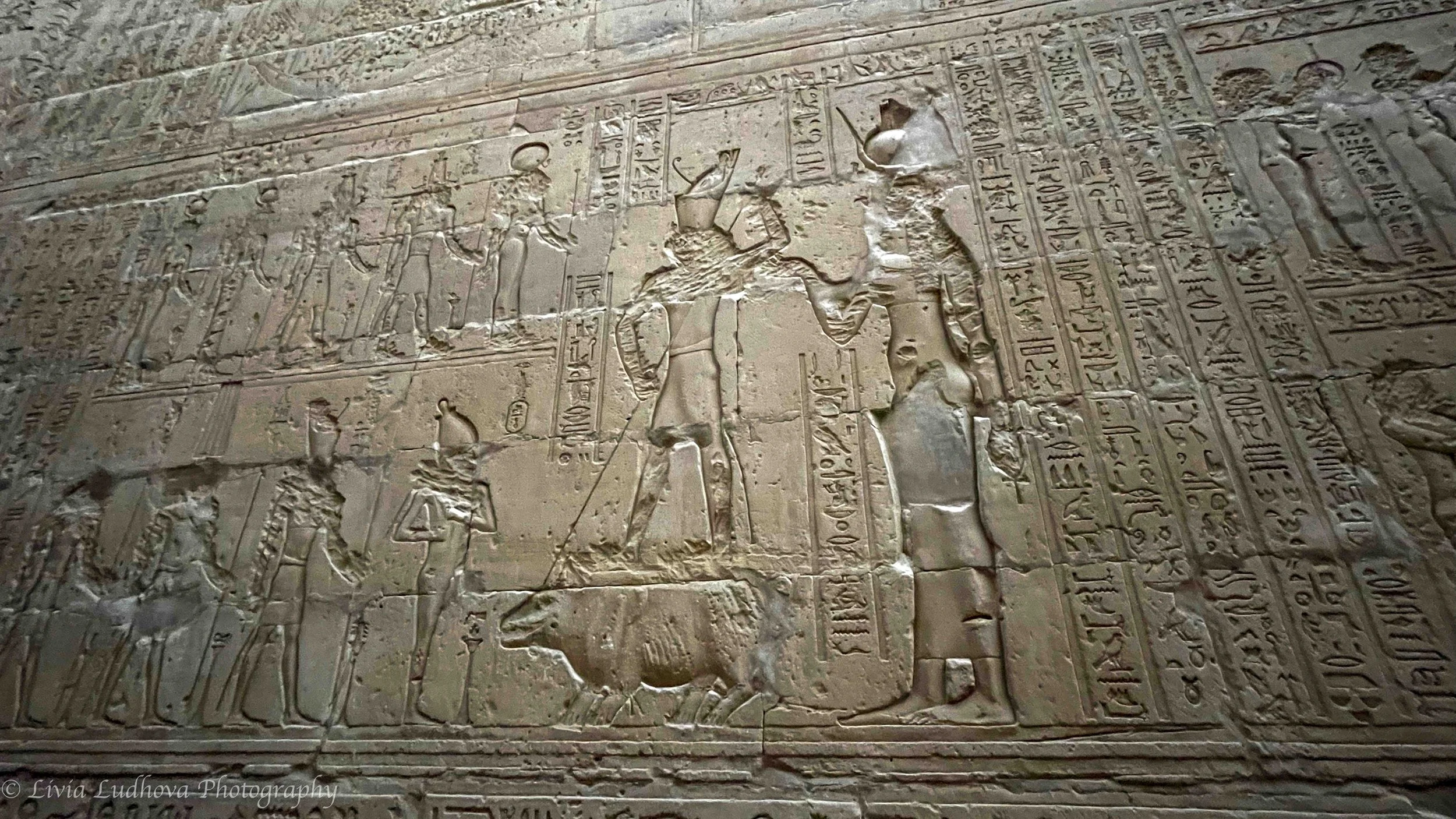
Horus defeating chaos and restoric cosmic orde (maa't) after Sethi killed his father, Osiris.
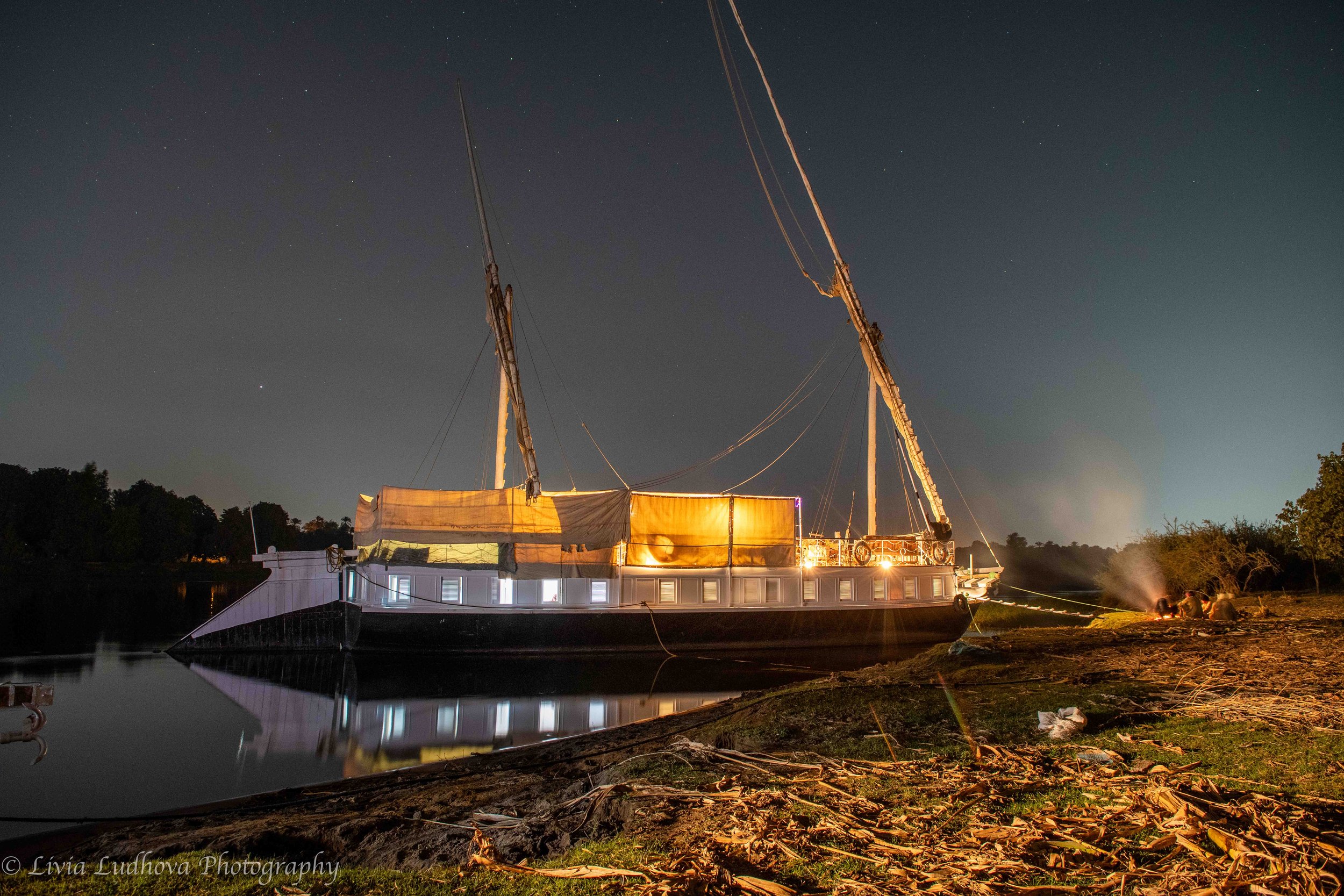
And the last night moored at a traquill beach.
Day 4: Nile Cruise: El Kab and Esna
Dec 29: Nile cruise with Dahabyia Loulia Day 3 – El Kab tombs – city of Esna
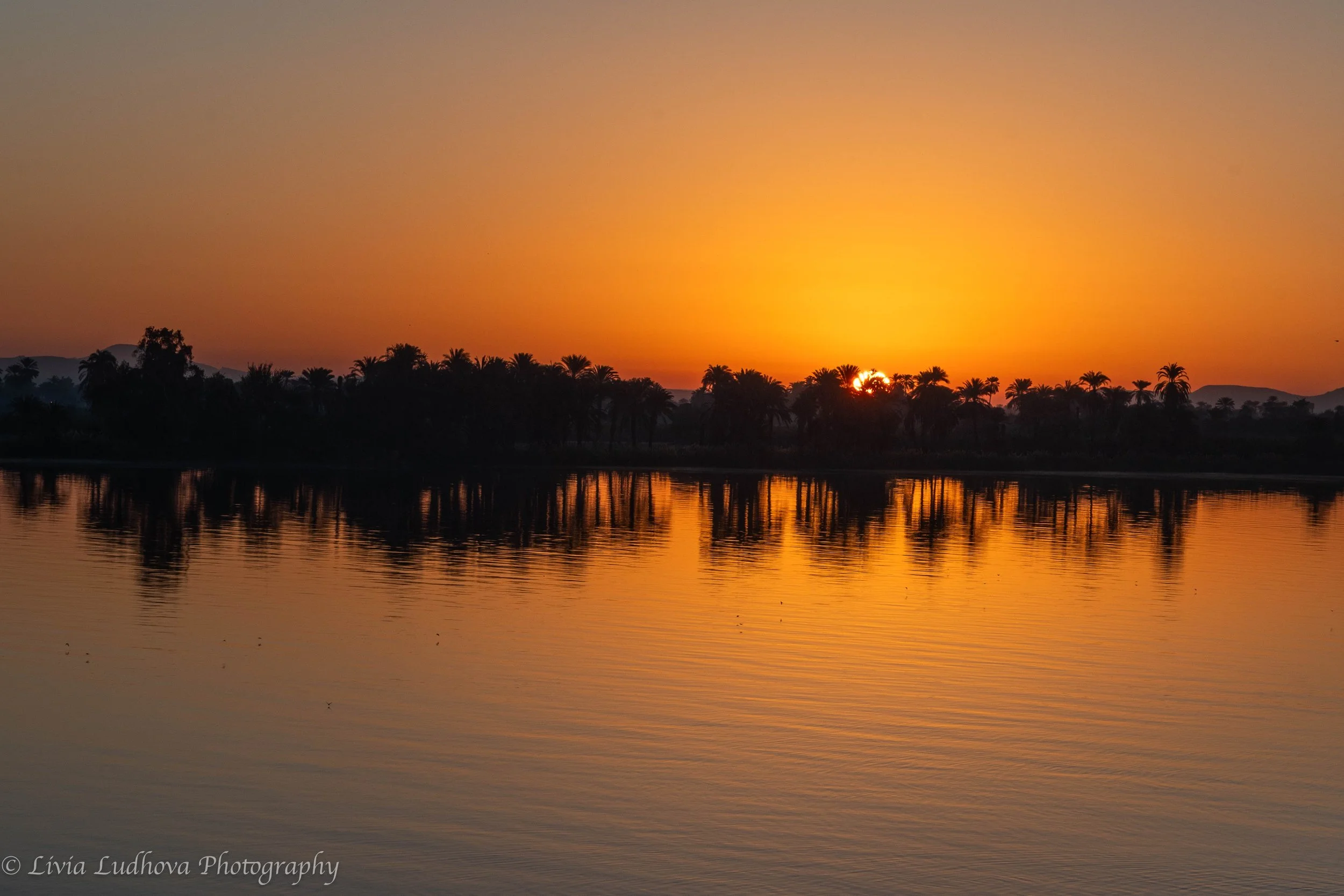
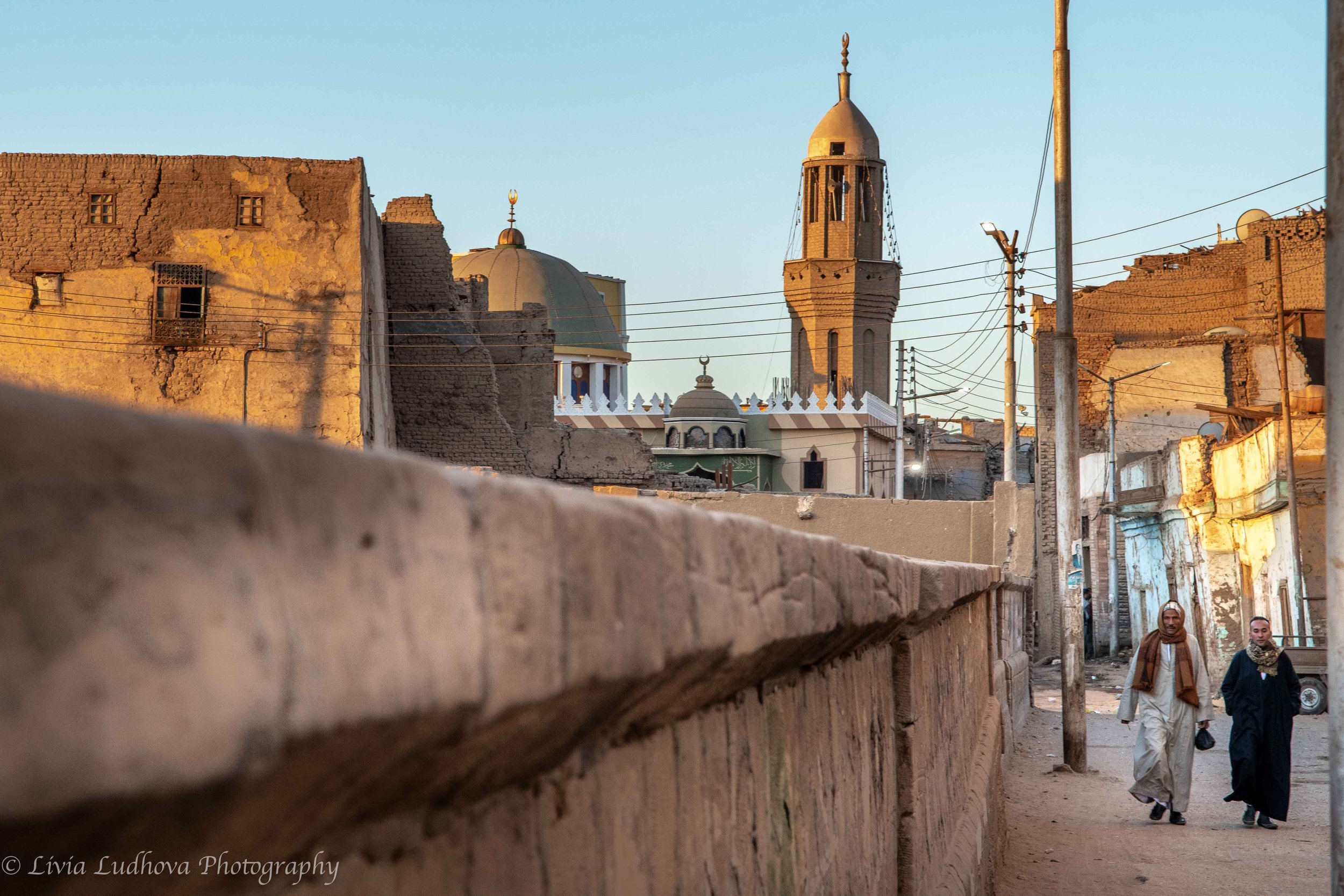
The third day of the Nile cruise began with an exceptionally calm sunrise on the Nile, softened by light fog and the slow movement of small boats. We walked through a picturesque riverside village, observing everyday local life on the way to the cliffside tombs of El Kab. At El Kab, ancient Nekheb, rock-cut tombs of early New Kingdom officials line the limestone cliffs above the Nile. Dating mainly to the 18th Dynasty (ca. 1550–1295 BCE), these provincial elite tombs preserve autobiographical inscriptions and reliefs depicting military service, ritual life, and devotion to Nekhbet, the vulture goddess and protectress of Upper Egypt. Remains of the massive mudbrick city walls further emphasize El Kab’s former administrative importance. The return walk led again through village life along the riverbank back to the dahabiya. In late afternoon, we moored at Esna. After the farewell dinner on board, I briefly ventured into the city for a first impression of Esna and its evening atmosphere.
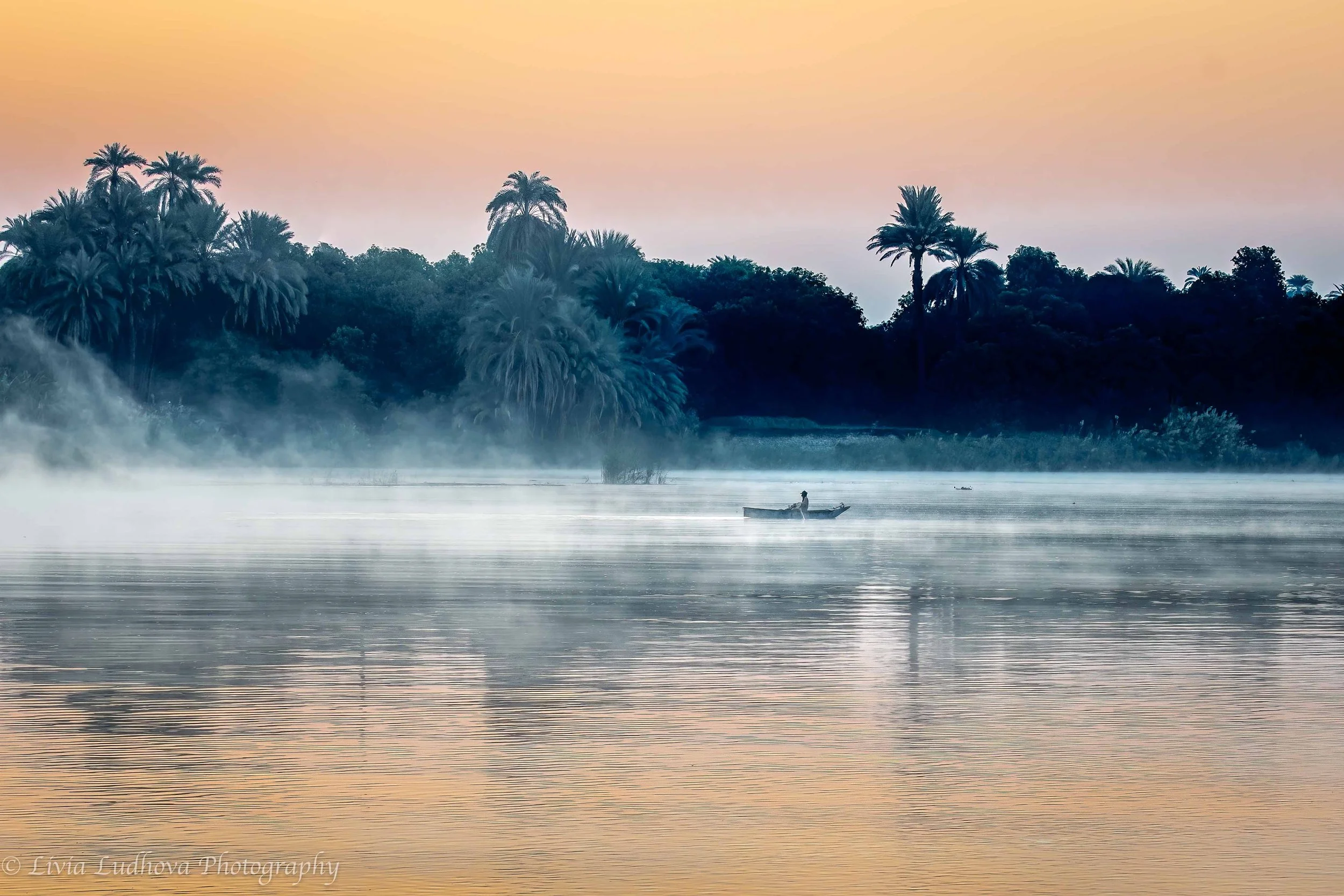
Calm sunrise with mist and small fisherman boat.
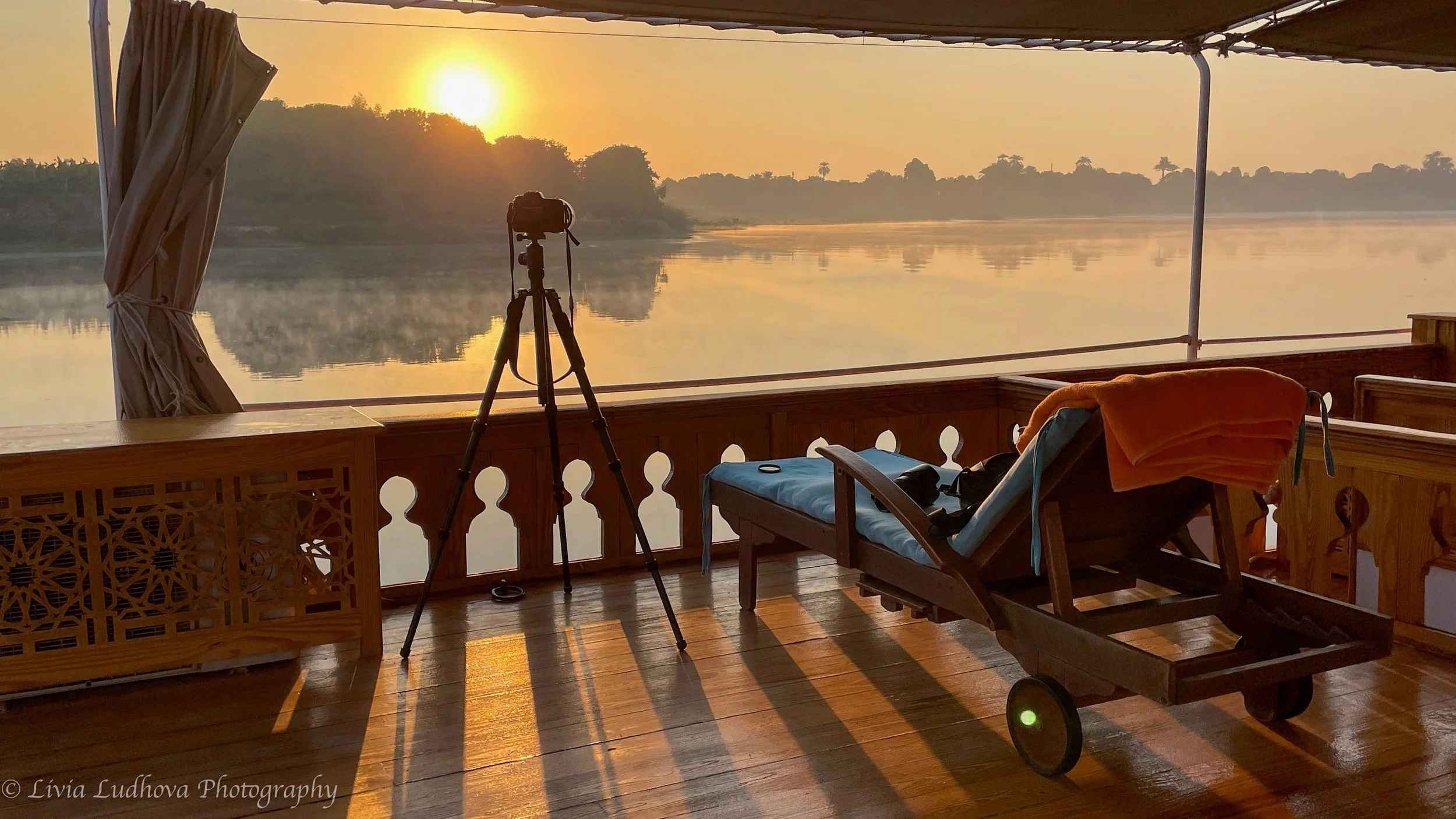
My sunrise shooting corner.
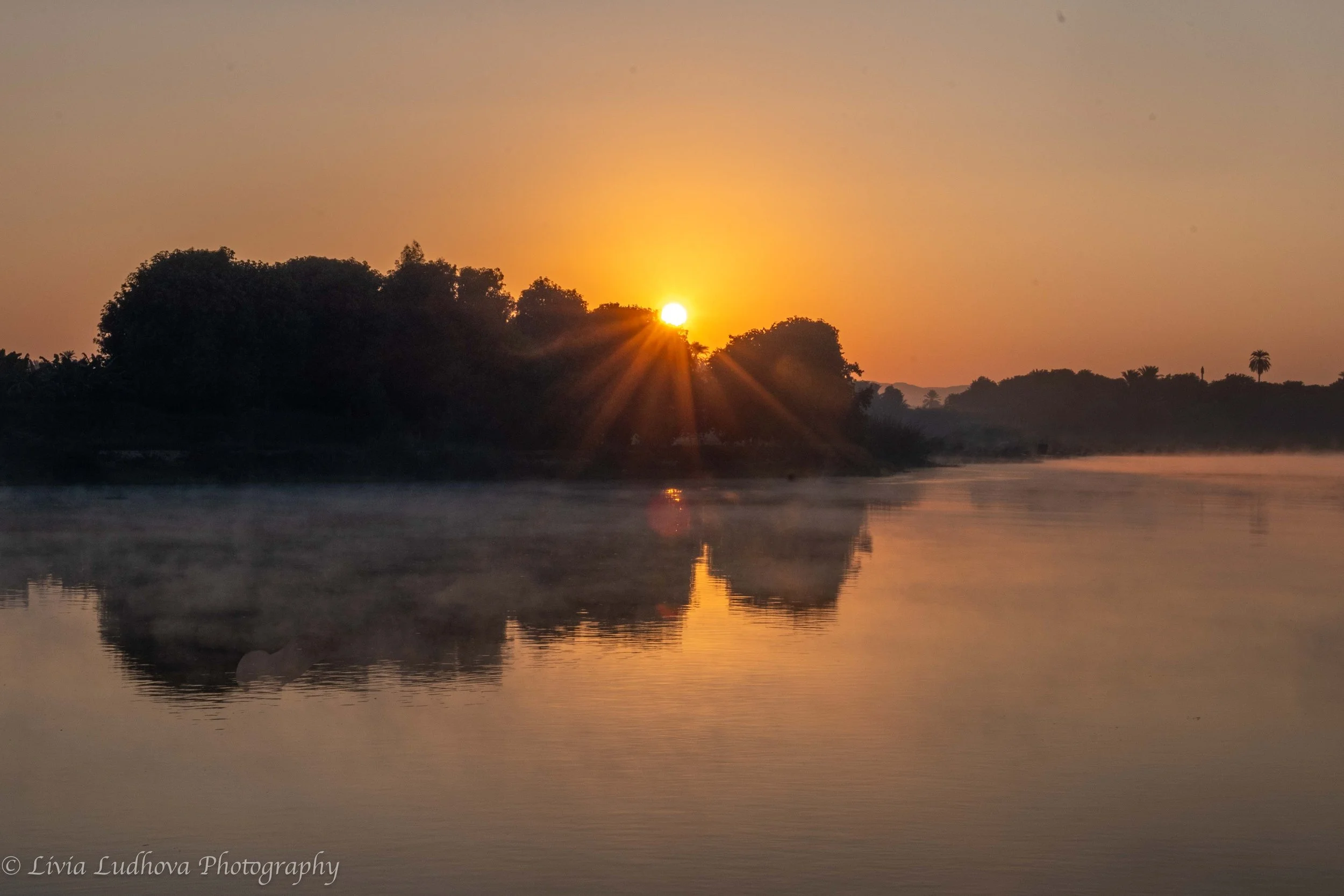
Alawyas magical to see it...
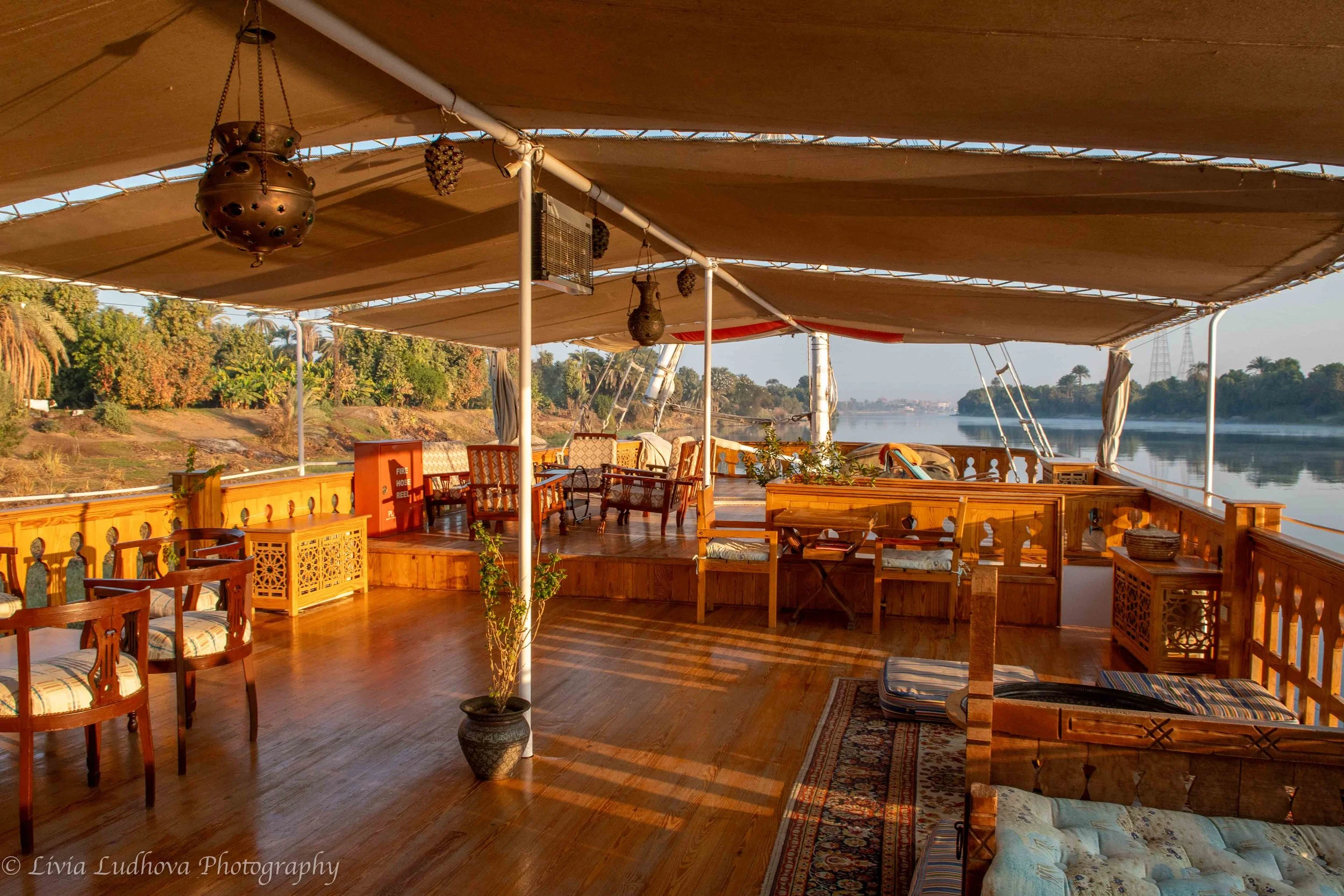
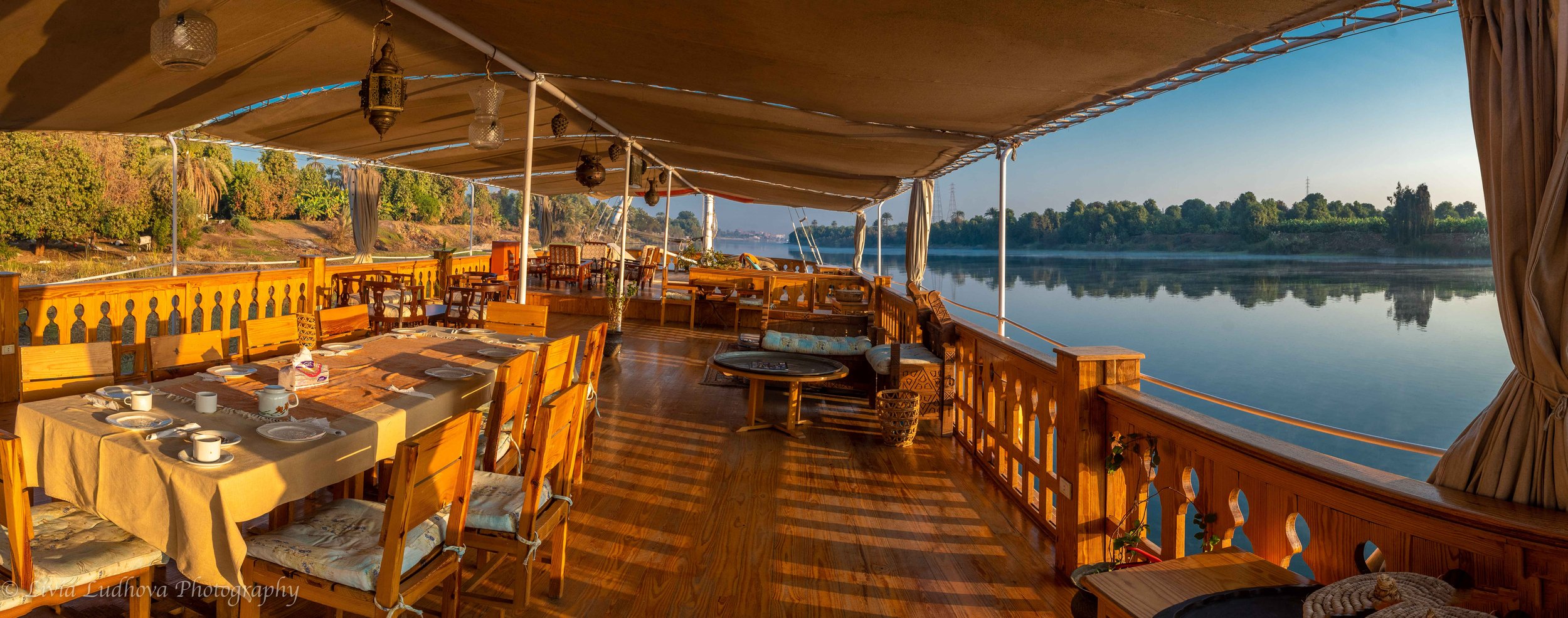
Upper deck floded in golden light.
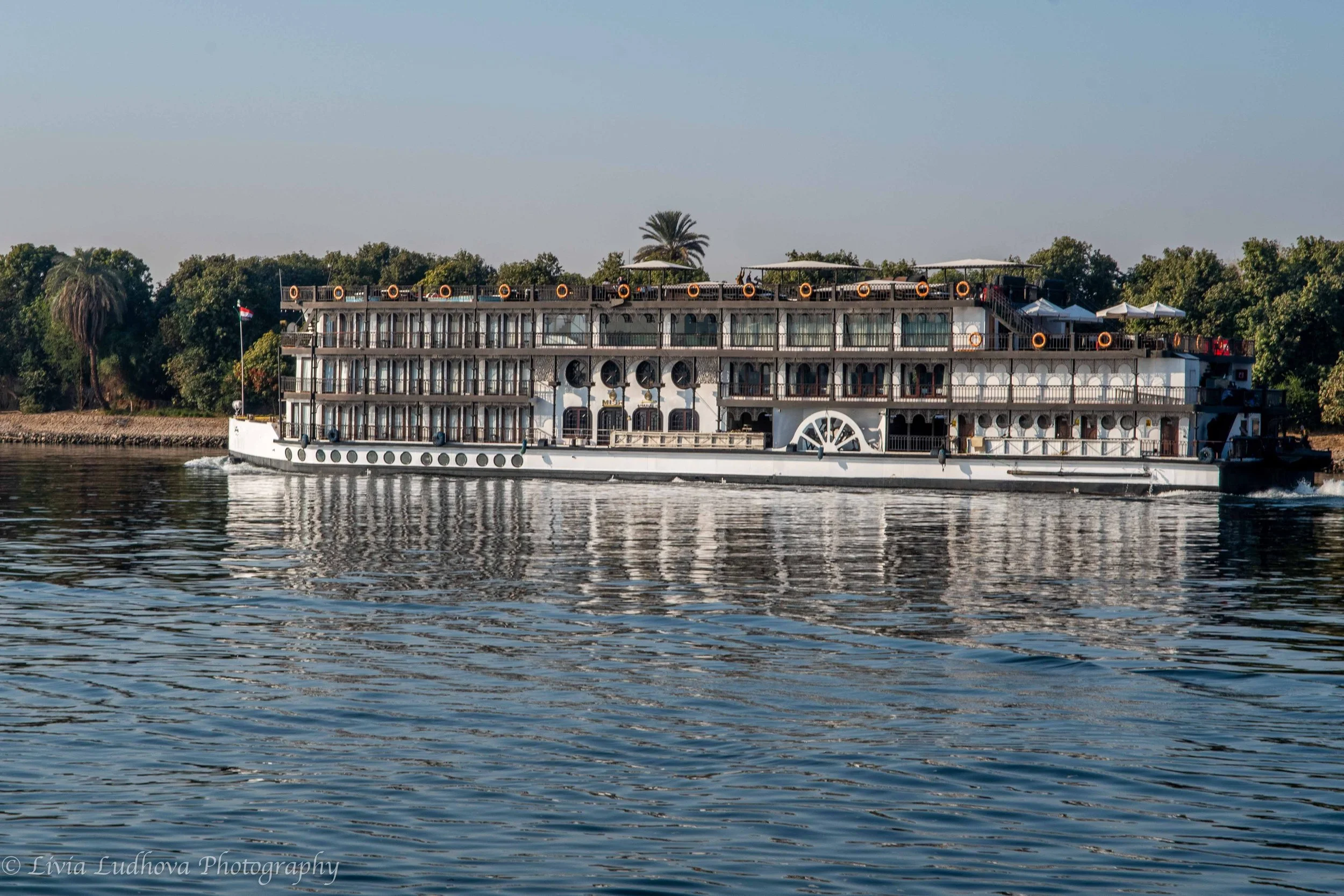
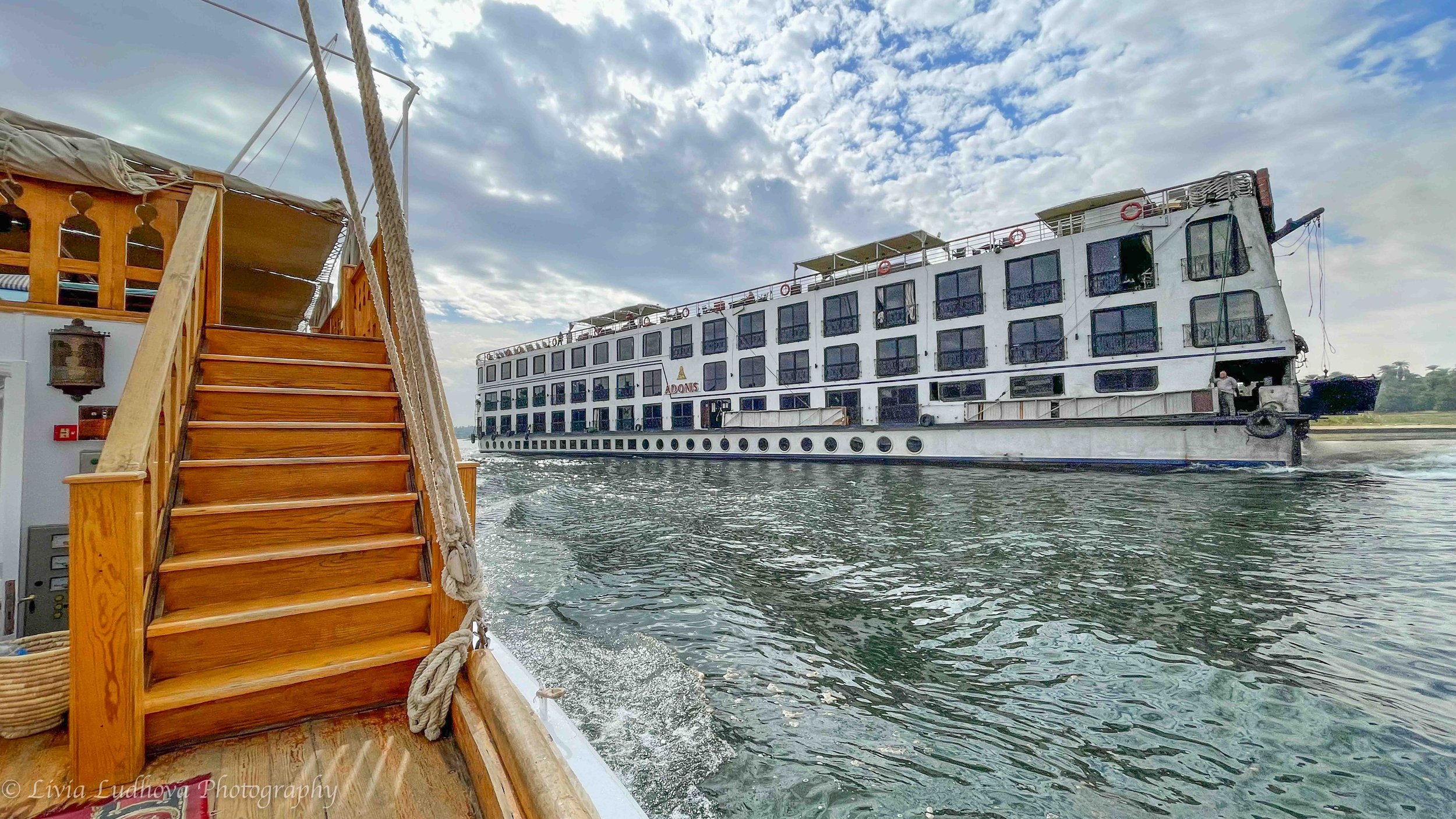
Also some larger ships have its charm.
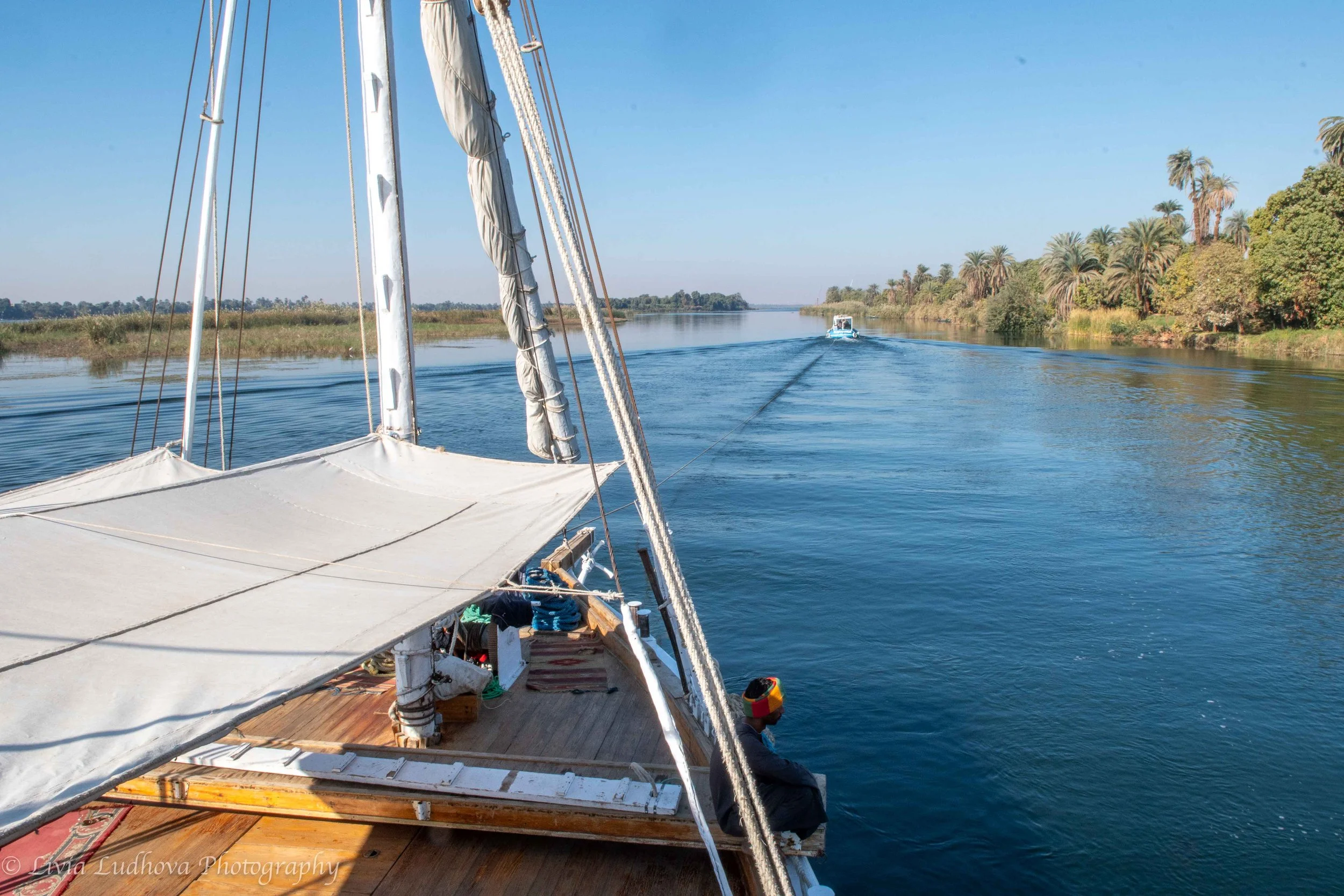
We are towed El Kab
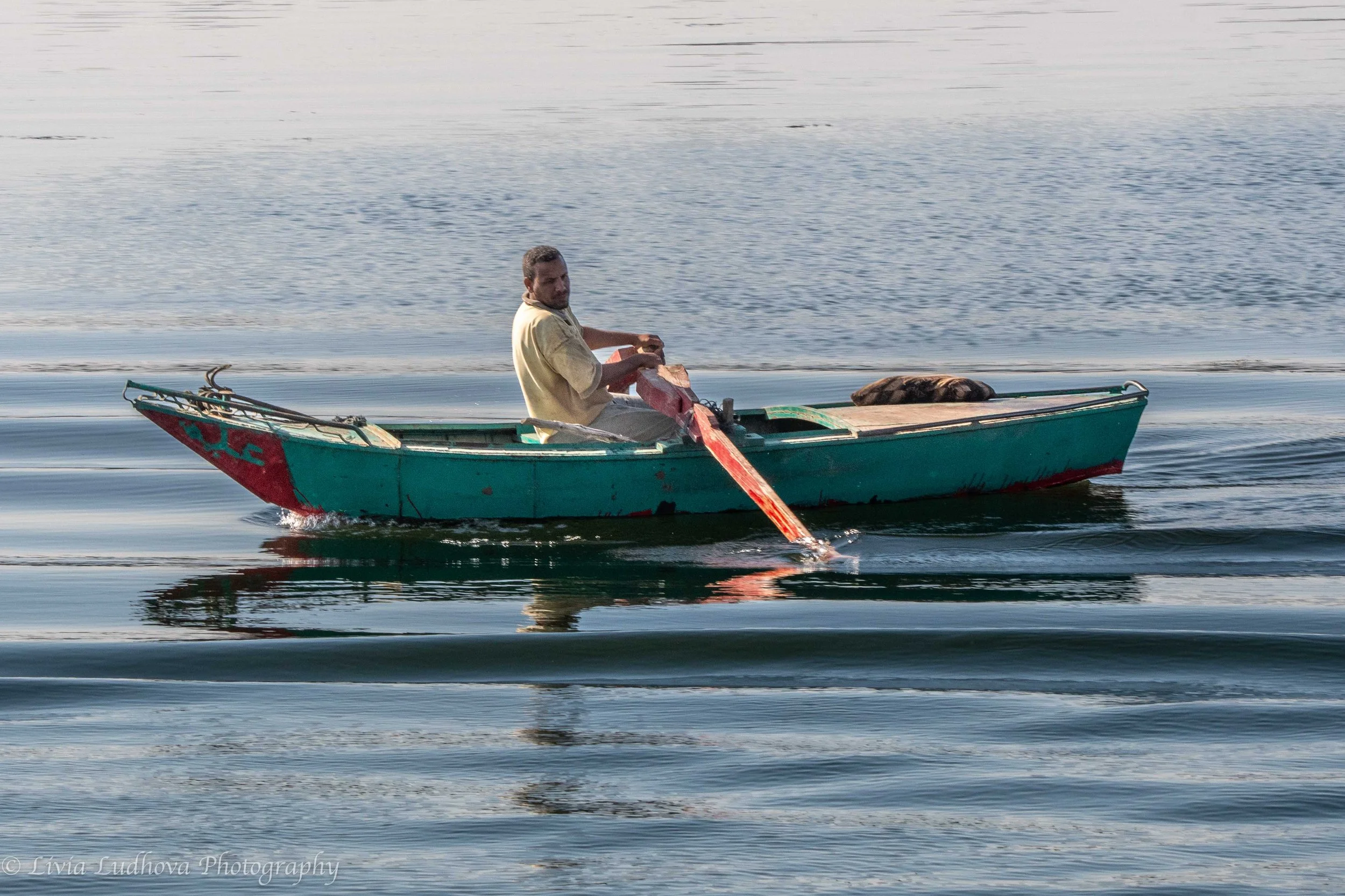
Life on Nile
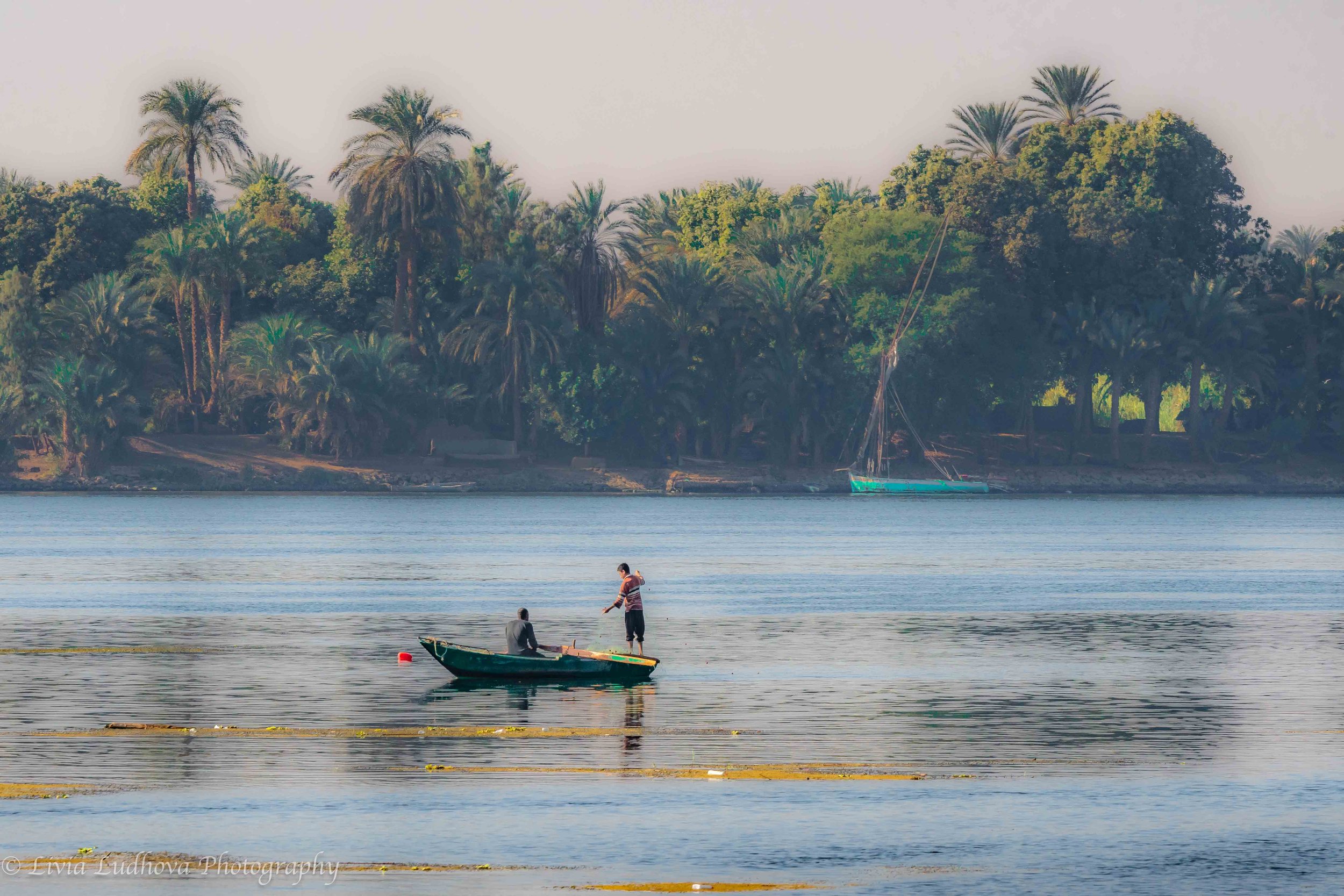
Fishermen
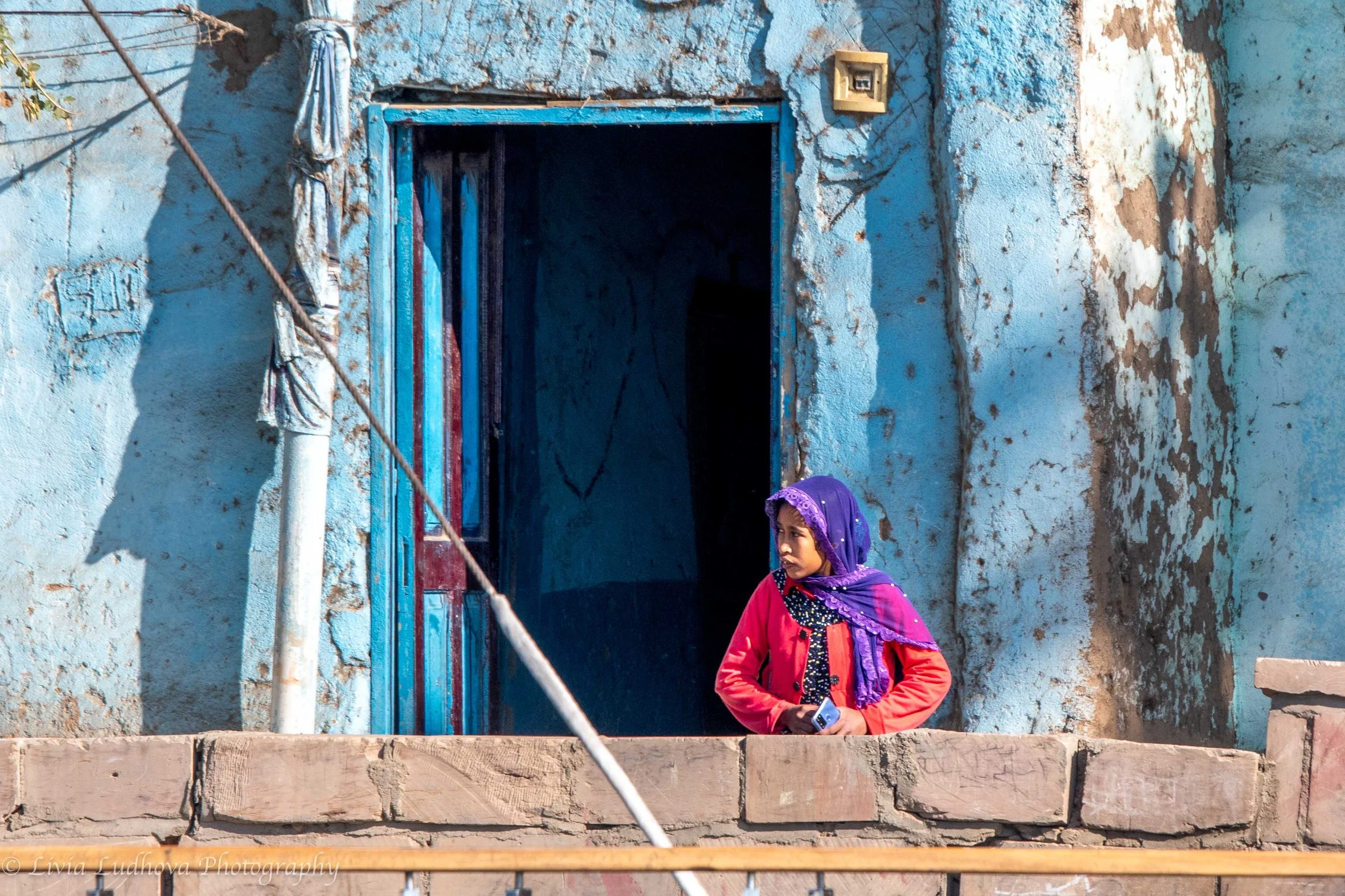
Colourful welcome in El Kab
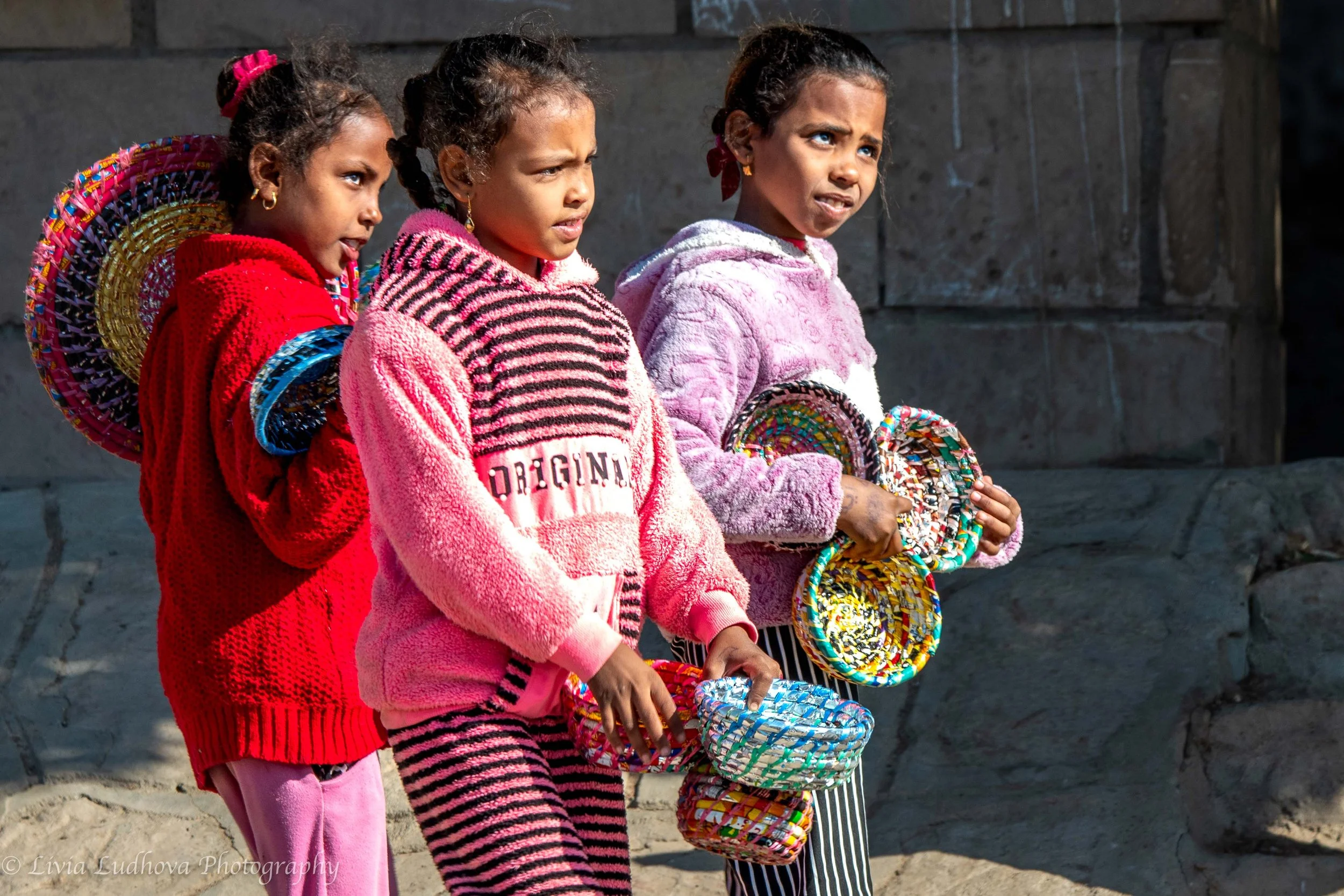
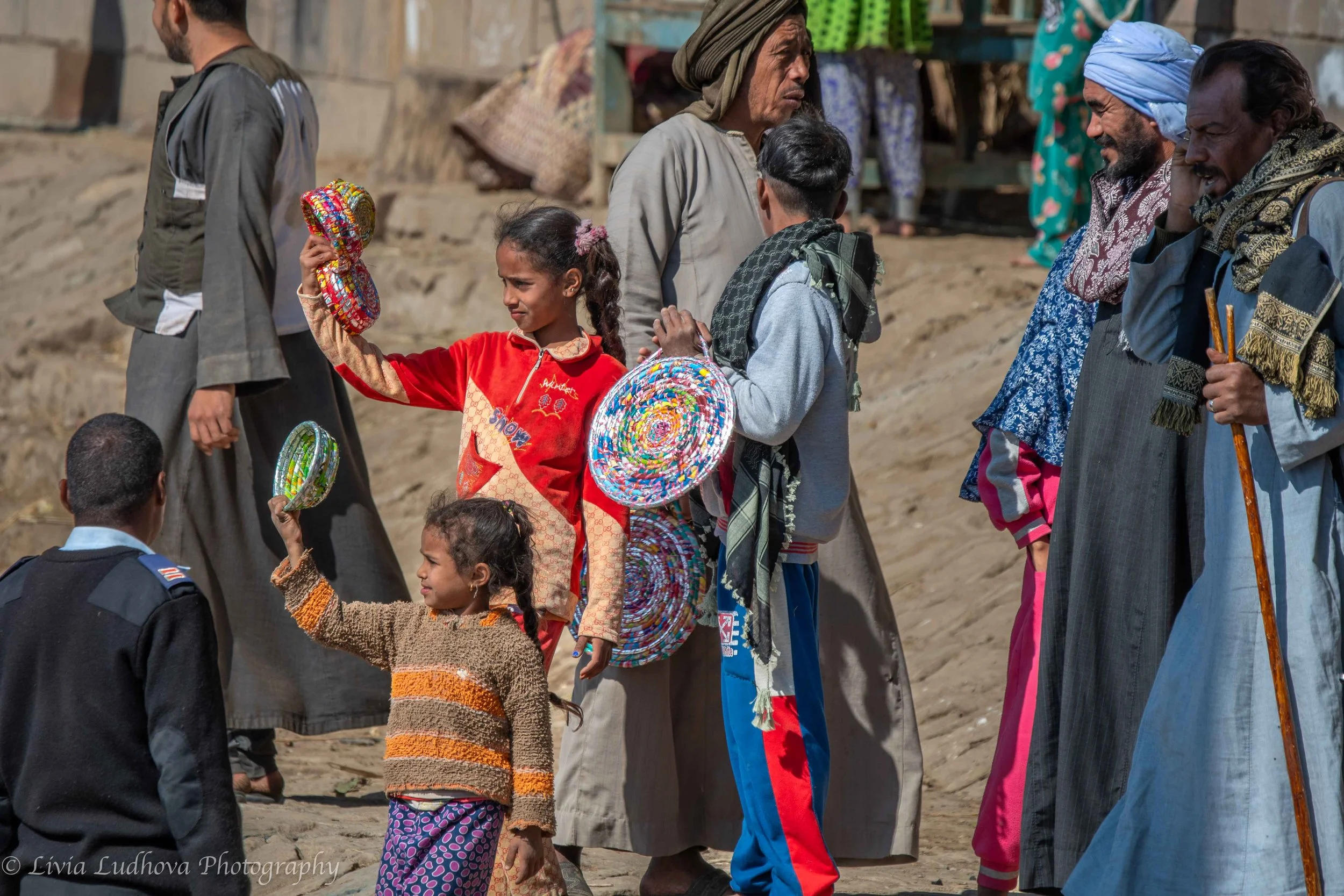
Local kids selling baskets
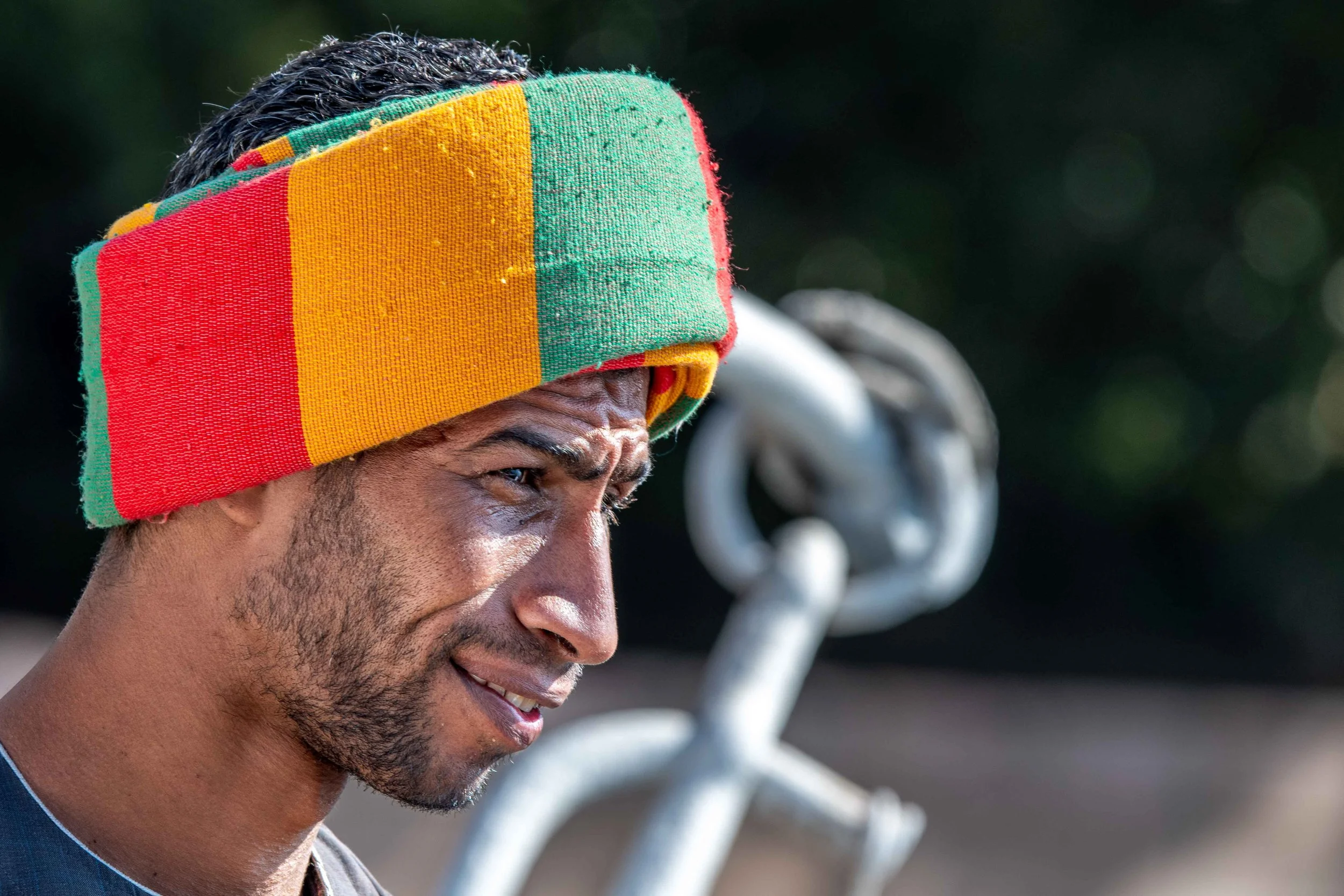
Portrait of our sailor
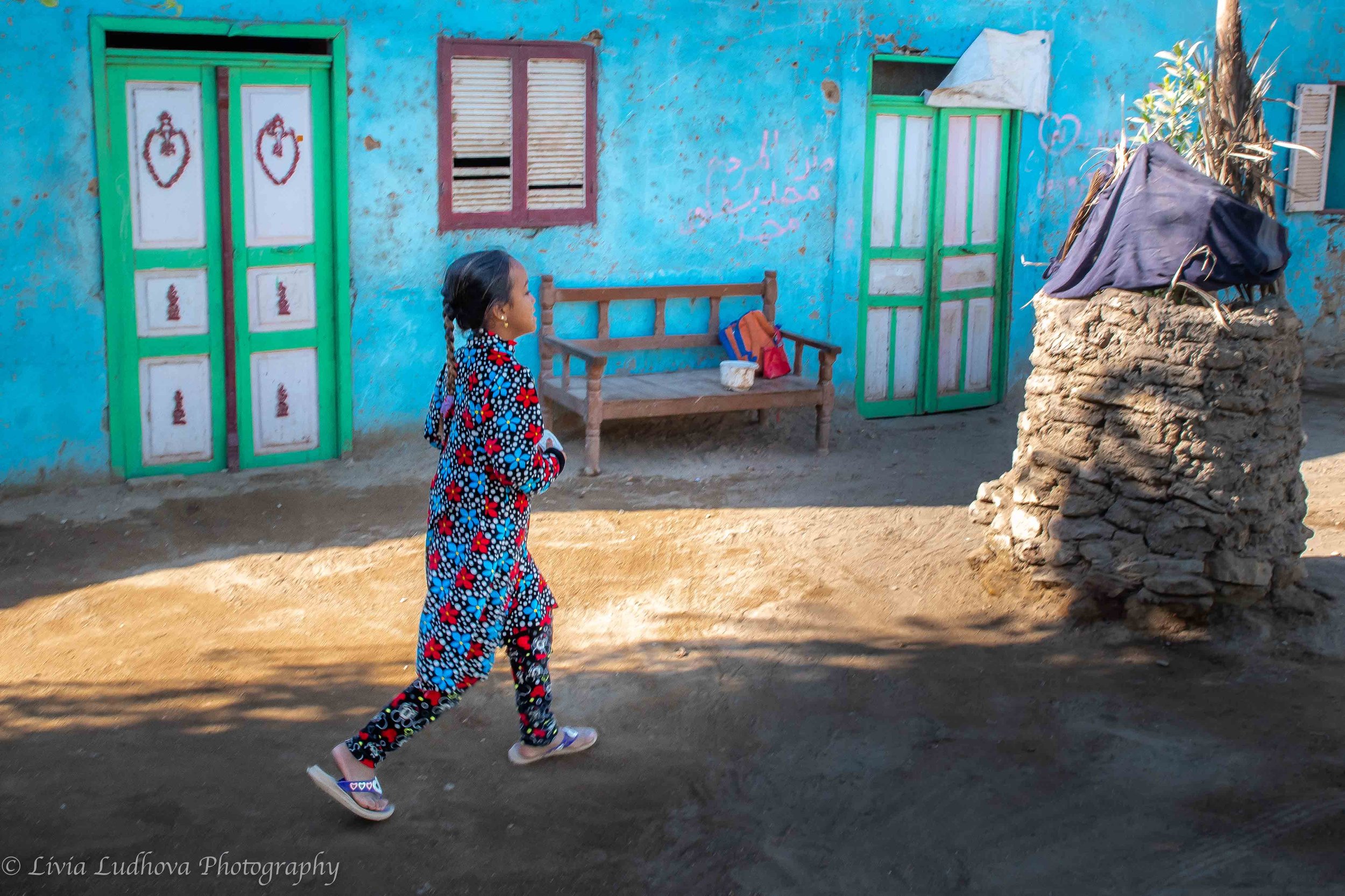
Boasting colours
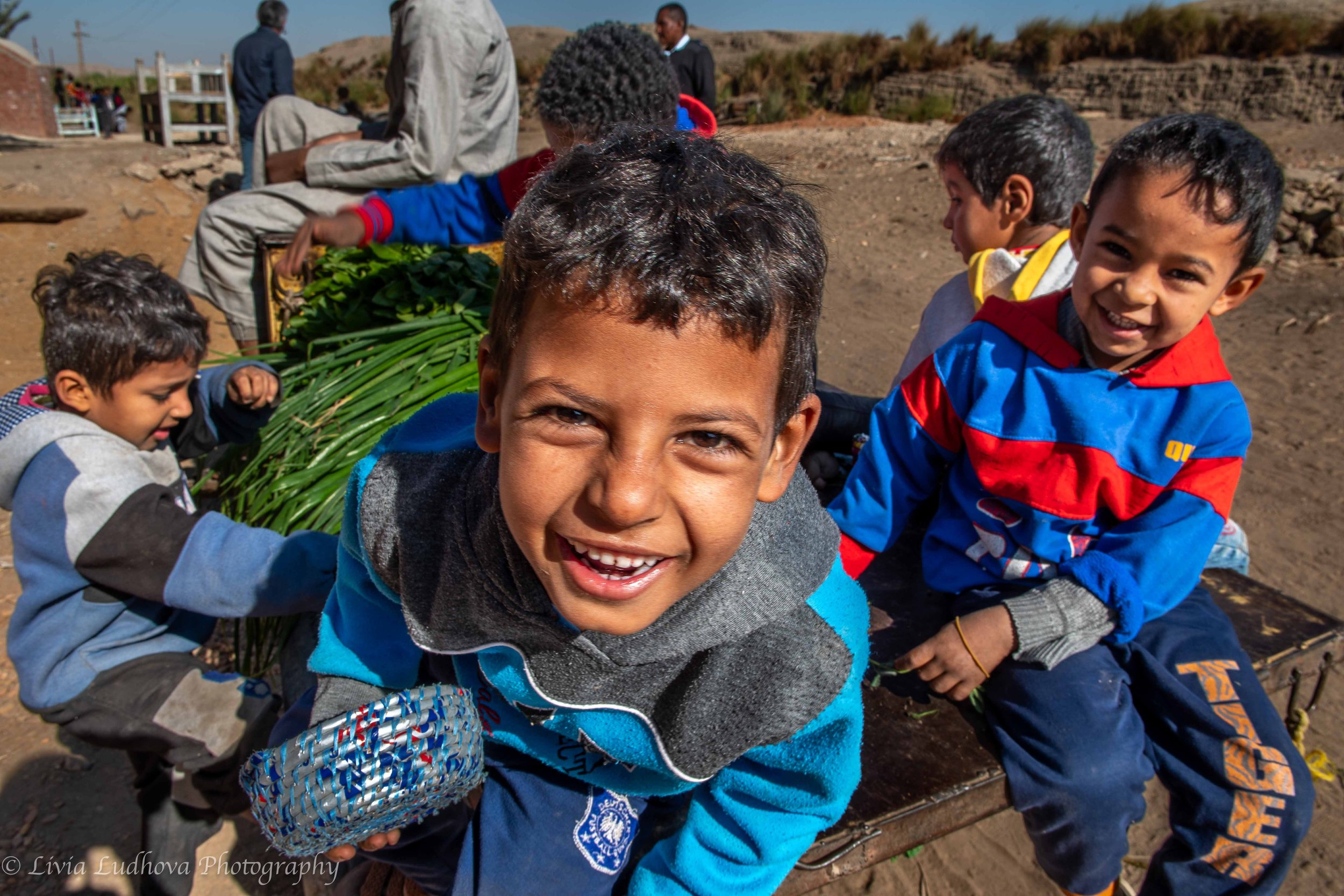
Joyful local kids
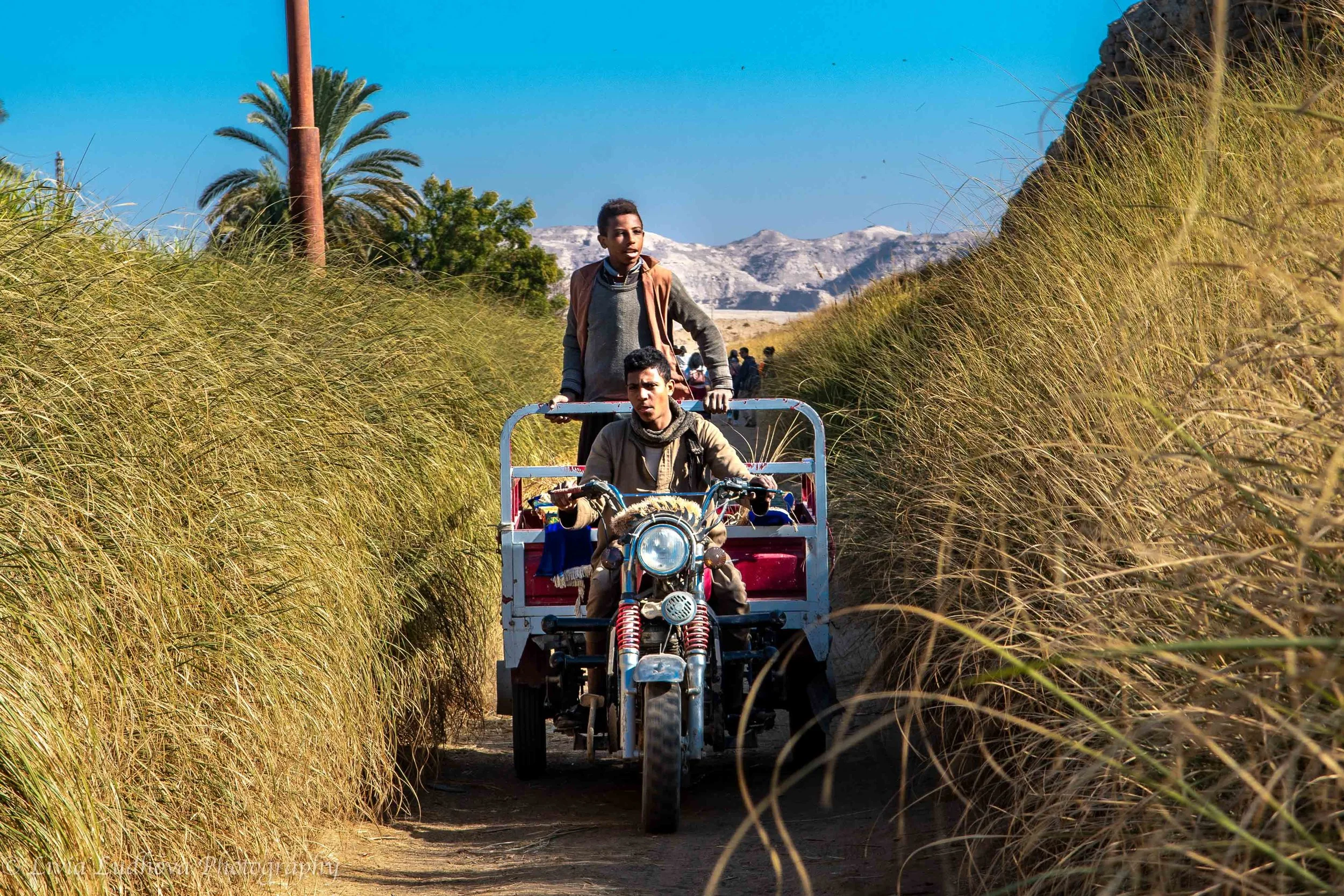
Countryside scene
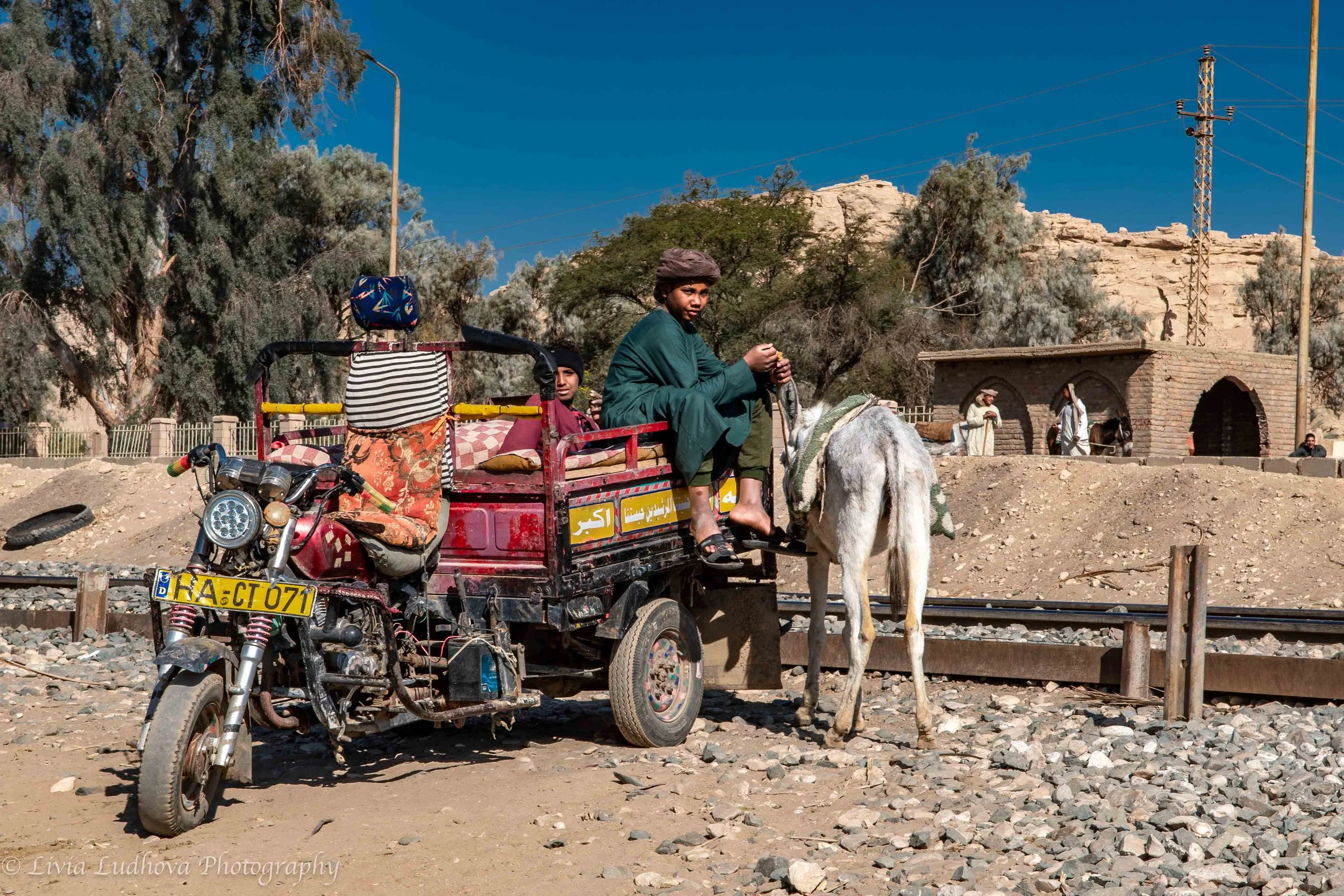
The most freuqent local transport
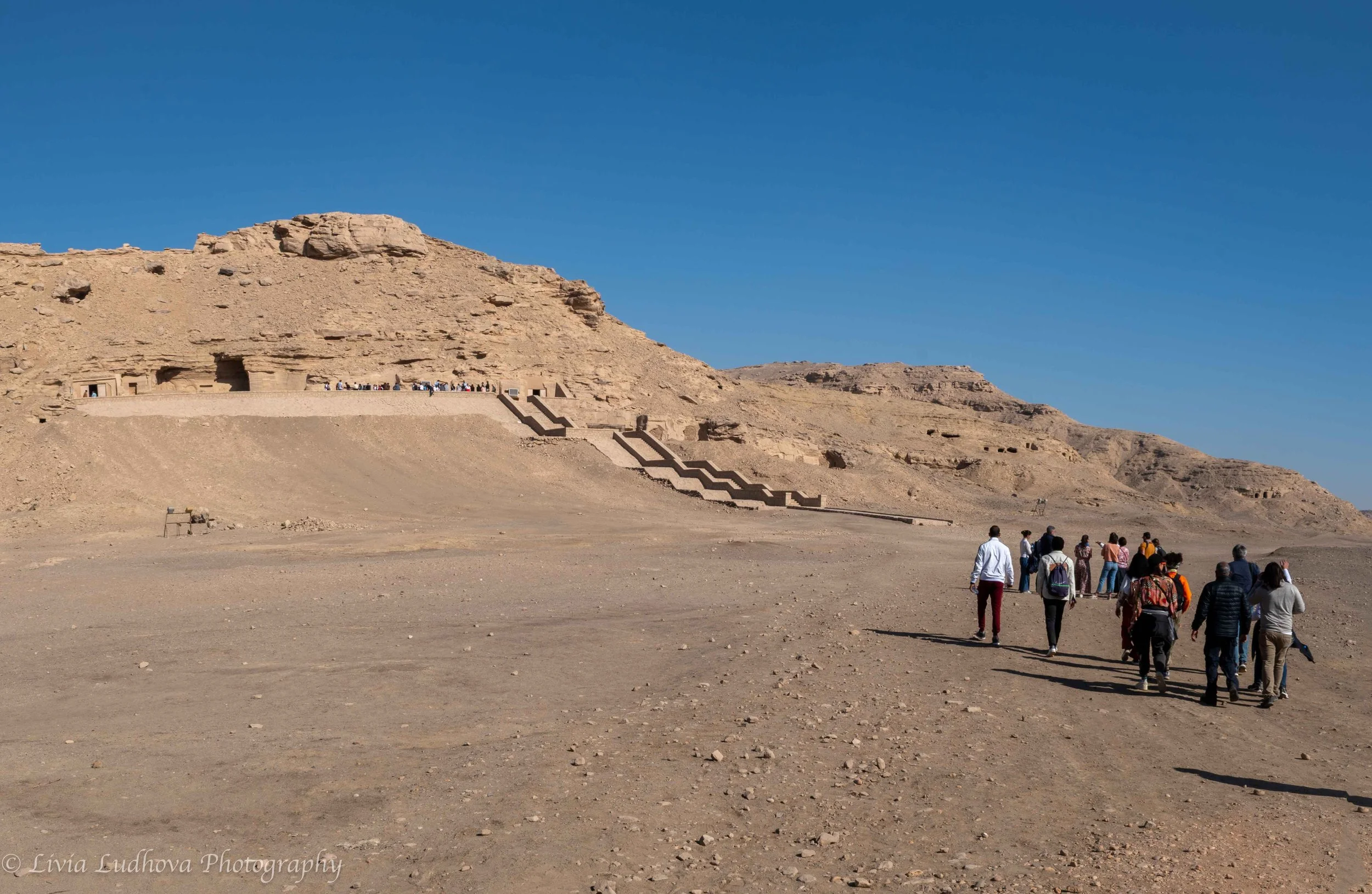
We are reaching the tombs on ancient Nekheb.
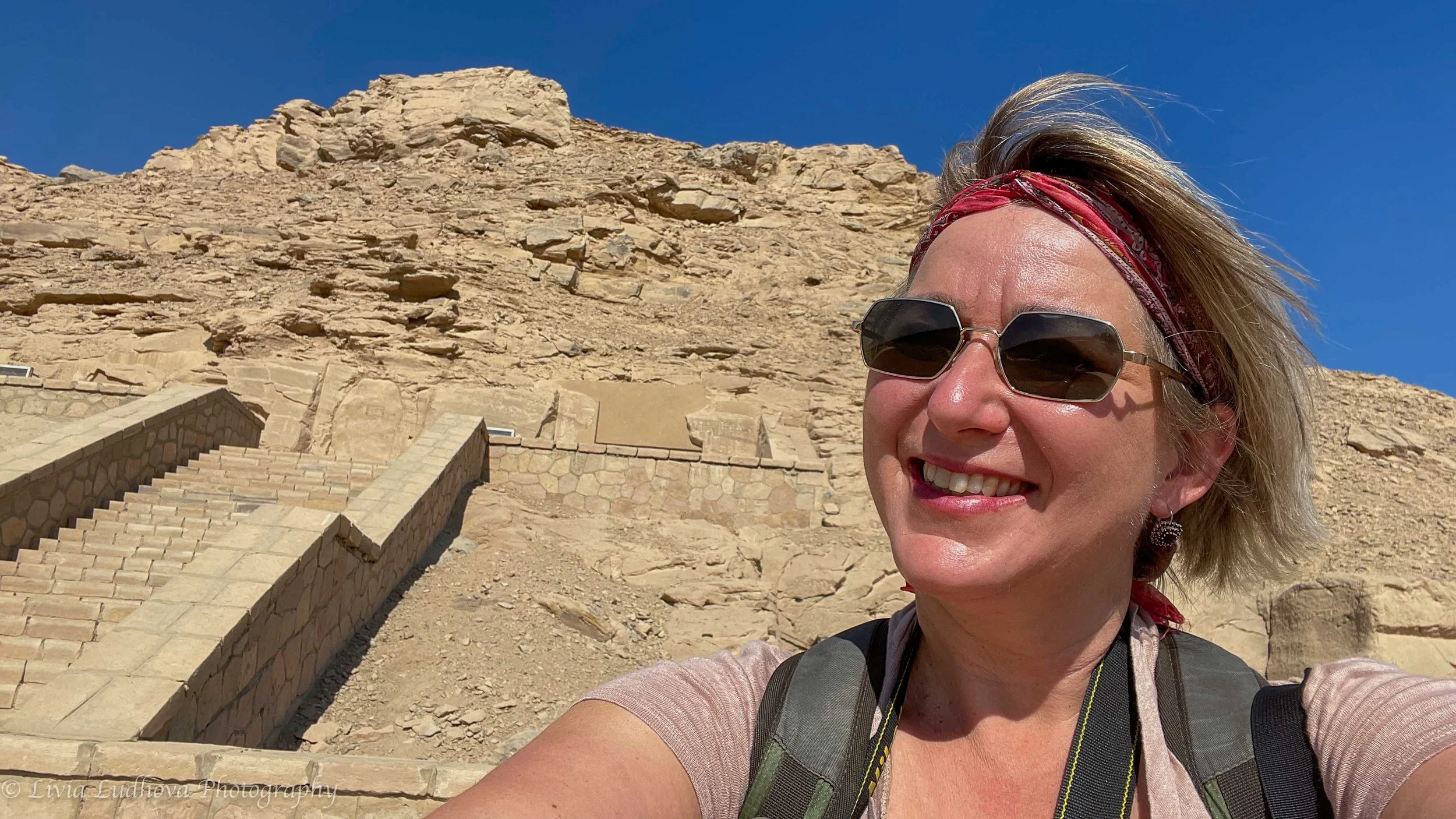
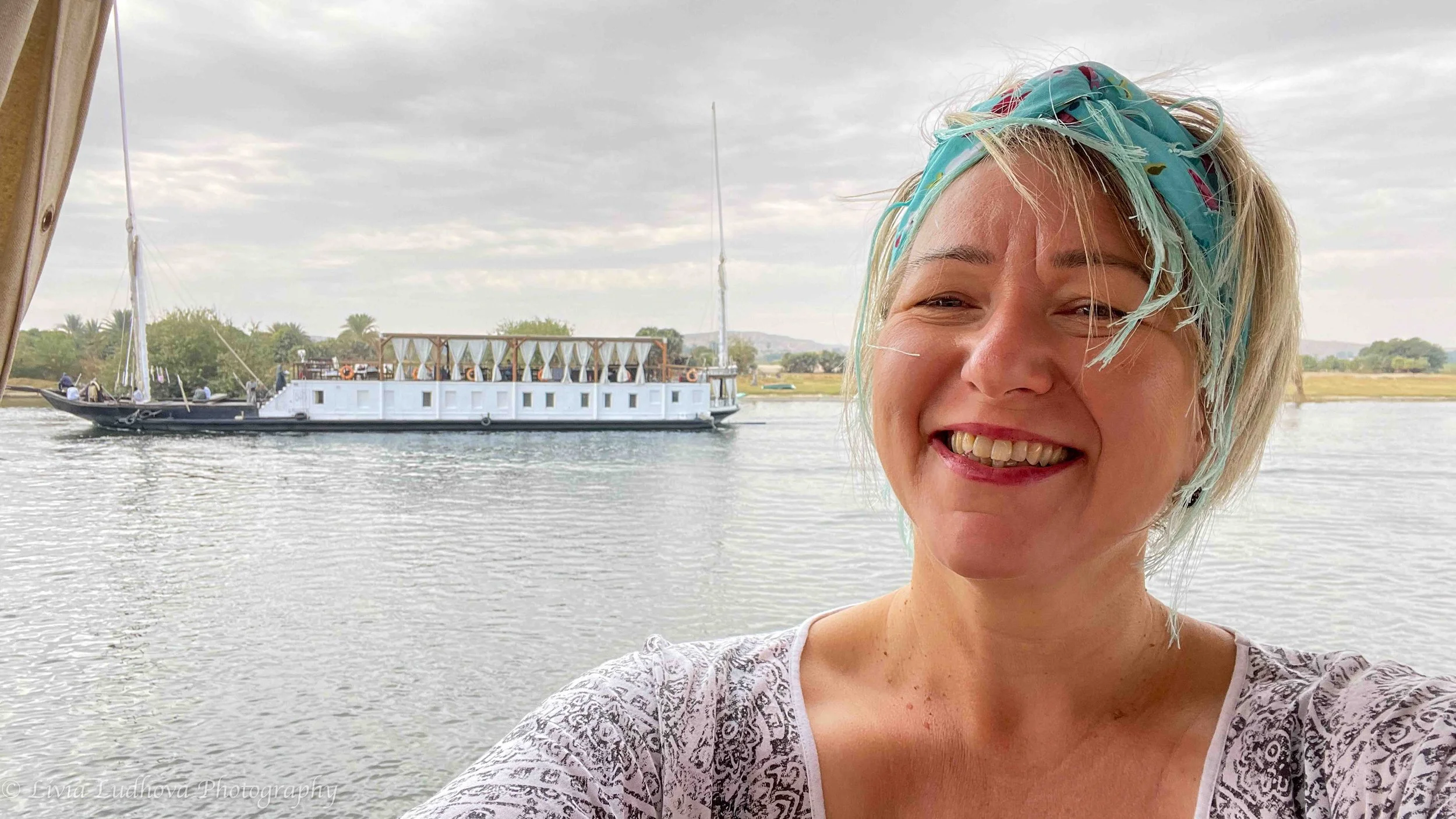
Happy face of me
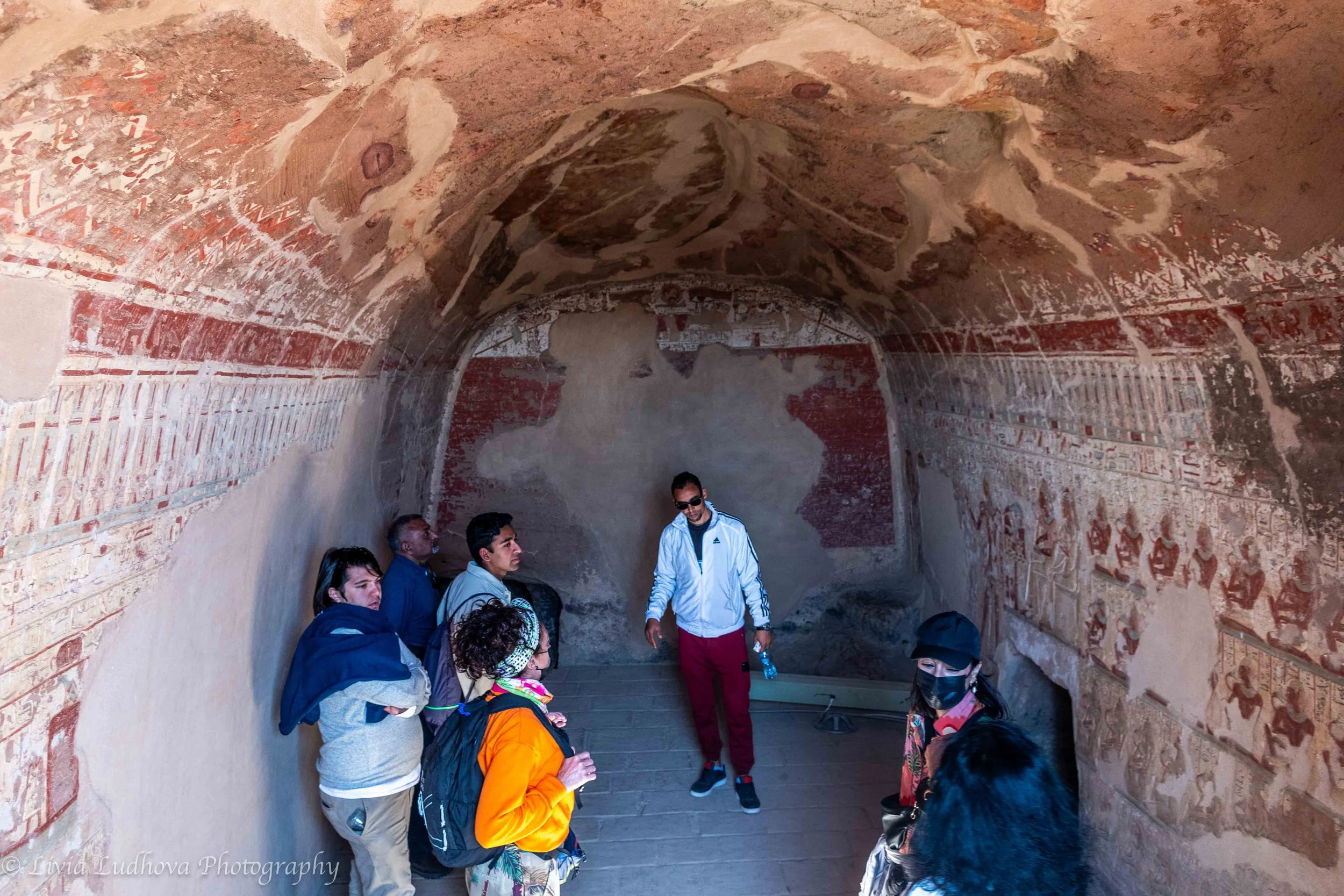
And our tout of the best preserved tombs begins
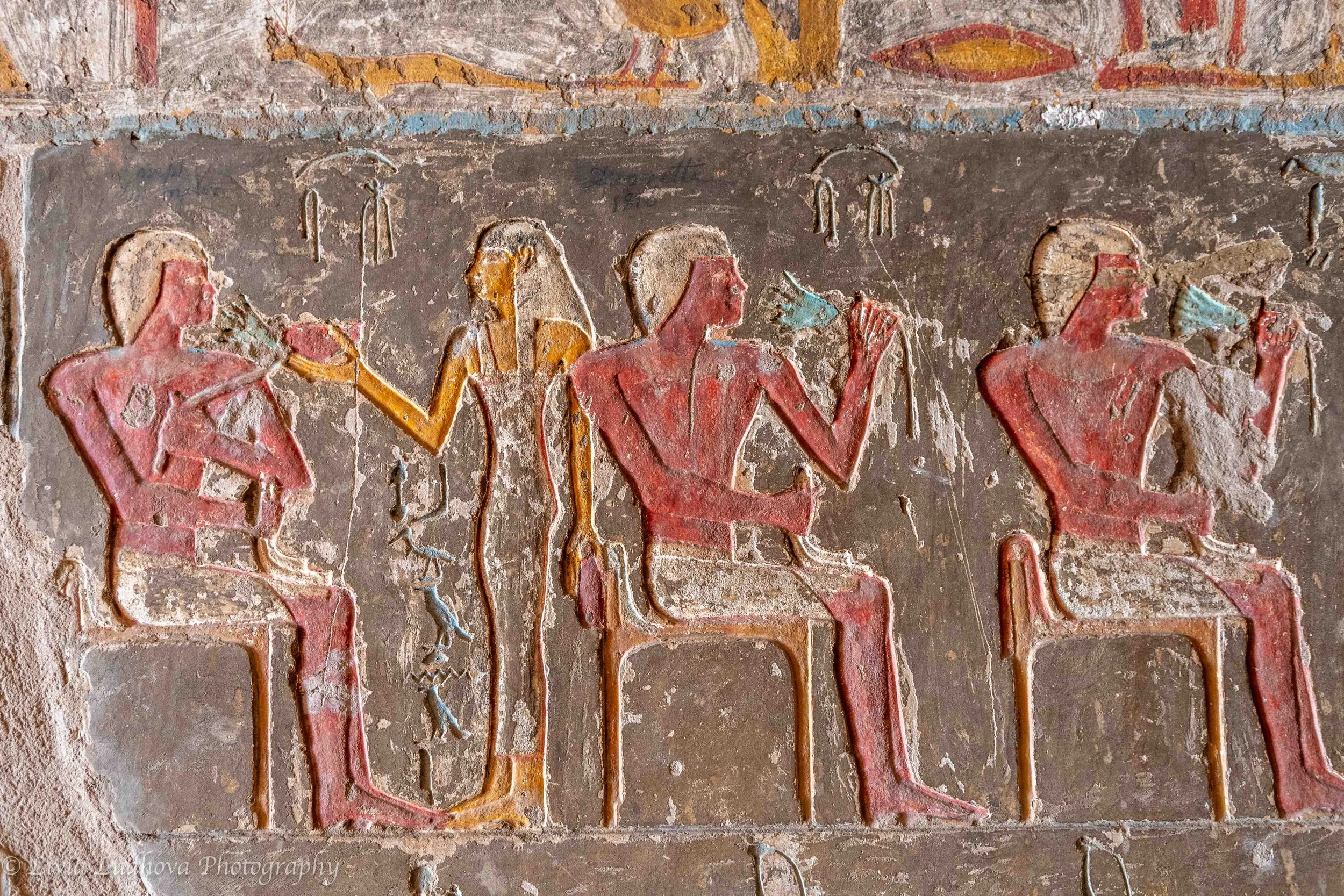
Seated figures in ritual context, wall relief, El Kab (Nekheb), early 18th Dynasty — provincial elite tomb decoration reflecting cult participation and status.
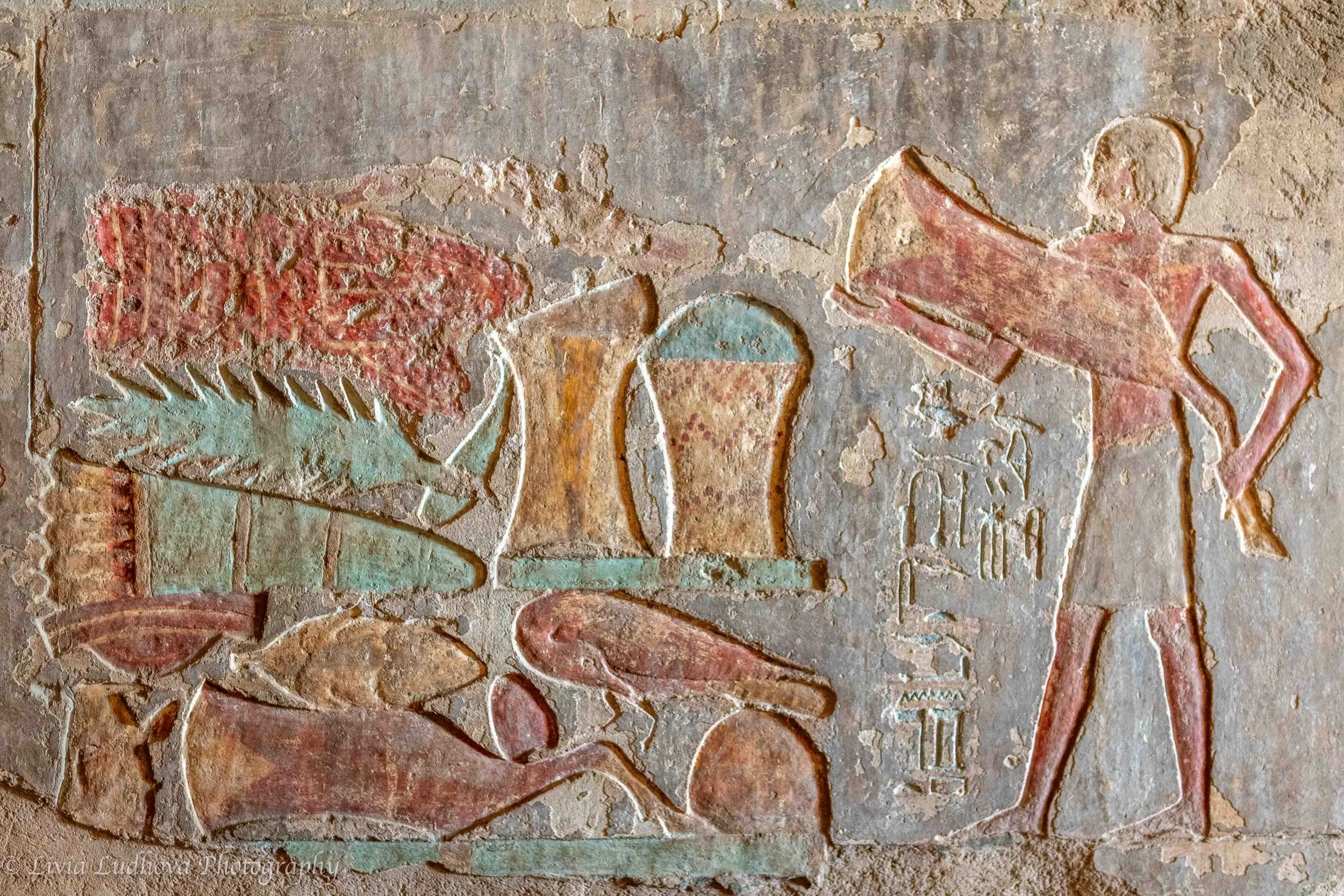
Offering and ritual action scene, note clearly recognazible food items.
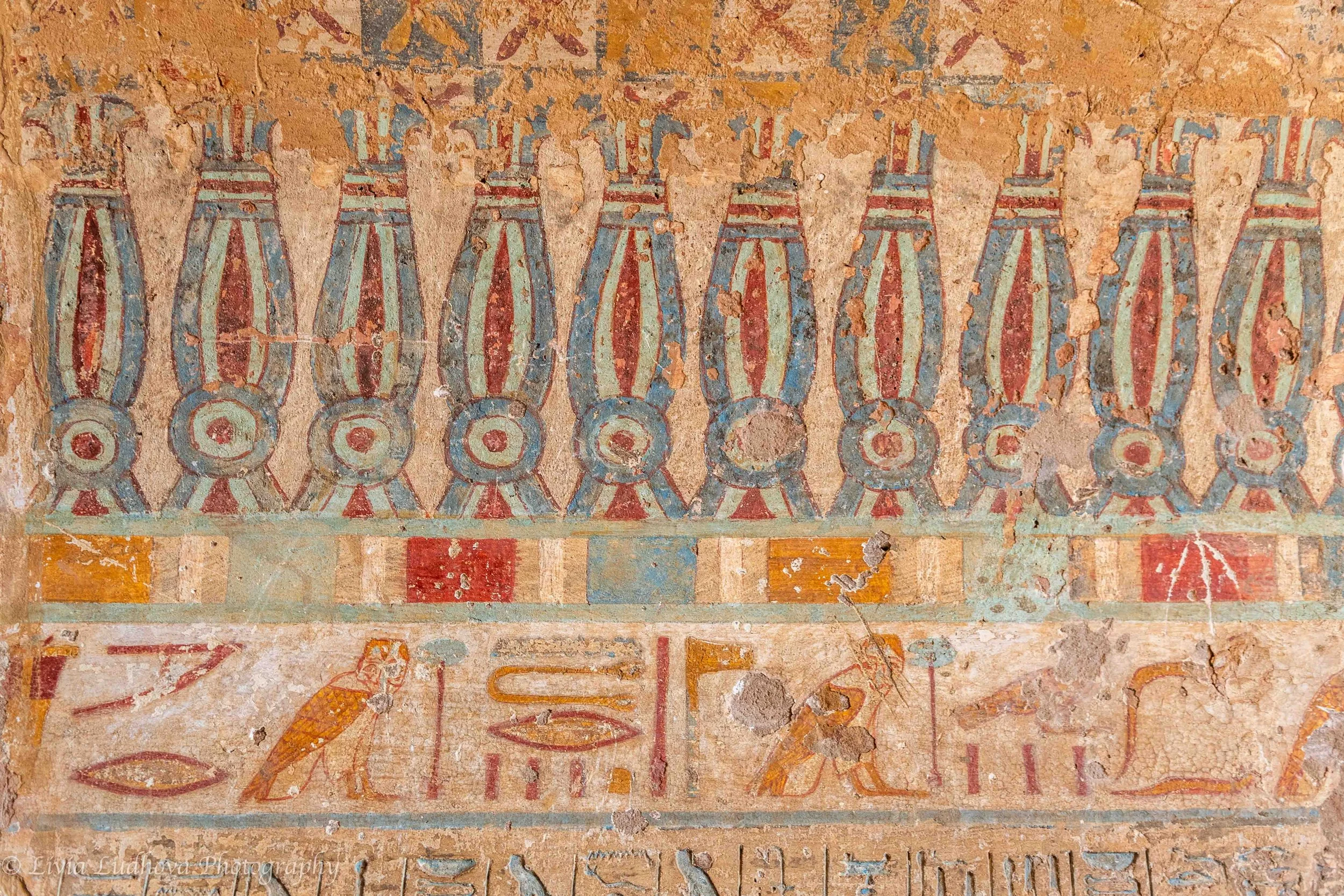
Decorative frieze with symbolic motifs.
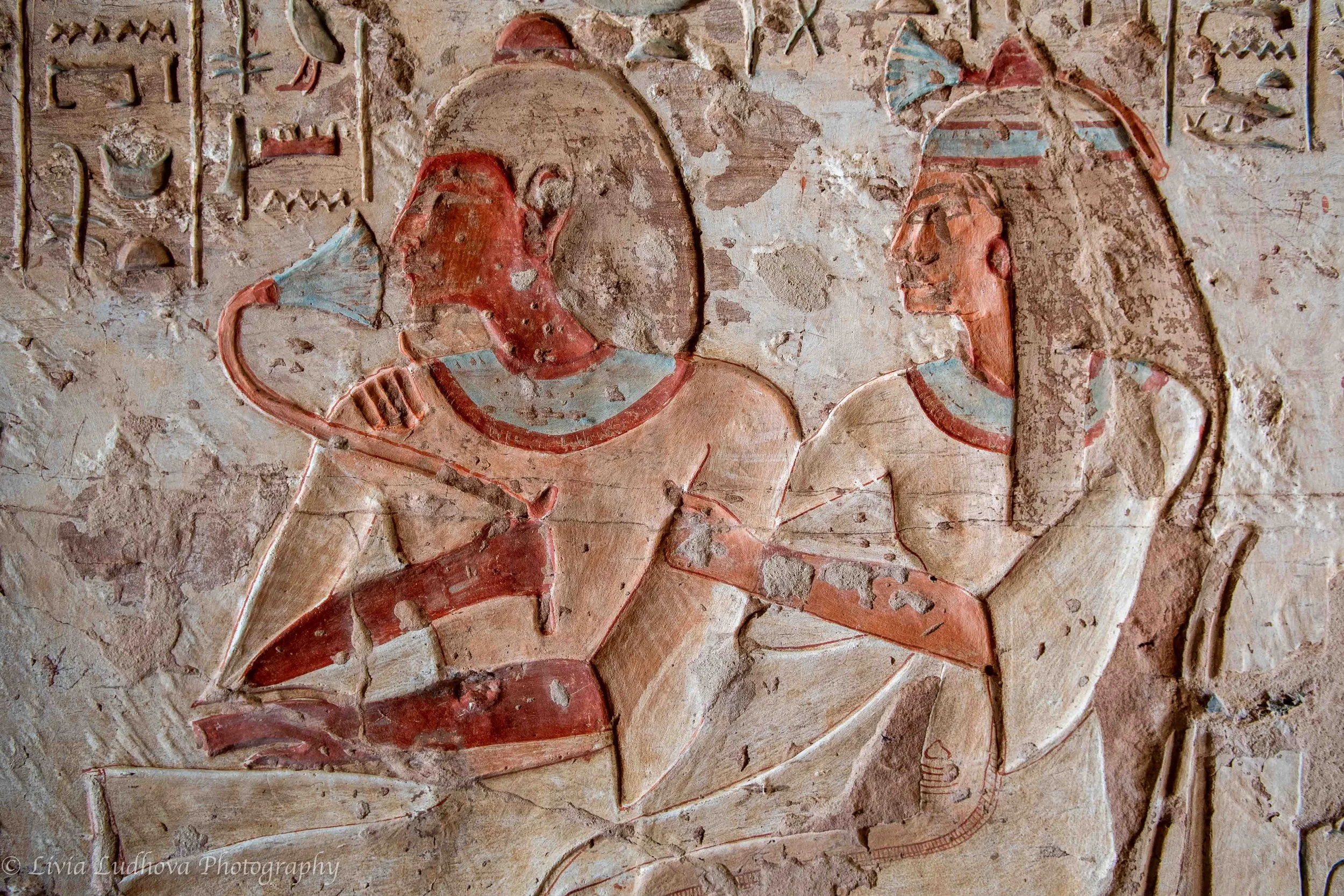
Couple in intimate ritual gesture, depiction of familial presence.
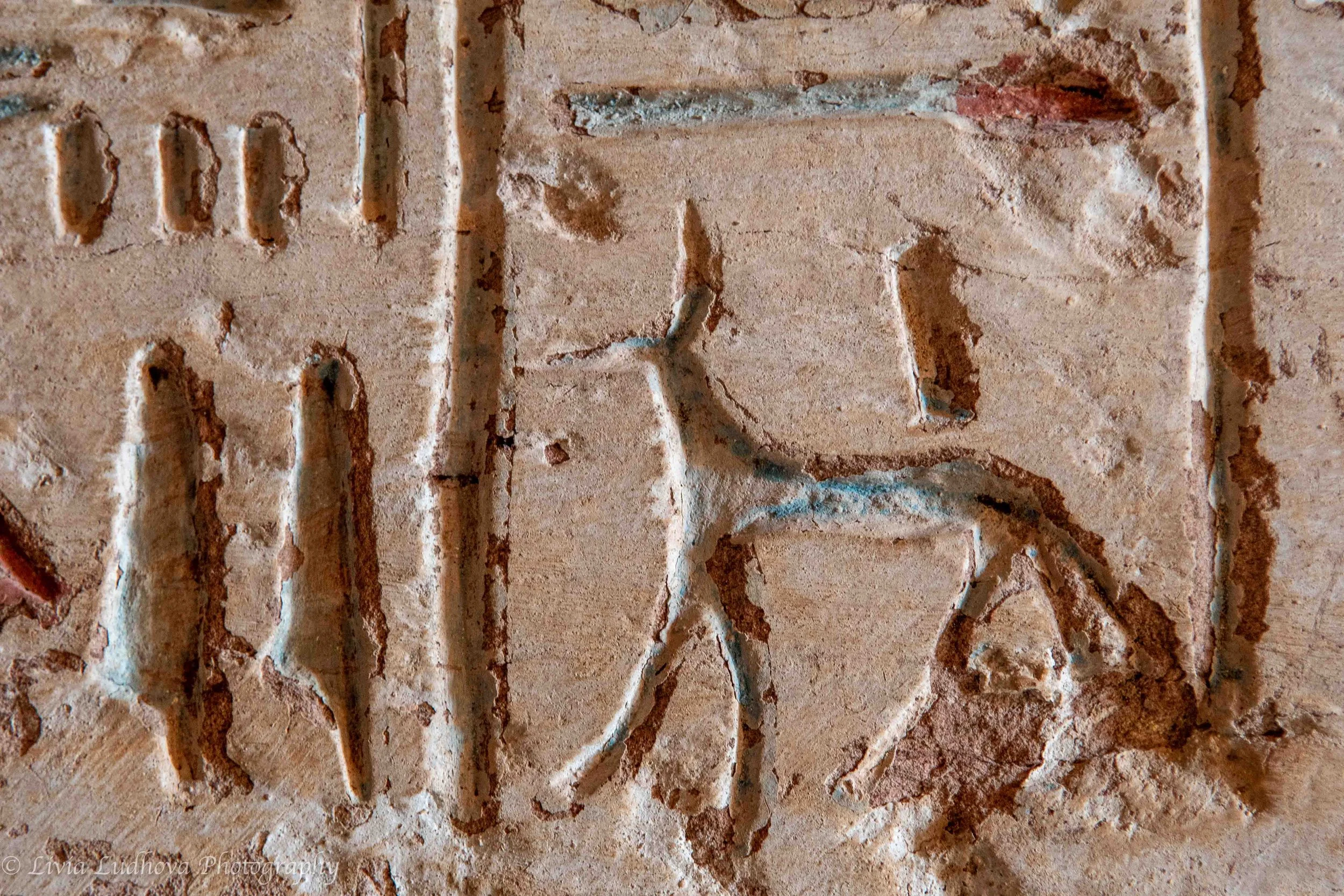
Hieroglyphic signs with traces of blue pigment.
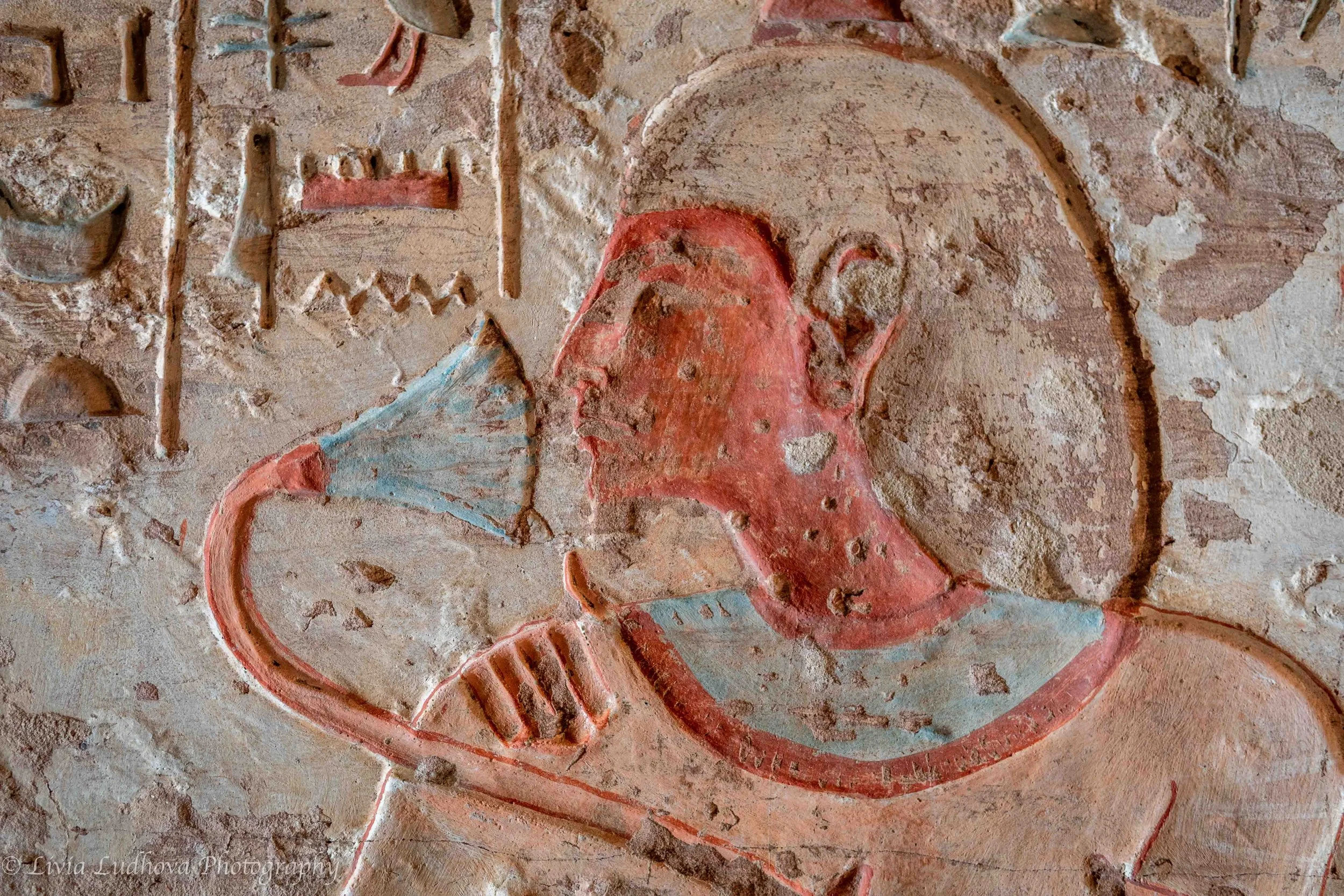
Profile figure holding a lotus flower, symbolizing rebirth, regeneration, and eternal renewal in the afterlife.
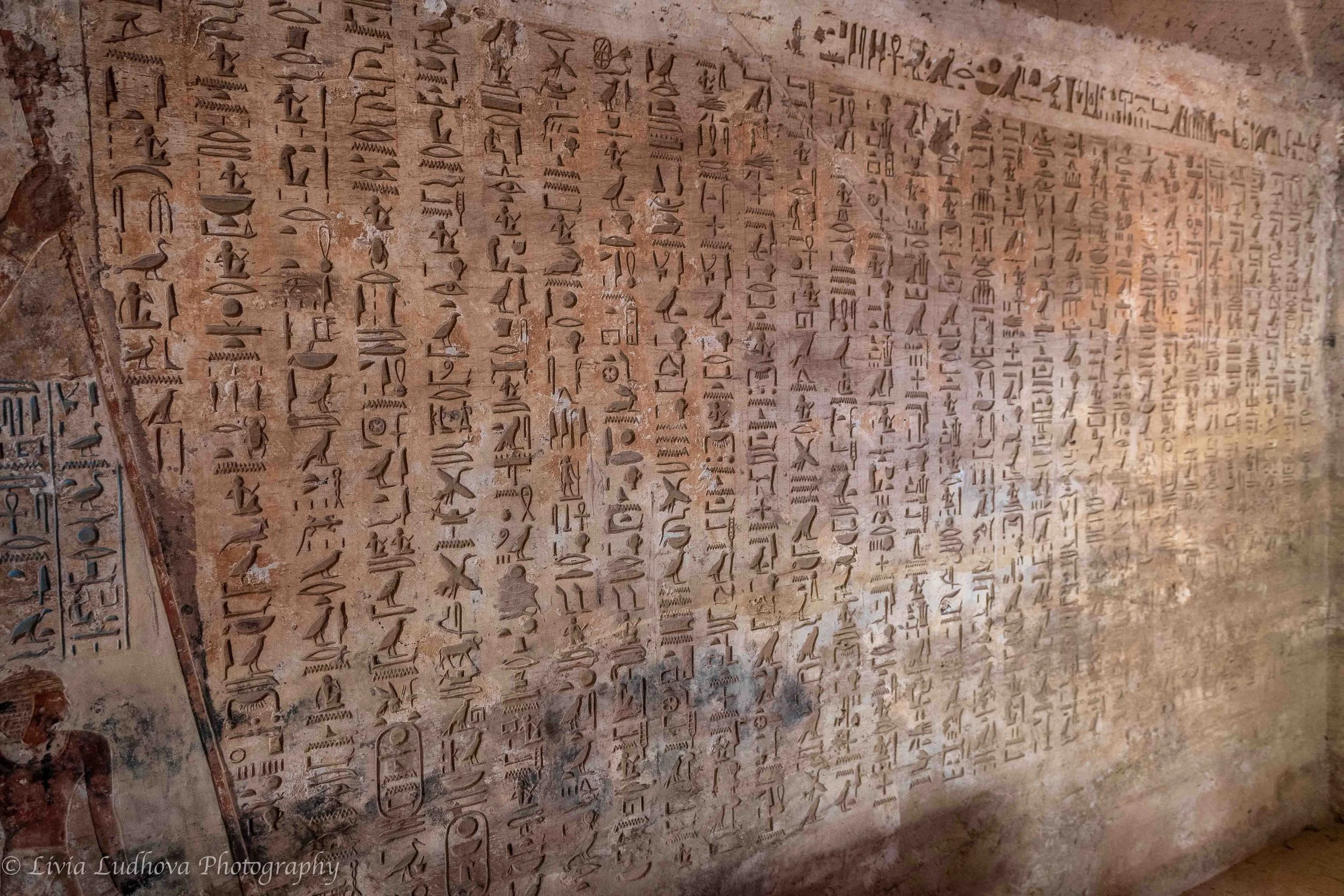
Autobiographical hieroglyphic text, — career narrative and declaration of loyalty to king and goddess Nekhbet.
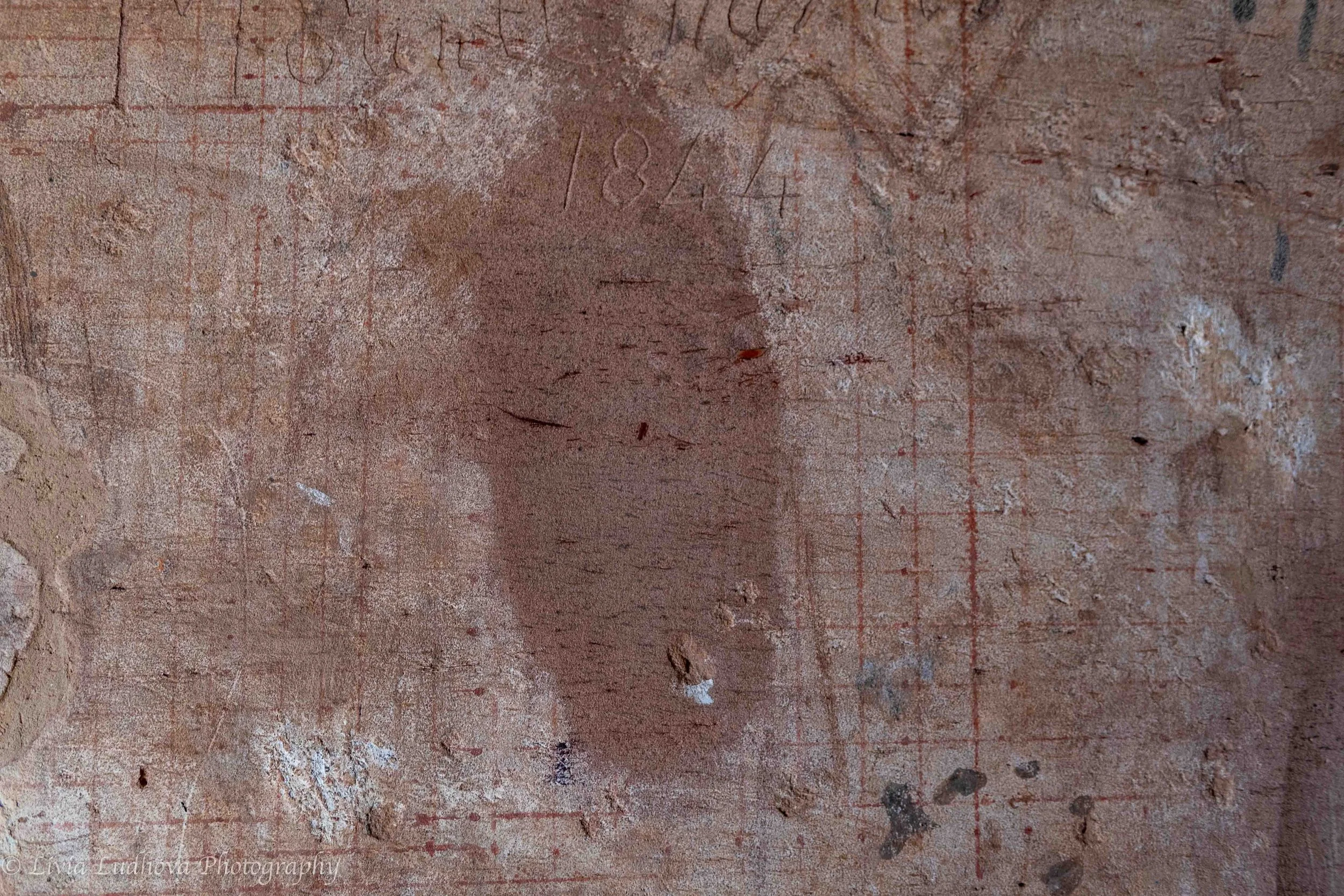
Unfinished relief with preparatory grid (raster).
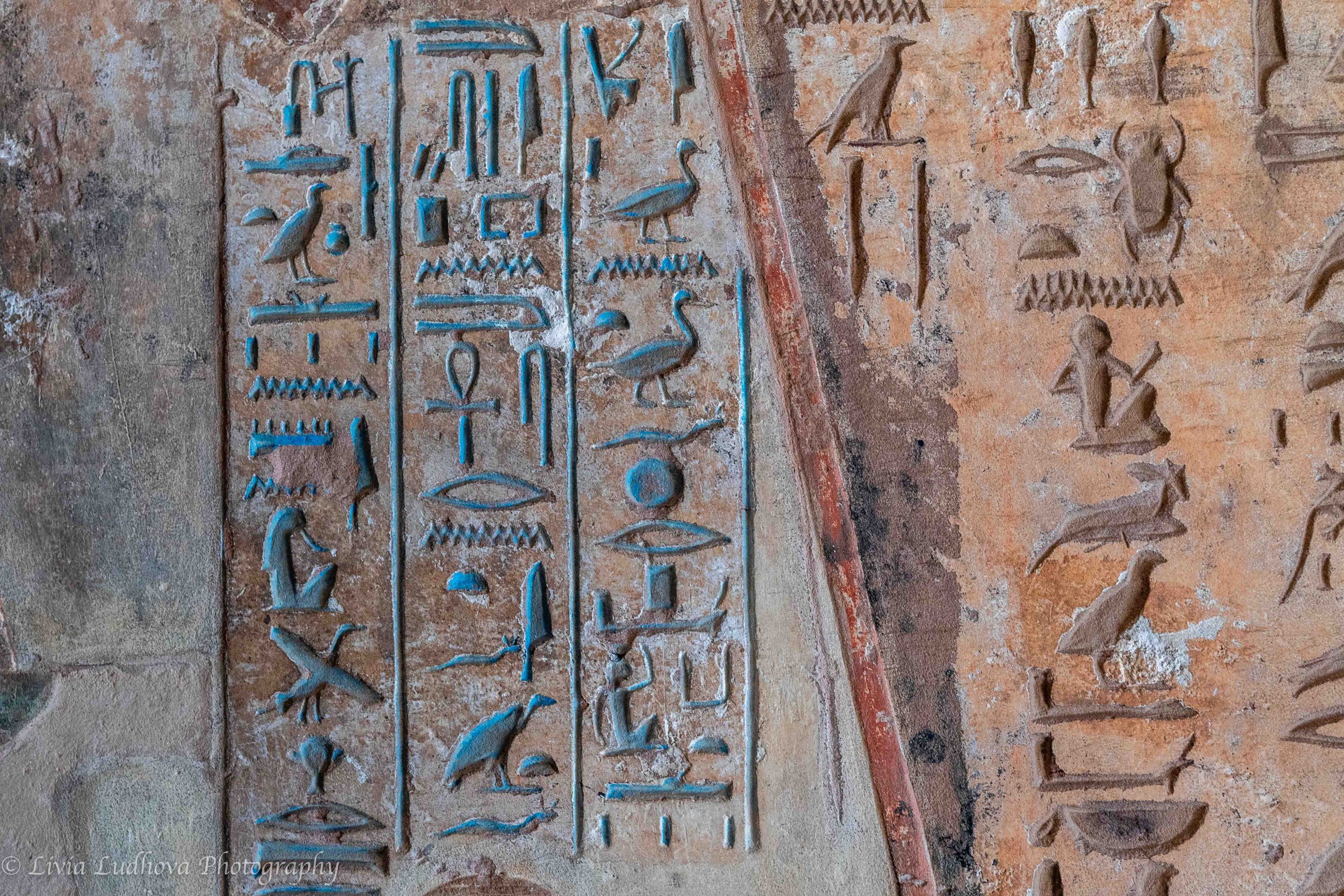
Carved text with surviving blue and red paint, illustrating the original polychrome appearance of tomb inscriptions.
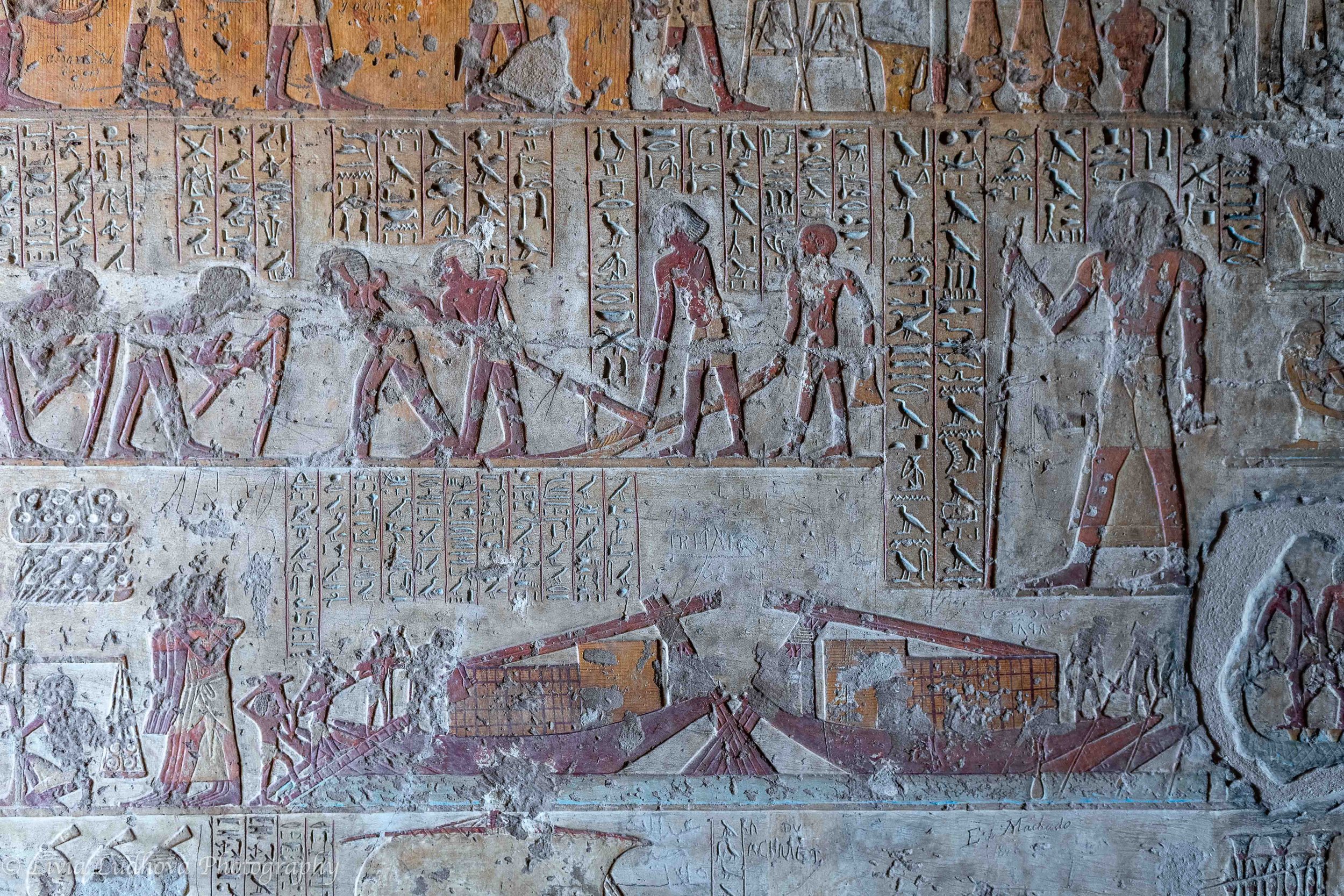
Painted relief panel with offering procession, attendants bring food and goods for the tomb owner, reflecting funerary provision and elite status.
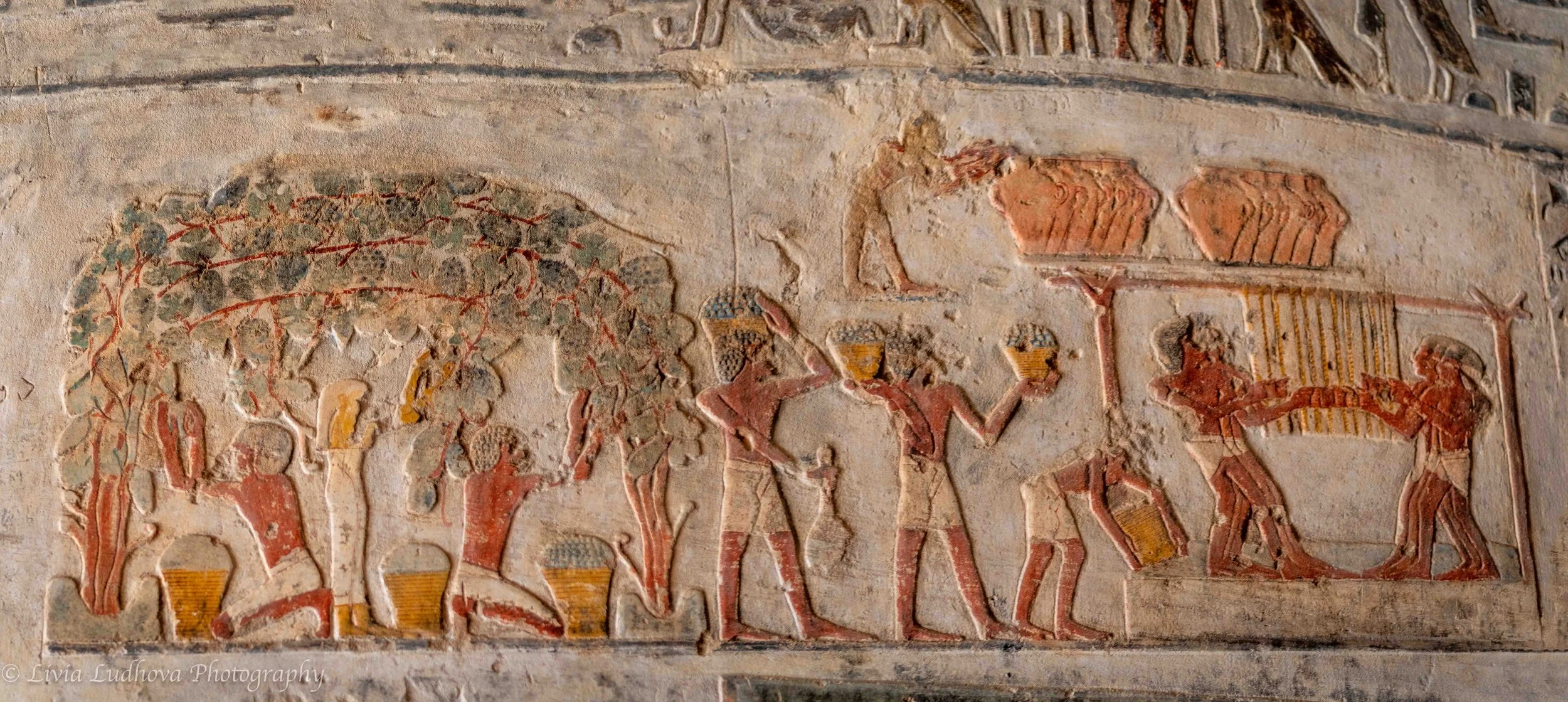
Agricultural and provisioning scene, El Kab — figures harvesting and presenting produce, emphasizing sustenance, renewal, and continuity in the afterlife.
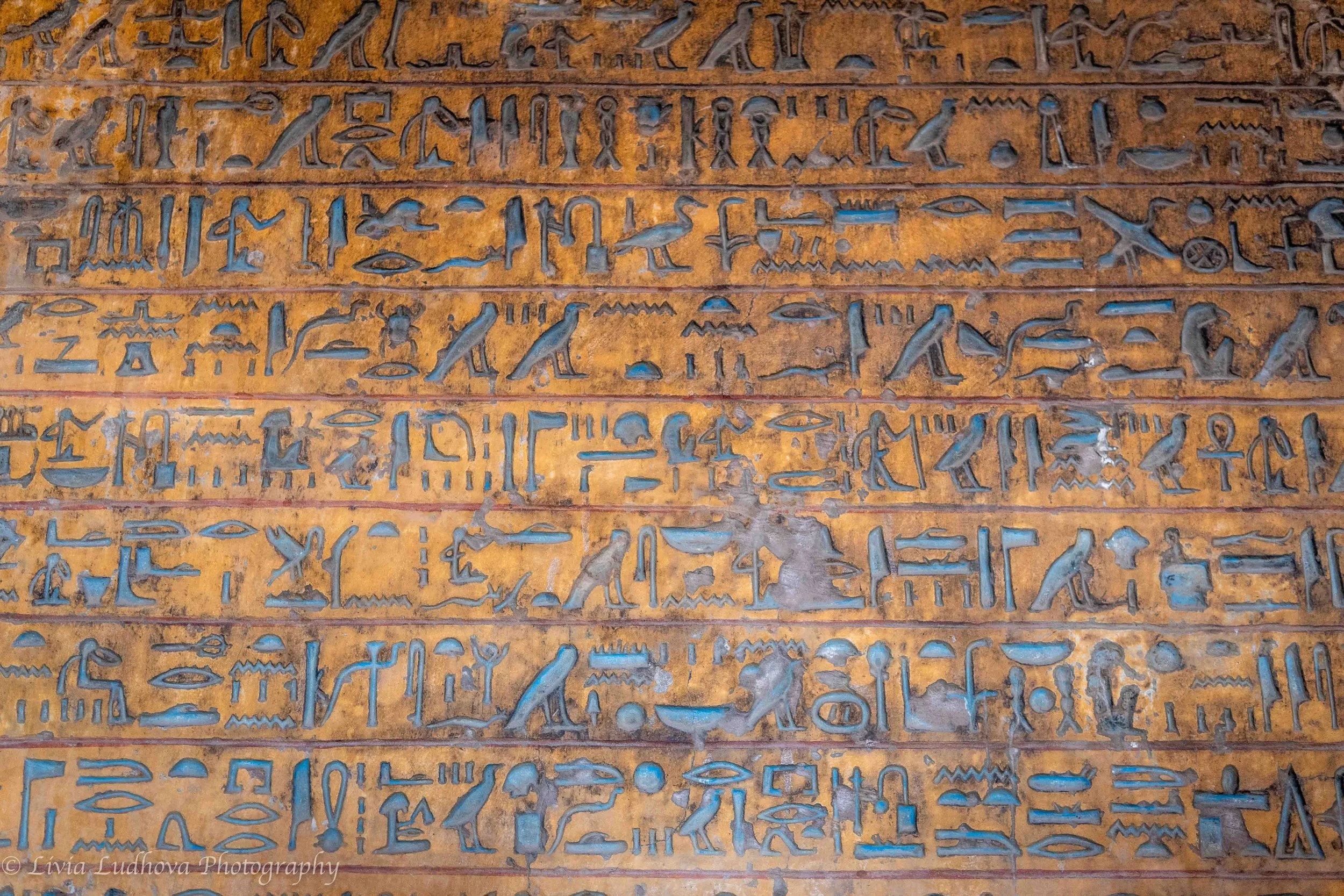
Hieroglyphic inscription with preserved pigments, El Kab — vivid blue and yellow traces illustrate the original polychrome surface of tomb texts.
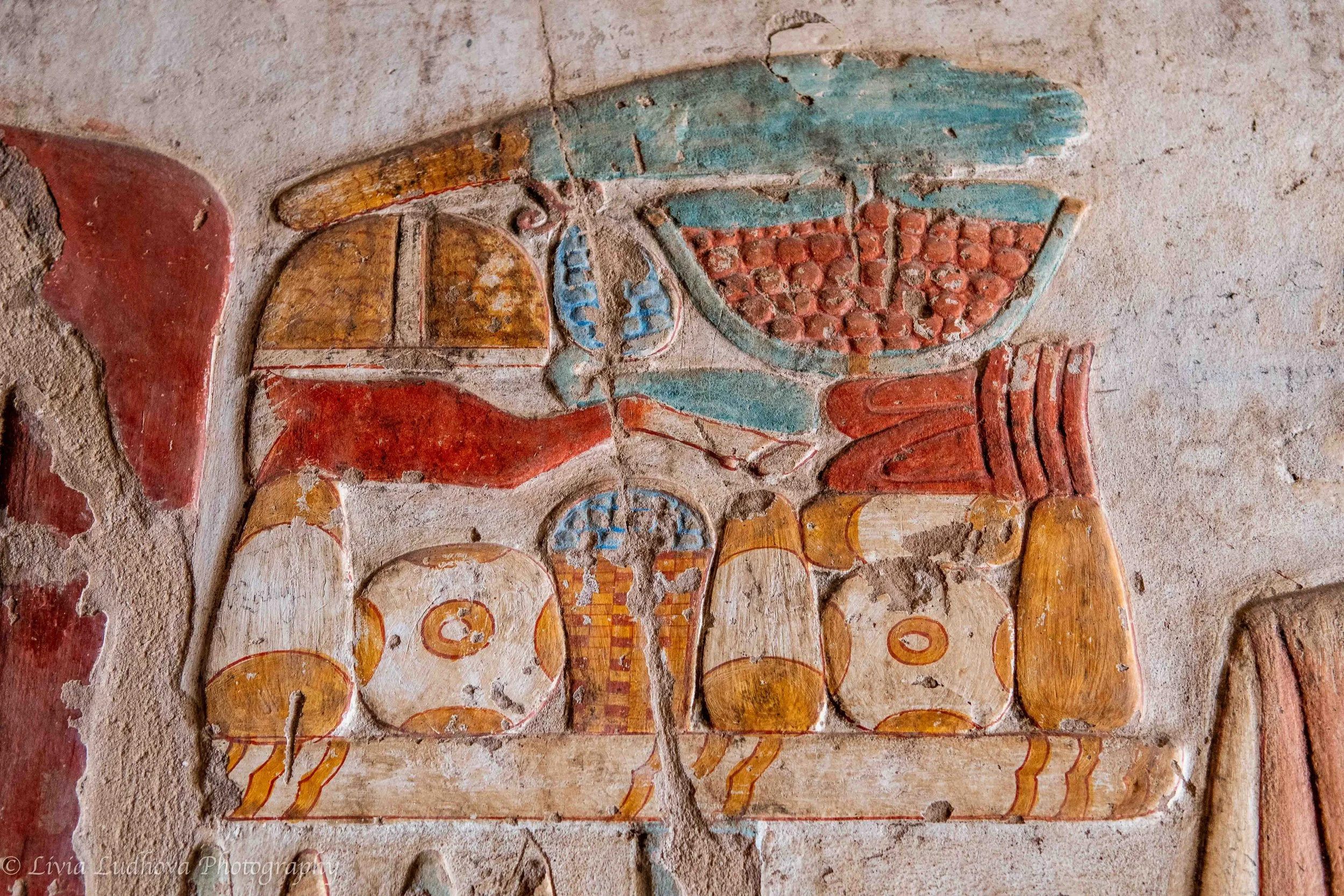
Offering table relief, El Kab — painted vessels and food offerings symbolizing sustenance for the afterlife.
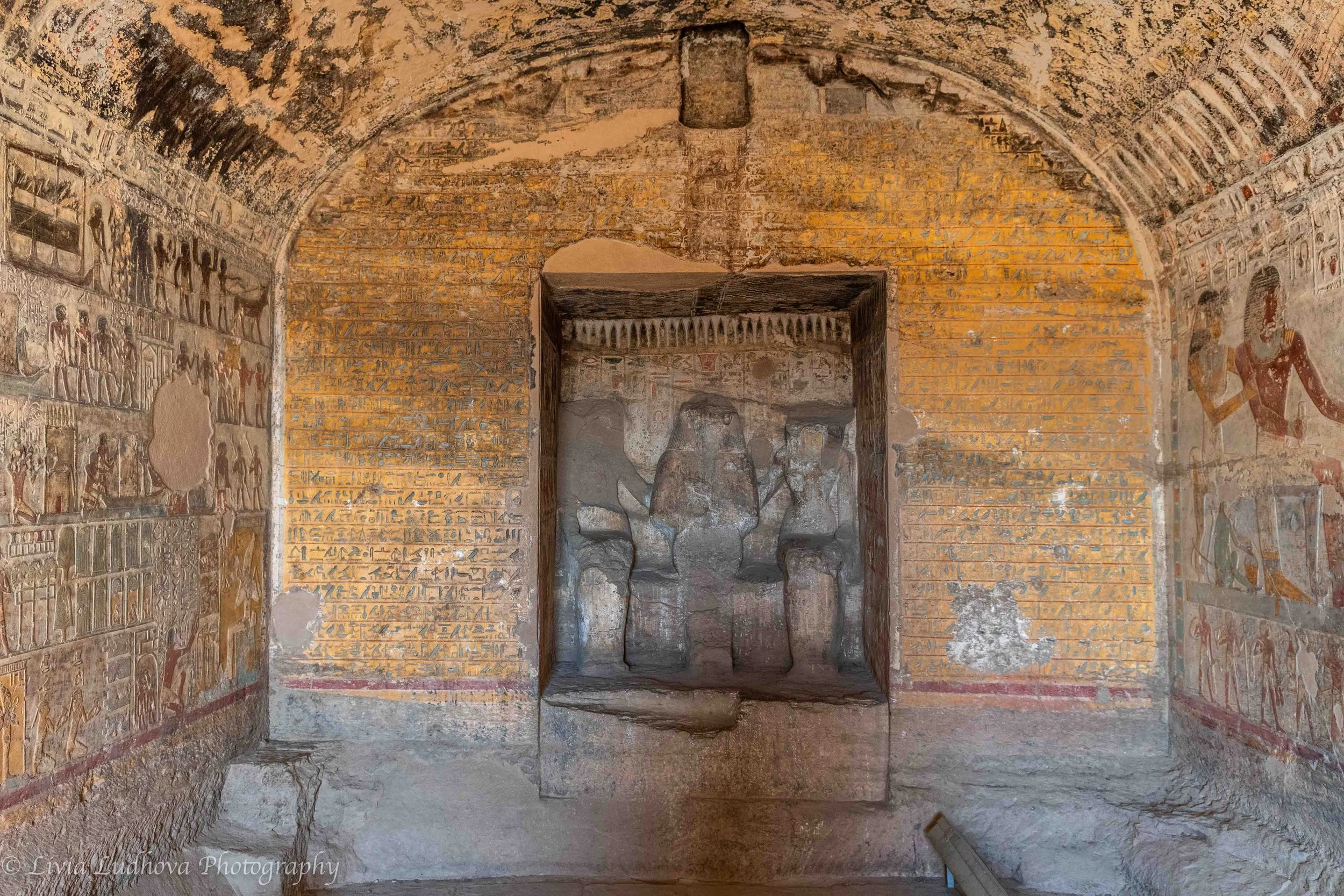
Tomb of Paheri (EK2) - One of the best-preserved provincial elite tombs of the early New Kingdom
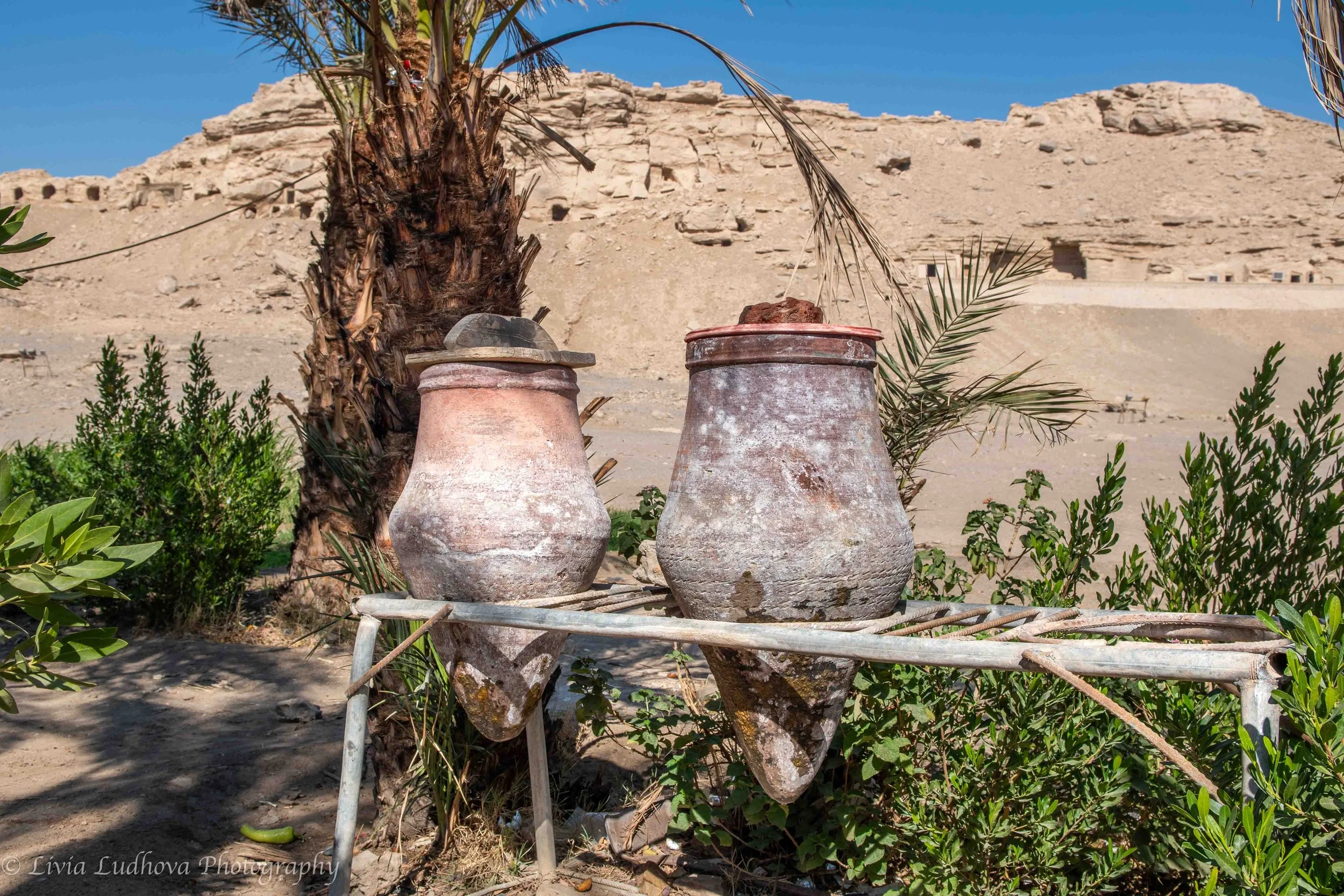
Water jars on a wooden stand - anyone passing by in need can get a drink.
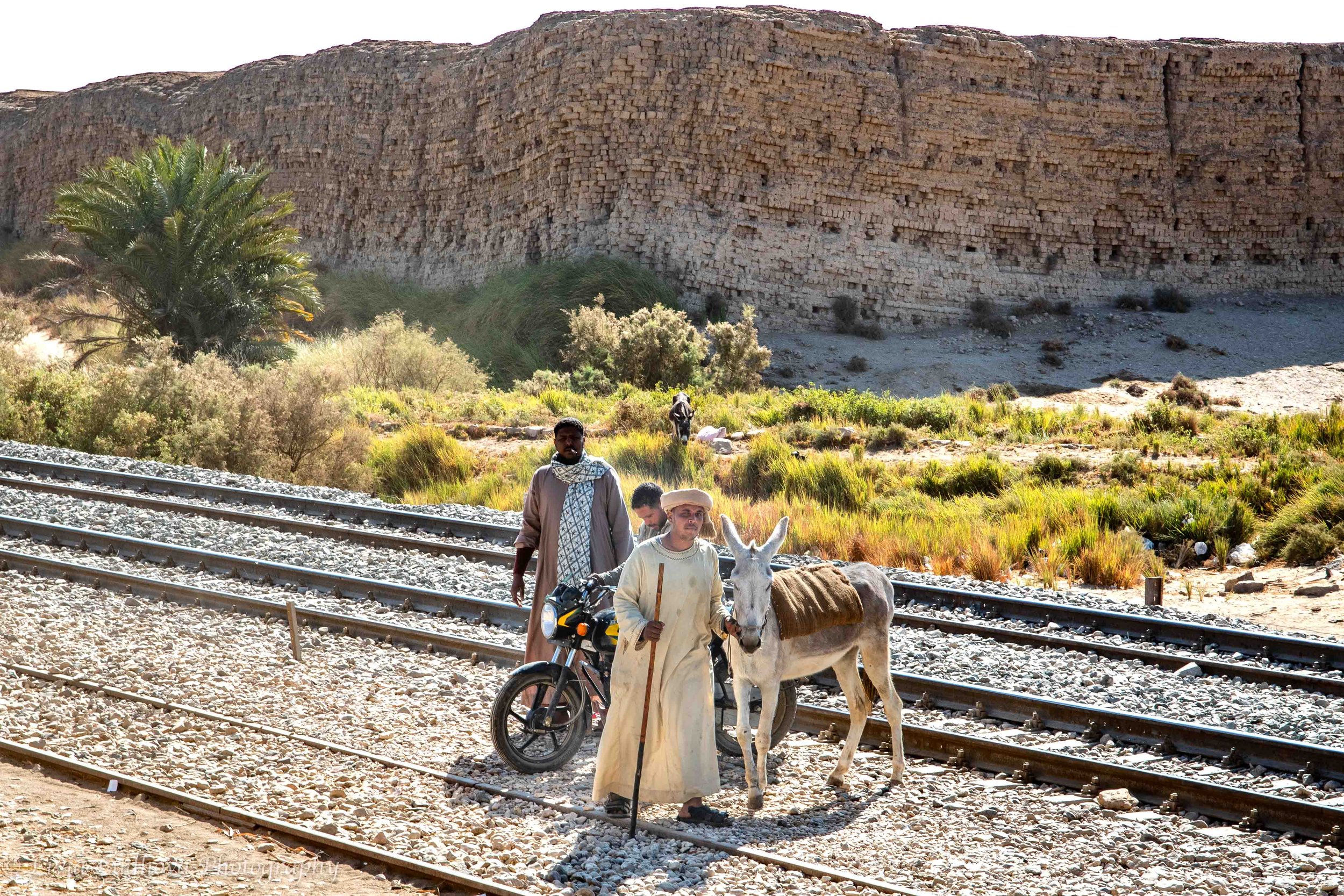
Locals with a donkey and motrbike near the railway — everyday mobility along the Nile corridor.
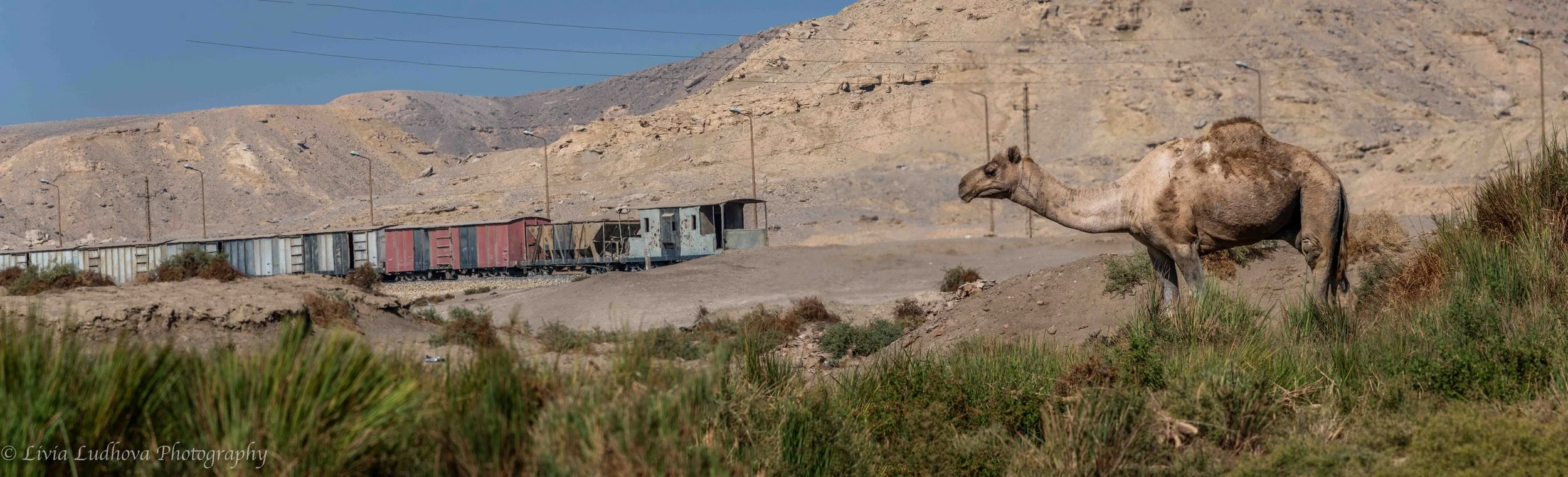
Camel beside abandoned rail wagons, desert edge — juxtaposition of traditional pastoral life and modern infrastructure.
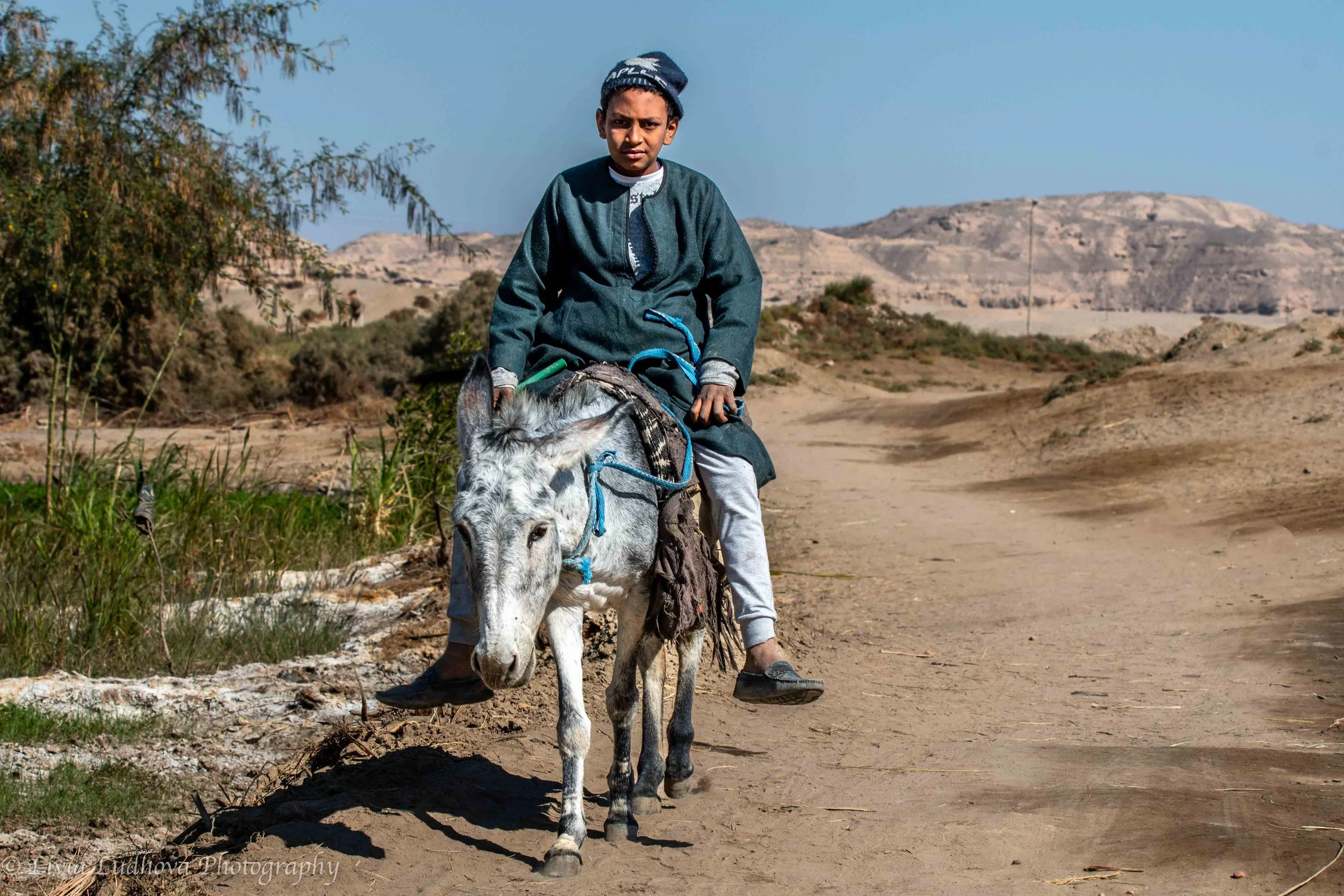
Boy riding a donkey, near El Kab — daily movement through agricultural paths.
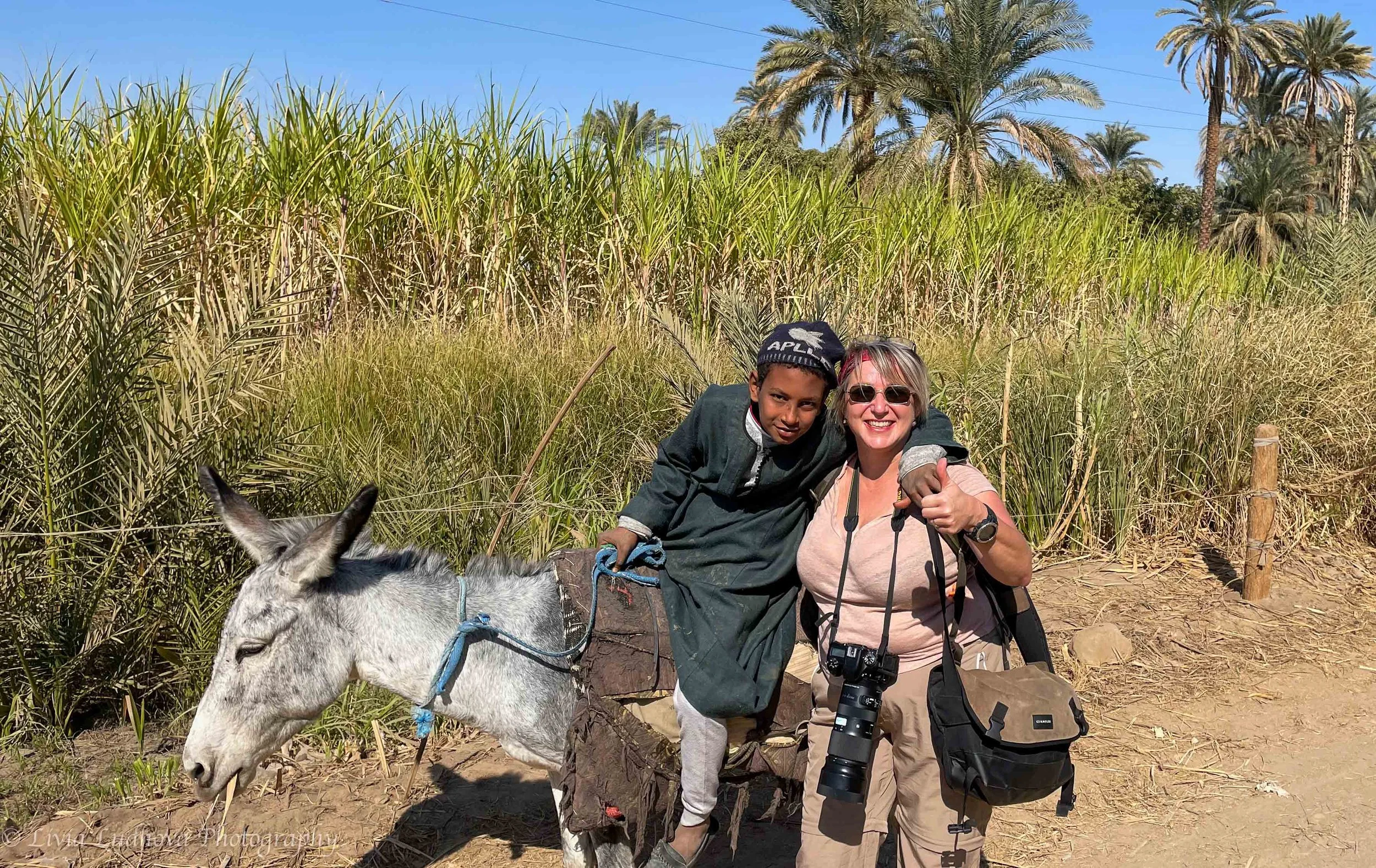
Interacting with locals makes my travel special.
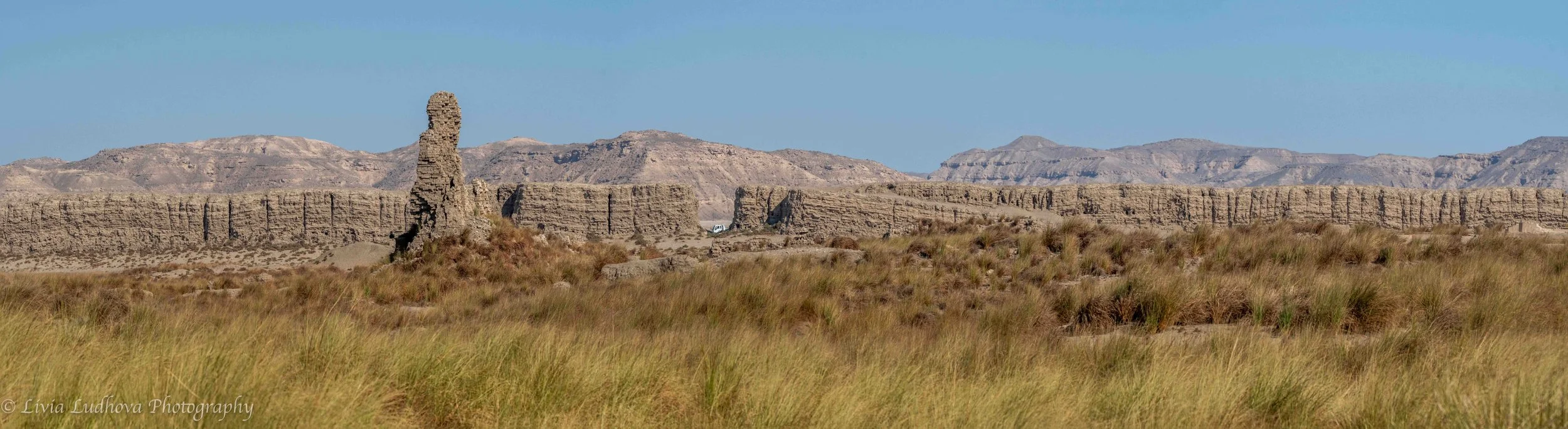
City wall of El Kab (ancient Nekheb) — massive mudbrick enclosure dating mainly to the early New Kingdom (c. 1550–1290 BCE), enclosing the sacred city of the goddess Nekhbet and reflecting the strategic and religious importance of this provincial center along the Nile.
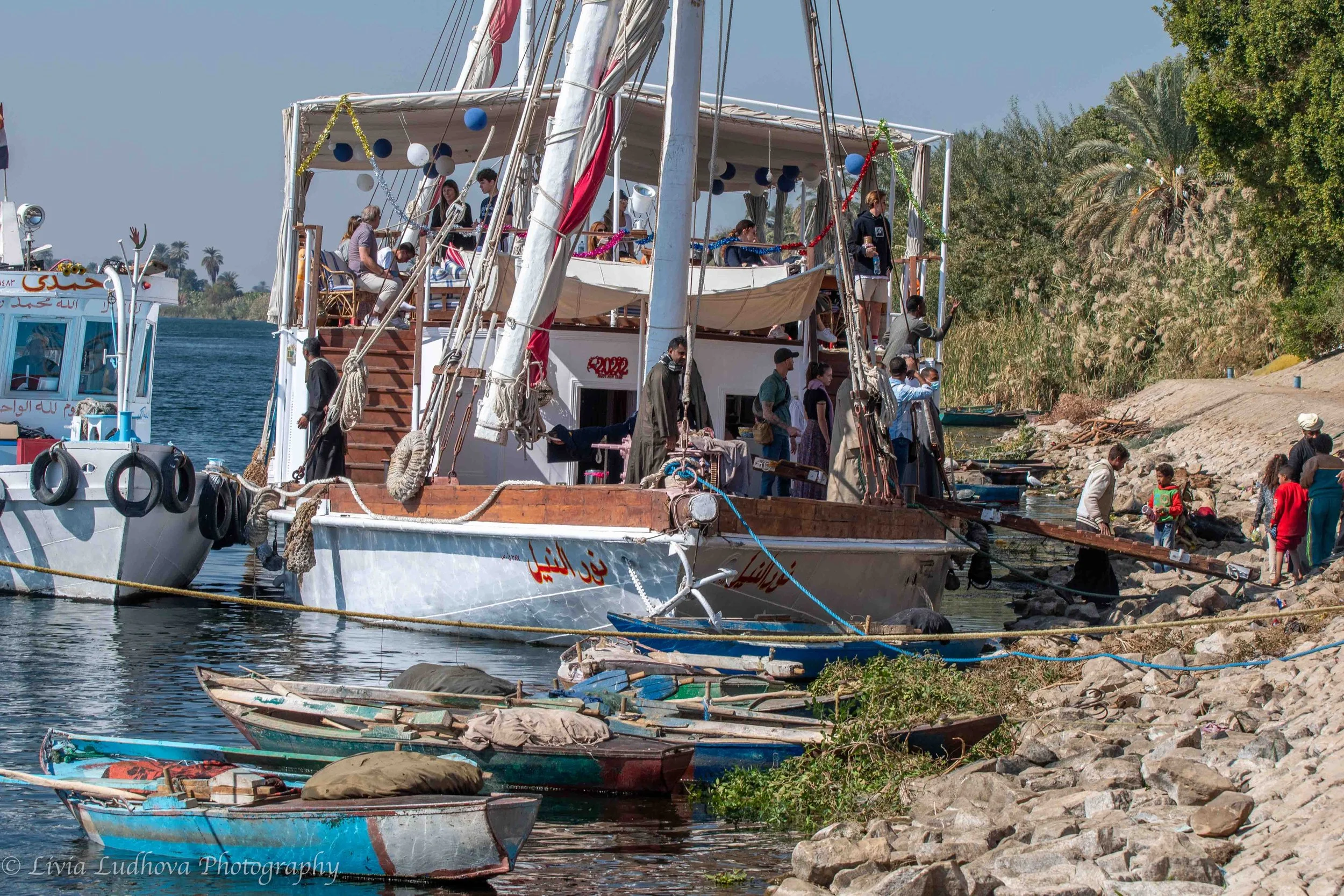
Riverbank activity and moored boats.
Children gathering by the river.
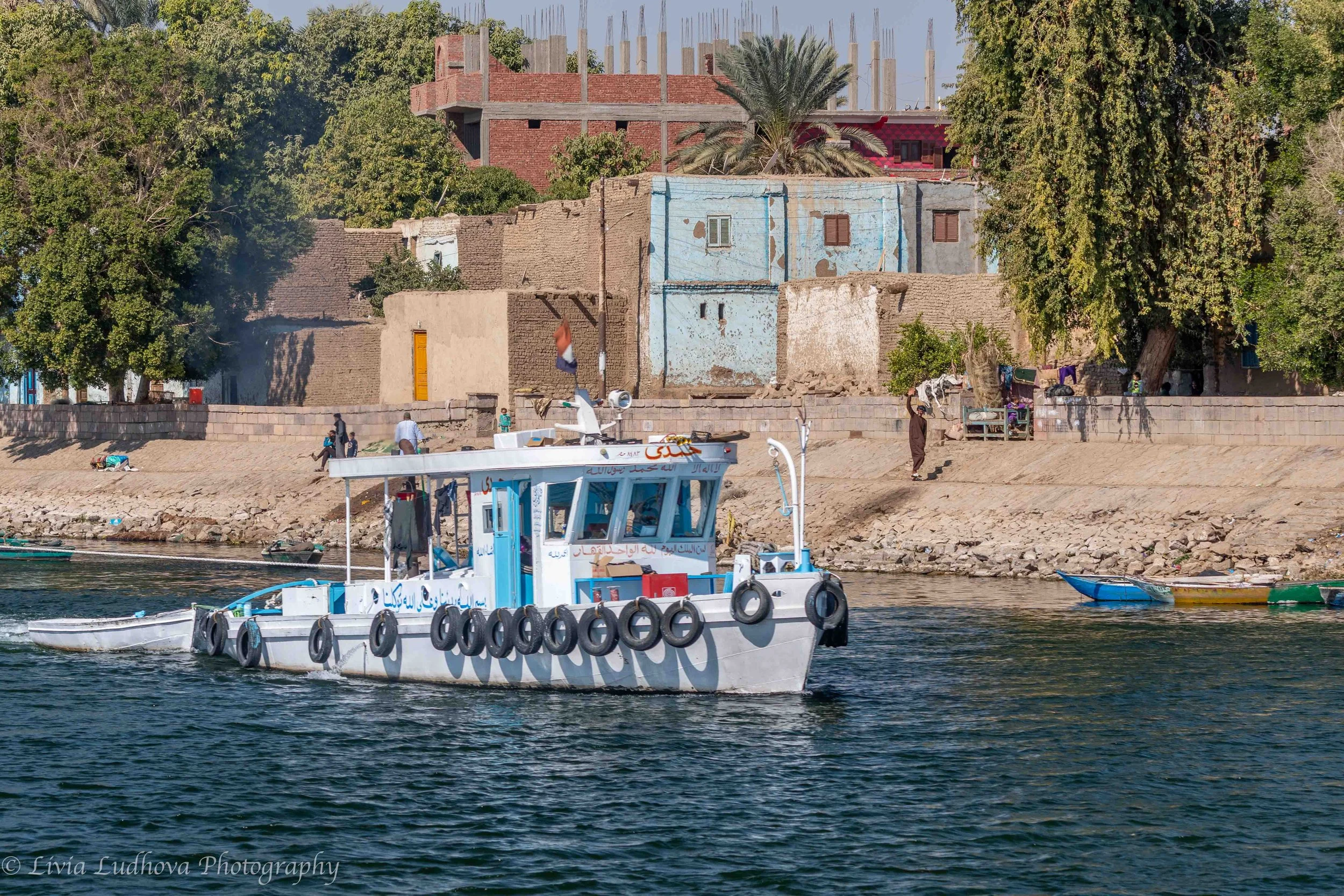
Passenger boat approaching the bank.
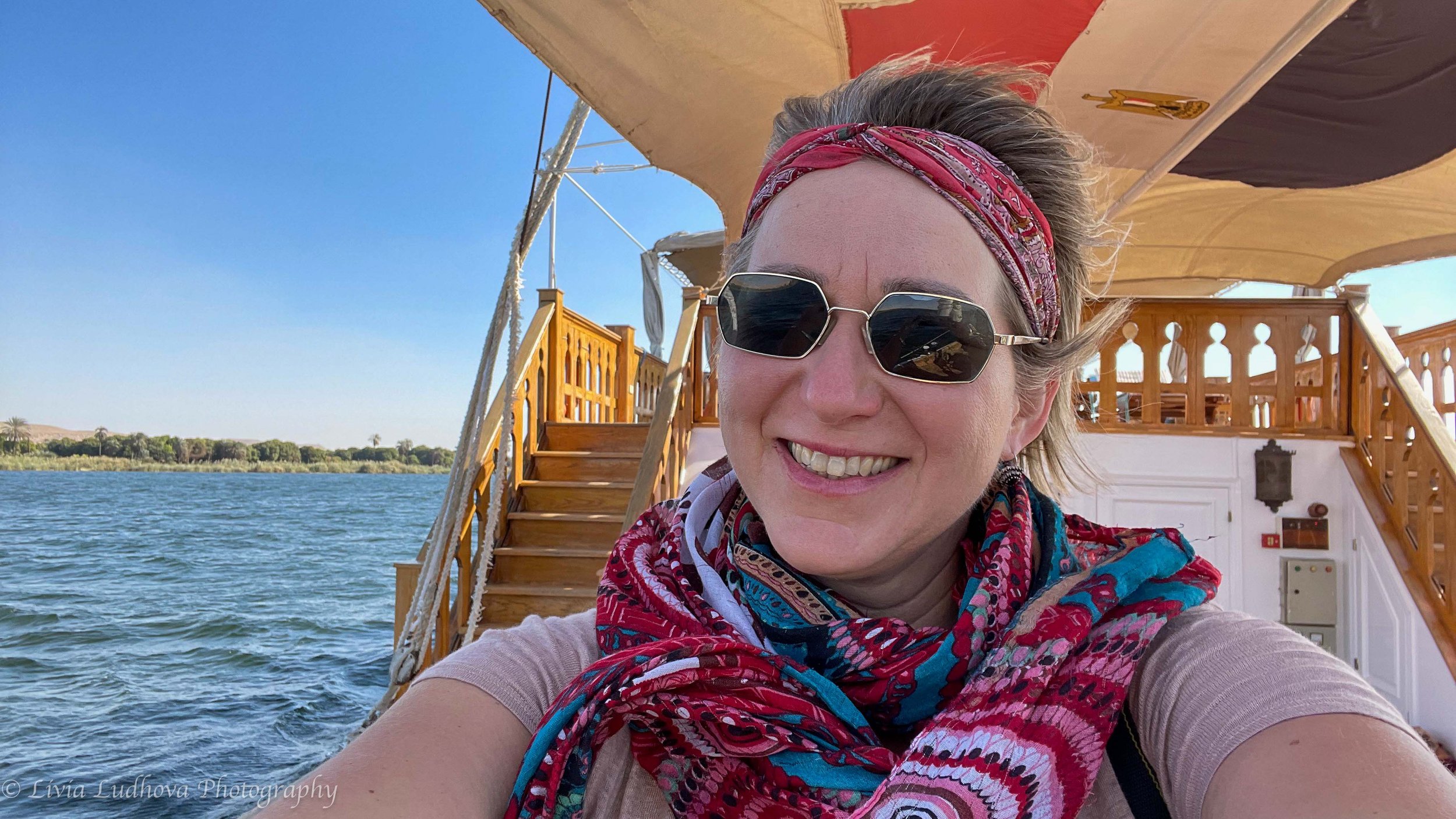
My onboard.
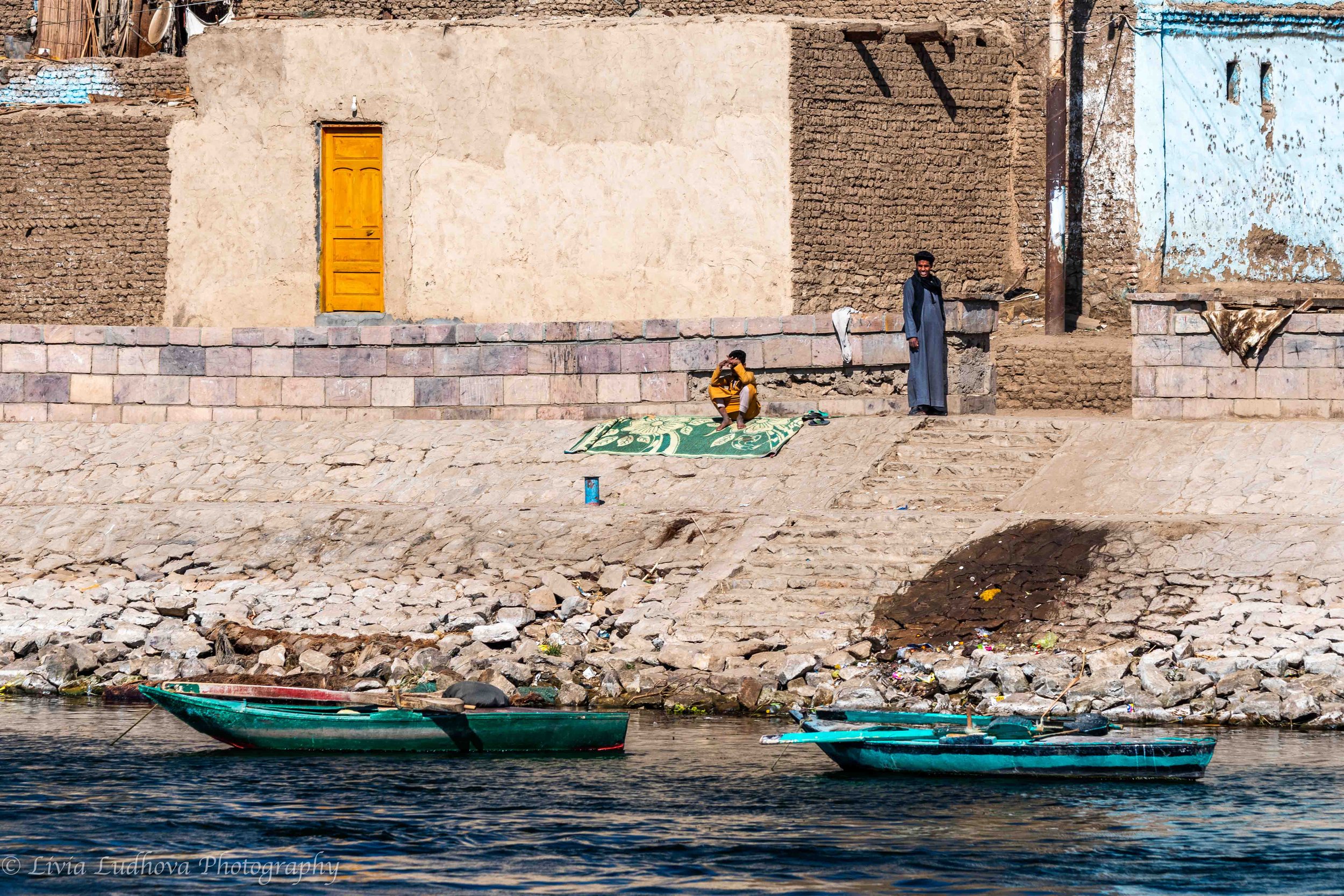
Village riverbank with fishermen and boats— layered shoreline activity.
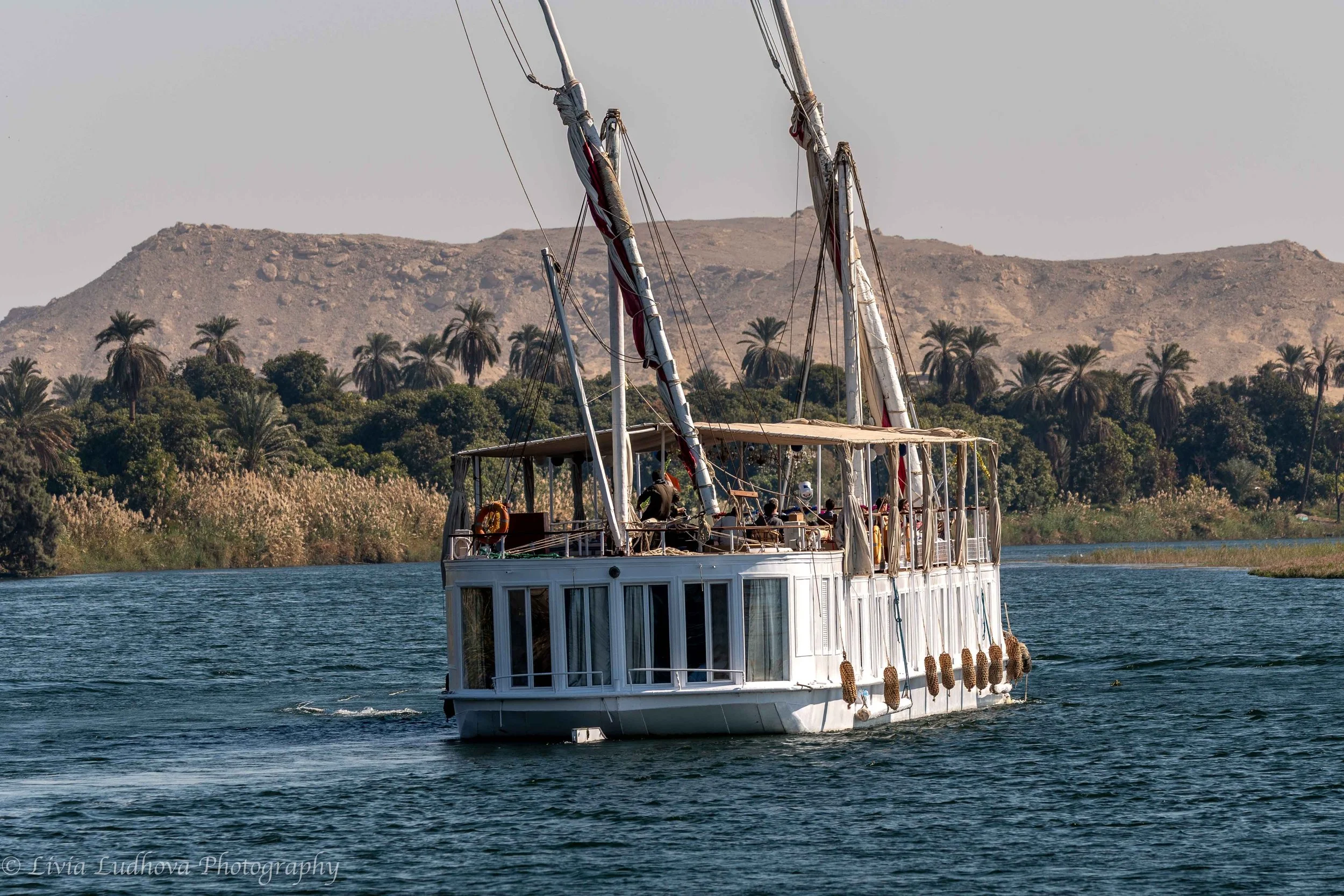
Dahabiya under sail, Nile — traditional river navigation against a desert backdrop.
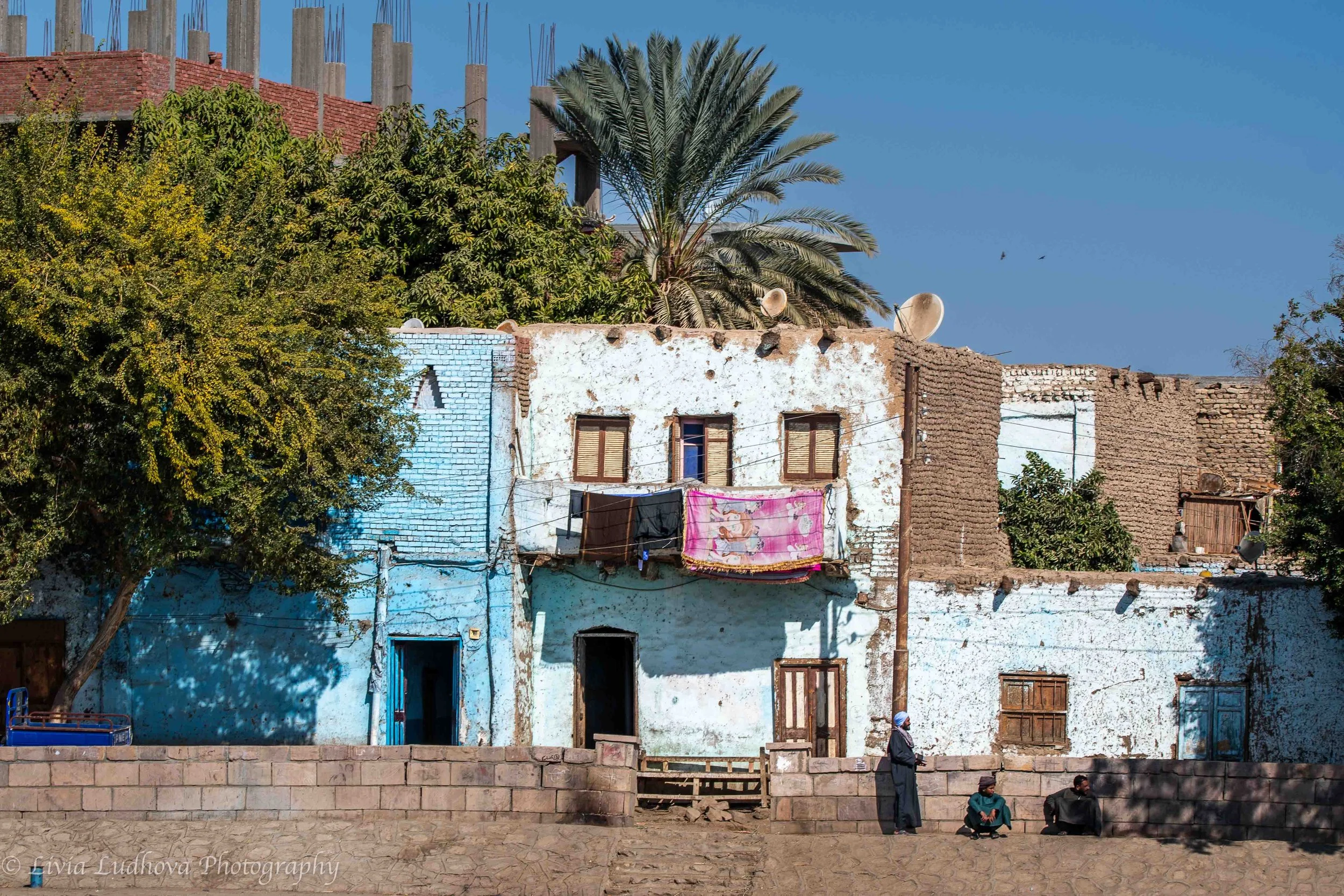
Painted village façade, Nile bank — domestic architecture shaped by river life.
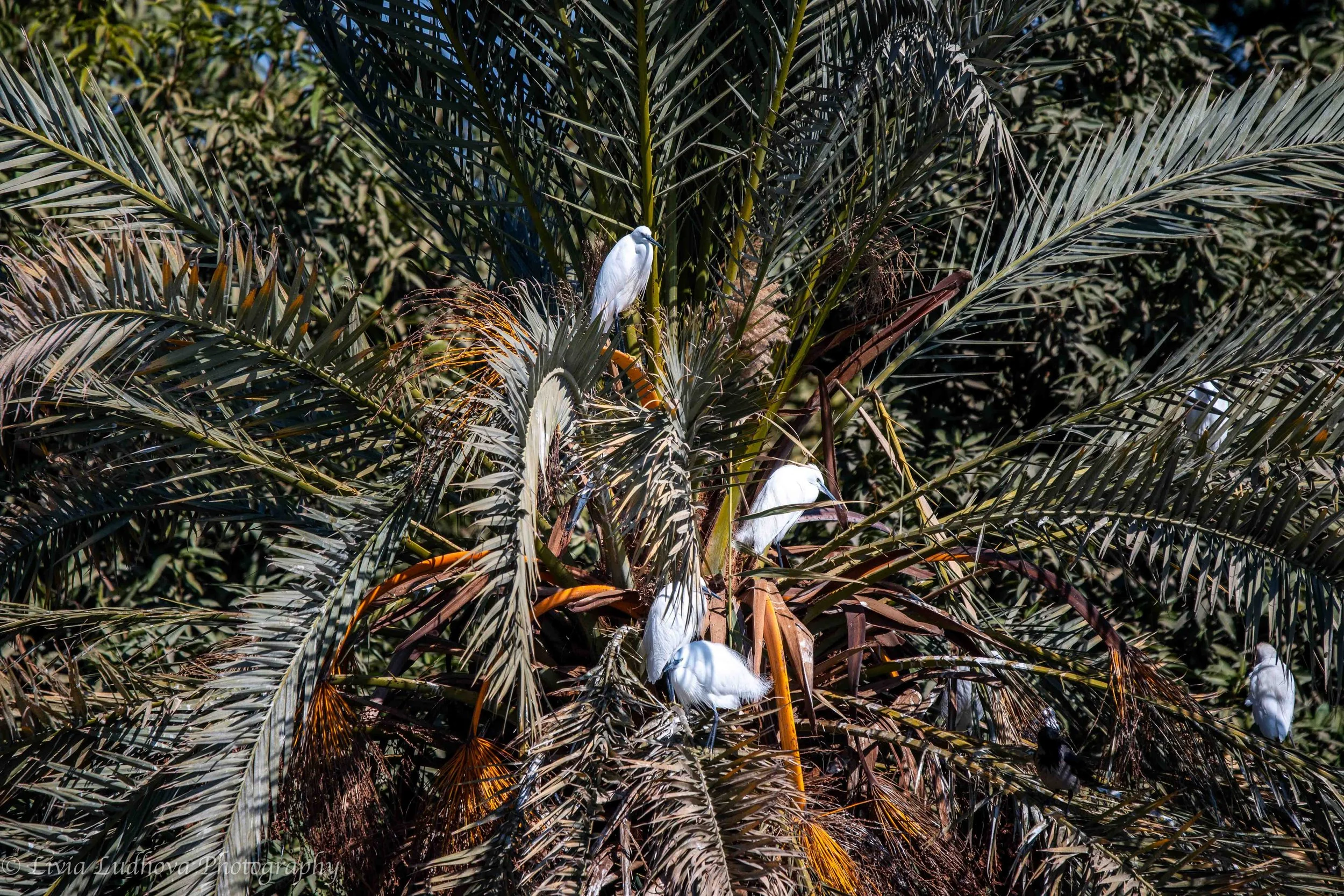
Palm crown with nesting egrets — coexistence of agriculture and river ecology.
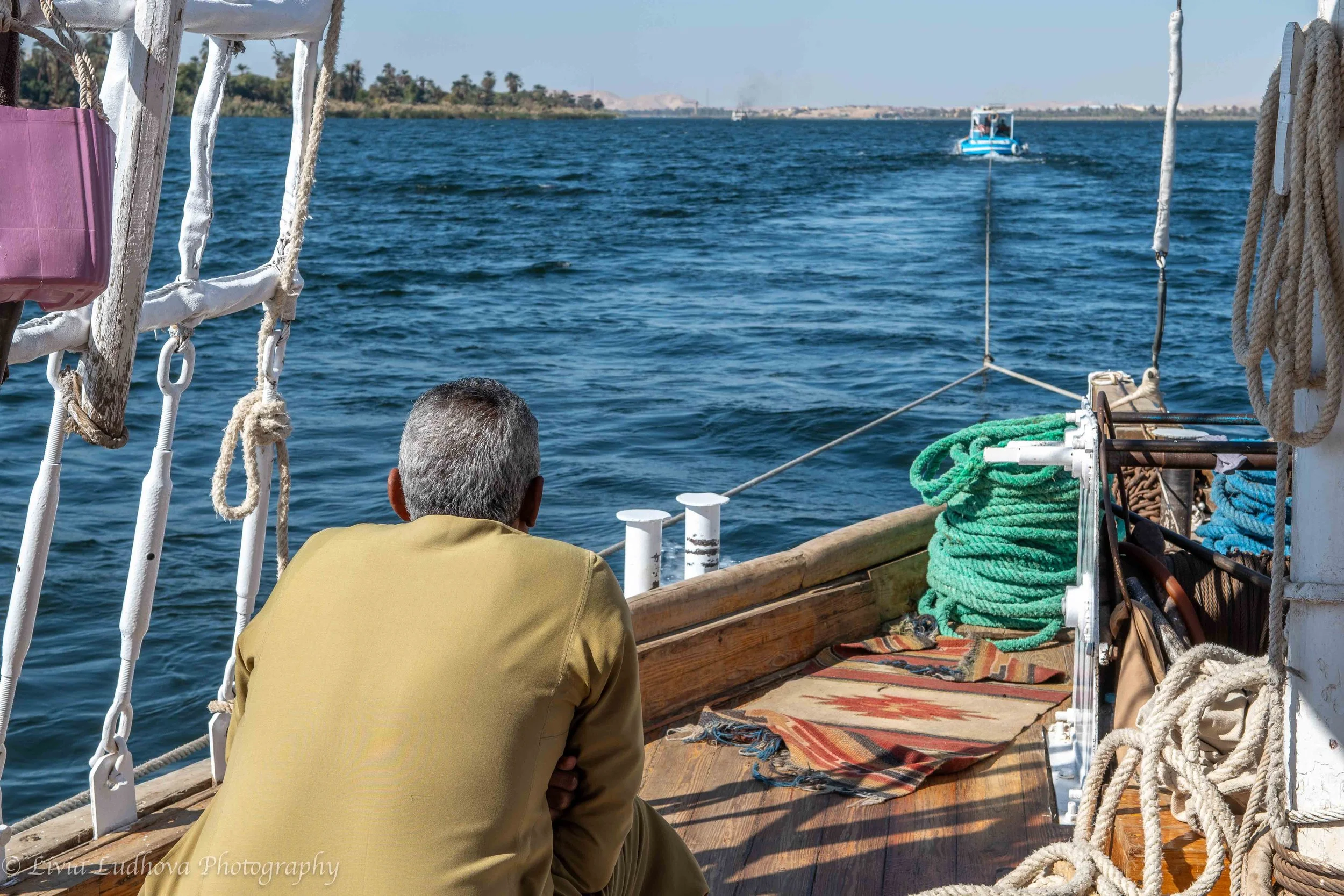
Captain resting on deck — quiet intervals between navigation tasks.

Sail handling — coordinated labor required for river travel.
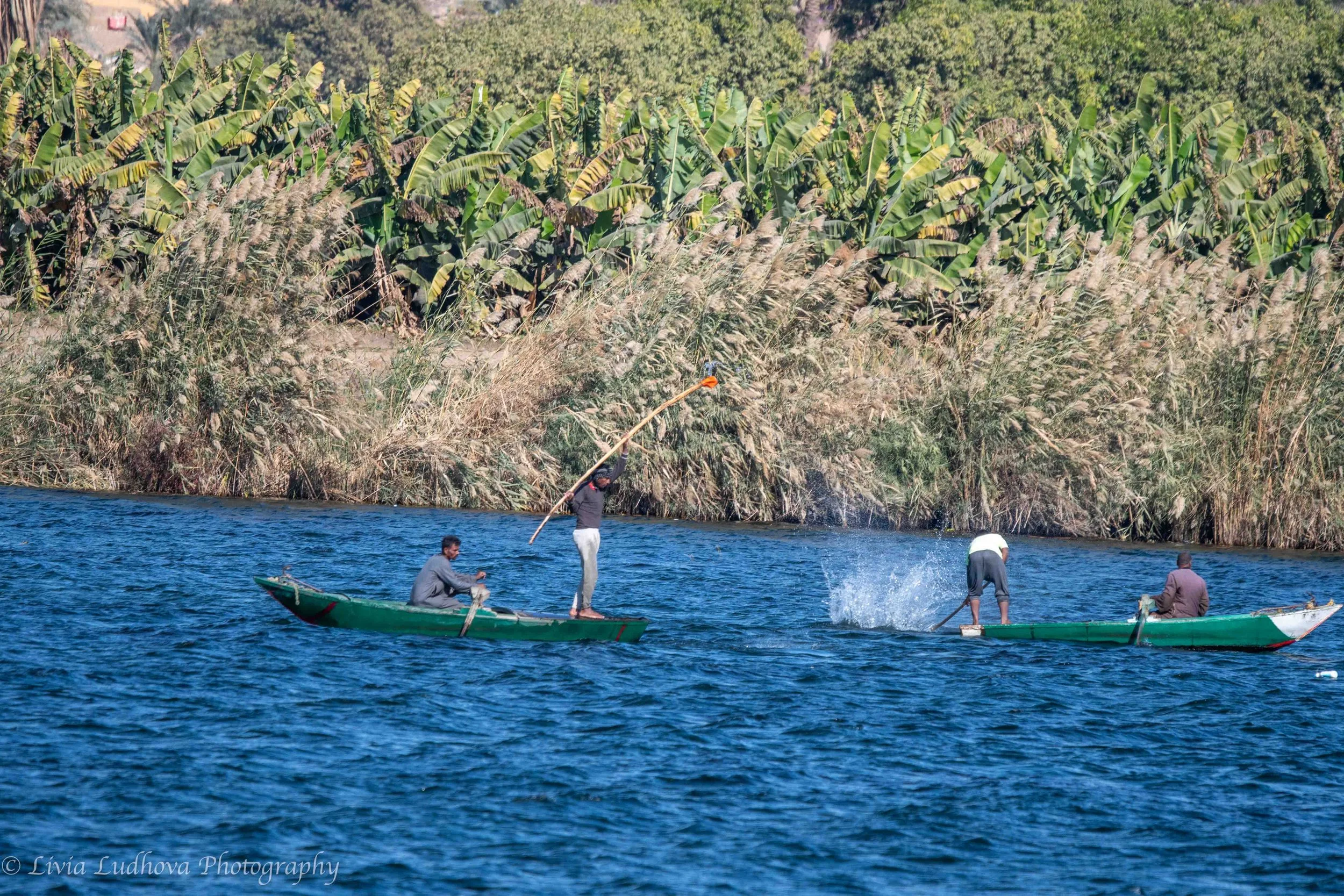
Traditional Nile fishing — fishermen driving fish from shallow waters by splashing and striking the surface with sticks, a long-established communal technique still used along the Nile.
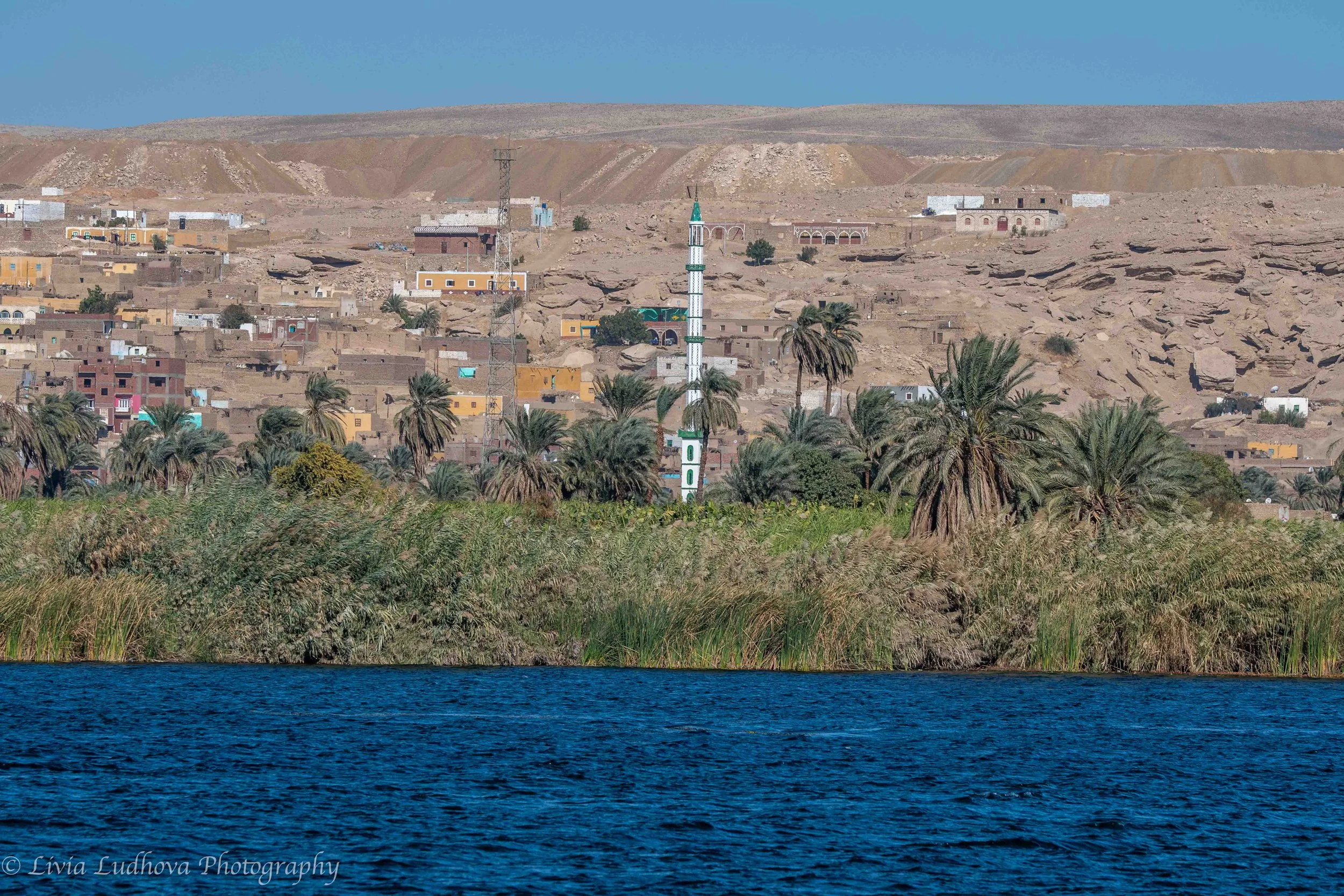
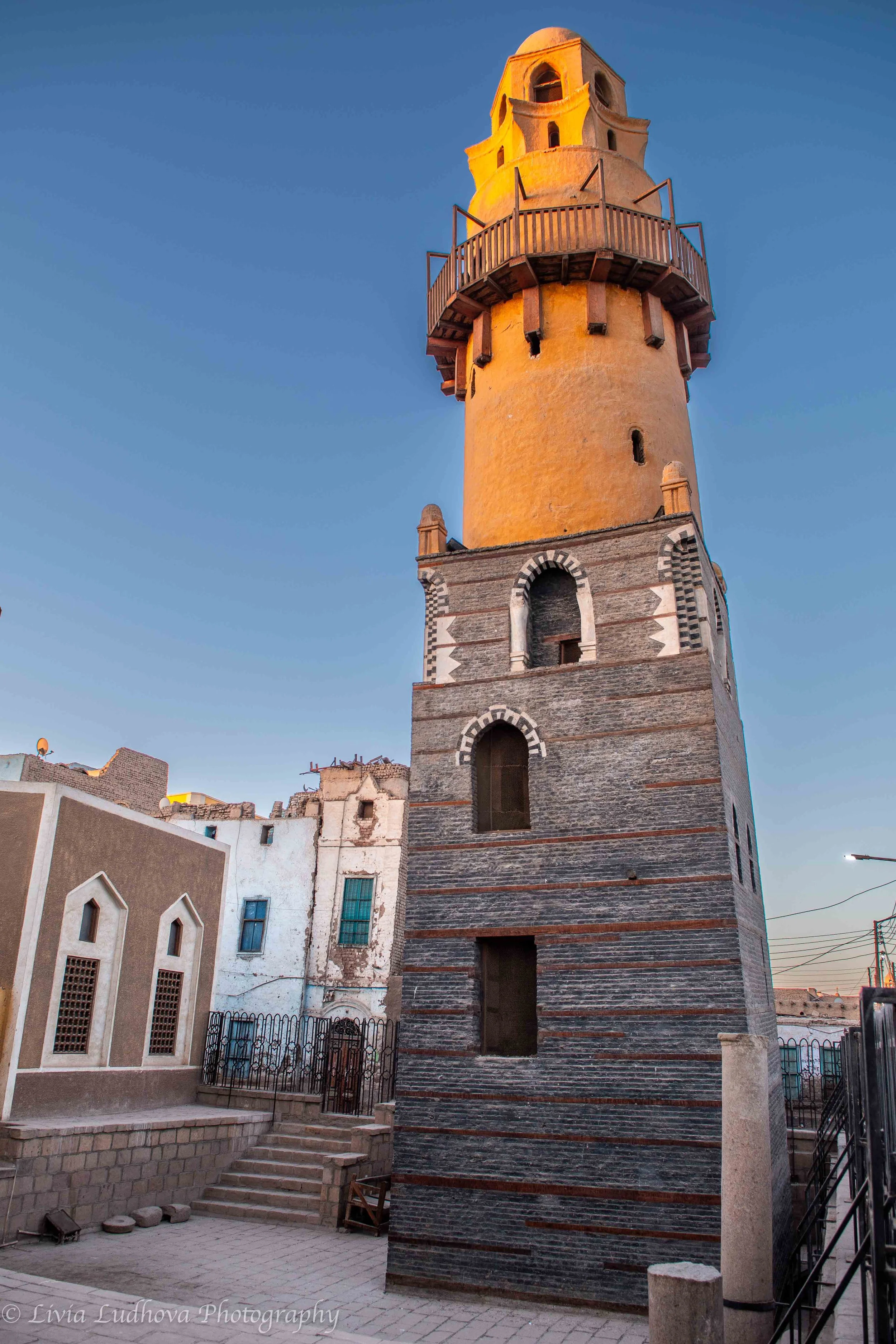
Village panorama across the river with white minaret.
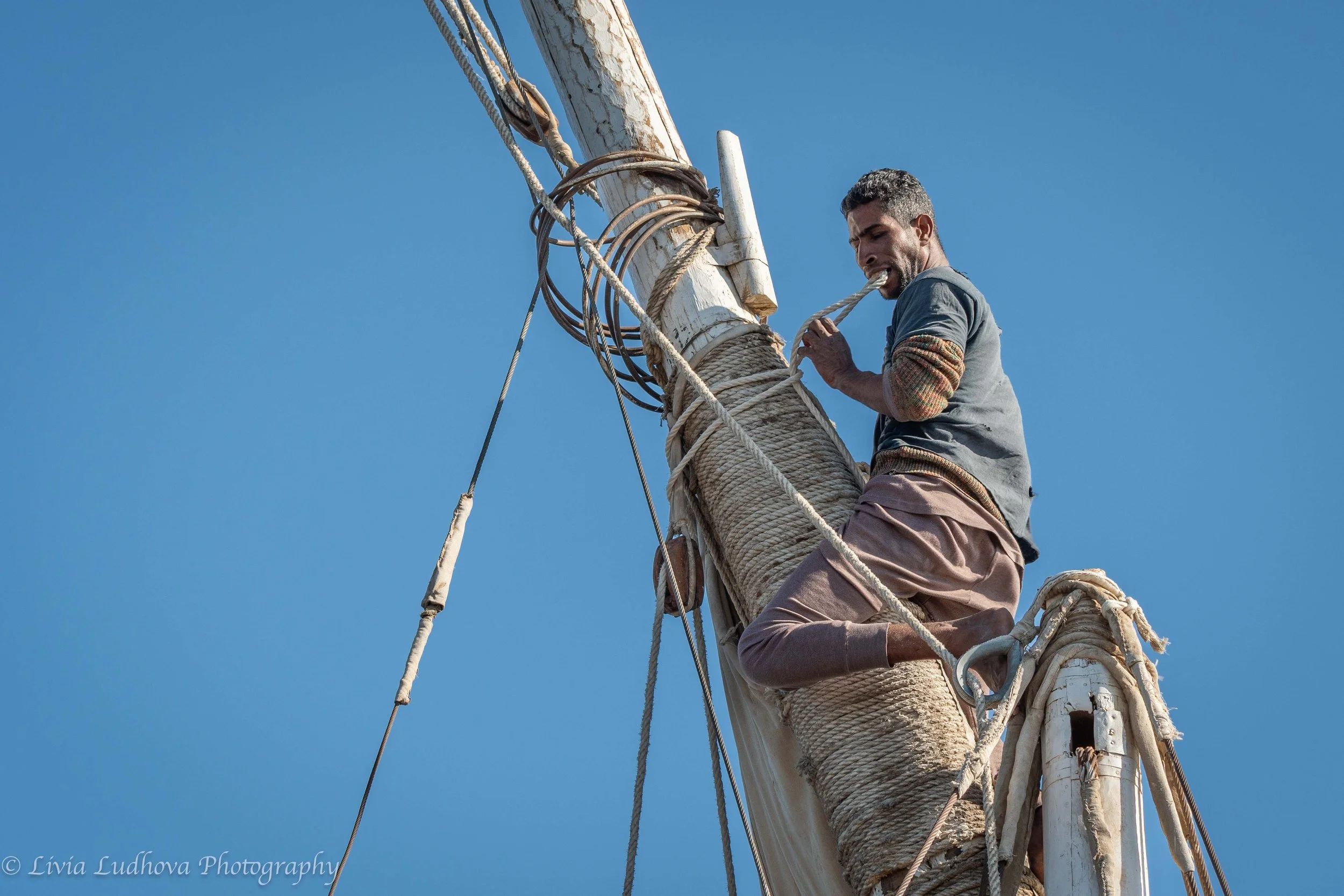
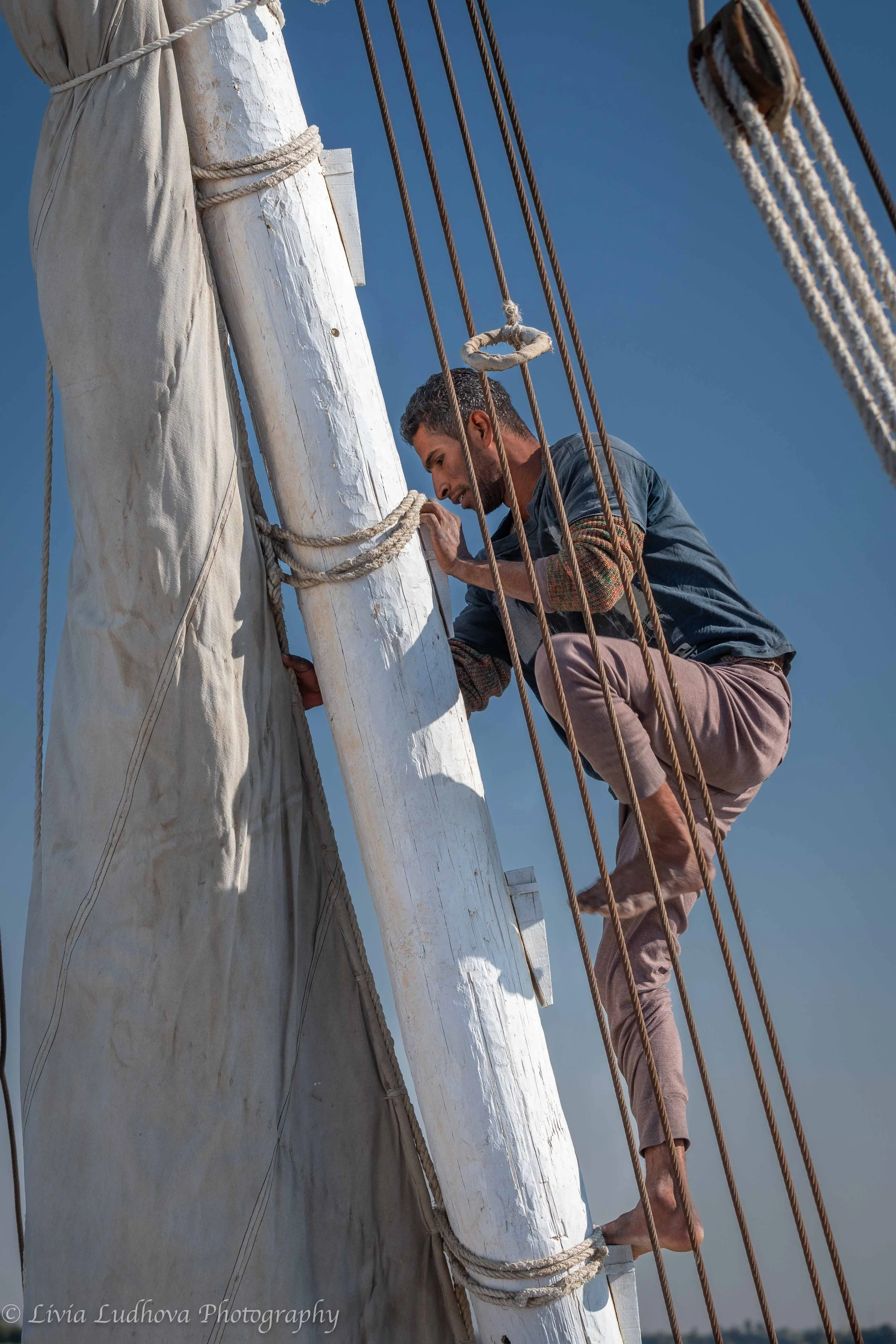
Handling sails while climbed on the mast.
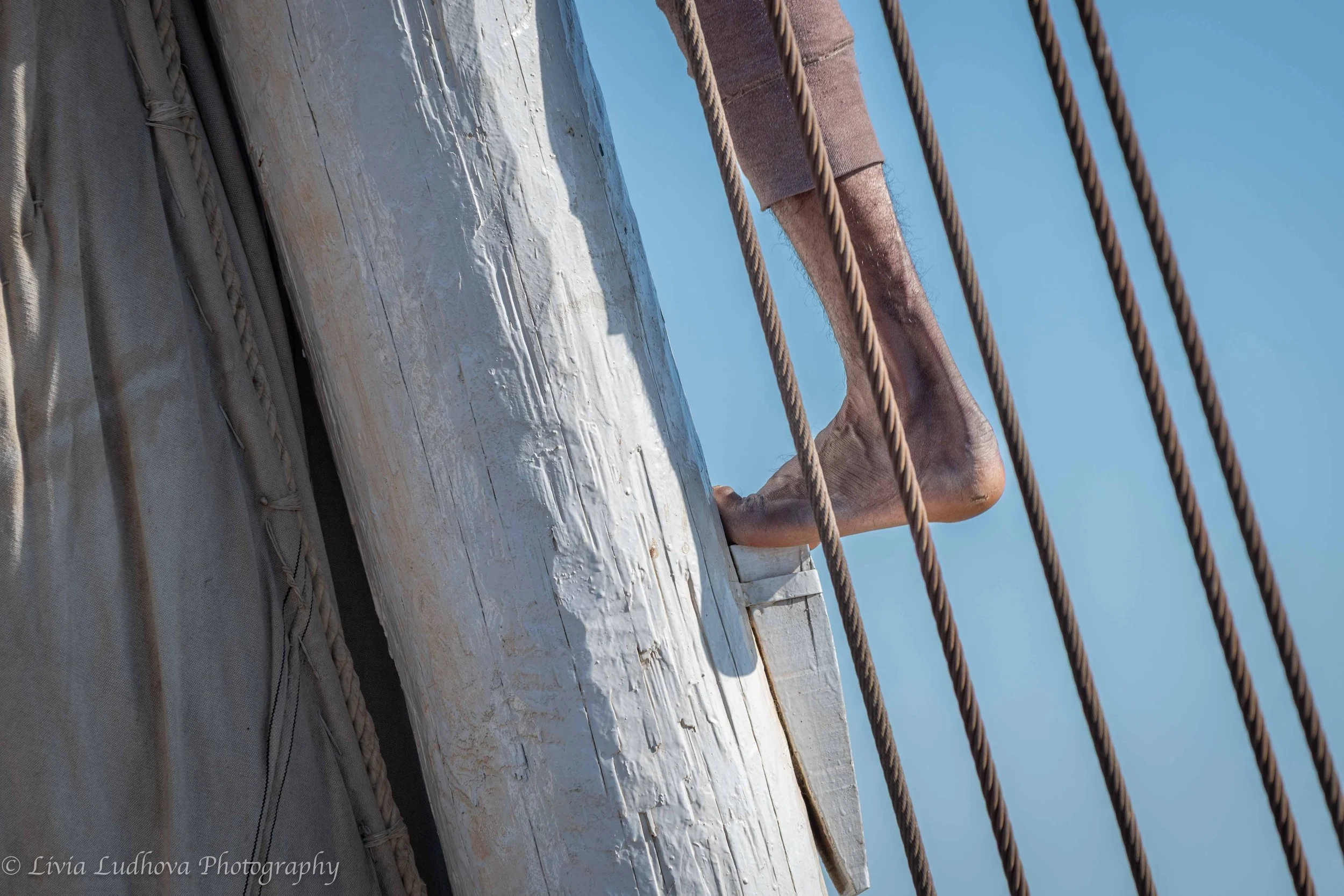
Detail of the feet on the mast.
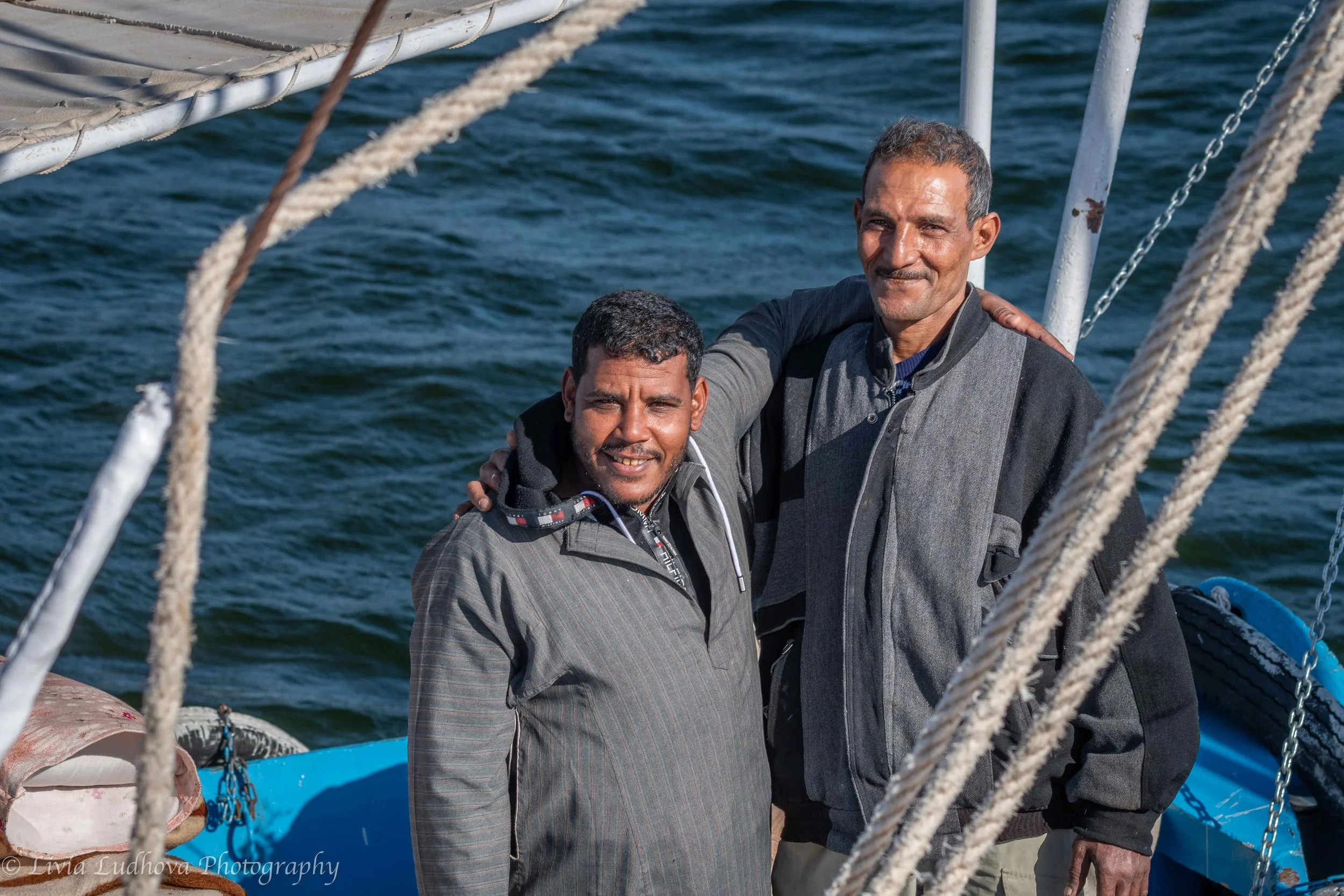
Our support team.
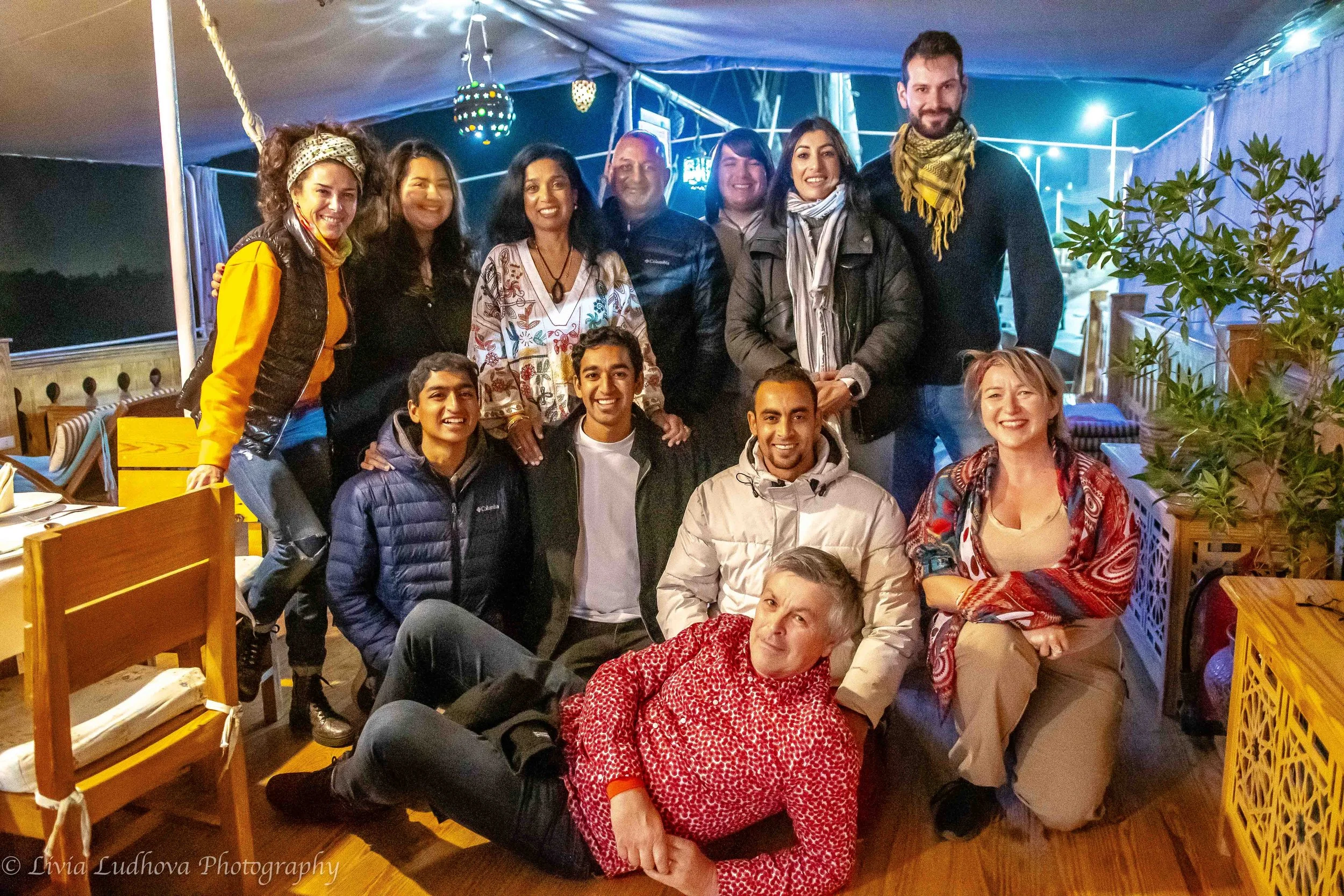
Our group on the final evening.
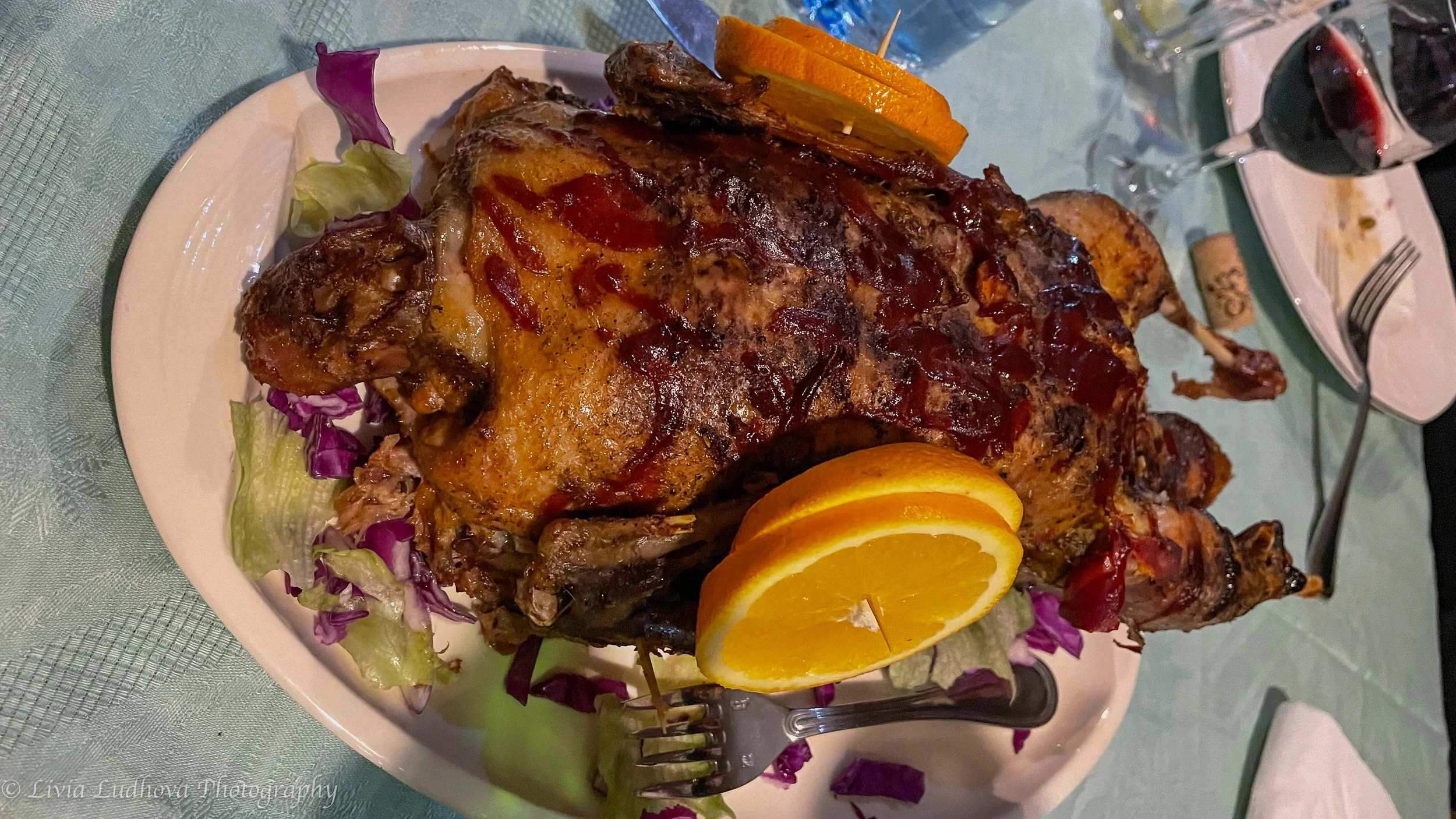
With delicious roasted duck dinner.
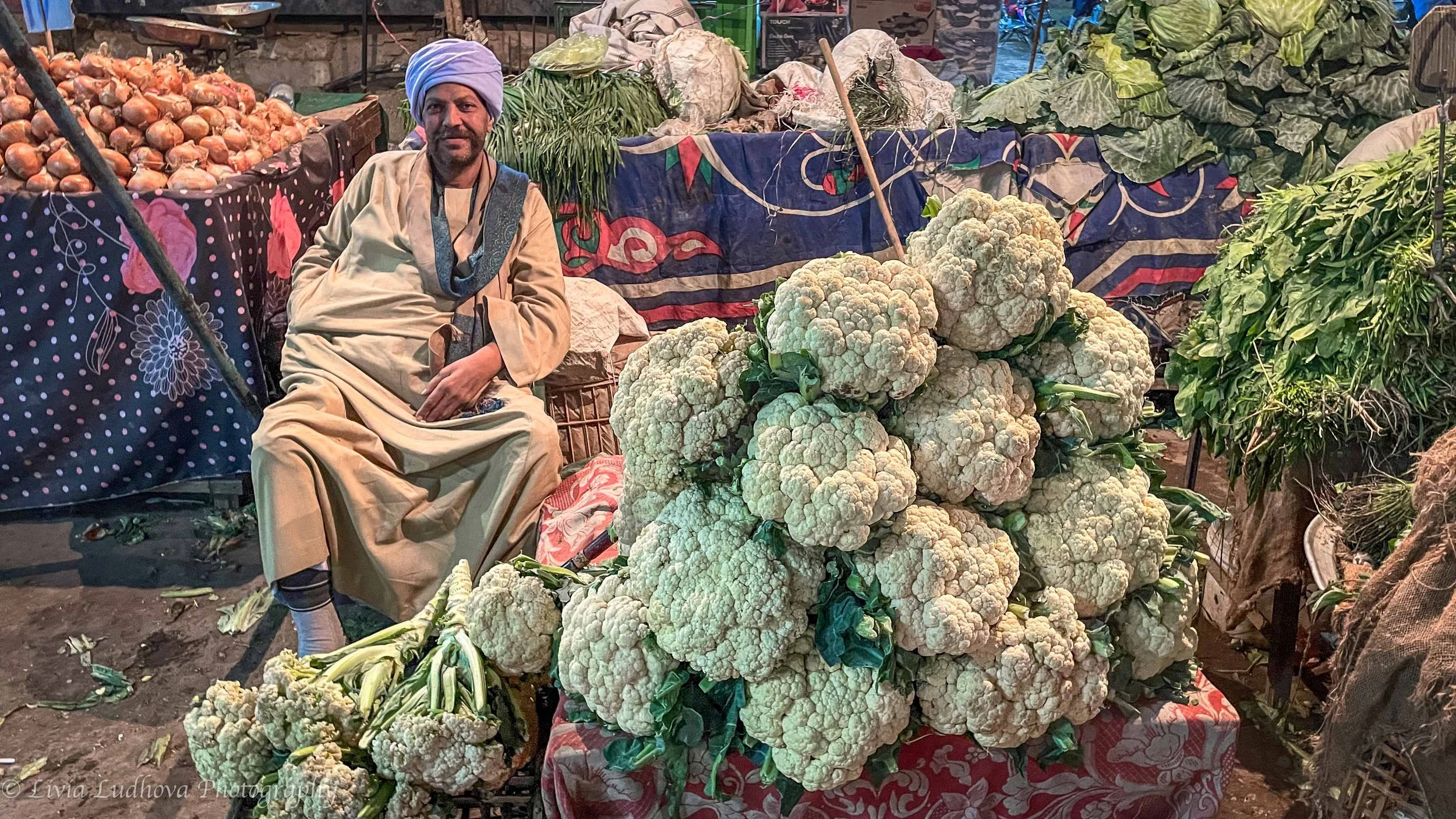
Gigantic cauliflower on sell at Esna market.
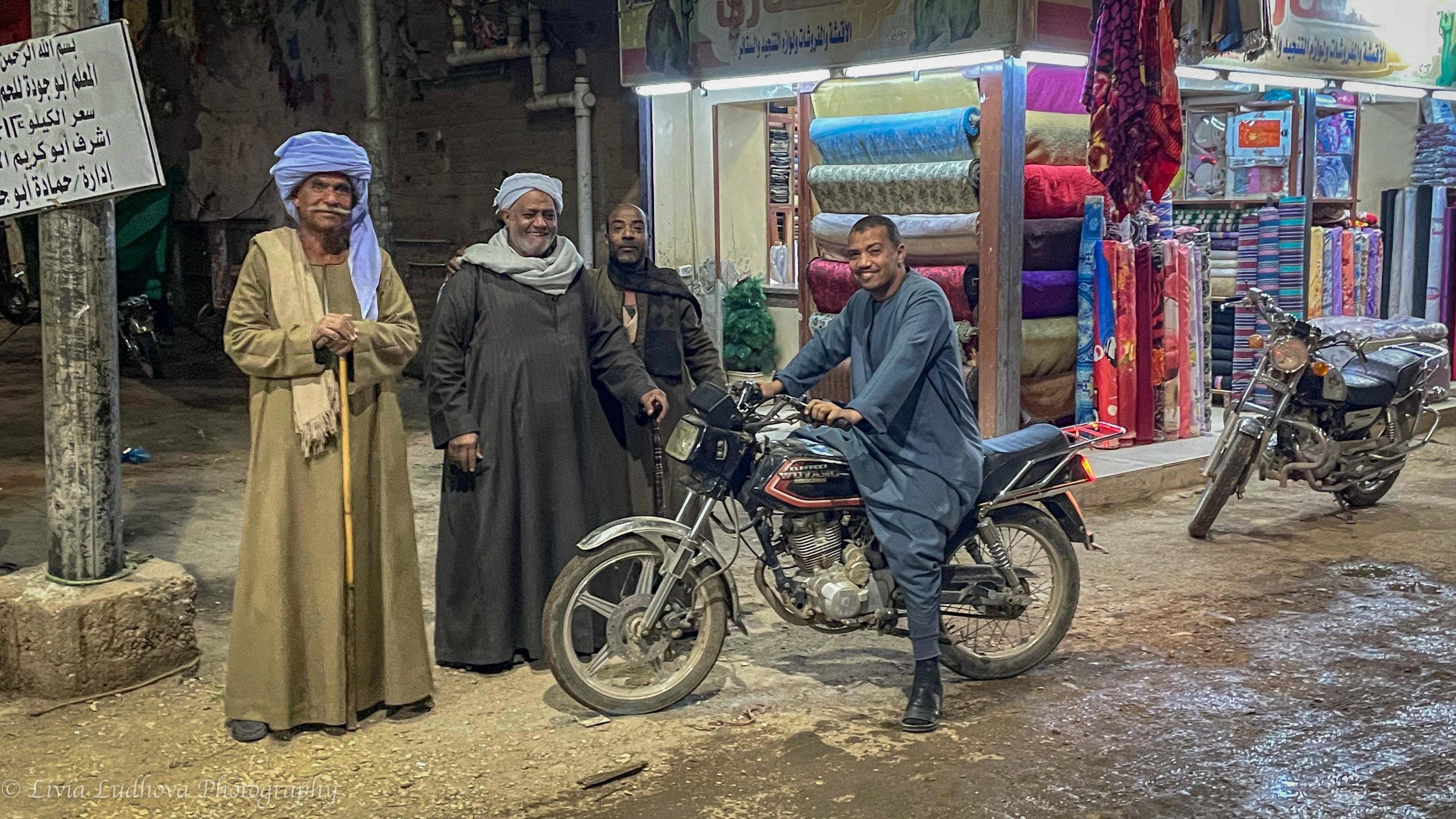
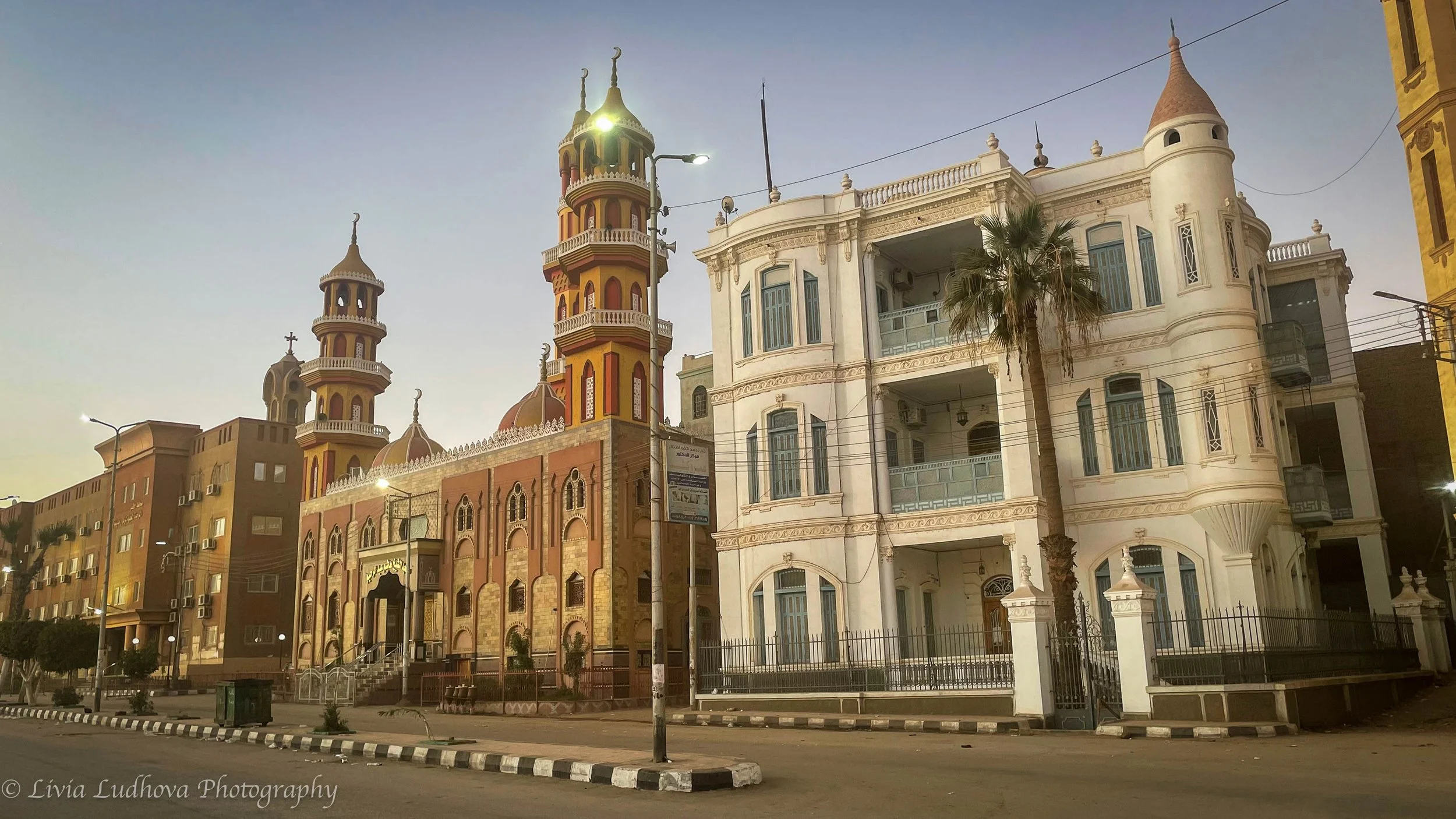
Men gathered with motorbike at night, Esna — informal social space after dark.
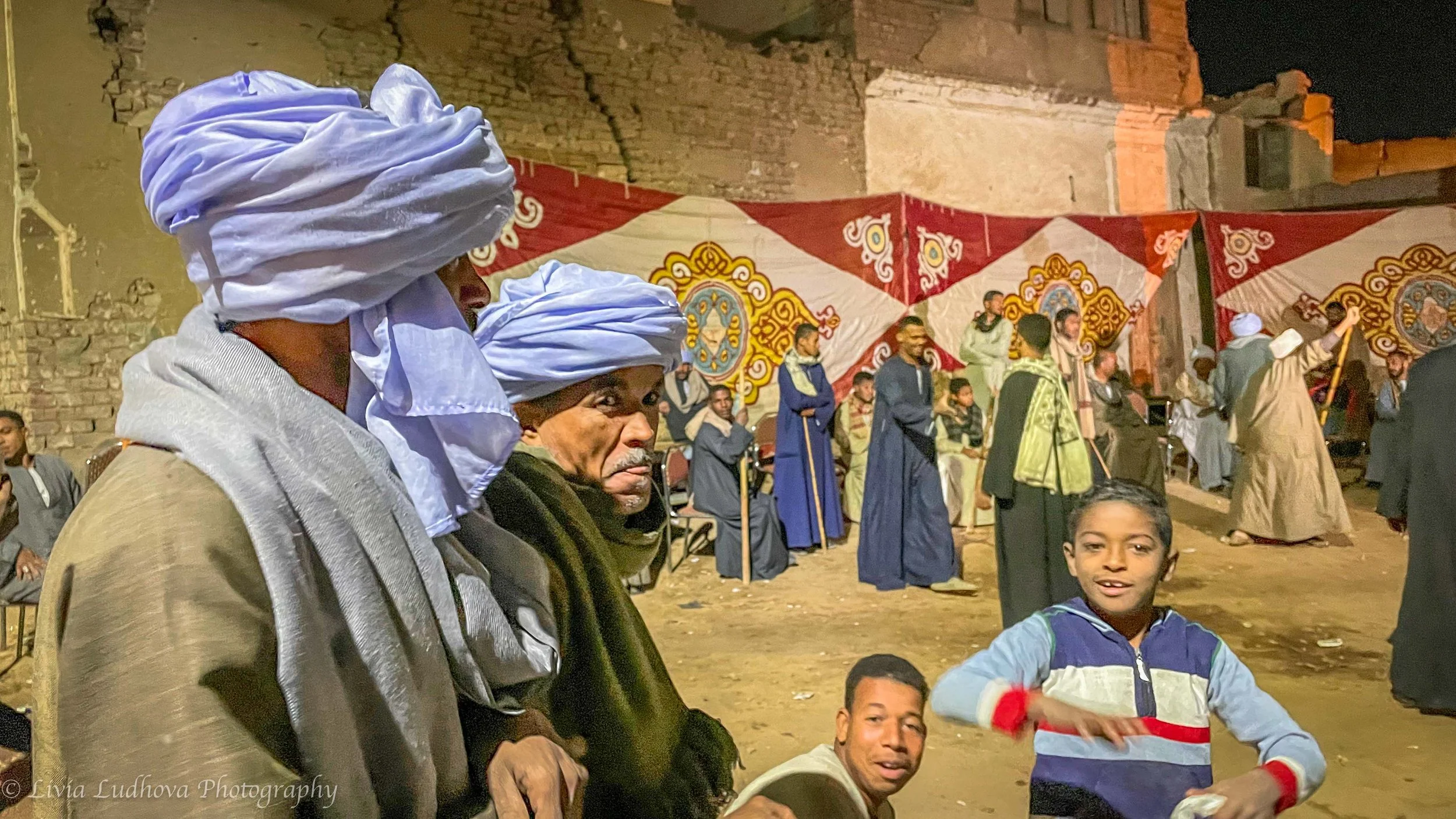
vening gathering with music and dance, Esna.
Day 5: Esna Temple and Luxor East Bank I
Dec 30 : Temple of Khnum in Esna - Luxor East Bank: Karnak Temple and Mumification museum
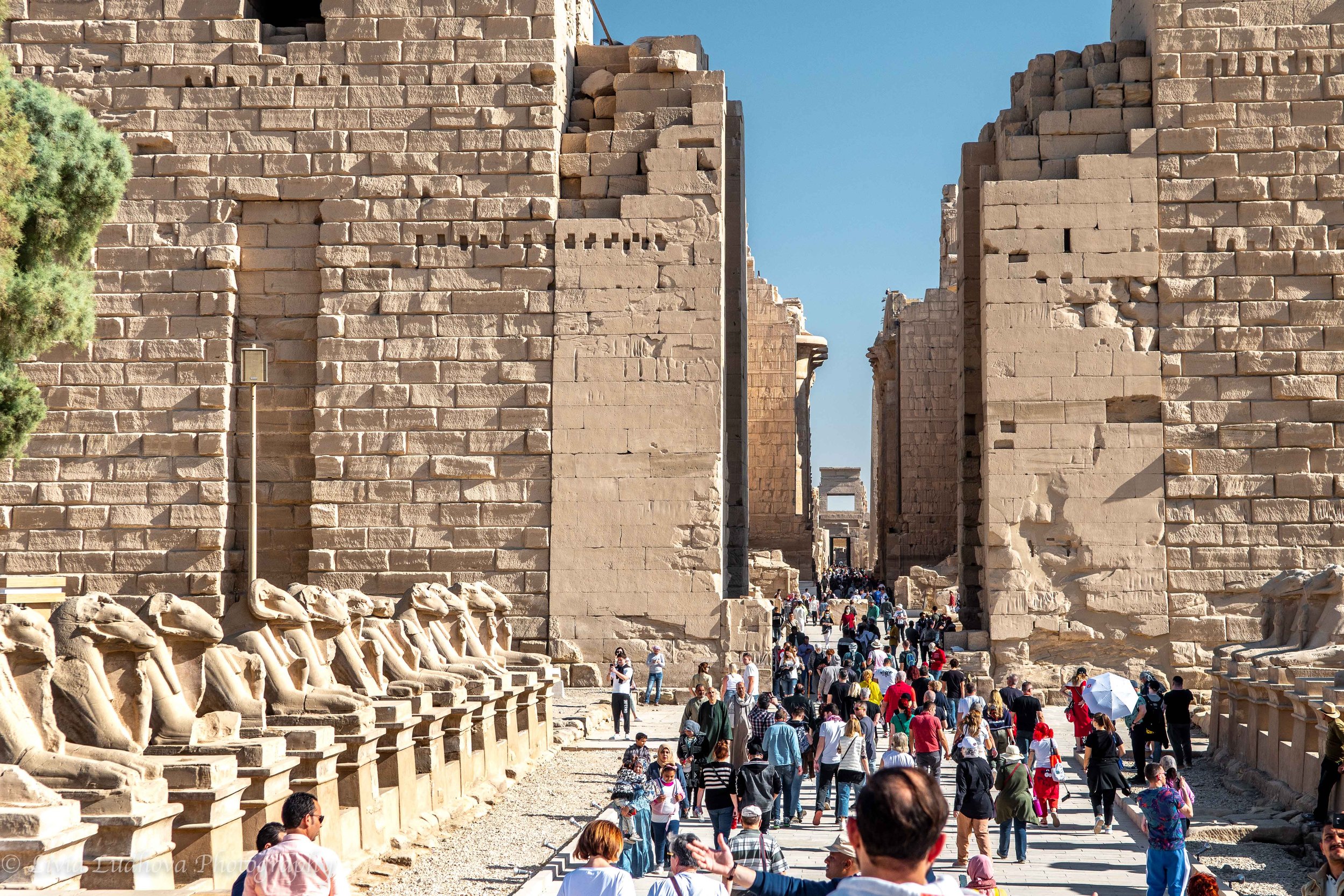
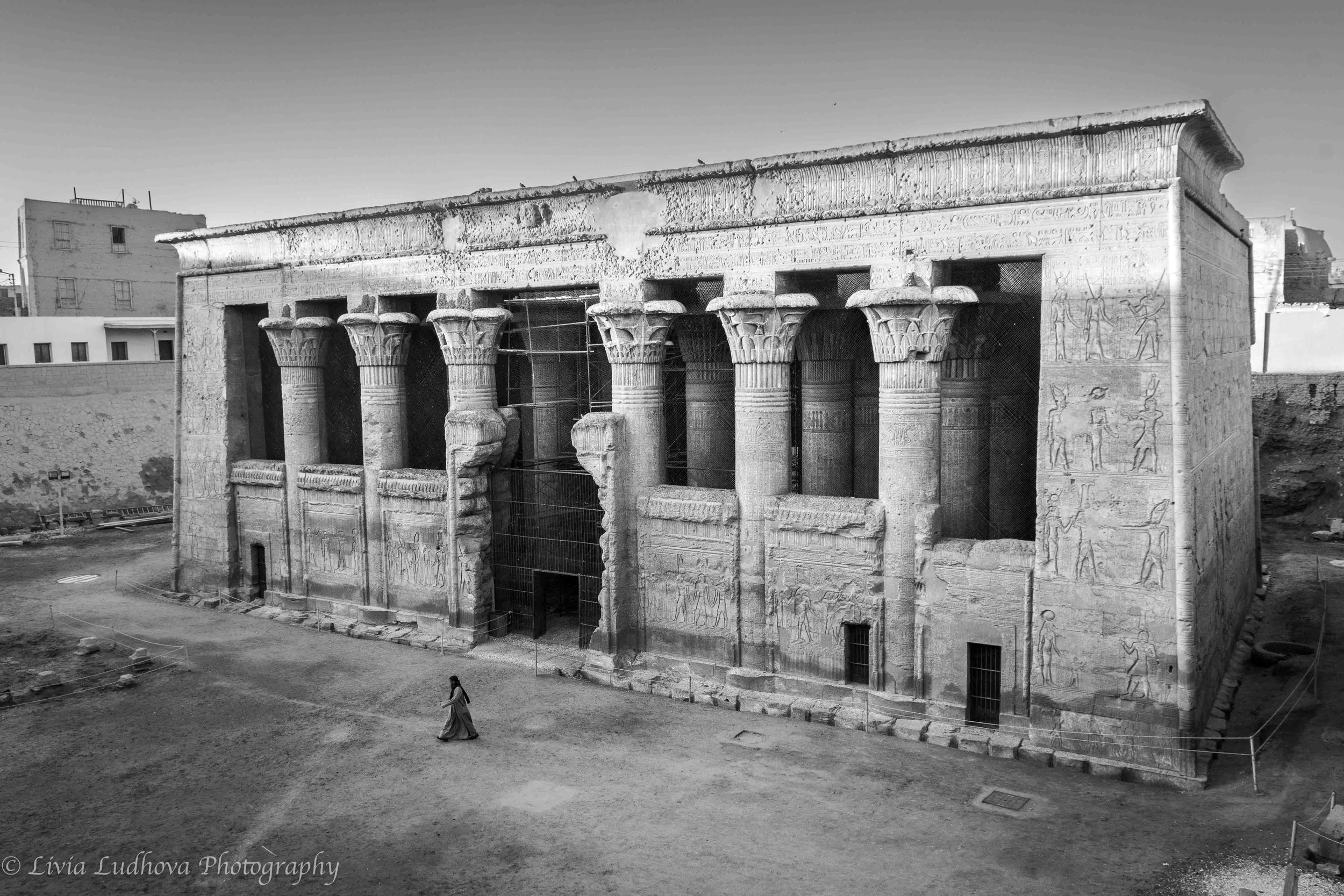
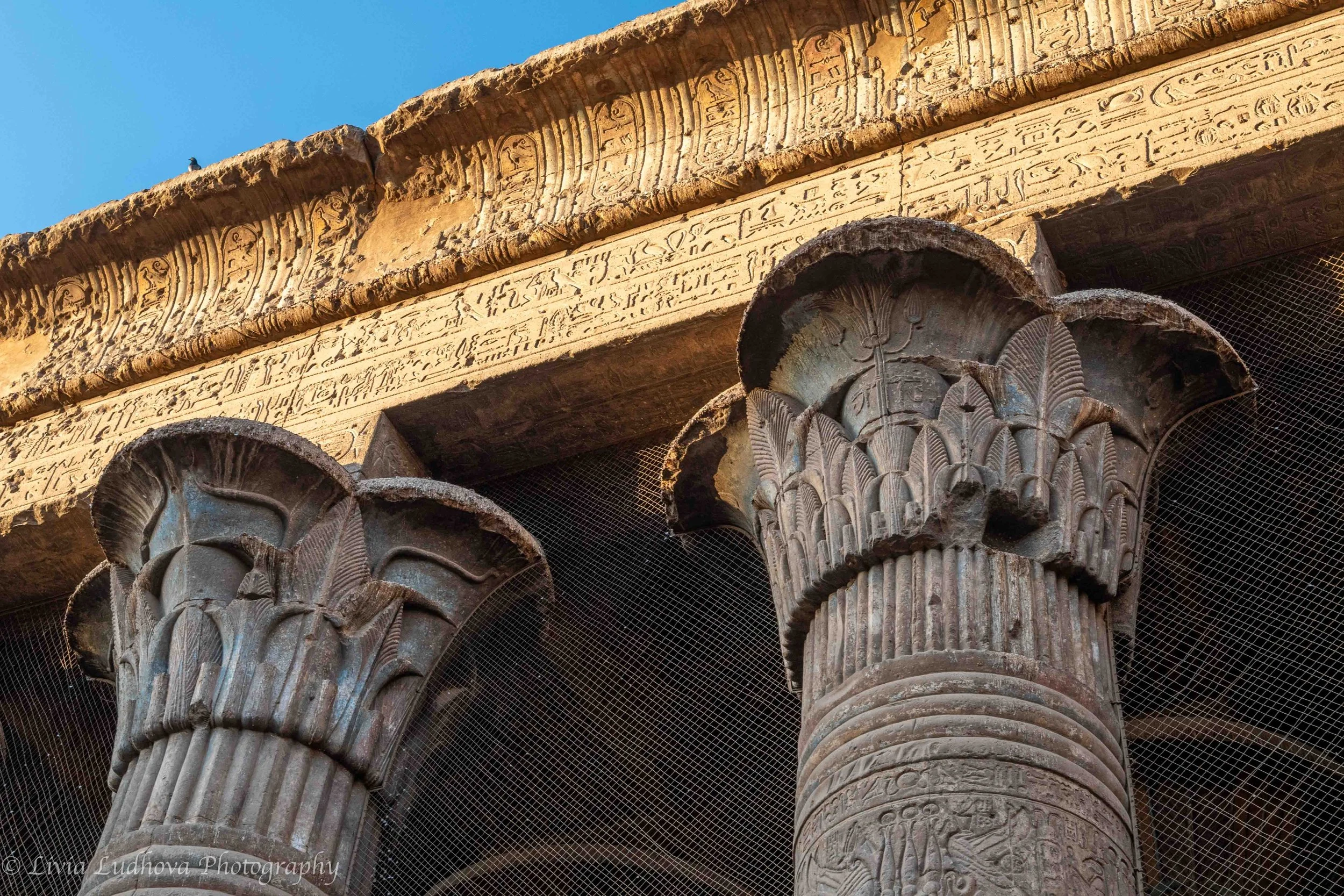
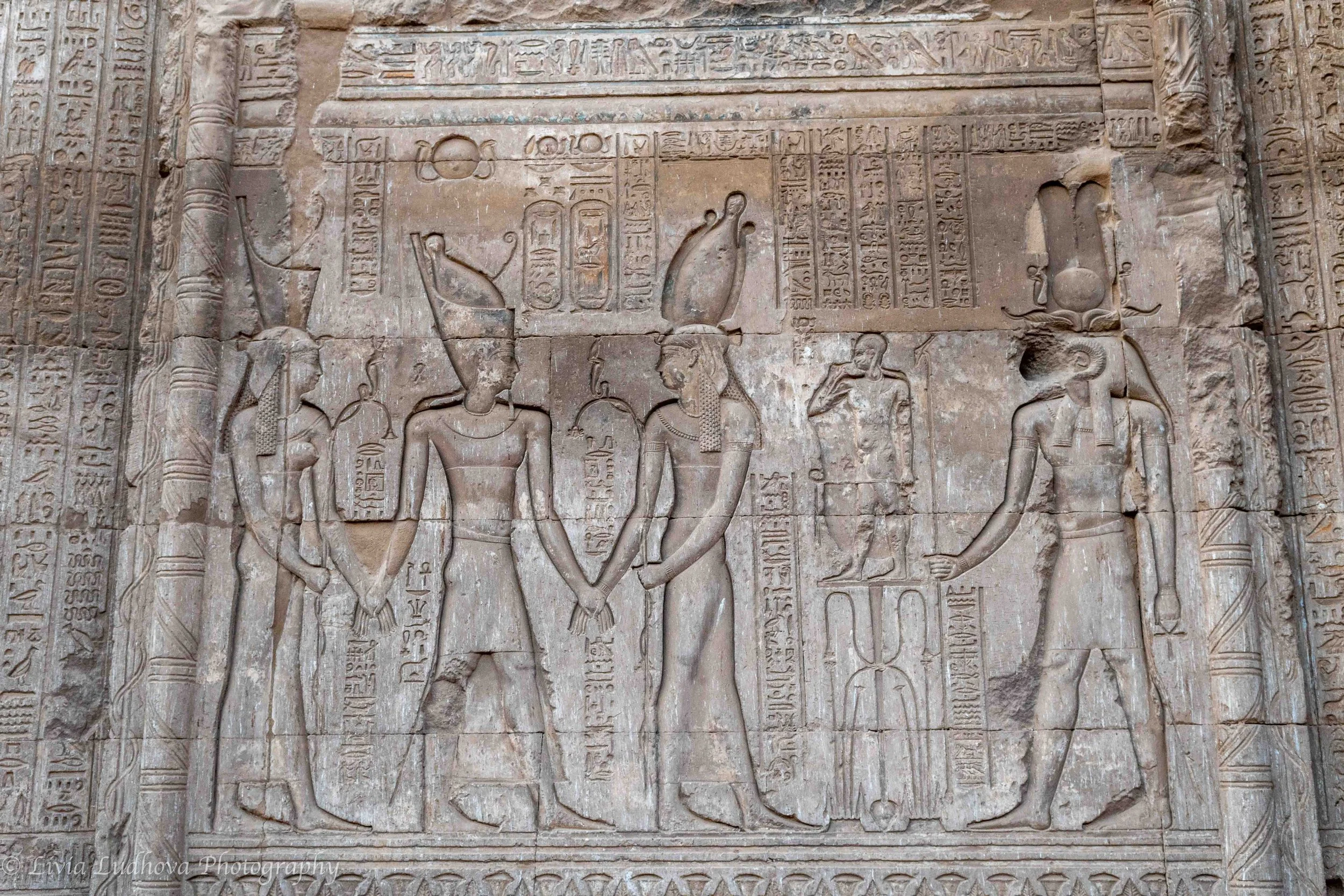
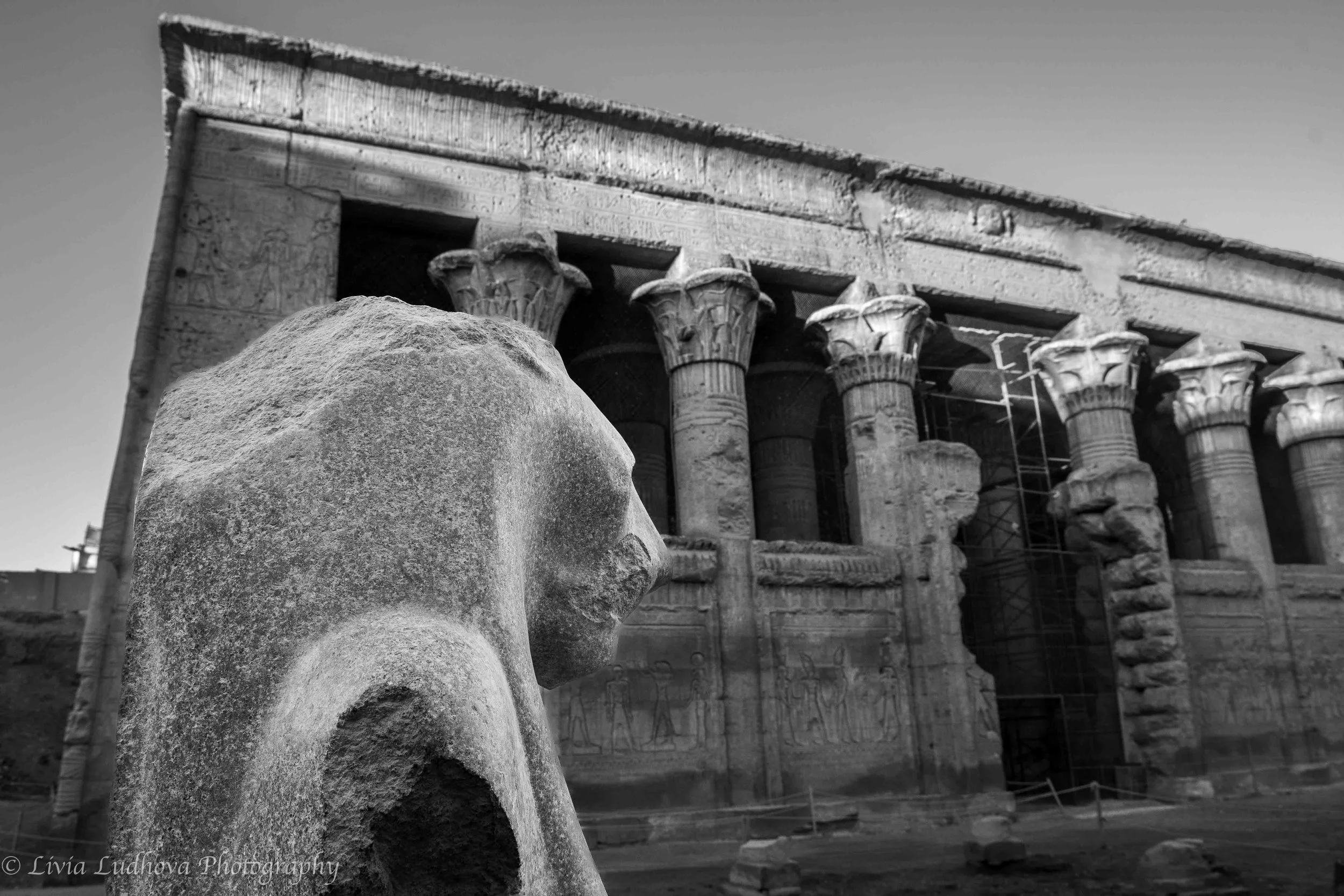
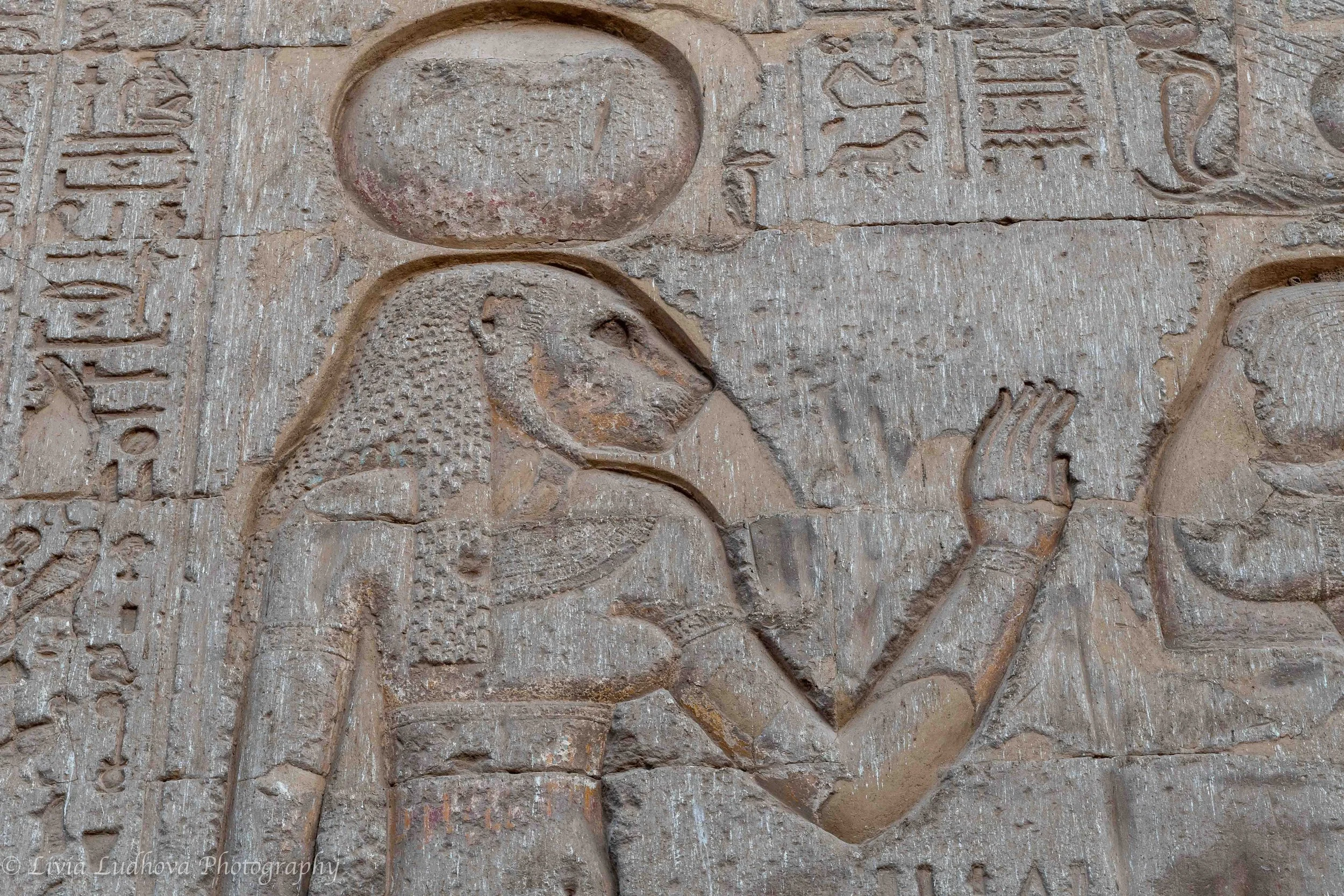
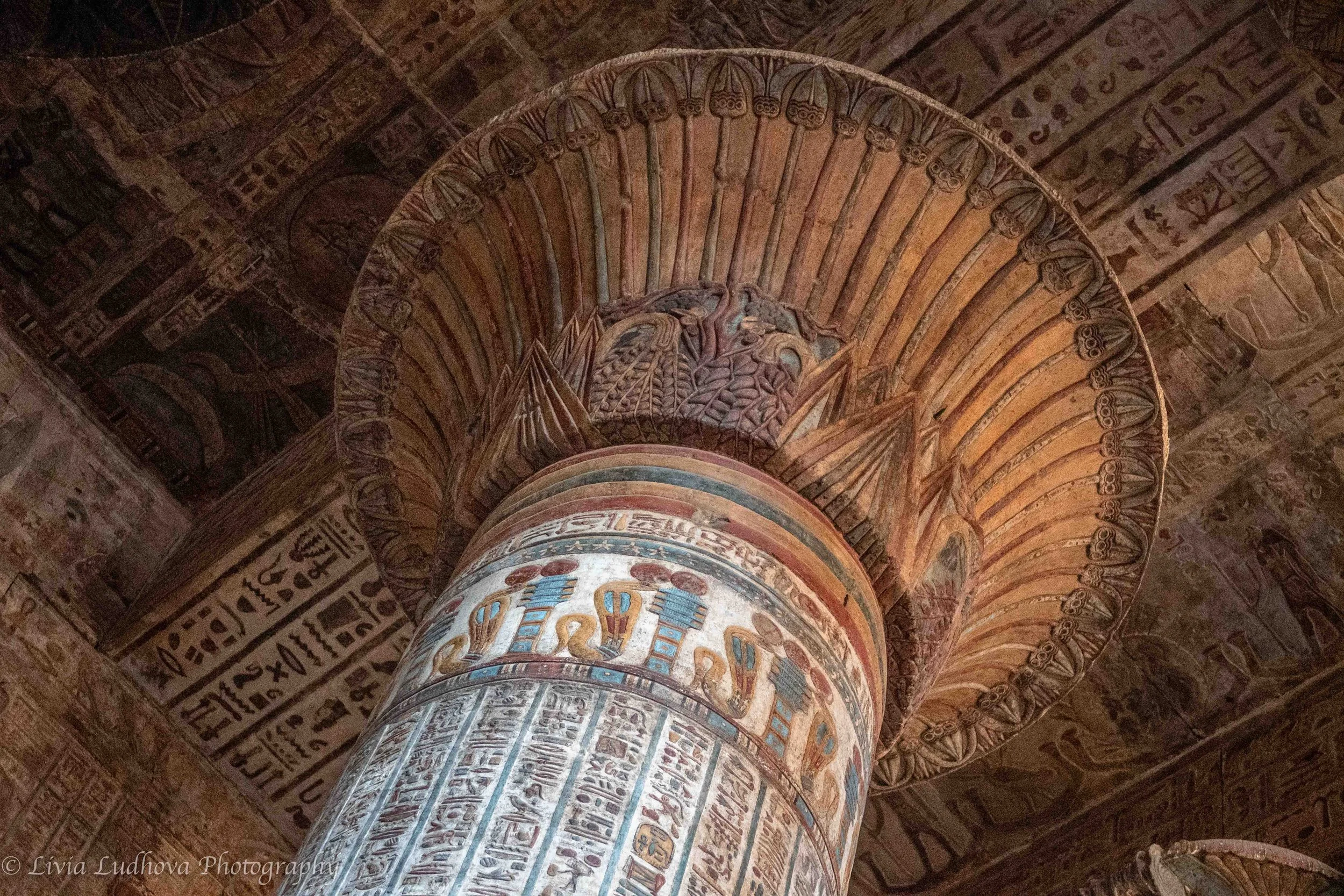
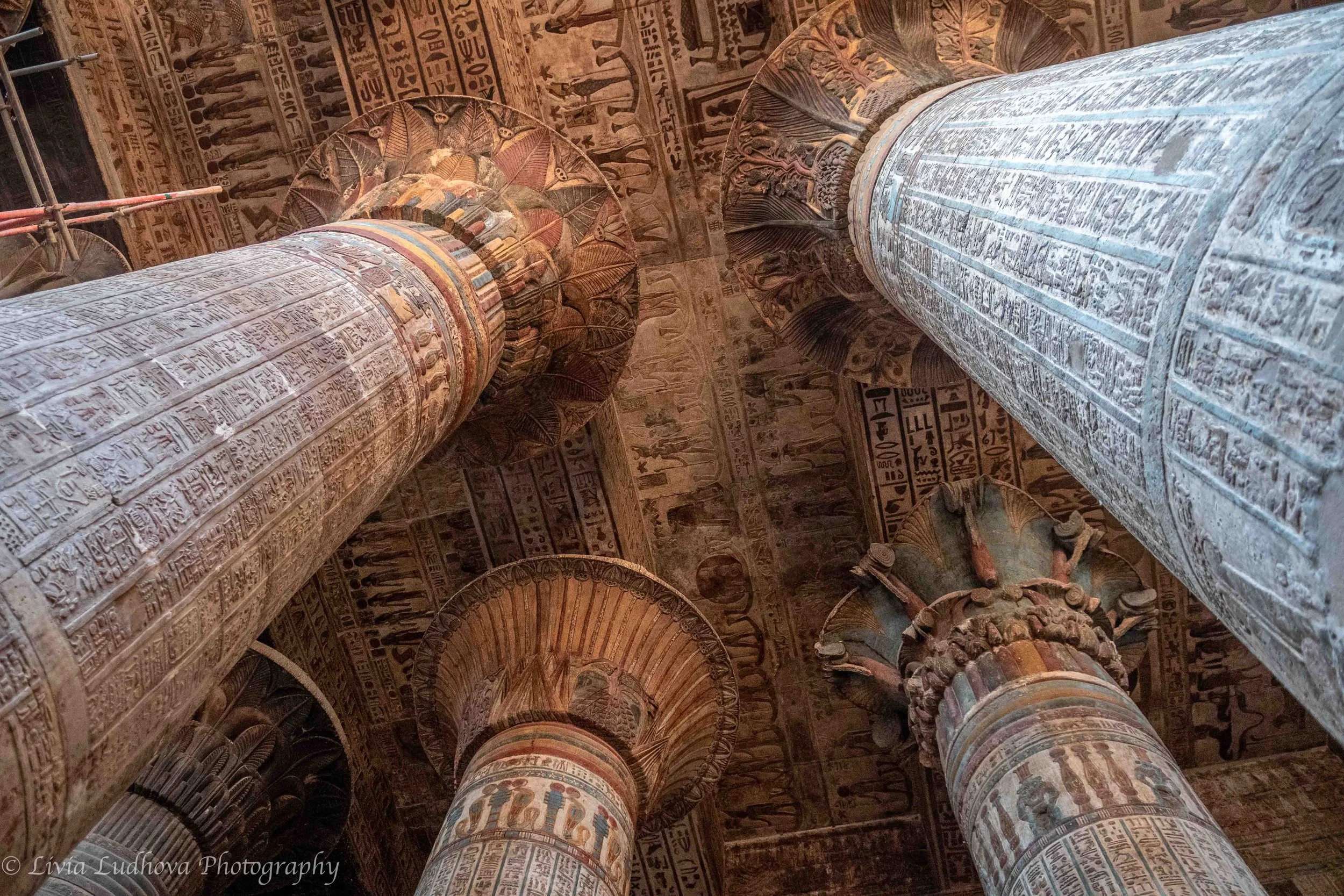
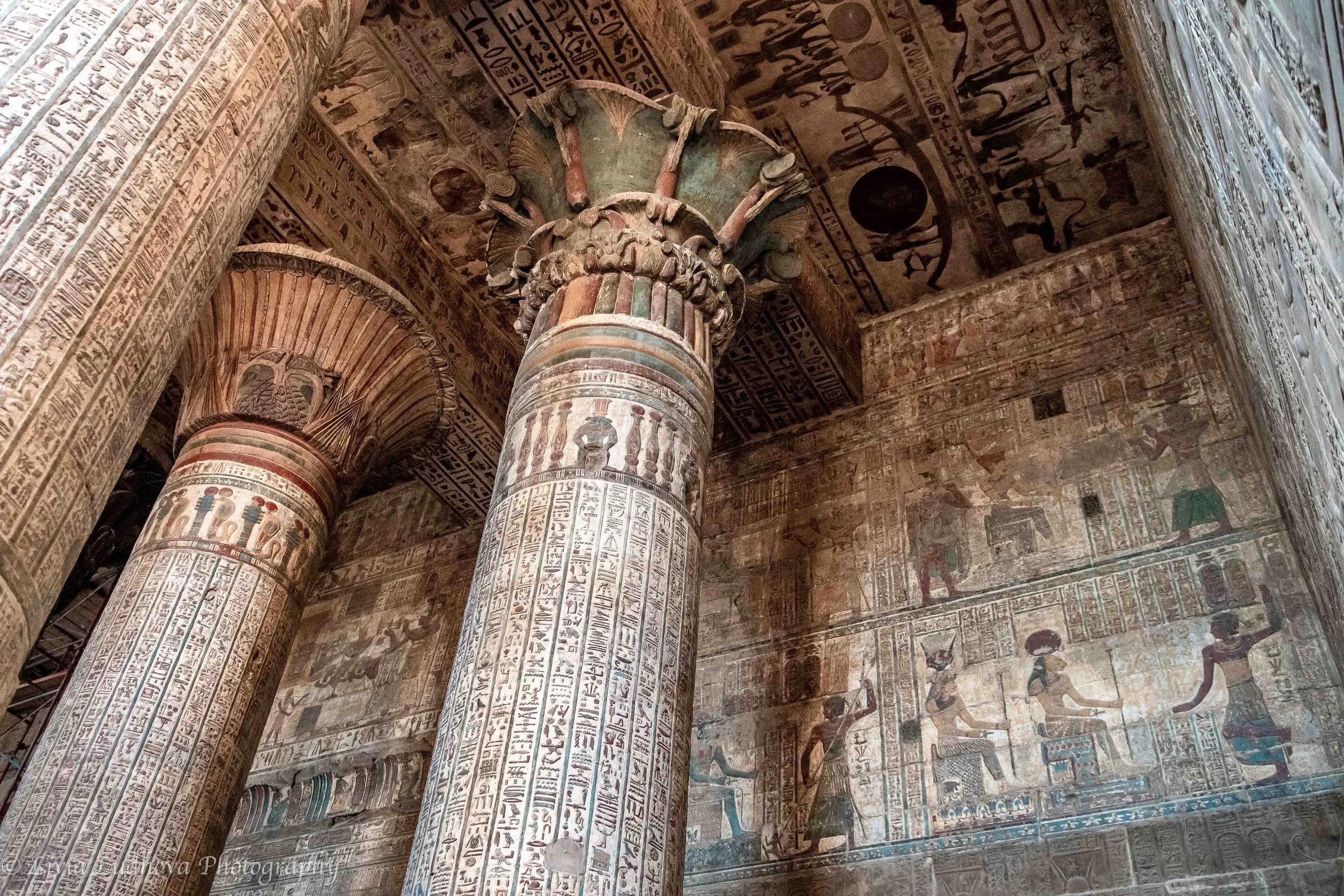
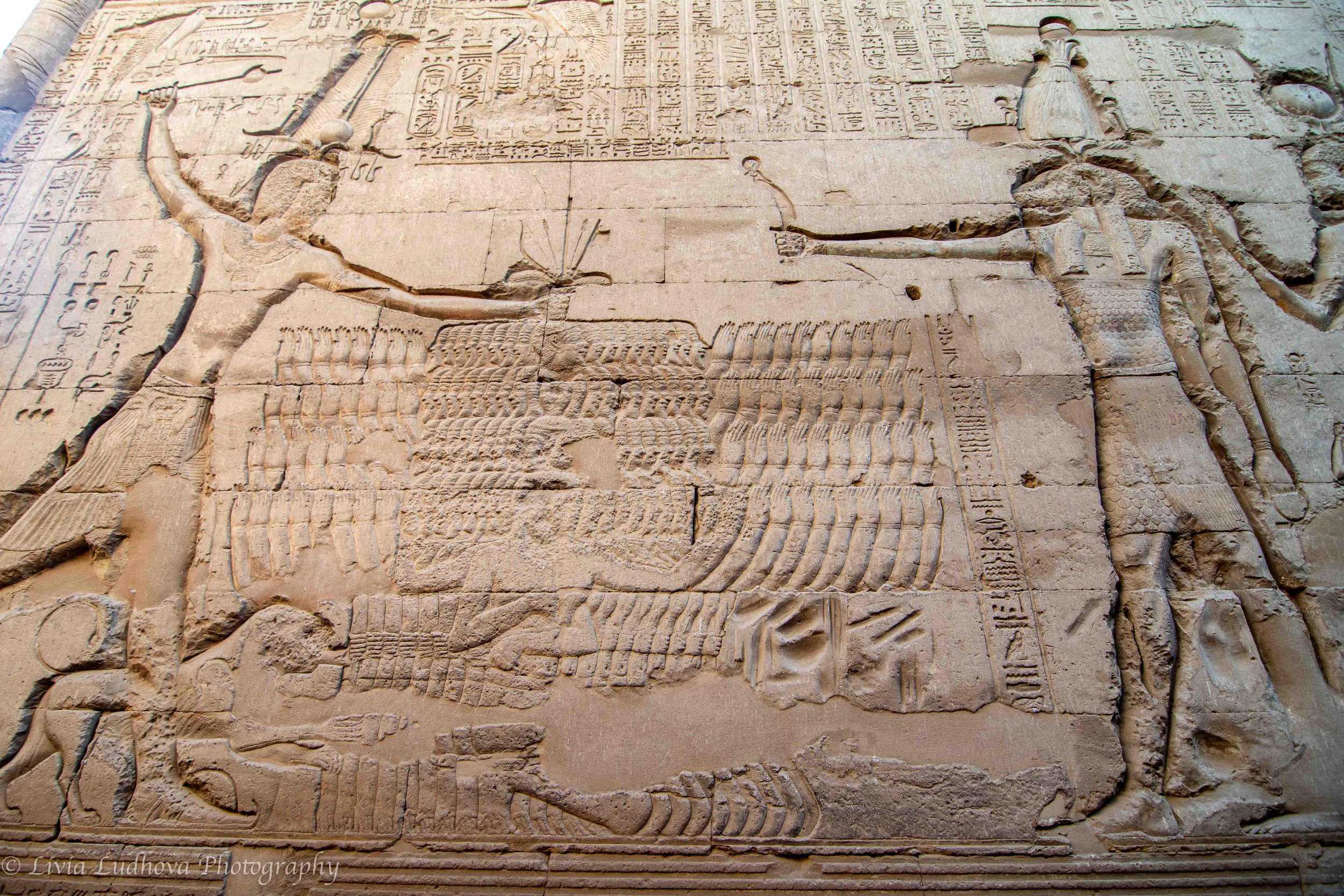
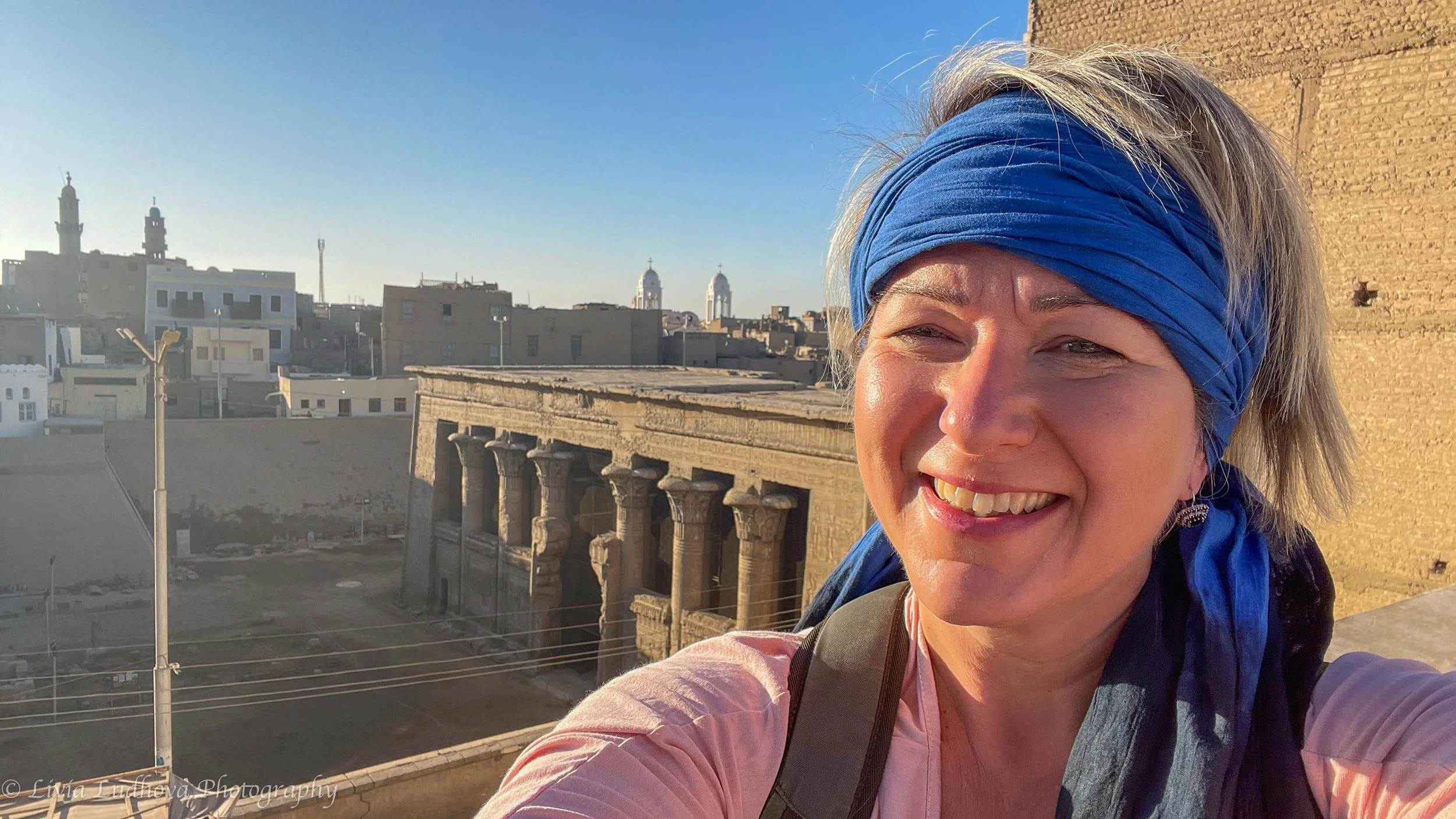
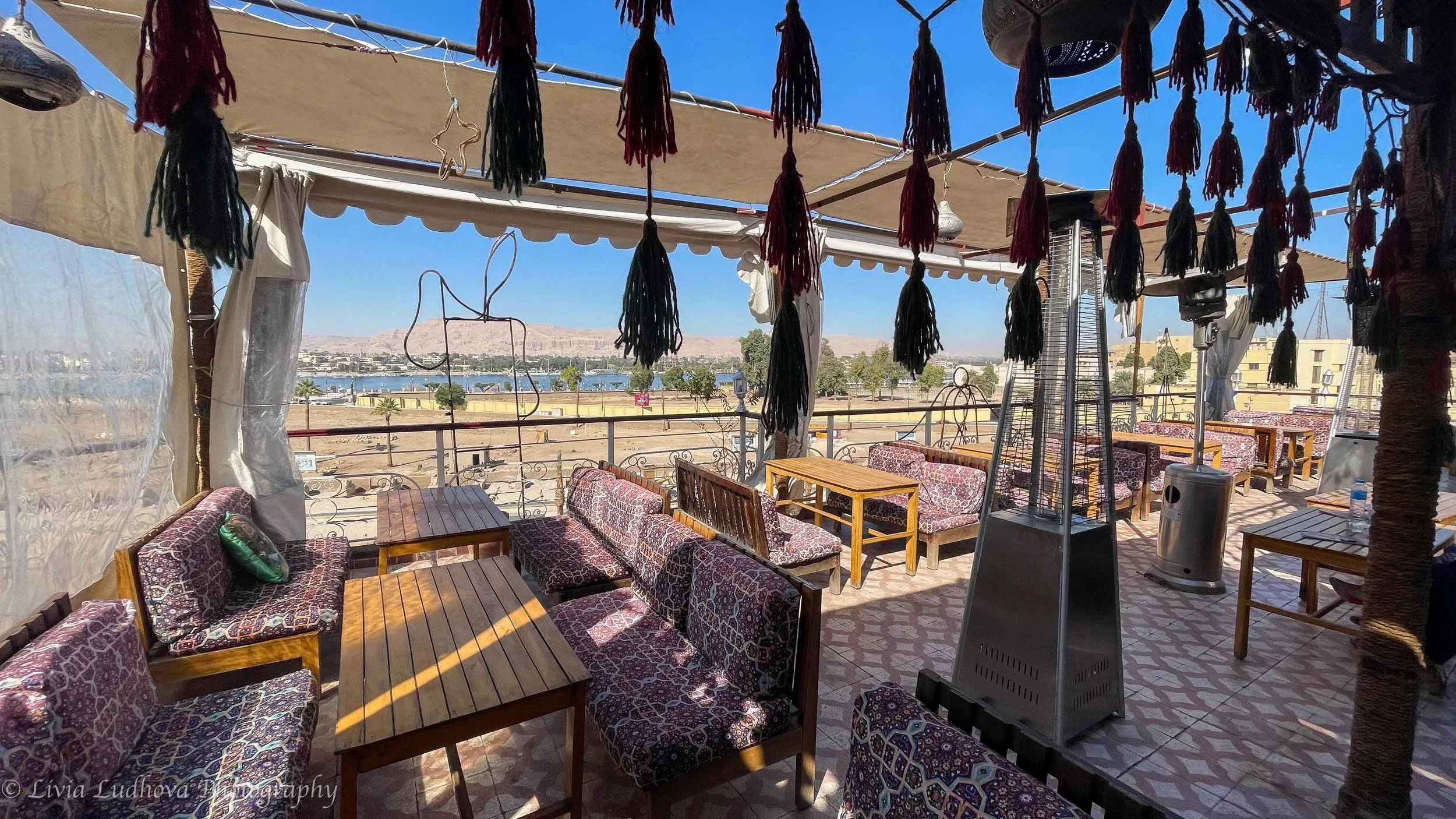
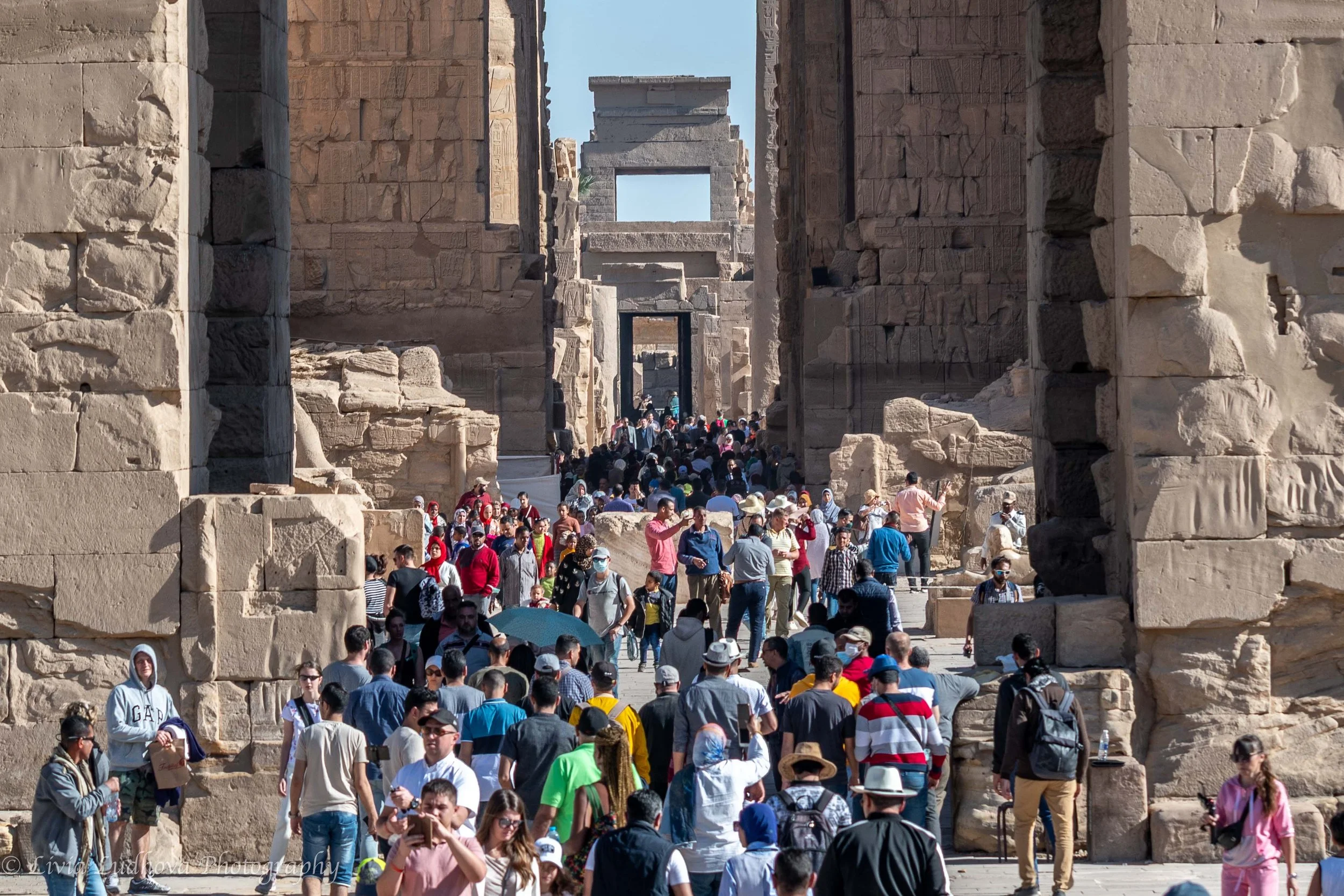
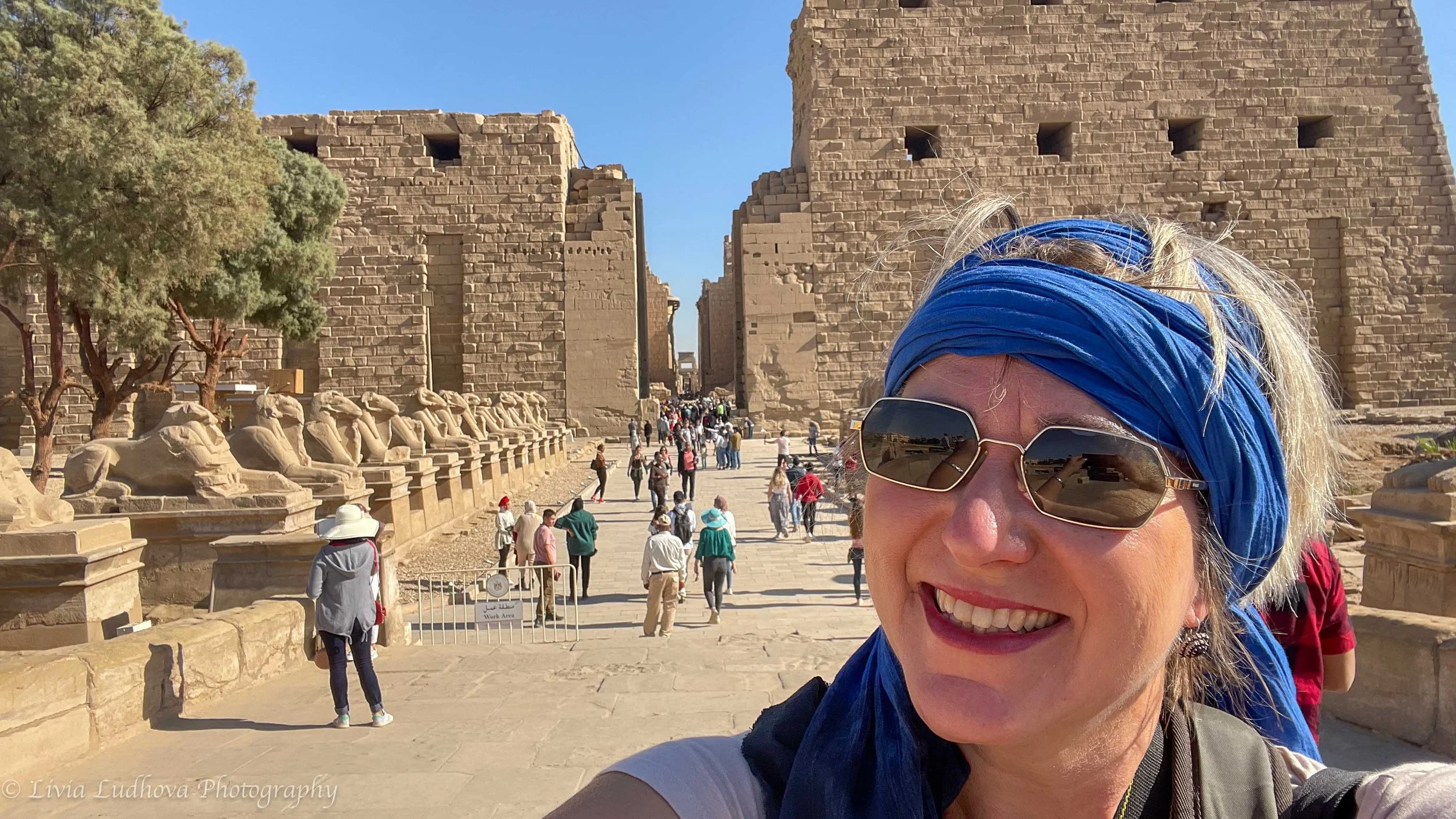
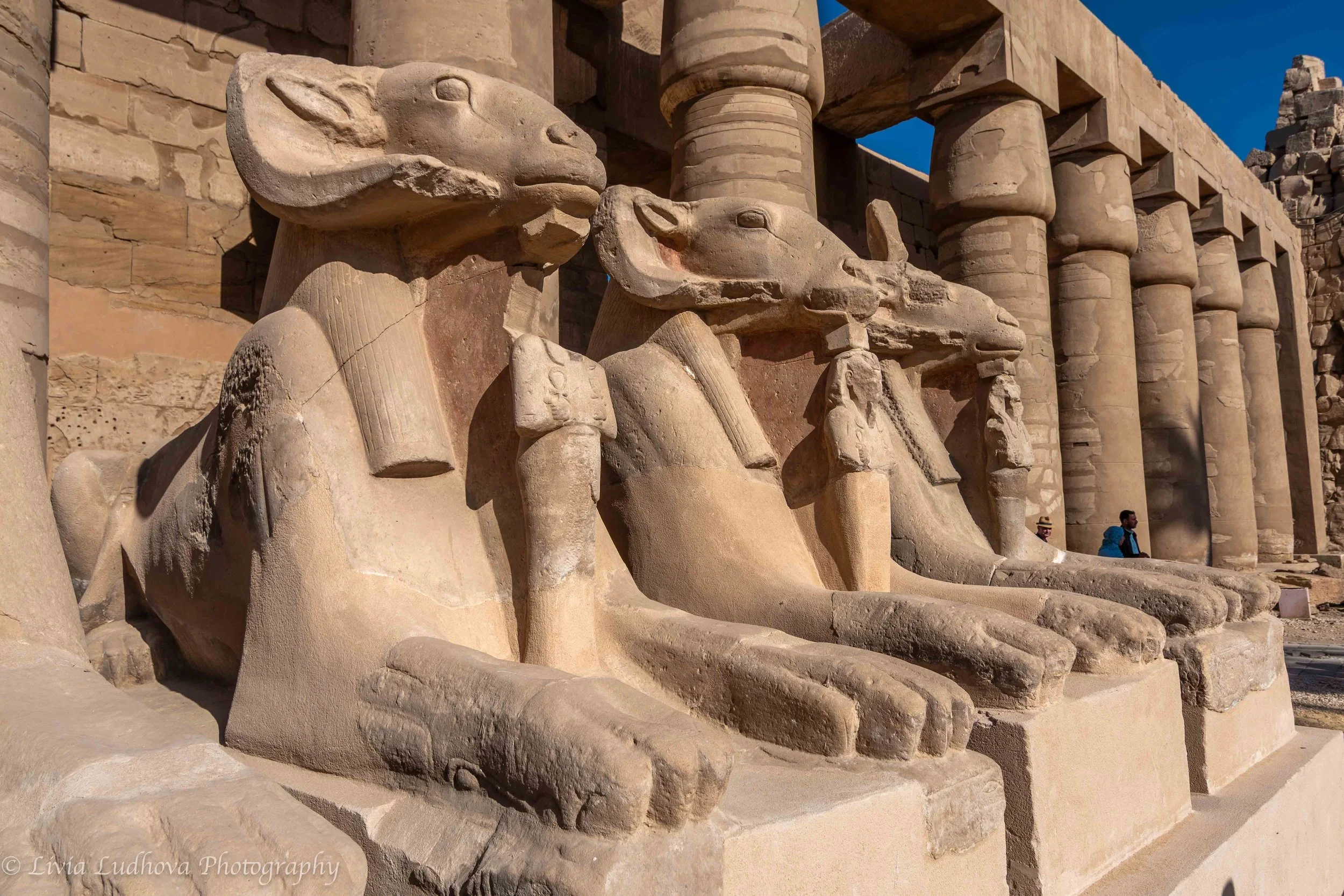
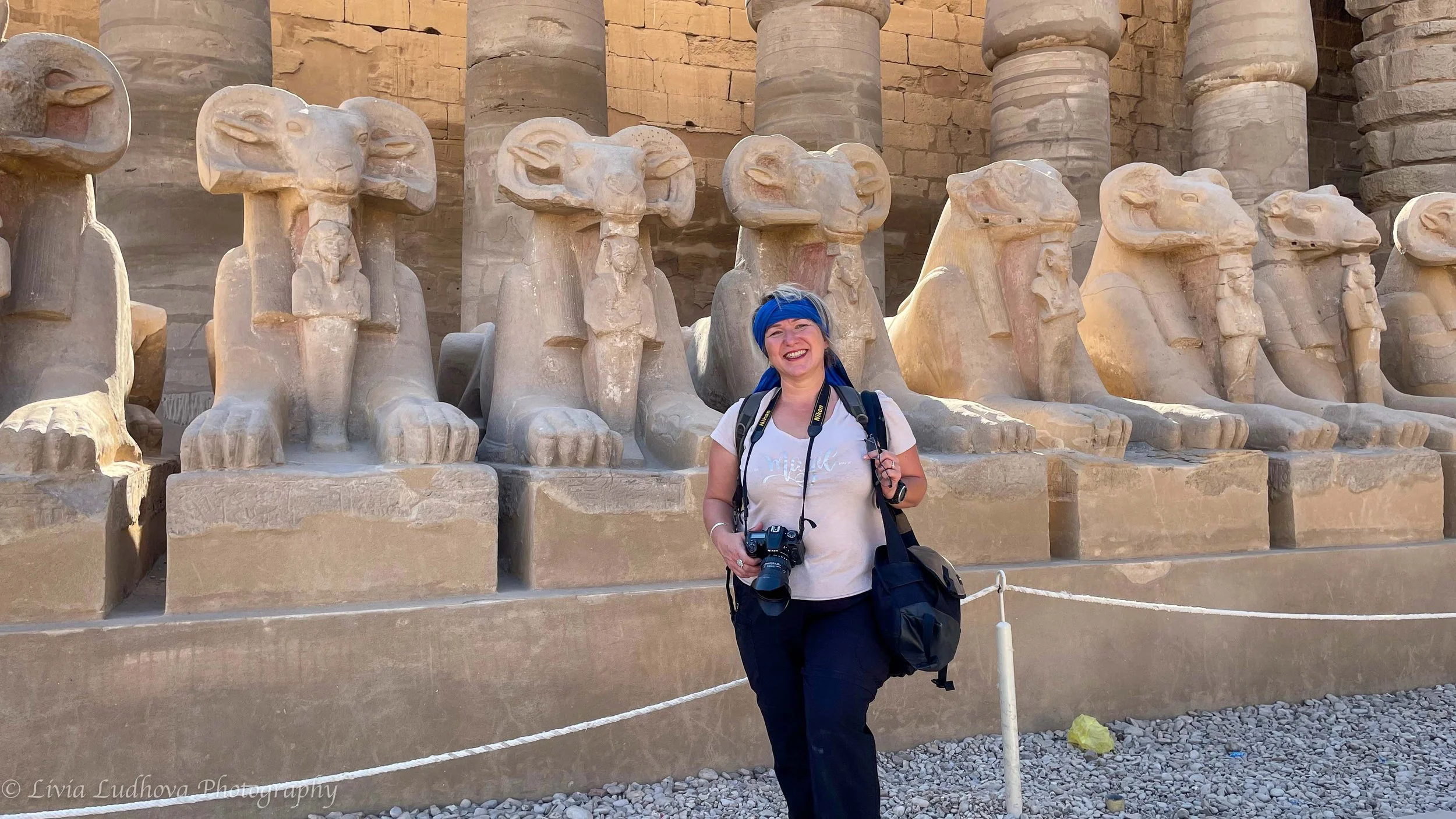
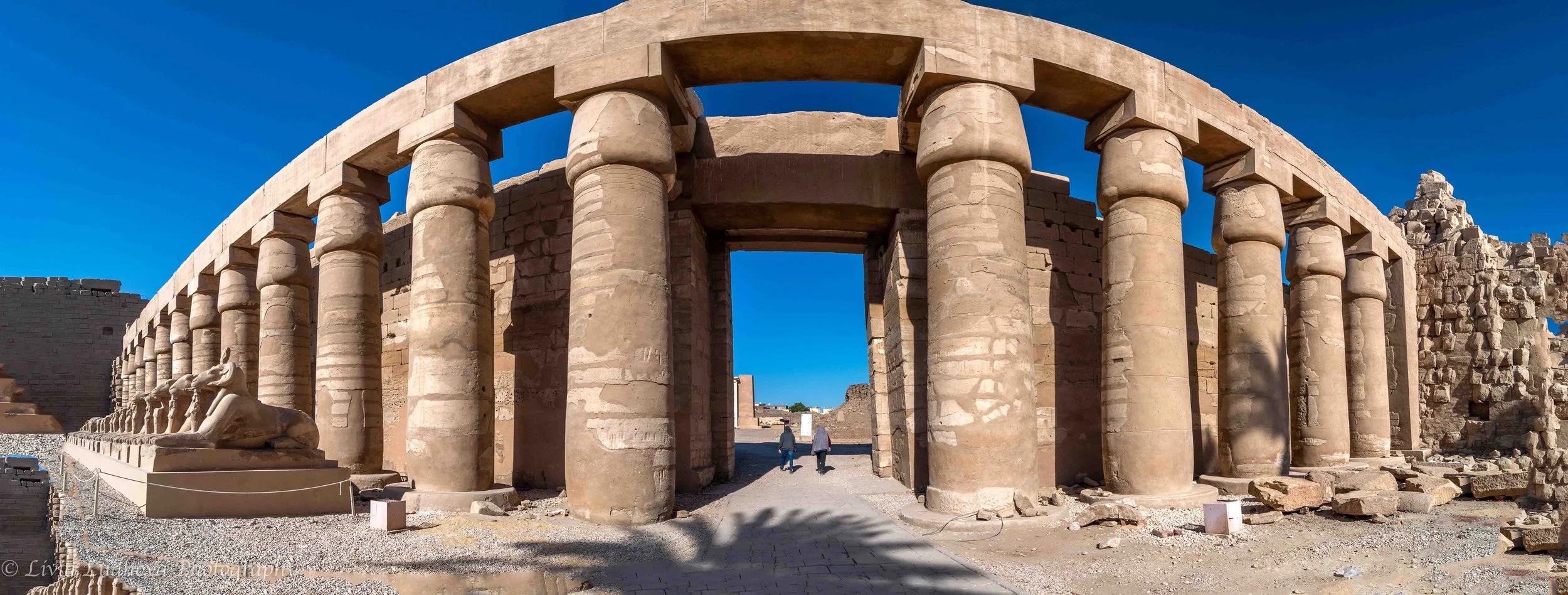
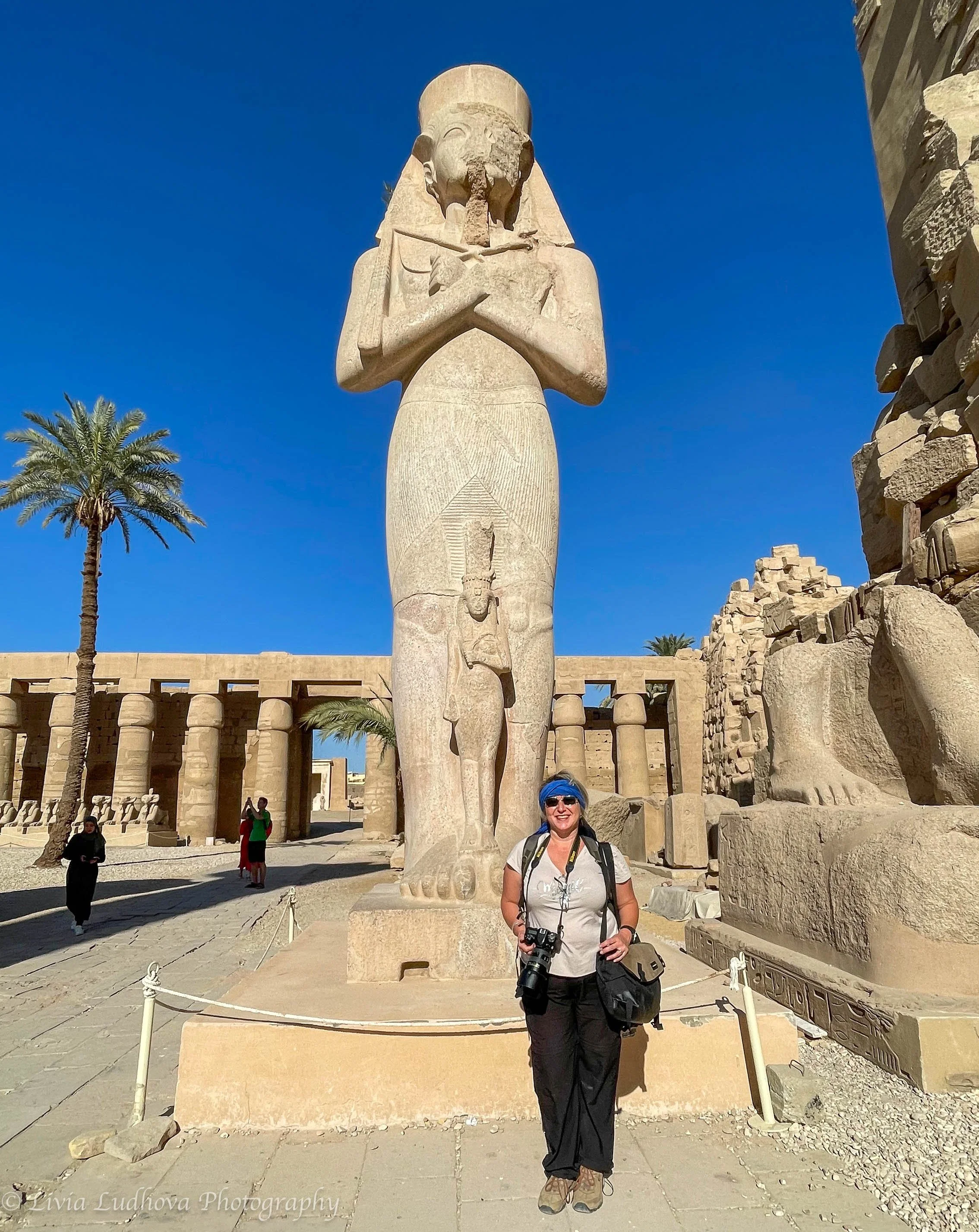
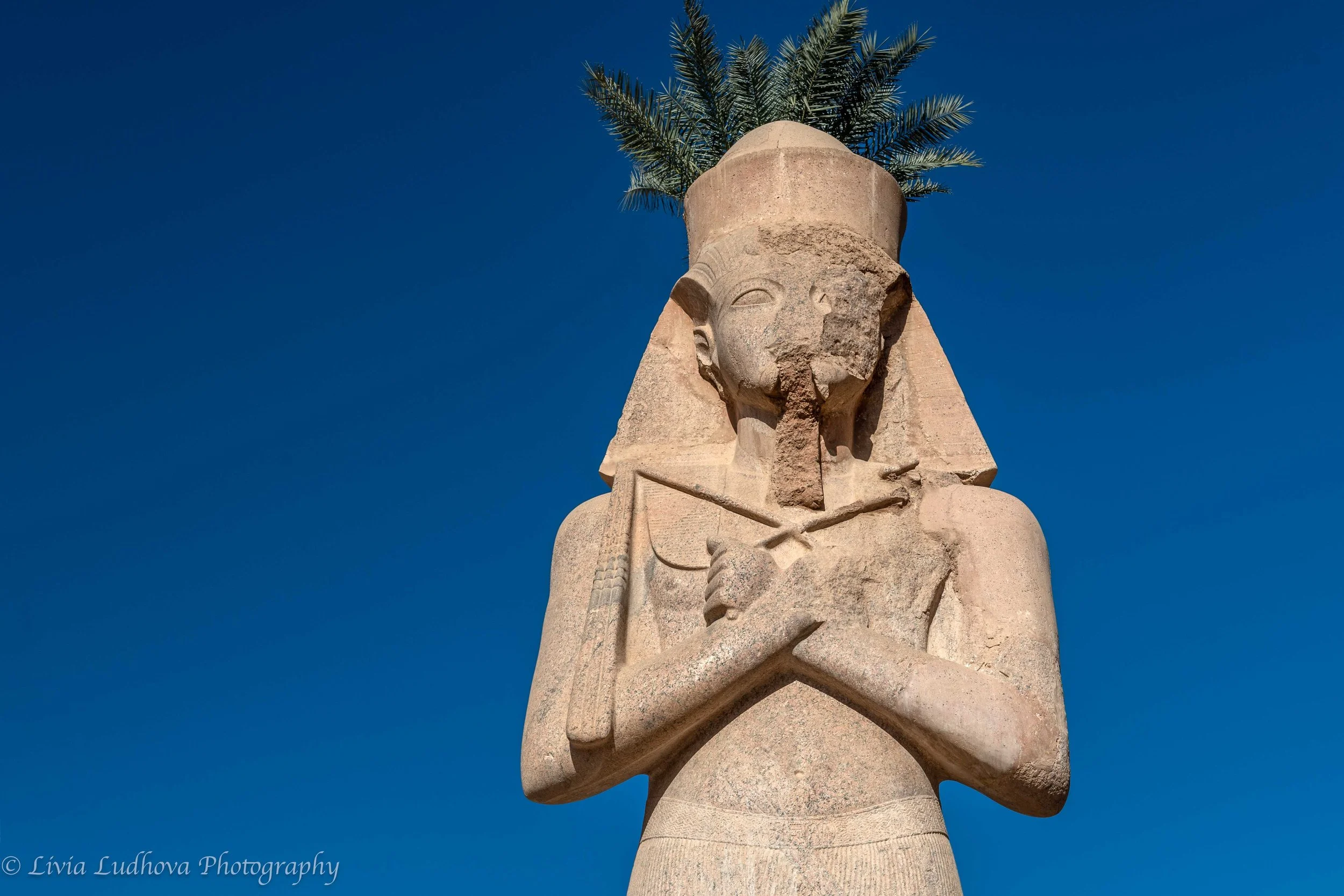
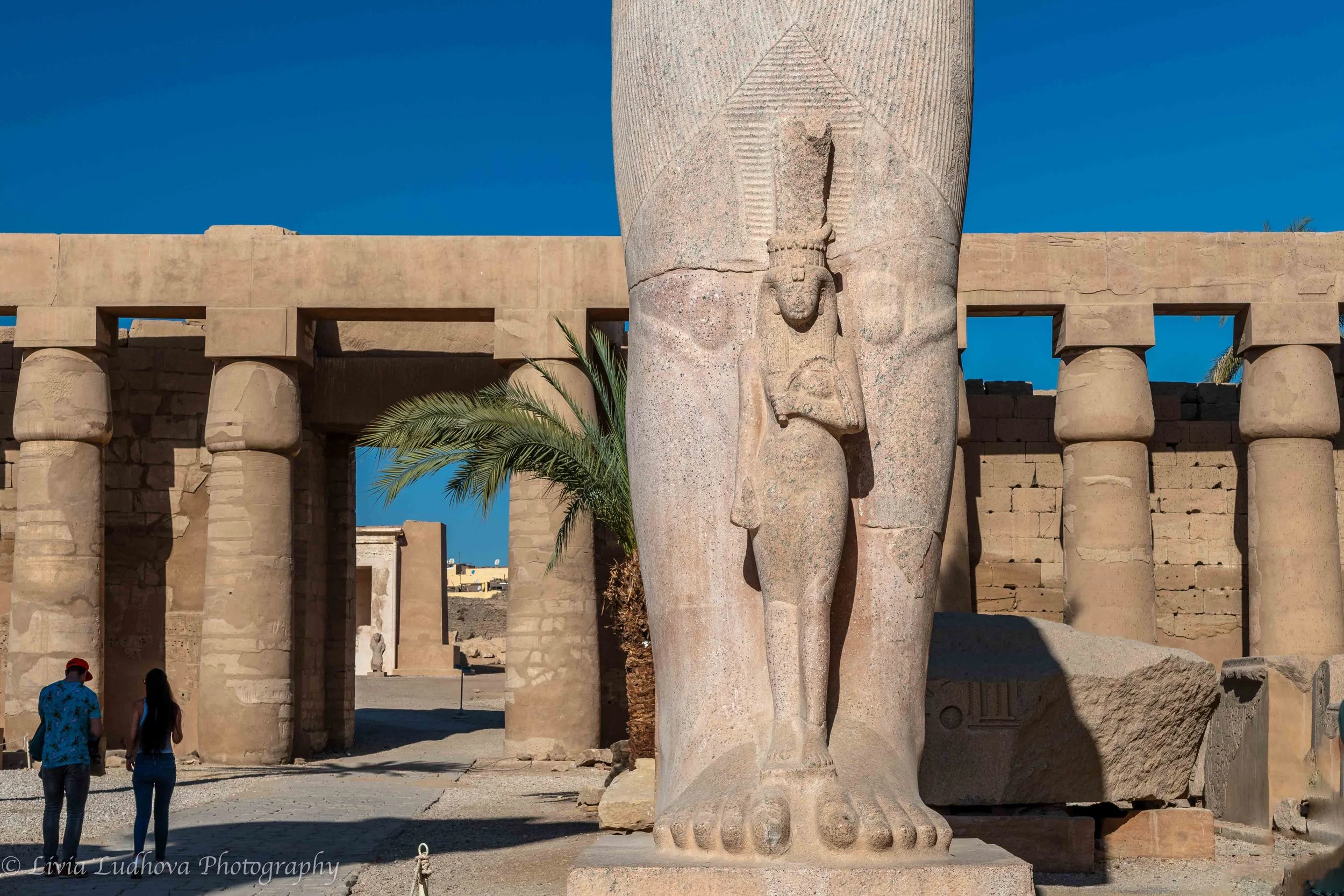
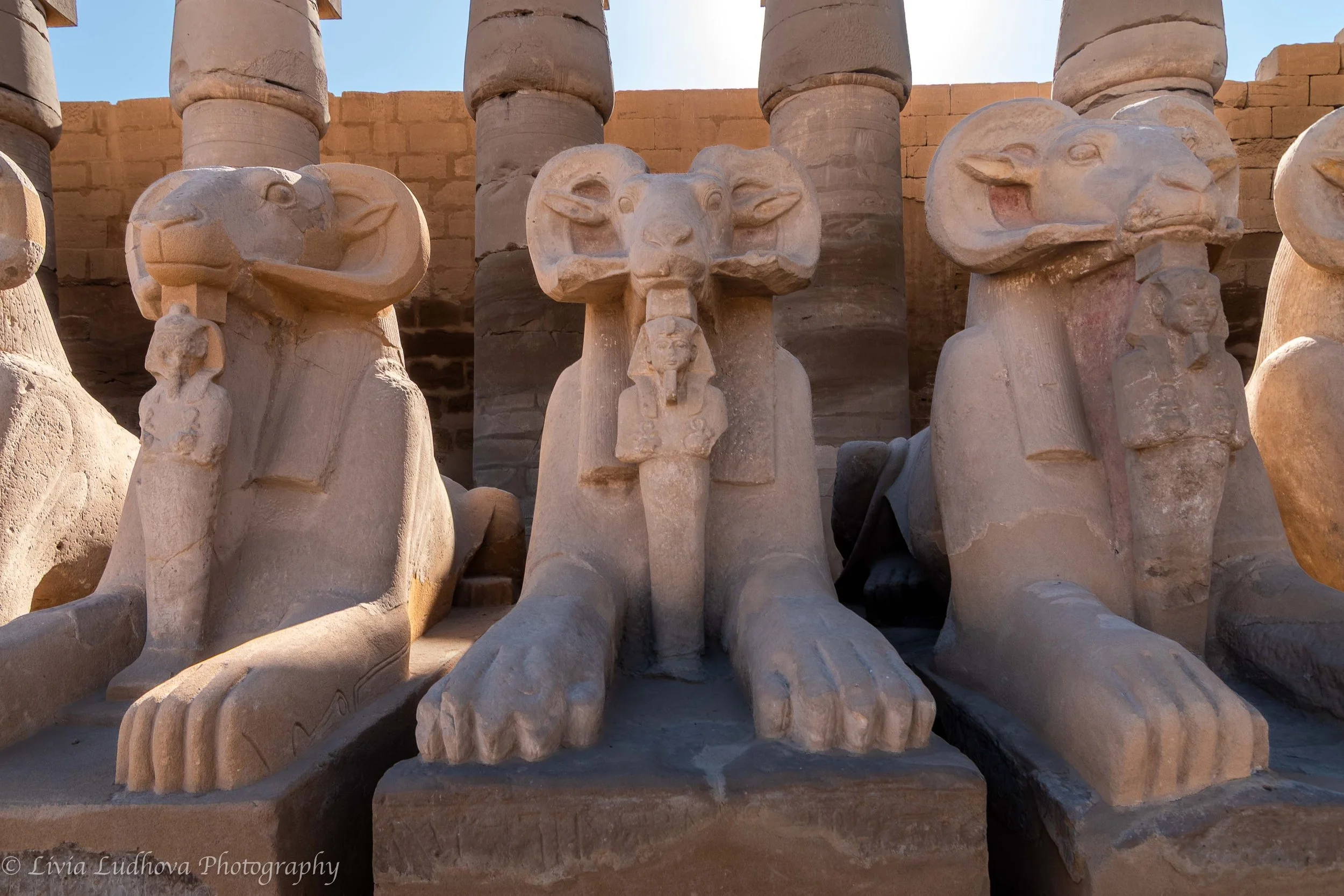
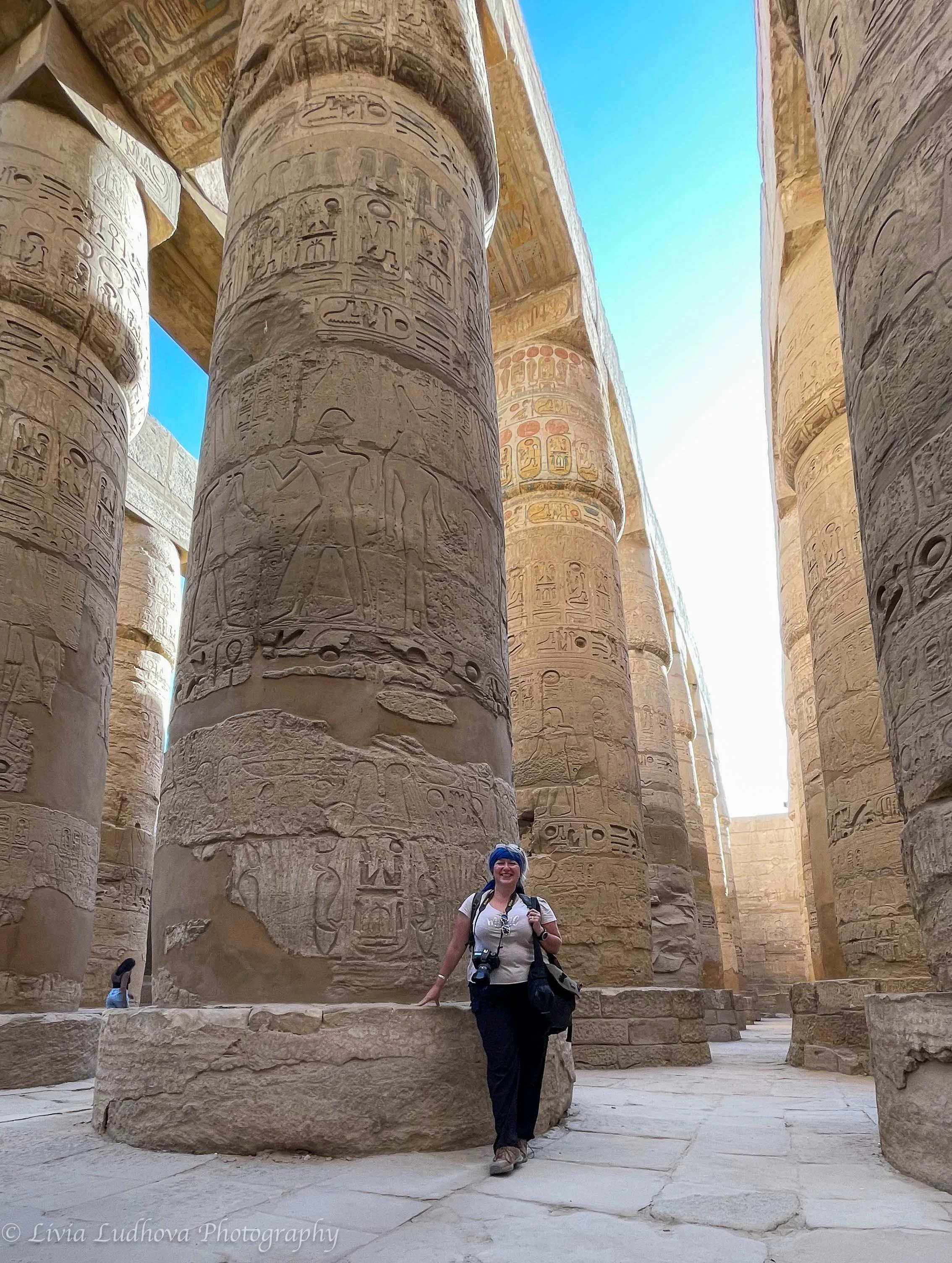
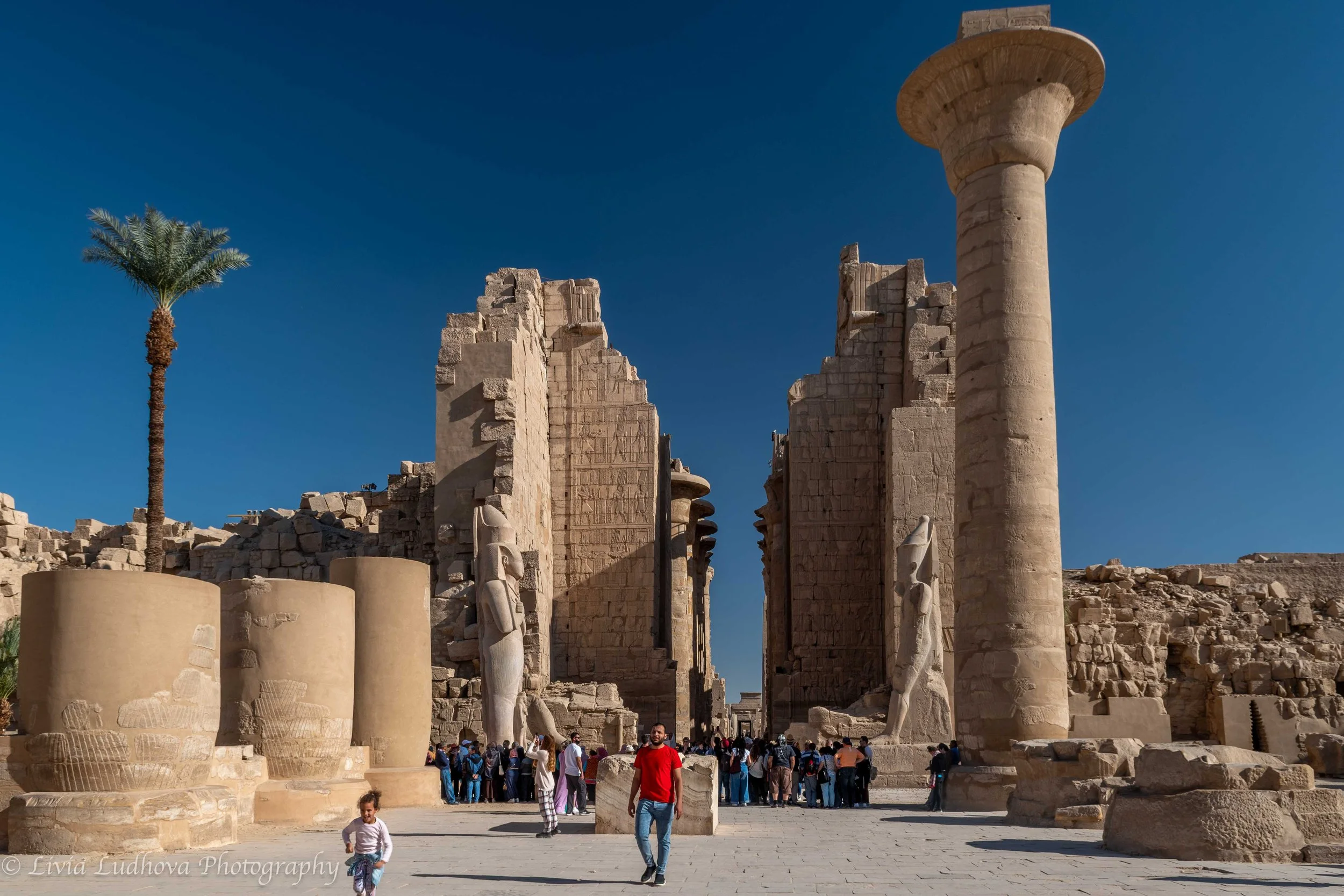
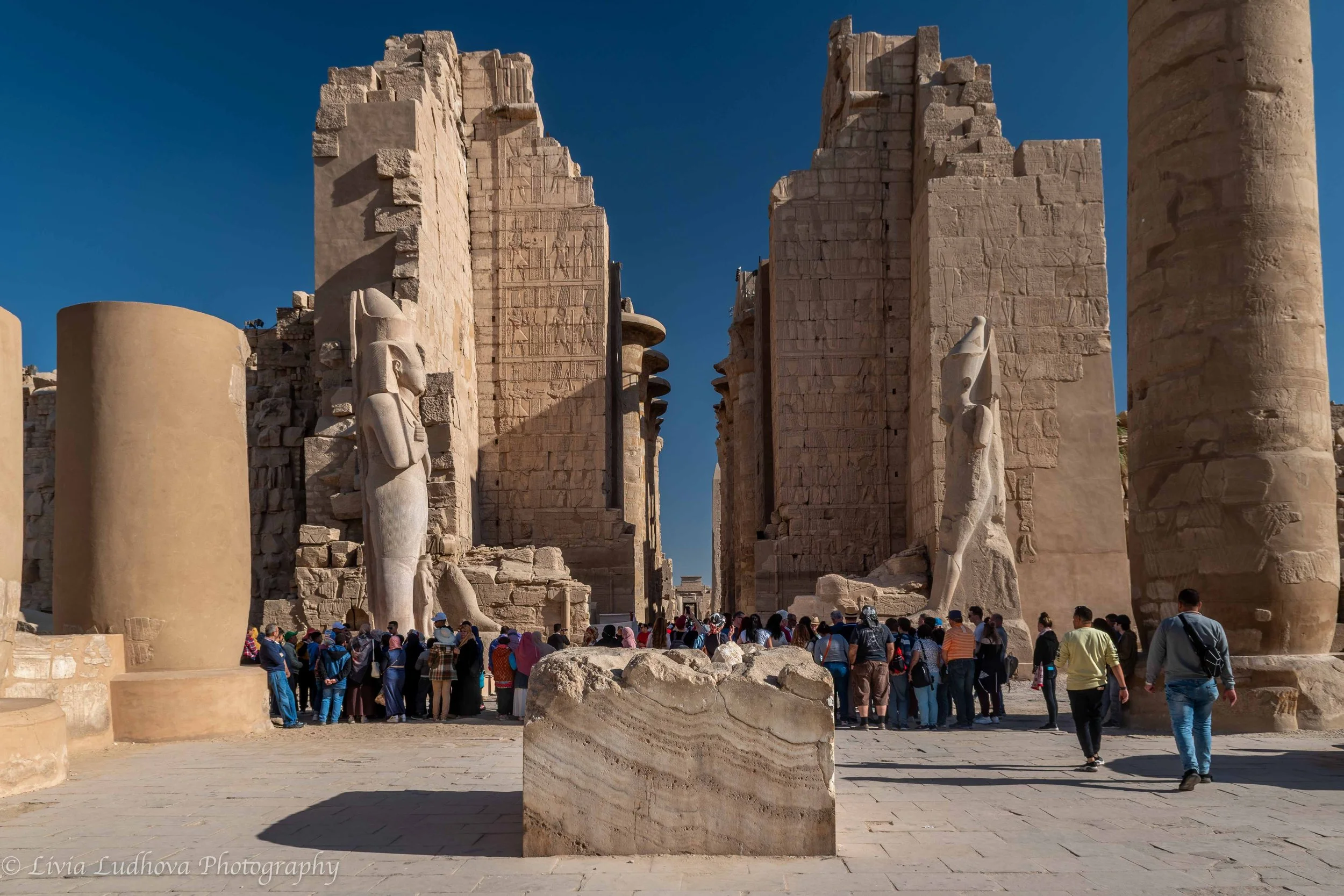
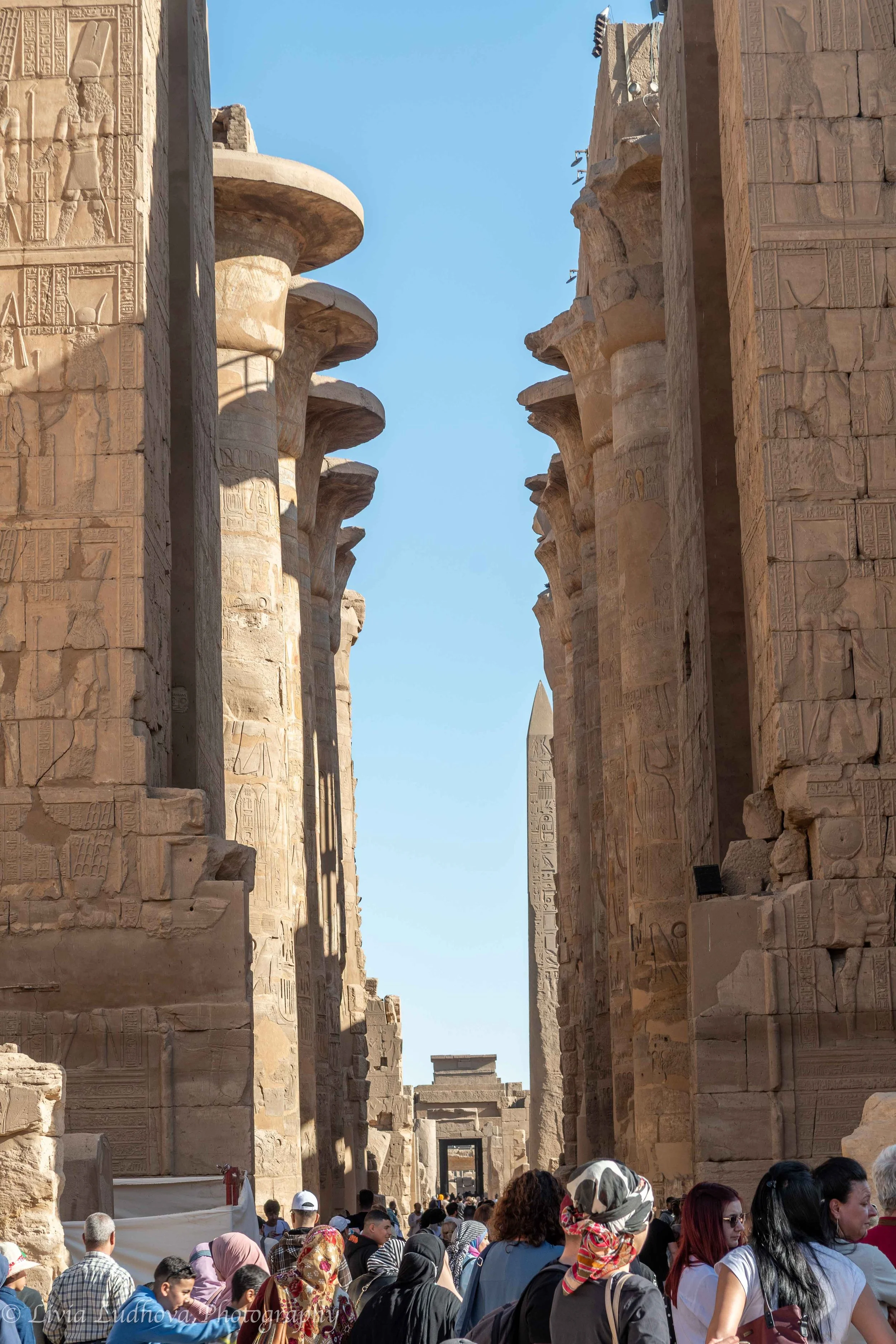
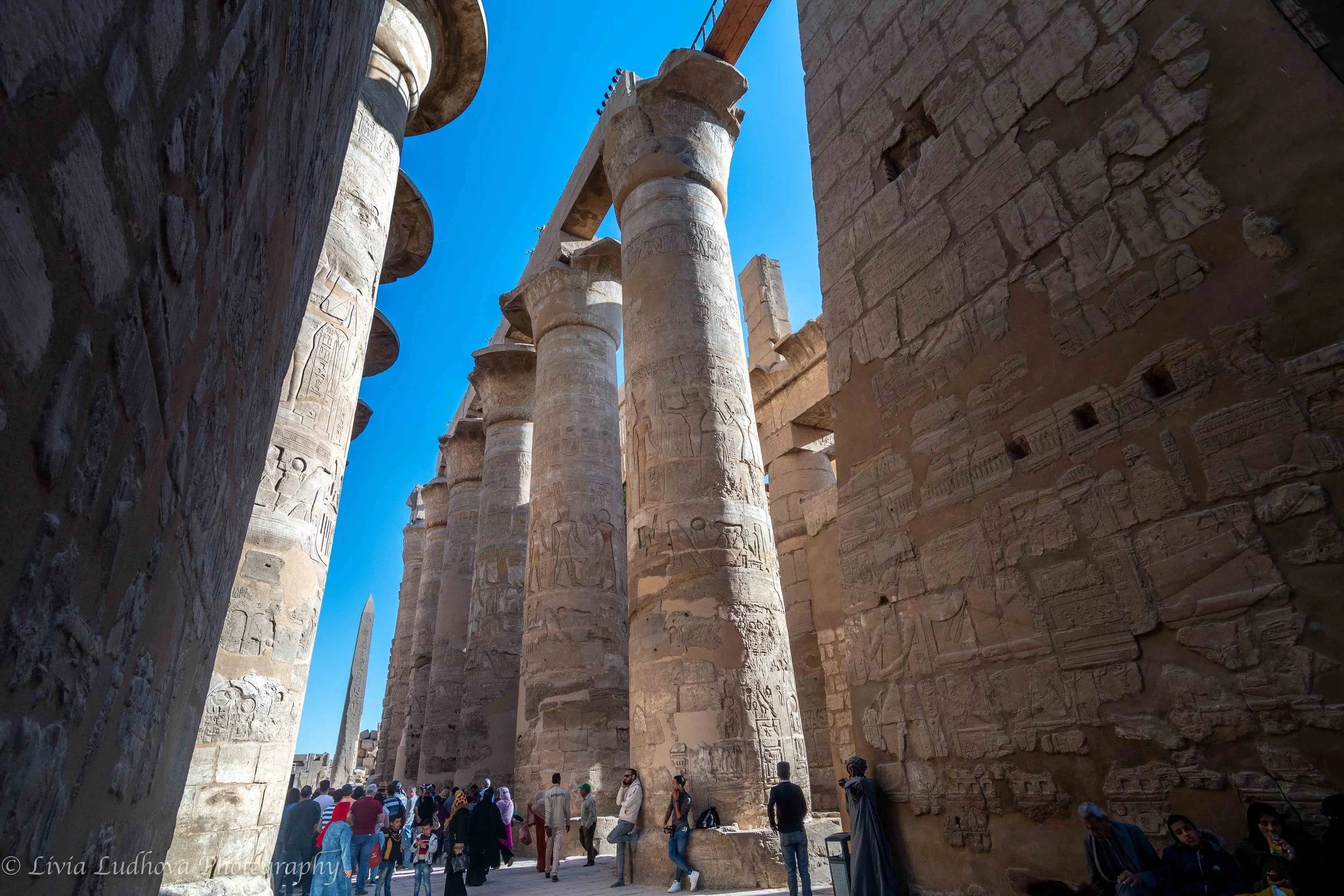
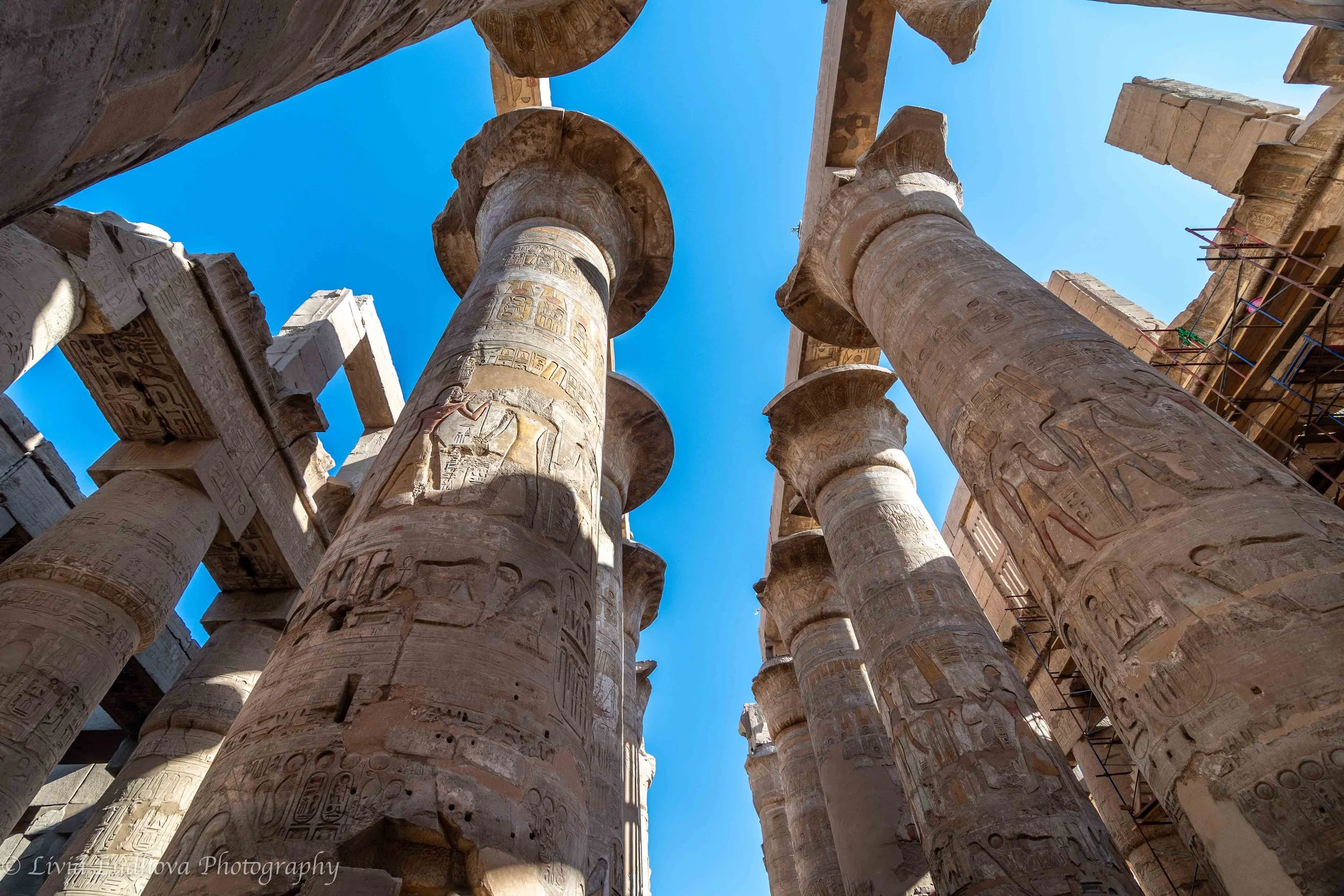
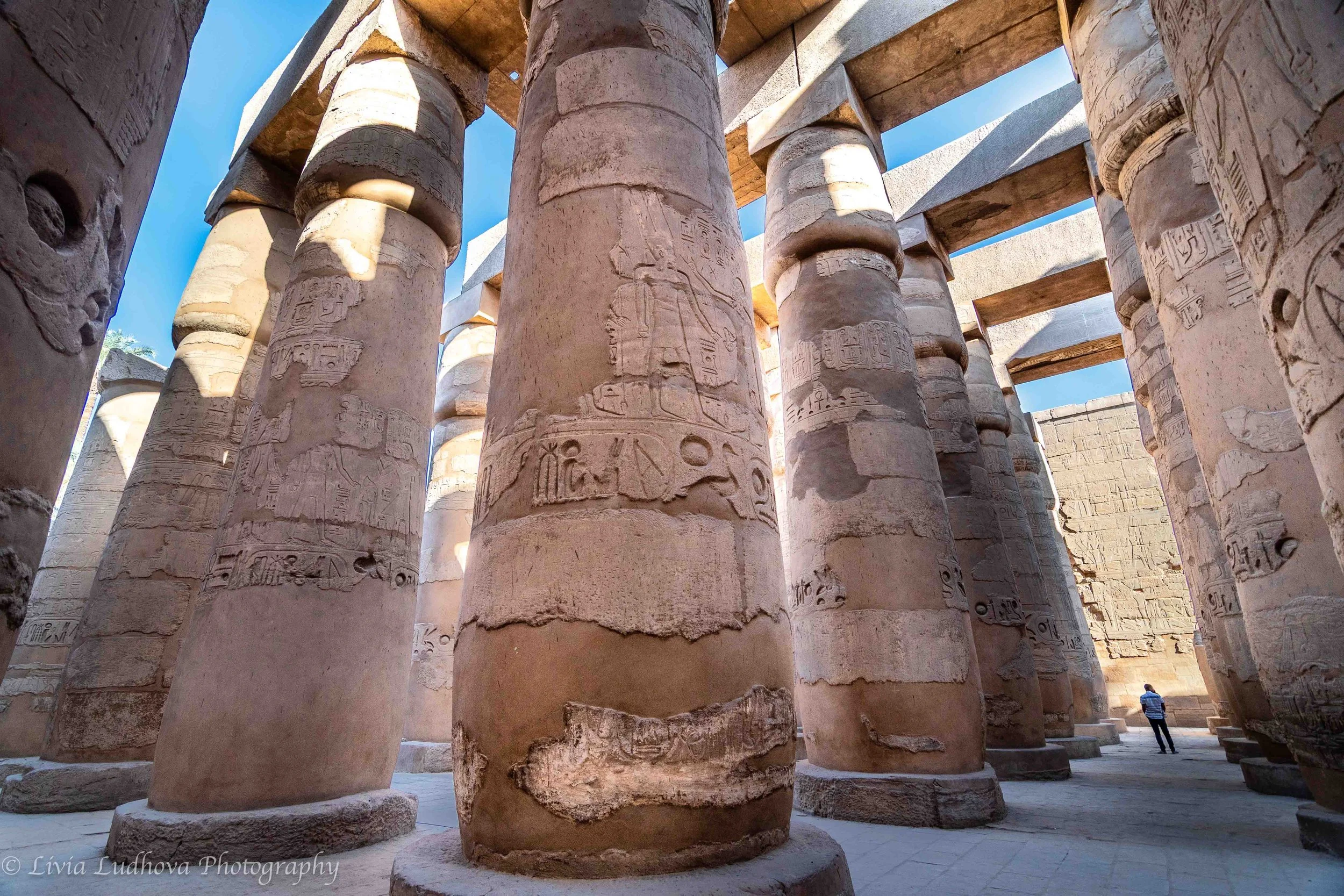
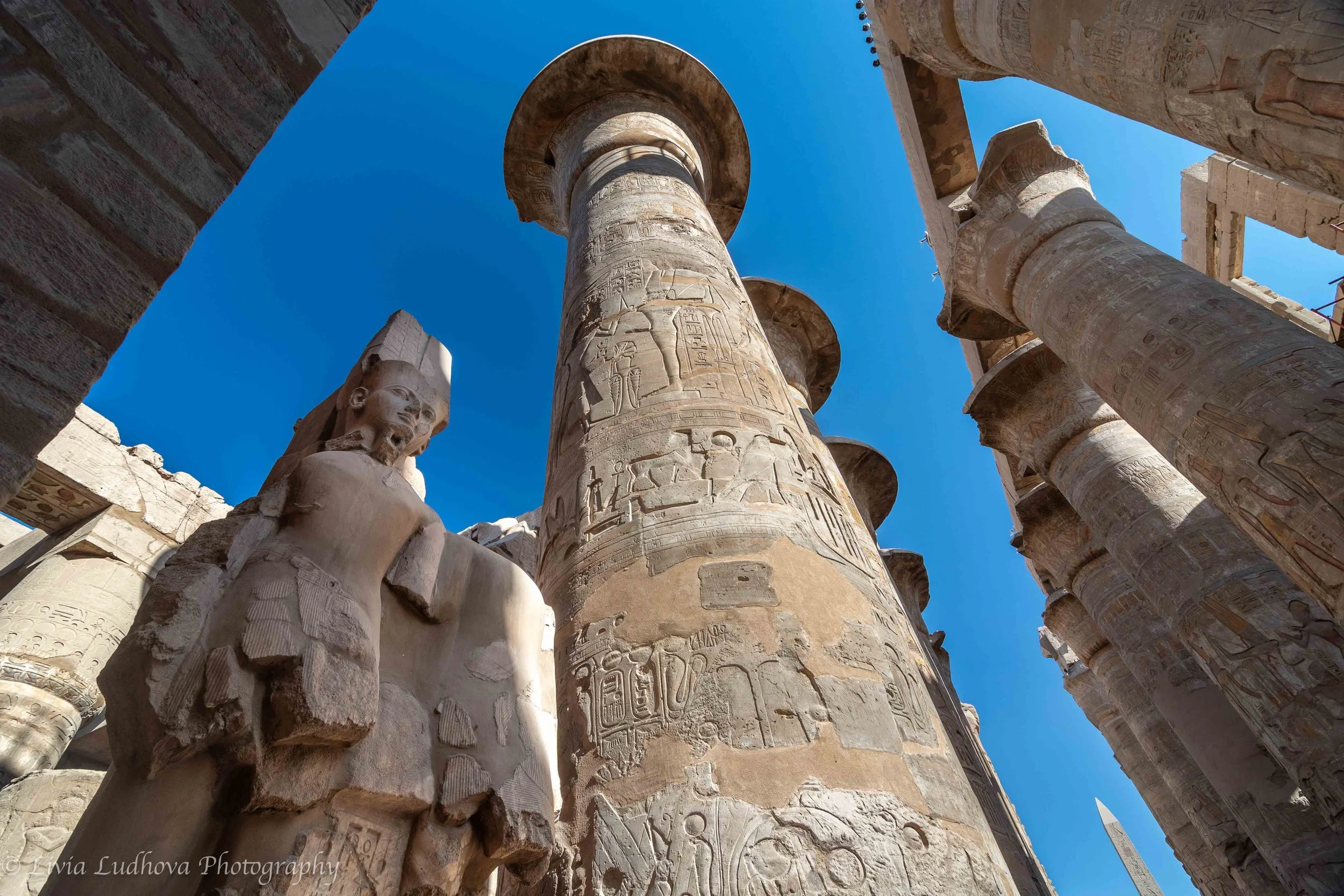
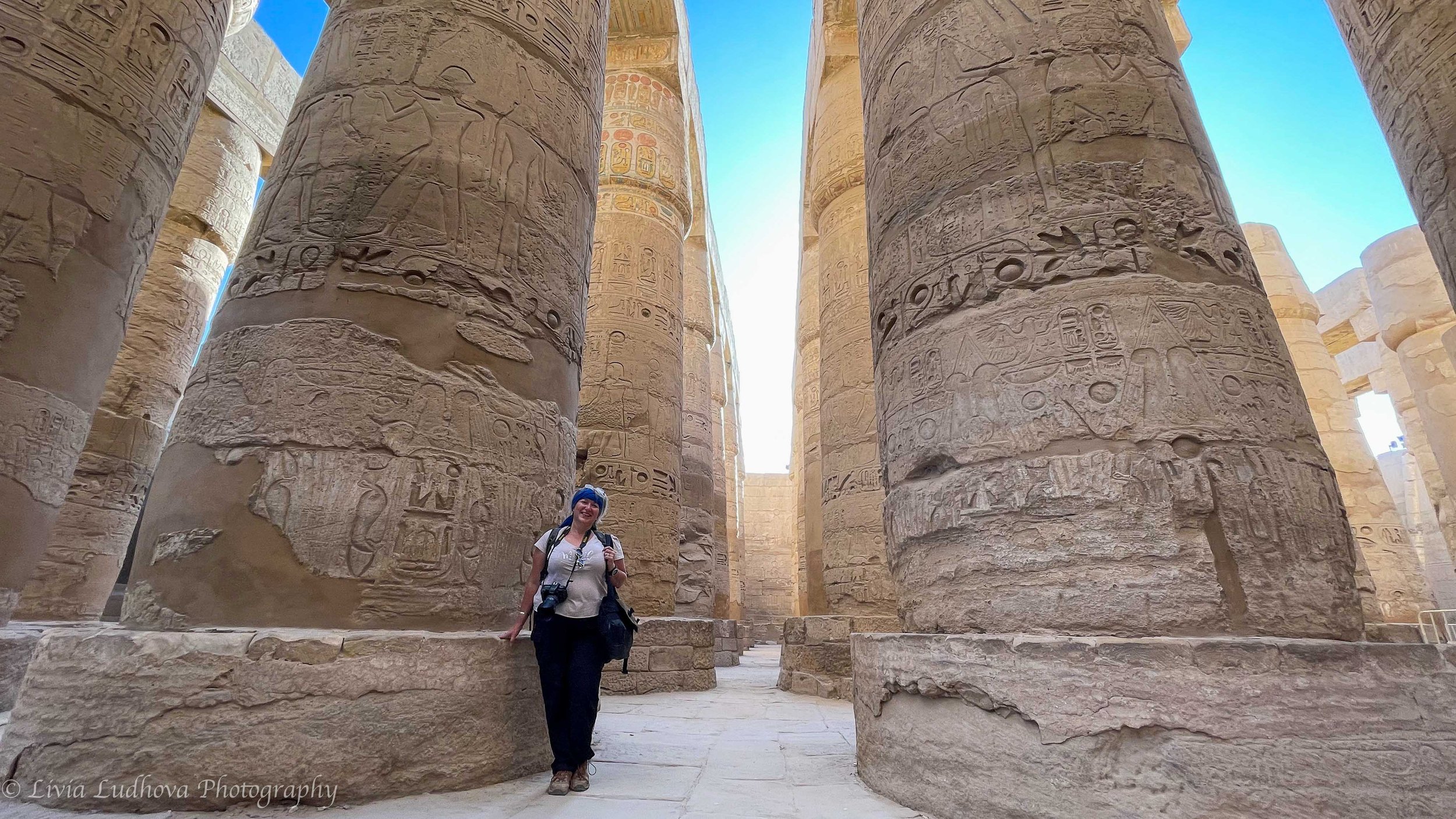
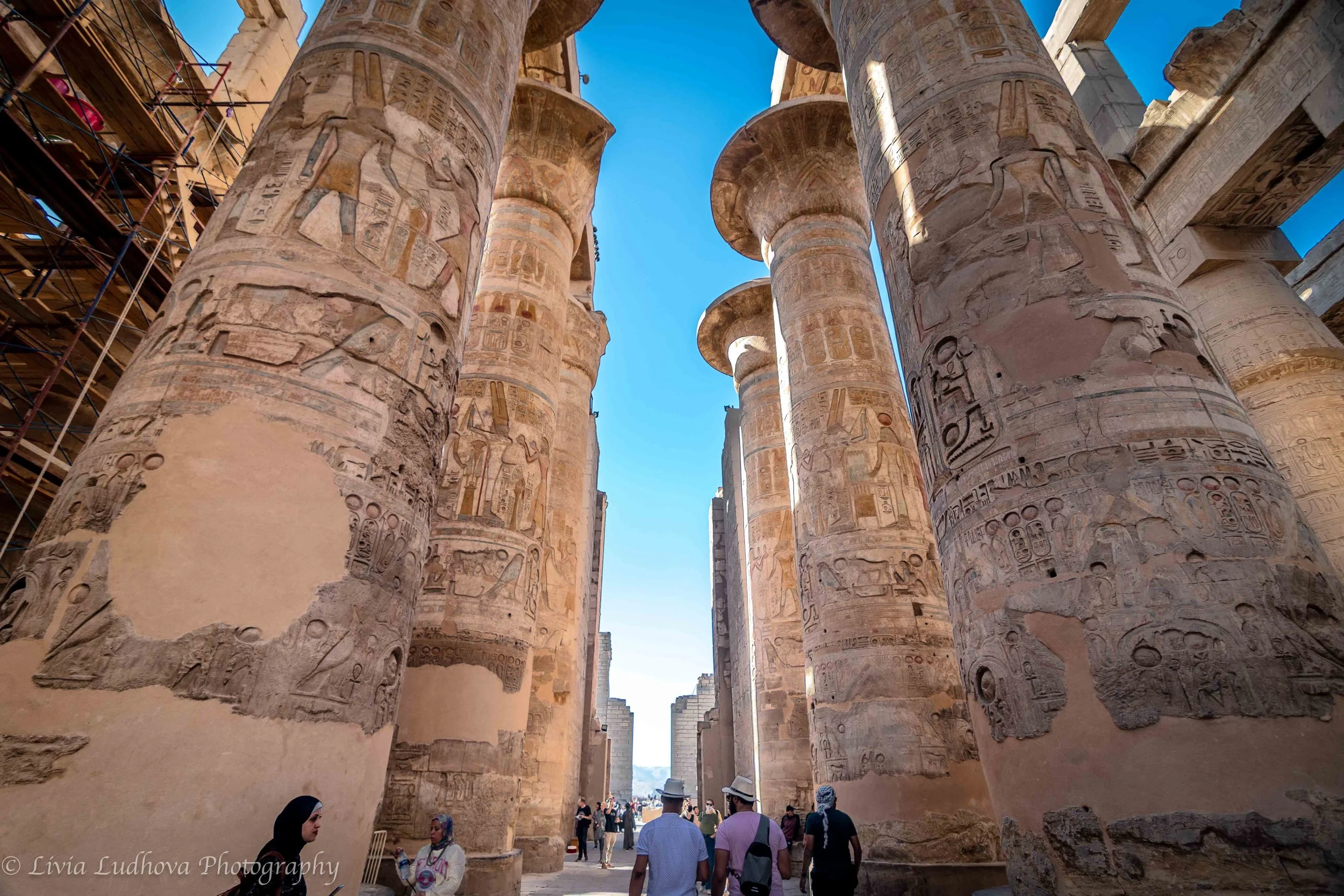
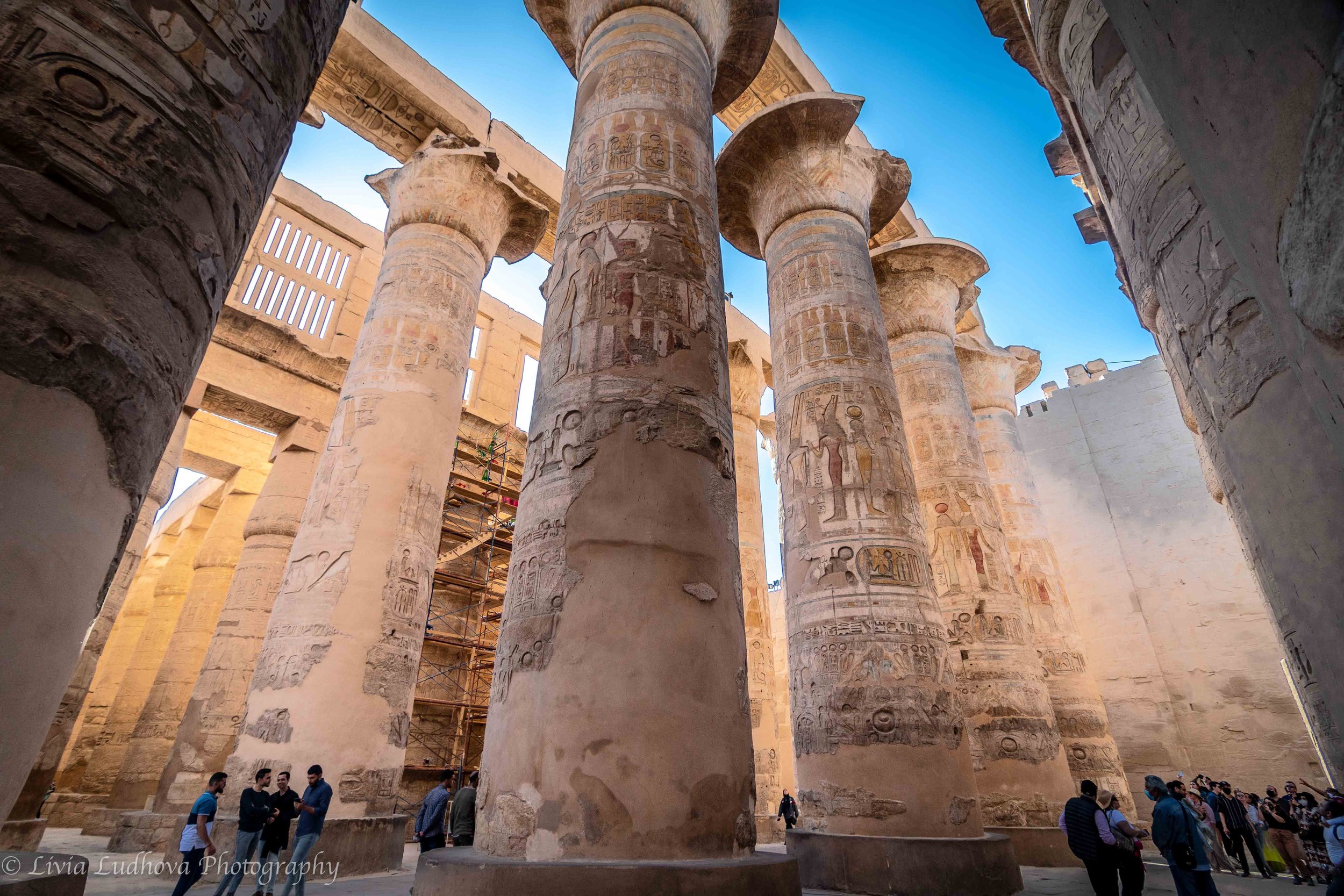
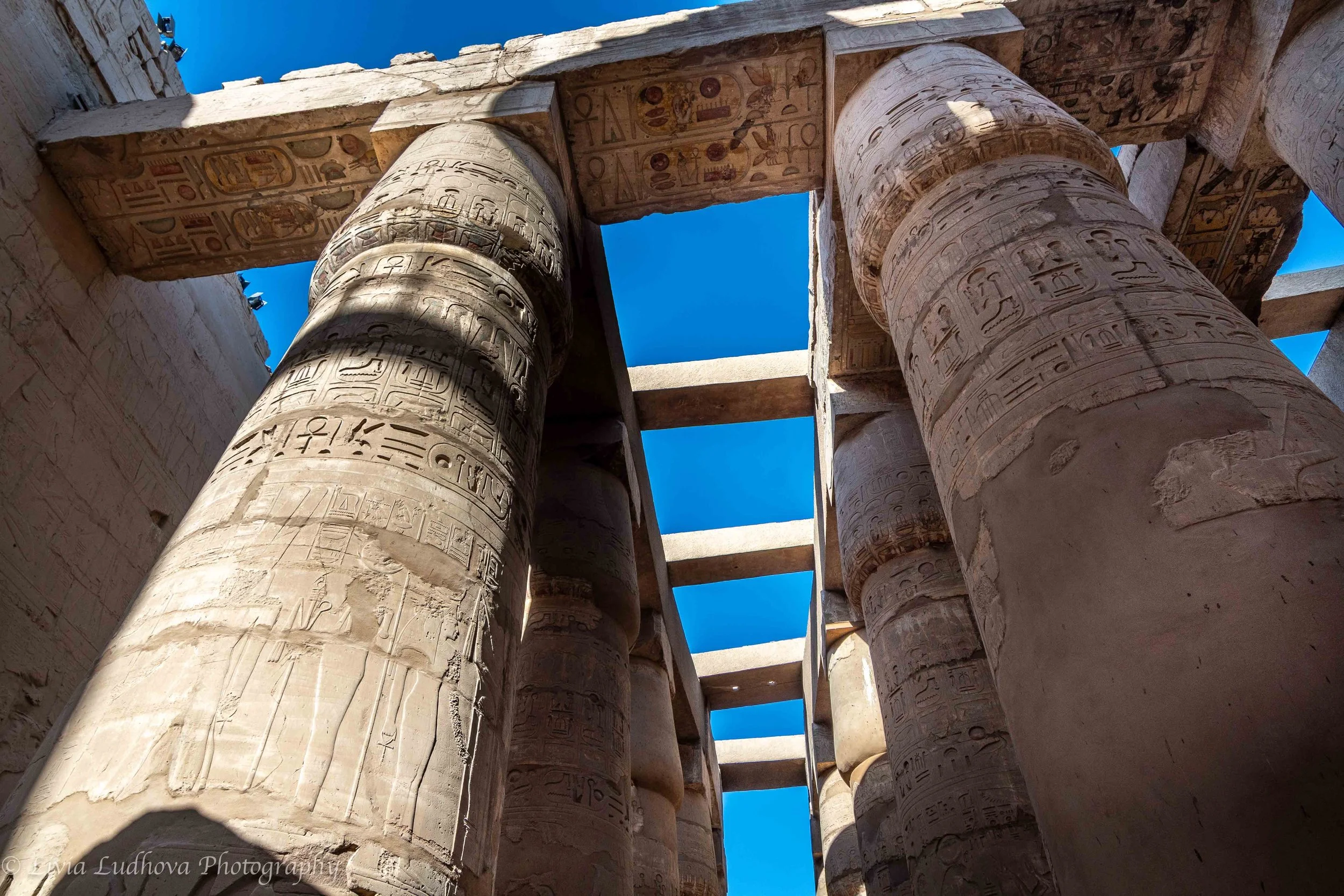
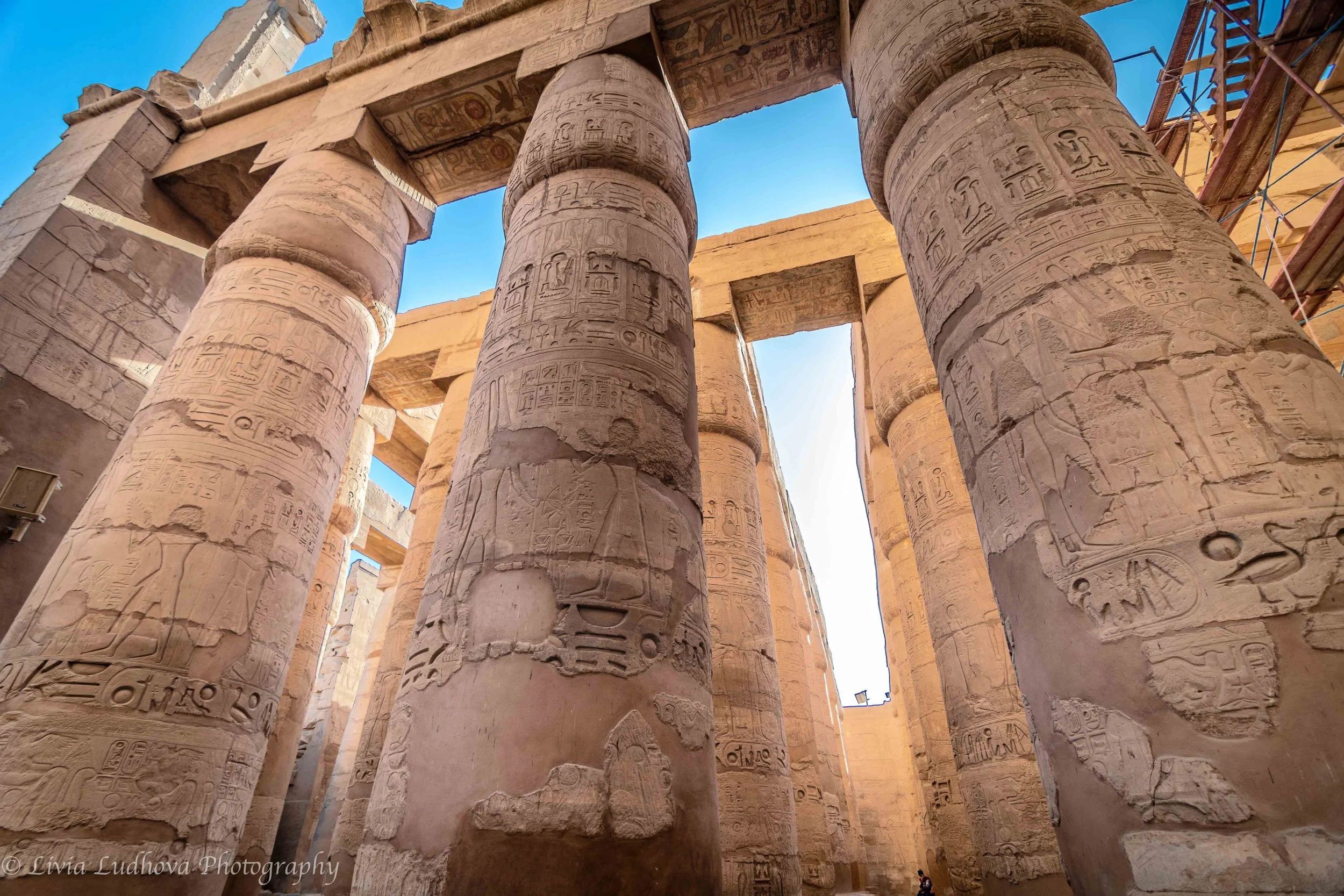
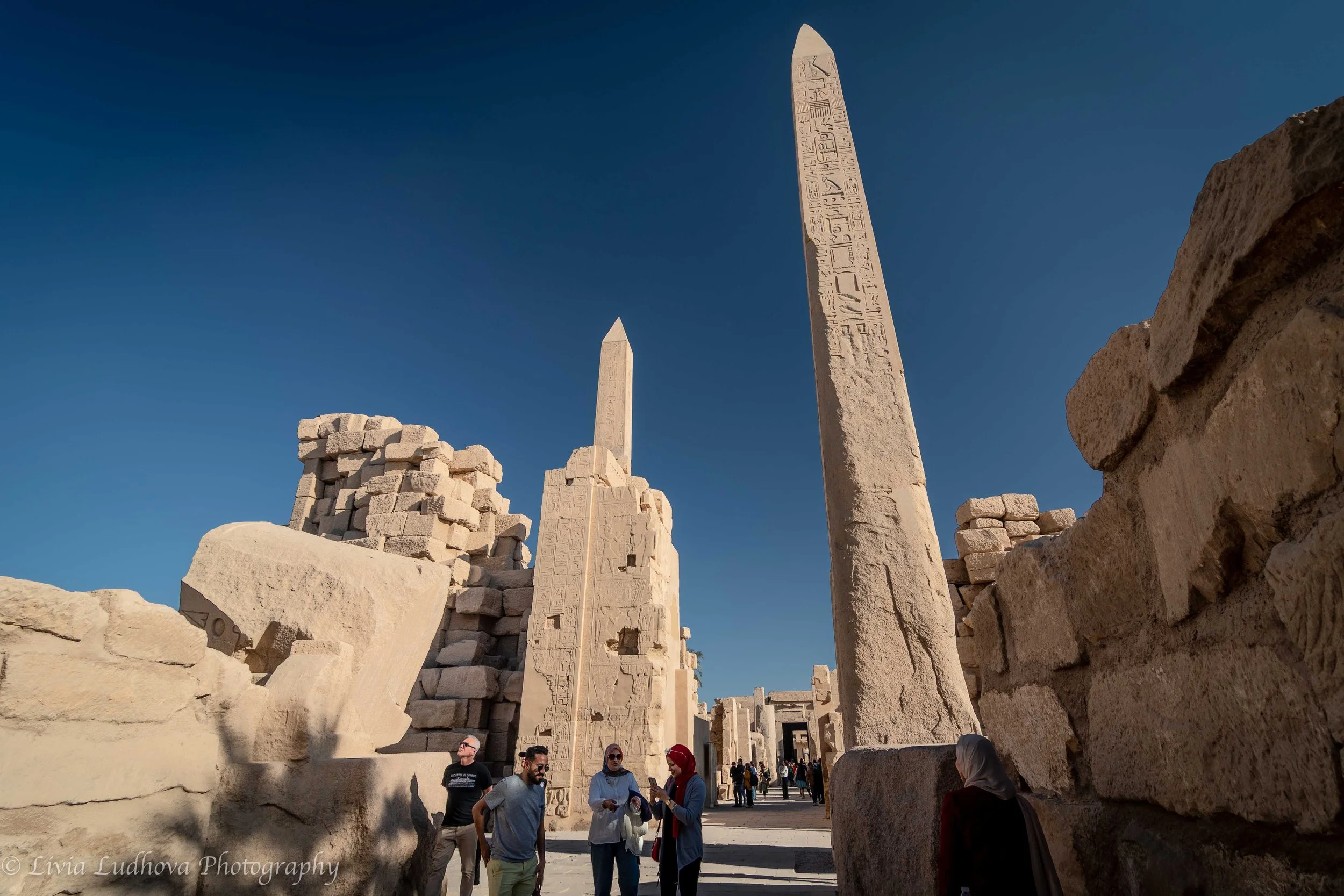
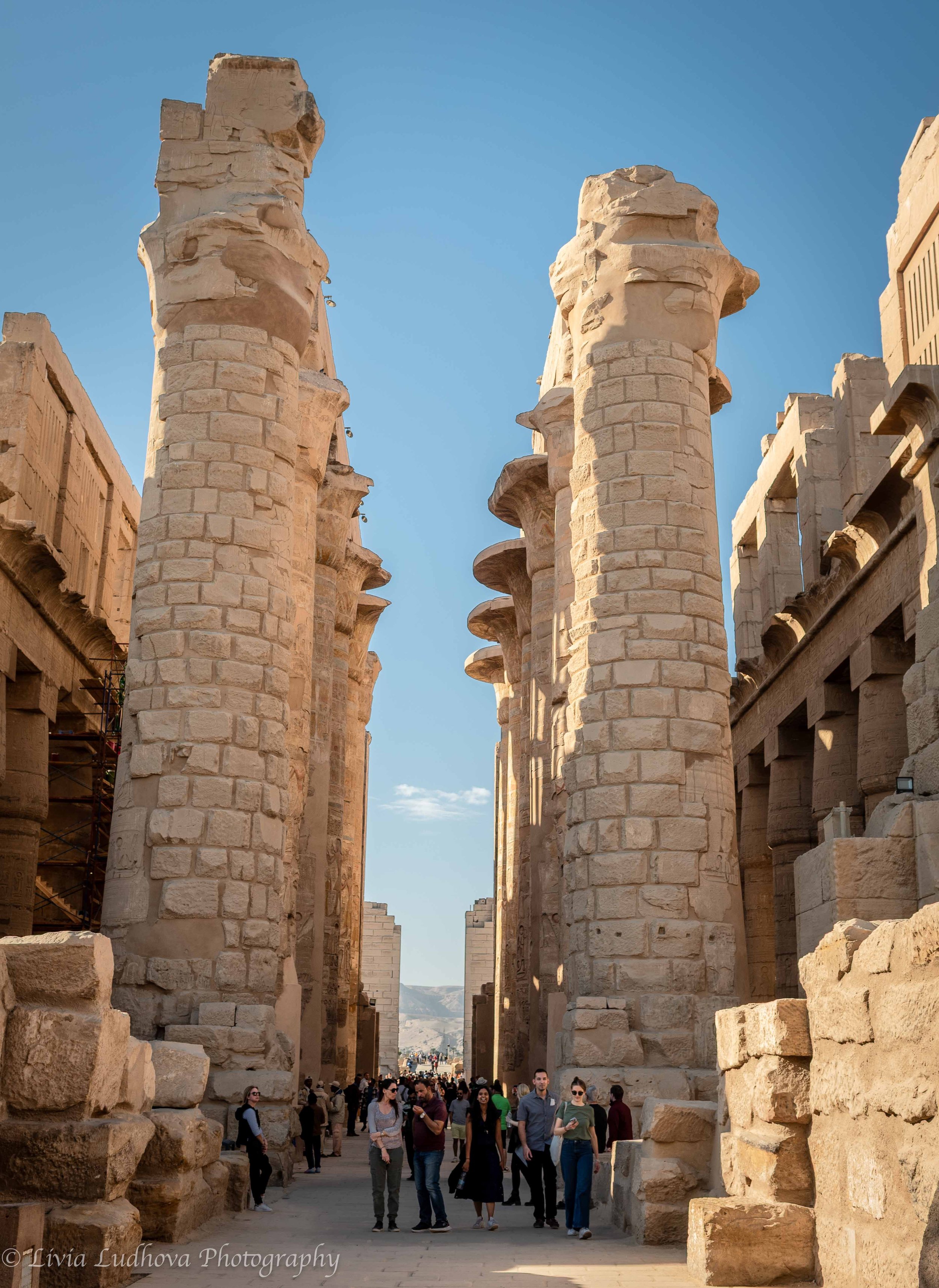
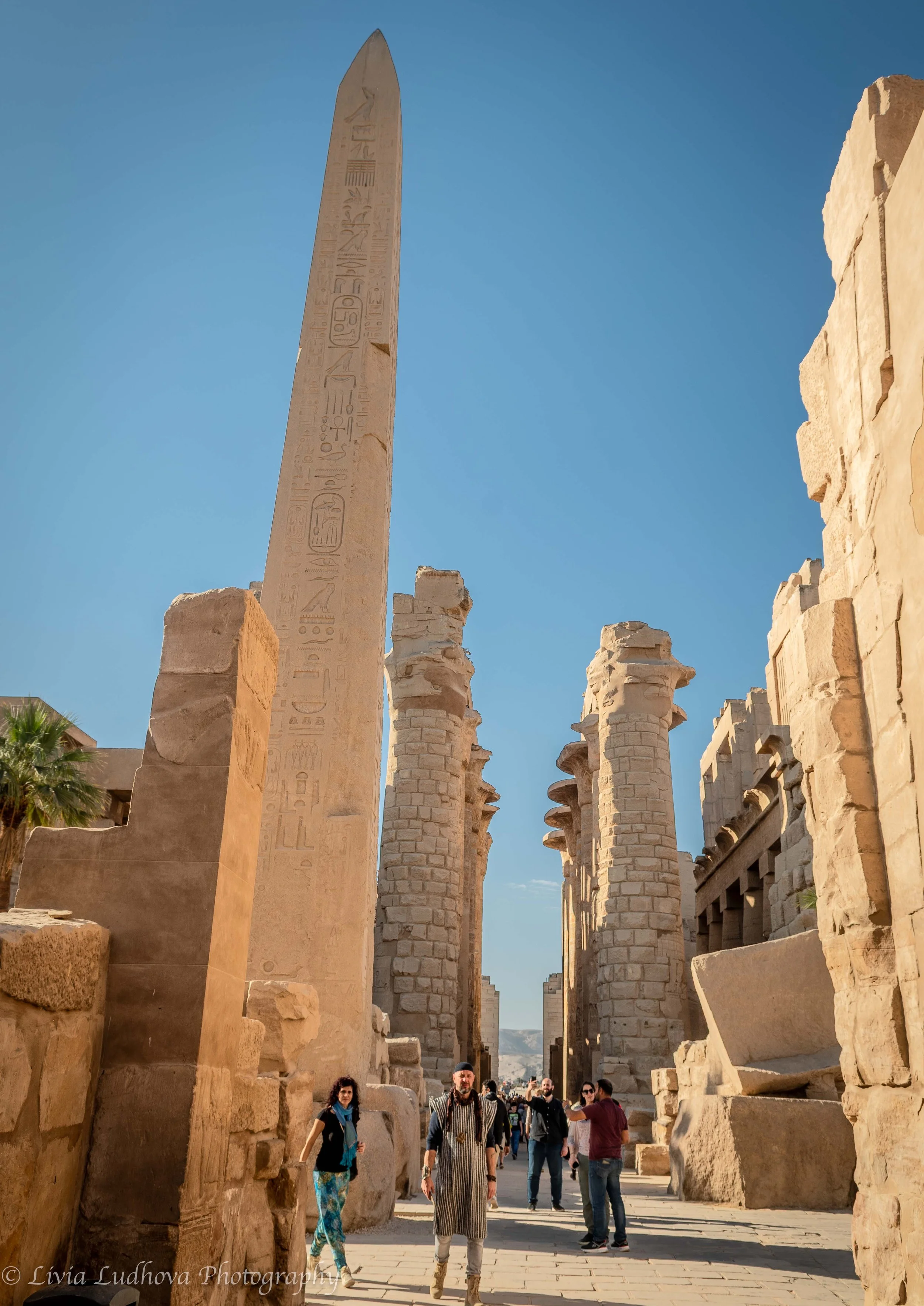
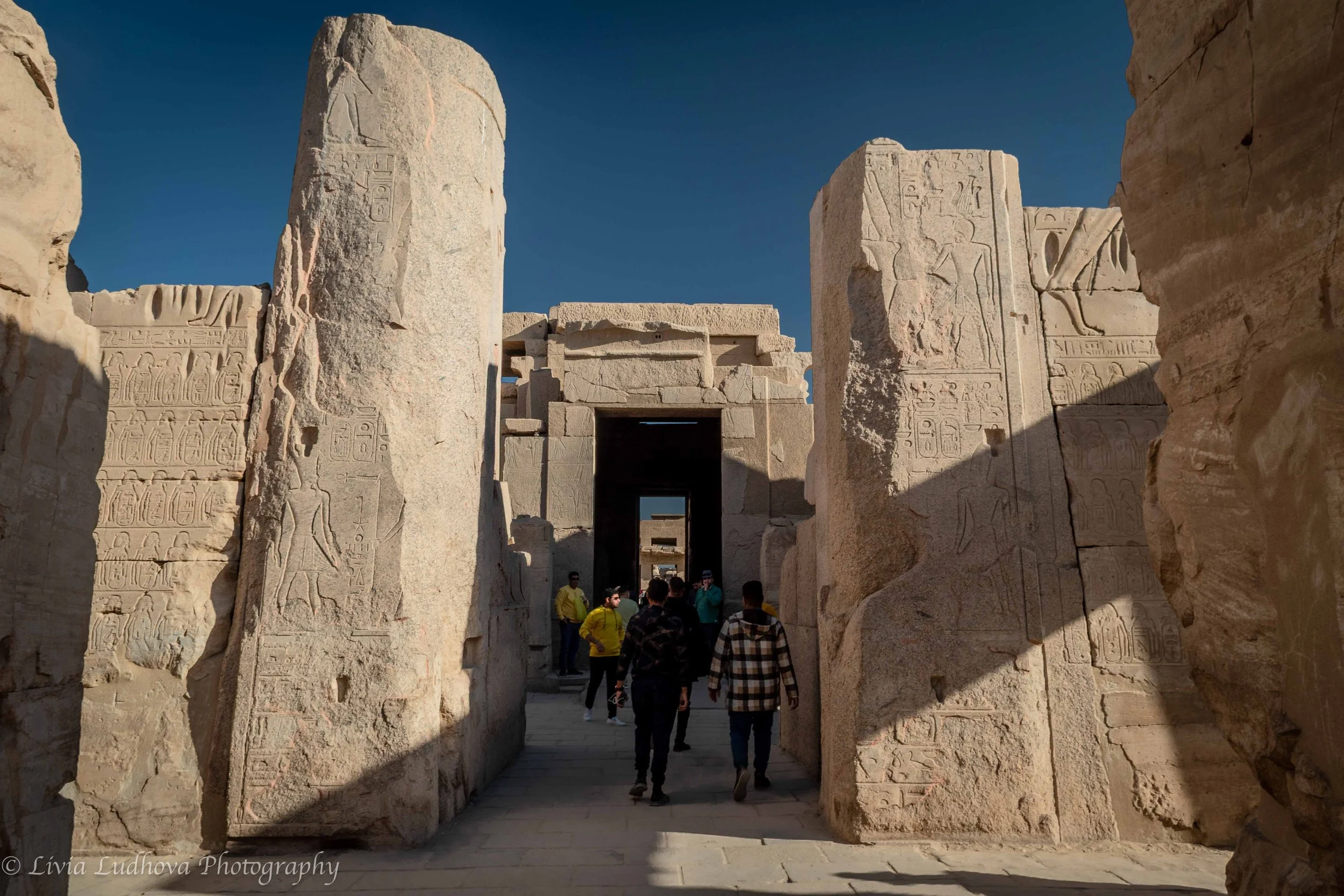
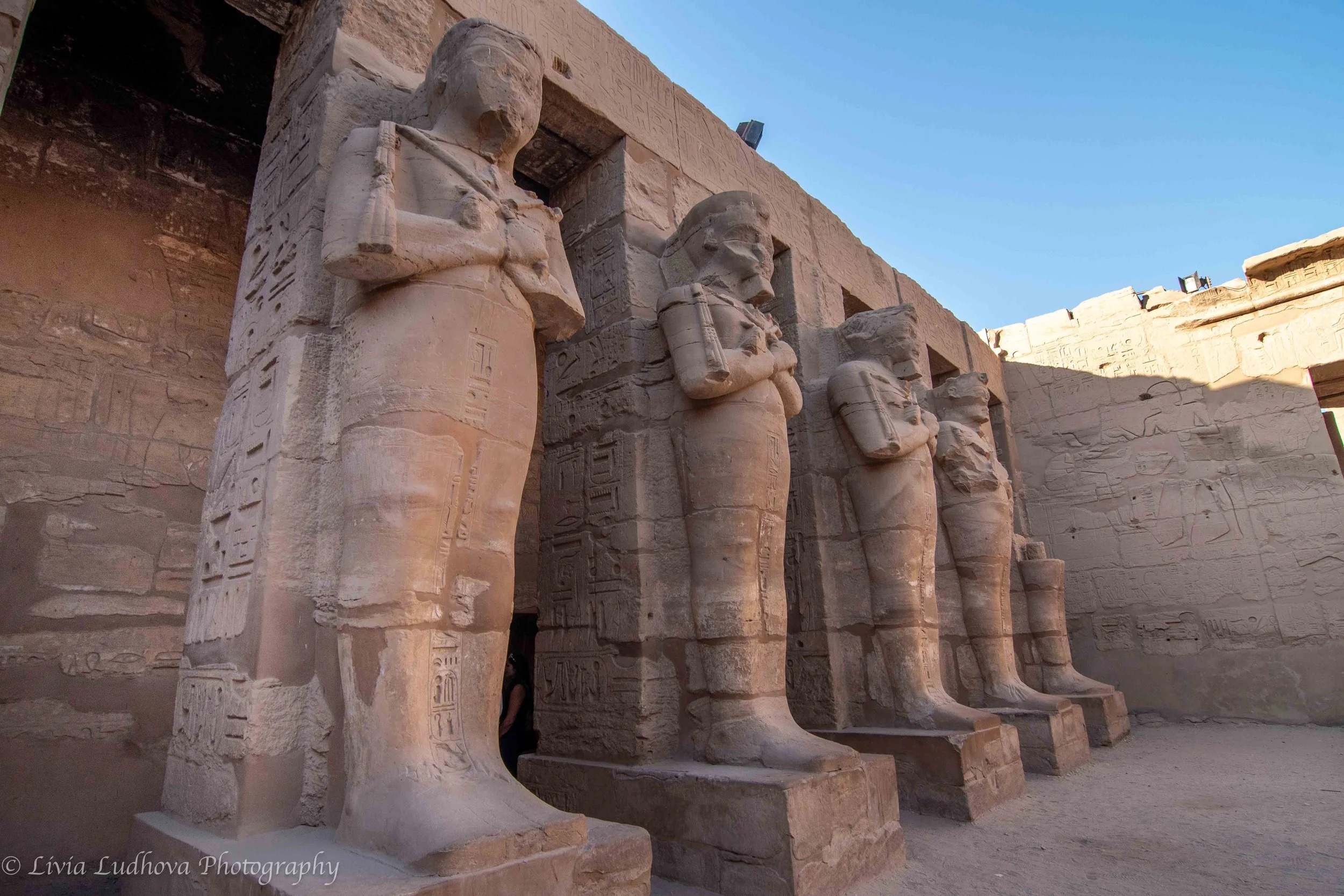
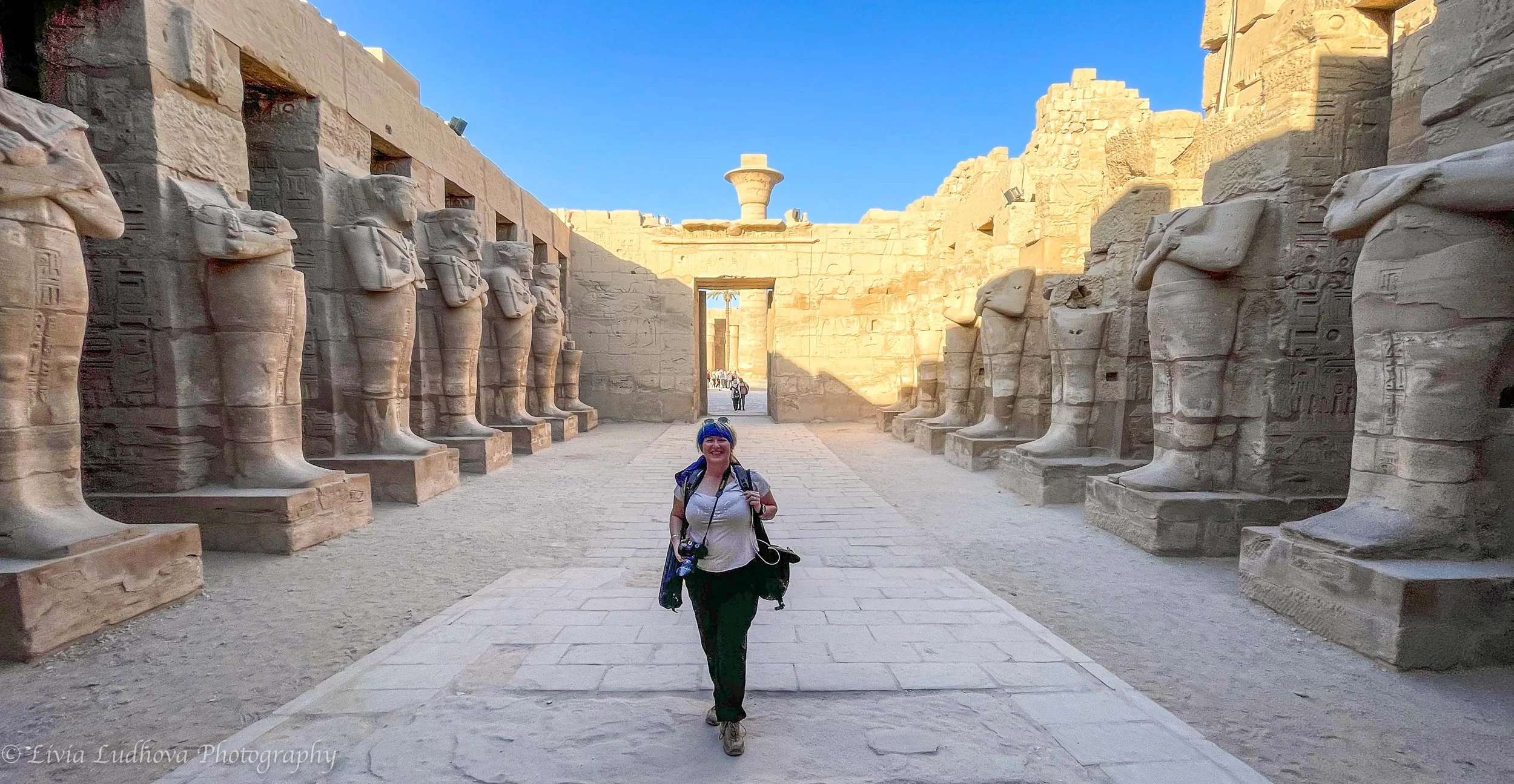
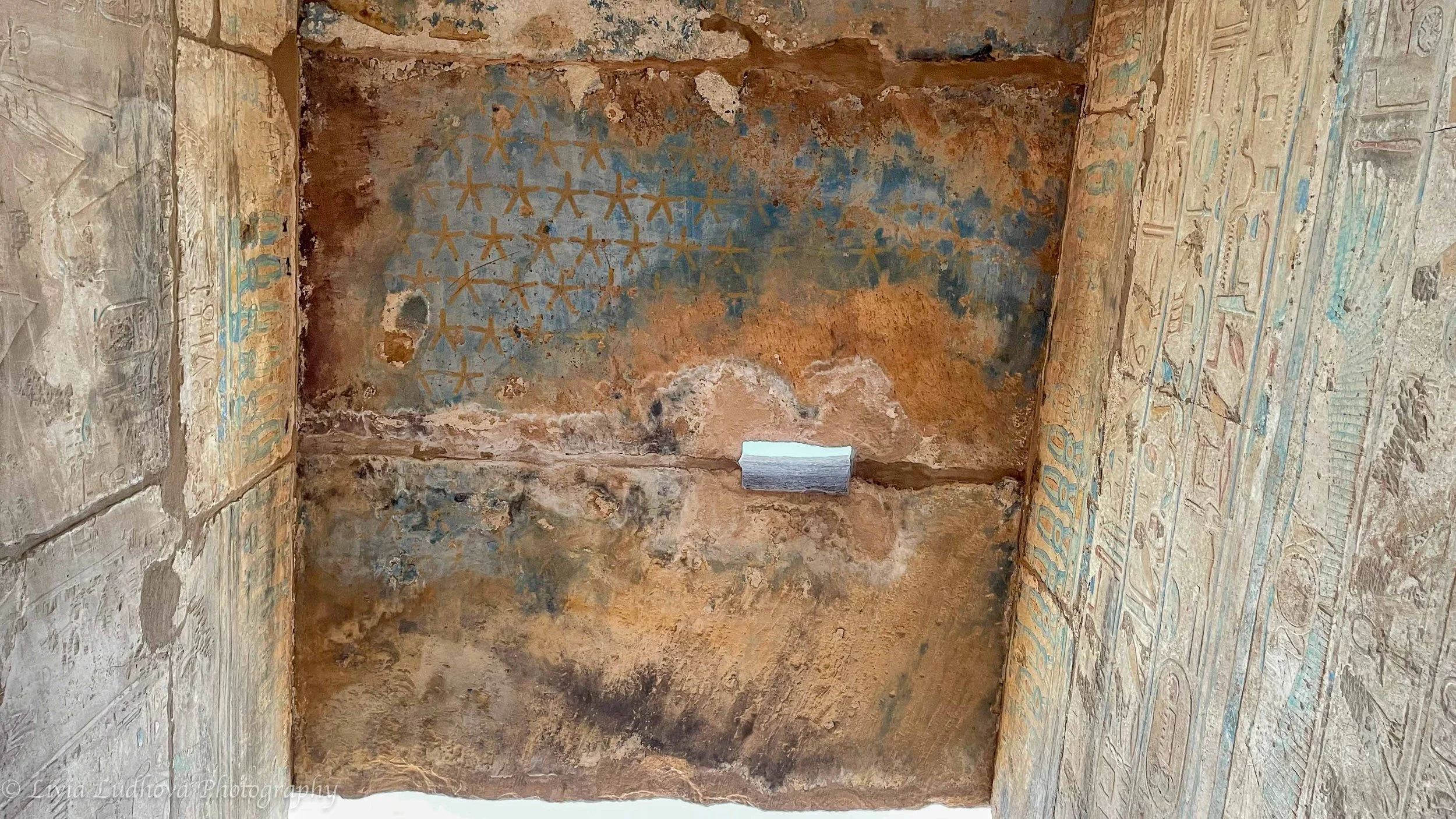
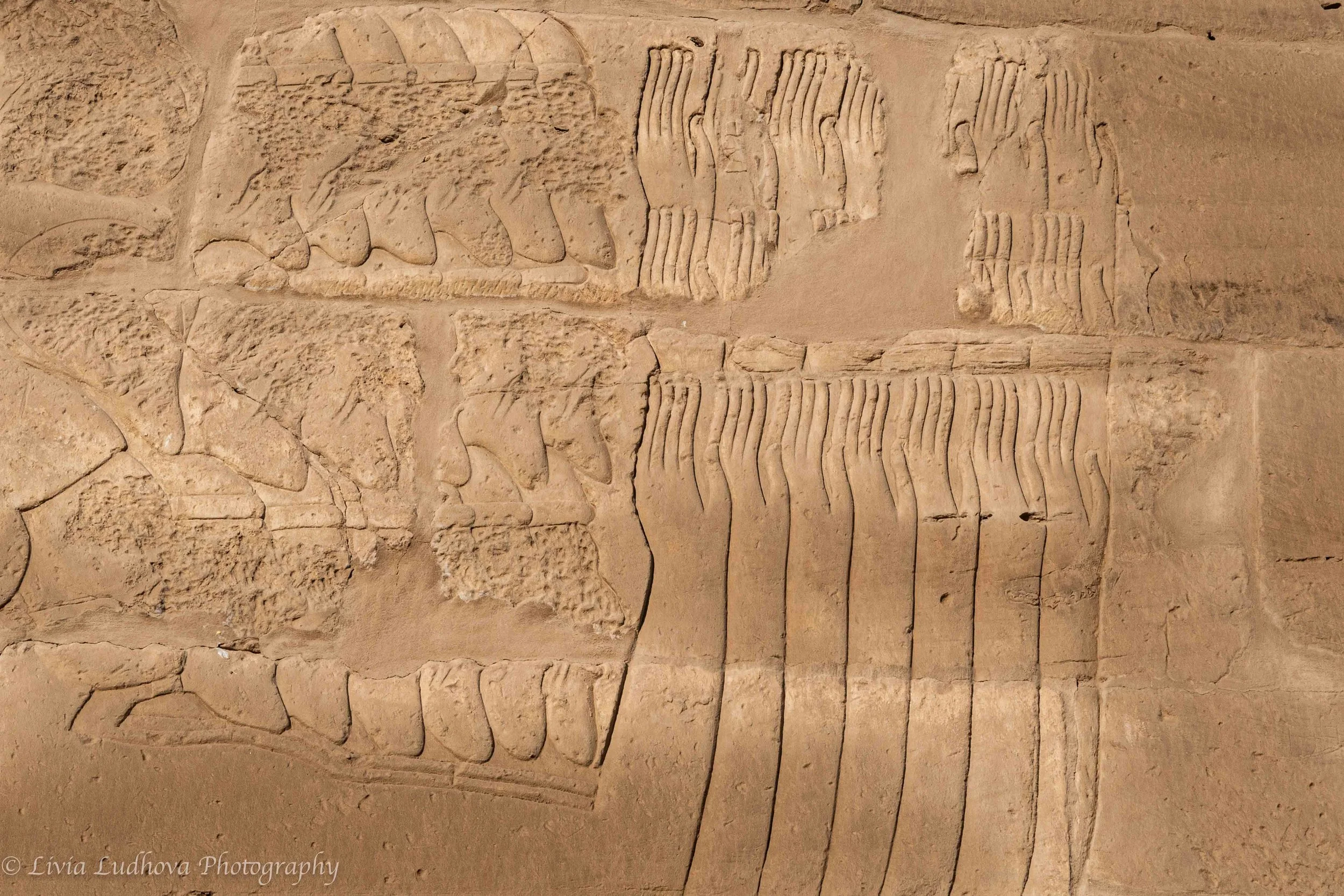
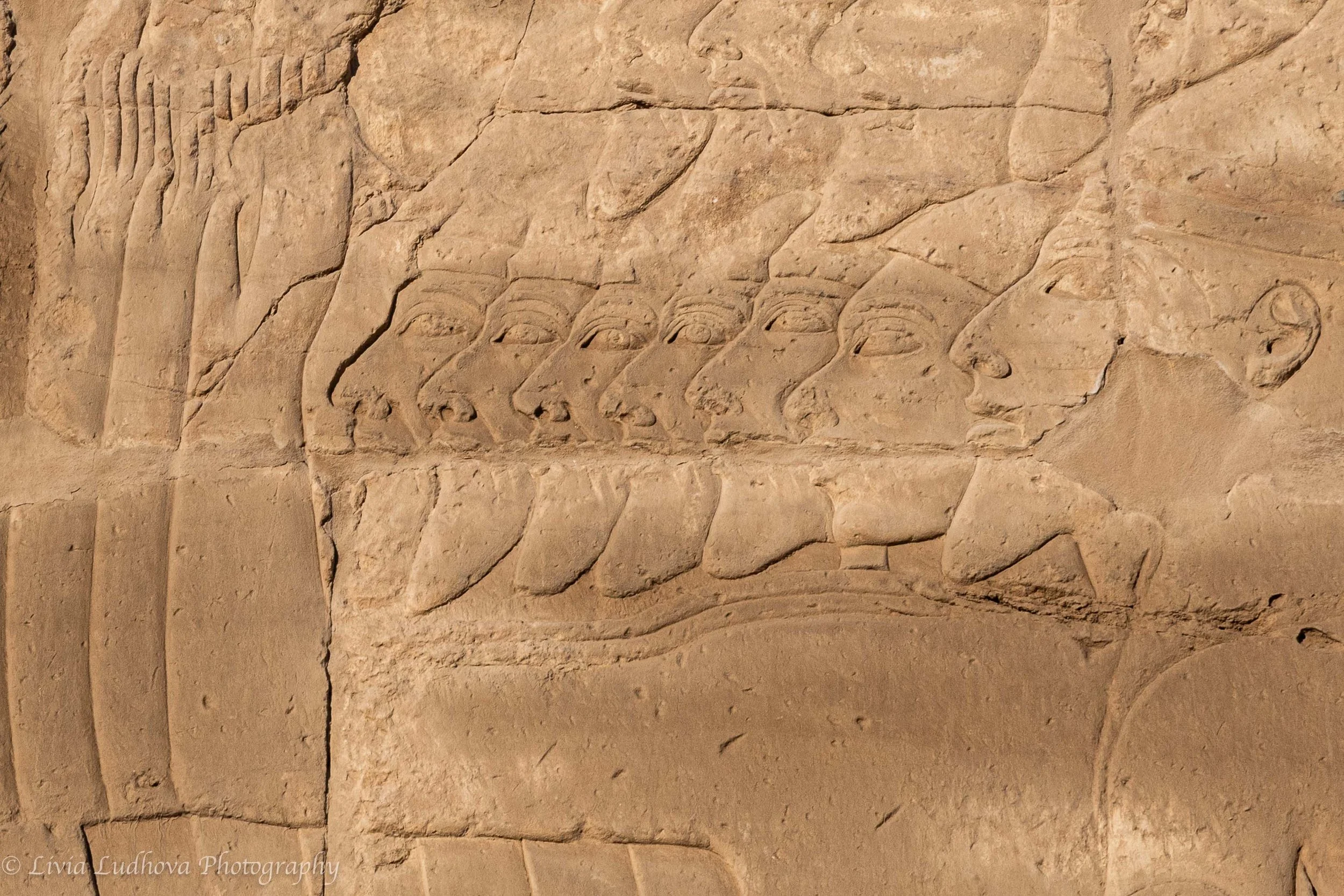
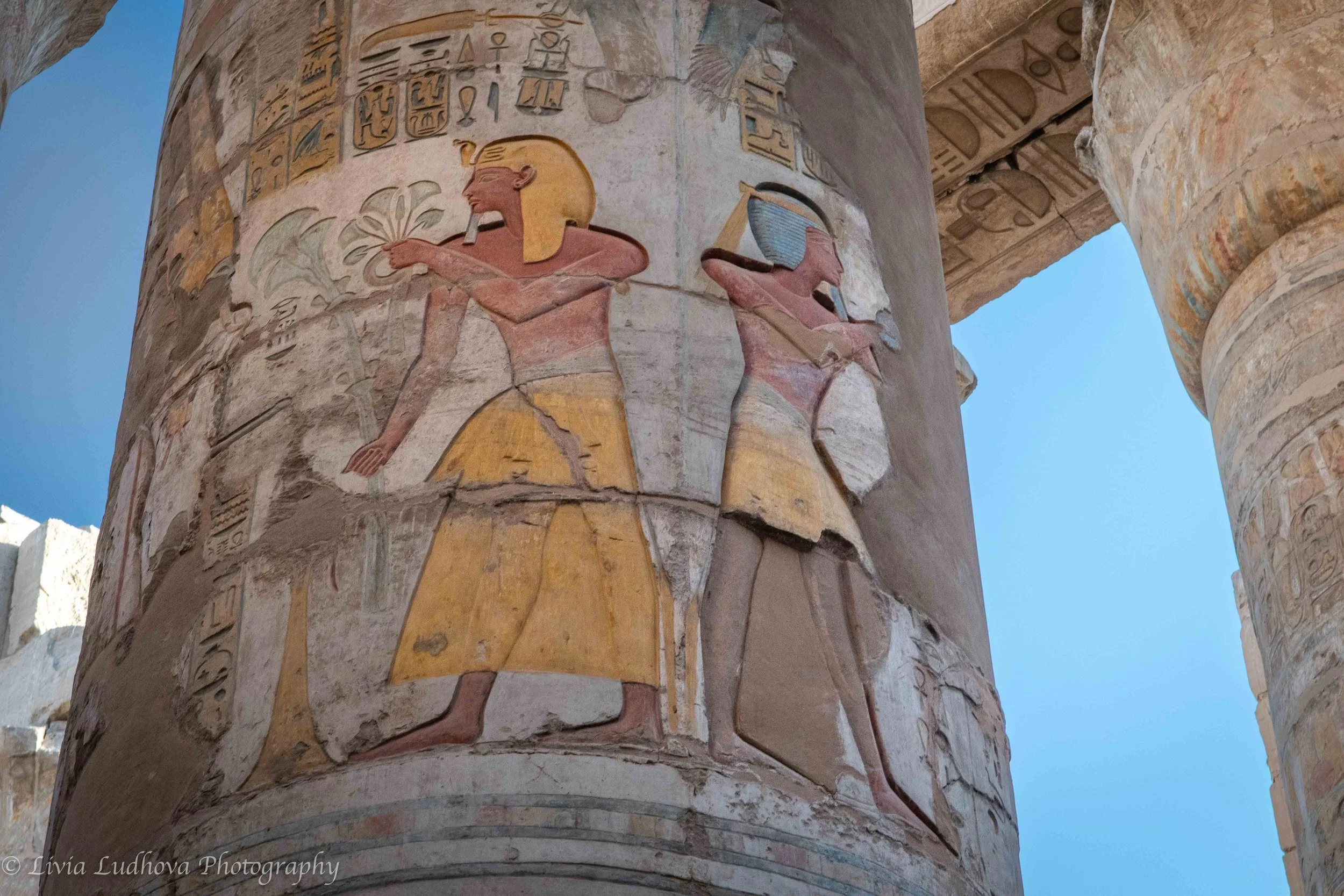
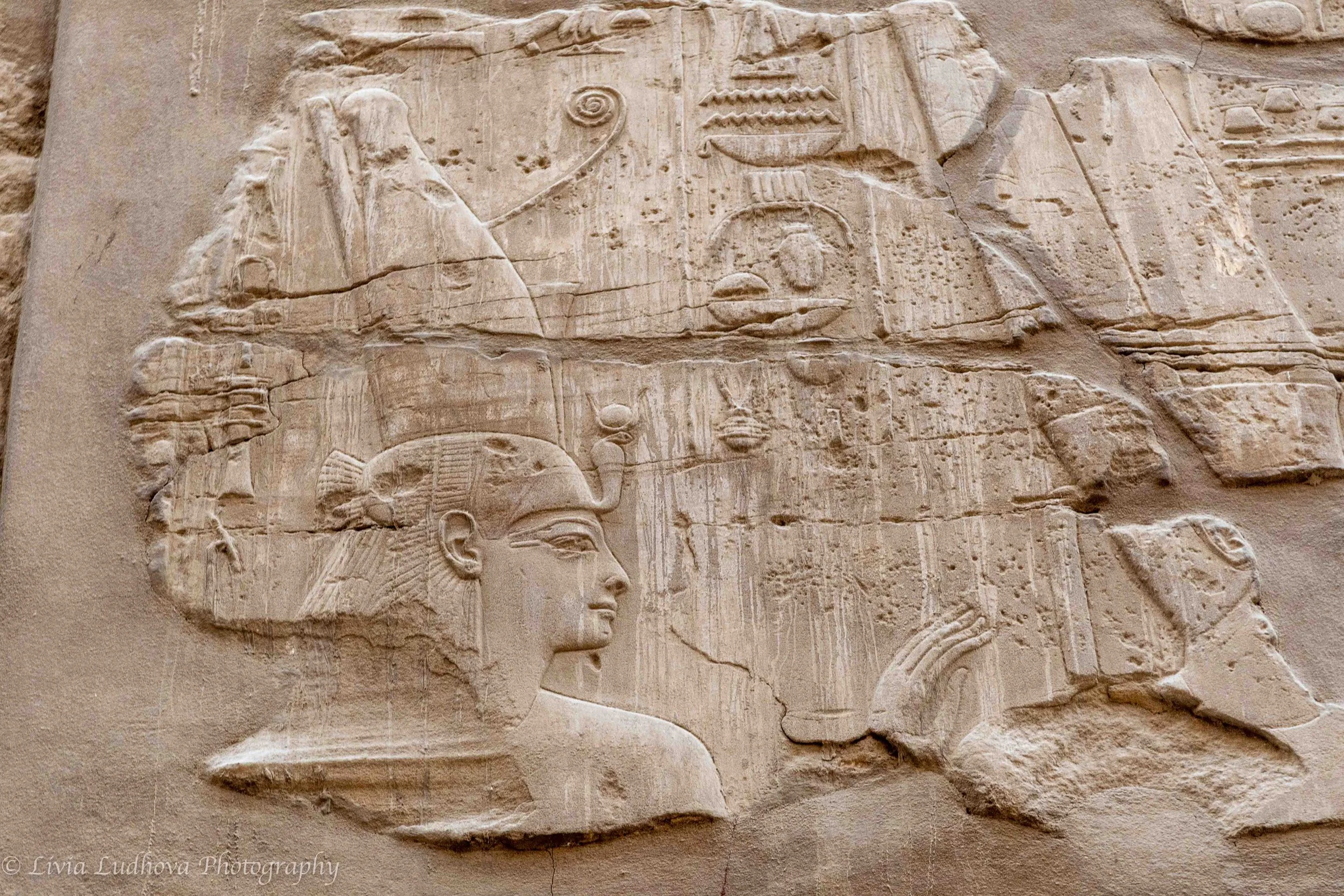
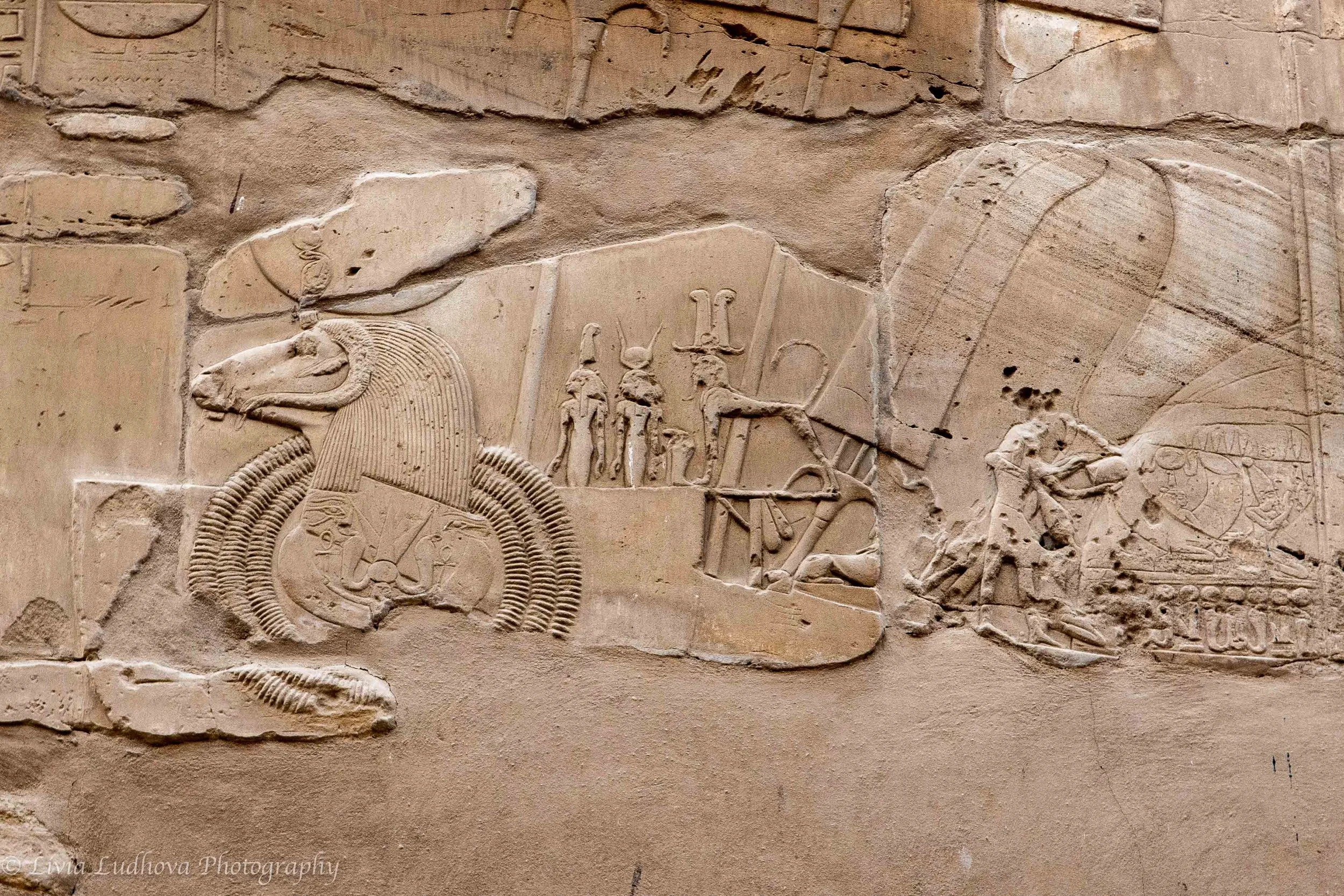
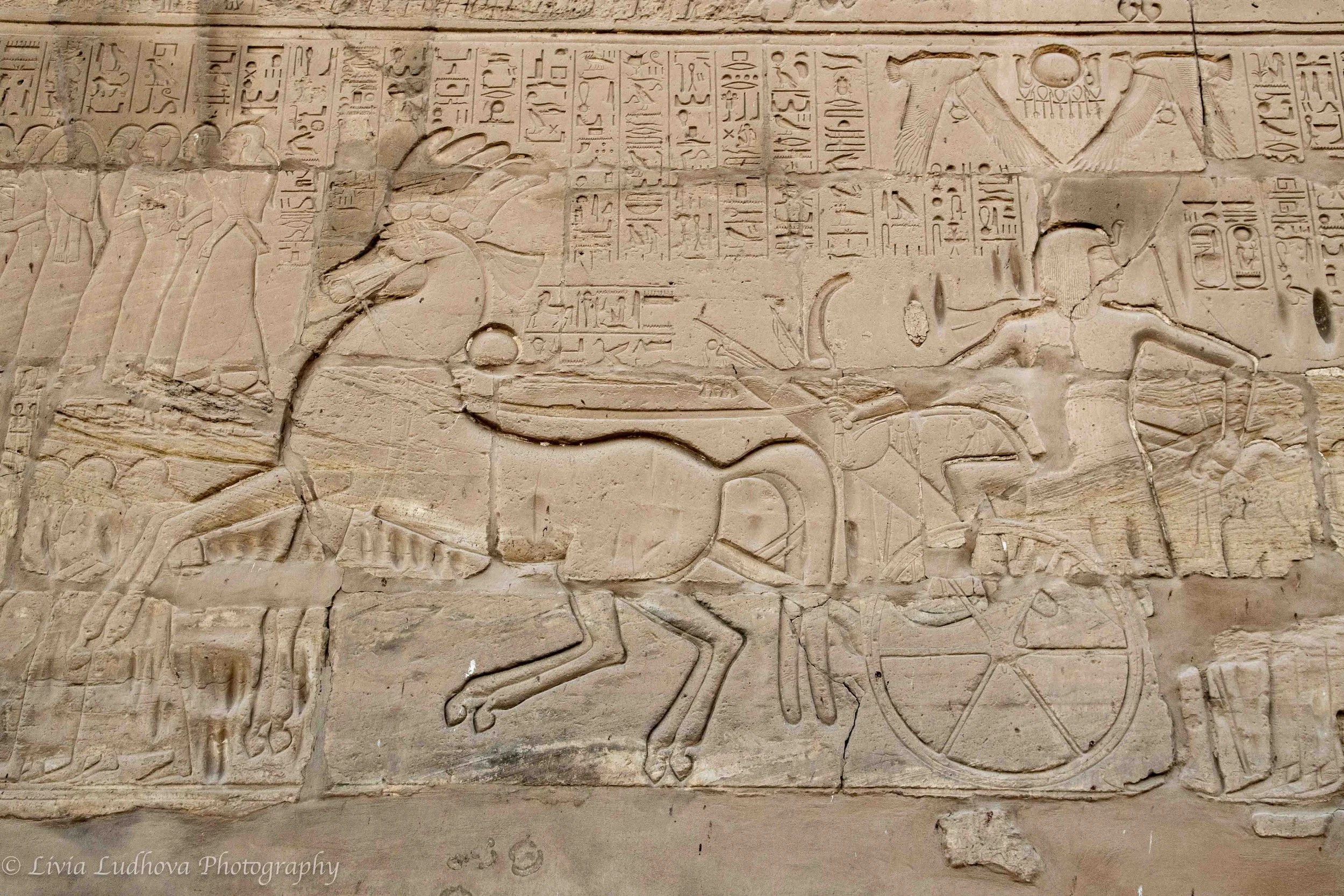
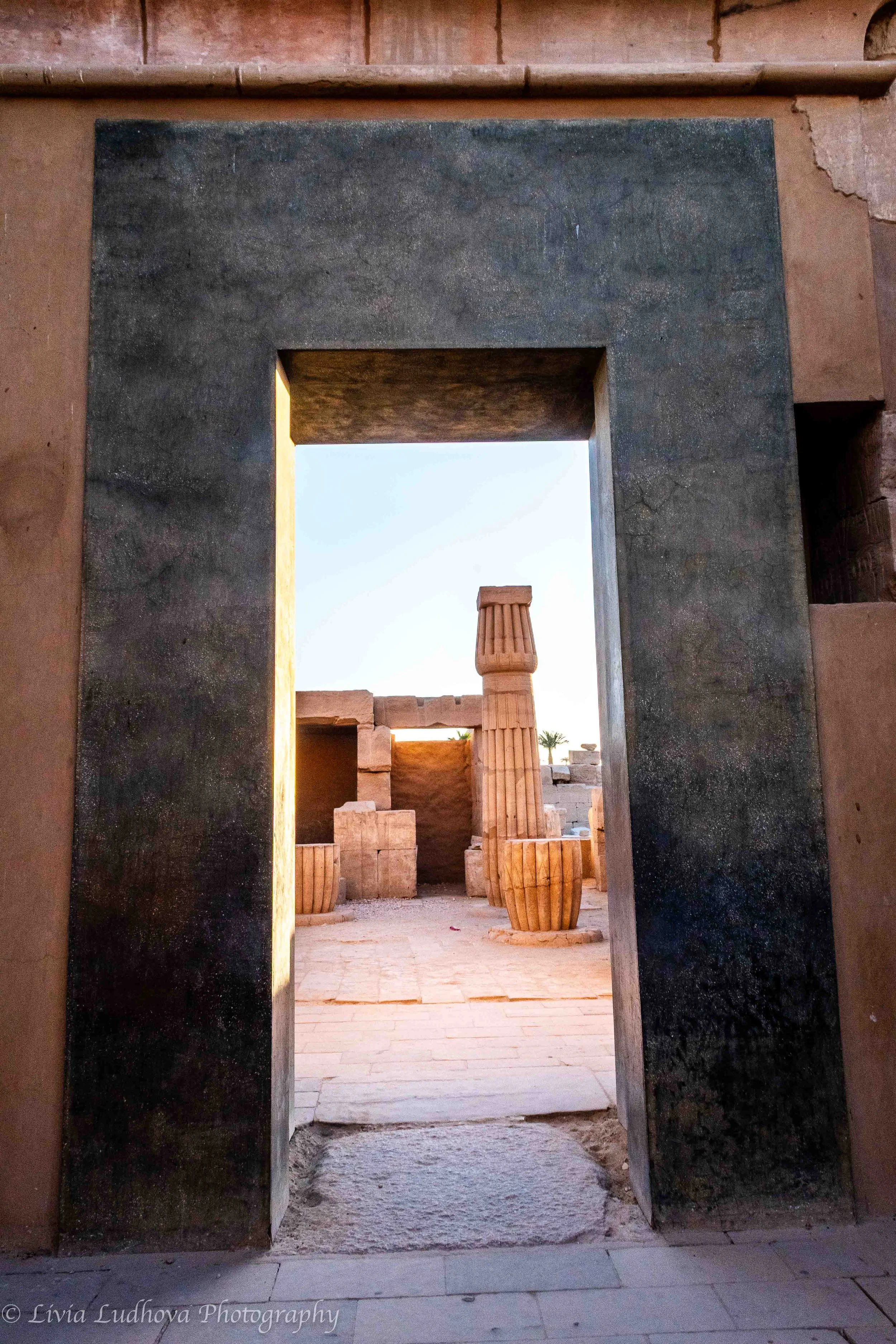
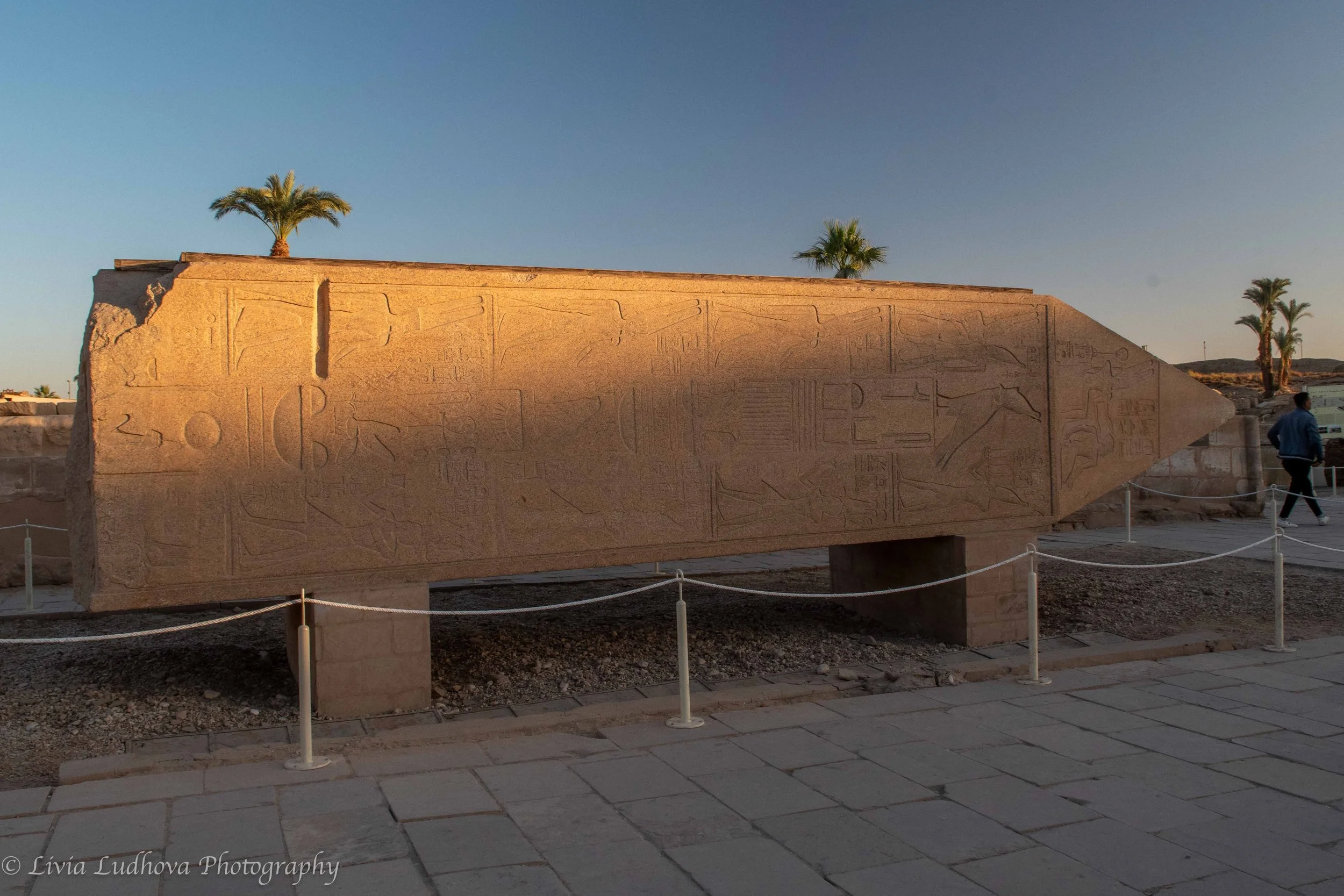
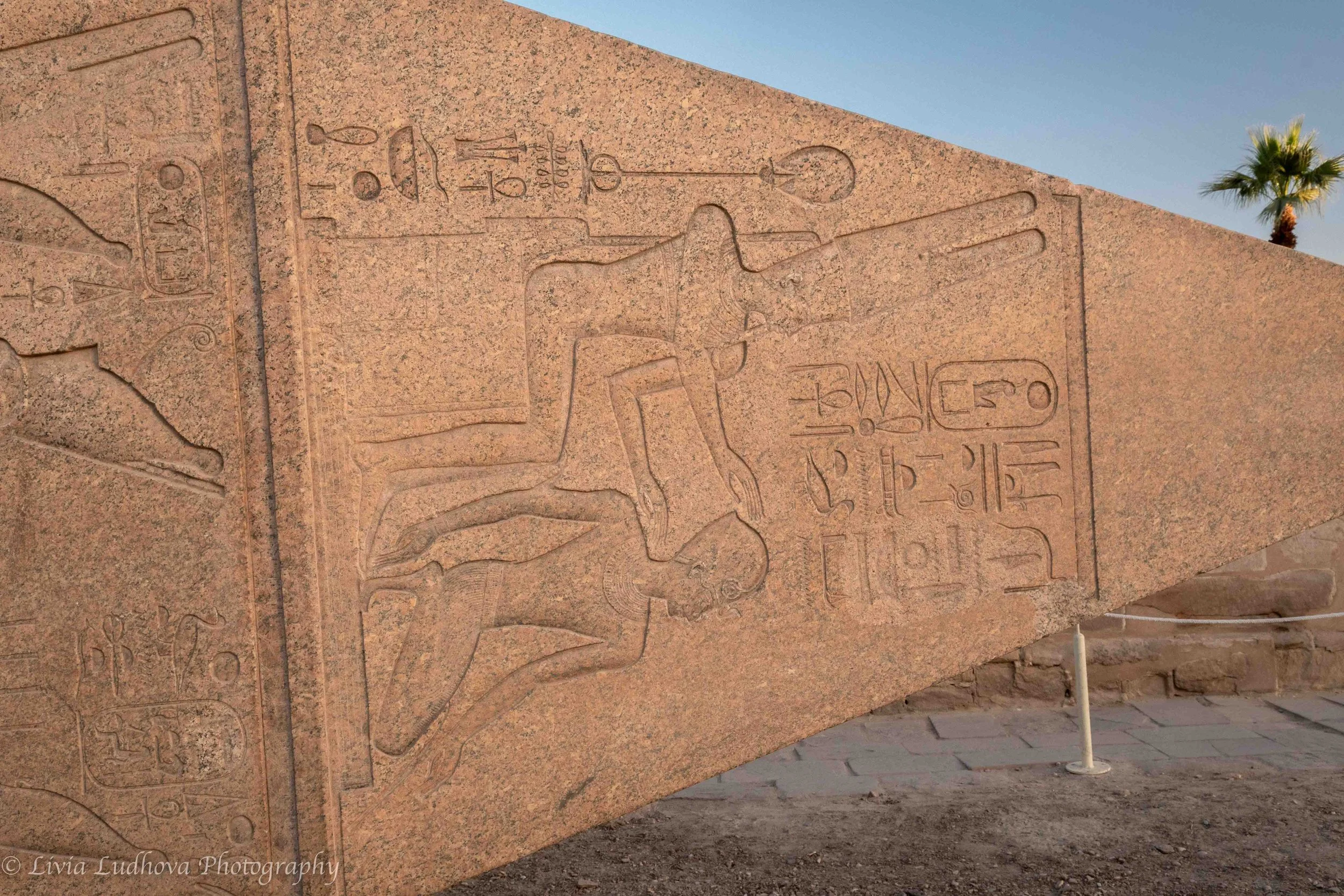
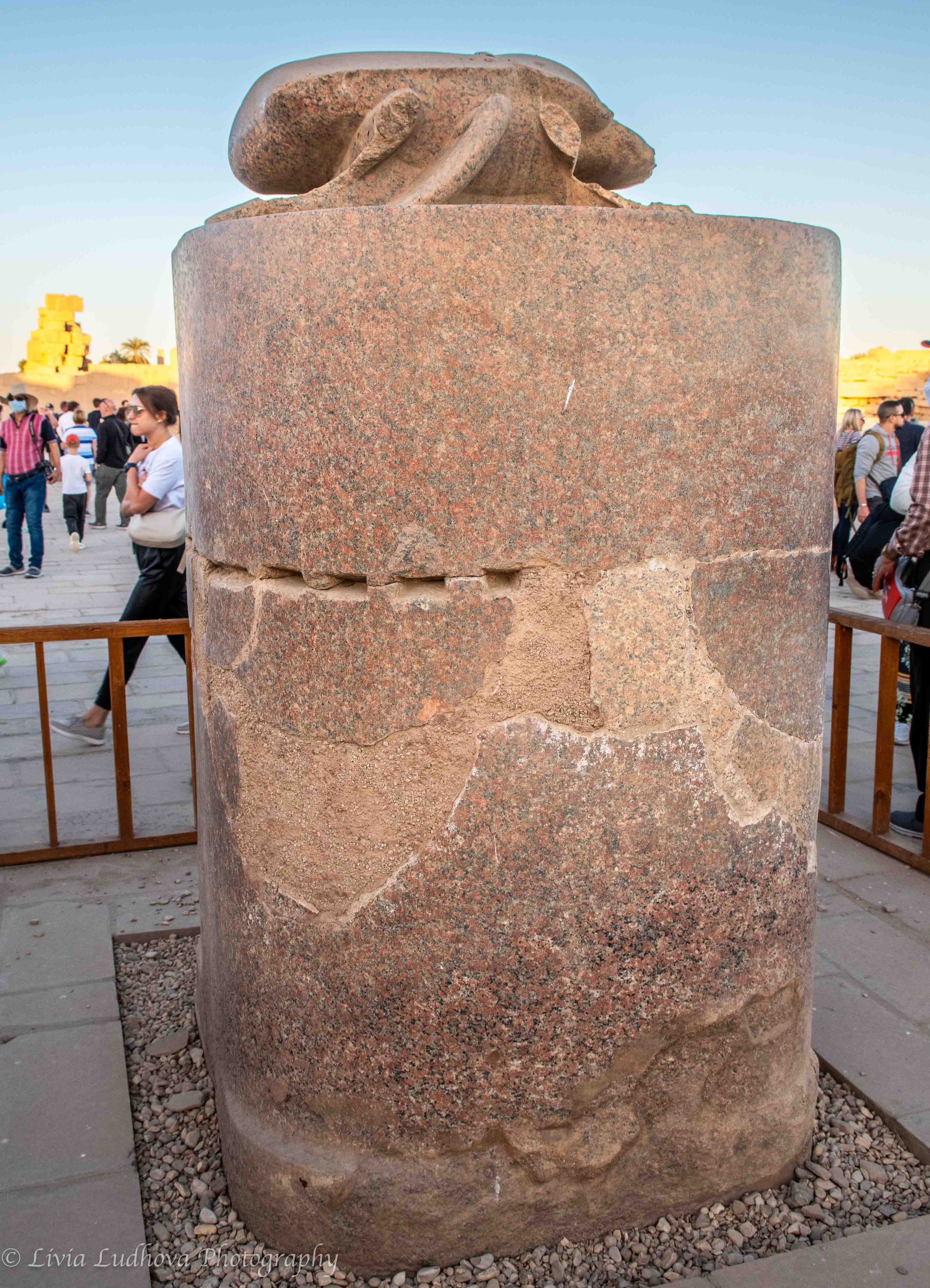
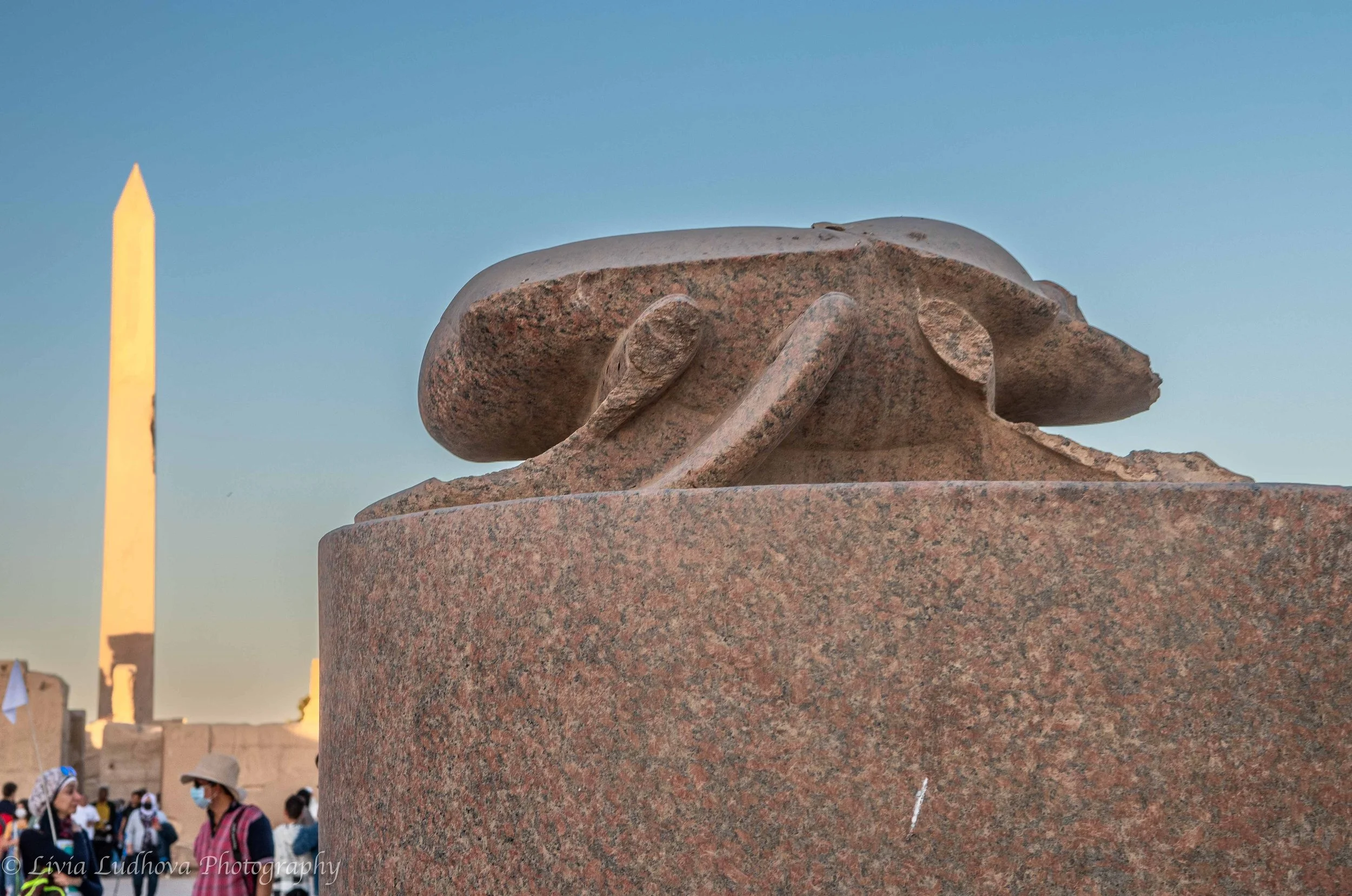
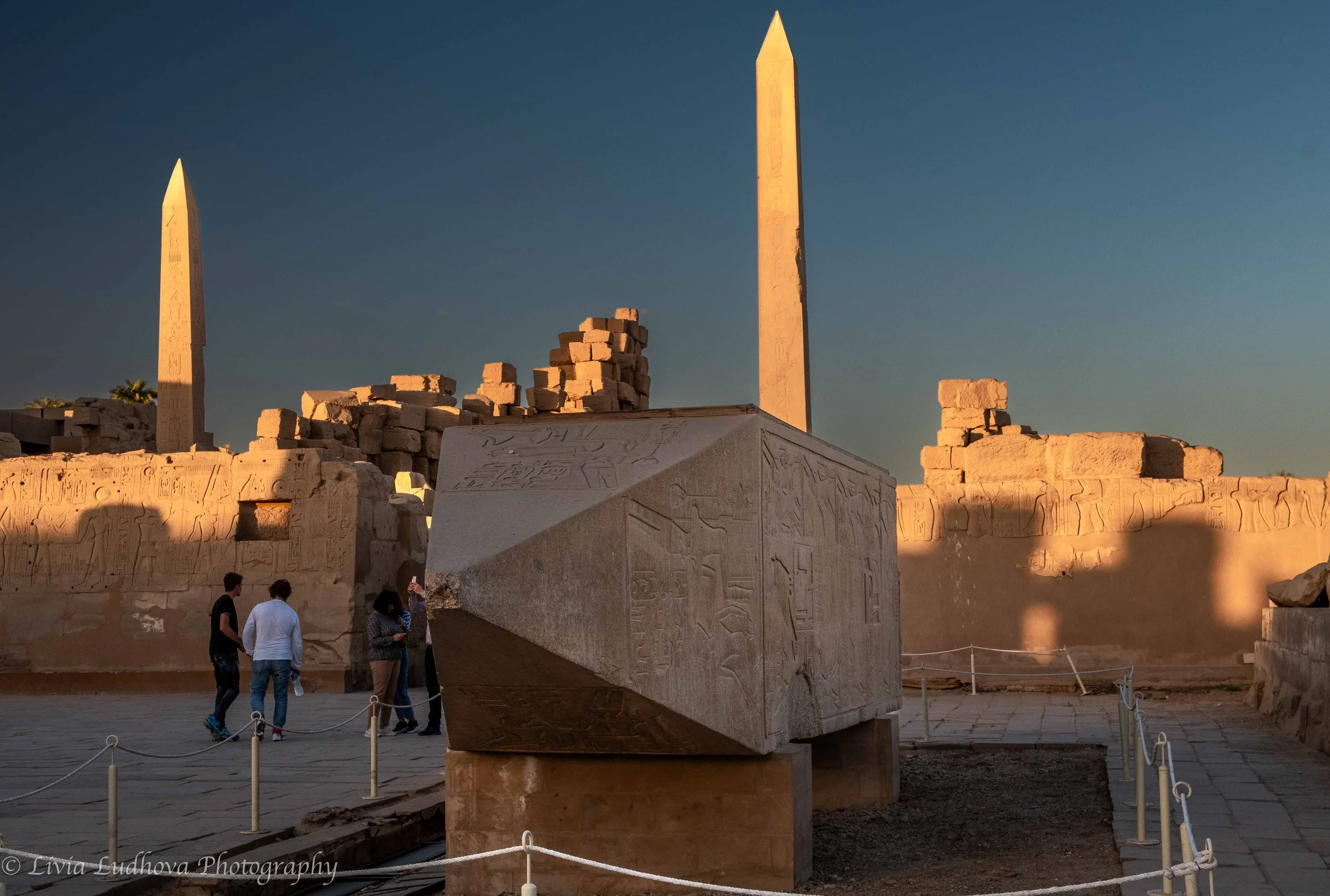
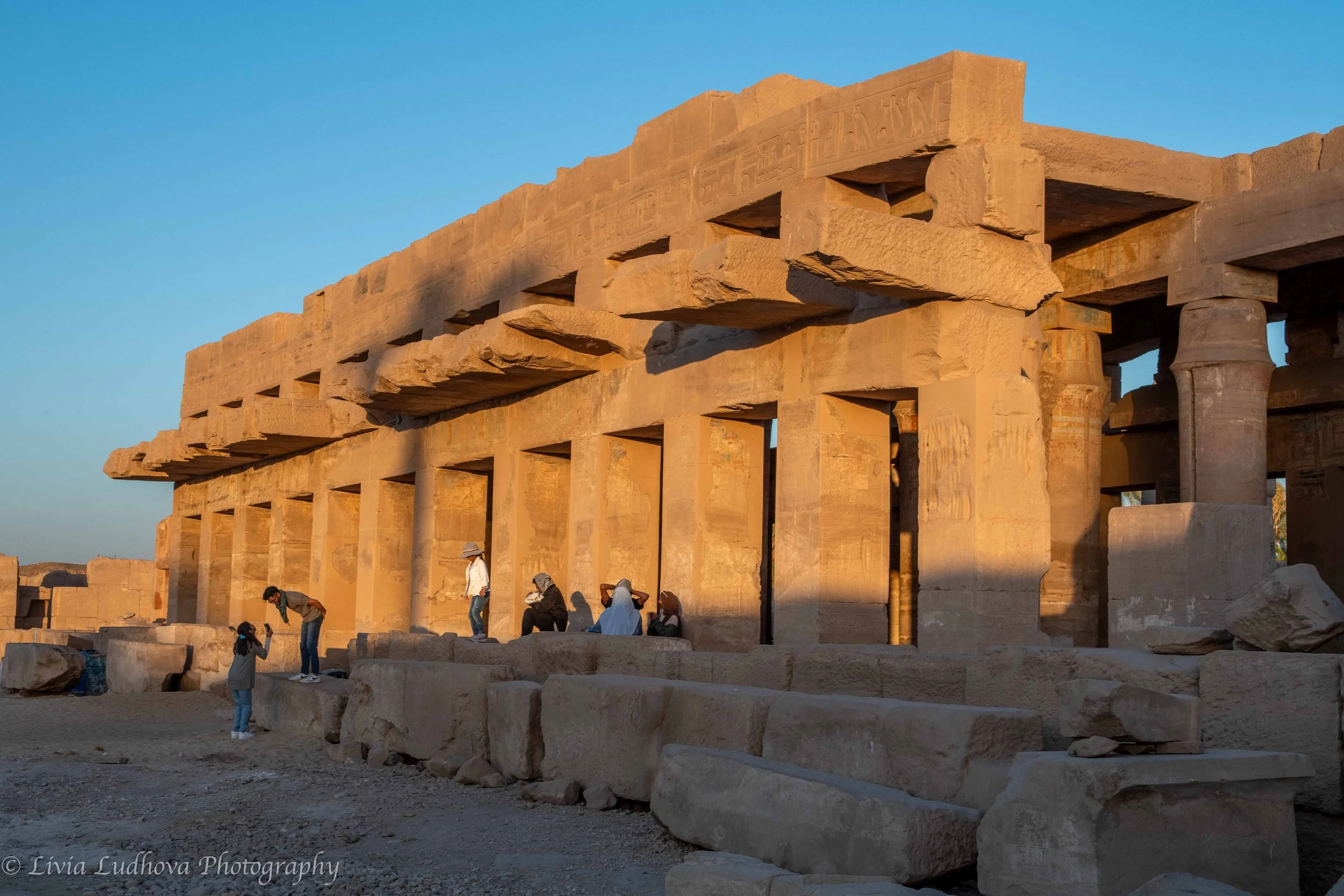
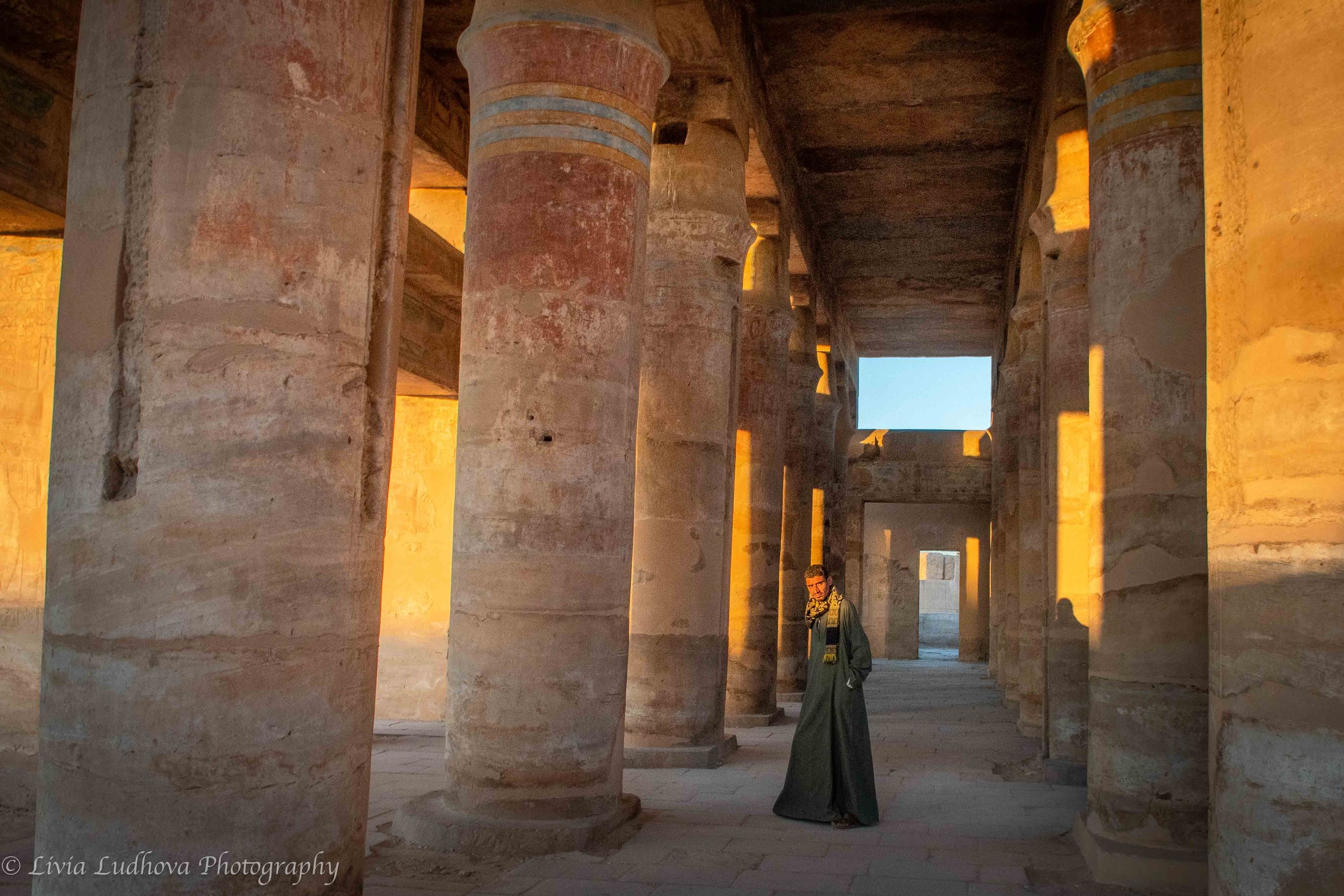
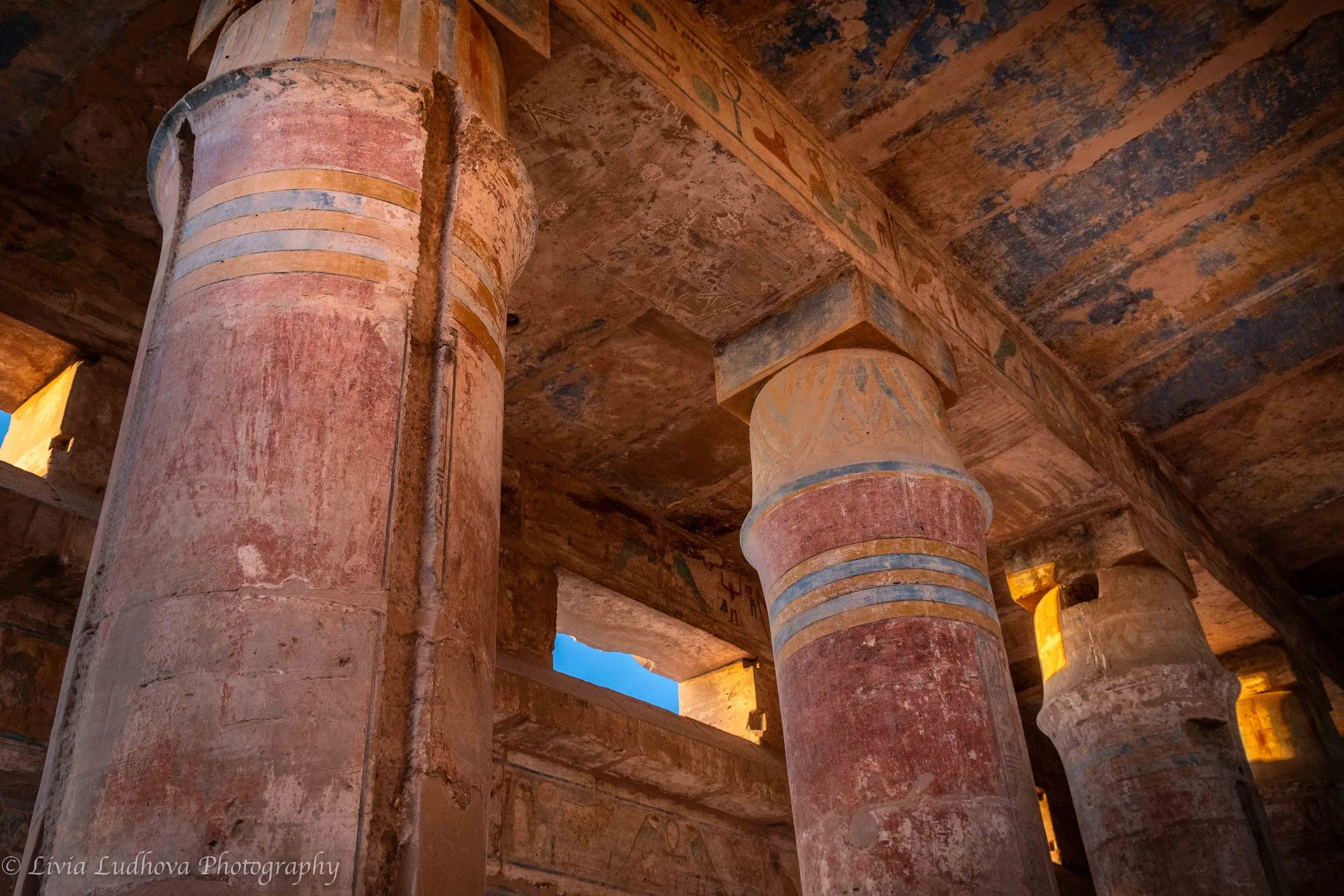
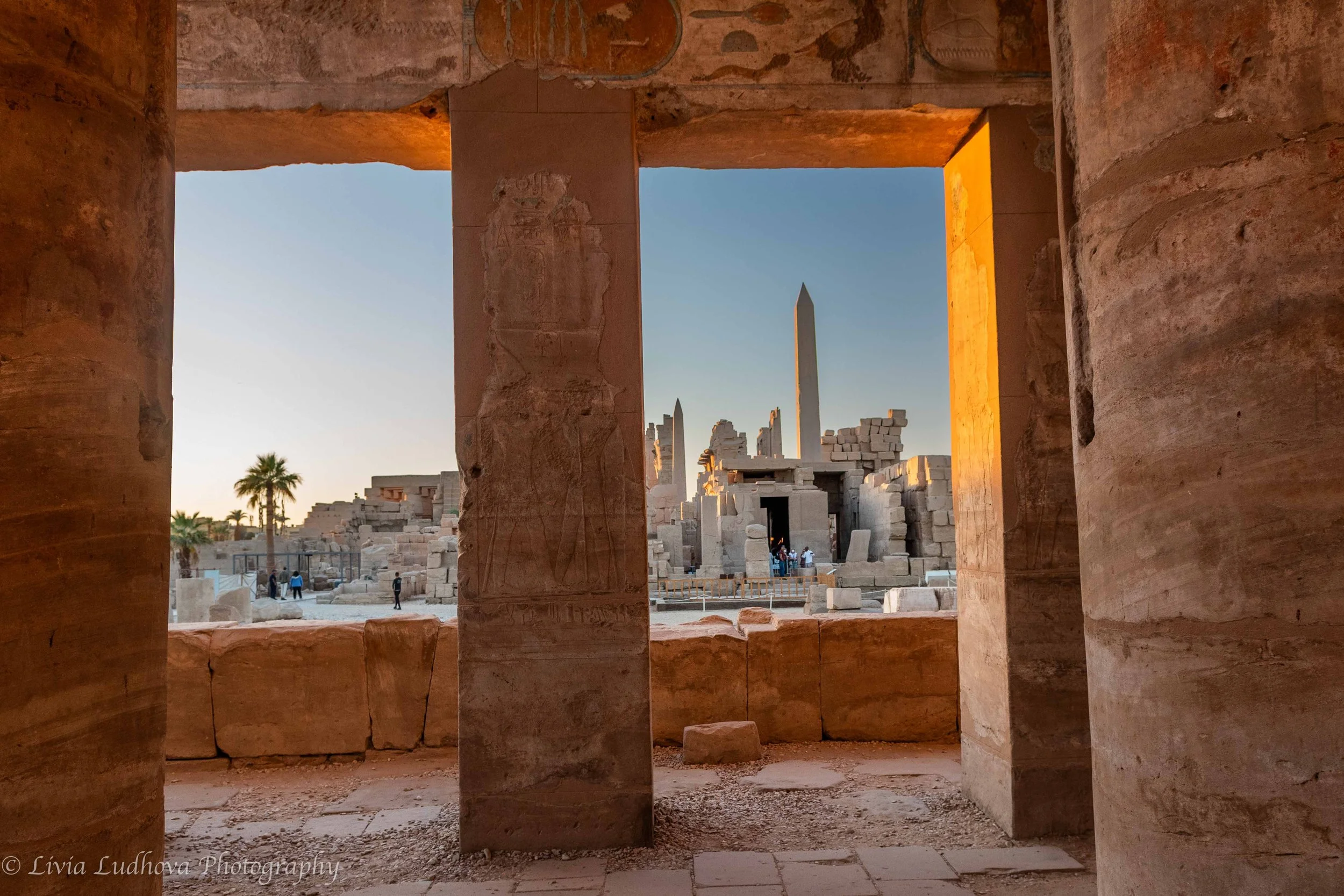
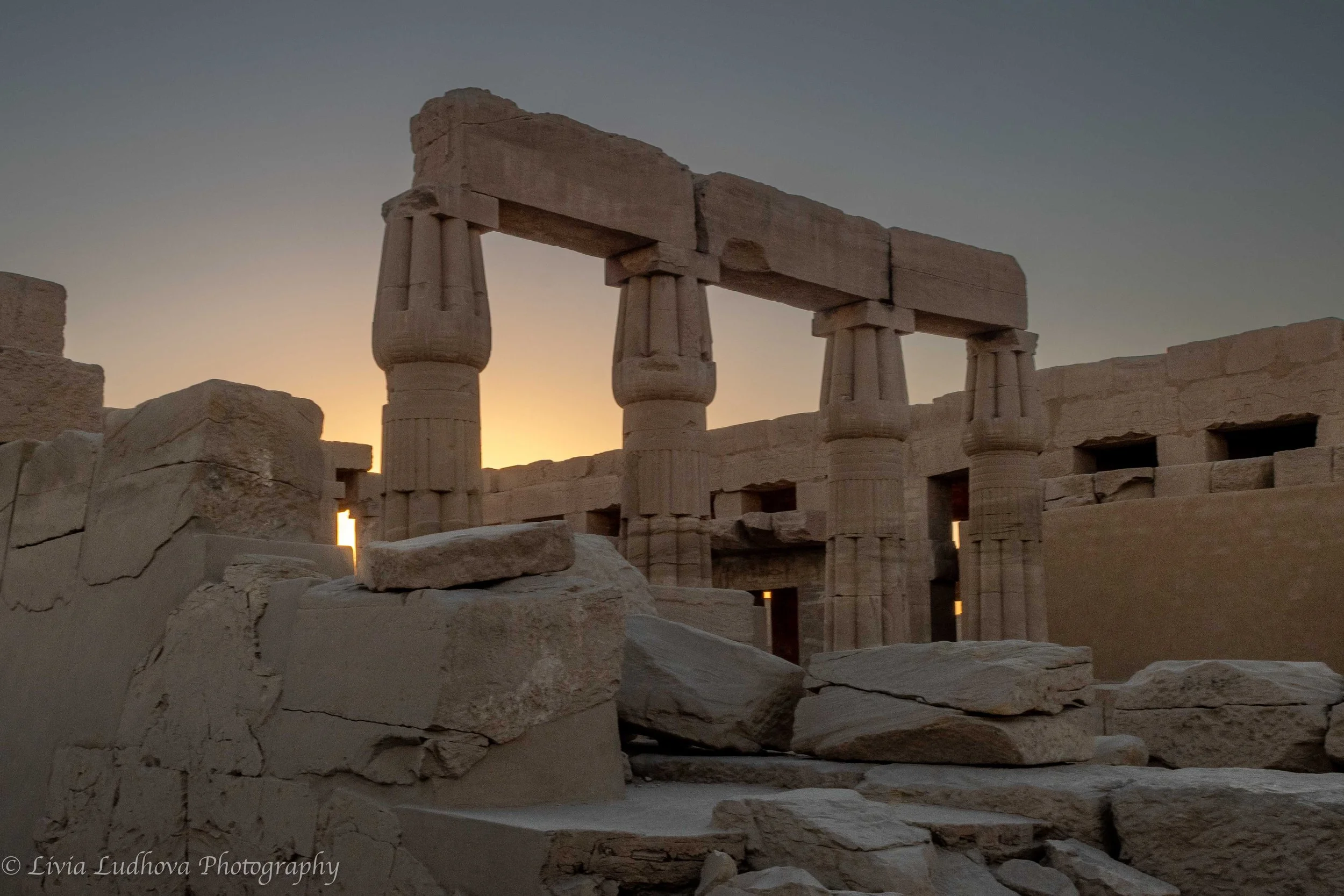
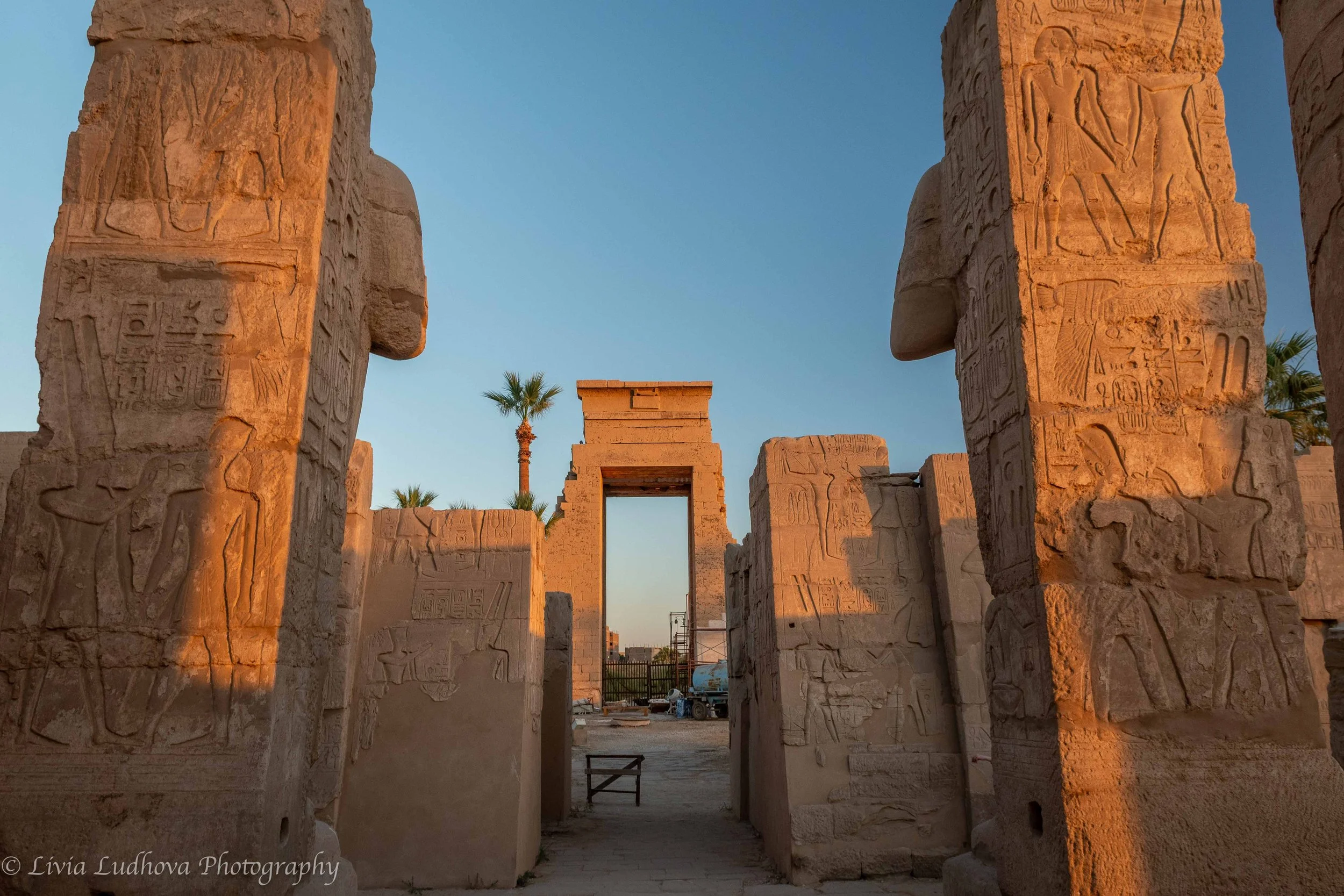
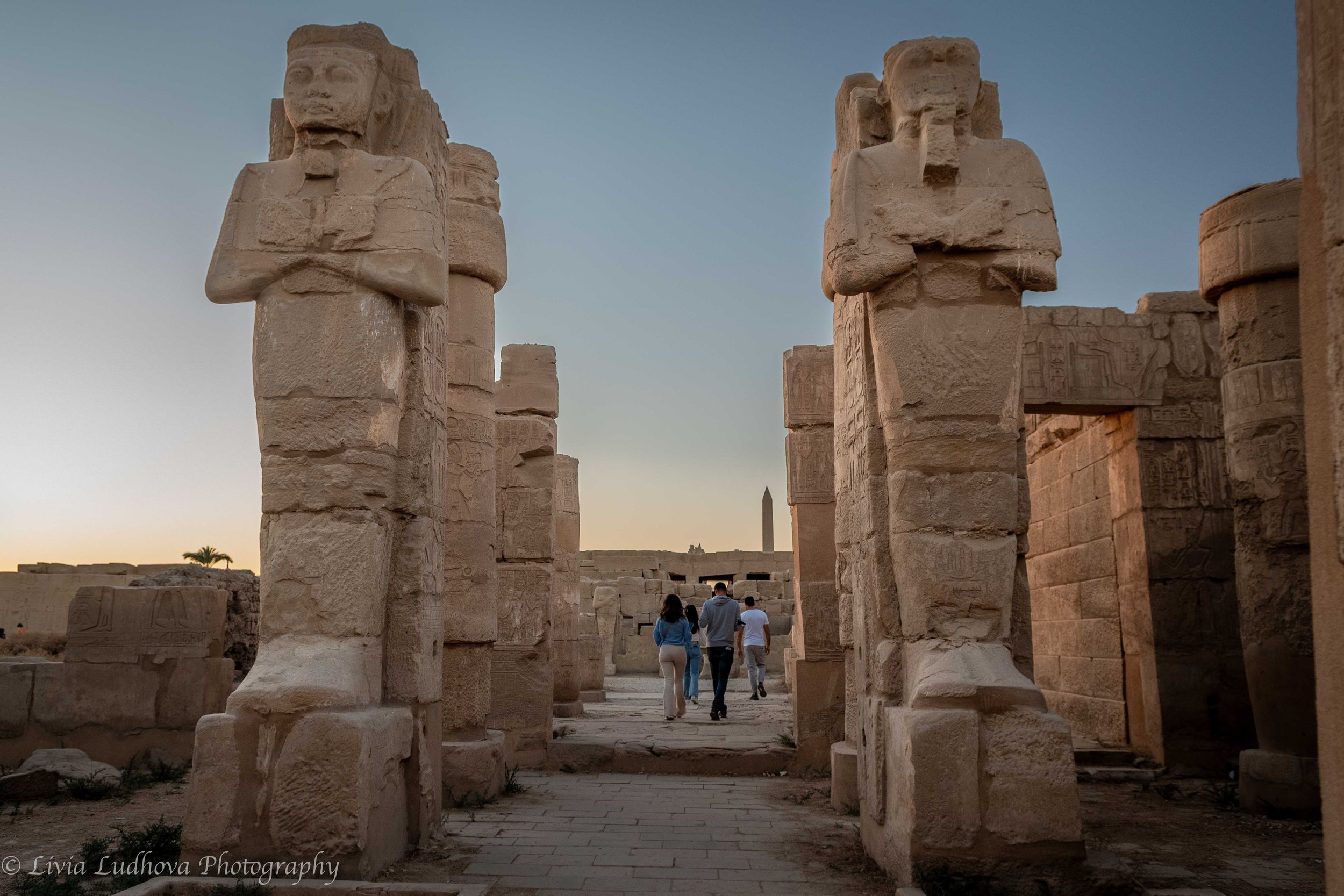
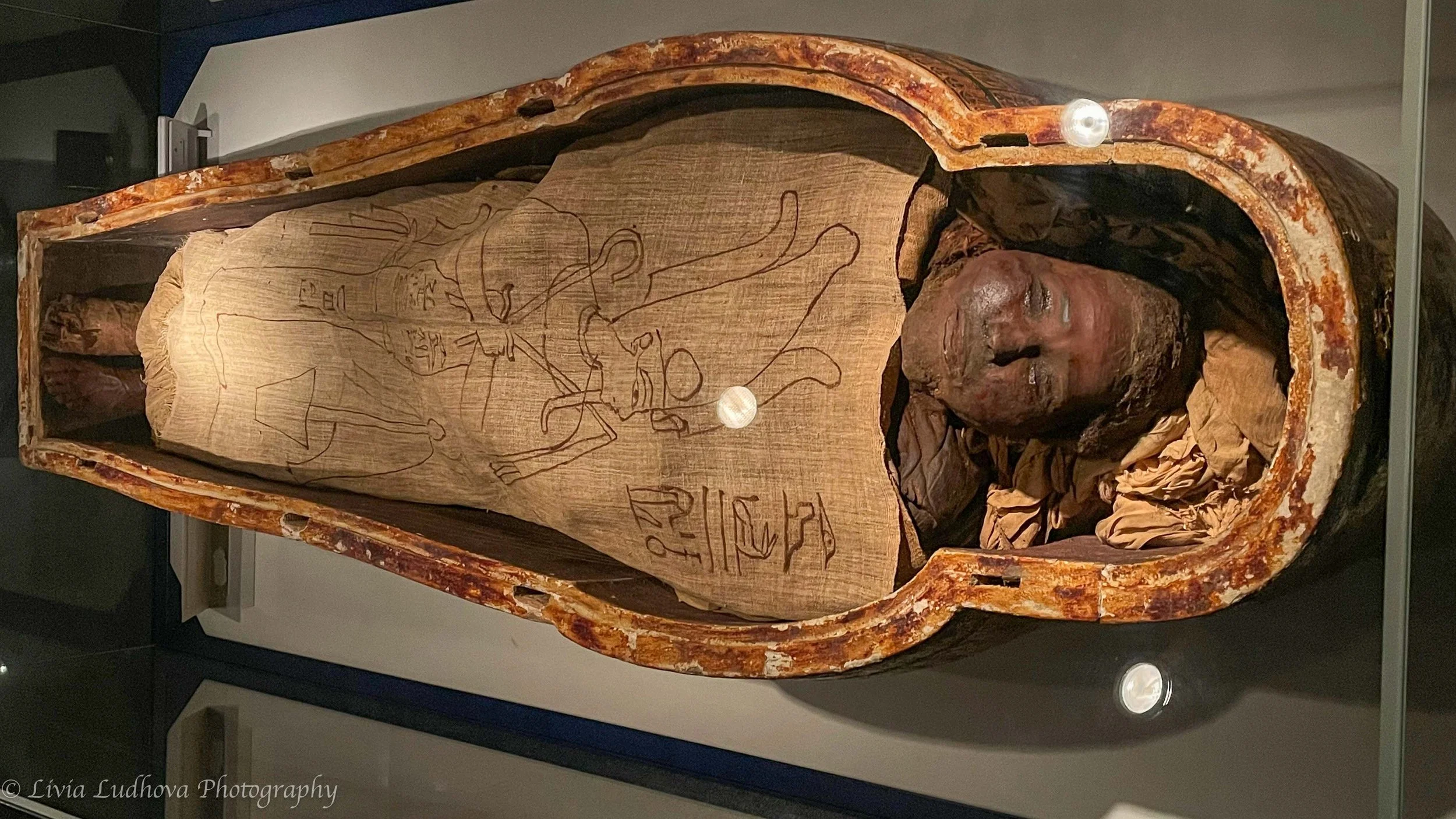
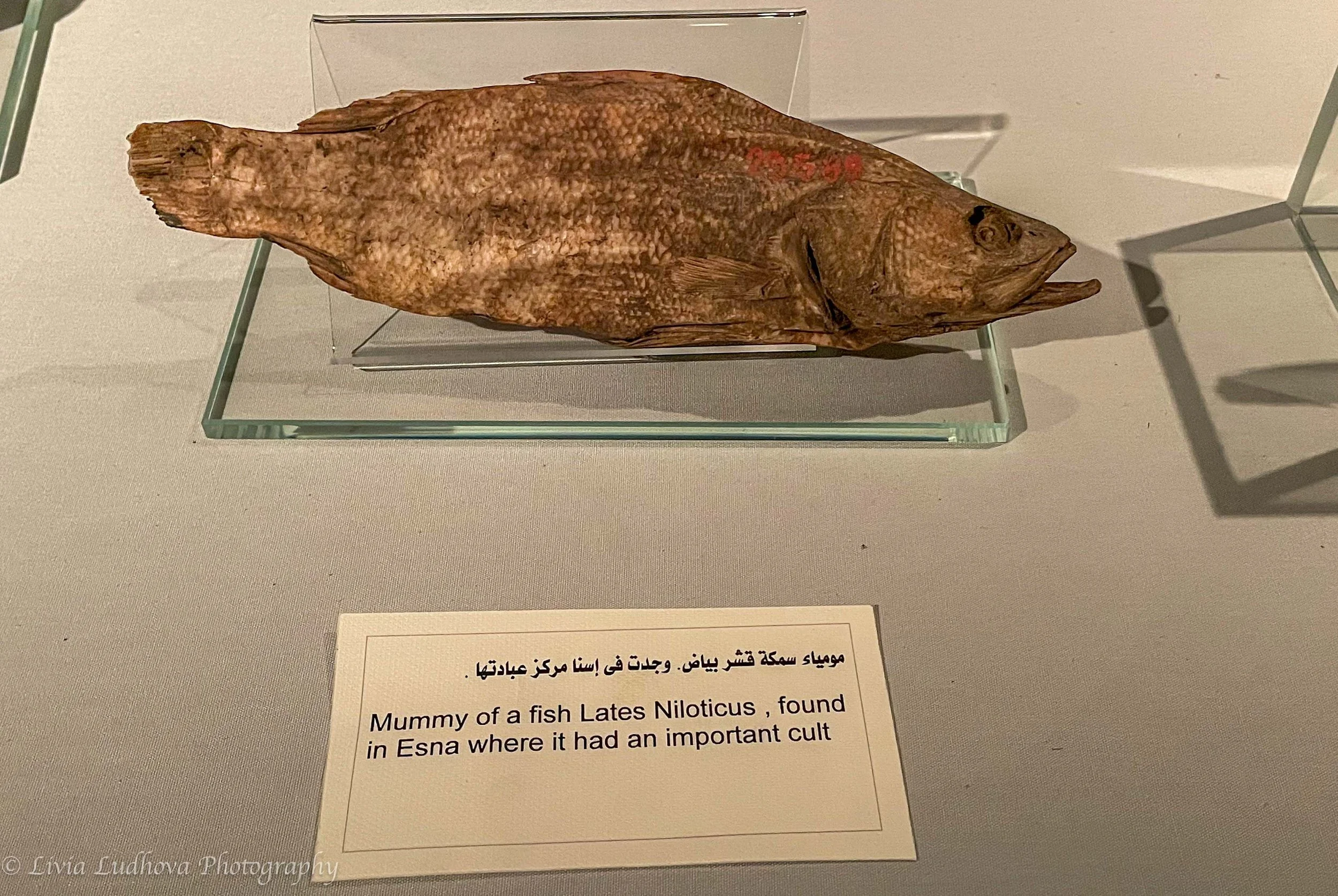
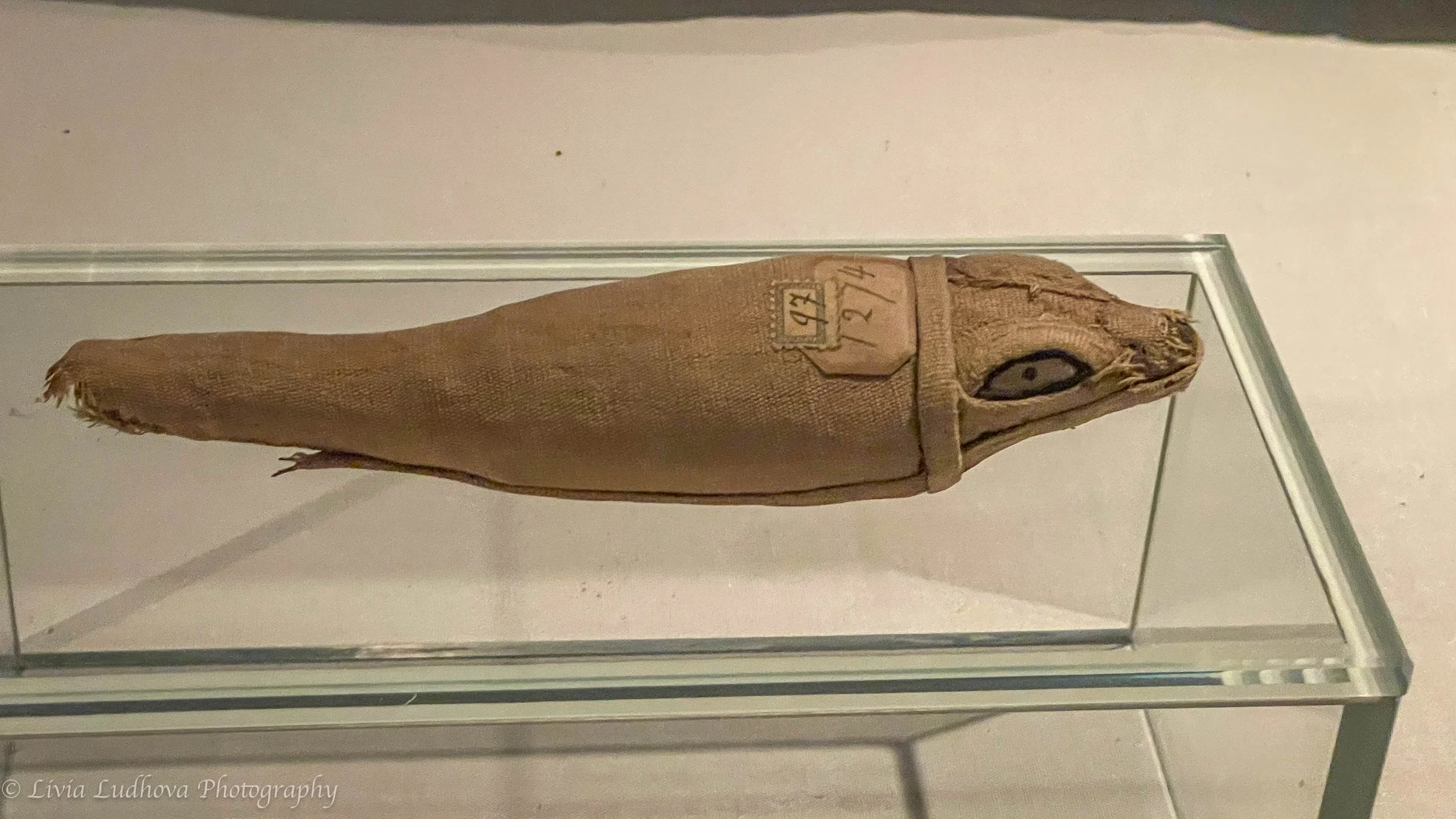
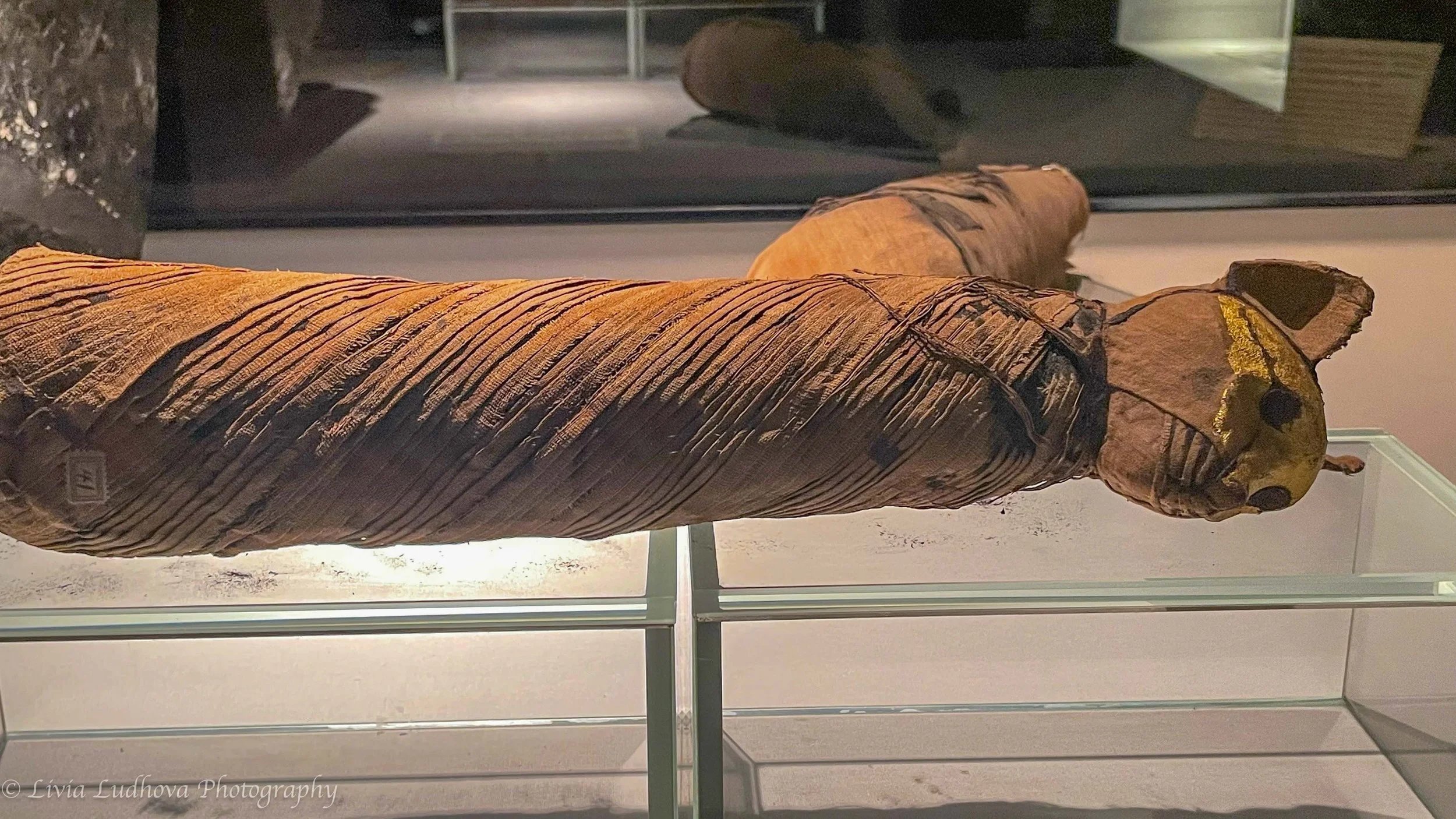
The day began at sunrise with a visit to the Temple of Khnum in Esna, built mainly in the Ptolemaic and Roman periods (3rd century BCE–2nd century CE), where the early light highlighted the well-preserved reliefs and inscriptions; after travelling to Luxor, the afternoon was spent at the Karnak Temple, developed from the Middle Kingdom (c. 2000 BCE) to the Ptolemaic period (c. 30 BCE), with a walk through the main axis and the Great Hypostyle Hall; the day ended with a short visit to the Mummification Museum, offering a clear overview of ancient Egyptian mummification practices.
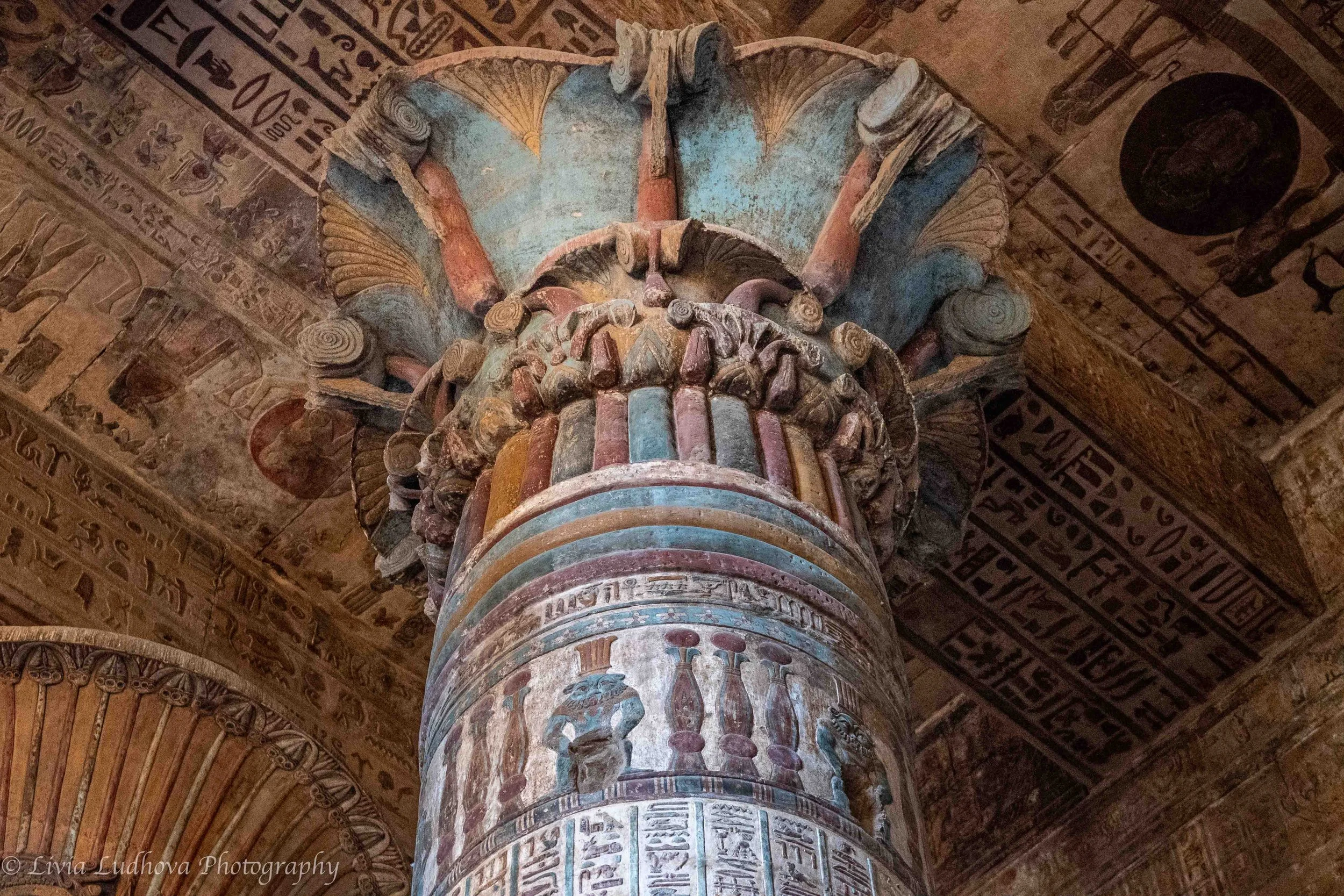
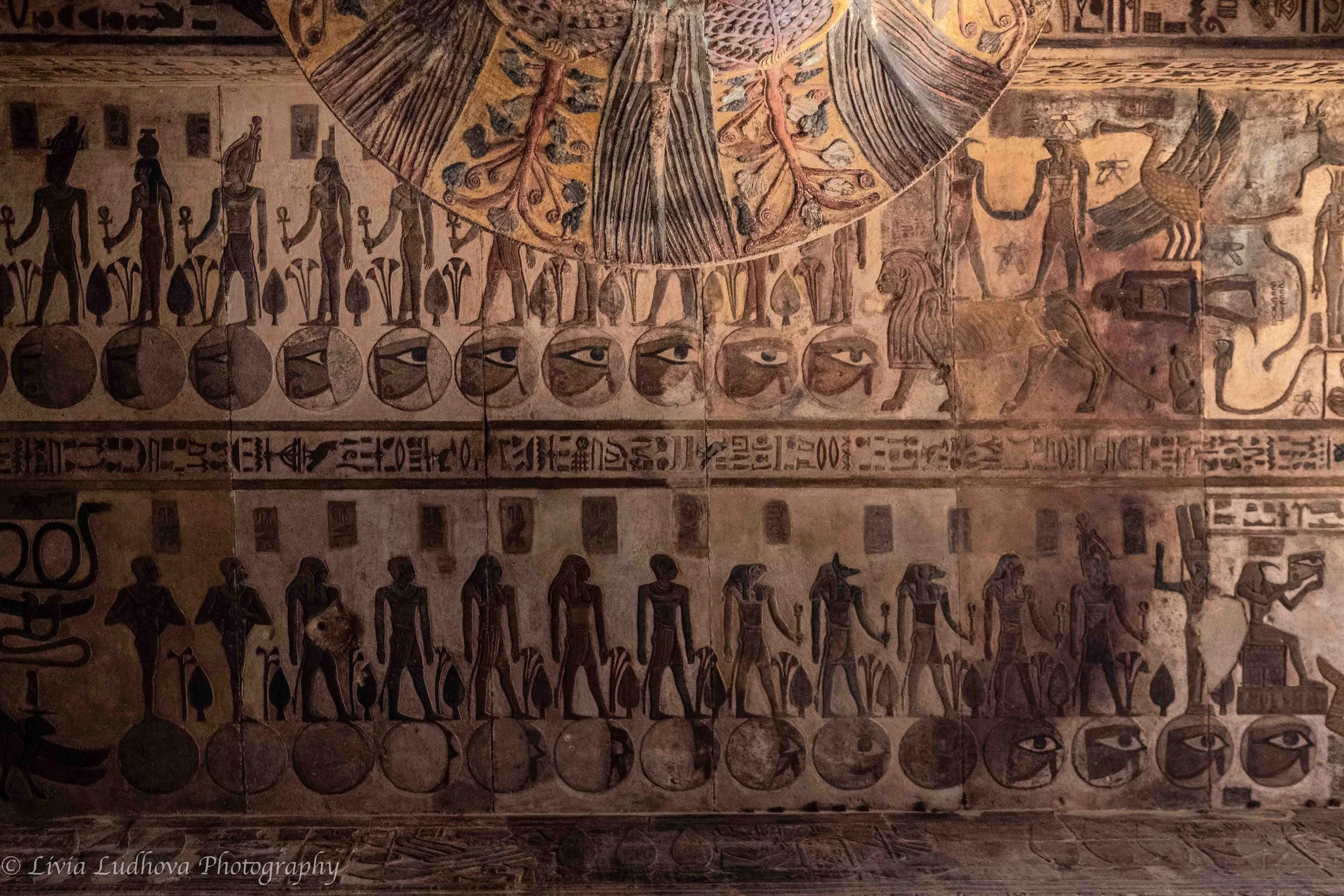
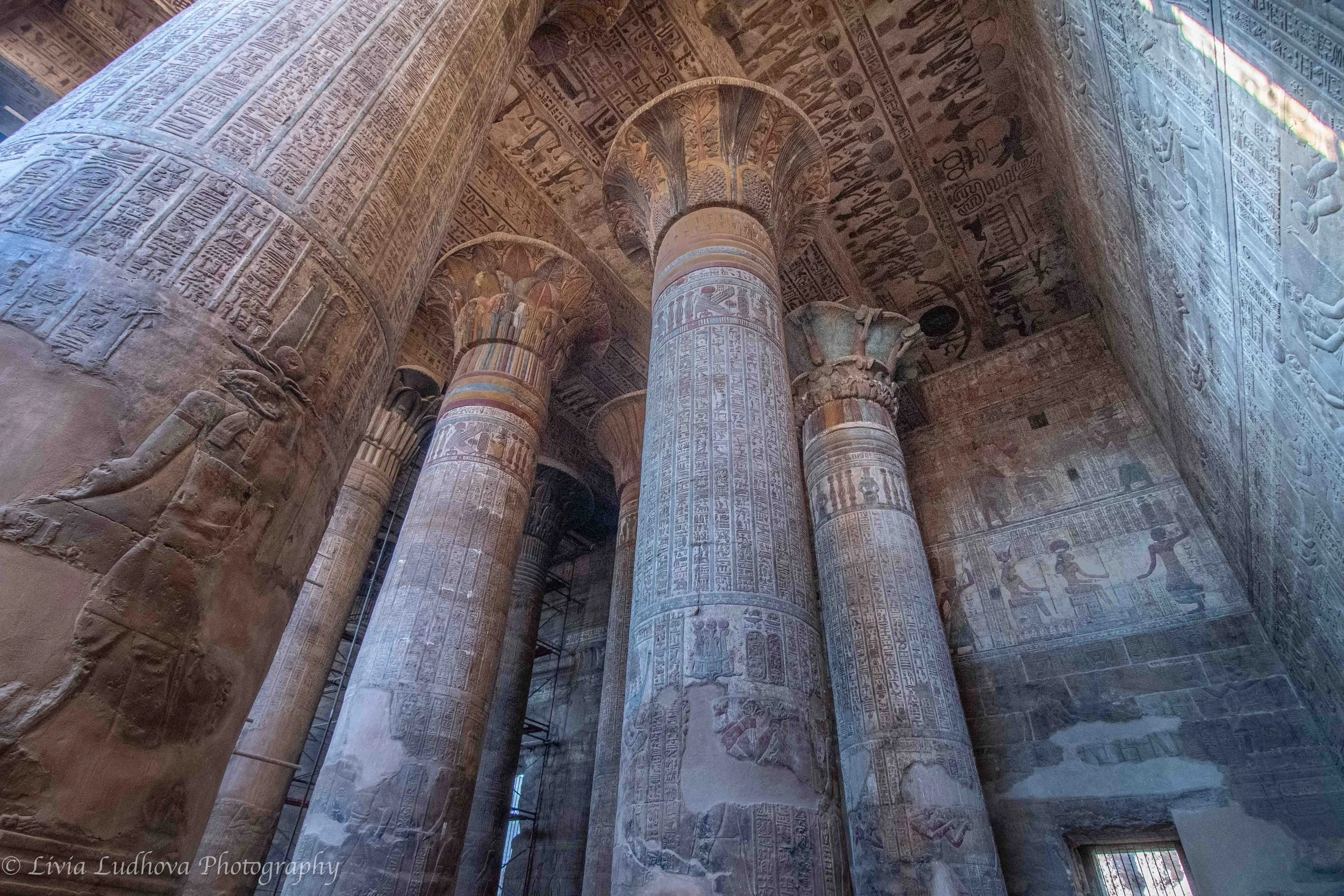
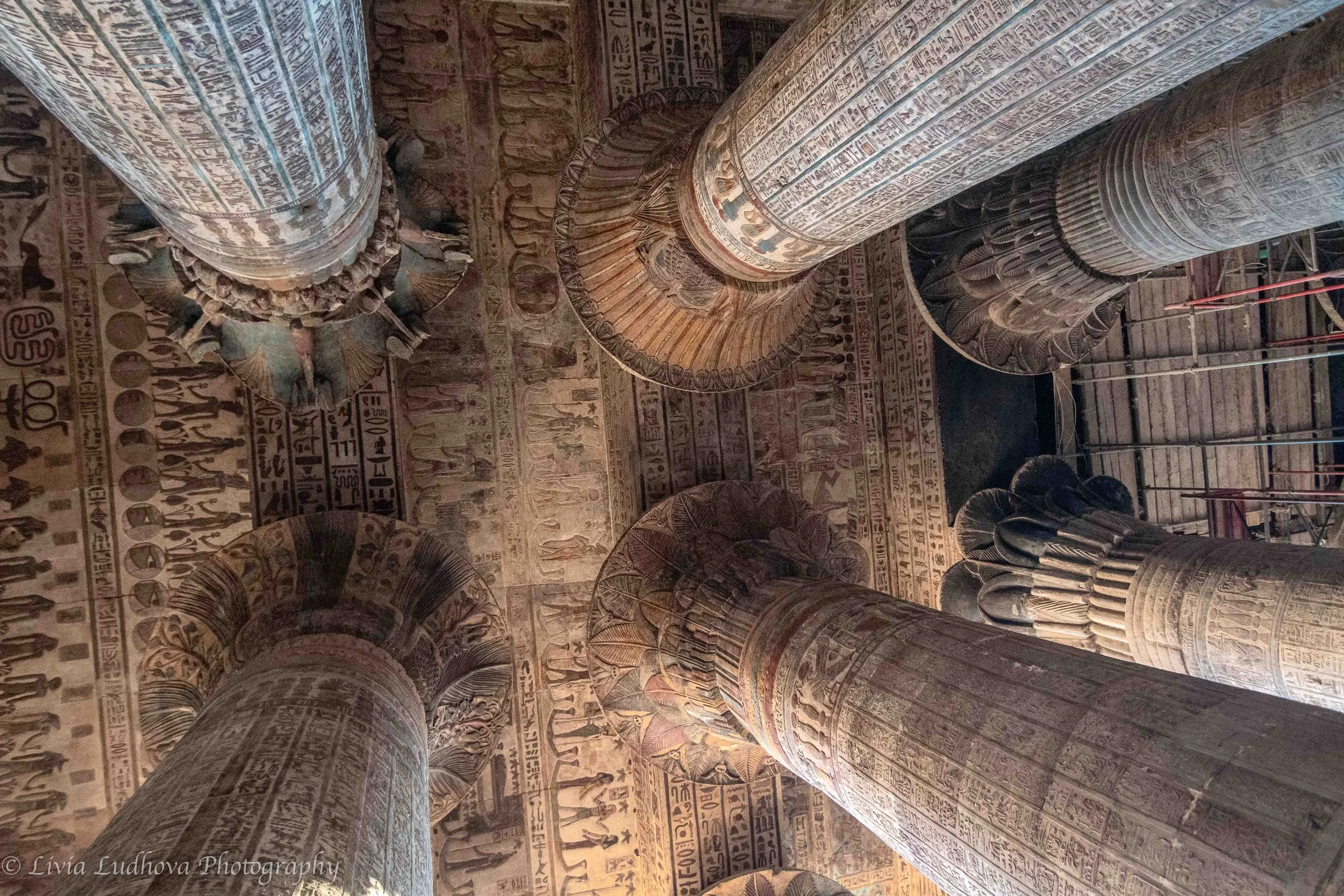
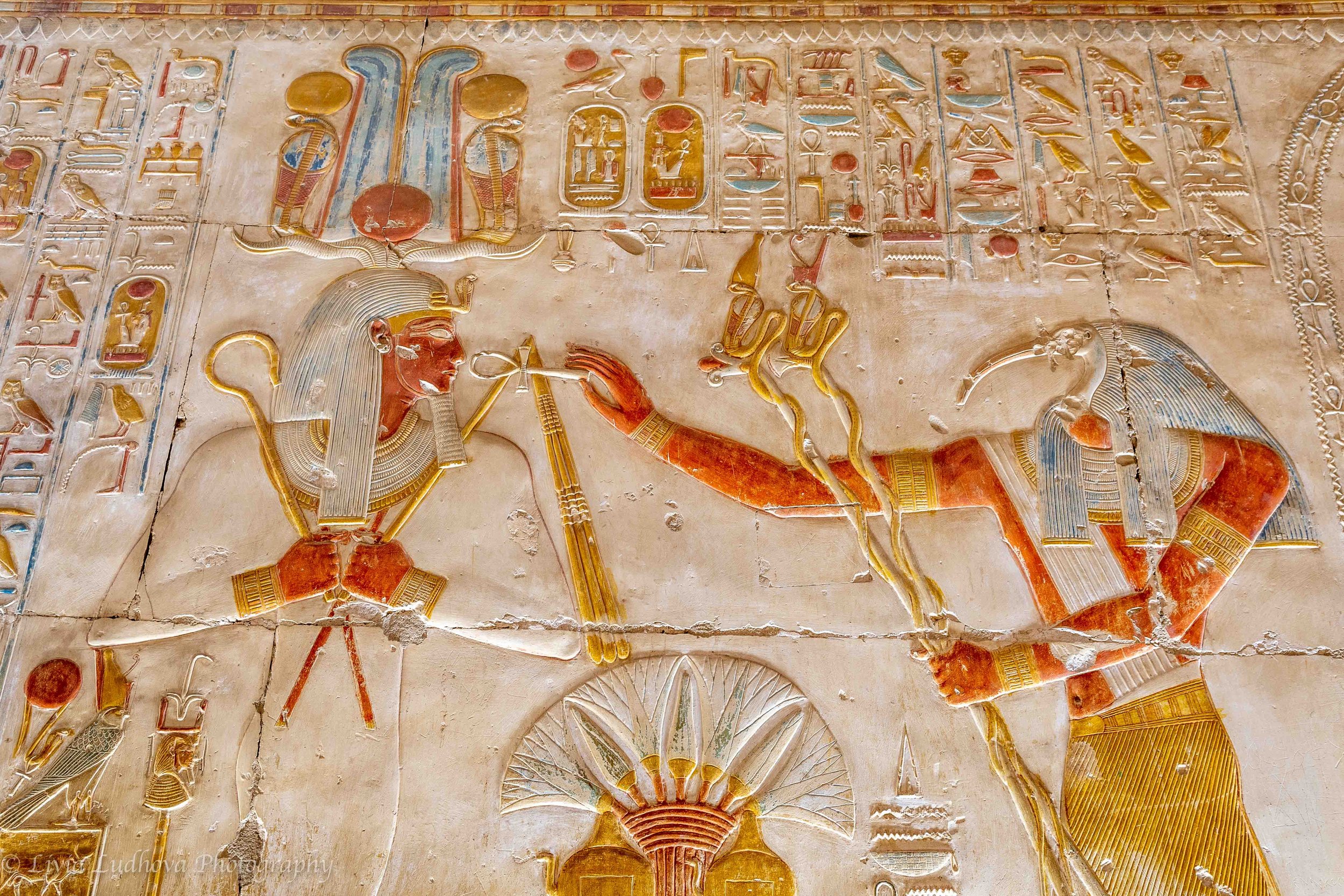
Day 6: Abydoss and Dendera
Dec 31 Seti I temple in Abydoss and Dendera temple of Hathor
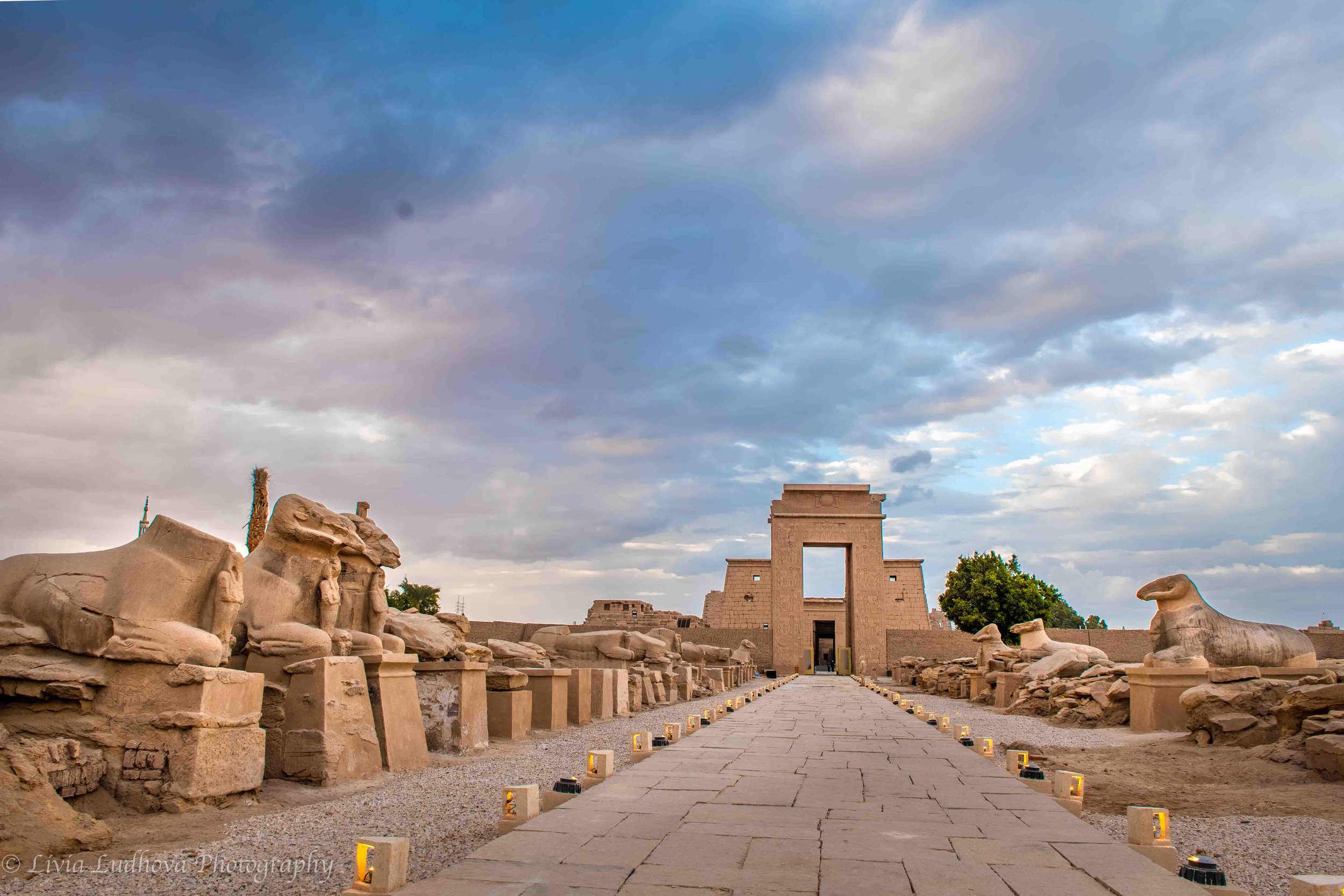
Day 7: Luxor East Bank II
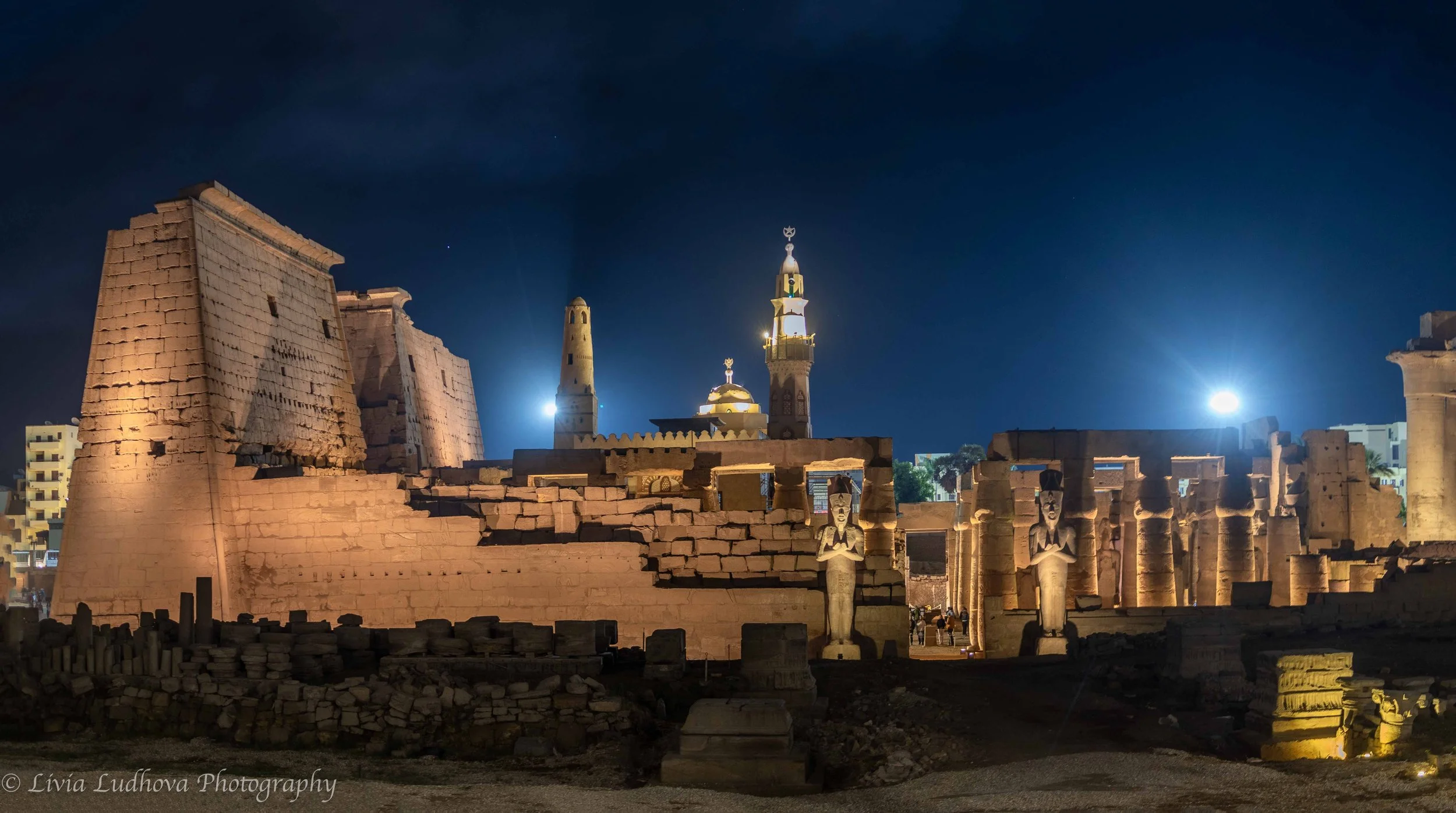
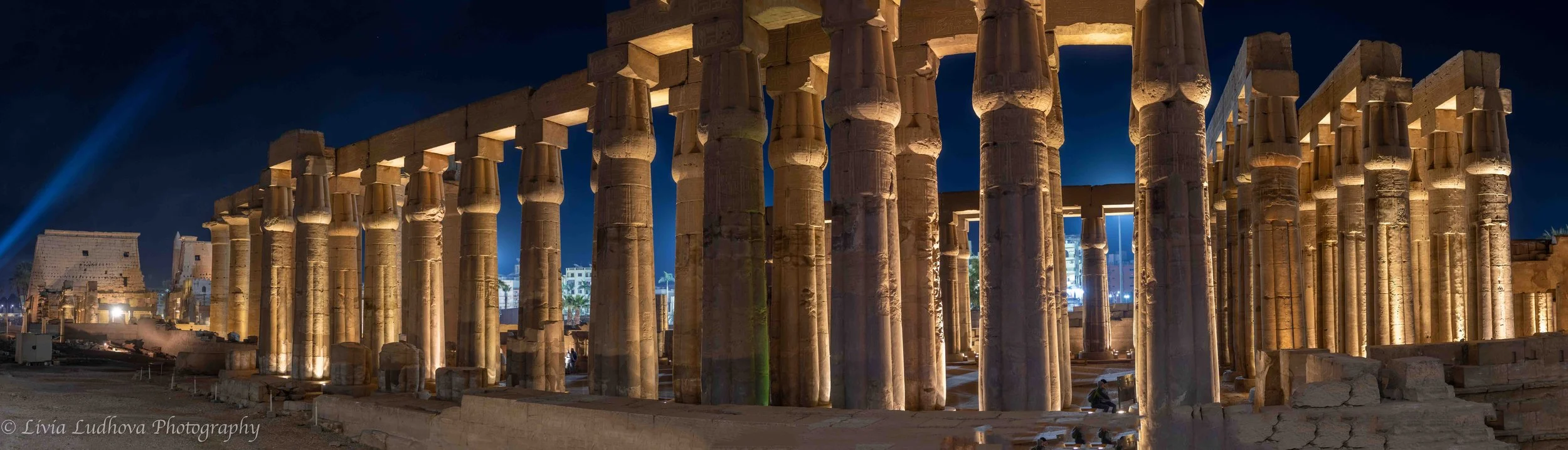
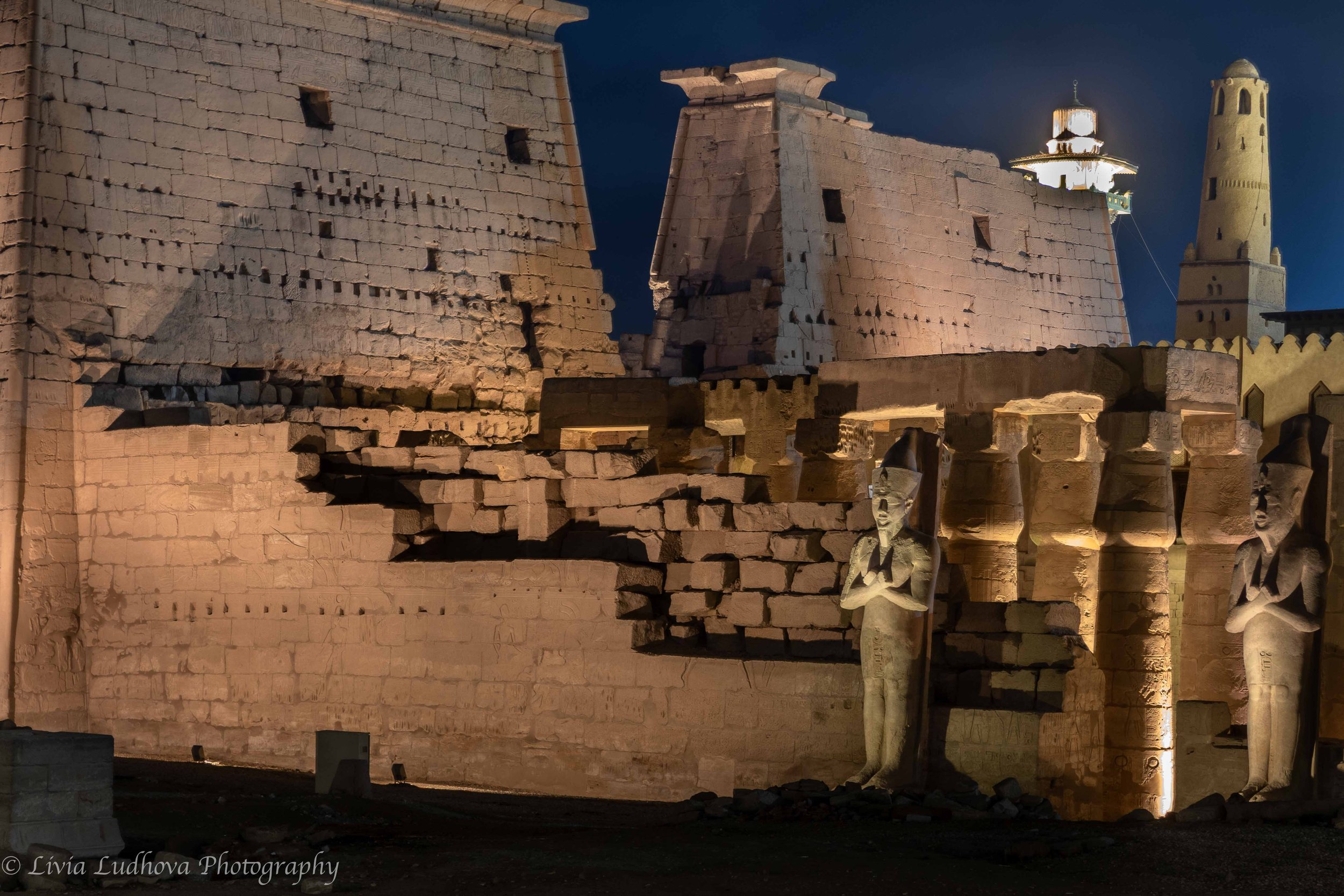
Jan 1 Luxor East Bank: Luxor Temple - Karnak Temple – Luxor Museum – Karnak sound and light show
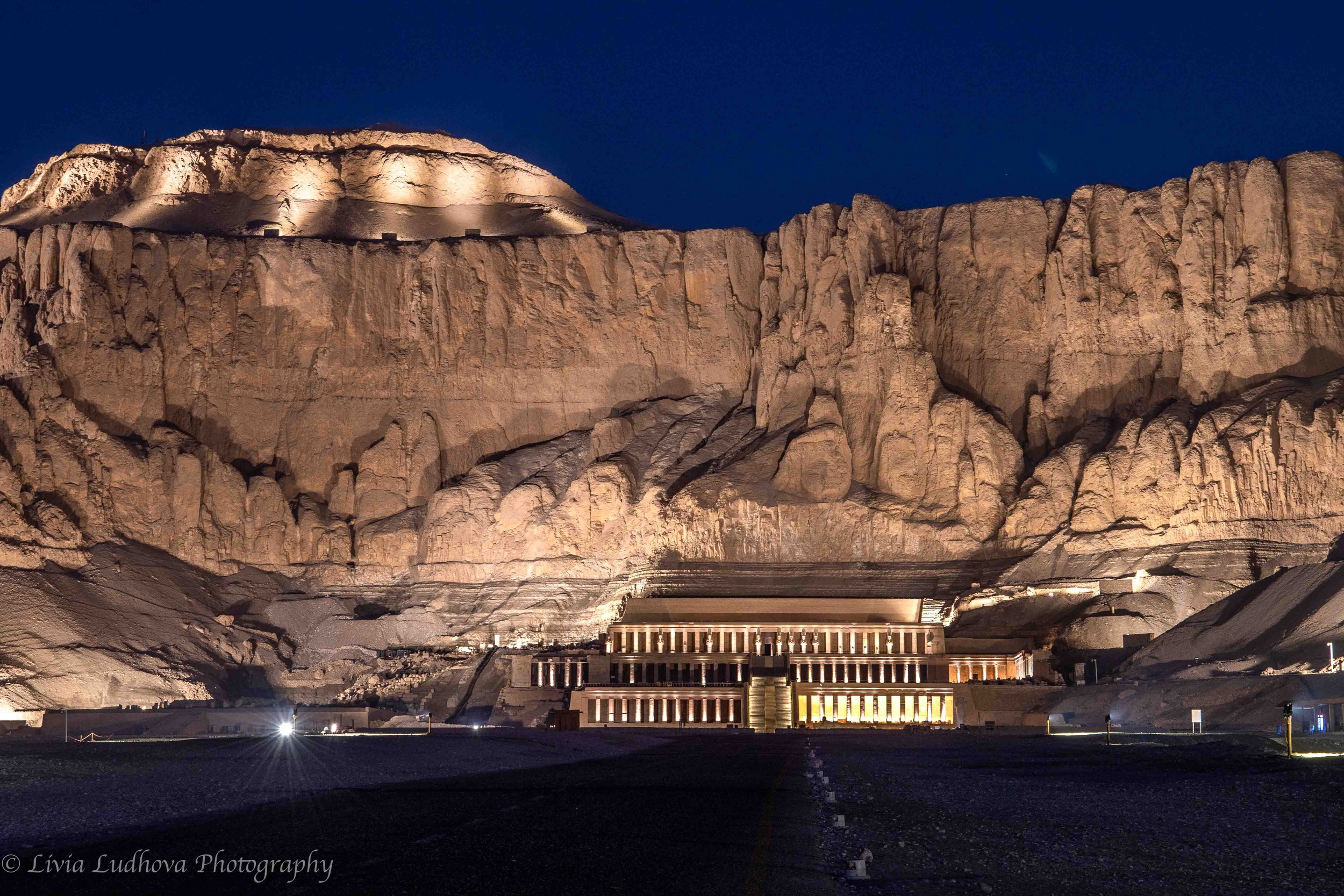
Day 8: Luxor West Bank I
Jan 2: Luxor West Bank 1: Valley of the Kings (tombs KV1 Ramesses VII, KV 6 Ramesses IX, KV 8 Merenptah , KV 9 RamessesV & VI, KV 11 Ramesses III, KV 14 Tausert - Setnakht, KV 15 Sety II, KV 16 Ramesses the first, KV 17 Seti the first, KV 47 Siptah, KV 63 Tutankhamen) – Carter House - Hatshepsut temple –Habbu Temple - Colossi of Memnon
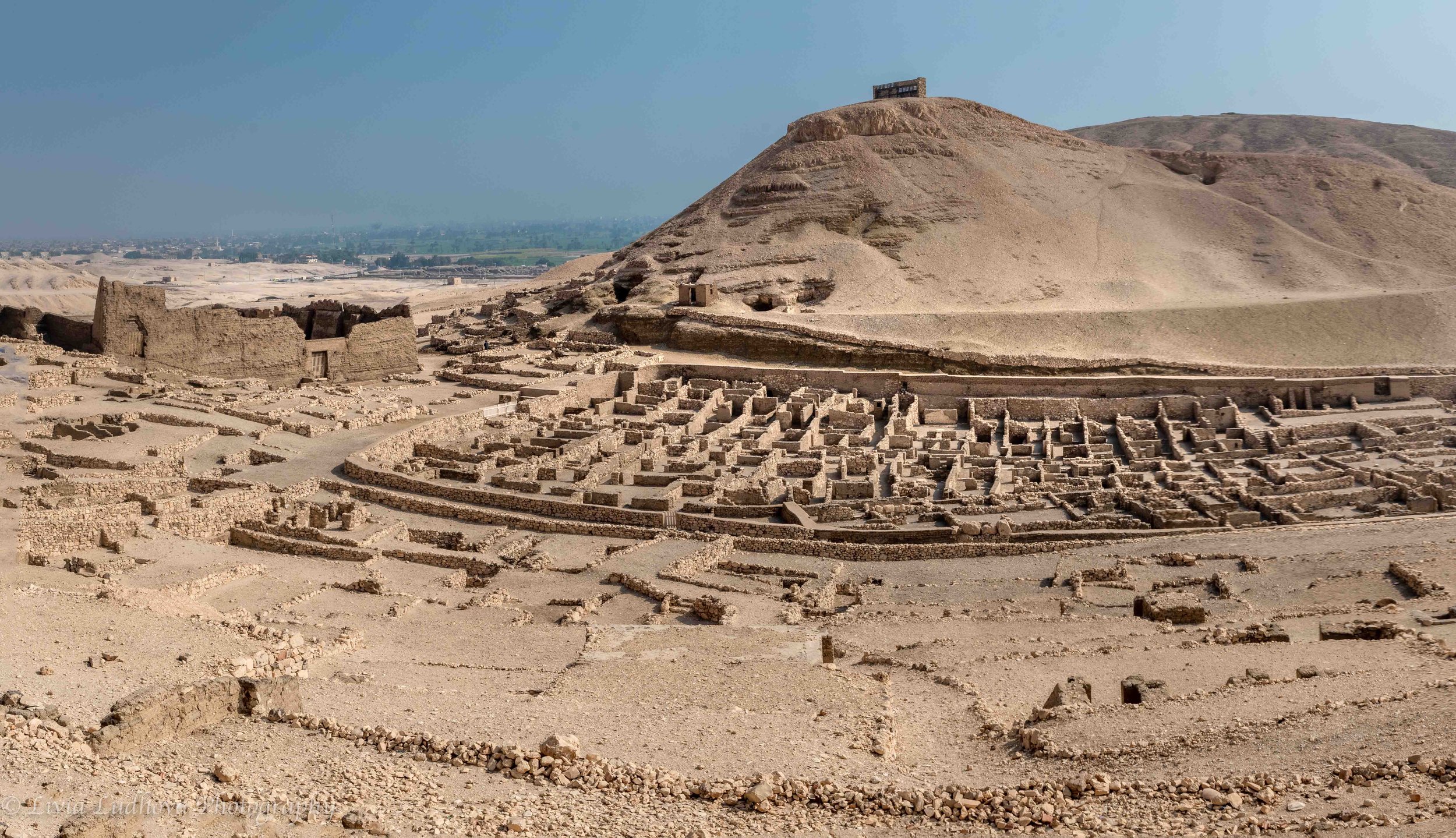
Day 9: Luxor West Bank II
Jan 3: Luxor West Bank 2: Tombs of the Nobels (Rekhmira No 100, Sennefer No 96, Ramose No 55 10th Dynasty) - Ramsseum - Deir el Medina (Sennutem, Inherkha/Amherkha No 350, Pashedu tombs) - Seti I Funerary Temple – Valley of the Queens (tombs of Nefertari, prince Amonchopeshfu, Titi No 52, prince Kha Em Wast )
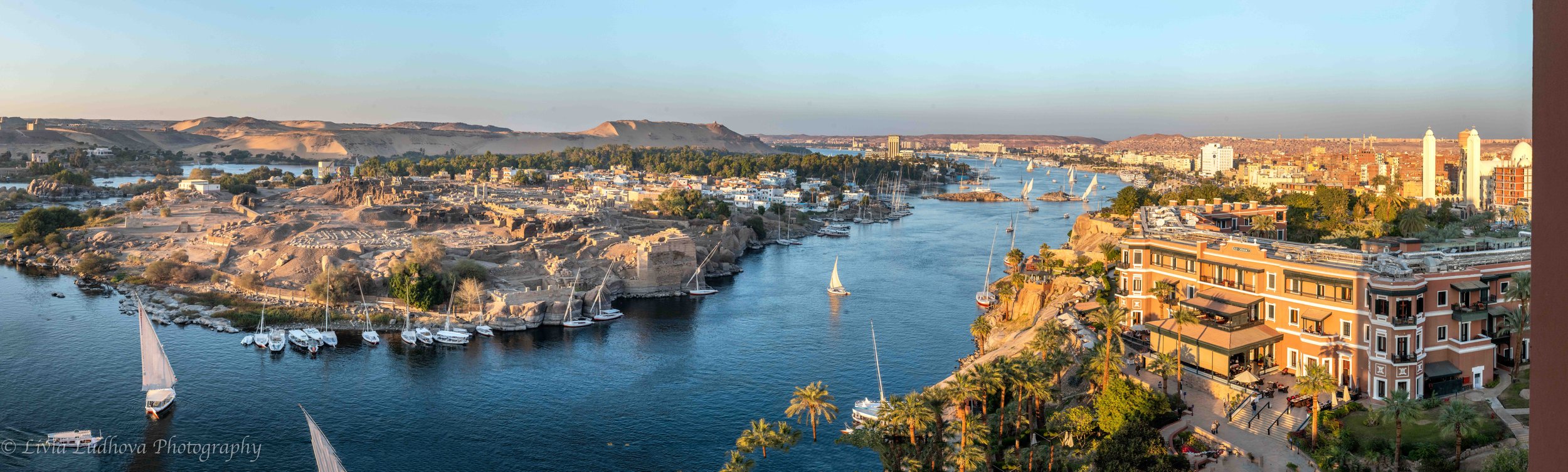
Day 10: Aswan II
Jan 4 : Travel to Aswan - Old Cataract Hotel – Nubian Museum
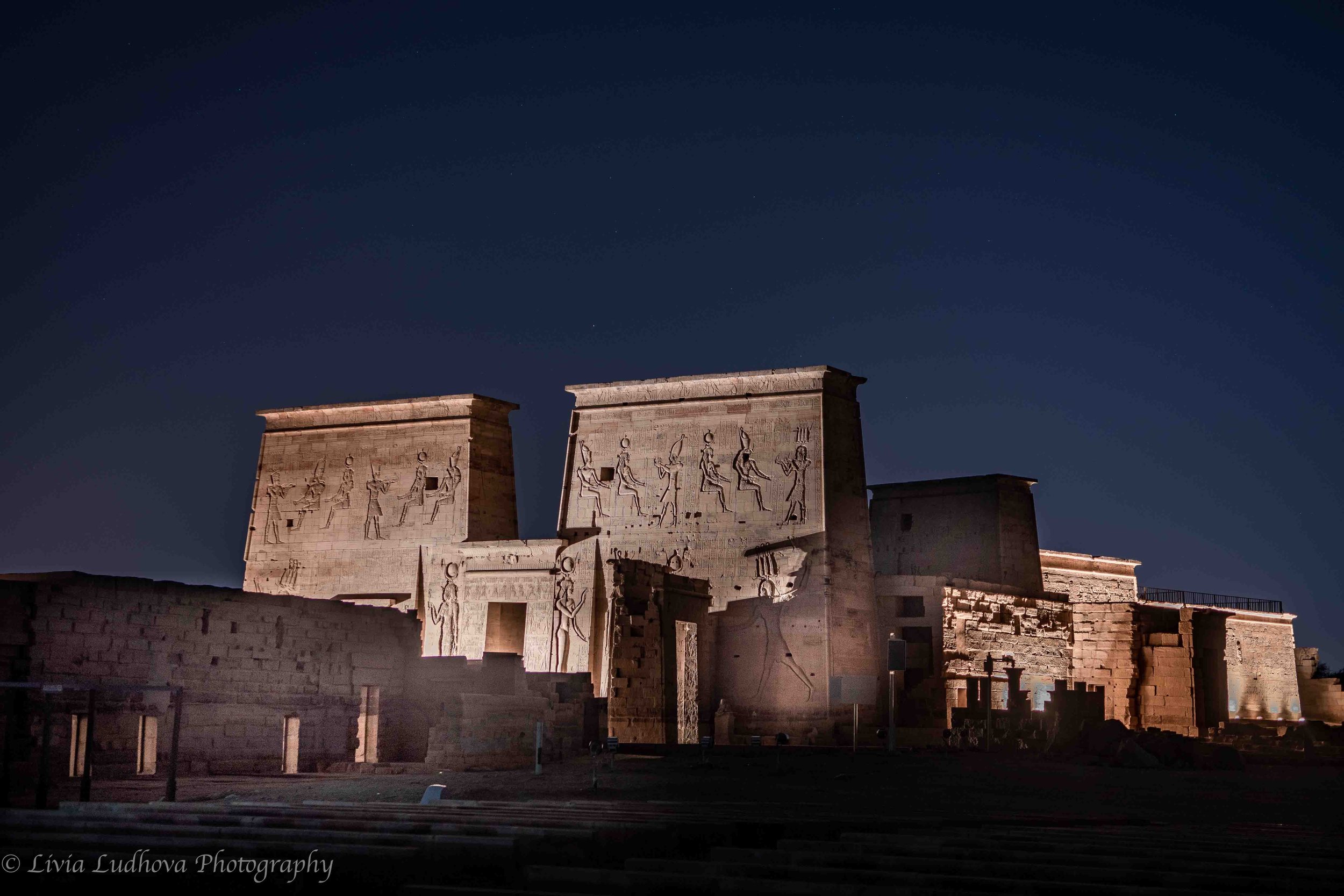
Day 11: Aswan III
Jan 5: Aswan: Unfinished Obelisk – Elephantina island – Philae temple
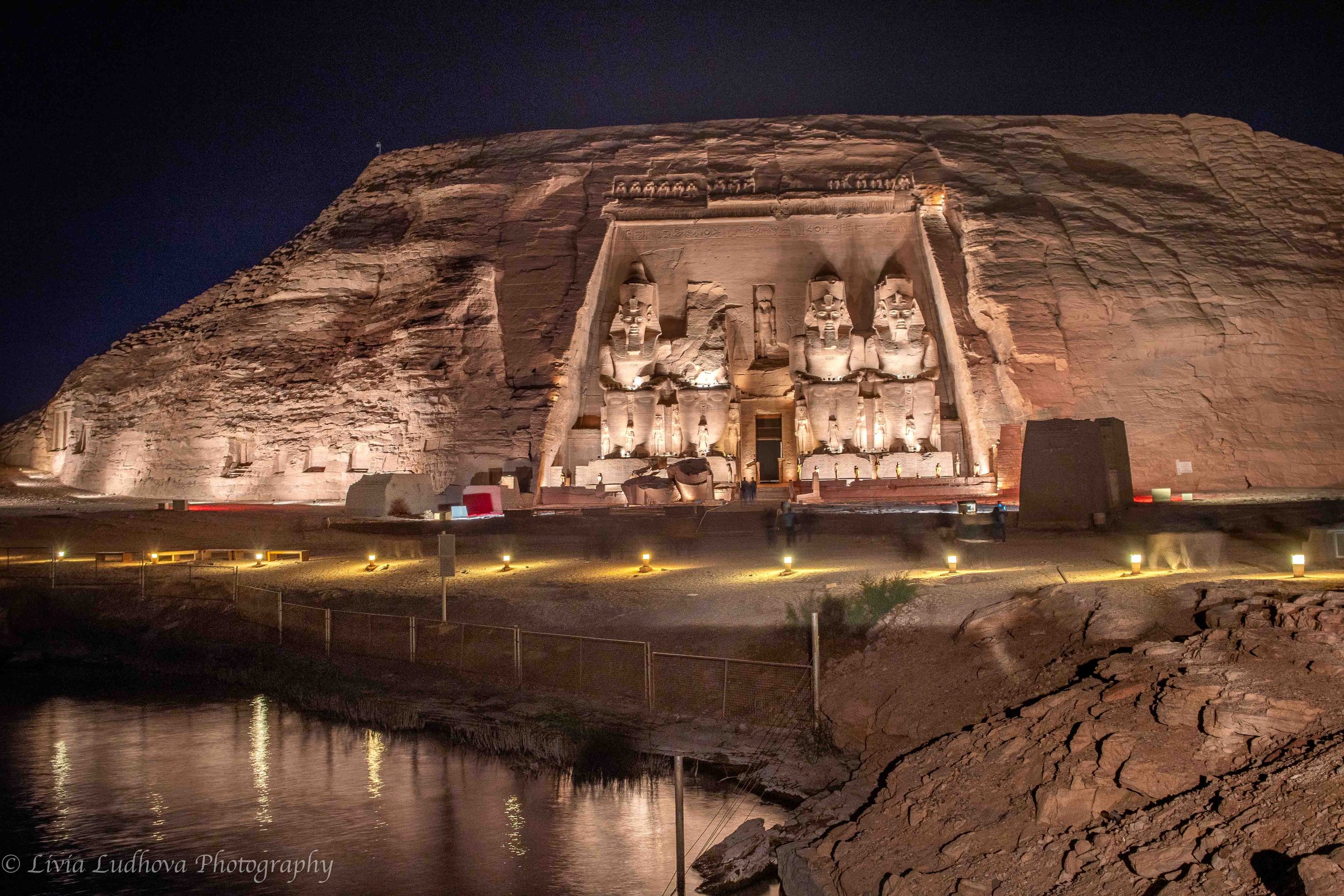
Day 12: Abu Simbel
Jan 6: Abu Simbel
Day 13: Abu Simbel + Aswan IV
Jan 7: Abu Simbel - Aswan (Hight Dam, Nubian Village, Old Souk)
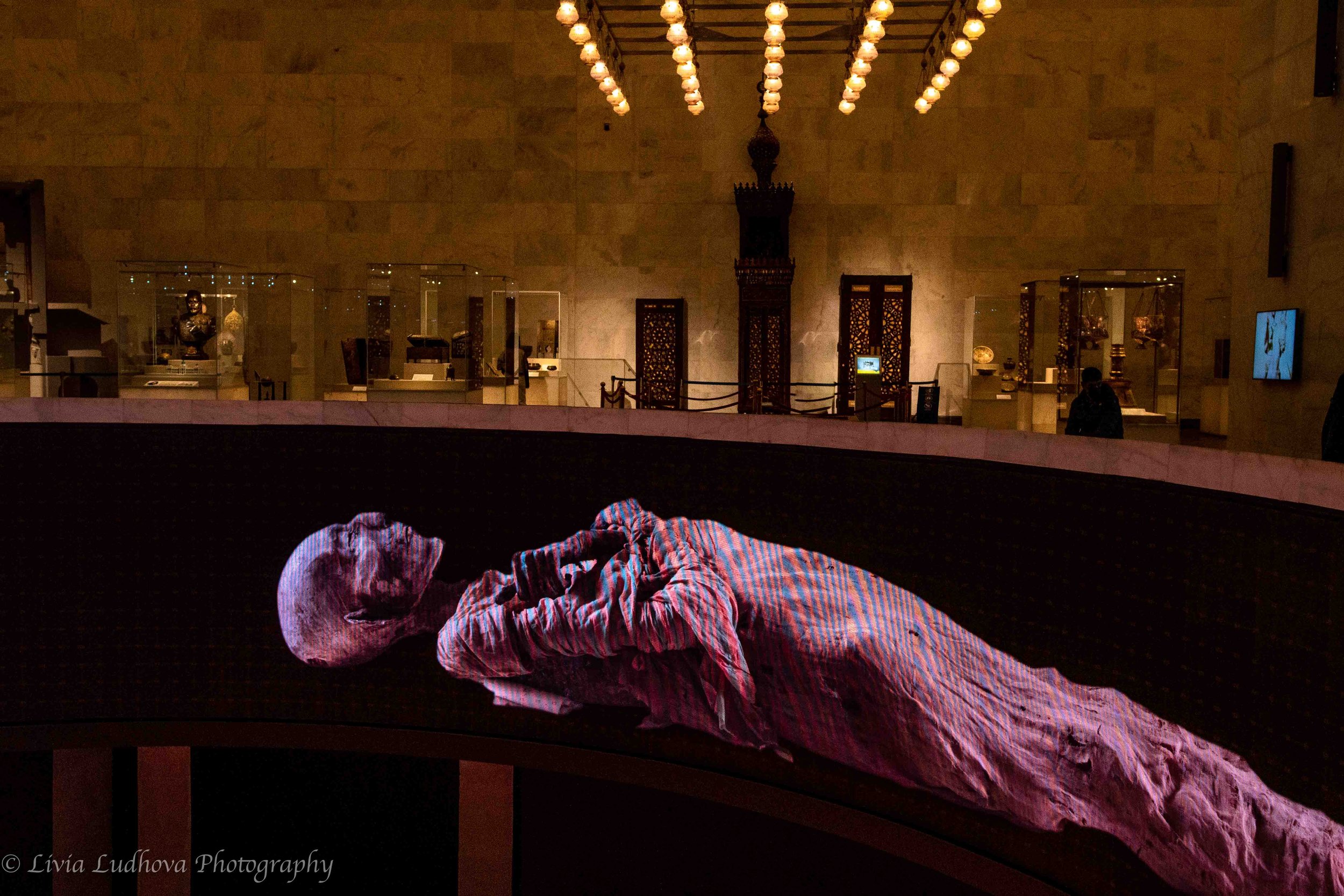
Day 14: Cairo
Jan 8: Cairo: National Museum of Egyptian Civilasion

Day 15: Faiyum oasis
Jan 9: Faiyum oasis